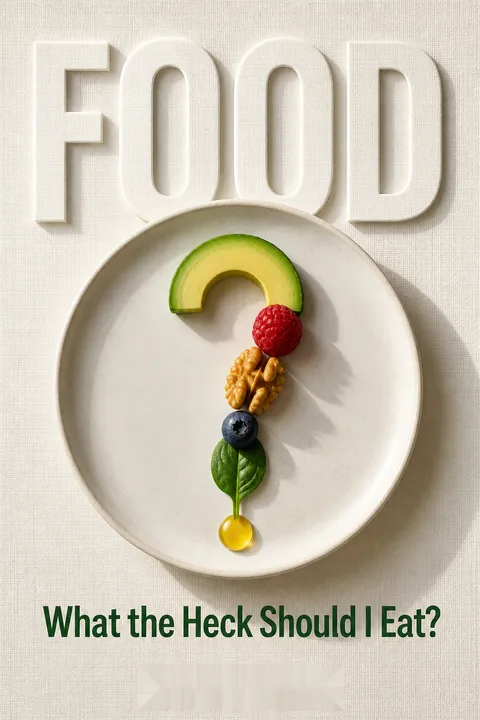


Key Takeaways
Build meals around real food, not industrial products wearing health claims
Start with the food itself. Hyman’s simplest test is whether a food looks like something nature made or a factory assembled. An avocado needs no ingredient list; a Twinkie’s list runs to dozens of components. He argues that nutrition advice gets distorted when it treats isolated nutrients as the whole story. He calls this approach nutritionism: judging food by single components, such as fat, fiber, or vitamins, instead of considering the whole food and how its parts interact.
The book treats food as more than fuel: what people eat affects health, cooking habits, farming, and communities. Its practical direction is to favor varied, minimally processed foods and be skeptical of packaging that advertises health benefits.
The recognizable-food test is memorable because it reduces a noisy debate to a useful shopping question. It also points toward a broader idea: food comes as a package, and a nutrient’s effect can change with its context. Still, simplicity is a guide, not a scientific verdict. Frozen vegetables and traditionally fermented foods are processed, yet can be nutritious; a plain-looking food is not automatically healthy in every amount. The strongest use of Hyman’s rule is as a prompt to inspect ingredients and preparation, not as a substitute for evidence or individual needs.
Teach cooking, because access without kitchen skills is not real choice
Skills change the menu. Hyman describes visiting a low-income South Carolina family facing severe obesity and chronic illness. They had little experience cooking from scratch, lacked basic kitchen tools, and relied heavily on packaged food and fast food. Rather than scolding them to eat less, he cooked with them: roasted vegetables, prepared turkey chili, and made salad dressing from basic ingredients. The family was surprised that the food tasted good and was filling.
Hyman reports that the family lost 18 pounds collectively in five days and 200 pounds over nine months. That dramatic account illustrates his point that knowledge, confidence, tools, and access shape eating habits. It is a personal story, not a controlled study proving that cooking alone caused the weight loss.
This story shifts the frame from character judgment to practical capability. In behavioral science, the environment often determines which action is easiest; a grocery store full of unfamiliar ingredients can make packaged convenience feel like the only workable option. Cooking instruction, equipment, time, and affordable ingredients therefore belong in health conversations. The story should not be turned into a promise that home cooking will produce the same results for every family. Its more durable lesson is that advice becomes useful when people have the means and skills to act on it.
Treat nutrition headlines as evidence claims, not marching orders
Nutrition evidence has limits. Long-term controlled feeding studies are difficult to run, so much nutrition research relies on people remembering what they ate. Those reports can be inaccurate, and people who eat more of one food may differ in many other ways. Hyman calls attention to confounding, industry funding, and researchers favoring evidence that supports their prior beliefs. He also recounts how the Seven Countries Study, used to support the saturated-fat hypothesis, examined a selected set of countries while excluding others.
His proposed response is to weigh different kinds of evidence together: laboratory research, population studies, controlled trials, and biological plausibility. He also cites analyses linking industry funding with more favorable findings for sponsors’ products. Such links warrant scrutiny, but a funding relationship alone does not establish that a result is false.
The book is right to teach readers how uncertainty enters nutrition science, rather than presenting every headline as settled truth. The same scrutiny should apply to contrarian claims: a study that fits a preferred low-carbohydrate or high-fat narrative can be selected just as easily as one that fits official guidance. Confidence grows when independent methods converge, not when a single dramatic study is treated as a final verdict. Readers can ask who was studied, what was measured, what comparison was used, and whether the conclusion outruns the data.
Make vegetables the plate’s foundation, then widen the colors
Plants bring range. Hyman recommends making nonstarchy vegetables the largest part of meals, often suggesting they occupy 50 to 75 percent of the plate. He values them for fiber and phytonutrients, the compounds plants produce that contribute color and may affect human biology. His practical advice is to vary colors and kinds, with leafy greens, cruciferous vegetables, herbs, and less familiar plants alongside everyday favorites. He also argues that fruit and vegetables should not be treated as interchangeable portions, because some fruits contain more sugar.
Preparation matters in his account: frozen vegetables can be convenient and nutritious, vegetables should not be cooked to mush, and adding some fat helps the body absorb fat-soluble vitamins. He favors organic produce when possible, especially for items he identifies as pesticide-prone.
Variety is a strong organizing principle because it avoids making a single “superfood” carry the burden of a whole diet. Color can help people diversify, while practical habits such as keeping frozen vegetables on hand can make that diversity easier. The recommended percentages and serving counts are best read as an example of a plant-forward pattern, not a universal prescription. Organic choices also involve cost and availability; eating enough produce matters, and the book itself recognizes that choosing conventional produce can be preferable to avoiding vegetables altogether.
Cut added sugar and liquid calories before fearing whole fruit
The form matters. Hyman’s clearest target is added sugar, especially in sweetened drinks and packaged foods. He distinguishes whole fruit from juice: fruit’s fiber slows sugar absorption and helps make it filling, while juice delivers sugar quickly and is easy to consume in large quantities. The book gives orange juice as a familiar example, noting that a glass can contain sugar comparable to soda. It also urges readers to check labels for less obvious sweetener names.
Hyman describes a study in which overweight teenagers replaced sugary foods with starch while keeping calories steady. After ten days, researchers observed improvements in several metabolic measures. That result supports paying attention to sugar’s effects, but it does not establish that every carbohydrate is harmful or that a short intervention predicts long-term outcomes for everyone.
The distinction between eating and drinking calories has practical force: beverages often provide little of the fullness that accompanies solid food. The book’s focus on added sugar is more useful than treating all sweetness as equivalent, since intact fruit includes fiber and nutrients. Its broad claims about sugar, however, sometimes move from plausible mechanisms to sweeping conclusions about disease. A careful reader can adopt the low-regret advice to reduce sugary drinks and heavily sweetened foods without assuming that every fruit or carbohydrate requires restriction.
Choose fats by source and processing, not by the word fat
Fat is not one category. The book challenges decades of low-fat advice and argues that natural fats in foods such as nuts, avocados, fish, eggs, and some animal foods should not be lumped together with industrial trans fats or highly refined oils. Hyman explains that fat helps with satiety and absorption of vitamins A, D, E, and K. He also points to studies in which higher-fat eating patterns performed well for weight loss and cardiovascular risk markers.
His practical emphasis is on less processed foods and cooking fats suited to the cooking method. He favors extra-virgin olive oil for lower-heat or uncooked uses and more heat-stable fats for hotter cooking. He does not argue that saturated fat should be eaten without limit, but his defense of it is stronger than the evidence warrants as a universal rule.
The useful correction is categorical: “fat” describes a broad family of nutrients, not a single health effect. This helps explain why replacing one food with another can matter more than lowering a nutrient in isolation. It also guards against the opposite mistake, turning a critique of low-fat dogma into a license for unlimited butter or oil. Evidence about fats varies by food, dietary pattern, and health outcome. The book’s best practical insight is to reduce highly processed foods and avoid treating a nutrition label’s fat number as the whole story.
Buy fewer animal foods, and make their raising matter
Quality and quantity both count. Hyman argues that meat, eggs, and poultry can provide concentrated protein and nutrients, while warning that production methods affect animal welfare, environmental costs, and food quality. He favors pasture-raised or grass-fed options when available, recommends keeping meat portions modest, and suggests putting vegetables at the center of the plate. He also distinguishes occasional processed meat from making bacon, deli meat, or hot dogs daily staples, and advises avoiding heavily charred meat.
He rejects the claim that dietary cholesterol in eggs automatically causes heart disease and encourages eating the yolk. His broader argument is that people need not avoid all animal foods for health, while acknowledging ethical, spiritual, and environmental reasons for doing so. The book does not make meat compulsory.
This position avoids the false choice between meat as poison and meat as a nutritional requirement for everyone. It also broadens the question from what is on the plate to how that food was produced. The trade-off is that premium sourcing can be expensive and unevenly available, so “choose better” cannot be the only public-health solution. Readers who avoid animal foods can still build a thoughtful diet, though some nutrients, including vitamin B12, require particular attention. The book’s emphasis on smaller portions offers a practical bridge between nutrition, cost, and environmental concern.
Use small oily fish for omega-3s, while avoiding mercury-heavy giants
Seafood calls for selection. Fish supplies EPA and DHA, omega-3 fats the book links to cardiovascular, brain, and inflammatory health. Hyman’s shortcut is the name SMASH fish: salmon, mackerel, anchovies, sardines, and herring. Smaller fish tend to accumulate fewer contaminants than large predatory fish, so the book advises caution with varieties such as swordfish and some tuna. It also warns that farmed fish can have different feed, environmental, and contamination concerns, and urges readers to seek reliable sourcing information.
The recommendation is not simply to eat more seafood without limit. Overfishing, fish fraud, and pollution complicate the choice. Hyman points readers toward seafood guides and traceability labels, and he stresses that pregnant people should consider both the benefits of omega-3s and the risks of contaminants.
This is a useful example of nutrition advice meeting environmental systems: a food can offer health benefits while its sourcing raises separate concerns. The small-fish rule is a memorable starting point, but it should not replace current local guidance on mercury or sustainability, which can change with species and origin. Seafood recommendations also differ by life stage. The book’s strongest transferable point is to diversify choices and ask where a fish came from, rather than assuming that “wild,” “farmed,” or “healthy” settles every question.
Test dairy, grains, and beans against your own symptoms and context
Not every food suits everyone. Hyman is skeptical of routine dairy consumption, noting that many adults digest lactose poorly and that milk is not the only source of calcium. He suggests that some people may tolerate small amounts of unsweetened fermented dairy, especially goat or sheep products, better than conventional cow’s milk. For grains, he focuses on refined flour, high-starch products, and gluten, while presenting intact, gluten-free grains as occasional options for some readers. Beans provide fiber and nutrients, but can be uncomfortable for people with digestive symptoms and may affect blood sugar.
His approach is to remove a suspected food briefly, then reintroduce it and observe the response. Broad claims that dairy, gluten, or beans cause illness in most people are not established by the examples in the book; suspected disease or persistent symptoms call for qualified clinical guidance.
Personal experimentation can reveal patterns that population averages miss, especially when symptoms are repeatable and the reintroduction is deliberate. But elimination diets can also create false certainty: symptoms fluctuate, several foods may change at once, and expectation can shape what people notice. A structured trial is more informative than a permanent ban based on a single bad day. This nuance matters here because the book’s arguments against several food groups are more categorical than its evidence justifies. Individual tolerance is a sensible question; universal danger is a much stronger claim.
Food choices matter, but industrial food rules shape the choices available
The plate has a policy. Hyman connects diet to food marketing, agricultural subsidies, labeling, public programs, and industrial farming. He argues that incentives favoring commodity crops and inexpensive processed ingredients can make less nutritious options widely available, while advertising shapes what families recognize as convenient or healthy. The book also connects food production with pollution, water use, greenhouse gases, animal treatment, and labor conditions.
This is why Hyman describes shopping and cooking as civic acts, but he also calls for broader food-policy reform. Individual purchases can support different producers, yet they cannot by themselves change the rules that govern school meals, food assistance, agricultural production, or marketing to children. The book’s central social claim is that health is affected by systems as well as personal decisions.
The systemic lens prevents a familiar error: treating every dietary outcome as a private failure of discipline. Prices, time, neighborhood stores, advertising, and public procurement shape what is feasible before anyone makes a choice. Consumer action can matter, but it is not a replacement for institutional change, particularly for households with tight budgets. The book is most persuasive when it links individual agency to collective responsibility rather than asking shoppers to solve industrial agriculture one receipt at a time.
Use the Pegan pattern as a flexible template, not a purity test
A synthesis, not a camp. Hyman calls his approach the Pegan Diet, a blend of what he sees as the strongest elements of Paleo and vegan eating. Its center is vegetables, with modest portions of protein, whole-food fats, limited added sugar, and fewer highly processed foods. Some legumes, intact grains, or fermented dairy may fit, depending on health and tolerance. The label is less important than the pattern: varied plants, minimally processed ingredients, and meals people can sustain.
For readers who want a reset, the book describes a 10-Day Detox Diet that removes several foods temporarily, then recommends reintroducing them one group at a time to notice responses. Hyman also emphasizes sleep, movement, and relaxation. The plan is not a substitute for medical treatment, and the book’s supplement recommendations should be discussed with a qualified clinician.
The Pegan idea works best as a reconciliation strategy: it steers attention away from identity-based diet camps and toward shared ground around whole foods and plants. Its flexibility is important because culture, budget, health conditions, and preferences shape what people can sustain. A short elimination period may help some people identify triggers, but an extensive restriction can be unnecessary or nutritionally risky without guidance. The book’s lasting contribution is less a perfect menu than a practical question: which eating pattern is nourishing, feasible, and durable for this person?
Analysis
The book’s most valuable intervention is not a final verdict on butter, grains, or dairy. It is a change in scale. Hyman asks readers to look beyond isolated nutrients toward meals, food processing, cooking skill, agricultural practice, and policy. That wider frame helps explain why a nutrition headline can be technically plausible and still mislead: a food is eaten within a pattern, produced within a system, and chosen within constraints.
The work is also a polemic against decades of low-fat guidance, and its rhetorical force sometimes outruns its evidence. It is strongest when it highlights research design problems, conflicts of interest, the difference between whole fruit and juice, or the practical value of cooking. It is less secure when it generalizes from limited studies to broad claims that particular foods cause chronic illness, or when it treats mechanistic hypotheses as settled clinical advice. A sound summary should preserve the author’s recommendations while distinguishing them from consensus and certainty.
The Pegan Diet is therefore more useful as a pattern than as a list of forbidden ingredients. Its plant-forward emphasis, skepticism toward ultra-processed foods, and attention to sourcing can travel across many dietary traditions. Its proposed restrictions require more caution, especially for people managing disease, pregnancy, or nutritional deficiencies. The book’s South Carolina family story captures another central insight: information alone does not produce change. Skills, equipment, time, money, and access determine whether advice can be practiced.
Readers can take the book seriously without accepting every claim. They can prioritize minimally processed foods, cook more often when feasible, reduce sugary drinks, diversify plants, and consider how food is produced. They can also retain scientific humility: observe personal responses, seek reliable clinical advice, and resist replacing one rigid food doctrine with another. The best answer to the title is a durable way of eating, not a new food fear.
Review Summary
Food: What the Heck Should I Eat? presents a comprehensive guide to nutrition, addressing food confusion and offering evidence-based advice. Readers appreciate Hyman's clear explanations and practical recommendations, though some find the dietary suggestions restrictive or unrealistic. The book emphasizes whole, unprocessed foods, criticizes sugar and industrial agriculture, and promotes environmental consciousness. While many readers found the information valuable, some noted repetition of content from other nutrition books. Overall, the book is praised for its accessible approach to complex nutritional topics.
People Also Read








Glossary
Pegan Diet
Paleo and vegan synthesisMark Hyman’s name for a flexible, plant-forward eating pattern that combines elements of Paleo and vegan diets. It emphasizes vegetables, minimally processed foods, healthy fats, and modest amounts of protein, while limiting added sugar and heavily processed products. Depending on individual tolerance, it may include some legumes, intact grains, or fermented dairy.
nutritionism
Nutrient-first view of foodA way of interpreting food by isolating its components, such as a particular fat, vitamin, or type of carbohydrate, rather than considering the whole food and its dietary context. Hyman argues that this approach can mislead consumers because nutrients interact with one another and with the body, while product marketing can exploit whichever component is currently praised.
food-like substance
Highly processed food productHyman’s critical label for heavily manufactured products whose ingredients and structure differ substantially from recognizable foods. The term draws attention to long ingredient lists, additives, refined ingredients, and marketing that presents a packaged product as healthy. It is a rhetorical distinction, not a formal scientific category.
functional medicine
Root-cause care modelA model of healthcare emphasized by Hyman that seeks to understand factors contributing to a patient’s condition rather than focusing only on naming or suppressing symptoms. In the book, it combines attention to diet and other lifestyle factors with clinical assessment, testing, and, where appropriate, medication or supplements.
glycemic load
Blood-sugar effect per servingA measure intended to estimate how much a typical serving of a food raises blood glucose. Unlike glycemic index, which compares the blood-sugar response to a standard amount of available carbohydrate, glycemic load also accounts for the quantity of carbohydrate in a usual portion. Hyman uses it to distinguish lower-impact choices from more rapidly absorbed starches and sugars.
resistant starch
Starch that resists digestionA form of starch that passes through the small intestine without being fully digested and can be fermented by gut microbes in the colon. The book describes it in beans and in some cooked foods that are cooled before eating. It presents resistant starch as a source of fuel for gut bacteria, though its effects depend on the food and the person.
sweet fat
Fat combined with sugar or starchHyman’s term for foods that combine fat with sugar or refined starch, a combination he considers especially easy to overconsume and unfavorable for metabolic health. It functions as a caution about food combinations and highly processed products, rather than a formal nutritional classification.
SMASH fish
Small omega-3-rich fishAn acronym for salmon, mackerel, anchovies, sardines, and herring. Hyman uses it to help readers remember seafood choices that tend to provide omega-3 fats while generally presenting less mercury concern than large predatory fish. Species, origin, and sustainability still matter, so the acronym is a shortcut rather than a complete seafood guide.
condi-meat
Meat as a small accompanimentHyman’s informal term for using meat as a modest addition to a meal rather than making it the main event. The idea is to place vegetables at the center of the plate and use a smaller portion of animal protein for flavor and nutrients. It expresses the book’s preference for plant-heavy meals and lower meat consumption.
10-Day Detox Diet
Short-term food resetA temporary eating plan described in the book that removes added sugar, many processed foods, and several potentially troublesome food groups, while emphasizing vegetables and minimally processed foods. Hyman presents it as a short reset, not a permanent diet, and suggests reintroducing foods systematically to observe individual responses. People with health conditions should seek qualified medical guidance before major dietary changes.
FAQ
What's Food: What the Heck Should I Eat? about?
- Nutrition Clarity: The book addresses the confusion surrounding food choices and nutrition, often muddled by conflicting dietary guidelines and media reports.
- Pegan Diet Introduction: It introduces the Pegan Diet, a blend of paleo and vegan principles, focusing on whole, unprocessed foods with dietary flexibility.
- Food as Medicine: Mark Hyman emphasizes that food impacts health, longevity, and well-being, serving as more than just fuel.
Why should I read Food: What the Heck Should I Eat??
- Empowerment Through Knowledge: The book empowers readers to make informed food choices based on the latest scientific research, debunking outdated myths.
- Practical Guidance: It offers practical advice on what to eat and avoid, simplifying grocery shopping and meal preparation.
- Holistic Health Approach: Hyman links food choices to broader issues like environmental sustainability and chronic disease prevention.
What are the key takeaways of Food: What the Heck Should I Eat??
- Focus on Whole Foods: Emphasizes consuming real, whole foods while avoiding processed and industrialized food-like substances.
- Understanding Food Groups: Provides insights into the nutritional value and health implications of various foods, from meats to vegetables.
- Food as a Connection: Highlights how food connects us to our health, communities, and the environment, advocating for mindful eating practices.
What are the best quotes from Food: What the Heck Should I Eat? and what do they mean?
- "What you put on your fork is the most important thing you do every day.": Stresses the impact of daily food choices on health and well-being.
- "Food is medicine.": Encapsulates the book's core message that food can prevent and reverse chronic diseases.
- "The sad truth is that much of what we eat is not really food.": Critiques the modern food industry, urging discernment between real food and processed alternatives.
What is the Pegan Diet as described in Food: What the Heck Should I Eat??
- Combination of Diets: Merges principles from paleo and vegan diets, focusing on whole, unprocessed foods.
- Emphasis on Nutrient Density: Encourages consumption of nutrient-dense foods like vegetables, healthy fats, and high-quality proteins.
- Sustainability and Ethics: Considers environmental sustainability and ethical food sourcing, promoting local and organic options.
How does Food: What the Heck Should I Eat? address the confusion around fats?
- Reevaluation of Fats: Challenges the belief that dietary fat is harmful, presenting evidence that healthy fats are essential.
- Saturated vs. Unsaturated Fats: Explains differences, advocating for healthy saturated fats from sources like coconut oil and grass-fed butter.
- Focus on Quality: Emphasizes choosing high-quality fats and oils, such as extra virgin olive oil, while avoiding processed vegetable oils.
How does Food: What the Heck Should I Eat? address sugar consumption?
- Sugar as a Health Risk: Links sugar to obesity, diabetes, and heart disease, suggesting it be an occasional treat.
- Natural Sweeteners: Recommends alternatives like honey and maple syrup, but advises moderation.
- Detox from Sugar: Suggests a detox phase to eliminate sugar and processed foods, improving energy and health outcomes.
What are the recommended food groups in Food: What the Heck Should I Eat??
- Meat and Poultry: Recommends high-quality, grass-fed meats and pasture-raised poultry for their nutritional benefits.
- Vegetables and Fruits: Advocates for a variety of organic and locally sourced vegetables and fruits to maximize nutrient intake.
- Healthy Fats: Encourages inclusion of healthy fats from sources like avocados, nuts, and olive oil for nutrient absorption.
What should I avoid according to Food: What the Heck Should I Eat??
- Processed Foods: Advises against consuming processed foods with harmful additives and low nutritional value.
- Conventional Dairy and Grains: Suggests avoiding conventional dairy and refined grains due to potential health risks.
- High-Sugar Foods: Warns against high-sugar foods, including fruit juices and sugary snacks, linked to weight gain and chronic diseases.
How can I implement the advice from Food: What the Heck Should I Eat? in my daily life?
- Start with Small Changes: Begin with manageable changes like incorporating more vegetables and reducing processed foods.
- Meal Planning: Use provided meal plans and recipes to organize meals around healthy foods.
- Mindful Eating: Practice mindful eating, paying attention to hunger cues and food quality.
What are the environmental and ethical considerations discussed in Food: What the Heck Should I Eat??
- Sustainable Sourcing: Advocates for choosing sustainably sourced foods to minimize environmental impact.
- Factory Farming Critique: Critiques factory farming for its negative effects on animal welfare, the environment, and food quality.
- Food as a Political Act: Encourages viewing food choices as political acts influencing health, the economy, and the environment.
What are the health benefits of following the advice in Food: What the Heck Should I Eat??
- Weight Management: Focus on whole foods and reduced sugar aids in weight management and reduces obesity risk.
- Reduced Inflammation: Dietary recommendations aim to reduce inflammation, linked to chronic diseases.
- Improved Overall Health: Promotes better cardiovascular health, digestion, and mental clarity through a holistic nutrition approach.
About the Author
Other books by Mark Hyman




Download PDF
Download EPUB
.epub digital book format is ideal for reading ebooks on phones, tablets, and e-readers.








