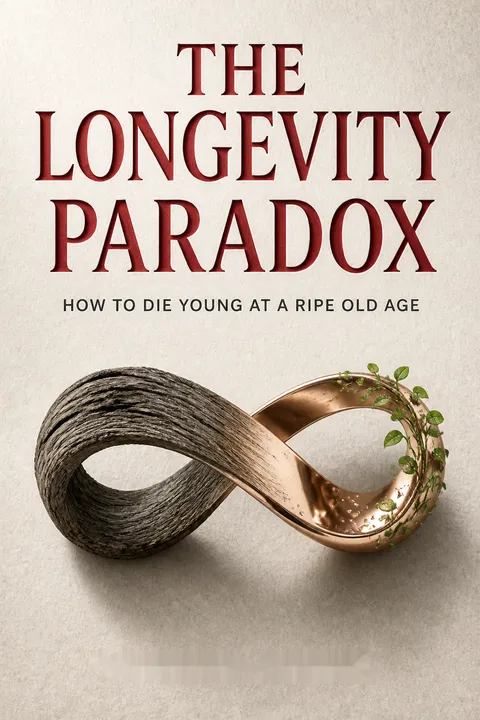


Key Takeaways
Treat your microbiome as part of your body, not background scenery
The whole-body view. The book’s central claim is that aging depends not only on human genes but also on the community of microbes living in and on us. Gundry calls this wider partnership the holobiome. His opening example is Edith Morrey, a patient he met in her nineties who remained active and youthful in appearance until her death shortly before 106. Gundry credits her long-standing food and lifestyle habits, and the microbial community they supported, rather than exceptional genes alone.
What the evidence suggests. The book points to studies in which household members share similar microbiomes, and to experiments where transferring gut microbes changed health-related traits in animals. These findings make the microbiome a plausible influence on health, though not a simple remote control for the body.
What's striking is the shift from a fixed-genetic story to a relational one. Health becomes an ongoing interaction among food, surroundings, microbes, and the host, which makes daily choices feel consequential without making them all-powerful. The book is most persuasive when it argues that family disease patterns can reflect shared habits as well as inheritance. Its microbial emphasis can also overshoot: a complex community is not a single cause, and the same microbial finding can be a cause, consequence, or fellow traveler of illness. The useful lesson is to treat microbial health as one important part of a larger system.
Protect the gut barrier before treating inflammation as the whole problem
A boundary under strain. Gundry describes the intestinal lining as a thin barrier that controls what enters the body. When it becomes more permeable, he argues, bacterial fragments called lipopolysaccharides, or LPS, and other substances can cross it and provoke immune activity. He uses inflammaging to describe the chronic, low-grade inflammation associated with aging. In his model, a disrupted gut community and a weakened barrier help sustain that inflammation.
The proposed chain. The book identifies lectins, some medications, and other exposures as possible sources of barrier damage. It explains the immune response as a protective alarm that becomes harmful when repeatedly activated. This framework links gut health to conditions ranging from joint pain to heart and brain disease, but the strength of those links varies across the conditions discussed.
The barrier model offers a useful way to connect digestion with immune activity: the gut is not merely a food tube but a major interface between the body and its surroundings. That framing helps explain why inflammation can involve several organs at once. The important distinction is between a plausible mechanism and proof that one dietary trigger causes a particular disease. Inflammation has many inputs, and a single pathway cannot account for every case. Readers can retain the practical question, what might be sustaining inflammation, without assuming that every symptom originates in a leaky gut.
Feed beneficial microbes with fiber-rich plants, mushrooms, nuts, and olive oil
Food for the residents. The book distinguishes probiotics, the microbes themselves, from prebiotics, the food that helps some microbes grow. Gundry emphasizes plant fibers that people do not fully digest, including those in artichokes, onions, chicory, jicama, and mushrooms. He also highlights nuts, leafy greens, and extra-virgin olive oil for their fibers and plant compounds, especially polyphenols. The argument is that microbes transform parts of these foods into substances that can support the gut lining and other body functions.
A practical pattern. Rather than relying on a probiotic pill alone, the program centers on repeatedly eating foods that nourish a broad microbial community. Gundry also favors resistant starches, such as those in green bananas and certain tubers, which pass largely undigested into the lower gut. His plan sharply restricts many grains, sugars, and other foods he considers harmful, a more controversial part of the advice.
The gardening analogy behind this advice is useful: introducing microbes without giving them suitable food is unlikely to build a durable community. A varied, plant-rich diet also makes the recommendations more concrete than simply buying supplements. The caution is that the book draws unusually strict lines between helpful and harmful foods, sometimes treating broad categories as if they act identically for everyone. Individual tolerance, preparation, and overall diet matter. A reader can take the core principle, feed microbial diversity with varied plant foods, while being more measured about universal prohibitions.
Use fasting as a brief challenge, not a daily test of willpower
A cycle, not a constant. Gundry argues that alternating periods of plenty with periods of lower intake may prompt cellular maintenance processes. He uses autophagy for the process by which cells break down and recycle damaged components, and discusses mTOR, a nutrient-sensing pathway involved in growth. In the book’s account, frequent high energy intake and animal protein can keep growth signals active, while temporary restriction can shift the body toward repair.
The proposed schedule. The program includes five consecutive days each month of a plant-based, roughly 900-calorie fast-mimicking diet. It also offers optional 600-calorie days and a weekly early dinner or skipped dinner. These are the author’s recommendations, not a universal prescription. Fasting can be inappropriate or risky for people with particular medical conditions, medication needs, pregnancy, or a history of disordered eating, so it warrants clinical guidance.
The valuable idea is the contrast between growth and maintenance. Biology does not operate at one setting, and the book’s seasonal metaphor encourages readers to question constant grazing and perpetual abundance. But a mechanism observed in cells or animals does not automatically validate a specific fasting schedule for every person. The program’s calorie targets are particularly unsuitable as casual self-experimentation for some readers. Fasting is best understood here as a hypothesis about timing and metabolic flexibility, not as a moral test or a substitute for individualized medical care.
Read Blue Zones as varied communities, not proof of one perfect diet
Different tables, shared clues. Gundry compares long-lived communities in Sardinia, Okinawa, Loma Linda, Nicoya, Ikaria, and elsewhere. Their diets differ: some rely on tubers, others on beans, olive oil, or fish. He argues that certain resistant-starch foods may nourish gut microbes, and that low animal-protein intake is a recurring feature across many of these populations. He also notes that some communities consume grains, challenging the claim that every long-lived population follows a single Mediterranean template.
Look beyond ingredients. The book’s broader portrait includes regular physical activity and close social ties, not just a list of foods. Its interpretation is that shared patterns matter more than any branded diet. The evidence presented is observational, however. These communities differ in many ways, so their longevity cannot be attributed to one food or nutrient from comparison alone.
The comparison is strongest as a lesson in humility: people can reach healthy old age through quite different food traditions. That undercuts the urge to turn one community’s menu into a universal formula. It also raises a harder question: which shared features matter most, and which are merely incidental? The book highlights low animal-protein intake, but lifestyle, social structure, food processing, and other local conditions complicate that conclusion. Blue Zones are better treated as sources of hypotheses and contrasts than as controlled experiments proving a single dietary cause.
Build strength and keep moving without mistaking endurance for the only route
Movement as maintenance. Gundry argues that muscle loss and weaker mobility are not inevitable consequences of age. He recommends everyday movement, walking, and exercises that challenge muscles against gravity. His brief routine combines a light jog in place, crunches, a plank, squats, and meditation. The point is accessibility: small bouts can interrupt long periods of sitting and help preserve strength.
Choose a sustainable dose. The book also favors short intervals of harder effort and warns against excessive long-distance endurance exercise, which it says can strain the heart and gut. That warning is stronger than the practical evidence offered in the text, so it should not be read as a blanket condemnation of running. The more durable takeaway is to build activity gradually, include strength and balance work, and adapt exercise to ability and health.
The book usefully shifts exercise away from calorie punishment and toward preserving the capacities that make daily life independent. Its emphasis on strength, stairs, walking, and brief routines is particularly memorable because each connects training to ordinary function. The contrast with endurance exercise invites nuance, though: duration alone cannot define whether training is beneficial or excessive. Fitness, recovery, intensity, and medical context all shape the dose. A practical interpretation is not to fear a favorite sport, but to avoid making one demanding activity the whole of a movement life.
Give sleep a long food-free runway and keep brain care evidence-based
Sleep as restoration. The book describes the glymphatic system, a network through which fluid helps clear waste from the brain, as especially active during deep sleep. Gundry connects poor sleep with disrupted appetite signals and argues that late meals may compete with the brain’s overnight cleanup. He recommends finishing food at least four hours before bed and names a weekly skipped dinner a brain-wash day.
Support the basics. The book also favors leafy greens, olive oil, and fish as foods associated with brain health. A study it cites linked daily leafy-green consumption with slower cognitive decline, while other evidence concerns diet patterns and brain measures. Those findings do not prove that a particular meal cutoff prevents dementia. The most dependable practical emphasis in this chapter is protecting regular, adequate sleep and avoiding the assumption that cognitive decline is simply unavoidable.
The sleep discussion is compelling because it connects a familiar behavior to a concrete biological process, making rest seem like active maintenance rather than lost time. The food-free interval is a more specific claim and deserves a different level of confidence than the general importance of sleep. A reader can adopt an earlier, lighter evening meal if it improves comfort or routine, without treating four hours as a proven threshold for brain protection. Separating robust habits from more speculative mechanisms keeps the chapter useful without turning every detail into a rule.
Treat disease-reversal stories as prompts for questions, not proof to stop treatment
Anecdotes with limits. Gundry recounts patients whose symptoms or test results improved after dietary changes. One patient, Angela, returned for an angiogram about a decade after surgery, and the examination showed improvement in a previously blocked vessel as well as less spinal arthritis. The book also reports that 95 of 102 patients with autoimmune biomarkers became symptom-free and tested negative after following a dietary program. These accounts are presented as evidence for the author’s approach, but the text does not establish that diet alone caused the changes.
Keep care coordinated. The book sometimes makes broad claims about reversing serious illnesses and criticizes common medications. Such claims should not be used to stop prescribed drugs, delay evaluation, or replace established care. Readers considering substantial diet changes, fasting, or supplements should discuss them with a qualified clinician, especially when managing chronic disease.
Patient stories matter because they reveal what people experience and can generate testable questions. They are not, by themselves, reliable estimates of treatment effect: patients may receive multiple interventions, and improvement can have several explanations. The reported autoimmune results would be more persuasive with clear comparison groups, transparent methods, and independent replication. This distinction does not dismiss the possibility that diet can meaningfully affect health. It protects the reader from converting a promising clinical observation into an instruction to abandon treatment that may be preventing serious harm.
Build a social calendar that keeps you moving, connected, and needed
Relationships create structure. The book treats close community as part of healthy aging, alongside food and exercise. Edith Morrey broke her hip at 101 and seemed to decline, but Gundry says her dog and active social life helped draw her back into daily routines. She lived for another five years. The afterword also describes Ruby, who taught chair yoga in her nineties, maintained friendships, and approached pain with humor while continuing to pursue life.
Make connection concrete. Gundry recommends joining groups, volunteering, maintaining spiritual or community ties, and spending time with animals. He also proposes that people exchange microbes through close contact, but the more grounded point is that relationships give days structure, movement, and reasons to participate. These examples suggest that social connection is not decorative wellness advice; it can help sustain the habits that keep life engaged.
The strongest insight is practical rather than microbial: relationships create appointments, obligations, shared activity, and a sense of being useful. Edith’s recovery is memorable because connection gave her a reason to re-enter ordinary life after a serious setback. The proposed role of exchanged microbes is an interesting hypothesis, but it is not needed to explain why community matters. Social support can influence behavior and resilience without requiring a microbial mechanism. The chapter’s useful challenge is to design later life around recurring contact, not merely hope that connection will happen on its own.
Analysis
The book’s organizing move is to treat the body as an ecosystem rather than a machine whose parts age independently. Its narrative begins with Edith Morrey, whose apparent youth at an advanced age gives the author a human puzzle, then widens to microbes, immune activity, cellular energy, diet, movement, sleep, and social life. This structure makes an abstract subject vivid: the reader is invited to imagine a living community whose housing conditions are partly shaped by daily choices.
The strongest contribution is integrative. The book repeatedly asks how diet, movement, medication, sleep, and environment interact, and it resists reducing aging to inherited genes or a single laboratory number. Its practical themes, including eating more varied plant foods, preserving strength, sleeping consistently, and maintaining relationships, remain useful even when the proposed biological explanation is uncertain.
The central weakness is evidentiary compression. The text moves quickly from associations in human populations, findings in animals, plausible mechanisms, and the author’s patient reports to confident recommendations about disease prevention or reversal. These are different kinds of evidence. A transfer experiment in rodents can show that microbes influence a trait in that model, but it cannot establish that a named food or fasting schedule prevents human dementia. A clinical anecdote can motivate research, but it cannot isolate cause. The book also treats contested dietary claims, especially its broad warnings about grains, fruit, dairy, and animal protein, with more certainty than its examples justify.
A careful reader can preserve the book’s most valuable model without adopting every rule: health is shaped by interacting systems, and repeated behaviors can alter the conditions those systems operate in. That model encourages observation and experimentation, but it also calls for proportion. Prefer sustainable changes with broad benefits, track outcomes, and involve clinicians when choices affect medication, chronic disease, or nutritional adequacy. Longevity is not a single microbial switch. It is a long-term pattern of biological, behavioral, and social conditions, with uncertainty attached to each proposed lever.
Review Summary
The Longevity Paradox receives mixed reviews, with praise for its insights on gut health and longevity, but criticism for its extreme diet recommendations and reliance on mouse studies. Some readers find the information valuable and life-changing, while others question the scientific validity and practicality of Gundry's advice. The book's focus on microbiome health and lifestyle changes resonates with many, but its promotion of numerous supplements and restrictive eating patterns draws skepticism. Readers appreciate the digestible presentation of complex topics but caution against following all recommendations blindly.
People Also Read






Glossary
holobiome
host and microbial communityGundry’s term for the human being considered together with the bacteria, viruses, fungi, and other organisms living in and on the body. The concept emphasizes that human health arises through interactions between a person and these microbial communities, rather than from human cells and genes alone.
gut buddies
beneficial resident microbesGundry’s informal name for microbes he considers helpful inhabitants of the gut. In the book’s model, these organisms assist with processing food, support the intestinal barrier, compete with harmful organisms, and send chemical signals that can affect other body systems. The phrase is a metaphor, not a scientific classification.
inflammaging
chronic age-related inflammationA term used in aging research for the persistent, low-grade inflammation associated with aging and age-related illness. Gundry accepts the pattern but argues that it is not the deepest cause: he proposes that changes in gut microbes and intestinal permeability help produce or sustain the inflammation.
hormesis
beneficial response to mild stressA biological response in which a limited stressor prompts protective or adaptive changes, while a stronger or prolonged exposure may be harmful. Gundry applies the idea to activities such as exercise, heat, cold, and temporary calorie restriction, arguing that brief challenges can activate cellular repair and resilience.
Autophagy
cellular recycling processA process by which cells break down and reuse damaged or unnecessary internal components. The book presents autophagy as one way cells maintain function and proposes that temporary stress, including exercise or reduced food intake, can increase it. The process is real, but its activation does not by itself prove that a particular diet extends human life.
mTOR
nutrient-sensing growth pathwayA signaling pathway whose name stands for mechanistic target of rapamycin, called mammalian target of rapamycin in the book. It responds to nutrient and energy availability and participates in cell growth and metabolism. Gundry argues that persistent stimulation can favor growth over maintenance, and links animal protein and abundant food to this pathway.
Fast-Mimicking Days
periodic low-calorie eating planThe book’s name for five consecutive days each month of a restricted, plant-based eating plan intended to imitate some effects of fasting while still allowing food. Gundry specifies roughly 900 calories a day and claims the schedule can produce benefits associated with longer calorie restriction. It is a proposed program, not appropriate for every person.
Brain-Wash Days
early final meal or skipped dinnerGundry’s name for days when a person finishes eating early or skips dinner, creating a longer interval between the last meal and sleep. He connects the practice to overnight brain waste clearance and intermittent fasting. The label is metaphorical, and the book’s specific meal-timing claims should not be mistaken for established treatment for neurological disease.
FAQ
What's The Longevity Paradox about?
- Focus on Gut Health: The Longevity Paradox by Steven R. Gundry emphasizes the critical role of gut health in determining overall health and longevity. The microbiome, a community of trillions of bacteria, significantly influences the aging process.
- Diet and Lifestyle Changes: The book presents a program that includes dietary changes, exercise, and lifestyle adjustments aimed at nurturing beneficial gut bacteria while eliminating harmful ones.
- Challenging Aging Myths: It debunks common myths about aging, linking many age-related diseases to gut health and inflammation rather than high cholesterol or animal protein.
Why should I read The Longevity Paradox?
- Transformative Health Insights: Readers will gain insights into how daily choices impact gut health and longevity, with actionable steps to improve health and vitality.
- Scientific Backing: Dr. Gundry supports his claims with scientific research and personal anecdotes, making the information credible and relatable.
- Holistic Approach: The book offers a comprehensive approach to health, addressing the interconnectedness of gut health, mental well-being, and physical fitness.
What are the key takeaways of The Longevity Paradox?
- Gut Microbiome Importance: A balanced gut microbiome is crucial for longevity, preventing diseases and promoting overall well-being.
- Dietary Recommendations: The book advocates for a diet rich in polyphenols, healthy fats, and resistant starches while avoiding lectins and processed foods.
- Lifestyle Changes: Regular exercise, stress management, and adequate sleep are essential components of the Longevity Paradox program.
What is the Longevity Paradox program?
- Dietary Focus: Emphasizes consuming foods that nourish gut bacteria, such as vegetables, nuts, and healthy fats, while avoiding grains and sugars.
- Meal Timing: Suggests spacing out meals to allow the body to "wash" itself overnight, promoting gut health and reducing inflammation.
- Supplement Recommendations: Includes specific supplements to support gut health and overall wellness, enhancing the effects of dietary changes.
How does the gut microbiome affect aging according to The Longevity Paradox?
- Microbial Influence: The gut microbiome regulates inflammation, metabolism, and immune responses, preventing many age-related diseases.
- Leaky Gut Syndrome: A compromised gut lining allows harmful substances into the bloodstream, triggering inflammation and disease.
- Gut-Brain Connection: The gut communicates with the brain, influencing mood and cognitive function, leading to better mental health.
What foods should I avoid according to The Longevity Paradox?
- Lectin-Rich Foods: Avoid foods high in lectins, such as grains and legumes, as they can damage the gut lining and promote inflammation.
- Processed Sugars: Added sugars and refined carbohydrates can lead to insulin resistance and weight gain, feeding harmful gut bacteria.
- Conventional Dairy and Meat: Limit dairy and meats from conventionally raised animals, opting for grass-fed or organic options.
What are the best foods for gut health according to The Longevity Paradox?
- Polyphenol-Rich Foods: Foods like berries, dark chocolate, and green tea nourish gut bacteria and reduce inflammation.
- Healthy Fats: Extra-virgin olive oil and avocados provide healthy fats that maintain the integrity of the gut lining.
- Fermented Foods: Sauerkraut, kimchi, and yogurt contain probiotics that promote a healthy gut microbiome.
How does exercise contribute to longevity in The Longevity Paradox?
- Muscle Maintenance: Regular strength training helps maintain muscle mass, crucial for metabolism and overall health.
- Gut Health: Exercise promotes a diverse and healthy gut microbiome, reducing inflammation and supporting the immune system.
- Mental Well-Being: Physical activity boosts mood and cognitive function, reducing the risk of depression and cognitive decline.
What role does inflammation play in aging according to The Longevity Paradox?
- Chronic Inflammation: A key driver of age-related diseases, often stemming from a compromised gut barrier and unhealthy microbiome.
- Autoimmune Responses: Inflammation can trigger autoimmune responses, leading to conditions like rheumatoid arthritis.
- Gut Health Connection: Maintaining a healthy gut can help reduce systemic inflammation, mitigating its effects on aging.
What are the best quotes from The Longevity Paradox and what do they mean?
- "You are not what you eat; you are what your gut buddies digest.": Highlights the importance of gut health in determining overall well-being.
- "Living for the present is not a winning strategy.": Emphasizes the need for long-term thinking regarding health and lifestyle choices.
- "Your life is literally in your hands—or, shall I say, in your mouth and gut.": Underscores the power of dietary choices in shaping health outcomes.
How does The Longevity Paradox define "gut buddies"?
- Beneficial Microorganisms: Refers to the beneficial bacteria and microorganisms in the human gut, crucial for digestion and immune function.
- Impact on Aging: A healthy population of gut buddies can help combat aging effects and promote longevity.
- Balance is Key: Maintaining a balance between good and bad bacteria is essential to prevent health issues.
What lifestyle changes does The Longevity Paradox suggest for longevity?
- Regular Exercise: Incorporate both aerobic and strength training exercises to maintain muscle mass and overall health.
- Stress Management: Practices like meditation and mindfulness can improve gut health and overall well-being.
- Social Connections: Building strong relationships and community ties can enhance emotional well-being and contribute to a longer life.
About the Author
Other books by Steven R. Gundry


Download PDF
Download EPUB
.epub digital book format is ideal for reading ebooks on phones, tablets, and e-readers.








