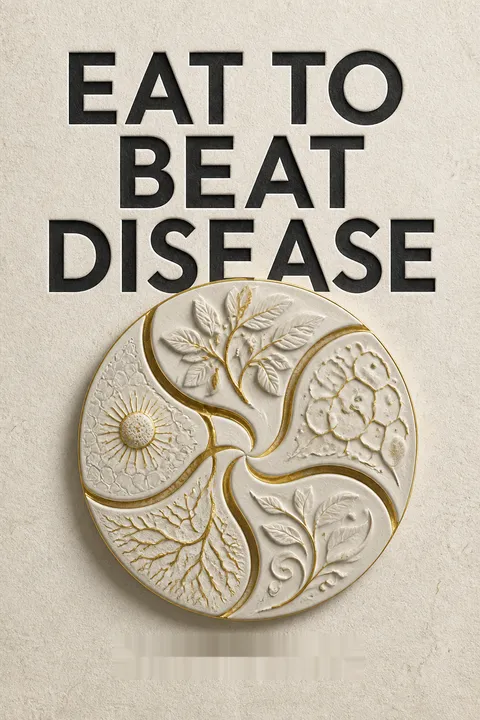


Key Takeaways
Build health by feeding the body's defenses, not just avoiding disease
Health is active work. William Li opens with a question patients repeatedly asked him: what should they eat to help themselves? As a physician, he had no useful answer. His research led him to define health not simply as the absence of a diagnosis, but as the body's ongoing ability to protect, repair, and regulate itself. He organizes that capacity into five defenses: angiogenesis, the control of blood-vessel growth; regeneration, the repair and renewal of tissue; the microbiome, the body's community of microorganisms; DNA protection, the maintenance of genetic material; and immunity, the detection and removal of threats.
A connected system. These defenses interact, and food can influence each of them. The book's proposal is not that meals cure disease, but that everyday choices may help the body's own protective systems function well. Li presents food as a partner to medical care, not a replacement for it.
The useful shift is from treating health as a status label to seeing it as a set of maintained capacities. That frame makes prevention less abstract: it asks what bodily work is being supported, rather than whether a food deserves a broad label such as healthy. The five-part map also gives readers a way to organize otherwise scattered nutrition findings. Its main risk is making complex biology sound more unified and controllable than it is. The framework is best used as a guide to questions, not as proof that a particular meal can prevent a particular disease.
Keep blood-vessel growth balanced: starve tumors, but nourish injured tissue
Vessels need regulation. Angiogenesis is the body's process for growing and maintaining blood vessels. Li describes it as a system with a crucial balancing act: too many vessels can feed diseased tissue, while too few can starve healthy organs. Tiny cancers may remain harmless when they cannot recruit a blood supply. In contrast, healing wounds and oxygen-starved tissues need new vessels. The same biological process can therefore help or harm, depending on where and when it occurs.
Food can influence both sides. The book discusses soy, tomatoes, tea, and other foods for their potential to restrain abnormal vessel growth, alongside barley and seeds that may support circulation in damaged tissue. Tomato preparation is one concrete example: cooking makes lycopene easier to absorb, and cooking it with oil can increase absorption further. The aim is balance, not simply turning vessel growth up or down.
This is the book's most memorable biological paradox: a process associated with tumor growth is also essential to wound repair and organ survival. That makes the case for thinking in terms of regulation rather than searching for a universal anti-cancer ingredient. The distinction also argues against interpreting laboratory effects as direct dietary instructions for people with cancer. A food's effect on a cell assay does not establish that eating it can control a tumor. The strongest practical lesson here is to value varied, ordinary foods while leaving disease treatment to clinical care.
Protect the body's repair crew with food, while limiting stem-cell insults
Regeneration is constant. Stem cells are unspecialized cells that can renew themselves and develop into specialized cells needed for repair. Li describes them as a small but essential workforce, with different tissues renewing at different rates. The body's stem cells can be harmed by smoking, high blood sugar, heavy alcohol use, aging, and other stresses. In people with diabetes, for example, high glucose is associated with fewer and less functional cells involved in blood-vessel repair.
Some foods show promise. A small study of sixteen people with coronary artery disease compared cocoa drinks with different flavanol levels. After thirty days, the high-flavanol group had more circulating stem cells and better blood-vessel dilation measurements. Other research discussed in the book links fish oil, turmeric, whole grains, and berries to regenerative activity. These findings are encouraging, but many studies are small, animal-based, or measure biological markers rather than lasting health outcomes.
The idea of a repair crew makes regeneration intuitive, and the emphasis on protecting that crew broadens prevention beyond calorie counts. It also makes behavior priorities clearer: food cannot be considered in isolation from exposures such as smoking or poorly controlled blood sugar. The cocoa study is a useful example of a measurable human effect, but its small size and short duration matter. More circulating cells are not automatically evidence of fewer heart attacks or longer life. Biomarkers help explain mechanisms; they do not, by themselves, prove clinical benefit.
Feed gut microbes fiber and variety, not just probiotic products
The gut is an ecosystem. The microbiome is the community of microorganisms living in and on the body. Its members use parts of food that human digestion leaves behind, especially plant fiber. They produce short-chain fatty acids, or SCFAs, which are bacterial byproducts linked in the book to gut health, inflammation, metabolism, immunity, and other defenses. Fermented foods such as yogurt, sauerkraut, and kimchi can introduce live microbes; beans, whole grains, fruits, and vegetables can feed microbes already present.
Diet can reshape the community. In a study comparing children in rural Burkina Faso with children in Florence, the African children ate more fiber and had higher levels of SCFAs and more diverse gut bacteria. The comparison cannot isolate diet from every cultural difference, but it illustrates the book's central point. A separate mouse study found that a low-fiber diet reduced some bacterial populations, and that some did not recover when the animals returned to healthier food.
The ecosystem model improves on the idea that gut health can be solved by adding one celebrated bacterial strain. Food is not merely a delivery vehicle for microbes; it also changes which organisms can thrive and what they produce. That places dietary variety and fiber at the center of the argument, while keeping supplements in perspective. Yet microbiome research is especially vulnerable to overinterpretation: a difference in bacterial composition does not prove that the difference caused a disease. The most grounded application is to favor fiber-rich whole foods, not to chase a personalized bacterial formula from an uncertain test.
Use food to support DNA repair, gene control, and chromosome protection
Genes are not the whole story. DNA is continually exposed to damage, while cellular repair mechanisms correct most errors. Diet may support this protection in three ways described by Li: helping limit damage, supporting repair, and influencing which genes are active. Epigenetic change means that environmental factors, including food, can alter gene activity without changing the underlying DNA sequence. Telomeres, protective structures at chromosome ends, are another focus because they tend to shorten with age.
Food findings vary in strength. In a small human study, eating kiwifruit was associated with less DNA damage, and eating three fruits daily was associated with a higher DNA-repair measure. Studies also link dietary patterns such as the Mediterranean diet with longer telomeres. By contrast, research associates frequent sugary drinks and processed meat with shorter telomeres. These are not licenses to ignore sun protection, smoking risks, or medical screening; food is one layer of defense.
The distinction between DNA sequence and gene activity is important. It replaces genetic fatalism with a more realistic account of how biology responds to experience, without suggesting that diet rewrites inherited code. The chapter's strongest conceptual contribution is its separation of antioxidant protection from repair after damage: preventing harm and fixing harm are not interchangeable tasks. Claims about telomeres require particular care, since a marker associated with aging is not itself a direct measure of how long an individual will live. The value lies in understanding plausible pathways, not treating a fruit as a genetic reset button.
Tune immunity to the problem; stronger is not always healthier
Defense needs a dial. The immune system has a rapid, broad response and a slower, more targeted response that can remember earlier threats. It must identify danger without attacking healthy tissue. Inflammation helps contain injury or infection, but if it persists or is misdirected, it can damage the body. Autoimmune diseases illustrate the cost of an immune response that attacks the body's own cells.
Foods may shift the response. A trial of aged garlic extract in 120 healthy adults found changes in immune-cell activity and fewer reported cold and flu symptoms. Research discussed in the book also connects green tea with reduced lupus activity, including a small human trial of green tea extract. These results do not make foods equivalent to vaccines, immunotherapy, or prescribed treatment. They do show why boosting immunity indiscriminately is the wrong goal: the aim is a well-regulated response, with medical guidance especially important for autoimmune disease or cancer.
The dial metaphor corrects a common mistake in wellness language: treating more immune activity as automatically better. The immune system protects by both attacking threats and stopping attacks when they are no longer useful. That makes restraint a form of defense, not a failure of defense. The aged-garlic and green-tea examples are promising because they connect dietary interventions with specific immune measures. Their limits are equally instructive: studies in healthy volunteers or small patient groups cannot establish that food prevents infection or replaces treatment. Regulation, not maximal activation, is the governing idea.
Choose five defense-supporting foods daily, then fit them around real life
Make the plan personal. Li's 5 × 5 × 5 framework asks readers to work five preferred, health-supporting foods into a day, choosing across the five defenses. The final five refers to eating occasions, such as meals and snacks, but the foods need not be spread evenly across them. A food that supports several defenses still counts as one of the five choices. The framework is designed to supplement, not replace, eating plans for medical needs or personal restrictions.
Add before you subtract. Readers first identify foods they actually enjoy, then select daily choices and find practical ways to eat them. The lists include familiar options such as apples, beans, tea, walnuts, and tomatoes, as well as less familiar foods. Batch cooking, keeping suitable snacks available, and checking restaurant menus against personal preferences are ways the book makes the approach workable. The aim is repeated, flexible choices rather than perfect compliance.
The framework's behavioral strength is its use of choice and repetition. A diet that fits a person's preferences and circumstances is more likely to be sustained than a rigid menu that ignores work, travel, budget, or culture. The add-first design also reduces the sense of deprivation that can make eating plans fragile. Its numerical simplicity should not be mistaken for a validated clinical prescription, however. Five is a planning prompt, not a biological threshold. Readers can use the framework as a reminder to diversify food choices while following medical and nutritional advice tailored to them.
Treat food doses as evidence-informed clues, not prescriptions or cures
Amount and context matter. A food dose is an amount associated with a health outcome in a study. Li argues that nutrition discussions should ask how much and how often, rather than stopping at whether a food is broadly considered healthy. For example, the book describes research associating about one cup of soymilk, or roughly ten grams of soy protein, per day with better outcomes among women with breast cancer. A study of cancer survivors also associated higher soy intake with lower recurrence and mortality.
Association is not a prescription. Much of the evidence comes from population studies, which can reveal useful patterns but cannot by themselves prove that a food caused the outcome. Clinical studies may be small, and laboratory findings may not translate into ordinary eating. Dose also depends on the person, the rest of the diet, and any medications or conditions. Li's own cautions are essential: avoid excessive intake, consult clinicians when ill or taking medication, and never use food instead of treatment.
Dose language can make nutrition more concrete and expose the emptiness of advice to simply eat well. It also creates a danger: a study-derived amount can sound like a clinically established treatment schedule. The distinction between a population association and a therapeutic dose is therefore central, not a technical footnote. The book is most useful when its quantities help readers make ordinary choices, such as adding soy or nuts, rather than when a percentage is interpreted as an individual's guaranteed risk reduction. Precision is valuable only when paired with precision about uncertainty.
Make preparation and repetition do the work, rather than chasing superfoods
Cooking changes the food. Food choice is only part of the book's practical argument. Preparation affects what the body can access: heating tomatoes changes lycopene into a more absorbable form, and adding oil can increase its absorption. Keeping tomato skin, eating whole fruits when practical, and using vegetables in soups, stews, or salads are simple ways to retain useful components and fiber.
Build a usable kitchen. Li favors basic equipment, fresh ingredients, home cooking, and storing food in ways that make regular meals easier. He advises avoiding charred meat and explains that high-heat grilling can create unwanted compounds; marinades may reduce their formation. The deeper point is not to find one exceptional ingredient, but to create a repeatable pattern with varied foods. Recipes, leftovers, meal planning, and enjoyable shared meals help translate information into daily practice.
This practical emphasis keeps nutrition from becoming a shopping-list contest for rare ingredients. Preparation, availability, and habit determine whether a theoretically beneficial food appears in a person's life at all. The tomato example makes the food matrix visible: the nutrient is not separate from cooking method or the rest of the meal. At the same time, kitchen advice should be ranked by evidence and risk. Avoiding heavily charred meat is a more defensible priority than treating a particular pan or reheating method as a major disease-prevention intervention. Practicality should not be confused with proof.
Analysis
The book's distinctive move is to organize nutrition around bodily functions rather than nutrients, foods to ban, or a single ideal diet. Angiogenesis, regeneration, the microbiome, DNA protection, and immunity provide a memorable map across otherwise disconnected research. That map helps explain why a food might plausibly affect several conditions, and why the same biological process can help in one tissue and harm in another. It also makes the central practical advice unusually permissive: add foods that support defense systems, select those that are enjoyable, and fit them into ordinary life.
The scientific case is strongest as a research agenda and a set of dietary hypotheses, not as a catalog of proven food treatments. The book draws on population studies, small human trials, animal experiments, and cell research. Those forms of evidence answer different questions. A compound's effect on cultured cells does not show that a serving of its source food produces the same effect in a person. An association between eating a food and lower disease rates can also reflect other features of the people or dietary pattern being studied. The dose tables are useful prompts, but their numbers should not be read as guaranteed personal risk reductions.
This distinction does not erase the book's value. It locates that value more accurately. The broad pattern it favors, varied plant foods, fiber, legumes, nuts, whole grains, and moderate reliance on minimally processed foods, is more defensible than any claim that one berry, beverage, or spice can direct a specific defense on command. Its best contribution is to make food biologically interesting without turning it into a substitute for medicine. The author's own caveats matter: people with disease or taking medication should involve their clinicians, and food supports care rather than replacing it. The lasting lesson is therefore not that a particular menu defeats disease, but that daily eating is one modifiable input into a complex system, and that promising mechanisms deserve both practical curiosity and scientific restraint.
Review Summary
Eat to Beat Disease receives mostly positive reviews for its comprehensive approach to nutrition and health. Readers appreciate the scientific research presented, though some find it repetitive or overwhelming. The book's focus on adding beneficial foods rather than restricting diets is praised. Many readers find the information valuable and life-changing, while others argue it offers little new insight. Some criticize contradictory advice or bias. Overall, reviewers commend the book's organization and practical application but debate its uniqueness in the health literature landscape.
People Also Read



Glossary
Angioprevention
Preventing disease through vessel regulationA health approach aimed at preventing disease by controlling abnormal angiogenesis, the formation of new blood vessels. In the book, it includes food, medicines, and supplements that may help restrain excessive vessel growth while preserving the vessels needed by healthy tissue. The term is presented as a preventive strategy, not a claim that diet can independently treat cancer.
Holobiont
Host plus microbial communityAn organism considered together with the many microorganisms living in and on it. The book uses the term for humans as hosts whose bacteria and other microbes contribute to a larger biological ecosystem. These microorganisms can influence digestion, immune activity, and other bodily processes, though the community includes both helpful and potentially harmful members.
Short-chain fatty acids
Microbial products of fiberCompounds produced when gut microbes break down certain dietary fibers. The book highlights acetate, propionate, and butyrate, describing associations with gut health, inflammation, glucose and lipid metabolism, immunity, angiogenesis, and stem-cell activity. These metabolites help explain how fiber can affect the body beyond its role in digestion.
Dysbiosis
Disrupted microbial balanceA disturbance in the composition or function of a microbial community, especially the gut microbiome. The book links dysbiosis with many conditions, including inflammatory bowel disease, metabolic disorders, and autoimmune illness. Such links do not necessarily establish that microbial imbalance causes each condition; disease itself and other influences may also change the microbiome.
Epigenetic change
Altered gene activityA change in how genes are used without changing the DNA sequence itself. The book describes mechanisms including DNA methylation, histone modification, and microRNA activity. Diet, sleep, stress, exercise, and environmental exposures may influence these processes, making some genes more or less active. Epigenetic effects vary according to which genes and pathways are affected.
Telomeres
Protective chromosome-end structuresStructures at the ends of chromosomes that help protect genetic material as cells divide. Telomeres tend to shorten with age, and the book discusses research associating their length with lifestyle and dietary patterns. These associations make telomeres useful in aging research, but their length alone does not determine an individual's lifespan or health.
Stem cell magnet
External stem-cell recruitment methodA method in which a treatment or technology outside the body attracts a person's own stem cells to an injured or damaged site. The book uses the term for approaches such as regenerative wound treatments that release signals to recruit stem cells from bone marrow. It is distinct from simply increasing stem cells through food.
5 × 5 × 5 framework
Five daily foods across five defensesA flexible eating plan that asks a person to select at least five preferred foods each day, with choices supporting the body's five named defense systems: angiogenesis, regeneration, the microbiome, DNA protection, and immunity. The foods can be eaten across meals and snacks in whatever pattern suits the person. It is a planning framework, not a medical diet or weight-loss prescription.
Food dose
Amount linked to an outcomeThe quantity and frequency of a food or beverage associated with a particular health outcome in research. The book uses food doses to make nutritional findings more actionable, such as specifying a study-associated amount of soy protein. These quantities are not automatically clinical prescriptions: evidence may be observational, preliminary, or specific to a studied population.
Hormesis
Benefit depends on the doseA response in which a modest amount of a stimulus may be beneficial, while larger amounts do not add benefit and may become harmful. The book applies this idea to food and biological systems, cautioning against assuming that more of a supposedly healthy food is always better. It supports varied eating and moderation rather than extreme reliance on one ingredient.
FAQ
What's Eat to Beat Disease about?
- Food as Medicine: Eat to Beat Disease by William W. Li emphasizes the role of food in preventing and treating diseases, presenting scientific evidence that supports dietary choices as a means to enhance health.
- Five Health Defense Systems: The book introduces five key systems—angiogenesis, regeneration, microbiome, DNA protection, and immunity—that are essential for maintaining health and preventing disease.
- Scientific and Practical Approach: It combines scientific research with practical dietary advice, illustrating how certain foods can influence health outcomes.
Why should I read Eat to Beat Disease?
- Empowerment through Knowledge: The book empowers readers to take control of their health by understanding how food choices can impact their well-being.
- Evidence-Based Insights: It provides a wealth of scientific research supporting the health benefits of specific foods, making it a credible resource for nutrition and wellness.
- Holistic Health View: By focusing on the interplay between various health defense systems, the book offers a comprehensive view of health that goes beyond just diet.
What are the key takeaways of Eat to Beat Disease?
- Food Influences Health: Dietary choices can significantly impact health outcomes, particularly in preventing chronic diseases.
- Five Health Defense Systems: Understanding and supporting these systems—angiogenesis, regeneration, microbiome, DNA protection, and immunity—are crucial for maintaining health.
- Empowerment through Diet: Readers are encouraged to view food as a powerful tool for health, capable of enhancing the body’s natural defenses.
What is the 5 × 5 × 5 framework in Eat to Beat Disease?
- Daily Food Goals: The framework encourages eating at least five different health-promoting foods each day to ensure a variety of nutrients and bioactive compounds.
- Defense System Coverage: Each of the five foods should touch on one of the five health defense systems, creating a balanced diet that supports overall health.
- Flexibility and Adaptability: It is designed to be flexible, allowing individuals to adapt it to their lifestyles and preferences, making healthy eating enjoyable and sustainable.
How does Eat to Beat Disease define health defense systems?
- Five Key Systems: The book identifies angiogenesis, regeneration, microbiome, immunity, and DNA protection as crucial systems for maintaining health and preventing disease.
- Interconnectedness: These systems are interconnected, meaning that improving one can positively affect the others, such as a healthy microbiome enhancing immune function.
- Food Activation: Specific foods are linked to the activation of these systems, providing a roadmap for readers to enhance their health through diet.
What foods are recommended for enhancing angiogenesis in Eat to Beat Disease?
- Soy Products: Foods like tofu and edamame contain genistein, which can inhibit tumor growth by affecting blood vessel formation.
- Tomatoes: Rich in lycopene, tomatoes can enhance angiogenesis and are linked to a reduced risk of prostate cancer.
- Berries: Black raspberries and blueberries are highlighted for their high levels of antioxidants and antiangiogenic properties.
How can I use food to support my immune system according to Eat to Beat Disease?
- Antioxidant-Rich Foods: Foods like berries, nuts, and green tea can help reduce inflammation and support immune function.
- Fermented Foods: Probiotic-rich foods such as yogurt and kimchi can enhance gut health, which is closely linked to immune function.
- Balanced Diet: A balanced diet, including a variety of nutrients, is essential for maintaining a robust immune system.
What role does the microbiome play in health as described in Eat to Beat Disease?
- Gut Health Connection: The microbiome consists of trillions of bacteria that aid in digestion, influence immunity, and can affect mood and behavior.
- Dietary Influence: Foods high in fiber and fermented products can promote a healthy microbiome, supporting overall health.
- Dysbiosis Consequences: An imbalance in gut bacteria is linked to various diseases, including obesity, diabetes, and autoimmune conditions.
What are some foods that can help protect DNA according to Eat to Beat Disease?
- Antioxidant-Rich Foods: Berries, dark chocolate, and green tea contain antioxidants that help protect DNA from damage.
- Cruciferous Vegetables: Broccoli and kale enhance DNA repair mechanisms and protect against mutations.
- Healthy Fats: Omega-3 fatty acids found in fish and flaxseeds support DNA health by reducing inflammation and oxidative stress.
How does Eat to Beat Disease suggest we improve our immune system?
- Immune-Boosting Foods: Foods like mushrooms, aged garlic, and broccoli sprouts enhance immune function by stimulating immune cell production.
- Anti-Inflammatory Foods: Consuming foods like extra virgin olive oil and fatty fish helps maintain a balanced immune system.
- Healthy Gut: Emphasizing prebiotic and probiotic foods supports a healthy gut microbiome, crucial for immune function.
What are some dietary patterns that can calm autoimmune diseases according to Eat to Beat Disease?
- Raw Vegan Living Diet: Emphasizes raw, unprocessed plant foods, reducing inflammation and supporting gut health.
- High-Vegetable/Low-Protein Diet: Associated with reduced relapse rates in multiple sclerosis patients by lowering inflammation.
- Autoimmune Protocol Diet: Focuses on nutrient-dense, anti-inflammatory foods, leading to improvements in symptoms for inflammatory bowel disease.
What are the best quotes from Eat to Beat Disease and what do they mean?
- "Your stem cells are always at work.": Highlights the continuous role of stem cells in maintaining health and repairing tissues.
- "Eating to beat disease is a whole new way to think about choosing which foods and beverages to consume every day.": Encourages viewing food as a powerful tool for disease prevention.
- "Let the good displace the bad.": Suggests focusing on incorporating healthy foods to naturally reduce less healthy options, promoting a positive dietary approach.
About the Author
Other books by William W. Li
Download PDF
Download EPUB
.epub digital book format is ideal for reading ebooks on phones, tablets, and e-readers.








