

Key Takeaways
Read ketones as mitochondrial signals, not as miraculous fuel
The familiar story shifts. The standard account says that severe carbohydrate restriction makes the liver produce ketones, which then replace glucose as a superior fuel. Gundry argues that ketones can serve as fuel in some circumstances, but their more important role is signaling. In his model, they tell mitochondria, the structures that turn food into usable cellular energy, to change how they operate.
The proposed message matters. Mitochondria usually use a proton gradient to produce ATP, the cell’s energy currency. Gundry says ketones can prompt them to let some of that gradient dissipate instead, producing less ATP and more heat. This process is called mitochondrial uncoupling. His core claim is that keto’s benefits come less from running on ketones than from the cellular response they trigger.
What's striking is the move from fuel to signaling: biology often uses molecules both as materials and as messages, so the categories need not be mutually exclusive. Ketones can contribute to energy metabolism while also affecting cellular processes. That makes the book's central reframing useful, but its sharp contrast risks oversimplifying a context-dependent system. A signaling pathway does not, by itself, establish that a diet reliably causes weight loss or extends life. The strongest reading is therefore a new hypothesis about mechanism, not a settled replacement for every account of ketosis.
Keep uncoupling modest; DNP shows how calorie wasting can turn lethal
Wasting energy has a cost. Uncoupling means mitochondria release some energy as heat rather than capturing it all as ATP. Gundry describes this as a way to ease pressure on mitochondria and limit damage associated with energy production. He cites an estimate that healthy mitochondria may waste about 30 percent of incoming fuel, though that figure should not be treated as a personal target.
DNP is the warning. In the 1930s, the compound 2,4-dinitrophenol was sold as a weight-loss drug after workers exposed to it became thin despite eating heavily. It could produce rapid weight loss, but also dangerous overheating, cataracts, and deaths. The book's lesson is that uncoupling must be balanced with the body's ability to maintain energy production, including by making more mitochondria. DNP was banned as a weight-loss treatment.
The DNP episode gives an abstract cellular process a memorable human consequence: more energy expenditure is not automatically healthier. This resembles the broader biological idea of hormesis, in which a limited stress can trigger adaptation while a larger dose overwhelms repair. The analogy is valuable because it resists the simplistic equation of calorie burning with benefit. At the same time, the book's list of foods and lifestyle practices should not be mistaken for controlled, dose-calibrated versions of a drug. Natural origin does not guarantee safety, and a proposed shared mechanism does not make interventions interchangeable.
Treat failed keto as a metabolic puzzle, not a character flaw
Two patients, opposite results. Janet, a patient Gundry describes as prediabetic, lost 15 pounds in three months on his initial high-fat plan. Over the next six months she lost another 20 pounds, and her HbA1c, a measure of average blood sugar, reached 4.9. Miranda followed a conventional keto diet closely but gained more than 15 pounds over a year and had high fasting insulin and prediabetic blood sugar.
The book's explanation is metabolic. Gundry says insulin resistance can interfere with the body's ability to release stored fat, so cutting carbohydrates alone may not produce the expected shift toward fat use. He also cites research comparing identical twins with different body weights: their mitochondria showed different activity despite shared genes. These stories challenge the idea that dietary failure automatically means weak willpower.
The contrast between Janet and Miranda is an effective antidote to moralizing about body weight. Metabolism, medication, sleep, stress, food access, and many other factors can shape a person's response to a diet. The twin comparison also illustrates why shared genes do not guarantee identical outcomes. Still, individual patient stories cannot identify which part of a multicomponent intervention caused a change. Janet's results are compelling as a case narrative, not proof that the proposed mitochondrial mechanism explains her weight loss or will generalize to other people.
Feed gut microbes fiber and colorful plants to support metabolic signaling
Microbes make messages. The book describes gut microbes as partners that transform some dietary fiber and plant compounds into postbiotics, meaning products of microbial activity that can affect the body's cells. Examples include short-chain fatty acids such as butyrate and acetate. Gundry argues that these compounds help signal mitochondria and support the gut lining.
The food pattern follows. Fiber-rich vegetables, nuts, seeds, and other plant foods supply material for microbial fermentation. Fermented foods such as sauerkraut, miso, and vinegar can provide fermentation products directly. The book also highlights polyphenols, plant compounds common in colorful produce, tea, coffee, cocoa, herbs, and spices. Its larger point is that severe carbohydrate restriction can remove useful plant foods along with refined starches and sweets, even though those foods are not metabolically equivalent.
This section connects nutrition to ecology inside the body: food feeds both the person and the organisms living in the gut, and their metabolites can influence host biology. That framework helps explain why dietary variety may matter beyond simple calorie totals. However, the effects of fiber and fermented foods depend on the person, the food, and the microbial community; one food does not guarantee a particular metabolite or health outcome. The distinction between whole plants and refined carbohydrates is more useful than treating all carbohydrates as one category, but the book's strong claims about specific plant compounds need evidence beyond a plausible pathway.
Test a 6-8-hour weekday eating window before counting calories
Timing is the central lever. Gundry argues that a long break from food allows insulin to fall and gives the liver more opportunity to make ketones. He emphasizes eating windows rather than calorie counting. In a mouse study led by Rafael de Cabo, mice limited to a shorter daily feeding period showed better metabolic flexibility than mice with continuous access to food. Some time-restricted groups lived 11 percent longer than all-day eaters, but that was an animal finding, not a human longevity result.
The proposed transition is gradual. The book's five-week schedule delays breakfast by about an hour each week, moving from an 8 a.m. start to noon and a roughly 7-hour eating window. It suggests keeping the weekday schedule while allowing more flexibility on weekends. Gundry also advises leaving several hours between the last meal and bedtime.
The mouse comparison usefully separates meal timing from food composition, while the human athletes cited in the book offer a reason to study time-restricted eating in people. Neither result proves that a narrow window is best for everyone or that it adds years to human life. Eating schedules also interact with work, caregiving, sleep, exercise, and medical needs. The practical strength here is gradual experimentation rather than abrupt restriction. People with conditions or medications affected by food timing should get individualized clinical guidance rather than treating a book schedule as a universal rule.
Use MCTs for ketones, not mountains of long-chain fat
Different fats behave differently. Gundry distinguishes medium-chain triglycerides, or MCTs, from the longer-chain fats common in meat, butter, and many oils. He says MCTs are absorbed and delivered to the liver relatively quickly, where they can be converted into ketones even when a person is eating carbohydrates. Goat's and sheep's dairy products are presented as food sources, with MCT oil as a supplemental option.
The practical contrast is with strict keto. Traditional keto often asks people to get most calories from fat. Gundry's alternative uses modest MCT intake, a period without food, and plant foods to generate signals without maintaining constant ketosis. He cites small studies in which MCT intake was associated with greater heat production or weight loss than comparison oils. Those findings do not show that all long-chain fats are harmful or that MCT oil guarantees weight loss.
The useful insight is that dietary fat is not one uniform substance. Chain length affects digestion and metabolism, and replacing a large amount of food with oil is not equivalent to adding a small amount within a balanced diet. The book's MCT emphasis can help readers question the assumption that keto requires unlimited fat. Yet claims about a fat's uncoupling effect should not be used to rank entire diets by a single mechanism. Long-term health depends on the full dietary pattern, and a few small studies cannot settle that comparison.
Build meals around plants, fermentation, and measured MCTs
The program has three pillars. Gundry recommends MCT-containing foods or oil, a shortened daily eating window, and plenty of fiber-rich and fermented foods. He encourages vegetables, herbs, spices, nuts, seeds, and selected dairy or seafood, while discouraging refined sugar and highly processed foods. His broader list of possible mitochondrial signals also includes polyamines in some aged cheeses and mushrooms, and responses to cold, heat, and red or near-infrared light.
Some rules are especially restrictive. The plan also advises avoiding many foods Gundry classifies as lectin-rich, including certain grains, legumes, and vegetables, though it allows some after pressure cooking. Readers can understand the program's logic without adopting every exclusion: it aims to combine a daily pause from food with nutrient-dense plant foods and sources of ketones, rather than chasing a particular fat percentage.
The plan's most durable practical idea is its combination of less grazing, less ultra-processed food, and more fiber-rich plants. That is more flexible than a menu built around bacon, cream, and strict carbohydrate limits. The broader collection of proposed signals, from cold exposure to red light, is intriguing but unevenly supported as a route to meaningful health outcomes. The lectin exclusions deserve particular caution: the book presents them as a major cause of illness, yet the reader should not assume that every excluded food is harmful or that pressure cooking makes every food safe for every person.
Separate promising mechanisms from proven treatments for cancer and aging
The claims grow ambitious. Gundry extends his mitochondrial model to longevity, brain health, heart disease, and cancer. He argues that uncoupling may protect mitochondria, encourage their replacement, and help damaged cells function normally. He also recounts his elderly dog Pearl's improvement after he gave her supplements, including melatonin, following a bladder cancer diagnosis. The account is an anecdote, not evidence that the same approach treats cancer in people.
Mechanism is not outcome. The book discusses laboratory findings, animal research, observational studies, patient experiences, and clinical interventions, sometimes in close succession. Those forms of evidence answer different questions. A compound's effect on cells does not establish that a diet prevents cancer, reverses dementia, or extends human lifespan. The book itself advises using health information to supplement, not replace, professional medical care.
The book's strongest intellectual move is to make mitochondrial biology a lens for interpreting familiar nutrition advice. Its greatest vulnerability is allowing a coherent mechanism to carry more certainty than the clinical evidence can bear. In medicine, promising cellular effects are the beginning of a research question, not the end of it. Cancer and neurodegenerative disease require proven, coordinated care, and anecdotes can inspire hypotheses but cannot verify treatment efficacy. Readers can explore food and meal timing as health choices while keeping supplements and disease-treatment claims under qualified medical supervision.
Analysis
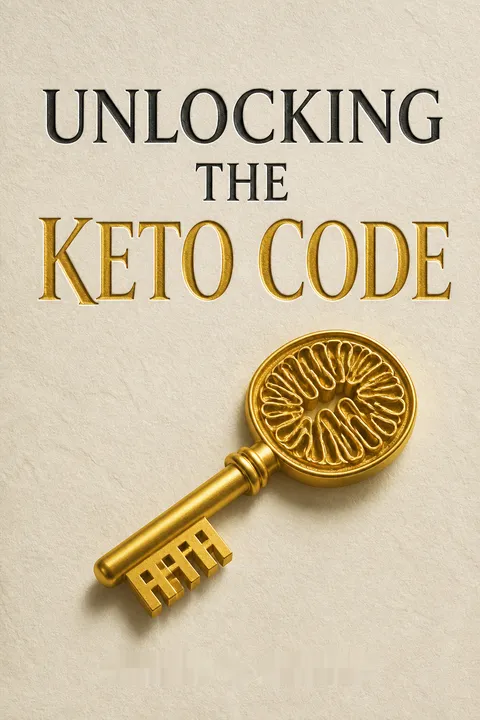
Unlocking the Keto Code is a health argument built around a reversal. It begins with two patients whose responses to conventional keto seem to make no sense: Janet loses weight and improves her blood markers, while Miranda gains weight despite following the rules. Gundry uses that contrast to question the premise that ketosis works by making the body an exceptionally efficient fat burner. He instead proposes that ketones signal mitochondria to uncouple, dissipating some energy as heat and prompting cellular protection and replacement.
That reframing gives the book a memorable explanatory center. It also lets Gundry connect foods, fasting, gut microbes, polyphenols, fermentation, and temperature to one cellular process. Its practical message is broader than keto: avoid constant grazing, favor minimally processed foods, include fiber-rich plants and fermented foods, and do not assume that all fats or carbohydrates act alike. The book's phased eating schedule and flexible food pattern are easier to imagine sustaining than a diet requiring nearly all calories from fat.
The central limitation is the distance between mechanism and medical promise. Mitochondrial uncoupling is a real biological process, but the book's account of its role in weight loss, aging, and disease prevention is a particular interpretation. Results from cells, animals, small human studies, clinical experience, and anecdotes do not provide equal levels of evidence. The book often moves among them quickly, which can make a hypothesis feel more established than it is. Its claims about lectins, supplements, cancer, and longevity especially call for careful scrutiny rather than automatic adoption.
The most valuable way to read the book is as a provocative model for asking better questions about metabolism, not as a settled medical protocol. Its lasting contribution is the reminder that diet can affect more than calories and macros. Its claims should still be tested against robust clinical outcomes, individual circumstances, and guidance from qualified health professionals.
Review Summary
Unlocking the Keto Code receives mixed reviews. Some readers find it informative and appreciate the new perspective on ketones as mitochondrial uncouplers. They value the scientific explanations and practical advice on diet and lifestyle. However, others criticize the book for lacking new information, relying on anecdotal evidence, and having a misleading title. The author's writing style is divisive, with some enjoying it and others finding it annoying. Overall, readers appreciate the focus on health benefits beyond strict ketosis but note the plan may be challenging to follow.
People Also Read








Glossary
Mitochondrial uncoupling
Energy released as heatA process in which the proton gradient across a mitochondrion's inner membrane is not used entirely to make ATP. Some of its energy is released as heat instead. Gundry presents uncoupling as a way to reduce strain on mitochondria and use more incoming fuel without capturing all of it as cellular energy.
Mitogenesis
Formation of new mitochondriaThe production of additional mitochondria within a cell. Gundry argues that signals associated with ketones and uncoupling can encourage this process, helping cells increase their energy-producing capacity. In the book's account, making more mitochondria can compensate for some energy dissipated during uncoupling.
Postbiotics
Microbial products with effectsSubstances produced by gut microbes as they process food, including short-chain fatty acids such as acetate and butyrate. The book treats them as messages that can influence the gut lining, immune activity, and mitochondria. They differ from probiotics, which are living microorganisms, and prebiotics, which are substrates microbes can use.
Fab Four
Four proposed mitochondrial signalsGundry's label for ketones, butyrate, other short-chain fatty acids and postbiotics, and polyphenols. He groups them because he argues that each can encourage mitochondrial uncoupling and cellular protection. The term is the book's organizing shorthand, not a clinical scoring system or a standardized scientific classification.
keto-consumption
Timed eating to prompt ketonesGundry's eating approach that combines a limited daily eating window with foods he considers supportive of ketone production and mitochondrial function. Its introductory schedule gradually delays the first meal across five weeks, aiming for a 6- to 8-hour window on weekdays while allowing more flexibility on weekends.
chrono-consumption
Eating within a timed windowGundry's term for planning when food is eaten, rather than focusing only on what or how much is eaten. In this book it serves as the earlier version of the timed-eating approach refined into keto-consumption, with an emphasis on leaving a substantial period without calories.
metabolic flexibility
Switching between fuel sourcesThe ability to shift between using glucose and fatty acids for energy as food availability changes. Gundry argues that continuous eating and insulin resistance can make this shift harder, while a daily fasting interval may help restore it. The term describes fuel use, not a guarantee of weight loss.
Goldilocks Rule
Keep the stressor in balanceGundry's name for the idea that a biological stressor can be beneficial at a moderate level but harmful when excessive. Applied to uncoupling, the rule means that dissipating some energy may protect mitochondria, while extreme uncoupling can deprive cells of needed ATP. The book uses the rule to distinguish regulated adaptation from dangerous overexposure.
Daily Fasting Improves Health and Survival in Male Mice Independent of Diet Composition and Calories
Mouse study of eating schedulesThe study by Rafael de Cabo and colleagues discussed in the book compared mice with continuous food access, calorie restriction, and time-limited access to food. Gundry highlights findings that time-restricted groups showed metabolic benefits and lived longer than all-day eaters. These were results in mice, not proof that the same lifespan effect occurs in humans.
Seven Countries Study
Observational diet and heart studyA long-running comparison of diet and cardiovascular outcomes across selected countries, cited in the book for its association between saturated-fat intake and coronary heart disease deaths. Gundry uses it to emphasize that correlation does not establish causation and argues that other dietary and lifestyle differences also matter. The study's conclusions and interpretation remain a subject of debate.
FAQ
What's "Unlocking the Keto Code" about?
- Overview: "Unlocking the Keto Code" by Steven R. Gundry explores a new understanding of the ketogenic diet, focusing on how ketones function as signaling molecules rather than a super fuel.
- Misconceptions: The book challenges traditional beliefs about ketosis, suggesting that ketones are not the miraculous fuel source they were once thought to be.
- Mitochondrial Health: It emphasizes the role of mitochondrial uncoupling in weight loss and health, proposing that this process is key to the benefits of a keto diet.
- Dietary Approach: Gundry introduces a more flexible dietary program that allows for the benefits of keto without the need for high-fat consumption.
Why should I read "Unlocking the Keto Code"?
- New Insights: The book provides a fresh perspective on the ketogenic diet, debunking myths and offering a science-backed approach to health and weight loss.
- Health Benefits: It offers strategies to improve mitochondrial health, which is linked to longevity, energy levels, and disease prevention.
- Practical Advice: Gundry provides actionable steps and recipes to incorporate the principles of mitochondrial uncoupling into daily life.
- Comprehensive Understanding: Readers gain a deeper understanding of how diet affects cellular processes and overall well-being.
What are the key takeaways of "Unlocking the Keto Code"?
- Ketones as Signalers: Ketones are not a super fuel but act as signaling molecules that promote mitochondrial uncoupling.
- Mitochondrial Uncoupling: This process is crucial for weight loss, energy efficiency, and preventing cellular damage.
- Flexible Dieting: The book advocates for a diet that includes a variety of foods, not just high-fat options, to achieve the benefits of ketosis.
- Time-Restricted Eating: Incorporating time-controlled eating can enhance ketone production and mitochondrial health.
How does Steven R. Gundry redefine ketosis in "Unlocking the Keto Code"?
- Signaling Role: Gundry explains that ketones primarily serve as signaling molecules that instruct mitochondria to uncouple, rather than acting as a primary energy source.
- Mitochondrial Focus: The emphasis is on protecting and repairing mitochondria to improve metabolic health and longevity.
- Dietary Flexibility: The book suggests that you don't need to consume a high-fat diet to achieve ketosis; instead, focus on foods that promote mitochondrial health.
- Scientific Backing: Gundry supports his claims with research and case studies, providing a credible alternative to traditional keto theories.
What is mitochondrial uncoupling, according to "Unlocking the Keto Code"?
- Definition: Mitochondrial uncoupling is a process where mitochondria waste energy by producing heat instead of ATP, which can lead to weight loss and improved health.
- Protective Mechanism: This process helps protect mitochondria from damage by reducing the production of harmful reactive oxygen species (ROS).
- Health Benefits: Uncoupling is linked to increased longevity, better metabolic health, and reduced risk of chronic diseases.
- Dietary Influence: Certain foods and practices, such as consuming polyphenols and practicing time-restricted eating, can promote mitochondrial uncoupling.
How does "Unlocking the Keto Code" suggest improving mitochondrial health?
- Dietary Changes: Incorporate foods rich in polyphenols, MCTs, and fermented products to support mitochondrial function.
- Time-Restricted Eating: Implementing a time-controlled eating schedule can enhance ketone production and mitochondrial efficiency.
- Avoiding Harmful Substances: Limit exposure to environmental toxins and certain medications that can impair mitochondrial function.
- Supplementation: Consider supplements like vitamin D3, omega-3s, and CoQ10 to support mitochondrial health.
What role do polyphenols play in "Unlocking the Keto Code"?
- Mitochondrial Uncouplers: Polyphenols are compounds that can promote mitochondrial uncoupling, leading to improved metabolic health.
- Sources: They are found in a variety of plant-based foods, including berries, tea, and dark chocolate.
- Health Benefits: Polyphenols are linked to reduced inflammation, improved cardiovascular health, and enhanced brain function.
- Dietary Integration: Gundry emphasizes the importance of including polyphenol-rich foods in the diet to support overall health.
How does "Unlocking the Keto Code" address weight loss?
- Mitochondrial Efficiency: The book suggests that weight loss is more about making mitochondria inefficient at energy production, leading to calorie wastage.
- Dietary Flexibility: Unlike traditional keto diets, Gundry's approach allows for a wider variety of foods, reducing dietary monotony.
- Time-Restricted Eating: This practice is highlighted as a key strategy for promoting weight loss by enhancing ketone production.
- Case Studies: Gundry includes real-life examples of patients who achieved weight loss through his methods, providing practical evidence of effectiveness.
What are the best quotes from "Unlocking the Keto Code" and what do they mean?
- "Ketones are not a super fuel but a super signal." This quote encapsulates the book's central thesis that ketones primarily function as signaling molecules for mitochondrial health.
- "Uncoupling is the key to unlocking the keto code." It highlights the importance of mitochondrial uncoupling in achieving the benefits traditionally associated with ketosis.
- "You don't need to eat a high-fat diet to reap the benefits of keto." This challenges the conventional wisdom of keto diets, advocating for a more balanced approach.
- "Mitochondria are the powerhouses of health and longevity." Emphasizes the critical role of mitochondria in overall well-being and the focus of the book on enhancing their function.
How does "Unlocking the Keto Code" redefine the role of fats in the diet?
- Selective Consumption: Gundry advises consuming specific types of fats, such as MCTs and omega-3s, that support mitochondrial health.
- Avoiding Excess: The book warns against the indiscriminate consumption of all fats, which can lead to health issues.
- Focus on Quality: Emphasizes the importance of choosing high-quality, nutrient-dense fats over processed or trans fats.
- Balanced Approach: Encourages a diet that includes a variety of foods, not just high-fat options, to achieve optimal health.
What is the significance of time-restricted eating in "Unlocking the Keto Code"?
- Enhances Ketone Production: Time-restricted eating helps the body enter a state of ketosis more efficiently by extending the fasting period.
- Supports Mitochondrial Health: It allows mitochondria to rest and repair, improving their function and promoting uncoupling.
- Flexible Implementation: Gundry provides a gradual approach to adopting time-restricted eating, making it accessible for most people.
- Health Benefits: Linked to improved metabolic flexibility, weight loss, and reduced risk of chronic diseases.
How does "Unlocking the Keto Code" suggest managing hunger during time-restricted eating?
- MCT Oil: Consuming MCT oil can help manage hunger by promoting ketone production without breaking the fast.
- Prebiotic Fiber: Increasing intake of prebiotic fiber can help satiate hunger by feeding gut bacteria and promoting postbiotic production.
- Vinegar: Adding vinegar to water can help curb hunger pangs and support mitochondrial uncoupling.
- Gradual Adjustment: Gundry recommends slowly adjusting the eating window to allow the body to adapt to the new schedule.
About the Author
Other books by Steven R. Gundry




Download PDF
Download EPUB
.epub digital book format is ideal for reading ebooks on phones, tablets, and e-readers.








