

Key Takeaways
Treat weight gain as a biological signal, not a character verdict
Look beyond the tally. Fung argues that “eating more than you burn” describes the immediate arithmetic of weight gain, but does not explain why the body stores more energy as fat, drives hunger, or reduces energy use. He calls this the difference between a proximate cause and an ultimate cause. “Eat less, move more” addresses the first; it does not identify what set the process in motion.
Policy changed the menu. Fung traces the rise of calorie counting and low-fat advice, culminating in the 1977 U.S. dietary goals that urged people to eat less fat and more carbohydrates. Refined grains and added sugars rose as fat intake fell. Obesity also climbed, though timing alone cannot prove that the guidelines caused the increase. The point is to investigate food, biology, and context rather than assume weak character.
The distinction between an accounting description and a causal explanation is useful well beyond nutrition. A fever is measurable, but knowing the temperature does not reveal the infection; likewise, calorie balance alone does not explain why appetite and energy use change. The historical sequence makes a strong case for questioning policy that outruns evidence. Yet the chronology is not a controlled experiment: many social and food-system changes happened together. The book is most persuasive when it invites better causal questions, and less persuasive when correlation is treated as a verdict.
Expect the body to defend weight loss by increasing hunger and conserving energy
Restriction triggers countermeasures. Fung challenges the assumption that calorie intake and expenditure operate independently. In the 1940s Minnesota Starvation Experiment, 36 healthy men ate a sharply restricted, carbohydrate-heavy diet for six months. Their resting metabolism fell, physical capacity declined, and food became a constant preoccupation. They lost less weight than simple calorie arithmetic predicted, then regained weight during recovery.
The response can persist. Fung also cites a study in which people who had lost weight still expended nearly 500 fewer calories per day after a year. Other research he discusses found increased hunger signals and weaker satiety signals after weight loss. His conclusion is not that energy balance disappears, but that the body alters both sides of the equation. Repeatedly tightening restriction can therefore intensify hunger and fatigue rather than solve the underlying problem.
This account gives dieters a less moralizing explanation for regain: maintaining a lower weight can require living against persistent biological signals. It also clarifies why short trials may overstate a diet’s success. The Minnesota study is vivid evidence of the costs of severe restriction, but its semi-starvation conditions are not identical to every moderate weight-loss plan. The broader lesson is not that all calorie reduction is futile. It is that adherence, hunger, metabolic adaptation, and long-term maintenance belong in the outcome measure, not in the footnotes.
Use insulin as Fung’s organizing model, not as a complete verdict on obesity
A storage signal matters. Insulin helps move glucose into cells and encourages the body to store energy. After a meal, some glucose is stored as glycogen; when those stores are full, the liver can convert excess carbohydrate into fat. Fung argues that persistently high insulin can favor fat storage and raise the body’s defended weight, making hunger and lower energy expenditure consequences as well as contributors.
Resistance compounds the signal. Insulin resistance means cells respond less effectively to insulin, so the body produces more to get a similar effect. Fung points to insulin treatment studies in diabetes, where higher doses were associated with greater weight gain, as evidence that insulin can influence weight. He uses “body set weight” for the level of fatness the body attempts to defend through appetite and energy expenditure. This model makes insulin central, but not solitary.
The model’s strength is that it connects appetite, storage, and energy expenditure rather than treating them as unrelated choices. The distinction between insulin’s effects on blood glucose and its broader role in metabolism is also useful. But medication evidence does not settle how much ordinary dietary insulin variation causes long-term weight gain: treatment, disease, and dose complicate the inference. The book’s own multifactorial framing is therefore essential. Insulin is a proposed organizing mechanism, not a single switch that explains every person’s weight.
Give insulin time to fall by ending constant snacking
Timing joins food choice. Fung argues that insulin levels rise with eating and fall when food is absent. In his account, repeatedly eating throughout the day can leave too little time at low insulin levels, reinforcing insulin resistance. He contrasts the traditional pattern of three meals without snacks with surveys showing more daily eating occasions by the early 2000s. Those observations suggest a possible connection, but do not by themselves prove that snacking caused the obesity epidemic.
Fasting creates a pause. The book presents intermittent fasting as a way to create longer periods without food, distinct from continuous calorie restriction. During a fast, the body uses stored glycogen, then increasingly relies on fat and ketones. Fung recommends starting with shorter fasts and fitting them to daily life. He also explicitly warns that people with diabetes who use glucose-lowering medication need close medical supervision because blood sugar can fall dangerously.
Meal timing is a practical dimension that food-focused advice can overlook. A schedule with fewer eating occasions may also reduce exposure to highly processed snack foods, so timing and food quality can reinforce each other. Still, the book’s comparison between past and present eating patterns risks treating a social trend as a cause without isolating other changes. Fasting is not a universal prescription, and its risks depend on health status and medication. The valuable question is whether a person’s eating pattern supports sustainable health, not whether every reader should adopt the same fasting window.
Cut added sugar first, especially sweet drinks and fructose-heavy products
Sugar acts through more than sweetness. Table sugar contains glucose and fructose. Fung explains that glucose raises blood sugar and prompts insulin release, while fructose is processed mainly in the liver. He argues that high fructose intake can promote fat accumulation in the liver and contribute to insulin resistance, which may then push insulin levels higher. Sweet drinks are a particular concern because they deliver concentrated sugar with little of the bulk found in whole foods.
The comparison is not all carbohydrates. Fung uses populations eating substantial amounts of rice or other unrefined starch with low obesity rates to argue that total carbohydrate intake cannot explain every case. In his account, low sugar intake and minimally processed foods help resolve the apparent contradiction. His practical advice is to reduce added sugars, especially in drinks and packaged foods, rather than treating fruit and every carbohydrate as equivalent.
The distinction between a whole fruit and a sweetened drink captures an important feature of food: form changes how quickly and easily large amounts can be consumed. The liver-centered account also offers a coherent reason to scrutinize high-sugar diets beyond their calorie content. At the same time, the book’s strong causal language goes beyond what population comparisons alone can establish, and fructose is not interchangeable with every food that contains it. The most defensible takeaway within this chapter is narrow and actionable: reduce concentrated added sugar, especially in beverages.
Choose minimally processed foods instead of declaring all carbs or fats guilty
Processing changes the package. Fung distinguishes refined flour and sugar from intact plant foods. Milling and processing remove fiber and make starch easier to absorb; this can produce a faster blood-glucose and insulin response. Fiber can slow digestion, increase bulk, and reduce the glucose and insulin rise from a meal. He calls it protective because it can moderate carbohydrate absorption, not because it erases every dietary effect.
Macronutrients are not interchangeable. Protein can also stimulate insulin, and some dairy proteins do so strongly, while protein may increase fullness. Dietary fat generally produces a smaller insulin response, and the book challenges the idea that fat is inherently fattening. Fung’s practical pattern is to limit added sugar and refined grains, keep protein moderate, favor natural fats, and eat fiber-rich whole foods. His argument is about food quality and balance, not a license to eat unlimited amounts of any one food.
This approach resists the common mistake of turning a nutrient into a moral category. A bean, a white-flour pastry, and a sweet drink may all contain carbohydrate, yet differ in fiber, structure, and ease of consumption. That is a more useful starting point than macronutrient labels alone. The book is also right to note that protein is not metabolically inert. However, its broad defense of dietary fat should not be read as a claim that every fat source or eating pattern has identical effects. Food-level distinctions matter.
Address sleep and chronic stress when food changes are not enough
Stress has a metabolic pathway. Cortisol helps mobilize energy during short-term threats. Fung argues that prolonged stress without physical exertion can keep glucose and insulin elevated, and that sustained cortisol exposure is associated with weight gain, especially around the abdomen. He cites conditions involving excess cortisol, such as Cushing’s syndrome, and the weight gain associated with prednisone treatment as examples of a hormonal pathway that cannot be reduced to food intake alone.
Sleep is part of the picture. The book links short sleep with higher cortisol, altered hunger signals, and reduced insulin sensitivity. Fung recommends practical ways to lower stress and improve sleep, including meditation, social connection, regular sleep hours, and a dark, cool bedroom. These approaches are presented as complements to dietary changes, not substitutes for medical care or a guarantee of weight loss.
Including stress and sleep broadens the model beyond the grocery cart. It recognizes that physiology responds to work, relationships, and recovery, not just meals. This also makes the framework less blame-centered: a person’s capacity to change eating habits may be shaped by conditions outside the kitchen. Yet the presence of a plausible hormonal pathway does not show that stress reduction alone produces substantial weight loss. These practices are valuable for well-being in their own right, while their weight effects may vary and should not be oversold.
Change the food environment instead of blaming families for predictable choices
Prices shape diets. Fung connects poverty and obesity to the affordability of processed food. He notes that U.S. farm subsidies favored crops such as corn and wheat, which can become inexpensive ingredients in refined products, while many fresh foods received less support. The book also describes how traditional diets among the Pima changed as refined flour and sugar became more available. These examples support an environmental explanation, though they do not establish that subsidies alone caused obesity.
One-size programs missed the target. Several school interventions emphasized lower fat, fewer calories, and more activity without reducing obesity. Fung contrasts them with programs focused more specifically on sweet drinks and energy-dense snacks, which reported better results in young children. He argues that interventions need clear targets rather than a jumble of general health advice. The wider lesson is to make nourishing choices affordable and accessible, rather than treating weight as proof of individual failure.
The food environment links personal behavior to public policy without reducing either to a conspiracy. Subsidies, prices, school offerings, and marketing can shape which options are easy to obtain. This perspective is valuable because advice is less useful when the recommended foods are costly or inconvenient. Still, the book sometimes moves quickly from a policy pattern to a causal explanation. Childhood programs differ in design, setting, and participants, so their outcomes cannot be attributed to one dietary change with certainty. Better policy requires testing which changes help, for whom, and under what conditions.
Build a sustainable plan around food quality, eating rhythm, and medical safety
Combine levers, do not chase a magic diet. Fung argues that many diets can produce early weight loss because each changes something about food intake and insulin, but long-term regain is common. His proposed approach combines several levers: reduce added sugar and refined grains, moderate protein, choose natural fats and fiber-rich foods, and avoid constant snacking. If appropriate, intermittent fasting adds periods without food. The emphasis is on a pattern that can be maintained, rather than a branded diet or a calorie target alone.
Personalize the intervention. The book identifies different possible drivers, including sugar intake, insulin resistance, stress, sleep, and meal timing. It therefore argues against assuming one solution fits everyone. Fasting requires particular caution for people with diabetes or medications that affect blood sugar or blood pressure. Clinical advice matters before changing medication or attempting extended fasts. The principle is to address the likely drivers safely, not to turn the book’s protocol into a universal rule.
The strongest practical feature of this framework is its refusal to force a false choice between food composition and eating patterns. A plan can address both, while also accounting for sleep, stress, and affordability. Its emphasis on fit and safety is especially important because restrictive strategies can interact with illness and medication. The framework remains a hypothesis-guided approach rather than a personalized diagnosis: identifying which factor matters most requires observation and, where relevant, professional care. Sustainable outcomes deserve more weight than dramatic short-term results.
Analysis
The book’s central move is to replace a moralized arithmetic story with a regulatory one. It does not need to deny conservation of energy to make that move: its stronger claim is that a human body is not a passive ledger. Hormones, appetite, thermogenesis, and behavior influence both intake and expenditure. The thermostat analogy makes this intuitive, while insulin and insulin resistance give the theory a proposed mechanism.
The narrative is effective because it moves from failed advice to historical policy, then to physiology, social conditions, food composition, and practical interventions. Its most valuable contribution is this integrated frame. It explains why a short-term weight change is not the same as durable change, why eating patterns may matter alongside food choices, and why weight gain should not be treated as a simple measure of discipline.
Its main vulnerability is the force with which a plausible organizing model becomes an overarching causal explanation. The book draws on human studies, but many are observational, small, short, or conducted in specific clinical contexts. Insulin-associated weight gain under medication is evidence that insulin can affect weight; it does not, by itself, quantify the role of ordinary dietary insulin responses in population obesity. Likewise, trends in subsidies, snacking, and obesity can motivate causal questions without answering them. The book’s own claim that obesity is multifactorial should temper its most categorical statements about calories, exercise, and insulin.
A careful reader can retain the practical insight without accepting every inference: physiology matters, foods differ beyond calorie counts, and long-term behavior is shaped by appetite and environment. The book is best read as a forceful challenge to simplistic advice and a framework for investigation, not as a definitive clinical protocol. Its fasting recommendations especially require individualized medical judgment, because medication and health status can change the risk substantially.
Review Summary
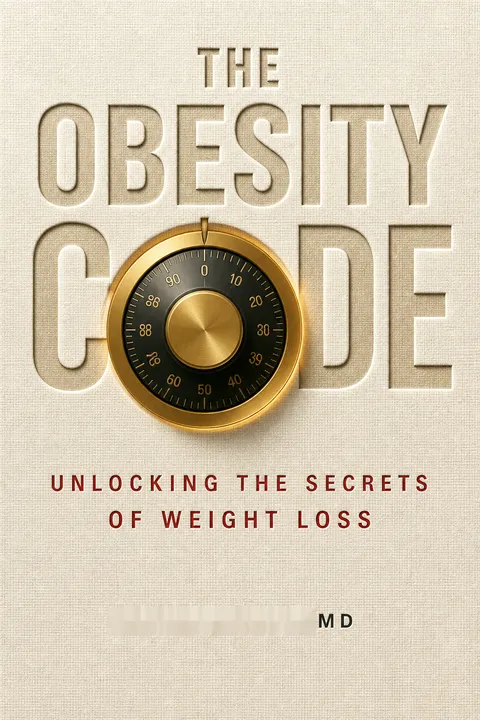
Readers praise The Obesity Code for its scientific approach to weight loss, focusing on insulin's role rather than calorie counting. Many found it eye-opening and life-changing, appreciating Dr. Fung's clear explanations of complex topics. The book challenges conventional dietary wisdom and offers a new perspective on obesity causes. While some critics found the fasting recommendations extreme, most readers appreciated the book's insights into hormonal factors affecting weight. Many reported success implementing the book's strategies, though some wished for more practical advice on implementing the recommendations long-term.
People Also Read





Glossary
Calorie deception
Calories treated as the causeFung’s term for the assumption that weight can be understood and controlled chiefly by subtracting energy expenditure from energy intake. He argues that this model wrongly treats intake and expenditure as independent, metabolism as fixed, eating as fully voluntary, and all calories as metabolically equivalent. He does not deny energy accounting, but argues it is insufficient as a causal explanation.
Body set weight
Defended body-fat levelThe level of body weight or fatness that, in Fung’s model, the brain and hormonal systems attempt to maintain. When weight falls below this level, appetite may rise and energy expenditure may fall; when weight rises above it, the body may respond in the opposite direction. Fung argues that obesity involves this defended level being set too high.
Insulin resistance
Reduced response to insulinA condition in which cells respond less effectively to insulin’s signals. The body may compensate by producing more insulin to achieve a similar effect on glucose handling. Fung emphasizes a reinforcing cycle: persistent high insulin may contribute to resistance, and resistance can prompt higher insulin levels. He treats this cycle as a major proposed mechanism linking metabolism and weight gain.
Carbohydrate-insulin hypothesis
Carbohydrates raise insulin and weightThe hypothesis that carbohydrate-rich foods, especially refined starches and sugars, raise blood glucose and insulin, and that sustained high insulin encourages energy storage and weight gain. Fung treats this as a useful but incomplete account. He adds fructose-related liver effects, insulin resistance, meal timing, protein responses, and other factors to explain why carbohydrate intake alone does not predict obesity consistently.
Incretin effect
Gut hormones amplify insulin releaseThe greater insulin response that can occur when nutrients are taken orally compared with an equivalent glucose exposure delivered intravenously. Fung explains that gut hormones, including GLP-1 and GIP, help produce this response. They can also slow stomach emptying and increase fullness, so their effects on insulin and appetite may point in different directions.
Glycemic index
Food’s blood-glucose responseA scale developed to compare how carbohydrate-containing foods raise blood glucose relative to a reference food, glucose. Fung notes that it does not directly measure insulin and that serving sizes differ. Glycemic load adjusts the index for the amount of carbohydrate in a typical serving. Both measures distinguish many refined foods from intact, fiber-rich foods, but neither captures every hormonal response.
Diabesity
Obesity and type 2 diabetes togetherFung’s label for the close relationship between obesity and type 2 diabetes in his hormonal model. He argues that both conditions can involve high insulin levels and insulin resistance, with elevated blood glucose serving as a feature of diabetes rather than the whole underlying problem. The term emphasizes shared proposed mechanisms, not that the two conditions are identical.
Intermittent fasting
Planned periods without foodA pattern of voluntarily alternating periods of eating with defined periods without food. Fung distinguishes it from involuntary starvation and argues that fasting can create intervals of lower insulin and greater use of stored energy. His examples range from daily eating windows to 24- or 36-hour fasts. He cautions that people taking diabetes medication need close medical supervision.
FAQ
What's The Obesity Code about?
- Focus on Hormonal Causes: The Obesity Code by Jason Fung explores obesity as a hormonal disorder, primarily driven by insulin, rather than just overeating or lack of exercise.
- Insulin's Central Role: The book argues that insulin is the key hormone in weight gain and loss, challenging the traditional calorie-in, calorie-out model.
- Dietary and Lifestyle Advice: Fung provides practical advice, including dietary changes and intermittent fasting, to manage insulin levels and promote weight loss.
Why should I read The Obesity Code?
- Scientific Foundation: The book is grounded in scientific research, offering a comprehensive view of obesity that challenges conventional dietary wisdom.
- Practical Strategies: Fung provides actionable strategies, including dietary changes and fasting protocols, for effective weight management.
- Empowerment Through Understanding: Readers gain insights into the complexities of obesity, empowering them to address the root causes of their weight issues.
What are the key takeaways of The Obesity Code?
- Insulin's Dominance: Insulin is the primary hormone driving obesity, and managing its levels is crucial for weight loss.
- Caloric Reduction Limitations: Simply reducing calories is ineffective for sustainable weight loss due to the body's compensatory mechanisms.
- Intermittent Fasting Benefits: Fasting is highlighted as a powerful tool for lowering insulin levels and promoting fat loss.
What is the hormonal theory of obesity presented in The Obesity Code?
- Insulin's Role: The theory posits that insulin is the main hormone regulating body weight, with high levels leading to increased fat storage.
- Body Set Weight: Fung explains that the body has a "set point" for weight, influenced by insulin levels, making weight loss difficult when insulin is high.
- Insulin Resistance: Persistent high insulin levels can lead to insulin resistance, complicating weight management and perpetuating obesity.
How does The Obesity Code address the calorie deception?
- Misleading Caloric Imbalance: Fung argues that viewing obesity as a simple caloric imbalance is misleading and ineffective for long-term weight loss.
- Interdependence of Calories: Reducing caloric intake leads to decreased caloric expenditure, complicating sustainable weight loss.
- Hormonal Focus: The book emphasizes understanding hormonal responses, particularly insulin, over focusing solely on calories.
What dietary changes does Jason Fung recommend in The Obesity Code?
- Low-Carbohydrate, High-Fat Diet: Fung advocates for reducing refined carbohydrates and increasing healthy fats to lower insulin levels.
- Intermittent Fasting: The book promotes fasting as a method to reduce insulin levels and improve metabolic health.
- Avoid Processed Foods: Fung advises against consuming processed foods high in sugar and refined carbohydrates.
How does The Obesity Code explain insulin resistance?
- Cycle of Insulin Resistance: High insulin levels lead to more fat storage, increasing insulin resistance and making weight loss difficult.
- Fructose's Impact: Fructose contributes to fatty liver and insulin resistance, leading to chronic health issues.
- Gradual Development: Insulin resistance develops over years, with dietary choices accumulating effects over decades.
What is the role of fasting in The Obesity Code?
- Insulin Level Reduction: Intermittent fasting significantly lowers insulin levels, allowing the body to reset its hormonal balance.
- Fasting Protocols: Various fasting protocols, such as 24-hour and 36-hour fasts, are outlined for incorporation into weekly routines.
- Health Benefits: Fasting is presented as a natural way to improve metabolic health, reduce body fat, and enhance well-being.
What are the dangers of artificial sweeteners according to The Obesity Code?
- Insulin Response: Artificial sweeteners can trigger insulin responses, leading to increased cravings and potential weight gain.
- Misleading Health Claims: "Sugar-free" products may not aid weight loss and can perpetuate unhealthy eating habits.
- Long-Term Risks: Studies link artificial sweeteners to metabolic syndrome and cardiovascular problems, advising against their use.
What does Jason Fung say about carbohydrates in The Obesity Code?
- Carbohydrate Distinction: Fung differentiates between harmful refined carbohydrates and whole, unprocessed ones.
- Glycemic Index: High-glycemic foods cause rapid insulin spikes; low-glycemic foods are recommended for stable blood sugar.
- Quality Over Quantity: Focus on whole foods like fruits and vegetables rather than processed grains and sugars.
What are some common myths about obesity that The Obesity Code addresses?
- Calories In vs. Out: Fung challenges the notion that weight loss is simply about calories consumed versus burned.
- Fat Misconceptions: The book dispels the myth that all dietary fat is harmful, highlighting the benefits of healthy fats.
- Exercise Limitations: While important, exercise alone is not a solution for obesity; dietary changes are crucial.
What are the best quotes from The Obesity Code and what do they mean?
- "Obesity is a hormonal, not a caloric imbalance.": Highlights the book's thesis that hormones, particularly insulin, drive obesity.
- "Insulin is the main driver of weight gain.": Emphasizes insulin's critical role in fat storage and weight management.
- "Fasting is a powerful tool for weight loss.": Advocates for fasting as an effective method to lower insulin and promote fat burning.
About the Author
Other books by Jason Fung



Download PDF
Download EPUB
.epub digital book format is ideal for reading ebooks on phones, tablets, and e-readers.








