

Key Takeaways
Make two low-calorie days easier to sustain than seven days of restraint
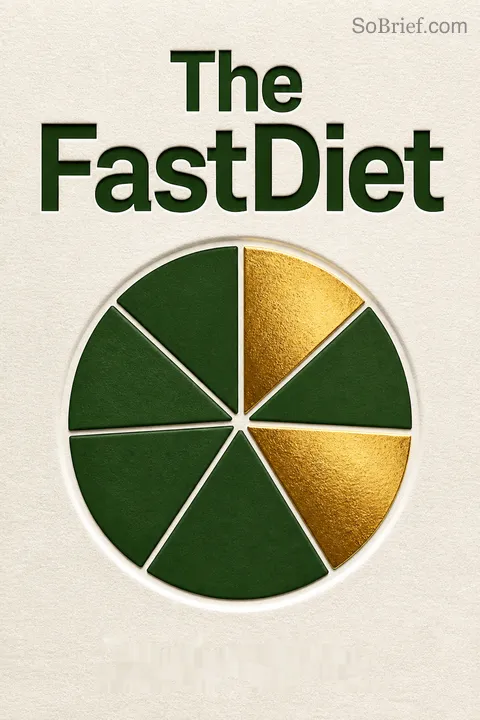
The weekly rhythm. The Fast Diet’s central plan is to eat normally on five days and restrict intake on two non-consecutive days. It suggests about 500 calories for women and 600 for men on each restricted day. Mosley settled on this 5:2 pattern after finding both longer fasts and fasting every other day too difficult to maintain. The point is not to prove toughness. It is to create a repeatable weekly calorie deficit without turning every meal into a negotiation.
Room to adapt. The two days can move around social plans, and the limited calories can be divided into one, two, or several small meals. Mosley and Spencer found different schedules workable. Their varied experiences support flexibility, not a single ideal timetable.
What's compelling here is the design around adherence. A plan that asks for restraint every day can make every meal feel like a test; a plan with predictable periods of normal eating may be easier to keep. That fits a broader principle in behavior change: the best strategy is often the one a person can repeat, not the one that looks most rigorous on paper. Still, unrestricted days are not a biological blank cheque. The method's weight-loss effect depends on the overall pattern, including whether people compensate heavily on the other five days.
Treat fasting as a schedule, not a contest in endurance
Find the workable dose. Mosley first undertook a four-day fast under the guidance of longevity researcher Valter Longo. He reported weight loss and changes in blood measurements, but the experience did not seem practical as a routine. He also tried alternate-day fasting, in which restricted days recur every other day, and found the unpredictable schedule socially and psychologically demanding.
Choose sustainability. He moved to two separated restricted days per week, eating a small amount rather than nothing. The book explicitly distinguishes this from prolonged starvation: it does not advise readers to copy Mosley's four-day experiment, and describes extended fasts as more extreme and potentially risky. A short schedule that fits ordinary work, meals, and family life is the practical proposal.
The shift from dramatic experiment to manageable routine is an important part of the book's logic. In health behavior, burden is not a side issue: it determines whether an intervention is used long enough to matter. A person who can follow a moderate plan consistently may do better than one who repeatedly attempts an extreme plan and abandons it. The comparison is not proof that 5:2 is universally easiest, though. Work schedules, health conditions, and relationships to food vary, so the right measure is tolerability as well as results.
Expect hunger to arrive in waves, then let the wave pass
Hunger is not a countdown. Mosley expected hunger to intensify until he could no longer resist eating. Instead, he found that pangs often faded when he stayed occupied. Spencer likewise presents hunger as something that can come and go, rather than a steadily rising emergency. The book argues that people may confuse hunger with boredom, thirst, routine, or the sight and smell of food. It calls pleasure-driven eating without physical need hedonic hunger.
Practise noticing. The practical suggestions are modest: wait before eating, drink a no-calorie beverage, take a walk, or redirect attention. In a study of alternate-day modified fasting cited in the book, participants' reported hunger rose initially and declined after about two weeks. That finding is about participants in a study, not a guarantee that every person adapts the same way.
The useful move is separating a sensation from the instruction it seems to contain. Psychology uses similar approaches to cravings: naming a passing urge can create room to choose rather than react. That makes fasting, at least in part, a lesson in appetite awareness. But the distinction between an ordinary pang and a warning symptom matters. The book's advice is for generally healthy people attempting a brief, modified fast, not a reason to ignore significant dizziness, illness, or signs that a particular eating pattern is unsafe.
Use fasting's cellular-stress theory as a hypothesis, not a promise
A useful biological idea. The book uses hormesis to describe how a limited stress can trigger protective responses. Exercise provides its familiar example: exertion challenges muscle, and the body repairs it. Mosley applies the idea to fasting, proposing that temporary food scarcity may shift the body away from growth signals and toward maintenance. The book discusses lower levels of IGF-1, a growth-related hormone, and autophagy, the process by which cells break down and recycle damaged components.
Evidence has limits. The proposed repair mechanisms draw heavily on animal studies and biological theory. The book reports that fasting and calorie restriction affect these pathways, but does not establish that a particular 5:2 schedule reliably produces long-term disease prevention in people. Its cellular explanation is a reason to investigate fasting, not a promise of a longer or disease-free life.
Hormesis offers a memorable corrective to the idea that every discomfort is harmful: some manageable challenges can prompt adaptation. The concept also helps connect fasting with exercise and the body's capacity for repair. Yet the dose and setting matter. A stressor can be useful in one range and damaging in another, and a cellular response is not equivalent to a proven improvement in lifespan. The strongest reading treats the mechanism as a plausible research model while resisting the leap from a change in a biomarker to a guaranteed health outcome.
Judge progress by waist and blood markers, not scale alone
Look beyond body weight. Mosley describes himself as TOFI, or thin on the outside but carrying fat internally. An MRI showed visceral fat around his organs, while blood tests raised concern about glucose and cholesterol. The book recommends tracking waist size as well as weight, since abdominal fat may signal health risks that a scale cannot show. It offers waist circumference below half one's height as a simple reference point.
One person's results. After three months on the plan, Mosley reported losing 19 pounds, reducing his waist from 36 to 33 inches, and seeing fasting glucose move from 7.3 to 5.0 mmol/l. His IGF-1 also fell. These are personal before-and-after measurements, not evidence that every participant should expect the same changes or that fasting alone caused them.
This is a stronger model of progress than treating weight as the only scoreboard. Waist measurement and blood tests can illuminate different aspects of health, while weight can fluctuate with water and food in the digestive system. The important methodological caution is that Mosley's dramatic personal results are a case history, not a controlled trial. Individual data can motivate questions and help a person discuss changes with a clinician, but it cannot separate fasting's effects from other changes or establish what will happen across a population.
Choose fast-day food for satiety, not the smallest possible plate
Spend the allowance wisely. The book recommends building restricted-day meals around foods that satisfy without using the full calorie budget quickly. Examples include eggs, fish, lean meat, beans, vegetables, and light soups. Protein may help people feel full, while vegetables add bulk. The authors also suggest choosing many lower-glycaemic foods. The glycaemic index ranks carbohydrate foods by how quickly they tend to raise blood glucose; glycaemic load also accounts for the amount of carbohydrate in a serving.
Make meals enjoyable. Porridge is presented as a steadier breakfast choice than cornflakes, and the book notes that a baked potato can raise blood glucose more sharply than many people expect. It advises limiting calorie-dense additions such as lattes, oils, and alcohol on restricted days. The practical lesson is not to ban particular foods forever, but to make a small allowance filling and varied.
Satiety is a useful bridge between nutritional theory and the lived experience of a low-calorie day. Food volume, protein, fiber, flavor, and eating pace can all shape how satisfying a meal feels, so the book's attention to enjoyable meals is more practical than a bare calorie ceiling. Glycaemic index is only a rough guide, however. Preparation, portions, and mixed meals affect the response, and no single score captures overall nutritional quality. The broader aim is to make limited meals nourishing and satisfying, rather than to turn food into a ranking exercise.
Let your weekly routine fit real life, or it will not last
Make the plan yours. The book encourages readers to choose fasting days around work, family meals, and social commitments. One person may prefer breakfast and dinner with a long gap between; another may spread the day's allowance across smaller meals. Preparation helps: plan restricted-day food in advance, keep track of portions, and choose a busy day when possible. A supportive friend or partner can also make the routine easier to navigate.
Adjust after weight loss. Once a person reaches a desired weight, the book introduces the Maintenance Model: fasting on one day each week instead of two. It also suggests that schedules can be shifted around holidays or events. Flexibility is meant to preserve the basic habit, not to make the plan so vague that the restricted days disappear.
This section treats adherence as a problem of design rather than character. Planning around social life reduces the friction that causes many people to abandon a routine, while a partner can provide both practical coordination and encouragement. The approach resembles self-determination principles: people are more likely to persist when they have meaningful choice rather than feeling trapped by rigid rules. Flexibility still needs a clear anchor. Without some dependable pattern, adaptation can quietly become avoidance, so a realistic schedule should be specific enough to repeat.
Separate established weight-loss arithmetic from speculative disease protection
Human evidence is mixed in strength. The book reports a three-month study of 115 women in which the groups following two-day intermittent restriction lost about 4 kg on average, compared with about 2.4 kg among women assigned a daily 1,500-calorie diet. It also describes a small study of eight healthy men whose insulin sensitivity improved after two weeks of fasting, without weight loss. These findings support further study, but they are limited in scale and duration.
Do not overread mechanisms. Claims about longer life, dementia prevention, cancer risk, and fasting alongside chemotherapy rely substantially on animal research, early studies, or personal stories. Nora Quinn's experience fasting during cancer treatment was not a controlled trial. The book itself describes the human evidence as developing. Its most practical case is a manageable eating schedule; its larger disease-prevention claims deserve more caution.
A useful way to read health research is to keep separate the levels of evidence: a proposed mechanism, an animal result, a small human trial, and a demonstrated clinical outcome are not interchangeable. This distinction preserves the book's genuine contribution without turning promising findings into certainty. The short-term weight-loss and metabolic studies are relevant, but they do not prove that a particular schedule prevents cancer or dementia. That precision matters especially when a dramatic story, such as fasting around chemotherapy, could tempt a reader to imitate an intervention that requires medical oversight.
Screen for conditions that make fasting unsafe before starting
Not everyone should fast. The book says fasting is not advised for children, people who are pregnant or trying to conceive, people with type 1 diabetes, those with an eating disorder, or people who are already extremely lean. It recommends consulting a doctor when an underlying medical condition is present. The authors also distinguish their short, modified plan from prolonged fasting, which they describe as an extreme intervention best undertaken in a supervised setting.
Stop if it feels wrong. The practical advice is to be cautious, remain attentive to how the body responds, and stop if fasting causes significant problems. The book's dietary plan should not be confused with treatment for disease. In particular, Nora Quinn's decision to fast during chemotherapy is presented as an unsupervised personal experiment, not as a recommendation for cancer patients.
Safety is not a footnote to a diet; it is part of whether the intervention is appropriate at all. The same calorie restriction can have different implications depending on age, pregnancy, illness, medication, and a person's history with eating. The book's exclusions provide a useful starting screen, but no short list can replace individualized medical advice. This is especially important when the text discusses insulin, blood glucose, or cancer treatment, where changing food intake may intersect with clinical care.
Analysis
The FastDiet combines a personal science-documentary narrative, an argument for intermittent fasting, and a practical eating guide. Its story begins with Mosley's skepticism and health concerns, moves through interviews and experiments, then settles on the 5:2 routine because it is more livable than prolonged or alternate-day fasting. Spencer's account adds a second perspective, emphasizing how the schedule can fit around family and social life. Together, their experiences make the method concrete rather than merely theoretical.
The book's most durable insight is behavioral: a dietary plan must be tolerable enough to repeat. Its 5:2 structure makes restriction finite, offers flexibility, and asks readers to notice when habit or environment is prompting them to eat. That is a distinct proposition from the claim that fasting has unique effects beyond reduced energy intake. The book presents both, but they rest on different kinds of evidence.
The biological argument is intriguing. The authors connect fasting with hormesis, IGF-1, cellular repair, insulin sensitivity, and brain-derived neurotrophic factor. Yet the evidence described varies widely: some human studies are short or small, many mechanistic claims come from animals, and some striking outcomes are single-person anecdotes. Mosley's own blood markers are motivating illustrations, not proof of general effects. That distinction matters because the book sometimes moves quickly from a plausible mechanism to expansive claims about cancer, dementia, and longevity.
Read the plan, then, as a practical hypothesis rather than a medical guarantee. Its clearest case is that two deliberately restricted days may help some people manage intake without daily dieting. Whether that format is safe or suitable depends on the individual, and the long-term health promises require stronger evidence than the book's examples supply.
Review Summary
The FastDiet by Michael Mosley receives mostly positive reviews. Readers appreciate its science-based approach to intermittent fasting, finding it easy to follow and effective for weight loss and health improvement. Many report increased energy, better skin, and improved focus. The 5:2 method (eating normally for 5 days, restricting calories for 2) is seen as manageable and sustainable. Some criticize the book's emphasis on weight loss over health benefits and its potentially triggering content for those with eating disorders. Overall, readers find it informative and potentially life-changing.
People Also Read



Glossary
5:2 diet
Two restricted days weeklyAn intermittent eating schedule in which a person eats normally on five days of the week and substantially limits calories on two days. The book's suggested allowance is about 500 calories for women and 600 for men on restricted days. The days are usually separated, and the meals can be arranged to suit the person's routine.
Intermittent Fasting
Repeated periods without foodA broad term for eating patterns that alternate periods of eating with periods of fasting or sharply reduced intake. In this book, it includes several approaches, from alternate-day fasting to the modified 5:2 plan. The term describes when and how often food intake is restricted, rather than prescribing one particular menu.
Hormesis
Adaptation to limited stressA biological idea that a modest stressor can trigger responses that help an organism adapt or repair itself. The book uses exercise as an example and applies the idea to short periods of fasting. Hormesis does not mean every stress is beneficial; the size, duration, and context of the challenge matter.
IGF-1
Growth-related signaling hormoneInsulin-like growth factor 1 is a hormone involved in growth and cellular activity. The book argues that persistently high levels may contribute to ageing-related disease and discusses fasting as a possible way to reduce circulating IGF-1. It presents evidence from animal research and individual measurements, not proof that a particular fasting schedule prevents cancer in people.
Autophagy
Cellular recycling processA process in which cells break down and recycle damaged or worn components. The book describes autophagy as part of the body's maintenance response and connects it to calorie restriction. It is presented as a possible mechanism behind fasting-related benefits, not as a directly demonstrated guarantee of improved health for people following the 5:2 plan.
Brain-derived neurotrophic factor (BDNF)
Protein supporting nerve cellsA protein associated with the growth, maintenance, and function of nerve cells. The book discusses research linking BDNF with the hippocampus, learning, memory, and mood. Much of the evidence it cites comes from animal studies, and the text notes that the proposed mood and cognitive benefits of intermittent fasting were not yet firmly established in humans.
Glycaemic index (GI)
Carbohydrate blood-sugar rankingA scale used to compare how quickly carbohydrate-containing foods tend to raise blood glucose. The book recommends lower-GI choices on restricted days, giving porridge as a lower-impact option than some refined breakfast cereals. The measure does not apply to foods without carbohydrates and cannot, by itself, describe the nutritional value of a meal.
Glycaemic load (GL)
Portion-adjusted glucose impactA measure that combines a food's glycaemic index with the amount of carbohydrate in a serving. The book presents it as a complement to GI because portion size affects the likely blood-sugar effect. Like GI, it is a guide rather than a complete measure of a food's healthfulness, and actual meals may differ from isolated-food calculations.
TOFI
Lean-looking, internally fatAn abbreviation for Thin on the Outside and Fat Inside, used in the book for someone whose outward appearance or weight may conceal substantial visceral fat. Mosley uses the term after an MRI showed fat around his internal organs despite his not appearing dramatically overweight. It illustrates why body weight alone may not reveal where fat is stored.
Maintenance Model
One restricted day weeklyThe book's suggested adjustment for a person who has reached a desired weight: reduce the routine from two restricted days each week to one. The aim is to help maintain weight while retaining an occasional fasting day. The authors present it as a flexible practical option, while acknowledging that its long-term health effects were not specifically established by the studies they discuss.
FAQ
What's "The FastDiet" about?
- Intermittent Fasting Focus: "The FastDiet" by Michael Mosley and Mimi Spencer introduces the concept of intermittent fasting, specifically the 5:2 diet, where you eat normally for five days and restrict calorie intake to 500-600 calories for two non-consecutive days.
- Health Benefits: The book explores the potential health benefits of intermittent fasting, including weight loss, improved metabolic health, and increased longevity.
- Scientific Backing: It provides scientific evidence and personal anecdotes to support the effectiveness of intermittent fasting as a sustainable lifestyle change.
- Practical Guidance: The authors offer practical advice on how to implement the diet safely and effectively, including meal plans and tips for managing hunger.
Why should I read "The FastDiet"?
- Evidence-Based Approach: The book presents an evidence-based approach to dieting, backed by scientific research and personal experimentation by the authors.
- Simplicity and Flexibility: It offers a simple and flexible dieting method that can be easily integrated into everyday life without the need for complex rules or constant calorie counting.
- Health Improvement: Readers interested in improving their health, losing weight, and potentially increasing their lifespan may find the book's insights valuable.
- Personal Stories: The authors share their personal journeys and experiences with intermittent fasting, providing relatable and motivational content.
What are the key takeaways of "The FastDiet"?
- 5:2 Diet Structure: The core of the book is the 5:2 diet, where you eat normally for five days and restrict calories to 500-600 on two non-consecutive days.
- Health Benefits: Intermittent fasting can lead to weight loss, improved insulin sensitivity, reduced risk of chronic diseases, and potential longevity benefits.
- Scientific Support: The book emphasizes the scientific research supporting intermittent fasting, including studies on calorie restriction and its effects on health.
- Practical Tips: It provides practical advice on how to manage fasting days, including meal suggestions and strategies to cope with hunger.
How does the 5:2 diet work according to "The FastDiet"?
- Normal Eating Days: For five days a week, you eat normally without worrying about calorie restrictions, allowing for flexibility and enjoyment of food.
- Fasting Days: On two non-consecutive days, you limit your calorie intake to 500 for women and 600 for men, focusing on high-protein and low-GI foods.
- Health Benefits: This pattern is designed to mimic periods of feast and famine, which can lead to various health benefits, including weight loss and improved metabolic health.
- Sustainability: The diet is presented as a sustainable long-term lifestyle change rather than a temporary diet, making it easier to maintain over time.
What scientific evidence supports the claims in "The FastDiet"?
- Research Studies: The book references numerous studies that show the benefits of intermittent fasting, including improved insulin sensitivity and reduced risk of chronic diseases.
- Animal Studies: It discusses animal research that demonstrates the potential for increased lifespan and health benefits from calorie restriction and fasting.
- Human Trials: The authors highlight human trials that have shown positive outcomes in weight loss and metabolic health from intermittent fasting.
- Expert Opinions: The book includes insights from leading scientists and researchers who have studied the effects of fasting on health and longevity.
What are the potential health benefits of intermittent fasting as described in "The FastDiet"?
- Weight Loss: Intermittent fasting can lead to significant weight loss by reducing calorie intake and improving metabolic rate.
- Improved Insulin Sensitivity: Fasting can enhance insulin sensitivity, reducing the risk of type 2 diabetes and other metabolic disorders.
- Reduced Disease Risk: The diet may lower the risk of chronic diseases such as heart disease, cancer, and Alzheimer's by reducing inflammation and improving cellular repair.
- Longevity: Some studies suggest that intermittent fasting can increase lifespan by promoting cellular repair and reducing oxidative stress.
How do the authors of "The FastDiet" suggest managing hunger on fasting days?
- Stay Hydrated: Drinking plenty of water and low-calorie beverages can help manage hunger and prevent dehydration.
- Distraction Techniques: Engaging in activities that keep you busy can help take your mind off hunger and make fasting days more manageable.
- Meal Planning: Planning meals in advance and focusing on high-protein, low-GI foods can help you feel fuller for longer.
- Mindset Shift: Embracing the feeling of hunger as a natural and manageable sensation can help reduce anxiety about fasting.
What practical tips does "The FastDiet" offer for successful fasting?
- Meal Timing: Consider splitting your calories into two meals or consuming them in one sitting, depending on what works best for you.
- Food Choices: Focus on high-protein, low-GI foods that provide satiety and maintain stable blood sugar levels.
- Flexibility: Adapt the fasting schedule to fit your lifestyle, choosing fasting days that align with your social and work commitments.
- Support System: Engage with friends or online communities for support and motivation during fasting days.
What are some common misconceptions about fasting addressed in "The FastDiet"?
- Starvation Mode: The book clarifies that short-term fasting does not lead to starvation mode or muscle loss, as the body adapts to intermittent calorie restriction.
- Nutrient Deficiency: With proper planning, fasting does not lead to nutrient deficiencies, as the diet allows for a wide variety of foods on non-fasting days.
- Hunger Management: The authors explain that hunger is manageable and often decreases over time as the body adapts to the fasting routine.
- Complexity: Intermittent fasting is presented as a simple and flexible approach, contrary to the belief that dieting must be complicated and restrictive.
How do Michael Mosley and Mimi Spencer incorporate personal experiences in "The FastDiet"?
- Personal Journeys: Both authors share their personal experiences with intermittent fasting, including their initial skepticism and eventual success.
- Health Improvements: They discuss the health improvements they experienced, such as weight loss and better metabolic markers, providing real-life evidence of the diet's effectiveness.
- Challenges and Solutions: The authors candidly address the challenges they faced and the strategies they used to overcome them, offering practical advice to readers.
- Motivational Stories: Their stories serve as motivation for readers, demonstrating that intermittent fasting can be a sustainable and rewarding lifestyle change.
What are the best quotes from "The FastDiet" and what do they mean?
- "There is nothing else you can do to your body that is as powerful as fasting." This quote emphasizes the transformative potential of fasting on health and longevity.
- "Intermittent Fasting can put us back in touch with our human selves." It suggests that fasting reconnects us with natural eating patterns, promoting overall well-being.
- "The Fast Diet is a radical alternative." This highlights the diet's departure from conventional dieting methods, offering a new approach to weight loss and health.
- "It is not just a diet. It is much more than that: it is a sustainable strategy for a healthy, long life." This underscores the book's message that intermittent fasting is a lifestyle change with long-term benefits.
About the Author
Other books by Michael Mosley




Download PDF
Download EPUB
.epub digital book format is ideal for reading ebooks on phones, tablets, and e-readers.








