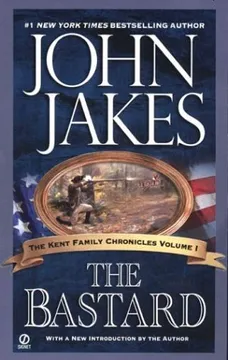


Plot Summary
The Bastard’s Inheritance
In 1770, seventeen-year-old Phillipe Charboneau1 works at a failing inn in Auvergne while his mother,2 Marie,2 insists he is destined for a grand life in England. After local boys Auguste and Bertram beat him and mock Marie’s2 past as a Paris actress, she finally tells him that his father6 is James Amberly, the Duke of Kentland.6
A witnessed letter acknowledges Phillipe1 as Amberly’s6 son1 and promises him half his father’s6 money. The title and estate must pass through the legitimate line, but the fortune could lift Marie2 and Phillipe1 out of poverty. Girard,7 Phillipe’s tutor,7 has meanwhile been teaching him the dangerous arguments of Locke and Rousseau, ideas that make inherited authority seem less natural than Marie2 claims.
Phillipe’s inheritance first appears as an answer to humiliation: wealth could silence the boys who sneer at his birth and rescue him from the inn. But Marie’s promise already carries a cost. She has made her son’s future the justification for her own sacrifice, and the oath she asks of him turns care into obligation. Girard offers a competing education, teaching Phillipe to question the very hierarchy that might make him powerful. His first conflict is therefore not simply poverty against privilege, but two different ideas of freedom.
Blood on the Snow
During a winter storm, Phillipe1 hears cries in the pines and finds Auguste and Bertram attacking a red-haired boy armed with a spontoon. The boy is Marie Joseph Paul Yves Roch Gilbert du Motier, the young Marquis de Lafayette,13 home from Paris. When Auguste charges Phillipe1 with a dagger, Phillipe1 thrusts with the fallen weapon and kills him.
Lafayette13 calmly helps hide the body, then brings Phillipe1 to his family’s chateau and teaches him sword and musket drills. Their friendship ends when Lafayette13 must return to Paris, but he leaves Phillipe1 a French grenadier’s sword. The violence has made Phillipe1 a killer; the gift gives him a new role to imagine, even as the ease with which Lafayette13 treats a death unsettles him.
The snowfield gives Phillipe his first experience of privilege from the inside. Lafayette is generous, capable, and loyal, yet his composure around Auguste’s death suggests that rank can insulate a person from consequences. Phillipe accepts the practical need to hide the body, but cannot quite adopt Lafayette’s indifference. The sword becomes more than a keepsake: it links survival to a possible identity as a soldier. Still, Phillipe has now seen that courage and entitlement can occupy the same person, a distinction that will matter when he enters the Amberly household.
The House of Kentland
A letter from James Amberly’s wife24 summons Phillipe1 and Marie2 to England because the Duke6 is gravely ill and wants to see his son.1 After a difficult crossing, they reach Kentland and are kept from James6 by his wife,24 Lady Jane,24 and the physician Dr. Bleeker.
Their welcome turns openly hostile when Phillipe1 meets Roger,5 his legitimate half-brother,5 and Roger’s fiancée,4 Alicia Parkhurst.4 Roger5 mocks Marie2 and threatens Phillipe;1 Alicia’s4 interest in him complicates the encounter.
Marie2 refuses Lady Jane’s24 offer of money to abandon the inheritance claim, then secures permission for mother and son to glimpse James,6 feverish and barely conscious. The visit confirms that the illness is real, but leaves them dependent on a household that controls access to both the Duke6 and the evidence of his wishes.
Kentland makes family resemblance a political fact. Roger recognizes Phillipe as a rival before the two have exchanged anything but contempt, while Lady Jane treats the claim as a threat to the future she has built around her son. Marie’s refusal of money is principled, but it also commits her and Phillipe to a contest in which the other side controls the rooms, servants, and information. Alicia’s attention offers a private opening inside this public hostility. Yet even attraction here is shaped by power: Phillipe is both a possible heir and a stranger whose right to belong can be denied.
A Love in Hiding
While Marie2 and Phillipe1 wait in Tonbridge with their money running low, Alicia4 secretly meets Phillipe1 in the countryside. She admits that her planned marriage to Roger5 is a family bargain, then becomes his lover.
Their meetings deepen into attachment, although Alicia4 remains reluctant to abandon the future arranged for her. She eventually persuades Lady Jane24 to let Marie2 and Phillipe1 see James6 again. They find him delirious in a dark, foul bedroom, unable to recognize them; Lady Jane24 uses the visit to urge them to leave.
In the village, Phillipe1 confronts Prime Minister Lord North, defending the colonists’ right to resist unjust rule. The encounter exposes his growing political anger, but it does nothing to loosen the Amberlys’5 hold over the inheritance or protect the couple from Roger.5
Alicia and Phillipe’s affair joins genuine feeling to unequal choices. She seeks an interval of freedom without yet risking the security and status of marriage to Roger; he wants to believe passion might outweigh the structure that governs her life. Their intimacy does not erase that structure. Meanwhile, the visit to James offers no recognition, only the sight of a father rendered inaccessible by illness and household control. Lord North’s presence makes the private dispute echo the colonial one: authority presents itself as order, while those beneath it experience its decisions as coercion.
The Letter Almost Burns
After James6 dies, Marie2 rushes to Kentland to see his body. Roger5 strikes her, and Phillipe1 fights back, smashing Roger’s5 hand with his silver-headed cane before escaping with Marie.2 Lady Jane’s24 ally, Bishop Francis, later offers them two thousand pounds to renounce the claim and return to France. Marie,2 exhausted and terrified for her son,1 is ready to accept.
When Francis asks to inspect James’s letter, Phillipe1 realizes the bishop is trying to destroy it and lunges as he sets one edge alight. Marie2 rescues the document, but part of a witness’s signature is lost. Roger’s5 men begin hunting them, and Alicia4 secretly warns Phillipe1 that he and his mother2 must flee. They leave Tonbridge for London with the damaged letter and little else.
The letter changes from promise to physical danger. Lady Jane’s family cannot safely dismiss it, so they try first to buy its owners and then to destroy the evidence. Marie’s willingness to accept the offer is not greed; it is the judgment of a mother who sees her son’s life at risk. Phillipe’s intervention saves the document but cannot restore its full legal strength. By escaping, he survives at the cost of losing Alicia and the possibility of any ordinary family reconciliation. The inheritance now binds him to the people most determined to erase it.
Rescued at St. Paul’s
Penniless and ill, Phillipe1 and Marie2 reach London after walking from Kent. They sleep on the steps of St. Paul’s, where a gang of beggars tries to steal Marie’s2 casket and Phillipe’s1 sword. He fights them off, kills their leader, and collapses from fever and a throat wound. Esau15 and Hosea Sholto,16 sons of a printer,14 carry him and Marie2 to their family home.
Their father, Solomon,14 offers Phillipe1 work in the print shop but warns him that the Amberlys5 can defeat his inheritance claim. Phillipe1 takes the job, learning to set type and run a press. Marie,2 however, remains fixed on returning to court and recovering the fortune. The Sholtos14 give them shelter, but not a way to reconcile their opposing plans.
London repeats the danger of Tonbridge on a larger, harsher scale: the poor are not protected simply because they are numerous, and the church steps offer no sanctuary after dark. The Sholtos provide a counterexample to the Amberlys, using skill and hospitality rather than rank to determine how others are treated. Work at the press gives Phillipe a practical identity grounded in learning and labor. Marie’s continued focus on inheritance, by contrast, shows how deeply she has invested her life in the promise she made to her son.
A New Name for America
At the Sholtos’14 shop, Phillipe1 studies the American colonies and meets Benjamin Franklin,8 who offers practical help finding work as a printer overseas. After an attempt on Phillipe’s1 life at Vauxhall Gardens, he decides that remaining in England endangers both him and the Sholtos.14
The family helps him secure passage aboard a ship bound for Boston. Marie’s2 health and state of mind collapse during the crossing. Before she dies, she admits Phillipe1 was right to seek a new beginning, though she still asks him to become wealthy and return to punish the Amberlys.5
Phillipe1 promises, then keeps her casket and the inheritance letter. To sever the trail of his old identity, he takes the name Philip Kent,1 carrying his father’s6 title only in the name he chooses.
Franklin’s invitation offers not a rescue by wealth but a route into work, knowledge, and a society without the same formal aristocracy. Marie can recognize that her son’s decision is sound only when her own dream has nearly consumed her. Even then, she cannot fully release its central demand: that he rise high enough to avenge them. Philip’s new name is an attempt to choose himself, but the promise to his mother and the preserved letter show that inheritance still travels with him. Reinvention begins as a choice, not yet a settled freedom.
The Boston Printer
Philip1 lands in Boston with no local contacts and spends days hungry, sick, and sleeping wherever he can. After he resists a British officer who threatens him over a muddy uniform, hardware merchant Will Molineaux20 brings him to the Salutation tavern.
There Philip1 meets Samuel Adams9 and joins the circle around the printer Ben Edes,11 who hires him at the Gazette. Philip’s1 work brings him into contact with Paul Revere,10 Benjamin Edes,11 and lawyer Abraham Ware,12 while Ware’s daughter3 Anne3 challenges him in a bookshop and later invites his company.
She is outspoken about both colonial rights and the narrow life prescribed for women. Philip1 is drawn to her, but his unresolved attachment to Alicia4 and his uncertain political loyalties keep him from making a clean beginning.
Boston gives Philip a community, but not a neutral one. His first welcome comes because he has resisted an officer, and his livelihood depends on a newspaper that openly challenges the Crown. The press turns ideas into repeated, shareable objects, placing Philip’s craft inside the political struggle. Anne offers a different kind of challenge: she recognizes his pride and questions the identity beneath it. His attraction to her develops alongside, rather than after, his attachment to Alicia, so his private uncertainty mirrors the city’s public debate over which future to choose.
Tea in the Harbor
As Parliament grants the East India Company control of colonial tea sales, Adams9 uses the monopoly to draw Boston merchants and citizens into protest. Philip1 grows closer to Anne,3 but resists the commitment she wants before he knows what he believes.
On December 16, 1773, he joins Edes’s11 disguised party at Griffin’s Wharf and helps dump the tea from three ships into the harbor. British officer Captain Stark22 recognizes him and pursues him through the streets. In an alley, Stark22 attacks with his sword; Philip,1 fighting for his life, kills him.
Anne3 finds Philip1 injured afterward and tends his wounds. That night they become lovers, though Philip1 still cannot promise her a future. The tea is gone, a royal officer is dead, and Philip1 has crossed into a cause he had not fully chosen.
The harbor action transforms political argument into bodily risk. Philip’s participation is not yet the product of settled ideology; anger at the Crown and his need to protect his livelihood help carry him into the raid. Stark’s pursuit makes the cost immediate, forcing Philip to kill rather than merely print or observe resistance. Anne’s care then joins political danger to intimacy. Their relationship begins from an act he cannot undo, while his hesitation about commitment reveals that courage in public does not automatically produce clarity in private.
The Brother in Red
After Parliament closes Boston’s port and troops fill the town, Philip1 joins the Boston Grenadier Company and befriends Sergeant George Lumden,17 a British soldier who wants to desert for the love of Daisy O’Brian.18
Philip1 arranges a cart to help Lumden17 escape, but the boy Jemmy Thaxter sells the plan to the regiment. When Philip1 returns to warn him, Lieutenant Colonel Roger Amberly5 is already at Anne Ware’s3 home, demanding to know where Lumden17 is. Roger5 seizes and hurts Anne;3 Philip1 enters with a bayonet and kills him in the struggle.
He and Lumden17 hide the body, then slip out of Boston under a farmer’s disguise. Anne3 and Daisy18 stay behind to face the officers’ questions, while Philip1 reaches the O’Brian19 farm near Concord as a fugitive once more.
Philip’s attempt to help Lumden is an act of solidarity, but his reliance on a street child’s silence leaves others exposed. Roger’s arrival collapses the distance between the family feud and the colonial crisis: a royal uniform now gives his private violence official cover. Philip kills him to stop the assault on Anne, yet the act is neither clean revenge nor a simple victory. It creates a body to conceal, puts Anne and Daisy under suspicion, and sends Philip away from the woman he loves just as he begins to understand the depth of that love.
The Letter from Alicia
At Martin O’Brian’s19 farm, Philip1 and Lumden17 find work and shelter. Philip1 drills with Colonel James Barrett’s Concord militia while waiting for word from Anne.3 When Anne3 and her father12 eventually reach Concord, she gives Philip1 a private letter from Alicia.4
Alicia4 writes from Philadelphia that Roger5 survived the stabbing, was taken there for treatment, and has named his attacker. She also confesses that she still loves Philip1 and wants him to come to her. Anne3 warns that the letter could be a trap and resents his divided loyalties.
Philip1 cannot dismiss the possibility that Alicia4 is in danger, or his own lingering feelings. He leaves for Philadelphia, accepting Martin O’Brian’s19 mare and money for the journey, while Anne3 and her father12 remain behind.
The letter turns an old attachment into a present decision. Alicia’s appeal arrives when Philip has begun to build a life among the people resisting the Crown, while Anne has already risked herself to protect him. His departure is not proof that he loves Alicia more; it shows how unfinished desire can command attention even when reason names its dangers. Anne’s anger is sharpened by the imbalance of sacrifice: she has acted for him, while he has yet to decide what future he can offer. The journey is an attempt to settle both a relationship and an identity.
The Philadelphia Reunion
In Philadelphia, Philip1 learns that the Trumbull household is mourning Roger,5 whom the family believes dead. Alicia4 arranges a secret meeting in a coach and greets Philip1 with the intimacy of their affair in England. She says she regrets marrying Roger5 and wants to marry Philip1 instead.
Her promises stir his old desire, but Philip1 questions how their life could work: he is a printer with little money, while Alicia4 has been raised amid wealth and rank. She dismisses those differences and insists they can build a future in America. Philip1 agrees to stay in the city, though her sudden willingness to abandon her former world does not fully convince him. He has found Alicia4 again, but the reunion deepens rather than resolves his doubts.
Alicia offers Philip the future Marie once imagined, now presented as a choice made for love rather than status. Yet her proposal does not erase their unequal histories. Philip has experienced the labor and danger that her world could insulate her from, and he doubts that she understands what poverty would mean in daily life. His hesitation is not simply fear of intimacy; it is an emerging suspicion that desire can disguise a return to the very hierarchy he has fled. The reunion therefore tests whether feeling can survive without privilege.
The Whistle Costs Too Much
While Philip1 waits for Alicia,4 he meets Franklin,8 who tells him that James Amberly6 is alive and serving the Crown in England. The revelation explains why no public death was reported and why Kentland’s mourning had been staged to drive Marie2 and Philip1 away.
Philip1 rushes back to his room and confronts Alicia.4 She admits Lady Jane24 devised the deception and that she knew the Duke6 was alive, but says fear for Philip1 and her own place kept her silent.
Alicia4 urges him to use his father’s letter to claim the fortune and title, then offers herself as his wife. Philip1 sees that she wants the inheritance as much as she wants him. He refuses both her offer and the chance to reclaim his birthright, then leaves Philadelphia without the letter’s promise.
Franklin’s news exposes the hidden transaction beneath every earlier scene at Kentland: the family did not merely deny Phillipe’s claim, it manufactured a death to make resistance seem pointless. Alicia’s confession is painful because it confirms both her affection and her complicity. Philip’s inheritance could make him powerful, but it would also draw him back into a system that treated his mother as disposable and his life as an obstacle. His refusal is a break with Marie’s dream, not with her love. He decides that becoming what harmed him would be too high a price.
The Road Back North
Philip1 rides north from Philadelphia and reaches Massachusetts as reports of an imminent British expedition spread through the countryside. He returns the inheritance letter to Marie’s2 casket at the O’Brian19 farm, then joins the local militia.
Near Lexington, he encounters Paul Revere10 and other riders warning that British troops are moving toward Concord to seize military stores. British officers capture Revere,10 Dawes, Prescott, and Philip,1 but the prisoners break apart during a confused escape, and Philip1 reaches Concord.
There, Abraham Ware12 tells him Anne3 is pregnant and furious that Philip1 left. The news reframes his return: he has not only a political cause to answer, but a child and a woman waiting amid danger. Before marching out, he burns the letter.
Philip’s return converts private decision into public responsibility. Burning the letter removes the last material route back to the title and fortune, while the approaching troops make delay impossible. Ware’s news about Anne’s pregnancy adds a future Philip cannot secure through money or rank; he can only choose whether to stand beside her and accept uncertainty. The night’s riders, alarms, and failed capture show how quickly information becomes survival. Philip is no longer deciding in the abstract whether to resist authority. The state’s force is moving through the same roads on which his life has been remade.
Concord’s First Volley
At Concord’s North Bridge, British soldiers fire on the militia, killing the drummer and an Acton captain. Philip1 finally shoots back, and the redcoats retreat from the bridge. As colonists pursue them, Philip1 searches the town and finds Anne,3 who has been helping recover flour from the millpond. He tells her he wants to marry her because he loves her, not because she is pregnant or her father12 demands it.
She accepts his choice, and they imagine a family and a printing business despite the war’s uncertainty. Philip1 then leaves with the other men heading east after the British. The battle has begun, and so has his chosen life: not the inheritance he once chased, but a future built with Anne3 and the people resisting the Crown.
The first volley makes the political argument irreversible. Philip’s shot is a concrete act of allegiance, but the battle does not offer the certainty of victory; the British retreat from the bridge while armed men continue after them. His reunion with Anne gives the conflict an intimate stake without making love a refuge from history. He chooses marriage and family while knowing he may be killed before he can return. The novel closes not with independence achieved, but with Philip finally acting from a chosen commitment rather than inherited shame, promised wealth, or fear.
Analysis
The novel makes inheritance the first language Philip1 learns for imagining freedom. Marie2 sees wealth and rank as protection against the humiliation of illegitimacy; Girard,7 Franklin,8 and the Boston printers teach him to question why protection should depend on birth at all. The conflict is not solved by a simple rejection of ambition. Philip1 remains attracted to the security and recognition the Amberly fortune could offer, and Alicia4 embodies that attraction with genuine tenderness as well as calculation. His choice in Philadelphia matters because he refuses not love, but a bargain in which love arrives bundled with the old hierarchy.
The press provides the book’s strongest material image of political change. It converts individual thoughts into public language, while the tea ships, militia muskets, and alarm riders show ideas becoming collective action. Jakes places Philip’s1 personal rebellion beside the colonies’ resistance, linking the abuses of an aristocratic household to the limits of royal authority. Yet he does not make the patriot cause morally spotless. Adams9 manipulates pressure, crowds brutalize a vulnerable Tory, and Philip1 repeatedly uses violence. Liberty is therefore not a clean inheritance; it is a difficult practice that demands judgment about what one is willing to do and become.
The romances sharpen that question. Alicia4 offers entry into the world Philip1 once coveted, while Anne3 asks for a relationship grounded in freely chosen commitment and shared work. Philip’s1 failure to understand his own loyalties hurts Anne,3 and the novel gives that harm real weight rather than treating his indecision as romantic glamour. At Concord, he finds no guarantee of safety or success. He chooses Anne,3 the printing trade, and the people resisting the Crown while knowing that war may take all three away. His new identity is not bestowed by title, family, or country. It is made through the choices he accepts responsibility for.
Review Summary
Readers widely praise The Bastard as an engaging and informative historical novel that brings the American Revolutionary era to life. Many discovered it in the 1970s and fondly revisit it decades later. Highlights include vivid historical figures like Benjamin Franklin and Samuel Adams, and protagonist Philip Kent's journey from France through England to colonial America. Some note dated prose and clichéd characters, while others find the history-rich storytelling superior to textbooks. Most readers eagerly continue the Kent Family Chronicles series.
People Also Read
Characters
Philip Kent
The self-made printerBorn Phillipe Charboneau, Philip is the unacknowledged son of an English duke6 and a French actress. He is proud, quick to anger, physically resourceful, and hungry for a place in the world, but he is also unsettled by the violence required to survive. His education in political philosophy gives him language for questioning inherited power, while his work at the press teaches him the value of practical skill. He struggles to separate ambition from the shame others attach to his birth. His changing name reflects that conflict: he wants to honor his origins without allowing them to dictate what he must become.
Marie Charboneau
The mother with a planMarie is a former Paris actress who raises Phillipe1 at a poor Auvergne inn. She is proud, intelligent, and determined to turn her son’s1 illegitimacy into a claim on the life she believes he deserves. Her love is fierce but entangled with ambition: she treats position and wealth as protection against the humiliation she has endured. The years of waiting have narrowed her sense of what a future can be, making her both a powerful advocate for Phillipe1 and a source of pressure. Her complicated devotion asks him to honor her sacrifices while also becoming someone she may not recognize.
Anne Ware
The patriot’s daughterAnne is the daughter of Boston lawyer Abraham Ware12, a thoughtful, politically engaged young woman who resists the expectation that her life should be limited to marriage and domestic work. Her mother’s thwarted ambitions have made her alert to the quiet ways custom can confine women, and she wants a partnership in which her mind and work matter. Anne is direct, passionate, and capable of both tenderness and sharp judgment. She is drawn to Philip’s1 independence but sees how his unresolved past complicates their bond. Her insistence on meaningful choice makes her more than a romantic counterweight.
Alicia Parkhurst
The aristocratic loverAlicia is the beautiful daughter of the Earl of Parkhurst and a young woman raised to treat marriage as a route to security, alliance, and family advancement. She is perceptive, sensuous, and adept at managing appearances, but her wit and self-control conceal a deep uncertainty about whether she can defy the life arranged for her. Her attraction to Philip1 gives her a glimpse of a different kind of intimacy, while her habits of calculation remain difficult to separate from genuine feeling. Alicia embodies the seductive promise of the world Philip1 has been taught to desire.
Roger Amberly
The entitled half-brotherRoger is the legitimate son of the Duke of Kentland6 and the rival heir to the family’s position and fortune. He is vain, volatile, and intensely protective of the world that has formed him. His public extravagance masks a brittle pride, while his temper makes disagreement feel to him like a personal assault. Roger’s relationship with his mother24 is close but controlling, and his engagement to Alicia4 is bound up with family ambition. He serves as a personal face of the privilege Philip1 encounters, though his cruelty grows from more than simple confidence in his rank.
James Amberly
The absent dukeJames Amberly, Duke of Kentland, is Phillipe’s1 English father and the author of the witnessed document at the center of Marie’s2 hopes. A former cavalry officer, he is remembered by Marie2 as gentle and honorable, unlike the harsher members of his household. His choices are constrained by rank, marriage, and the inheritance customs that shape his family. For Phillipe1, James is at once a real parent and an idea: the source of a possible fortune, a lost connection, and a life across the Channel that he has never seen.
Girard
The radical tutorGirard is the itinerant scholar who teaches Phillipe1 English, mathematics, and political philosophy while working at Marie’s2 inn. His affection for his pupil makes him more than a hired instructor; he wants Phillipe1 to learn how to think, not merely how to rise in society. He introduces arguments about consent, liberty, and the limits of royal authority, even when Phillipe1 resists their implications. Girard’s own working-class history gives those ideas personal weight, while his dry humor keeps instruction from becoming a sermon.
Benjamin Franklin
The practical philosopherFranklin is a celebrated printer, inventor, and colonial representative whose practical achievements give authority to his arguments about opportunity and liberty. He speaks to Phillipe1 as a young craftsman with choices ahead of him, offering advice and concrete help rather than a grand political lecture. His warmth, humor, and curiosity coexist with a clear-eyed sense of the dangers facing the colonies. Franklin understands that political principles carry private costs, including painful divisions within families. He becomes an influential example of a person who has built public importance through work rather than inherited rank.
Samuel Adams
The relentless organizerAdams is a Boston political organizer who uses meetings, committees, newspapers, and public pressure to make colonial grievances impossible to ignore. His shabby appearance and physical tremor contrast with an intense, disciplined will. He believes small concessions to royal power invite larger encroachments, and he is prepared to push events toward confrontation. The people around him do not all share his appetite for risk, which makes his leadership both energizing and divisive. To Philip1, Adams reveals how ideas can be organized into collective action, though the motives and methods of political leaders remain open to scrutiny.
Paul Revere
The silversmith courierRevere is a skilled Boston silversmith and engraver whose work connects craft, communication, and political organizing. He contributes prints and visual symbols to the patriot cause, while his familiarity with the roads and people of Massachusetts makes him a trusted messenger. Revere is practical and alert rather than grandstanding; he understands that news can matter as much as weapons when communities need to act together. His dentistry, family life, and commercial work keep him grounded in ordinary obligations even as he takes increasing risks for the resistance.
Ben Edes
The patriot printerEdes runs the Boston Gazette with the conviction that printing can shape public understanding and sustain political resistance. He hires Philip1, teaches him responsibility through demanding work, and gradually trusts him with increasingly sensitive tasks. His shop produces both ordinary commercial materials and the arguments of colonial leaders, making the press a practical center of political life. Edes is courageous but not careless: he knows the risks of publishing criticism and takes precautions to protect his workers. His mentorship gives Philip1 a trade and a place in the community.
Abraham Ware
Anne’s lawyer fatherWare is a Boston lawyer, political writer, and committed supporter of colonial rights. His sharp mind and eccentric manner can make him seem comic, but his concern for his daughter3 is serious and protective. He respects Anne’s3 independence even when he worries about her unconventional choices. Ware’s political work places him among men preparing for conflict, while his private judgment of Philip1 is shaped by both paternal concern and an understanding of the dangers around them. He expects Philip1 to take responsibility for the emotional consequences of his actions.
Lafayette
The young French marquisMarie Joseph Paul Yves Roch Gilbert du Motier, known to Phillipe1 as Gil, is the young Marquis de Lafayette, a disciplined military student and heir to a prominent French family. He is confident, generous toward Phillipe1, and already comfortable with weapons and command. Their friendship offers Phillipe1 an early glimpse of aristocratic life as both gracious and troubling. Lafayette values loyalty between comrades, and his attention helps Phillipe1 imagine a future beyond inn work. He is also a reminder that noble status can make dangerous acts seem ordinary.
Solomon Sholto
The demanding printerSolomon Sholto owns the London printing and stationery business where Phillipe1 finds work after fleeing Kent. He is strict about labor but humane toward the poor, and his religious convictions inform a strong sense of duty to people in need. Solomon believes printing offers ordinary readers a path out of ignorance, even though he disapproves of much popular fiction. His household’s practical kindness gives Phillipe1 an alternative model of authority: demanding, but not founded on inherited superiority or fear.
Esau Sholto
The principled printerEsau is Solomon Sholto’s14 strong, capable elder son and one of the people who rescues Phillipe1 and Marie2 in London. He is physically confident, skilled with type, and guided by a strong sense of responsibility to others. His straightforward generosity contrasts with his younger brother’s16 indulgence, though Esau’s moral certainty can also make him quick to judge. He introduces Phillipe1 to the Sholto14 household’s world of craft, work, and mutual obligation.
Hosea Sholto
The restless younger printerHosea is Solomon’s14 younger son, sociable and impulsive, with a weakness for drinking, gambling, and fashionable company. Beneath his careless manner, he can be patient and generous, especially when teaching Phillipe1 to operate a press. His relationship with his stern father14 is affectionate but strained by his habits. Hosea’s humor and appetite for pleasure soften the Sholto14 household’s moral seriousness without undoing its kindness.
George Lumden
The reluctant redcoatLumden is a British sergeant from a poor Warwickshire family, recruited into the army because it offered a way out of hardship. He is shy, conscientious, and increasingly uncomfortable with being stationed among people whose rights he understands. His growing love for Daisy18 makes the conflict personal: he does not want to fight the community he hopes to join. Lumden is neither a natural rebel nor a confident soldier, but his moral discomfort eventually matters more than obedience or the security his uniform provides.
Daisy O’Brian
The loyal household cookDaisy is a cheerful, hardworking cook in the Ware12 household who hopes to build a life of her own. Her affection for George Lumden17 gives her a reason to take risks she might otherwise avoid. Daisy is practical and loyal, helping with plans and carrying messages while remaining attentive to the dangers those plans create. Her open warmth offers a contrast to the guarded behavior of the wealthy households around her.
Martin O’Brian
The Concord farmerMartin is Daisy’s18 blunt, wary father, a farmer who trusts hard work and firsthand evidence over polished claims. When two strangers arrive before dawn, he treats them as possible threats until they prove otherwise. His rough humor hides a generous instinct, and his understanding of the local militia gives Philip1 a route into Concord’s preparations. Martin’s home offers shelter, but he expects anyone under his roof to earn it through useful labor.
Will Molineaux
The North End organizerMolineaux is a Boston hardware merchant and organizer among the Sons of Liberty. He encounters Philip1 when British officers threaten the sick, penniless newcomer, then helps him find food and work. Molineaux is bold, politically committed, and attentive to the practical use of crowds. His quick intervention gives Philip1 an opening into Boston’s patriot network.
Henry Knox
The militia instructorKnox is a Boston bookseller who discreetly studies British military tactics while recruiting and training a colonial grenadier company. His corpulent appearance masks discipline and strategic seriousness. He expects volunteers to prepare for the possibility of combat even when they lack proper weapons, and he recognizes Philip’s1 determination. Knox represents the effort to turn scattered anger into organized readiness.
Captain Stark
The vindictive officerStark is a British grenadier officer whose vanity and temper make him contemptuous of Boston’s patriots. He takes Philip’s1 resistance personally and treats his uniform as permission to intimidate others. His hostility brings the political conflict into direct physical danger.
Captain Plummer
The hired highwaymanPlummer is a one-eyed road captain who uses highway robbery as cover for violence against people targeted by the Amberly family5. His pockmarked face, stolen finery, and professional calm make him a vivid threat during Philip1 and Marie’s2 flight from England. He represents the way wealth can hire violence while keeping its own hands clean.
Lady Jane Amberly
The protective duchessLady Jane is Roger’s5 mother and James Amberly’s6 wife, a controlled, formidable woman who has built her life around protecting her son’s5 inheritance and position. She regards Marie2 and Phillipe1 as a threat to the family order, not as people with an equal claim. Her composure makes her difficult to read, and her protective instincts can justify methods that others would call ruthless. She is shaped by the same class system she works to preserve.
Plot Devices
The witnessed letter
The claim in writingJames Amberly’s6 French-language document recognizes Phillipe1 as his son1 and promises him a share of the Duke’s6 personal fortune. Because the estate and title follow a separate inheritance line, the letter gives Phillipe1 a claim to money without making him heir to Kentland itself. Marie2 preserves it in a leather casket, and the document drives the journey to England, the conflict with Lady Jane24, and the family’s attempts to make the claim disappear. Its legal force is uncertain, but its emotional force is absolute: it represents both Marie’s2 hope and Phillipe’s1 possible return to the life he was taught to want.
The printing press
Ideas made publicThe presses in the Sholto14 and Edes11 shops make writing reproducible, turning private arguments into newspapers, handbills, and broadsides that can reach a town. For Phillipe1, learning to print gives him a trade and a new social identity. In Boston, the Gazette carries the arguments of Adams9 and other patriots, while the press itself becomes a target of intimidation. The device links manual labor to political power: a worker who handles type can help shape what a community knows, fears, and chooses.
The liberty medal
Belonging made visibleBen Edes11 gives Philip1 a medal associated with the Sons of Liberty after he helps save the newspaper office from a fire. The small object marks a change in how others see him, from a newcomer who works at the press to someone trusted by the patriot circle. Philip’s1 relationship to the medal remains complicated because his loyalties develop unevenly. It appears as a token of belonging, but it cannot make a decision for him or guarantee safety when the conflict turns violent.
The Brown Bess
Preparation for open warLafayette13 first shows Phillipe1 how to load and fire the British Brown Bess, presenting the musket as a weapon that rewards discipline and coordinated use. Years later, Philip1 sees the same kind of firearm as essential to the colonial militia, which lacks the training and equipment of the regulars. Lumden’s17 abandoned musket and bayonet become practical symbols of military knowledge changing hands. The weapon’s path connects Philip’s1 childhood training to the eventual battle, where he must decide whether he can fire on the King’s soldiers.
Franklin’s whistle
The price of securityFranklin8 tells Philip1 how, as a boy, he spent too much of his money to buy a whistle and regretted the bargain once he understood its cost. He uses the memory to describe the danger of trading essential liberty for temporary comfort. Philip1 later applies the story to his own temptation: his father’s6 fortune and Alicia’s4 offer could purchase security and status, but might bind him to the system he has come to oppose. The whistle gives Philip1 a concrete way to measure desire against its price.
Download PDF
Download EPUB
.epub digital book format is ideal for reading ebooks on phones, tablets, and e-readers.








