

Key Takeaways
Treat prayer as relationship with God, not a lever for controlling outcomes.
A testimony of dependence. The Kendrick brothers open with family stories that shaped their belief in prayer: their grandparents' home survived a tornado that damaged nearby buildings, and a Christian school later received a donation matching a specific request for $7,000. The authors read such events as signs of God's care. These are personal testimonies, not neutral proof that every request will be granted as asked.
A relationship, not a mechanism. The book defines prayer as communion with God through Jesus Christ. Its purposes are to know and worship God, bring one's life into line with God's will, and seek God's power for God's purposes. Prayer is therefore not a technique for forcing an outcome. It is an act of trust, dependence, and participation in what the authors understand as spiritual struggle.
What's striking is how the opening stories make prayer concrete before presenting rules or formulas. That personal testimony can invite readers into a practice grounded in relationship rather than mere problem-solving. Psychology also recognizes that deliberate reflection can redirect attention and behavior, even apart from theological claims. But testimony and proof are different categories: a precisely timed donation may deepen faith for the family without establishing a predictable causal rule for everyone. The distinction protects the book's relational idea from becoming a promise that faithful prayer guarantees the result a person wants.
Center God's character, not your preferred outcome, when you ask.
Prayer aims beyond the request. The book's central purpose for prayer is God's glory, meaning the revealing of God's character and worth. Abraham's story illustrates this idea: when he faced the command to sacrifice Isaac, a ram was provided in Isaac's place, and Abraham came to know God as provider. The authors read the event as a moment when a familiar attribute of God became personally vivid.
Answer, then respond. The same lens is applied to Jesus raising Lazarus. The delay and death, in the book's interpretation, made Jesus' power over death unmistakable. When a prayer is answered, the authors urge readers to respond with gratitude, worship, and telling others what they believe God has done. The desired outcome matters, but knowing God is presented as the deeper purpose.
This reframing gives hardship a spiritual horizon: a person can seek not only relief but also a clearer grasp of what matters and whom they trust. Meaning-making can help people endure uncertainty without pretending it is painless. The difficult edge is that interpreting suffering as a stage for divine glory can sound like an explanation imposed on someone else's grief. The strongest version of the idea leaves room for lament and unanswered questions. It invites reflection on what a person learns about faith, without claiming to know why every loss occurred.
Give prayer a daily appointment, then let ordinary moments summon it.
Schedule the relationship. The authors argue for a dedicated daily time to pray, rather than waiting for a crisis or relying only on brief prayers before meals. They point to Jesus, Daniel, and David as examples of people who made prayer a regular practice despite demanding responsibilities. A scheduled time can become a durable routine, especially when paired with reading Scripture.
Let life prompt prayer. The book also recommends spontaneous prayer throughout the day. New beginnings, needs, blessings, burdens, crises, worries, and temptation can each serve as reminders to turn toward God. In this approach, prayer is both a chosen appointment and an immediate response to events. A person might set aside a quiet morning period, then pray briefly when a colleague shares bad news or a decision feels unclear.
The combination of a fixed time and situational reminders is practical because it addresses two different failures: forgetting prayer and separating it from daily life. Habit design often relies on stable cues, while reflective practices become more relevant when attached to real decisions and emotions. Still, the schedule should serve attention, not become a spiritual scorecard. A missed session need not mean a failed day, and a longer session is not automatically more sincere. Flexibility helps the practice survive changing work, care, and sleep demands.
Let praise, confession, gratitude, and requests correct prayer's natural imbalance.
A fuller conversation. The book uses A.C.T.S., a familiar four-part prayer pattern: adoration, confession, thanksgiving, and supplication, or requests. Adoration focuses on God's character; confession names wrongdoing honestly; thanksgiving recalls what one has received; supplication asks for help for oneself or another person. The authors describe these as flexible elements, not a mandatory script.
Balance changes the focus. A person who only asks for things may miss opportunities to worship, admit harm, or notice blessings. David's prayers of confession after serious wrongdoing and his expressions of gratitude offer examples of prayer that includes more than petitions. The pattern can also guide a short prayer: praise God for a quality, acknowledge a failure, give thanks for one concrete good, then ask for what is needed.
The pattern is useful because it interrupts the tendency to treat prayer as a list of demands. Confession can clarify responsibility, while gratitude directs attention toward support that distress may obscure. These elements also have practical analogues in reflective writing and moral self-examination. Yet gratitude should not be used to silence pain, and confession should not become automatic self-blame. The pattern works best as an invitation to honesty: appreciation and sorrow can coexist, and requests remain legitimate even when a person has no tidy resolution.
Treat delay, refusal, and surprise as distinct answers, not simple silence.
Five possible responses. The authors describe prayer's outcomes as immediate yes, yes at a later time, an answer that teaches through consequences, no because a request or motive is harmful, or a different answer that proves better than the request. Abraham's servant encountered Rebekah while praying for a wife for Isaac; Zechariah received the promise of a son after years of waiting; Israel received the king it demanded, with painful consequences; and Jesus healed a man who had asked only for help reaching a pool.
Keep asking with humility. The book treats these examples as reasons not to equate delay with rejection, while also acknowledging that prayers for healing or marriage may not end as hoped. It encourages people to keep praying, but to leave the final judgment about timing and outcome to God.
The five responses create a vocabulary for uncertainty, which can prevent a person from interpreting every delay as abandonment. They also keep prayer from being reduced to a vending-machine model. The risk lies in labeling an unwanted result a hidden benefit too quickly. Such interpretations may comfort some believers and burden others, especially after bereavement or serious illness. A careful use of this framework distinguishes trust from certainty: it can sustain hope while allowing a person to admit that an outcome remains painful, unexplained, or simply not what was requested.
Clear pride, resentment, and disobedience before treating prayer as a technique.
Check the condition of the heart. The book's Locks and Keys framework groups attitudes and actions that can hinder prayer with practices that cultivate it. The authors warn against praying to impress others, repeating words without attention, harboring bitterness, neglecting the poor, mistreating a spouse, asking from selfish motives, and refusing to act on what one believes God has already made clear. Jesus' story of the proud Pharisee and the repentant tax collector illustrates the contrast between self-approval and humility.
Prayer and conduct belong together. The authors present repentance, forgiveness, obedience, faith, private prayer, and persistence as signs of a more honest relationship with God. These are not described as a way to earn salvation. They are ways of refusing to use religious activity as cover for harmful behavior. Sometimes the next faithful step is not another request, but apologizing, forgiving, or doing what has already been understood.
The framework is strongest when it treats prayer as inseparable from ethical life. A person who asks for peace while nurturing resentment, or justice while ignoring a neighbor in need, faces a genuine contradiction. This resembles accountability practices in which stated values are compared with actual behavior. The nuance matters: suffering or an unanswered request does not prove that someone is secretly sinful or insufficiently faithful. Used as a checklist for self-examination, the framework can prompt repair. Used to judge other people's hardship, it can become unjust and damaging.
Let Scripture and the Spirit shape both your requests and discernment.
Use more than instinct. The book offers Scripture, God's known will, God's names, wisdom, and the Holy Spirit as guides for prayer. Nehemiah's prayer for Jerusalem draws on promises in the biblical text, combining confession with a specific request for success. The authors also encourage praying with a name or attribute of God that fits the need, such as calling on God as provider when asking for provision.
Ask, listen, and act. Wisdom is described as applying knowledge well, and the book points to Solomon asking God for discernment as a model. The Holy Spirit, in Christian belief, helps believers understand Scripture, recognize sin, and pray when they lack words. The authors recommend testing any inward prompting against the Bible and acting in obedience rather than assuming every strong feeling is divine guidance.
These resources give discernment a structure: a person can test an impulse against a text, a moral commitment, practical wisdom, and trusted believers rather than treating intuition as self-authenticating. That is a valuable safeguard in any tradition that claims guidance from within. The unresolved question is how to interpret competing readings or apparently conflicting promptings. A community can help, but communities can also reinforce their own biases. Humility, evidence, and openness to correction make spiritual discernment more responsible, not less faithful.
Prepare for temptation before it arrives, then answer it with practiced steps.
Anticipate familiar pressure. The authors describe preemptive prayer as preparing before a predictable challenge, rather than waiting until temptation or conflict is already overwhelming. They identify distraction, deception, self-accusation, and division as recurring spiritual dangers. Peter serves as a cautionary story: Jesus urged him to pray before a crisis, but Peter fell asleep and later denied knowing Jesus.
Respond in the moment. The book's R.E.S.P.O.N.D. method organizes a response to spiritual attack: reject the temptation under Christ's authority, answer falsehood with Scripture, examine whether wrongdoing needs confession, trust Christ's forgiveness, reclaim attention for God's purposes, pray for another person, and praise God for help. The method is meant to turn a moment of pressure into a practiced sequence rather than a panicked improvisation.
The preparation principle has a close practical parallel in planning for high-risk situations: identifying triggers in advance makes a deliberate response easier to recall under stress. The religious frame also gives temptation moral meaning and a source of support. Its limits deserve care. A spiritual-attack explanation may help someone resist a familiar temptation, but persistent depression, compulsions, or trauma can also require professional and relational support. Prayer and treatment need not compete. The most helpful reading encourages spiritual courage without making every mental-health struggle a supernatural diagnosis.
Aim intercession at real people and needs, not vague blessings.
Give requests a target. Intercession means petitioning God on another person's behalf. The book urges readers to pray specifically for people who do not share their faith, other believers, family members, public and workplace leaders, pastors, missionaries, and churches. For someone who has not heard the gospel, requests might include open opportunities to speak, clarity, courage, and freedom from misleading beliefs. For a fellow believer, the authors suggest asking for wisdom, spiritual growth, protection, and the ability to love others.
Include practical relationships. A parent can pray about a child's character and friendships; a congregation can pray for a pastor's family and teaching; a citizen can pray for leaders, including those with different views. The authors caution against letting lists of physical ailments crowd out spiritual needs, while still recognizing that health and material concerns deserve prayer.
Specific intercession turns concern into an organized act of attention. It can also deepen relationships: remembering a person's particular struggle makes it easier to offer practical help rather than a generic assurance. There is a productive tension in the author's emphasis on spiritual needs. Spiritual growth matters, but physical illness, safety, money, and housing are not lesser concerns to the person facing them. Praying for leaders can foster civic concern, yet respect for authority should never be confused with excusing abuse or surrendering moral judgment.
Build shared prayer into church life, and let repentance precede revival.
A movement begins together. The book closes with a story of a small Christian community in Germany. After a period marked by internal conflict, the community began praying for renewal. In 1727, the authors say, reconciliation and conversions followed; a group then established round-the-clock prayer, with people taking turns for an hour. The practice continued for more than a century and helped inspire missionary work and wider movements of Christian renewal.
Make the commitment durable. The authors connect revival not merely with asking for dramatic change, but with humility, confession, forgiveness, fasting, unity, and sustained prayer. They recommend recurring prayer at individual, church, community, and national levels. The point is to make prayer part of a congregation's shared life rather than an emergency event, and to let renewed faith lead to service and witness.
The historical example highlights a social dimension often missed in accounts of private devotion: shared schedules can create trust, mutual responsibility, and a sense of common purpose. Those conditions can support sustained service, including missionary work. Still, the story should not be read as a controlled experiment proving that a prayer rota causes revival. Historical change has many influences, and spiritual renewal cannot be manufactured on command. The durable lesson is less a guaranteed formula than a communal discipline that joins hope with reconciliation and action.
Analysis
The book is best understood as a Christian training manual that moves from conviction to practice. It begins with family testimonies of provision, establishes prayer as communion through Jesus, then supplies habits, moral checks, interpretive resources, spiritual-warfare strategies, and prayer targets. Its military imagery gives a memorable through-line: prayer is not a retreat from ordinary life but a way of preparing for it, resisting destructive impulses, and supporting other people. The final appeal shifts from individual discipline to collective renewal.
Its most useful contribution is the insistence that prayer has several dimensions at once. It can express worship, admit wrongdoing, cultivate gratitude, ask for help, and change how a person acts toward others. Scheduled and spontaneous prayer complement each other, while specific intercession directs attention beyond the self. The book's examples of Nehemiah, Peter, Esther, and the early church make these practices concrete rather than leaving them as abstractions.
The framework also carries a real interpretive risk. When an answer is delayed, withheld, or different from what was requested, the claim that God has a better purpose may preserve faith, but it can also be difficult to test and painful to hear. The book acknowledges some tragic outcomes, yet readers should not infer that illness or loss reveals deficient faith, hidden sin, or a failure to pray correctly. Likewise, spiritual-warfare language can motivate resistance to temptation, but it should not displace practical care for trauma, illness, or social problems. A broader reading can hold the book's theology alongside prayer's observable human effects. Prayer can organize attention, give language to fear and hope, remind people of their commitments, and connect them to a supportive community. Those effects do not settle whether God acts in response, a question the book answers through Christian faith. They do clarify why prayer can matter in daily life even when a requested outcome remains uncertain. Its most grounded invitation is therefore not to expect control, but to practice attention, honesty, endurance, and care in relationship with God and neighbor.
Review Summary
The Battle Plan for Prayer receives overwhelmingly positive reviews, with readers praising its practical strategies for developing a stronger prayer life. Many found it helpful for both new and experienced Christians, appreciating its biblical foundations and easy-to-follow format. Reviewers highlighted the book's organization, specific prayer techniques, and appendices as particularly valuable. Some noted it wasn't as in-depth as expected, but overall, readers felt it significantly improved their prayer habits and relationship with God.
People Also Read










Glossary
A.C.T.S.
Four-part prayer patternA prayer pattern using adoration, confession, thanksgiving, and supplication. Adoration praises God's character, confession acknowledges wrongdoing, thanksgiving expresses gratitude, and supplication presents requests for oneself or others. The book treats these as flexible dimensions of prayer rather than required steps or a fixed script.
Locks and Keys
Prayer barriers and practicesThe book's organizing framework for factors that hinder prayer and practices that support it. The locks include attitudes and actions such as unrepented wrongdoing, pride, selfish motives, bitterness, and prayer performed for show. The keys include habits such as persistence, faith, obedience, private prayer, and praying with other believers. The framework is intended for reflection, not mechanical control of outcomes.
R.E.S.P.O.N.D.
Response plan for temptationA seven-part method for responding to what the book describes as spiritual attack. It directs a believer to resist temptation through Christ, use Scripture against falsehood, examine the need for repentance, trust forgiveness, renew commitment to God, redirect attention toward praying for another person, and express praise. The sequence is presented as a practical aid for moments of pressure.
Abiding in Christ
Ongoing fellowship with JesusA continuing relationship of closeness and loyalty to Jesus, expressed through receiving and following his teaching, obeying his commands, remaining receptive to God's love, and seeking forgiveness when one sins. In the book, this relationship shapes what a believer desires and prays for, rather than serving as a formula for obtaining any requested outcome.
Extraordinary prayer
Intensive shared prayerA concentrated form of prayer the book recommends for urgent or deeply consequential situations. It may involve a group, fasting, persistence, and heightened emotional commitment. Biblical examples include Esther calling her people to fast before she approached the Persian king and the early church praying fervently for Peter while he was imprisoned.
Spiritual stronghold
Entrenched pattern of falsehoodThe book uses this term for a pattern of distorted belief or wrongdoing that can keep a person feeling trapped. It connects such patterns with lies, temptation, and unconfessed sin, and recommends countering them through truth from Scripture, repentance, prayer, and renewed commitment to Christ. The term is used within the book's Christian account of spiritual conflict.
FAQ
What's "The Battle Plan for Prayer" about?
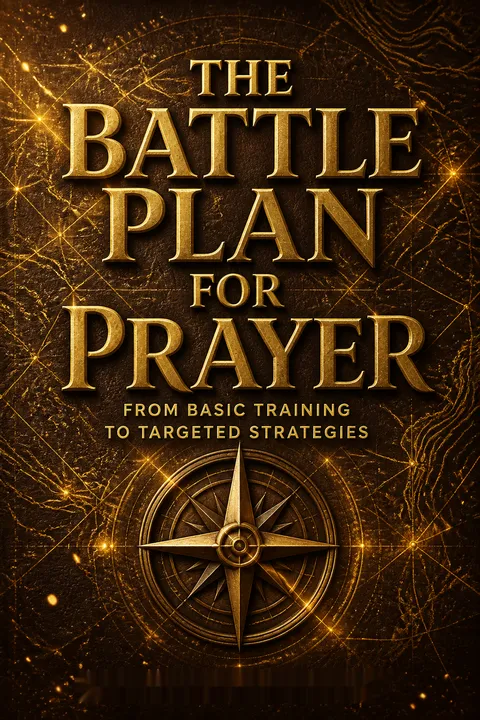
- Purpose and Structure: "The Battle Plan for Prayer" by Stephen Kendrick is a guide to developing a strategic and effective prayer life, moving from basic training to targeted strategies.
- Content Overview: The book is divided into several parts, including Enlistment, Basic Training, Conditioning, Strategies, Targets, Ammunition, and Reinforcements, each focusing on different aspects of prayer.
- Personal and Spiritual Growth: It aims to deepen the reader's relationship with God, enhance their understanding of prayer, and equip them to pray more biblically and strategically.
Why should I read "The Battle Plan for Prayer"?
- Strengthen Prayer Life: The book provides practical strategies to enhance and deepen your prayer life, making it more effective and meaningful.
- Biblical Foundation: It offers a strong biblical foundation for understanding the power and purpose of prayer, supported by numerous scripture references.
- Spiritual Growth: Reading this book can lead to personal spiritual growth, helping you to align your life more closely with God's will and purposes.
What are the key takeaways of "The Battle Plan for Prayer"?
- Prayer as a Strategy: Prayer is not just a ritual but a strategic tool for spiritual warfare and personal growth.
- Importance of Persistence: Persistent and fervent prayer is emphasized as crucial for seeing God's work in your life and the world.
- Role of Faith and Obedience: Faith and obedience are key components of effective prayer, as they align your heart with God's will.
How does "The Battle Plan for Prayer" define prayer?
- Communion with God: Prayer is defined as communion with God to intimately know, love, and worship Him.
- Alignment with God's Will: It involves understanding and conforming our lives to His will and ways.
- Access to God's Power: Prayer is a means to access and advance God's kingdom, power, and glory.
What are the different types of prayer discussed in "The Battle Plan for Prayer"?
- Adoration: Praising and worshiping God for who He is.
- Confession: Getting honest about sin and seeking forgiveness.
- Thanksgiving: Expressing gratitude for God's blessings and actions.
- Supplication: Asking for something from God, including intercession for others.
What are the "Locks and Keys" of prayer in "The Battle Plan for Prayer"?
- Locks of Prayer: These are barriers that hinder effective prayer, such as praying with a faithless heart or with unconfessed sin.
- Keys of Prayer: These are principles that enhance prayer, like praying persistently, in faith, and according to God's will.
- Practical Application: Understanding these concepts helps believers to remove obstacles and unlock the full potential of their prayer life.
How does "The Battle Plan for Prayer" suggest using the Bible in prayer?
- Scripture as a Guide: The book encourages using scripture to guide and anchor your prayers, ensuring they are aligned with God's truth.
- Praying God's Promises: It suggests praying the promises and truths found in the Bible to strengthen faith and focus.
- Integration with Prayer: Regular reading and meditation on the Bible are recommended to naturally integrate scripture into your prayer life.
What role does faith play in "The Battle Plan for Prayer"?
- Foundation of Prayer: Faith is foundational to effective prayer, as it involves trusting in God's character and promises.
- Overcoming Doubt: The book addresses common doubts about God's willingness and ability to answer prayer, encouraging believers to trust in His goodness.
- Faith in Action: Praying in faith means believing that God hears and will respond according to His will and timing.
What strategies does "The Battle Plan for Prayer" offer for praying for others?
- Intercession: The book emphasizes the importance of interceding for others, asking God to work in their lives.
- Praying for the Lost: It provides guidance on praying for those who do not know Christ, asking for their hearts to be opened to the gospel.
- Praying for Believers: Strategies are given for praying for fellow believers, focusing on their spiritual growth and protection.
How does "The Battle Plan for Prayer" address spiritual warfare?
- Prayer as a Weapon: Prayer is presented as a major assault weapon in spiritual warfare, essential for overcoming the enemy's attacks.
- Defensive and Offensive Prayers: The book discusses both defensive prayers (protection from evil) and offensive prayers (advancing God's kingdom).
- Role of the Holy Spirit: The Holy Spirit is highlighted as a guide and empowerer in the believer's prayer life, especially in spiritual battles.
What are some of the best quotes from "The Battle Plan for Prayer" and what do they mean?
- "Prayer can accomplish what a willing God can accomplish.": This quote emphasizes the power of prayer when aligned with God's will.
- "The effective prayer of a righteous man can accomplish much.": It highlights the impact of prayer when offered by someone living in obedience to God.
- "Prayer is not about prayer; it is about a Person—God Himself.": This underscores the relational aspect of prayer, focusing on communion with God rather than the act itself.
How can "The Battle Plan for Prayer" help me develop a prayer ministry?
- Guidance and Structure: The book provides guidance on establishing a prayer ministry within a church or community, emphasizing the importance of corporate prayer.
- Encouragement for Leaders: It encourages leaders to prioritize prayer and equip others to become prayer warriors.
- Resources and Strategies: Offers practical resources and strategies for organizing and sustaining a vibrant prayer ministry.

Download PDF
Download EPUB
.epub digital book format is ideal for reading ebooks on phones, tablets, and e-readers.








