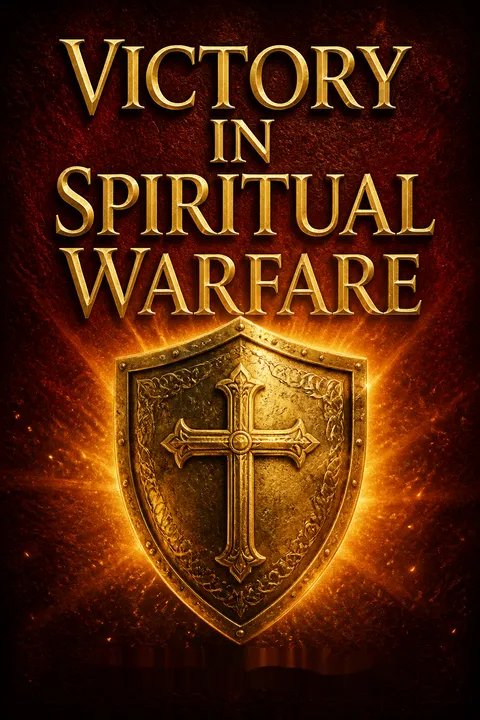


Key Takeaways
Live from Christ's victory instead of trying to earn it
The outcome is settled. Evans opens with a painting of a frightened man apparently losing a chess game to the devil. A visiting chess champion studies the board and finds a move that changes the outcome. The story introduces the book's central Christian claim: Jesus' death and resurrection have already defeated Satan, so believers face daily struggles from a position of promised victory, not to earn a victory God has withheld.
Confidence is not invulnerability. The believer still has to make choices, resist deception, and endure hardship. Evans presents the resurrection as the decisive move, while the rest of life is the difficult work of living in light of it.
The distinction between securing a victory and learning to live from it can reduce shame: a setback need not mean that faith has failed or that acceptance must be earned again. It also gives hardship a coherent story rather than treating each crisis as proof of abandonment. The useful nuance is that spiritual assurance does not guarantee a particular earthly outcome. A person may trust God and still experience illness, loss, or unresolved conflict. The framework is strongest when it offers courage and belonging, not when it is used to promise control over events.
Do not confuse the visible opponent with the whole conflict
Look beneath the surface. Evans defines spiritual warfare as conflict in an invisible spiritual realm whose effects appear in ordinary life. Drawing on Ephesians, he argues that a spouse, coworker, illness, or personal weakness is not necessarily the ultimate enemy. He uses the image of a police officer shooting at a television because a criminal appears on screen: the action mistakes a visible representation for the source of the problem.
Change the level of response. In the book's model, practical problems may need practical care, but prayer, Scripture, and obedience address their spiritual dimension. The warning against blaming people can help interrupt cycles of retaliation, even when the proposed spiritual explanation remains a matter of Christian belief.
The most constructive part of this lens is its resistance to scapegoating. Conflict research likewise finds that people often mistake a partner's behavior for the entire problem, overlooking stress, incentives, and patterns that shape both sides. The model becomes less reliable when it claims every physical disturbance has a spiritual cause. Illness, trauma, and social conditions have biological and material dimensions that deserve direct attention. Treating a spiritual interpretation as one source of meaning, rather than a universal diagnosis, preserves its value without delaying medical care or practical intervention.
Interrupt temptation before a legitimate desire becomes a destructive pattern
Notice the progression. Evans describes temptation as a process, not a sudden leap. A normal desire, such as wanting food, sex, rest, or relief, can be redirected toward an illegitimate shortcut. Deception makes that shortcut appear harmless, repeated choices turn it into disobedience, and the consequences can damage relationships, hope, or a person's sense of connection with God.
Catch the small entry. His examples include a seemingly minor choice that makes the next boundary easier to cross, and King David's decision to count his army after entertaining the idea that he could rely on his own strength. The practical lesson is to identify the thought that justifies a harmful action before it becomes routine.
This gradual account resembles contemporary models of habit formation and behavioral escalation: repeated actions can become easier when they are rewarded with short-term relief, even as long-term costs rise. That makes early recognition more useful than relying on a dramatic promise to change. The framework also has limits. A harmful pattern may be reinforced by dependence, poverty, coercion, or trauma, not simply by a person's choice to entertain a deceptive thought. Naming the sequence can clarify agency, but it should not erase the conditions that constrain it.
Wear a complete spiritual posture, not a lucky-charm version of faith
Armor means practiced readiness. Evans reads Ephesians 6 as a picture of Christian capacities, not magic equipment. Truth keeps a person oriented; righteousness means both a standing granted through Christ and an effort to live rightly; peace provides steadiness; faith offers protection; salvation guards identity and hope; and Scripture supplies language for resisting deception.
Use the whole kit. He distinguishes the first three forms of readiness, which believers should maintain, from the shield, helmet, and sword, which they must actively take up. The Roman soldier's shield, for example, protected him from flaming arrows. In Evans's analogy, the armor works through belief and practice, not by carrying a Bible as a charm or reciting words without understanding them.
The image works because it translates a dense theological passage into a memorable set of functions: orientation, conduct, steadiness, trust, identity, and response. It also discourages magical thinking by tying protection to a lived practice. At the same time, armor imagery can encourage an overly individual view of resilience, as if every problem were solved by personally suiting up. The book's emphasis on relationships and community offers a wider frame, but the metaphor itself is clearest when paired with help from other people and ordinary problem-solving.
Let God's truth challenge your feelings, and meet failure with honesty
Feelings are signals, not verdicts. Evans treats truth as God's understanding of reality, including motives and intentions, not merely accurate surface facts. Feelings matter, he argues, but they can shift with circumstances and should not be the only guide for decisions. His story of a man claiming to have caught fish after buying them at a market shows how facts can be presented in a way that hides intent.
Bring the whole self into view. Evans distinguishes a believer's standing as made righteous through Christ from the daily practice of righteousness. Confession, in his account, restores honest fellowship with God instead of concealing wrongdoing. He compares hidden sin to trash left indoors: covering it does not remove its effects.
The distinction between an event and the story told about it connects with cognitive reappraisal, the practice of examining interpretations rather than automatically accepting them. The book's call to be honest about motives also cuts against performative piety. Still, an appeal to an authoritative source of truth requires interpretation, and people can sincerely disagree about what a text means. Likewise, not every painful feeling signals a false belief or moral failure. Emotional experience can contain important information about unmet needs, danger, or illness, even when it is not the whole picture.
Make faith visible through action grounded in what you believe God has said
Faith is more than confidence. Evans defines faith as acting on what a believer understands God to have said, even when circumstances or feelings point elsewhere. His example is Peter, an experienced fisherman who casts his nets again after a fruitless night because Jesus tells him to. The unexpectedly large catch illustrates action based on trust, rather than confidence in personal expertise.
Grace is the source, faith the response. Evans argues that good works cannot purchase God's favor. Instead, grace is what God gives, and faith is how the believer receives and responds to it. This distinction pushes against spiritual scorekeeping: prayer, service, and generosity matter as expressions of trust, not as payments intended to make God provide.
This account usefully separates faith from mood. People can take a principled step while anxious, uncertain, or emotionally flat, which makes the idea more practical than treating confidence as a prerequisite for action. Its strongest safeguard is the insistence that faith responds to a grounded understanding of God's word, not every personal wish. Without that safeguard, failed expectations can be blamed on inadequate faith, placing an unfair burden on people facing real constraints. Faith can sustain action, but it should not be confused with certainty that a desired result will follow.
Move from reading Scripture to applying a specific truth under pressure
A book is not a talisman. Evans distinguishes the written Bible, its interpreted message, and a specific application or utterance drawn from it. He names these graphe, logos, and rhema. In his account, merely owning or reading Scripture is different from understanding its meaning, and both differ from applying a relevant truth to a particular struggle.
Use the text in the moment. Evans points to Jesus' wilderness encounter with Satan: rather than relying on abstract self-confidence, Jesus answers temptation with Scripture. The practical sequence is to read carefully, understand the context, and bring an appropriate teaching to bear on the choice at hand. That turns biblical study into a resource for judgment and action.
The sequence encourages active reading rather than treating religious texts as protective objects. It resembles the movement from information to interpretation to application found in professional training: knowledge becomes useful when it guides a decision. A needed scholarly caution is that graphe, logos, and rhema do not function as a fixed three-step ladder in every New Testament passage. Their meanings overlap and depend on context. Evans's distinction can still help readers describe different ways of engaging Scripture, provided it is treated as a teaching device rather than a universal rule about Greek usage.
Pray with persistence, informed by Scripture rather than wishful certainty
Ask with a reference point. Evans presents prayer as a way of asking God to act in earthly circumstances, guided by God's character and promises rather than by whatever a person happens to want. Elijah's prayer for rain illustrates the pattern: in the biblical account, he hears that rain is coming, prays, and continues watching for its arrival.
Do not mistake delay for indifference. Evans also interprets Daniel's delayed answer as an example of spiritual opposition in the unseen realm. He encourages perseverance, alertness, and prayer for others. For daily practice, he recommends Scripture-informed requests and gratitude, not repetitive attempts to pressure God into granting a specific outcome.
Prayer can support emotional regulation, attention, and a sense of connection, while shared prayer can also bind a community around someone in distress. The emphasis on aligning requests with a tradition's central commitments helps distinguish prayer from simple wish fulfillment. The story of unseen opposition, however, is a theological reading of a biblical text, not a way to verify why a particular prayer appears unanswered. If every delay is attributed to hidden spiritual interference, people may become more anxious or blame themselves for praying incorrectly. Perseverance is most sustaining when it leaves room for uncertainty.
Take emotional pain seriously without assuming every cause is spiritual
Name the pattern. Evans distinguishes a passing bad day from an emotional stronghold, a persistent feeling or attitude that dominates choices. He groups these struggles around painful experiences in the past, exhausting pressures in the present, and fear about the future. Jeremiah and David serve as examples of people who recalled God's care and found hope while circumstances remained difficult.
Do not simply suppress it. The book argues that thoughts shape emotional responses and recommends replacing hopeless conclusions with remembered truths. It also acknowledges that some emotional problems have physiological causes, while asserting that many are rooted in sin or its effects. The useful practice is to name pain, seek support, and examine both beliefs and circumstances rather than pretend distress is absent.
The section's account of past, present, and anticipated suffering recognizes that emotional life is shaped by memory, current stress, and prediction. Recalling a source of hope can be a meaningful coping practice. Its causal claims need careful handling: depression, anxiety, and other conditions may involve biology, trauma, social environment, or several factors at once. Calling them demonic or sinful can deepen stigma and delay treatment. Spiritual care can accompany therapy, medical assessment, or crisis support; it should not be used to discredit them.
Pair spiritual identity with practical boundaries and relational responsibility
Patterns need different responses. Evans calls a repeated pattern that holds someone away from their values a stronghold. He applies this idea to substance use, sexual behavior, food, gambling, and marriage. His guidance emphasizes identity in Christ, Scripture, prayer, gratitude, and daily repetition. A six-day exercise asks readers to identify a truth, apply it personally, address the temptation, and ask God for help.
Make the response concrete. The book urges boundaries around sexual behavior and harmful substances, a grateful and non-compulsive relationship with food, and resistance to gambling driven by greed. In marriage, it frames the bond as a covenant and urges husbands toward sacrificial care and wives toward respect. These are the author's prescriptions, and they require attention to mutual safety and consent.
The strength of this approach is the pairing of identity with repeated, concrete practice. A person is not reduced to a compulsion, yet change is expected to show up in choices and boundaries. The gendered marital advice is more contestable: sacrificial care and mutual respect can support a relationship, but one-sided submission can reinforce unequal power or become unsafe. Likewise, spiritual disciplines may help with addiction, but they do not replace evidence-based treatment or supportive relationships. The most humane reading combines spiritual commitment with individualized care and reciprocal responsibility.
Use give, save, and spend to reclaim financial agency
Treat money as stewardship. Evans argues that debt can restrict a person's choices and cites the biblical warning that borrowers can become dependent on lenders. His practical model is to give, save, and spend: contribute according to religious conviction, reserve money for future needs, and make a plan for current expenses. He uses Joseph's storage of grain before famine as an example of preparing for a difficult season.
Separate needs from wants. A budget helps keep spending within available resources, while contentment can reduce the pressure to imitate other people's purchases. The book also calls money a resource rather than the ultimate source of security. Evans reports giving and savings estimates from his own era, but the enduring advice is the process, not those dated figures.
This is one of the book's most directly testable applications. Budgeting, saving, and limiting consumer debt can expand a household's choices without requiring a supernatural explanation for every setback. The stewardship frame can also connect generosity to shared responsibility rather than status. One caution is that giving should not be presented as a guaranteed route to financial return, especially for people who cannot safely meet basic expenses. Economic shocks, low wages, and medical costs can create debt despite careful planning. The model works best alongside realistic advice, not as a judgment of a person's faith.
Analysis
The book's central achievement is to make Christian identity a practical lens for interpreting temptation, conflict, and hardship. Its governing contrast is not simply good versus evil, but earned control versus received grace: believers cannot defeat a supernatural enemy by willpower alone, yet they can act from the victory attributed to Christ. The armor image gives this theology a memorable structure, while the stronghold chapters translate it into daily practices involving relationships, habits, emotions, and money.
Its most useful psychological insight is that interpretation affects action. A person who sees a craving as an identity may feel trapped by it; a person who sees it as a pattern may find room to respond differently. Scripture, prayer, confession, gratitude, and testimony can function as attention practices, sources of meaning, and forms of social reinforcement. Their value does not depend on accepting every claim about invisible causation.
That distinction matters because Evans sometimes treats spiritual roots as the primary explanation for physical and emotional problems. Such a view can encourage people to look beyond blame and symptoms, but it can also overreach. Mental illness, addiction, debt, and marital conflict are shaped by biological, psychological, relational, and economic factors. A spiritual account should complement, not displace, medical care, therapy, safety planning, or material assistance. In particular, distress is not evidence of weak faith, and religious language should never be used to excuse abuse or discourage treatment.
The strongest reading of the book preserves its theological center while resisting its broadest causal claims. The armor then becomes a set of practices for courage, ethical action, and belonging, rather than a guarantee of control over outcomes. Its practical promise is not that every battle ends quickly, but that people can face struggle without defining themselves by defeat, and can seek help across spiritual and worldly forms of care.
Review Summary
Victory in Spiritual Warfare receives high praise from readers, with an average rating of 4.57 out of 5. Reviewers appreciate Evans' practical approach to spiritual warfare, biblical analysis, and relatable analogies. Many found the book enlightening and empowering, particularly the sections on the armor of God and strategies for overcoming specific strongholds. Readers commend Evans' scriptural foundation and clear explanations. Some caution against viewing the strategies as formulaic, while a few critics question the theological accuracy. Overall, most readers highly recommend the book for its insights into spiritual battles and Christian living.
People Also Read







Glossary
Stronghold
Entrenched harmful patternEvans uses stronghold for a recurring pattern of thought or behavior that keeps a person from living according to God's will. He understands it as involving both visible actions and an invisible spiritual dimension. The book applies the term to compulsions, emotional patterns, relationship conflict, gambling, and debt.
Kingdom agenda
God's rule across lifeEvans's term for God's comprehensive rule over human life. He applies it not only to individual belief, but also to family, church, and society. In this view, Christian faith should shape conduct and institutions, with the aim of bringing these areas into alignment with biblical principles.
Armor of God
Spiritual readiness for conflictThe set of images in Ephesians 6 that Evans interprets as a believer's equipment for spiritual struggle. The pieces represent truth, righteousness, peace, faith, salvation, and God's word. Evans treats them as practiced commitments and resources for resisting deception, rather than as literal objects or protective charms.
Graphe
The written ScriptureA Greek term Evans uses for the written form of Scripture, meaning the biblical text as a document. He distinguishes it from understanding the text's message and from applying a specific scriptural utterance to a current situation. The categories are part of his teaching explanation, not a rigid rule for every biblical use.
Logos
The message of ScriptureEvans uses Logos for the meaning or message conveyed by Scripture, beyond the physical book or written words. He also connects the term with Jesus as God's message embodied in human life. In his explanation, understanding this message helps readers examine motives and discern how a text speaks to conduct.
Rhema
A specific applied utteranceIn Evans's account, rhema is a particular spoken or applied word drawn from Scripture for a specific circumstance. He presents it as the Spirit's use of God's word in responding to temptation or conflict. The book distinguishes it from the written text and its general message, though these Greek terms can overlap in biblical usage.
Kairos
An appointed momentEvans interprets kairos as a specific, opportune time, contrasting it with time understood as a general sequence of minutes and hours. In his reading of Ephesians 6, it points to moments of intense struggle when believers should be especially alert and pray. This is his interpretive emphasis for the passage.
Access principle
Sin permits harmful influenceEvans's name for the theological idea that disobedience and unresolved sin can give Satan or demons an opening to influence a person's life or environment. The book uses this concept to stress confession and repentance. It is a spiritual interpretation, not a clinically established explanation for illness or behavior.
FAQ
What's Victory in Spiritual Warfare about?
- Spiritual Battle Focus: The book delves into the concept of spiritual warfare, emphasizing that believers are engaged in a battle against unseen forces. It highlights the importance of understanding the nature of this battle and the strategies employed by the enemy.
- Armor of God: Tony Evans outlines the "armor of God" as described in Ephesians 6, detailing each piece and its significance in protecting believers during spiritual warfare.
- Living from Victory: A key theme is that Christians are not fighting for victory but from a position of victory already secured through Christ, encouraging believers to engage in spiritual warfare with confidence.
Why should I read Victory in Spiritual Warfare?
- Practical Guidance: The book provides practical advice on how to equip oneself for spiritual battles, making it a valuable resource for anyone seeking to deepen their understanding of spiritual warfare.
- Empowerment through Knowledge: Readers will gain insights into the nature of their struggles and learn how to apply biblical truths to overcome challenges, empowering them to live victoriously.
- Strengthening Faith: By understanding the armor of God and how to use it, readers can strengthen their faith and resilience against spiritual attacks, leading to a more fulfilling Christian life.
What are the key takeaways of Victory in Spiritual Warfare?
- Understanding the Battle: Recognizing that the battle is spiritual and not against flesh and blood is crucial for effective engagement, shifting the focus from physical problems to their spiritual roots.
- Importance of Armor: Each piece of armor serves a specific purpose in protecting and equipping believers for spiritual warfare, and it must be worn and utilized correctly to be effective.
- Faith as a Weapon: The shield of faith is highlighted as a critical tool for extinguishing the enemy's attacks, and faith must be rooted in truth to be effective in spiritual battles.
What is the armor of God mentioned in Victory in Spiritual Warfare?
- Belt of Truth: This piece stabilizes and holds everything together, emphasizing the importance of knowing and living by God's truth, protecting against deception and chaos.
- Breastplate of Righteousness: Protects the heart and signifies the believer's position in Christ, involving both imputed righteousness (what God has given) and practical righteousness (how one lives).
- Shoes of Peace: Provide stability and readiness to share the gospel, symbolizing the inner peace that comes from knowing Christ, allowing believers to stand firm in trials.
How does Tony Evans define spiritual warfare in Victory in Spiritual Warfare?
- Cosmic Conflict: Spiritual warfare is described as a cosmic conflict occurring in the invisible spiritual realm, affecting the visible physical realm, involving forces of good and evil.
- Root of Problems: Evans emphasizes that many physical issues stem from spiritual roots, and addressing these roots is essential for true healing and victory.
- Engagement Required: Believers are called to actively engage in this warfare, utilizing the armor of God to combat the enemy's schemes and strategies.
What are the best quotes from Victory in Spiritual Warfare and what do they mean?
- "Whatever is plaguing you today...": This quote emphasizes the belief that physical problems often have spiritual roots, encouraging readers to address the underlying spiritual issues rather than just the symptoms.
- "The sword of the Spirit...": Highlights the importance of using God's Word as a weapon in spiritual battles, suggesting that scripture is powerful and can combat lies and deception from the enemy.
- "You can leave God out...": Serves as a reminder that while God is always present, individuals have the choice to engage with Him or not, underscoring the importance of actively seeking God's involvement in our lives.
How does the breastplate of righteousness function in spiritual warfare?
- Protects the Heart: The breastplate guards the heart, central to a believer's spiritual life, signifying both the believer's position in Christ and the need for practical righteousness in daily living.
- Imputed and Practical Righteousness: Righteousness is both imputed (given by God) and practical (how one lives), crucial for maintaining a strong defense against spiritual attacks.
- Confession and Restoration: Regular confession of sin is necessary to maintain the breastplate's effectiveness, restoring fellowship with God and ensuring alignment with His righteousness.
What role does faith play in Victory in Spiritual Warfare?
- Shield of Faith: Faith is described as the shield that protects believers from the enemy's attacks, essential for extinguishing the fiery darts of doubt, fear, and temptation.
- Accessing Grace: Faith is the means by which believers access God's grace and power, not about having more faith but understanding and acting on the truth of God's Word.
- Living by Faith: Living by faith means aligning one's actions with God's truth, leading to victory in spiritual battles.
How can I apply the teachings of Victory in Spiritual Warfare to my life?
- Daily Armor Application: Start each day by consciously putting on the armor of God and reflecting on its significance, helping you remain aware of spiritual battles throughout the day.
- Scripture Memorization: Memorize key verses that resonate with your personal struggles, equipping you to counteract negative thoughts and lies from the enemy with God's truth.
- Consistent Prayer Life: Develop a consistent prayer routine that includes both speaking to God and listening for His guidance, strengthening your relationship with Him and enhancing your ability to navigate life's challenges.
What specific methods does Evans suggest for overcoming strongholds?
- Identify and Confront: Evans encourages readers to identify their specific strongholds, whether emotional, financial, or relational, as acknowledging these issues is the first step toward overcoming them.
- Utilize the Armor of God: Emphasizes the importance of putting on the armor of God daily, with each piece serving a unique purpose in protecting and empowering believers.
- Engage in Prayer: Stresses the necessity of prayer as a means of accessing God's power, suggesting that prayer should be a constant practice, especially during times of spiritual attack.
What role does prayer play in spiritual warfare according to Evans?
- Accessing God's Power: Prayer is described as the means by which believers access God's power and intervention in their lives, essential for spiritual victory and should be a regular practice.
- Communicating with God: Emphasizes that prayer is not just about asking for help but also about building a relationship with God, involving both speaking and listening to God's voice.
- Fighting Against the Enemy: Prayer serves as a weapon against the enemy, allowing believers to stand firm in their faith, encouraging readers to pray scripture and declare God's promises in their lives.
How does Victory in Spiritual Warfare address emotional strongholds?
- Identifying Emotional Issues: Discusses how emotional strongholds, such as anger and depression, can dominate a person's life, encouraging readers to recognize these strongholds and their roots.
- Replacing Lies with Truth: Emphasizes the importance of replacing negative thoughts with God's truth, leading to emotional healing and freedom.
- Hope and Healing: Reassures readers that God can bring hope and healing to their emotional struggles, and by trusting in God's promises, individuals can overcome their emotional strongholds.
About the Author
Other books by Tony Evans

Download PDF
Download EPUB
.epub digital book format is ideal for reading ebooks on phones, tablets, and e-readers.








