

Key Takeaways
Read October 7 as Cahn's proposed climax of Revelation's Dragon-Israel conflict
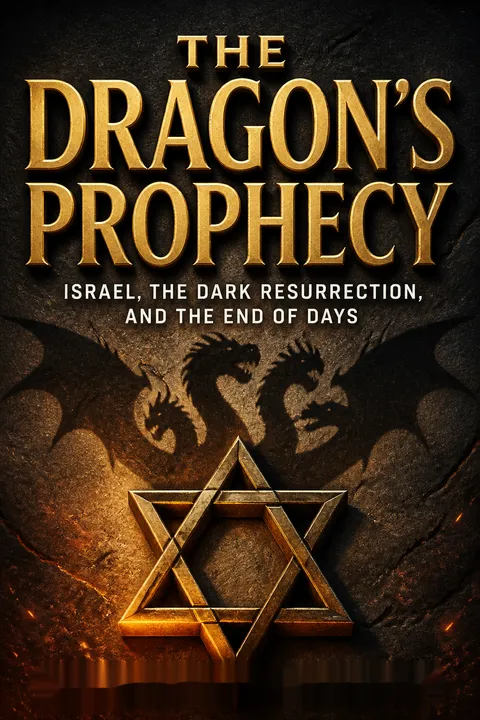
A night becomes a lens. Cahn says the book began after a Friday-night service in New Jersey, where he spoke about a biblical mystery. The following morning, October 7, 2023, Hamas attacked Israel. He interprets the timing and events as the fulfillment of a pattern: a surprise ground invasion on the Sabbath and a Jewish holy day, followed by war.
The vision behind it. In Revelation 12, Cahn identifies the woman as Israel, her child as the Messiah, and the Dragon as Satan. He reads the chapter as a long spiritual conflict that reaches a new stage when Israel exists again as a nation. This is the book's governing theological interpretation, not a conclusion established by the attack's timing alone.
The book's narrative power comes from placing a shocking contemporary event inside an ancient scriptural frame. That frame gives readers a way to connect history, faith, and moral urgency. It also asks for careful category distinctions: a religious interpretation can be meaningful to believers without functioning as independently verifiable evidence that an event was foretold. Holding both points together allows the reader to understand the author's conviction without confusing interpretation with proof.
Treat evil as a destructive inversion that feeds on the good
A parasite, not a rival creation. Cahn argues that evil cannot stand alone. Lies distort truth, murder depends on the prior value of life, and destruction requires something worth destroying. He calls evil an inversion of the good: it borrows what it twists rather than creating an independent moral order.
Choice makes the risk possible. In his Christian account, God created beings with will and consciousness, so goodness can be chosen freely. That freedom also permits rejection of the good. Cahn therefore presents evil as both personal and spiritual, ultimately embodied in the Devil, rather than as a force like a storm or earthquake. The argument gives the book a theological explanation for why human cruelty can seem to exceed ordinary calculation.
This account usefully distinguishes natural harm from intentional wrongdoing. An earthquake can devastate without intending anything; a person can choose to injure another. The idea that destructive systems depend on goods they corrupt also has a practical echo: propaganda needs shared language, and exploitation needs human trust. Yet the claim that moral values require a transcendent source remains a philosophical argument, not a settled deduction. Secular moral theories offer other accounts of obligation, even as they too must explain why some acts deserve condemnation.
See Israel's return as a prophetic reading, not merely a political event
The bones become a nation. Cahn reads Ezekiel's vision of dry bones coming to life as a prophecy of the Jewish people's return to their homeland. After the destruction of Jerusalem by Rome in AD 70 and centuries of dispersion, the modern state of Israel was established in 1948. In 1967, Israeli forces took control of Jerusalem's Old City, including access to the Western Wall.
History becomes resurrection. Cahn sees the return of people, language, institutions, and land as more than political restoration. He describes it as a national resurrection and a sign that the end-times vision in Revelation can now unfold in a specific place. The claim depends on reading ancient biblical prophecy as a description of modern events, a framework that gives the book its sense of historical momentum.
The resurrection metaphor captures the startling scale of rebuilding a national home after prolonged dispersion. It also reflects how communities use shared stories to make political change intelligible. The interpretive distinction matters: state formation can be understood through religious prophecy, but it also has historical, diplomatic, and political causes. Those explanations need not cancel each other for religious readers, though prophecy cannot by itself settle competing claims about sovereignty, borders, or the meaning of modern events.
Separate Cahn's Philistine parallel from claims about Palestinian ancestry
A proposed dark mirror. Cahn argues that Israel's return was mirrored by a modern return of Israel's ancient enemy, the Philistines. He connects the ancient name Pilashet to Palestine and the Arabic name Filastin, then traces the rise of modern Palestinian identity alongside Zionism and Israel's establishment. In his reading, the parallel is cultural and political as well as linguistic, not a claim that today's Palestinians are simply the same biological population as the ancient Philistines.
A consequential interpretation. He calls this process a dark resurrection: a people and identity supposedly taking on the role of an ancient adversary. That is the author's framework for interpreting the conflict, not a neutral historical consensus. The book's own distinction between names, ancestry, and identity is important, but does not establish an unbroken ancient continuity.
The parallel is central to the book, but it moves from resemblance to causation. A shared or related place-name does not prove that a modern national identity was created as a spiritual weapon, nor that contemporary Palestinians inherit an ancient people's hostility. National identities form through layered histories, political institutions, and lived experience. A reader can examine Cahn's typology as theology while refusing to treat an entire population as a single hostile actor. That distinction protects historical analysis and human dignity at once.
Use ancient parallels to interpret October 7, but test each comparison
The old story returns. Cahn compares the October 7 invasion with biblical accounts of Philistine raids against Israelite towns. He points to the attack's movement from Gaza into border communities, the abduction of civilians, and survivors hiding in fields and shelters. He also links the event to the Samson story: Gaza captures Samson, blinds and binds him, then displays him as a spectacle.
Numbers and motifs. The book notes an estimate of about 3,000 Hamas-led attackers and compares it with the roughly 3,000 people watching Samson in Gaza. It also pairs ancient arrows with modern rockets, and David's sling with stones used in later uprisings. Cahn reads these as echoes of an ancient war; resemblance alone cannot show that the events share a supernatural cause.
Historical analogy can reveal patterns that ordinary chronology obscures, especially recurring tactics such as raids, hostage-taking, and attacks on civilians. It can also overfit: once a reader searches a large body of scripture and history for parallels, some matches are inevitable. Numerical coincidence is particularly persuasive to the eye and particularly weak as causal evidence. The strongest use of this comparison is as a prompt to examine recurring violence and its human consequences, not as proof that modern populations are reenacting fixed biblical roles.
Treat Jubilee date patterns as interpretation, not proof of prediction
A fifty-year pattern. Cahn uses the biblical Jubilee, a year associated with release and return, to organize modern Israeli history. He links 1917, 1967, and 2017 with stages in the return to the land and Jerusalem. He then points to the Yom Kippur War, which began in 1973, and argues that fifty years later, in 2023, another surprise invasion arrived.
The date calculations. The book adds that October 7 fell on a Saturday and on Shemini Atzeret and Simchat Torah. It also counts 18,263 days between selected dates connected to Jerusalem and the Yom Kippur War, with the count ending on October 7. These patterns are presented as a Jubilean mystery. Their force depends on which dates and intervals are selected.
Calendars help communities organize memory, and anniversaries can make historical comparison vivid. Cahn's calculations invite readers to see time as patterned rather than random. But a pattern identified after an event is not the same as a prediction specified in advance. With enough candidate dates, intervals, and biblical references, multiple alignments can be found. A careful reader can appreciate the devotional meaning of the Jubilee motif while asking whether the method could have identified October 7 before it happened, using fixed rules and no retrospective adjustments.
Keep the Temple Mount's political rationale distinct from Cahn's spiritual explanation
A contested holy place. The Temple Mount in Jerusalem is central to Jewish religious history and also contains the Al-Aqsa Mosque, a site of deep importance to Muslims. Cahn argues that any prospect of renewed Jewish worship there threatened the Dragon's control and helped precipitate October 7. He cites spring 2023 clashes at the site, Hamas warnings, and leaders' statements that described Al-Aqsa as a reason for the operation.
The red heifers. Cahn also highlights five red heifers brought to Israel in 2022, which some religious groups connected with future Temple rites. He treats their arrival as another spiritual provocation. Hamas named its assault the Al-Aqsa Flood, a direct political and religious reference. Cahn's further claim that Satan orchestrated the timing is a theological inference, not something the stated rationale proves.
The Temple Mount shows how sacred geography can intensify political conflict: competing histories, worship practices, and claims to authority converge in one place. Taking the attackers' stated rationale seriously helps explain the operation's chosen symbolism, but it does not make that rationale the sole cause or justify violence against civilians. Cahn's spiritual account adds a layer for Christian readers; it should not replace analysis of political strategy, religious identity, or the choices of human decision-makers.
Read end-times warnings with humility, especially when mapping nations onto prophecy
An ancient coalition, modern proxies. Cahn reads Ezekiel 38 and 39 as a future invasion of a restored Israel. He maps ancient names in the prophecy onto modern countries, including Iran, Turkey, Sudan, and Libya, and notes that some of these states or networks have supported Hamas through money, weapons, or smuggling routes. He treats those connections as a preview of the prophesied coalition, not its completed fulfillment.
A spiritual chain. The book also interprets Daniel's Sar Paras, or ruler of Persia, as a demonic power behind Iran's hostility to Israel. Iran's April 2024 missile attack on Israel becomes a prophetic milestone in this reading. The larger forecast is a rise in global hostility, the Beast, and Armageddon. These conclusions depend on contested interpretations of biblical symbols and current events.
Prophetic texts often use symbolic names whose referents are disputed, so mapping them onto present-day states requires more than a name match. At the same time, the book's attention to proxy relationships points toward a concrete analytical question: how do funding, weapons, and political alliances enable armed groups? Those mechanisms can be studied with evidence without assuming a supernatural coordinator. Separating the observable network from the theological interpretation makes the argument easier to assess and less vulnerable to changing headlines.
Answer fear with disciplined faith, courage, and care for every person
The conflict becomes personal. Cahn turns from nations and prophecy to the reader's life. He describes the Dragon as opposing every person made in God's image, and presents Jesus as the answer to evil through forgiveness, new life, and reconciliation with God. His practical appeal is to meet fear with faith, hatred with love, and despair with hope, rather than surrendering to cruelty or cynicism.
A model for believers. He urges Christians to recover the courage and spiritual independence of the early church, which he associates with the Book of Acts, and uses the Greek term nikao for overcoming or triumphing. The book also says believers should show mercy to people caught up in destructive movements. Its conclusion is not that evil has the last word, but that Christian hope rests on the Lamb's eventual victory.
The turn from apocalyptic scale to daily conduct gives the book a constructive destination: beliefs matter insofar as they shape courage, restraint, and care. The image of resistance can help people face pressure without mistaking passivity for virtue. Yet martial language can also sharpen an us-versus-them mindset, particularly when applied to real populations. The book's call to love opponents and distinguish individuals from political movements is therefore essential, not incidental. It supplies an ethical check on the rhetoric of spiritual combat.
Analysis
The book is a Christian theological interpretation of recent history, organized as a long chain of correspondences between Revelation, ancient Israelite narratives, and modern events. Its central move is to read October 7 not as an isolated attack but as the latest expression of a spiritual conflict between the Dragon and Israel. From there, it builds outward: Israel's statehood becomes resurrection, Palestinian identity becomes an alleged Philistine counter-resurrection, date patterns become Jubilee signs, and the Temple Mount becomes the spiritual ground zero of current events. The closing chapters redirect that cosmic account toward Christian endurance and personal redemption.
This architecture is memorable because it makes disparate details feel like parts of one plot. It also contains an important ethical qualification: the author says individuals should not be judged solely by the actions of a people or government, and calls for mercy toward those caught in destructive movements. That restraint sits uneasily beside the book's sweeping characterization of Palestinians as a modern embodiment of Israel's ancient enemy. The tension deserves attention because metaphors of inherited enmity can turn a theological reading into an accusation against a whole population.
The book's strongest historical observations concern concrete events, including invasion, hostage-taking, attacks on civilians, and the political importance of the Temple Mount. Its most uncertain claims arise when similarity is treated as evidence of a hidden spiritual cause. Shared terminology, matching numbers, or anniversaries can generate compelling patterns, but they do not independently verify prophecy. Likewise, mapping ancient peoples to modern states is interpretive rather than self-evident. Readers can still find value in the book's religious account of evil, its insistence that history has moral stakes, and its call for faith under pressure, while distinguishing those convictions from historical proof. That distinction allows the text to be taken seriously without making its most contested claims immune to scrutiny.
Review Summary
The Dragon's Prophecy receives polarized reviews with an overall 4.57/5 rating. Supporters praise Cahn's connections between biblical prophecy and the October 7, 2023 Hamas attack on Israel, his exploration of 50-year Jubilee patterns, and insights into end-times events. They appreciate his ability to link ancient Philistines to modern Palestinians and explain current Middle Eastern conflicts through scripture. Critics argue the book is pro-Israel propaganda with cherry-picked verses, repetitive writing, poor formatting with excessively short chapters, and tenuous historical connections. Some find his interpretations stretch credibility while others consider him a modern prophet.
People Also Read

Glossary
orgidzo
Long-held, violent furyCahn uses the Greek term orgidzo for the Dragon's rage against Israel. He describes it as more than a passing anger: a persistent hostility that can erupt into violence and vengeance. In the book's theology, this spiritual fury is expressed through human actions and recurring anti-Jewish hatred.
dark resurrection
A proposed anti-Israel parallelCahn's phrase for his claim that the return of modern Israel was mirrored by a return of Israel's ancient enemy, the Philistines. He applies it to the emergence of Palestinian identity and its association with the land. This is the author's theological interpretation, not an established historical account of Palestinian ancestry.
Jubilean mystery
Prophetic reading of fifty-year cyclesCahn's method of linking modern events in Israeli history to the biblical Jubilee, a fiftieth year associated with release and return. He identifies stages of Israel's restoration in 1917, 1967, and 2017, then connects the 1973 Yom Kippur War to the 2023 attack. The proposed pattern is an interpretive framework.
Palestine stratagem
Identity replacement as spiritual strategyCahn's name for what he sees as a recurring strategy of evil: detach something from its original purpose, erase or displace its identity, and substitute an opposing one. He applies this first to the name and identity of the land of Israel, then extends the idea to Western culture and individual lives.
Sar Paras
Persia's spiritual rulerIn Daniel, the phrase refers to the ruler or prince of Persia who withstands an angel bringing a message to the prophet. Cahn interprets this figure as a demonic power associated with Persia, now Iran, and sees it as part of the Dragon's spiritual opposition to God's purposes for Israel.
Sar Yisrael
Israel's angelic protectorCahn's label for Michael, whom Daniel describes as a great prince standing for Daniel's people. He presents Michael as Israel's spiritual defender, set against the Sar Paras and aligned with the forces opposing the Dragon. The term expresses the book's account of spiritual warfare behind national conflict.
nikao
To overcome or triumphA Greek verb that Cahn draws from Revelation to describe believers' victory over the Dragon. He emphasizes that the biblical vision speaks of overcoming as a sure victory, grounded in the Lamb, the believers' testimony, and willingness to remain faithful under threat. The book applies the term to spiritual resistance in daily life.
About the Author
Download PDF
Download EPUB
.epub digital book format is ideal for reading ebooks on phones, tablets, and e-readers.








