


Plot Summary
The Seal on Ana's Desk
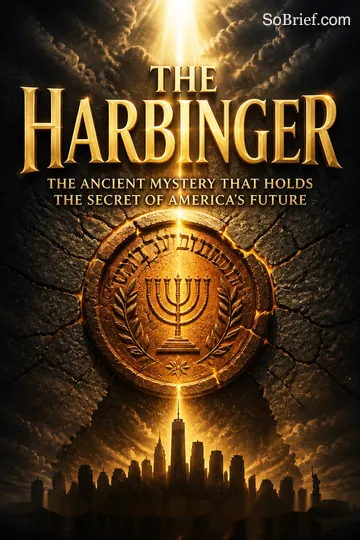
Nouriel Kaplan, a freelance journalist, arrives at the Manhattan office of Ana Goren, a formidable media executive, claiming that a mystery thousands of years old explains America’s recent crises and threatens its future. Ana suspects a pitch for a sensational story, but Nouriel’s seriousness unsettles her enough to keep listening.
He produces a small clay seal covered in unfamiliar markings and says it was sent to him without a letter or return address. Its arrival began a chain of encounters with a stranger who seemed to know Nouriel before they had met. Ana asks where the mystery came from. Nouriel reaches back to the Hudson River, where he first examined the seal beside the man who would become his guide.
The opening makes credibility itself part of the suspense. Ana tests Nouriel as a media professional would, measuring an extraordinary claim against the cost of her time, while Nouriel offers an artifact rather than credentials. The seal gives the unseen message a physical foothold. It also establishes the book’s central tension: Nouriel wants to investigate events as a journalist, but the stranger’s certainty keeps pushing him toward a role closer to witness than skeptic. Ana’s decision to listen gives the story its frame and turns private revelation into a question of public communication.
The Prophet Beside the Hudson
At the river bench, the stranger identifies Nouriel’s object as an ancient Judean seal and explains how seals authenticated important messages. He reveals a second seal, then says he has a message for Nouriel, though he refuses to give his name. Shaken, Nouriel leaves and searches the Bible for accounts of prophets.
When he returns to the bench several times, the stranger is absent until he appears on the third visit. He describes ancient Israel’s spiritual decline, the removal of its protection, and the warnings that preceded invasion. Then he names America as the nation now facing a similar danger. He gives Nouriel the first of nine seals, promising that each marks another warning to be uncovered.
The encounter converts a journalist’s curiosity into an obligation he has not chosen freely. Nouriel’s repeated returns show that disbelief cannot restore his earlier indifference: uncertainty itself draws him back. The stranger’s account establishes the novel’s typological method, reading America through the history of Israel rather than through political or economic explanations alone. That method gives scattered events an encompassing pattern, but it also asks Nouriel to accept an interpretation before he can test it. The seals make that demand procedural. Each meeting requires investigation, so belief and verification become entangled rather than cleanly opposed.
A Breach, Then Terror
The first seal’s broken wall leads Nouriel to the ancient invasion of Israel in 732 B.C., which the prophet calls the Breach: a limited attack that signaled the loss of national protection. He then identifies September 11 as America’s corresponding breach, when terrorists penetrated defenses long assumed secure.
The prophet distinguishes the grief of individual deaths from his interpretation of the attack as a national warning. A second seal depicts armed men, and Nouriel recognizes the Assyrians in reliefs at the Metropolitan Museum.
The prophet describes their deliberate use of terror and connects their invasion of Israel with the attacks on America. He also links the later wars in Afghanistan and Iraq to the ancient conflict, then gives Nouriel the next seal.
This section sets the book’s interpretive stakes at their most painful. The prophet insists that a national reading of catastrophe must coexist with the personal grief of those who lost loved ones, a distinction intended to prevent suffering from being reduced to a symbol. Yet the same move makes trauma evidence for a providential argument. Nouriel follows the guide from a breached wall to Assyrian reliefs, learning to treat material images as signs. The museum’s historical objects lend texture to the analogy, while the move from ancient terror to modern war extends the pattern from a single attack into a national response.
The Verse Beneath Ground Zero
Unable to interpret the third seal, Nouriel searches the New York Public Library for the word the prophet has told him he needs. The stranger intervenes with a scroll and identifies Isaiah 9:10 as the key: after invasion, ancient Israel answered destruction with a vow to rebuild using stronger materials and replace fallen trees with stronger ones.
The prophet reads that response as defiance rather than repentance. Nouriel then recognizes the seal’s image as fallen bricks. At Ground Zero, the collapsed World Trade Center became the defining image of September 11, and the prophet treats the rubble as the third Harbinger. He argues that America briefly turned toward prayer after the attack, but soon returned to familiar habits without changing course.
The verse supplies the narrative with a compact organizing mechanism: each subsequent sign can be read as an element of one ancient sentence. That discovery changes Nouriel’s task from collecting strange coincidences to arranging them in sequence. The fallen buildings become both physical remains and a challenge to national assumptions of invulnerability. The prophet’s emphasis on America’s short-lived religious response makes the aftermath as important as the attack itself. In this account, the decisive failure is not that the nation rebuilt, but that it treated rebuilding as a substitute for reflection. The distinction prepares the reader for the next signs.
The Tower and the Stone
The fourth seal sends Nouriel to the Empire State Building, but the prophet explains that the tower image points instead to Ground Zero’s planned reconstruction. American officials repeatedly promised to rebuild, and the proposed Freedom Tower was presented as a symbol of national recovery and resolve. The prophet reads the project’s intended height and strength as a modern echo of Israel’s defiant vow.
The fifth seal leads Nouriel to a mountain upstate, where the prophet explains that the ancient word for hewn stone refers to quarried rock. At Ground Zero, a twenty-ton Adirondack granite block was placed as a symbolic cornerstone for rebuilding. Years of disputes altered the project, and the stone was eventually removed.
The Tower and the stone turn public commemoration into the book’s most concrete study of symbolism. Officials intend to express resilience, but the prophet recasts the same acts as evidence that the nation chose strength over repentance. The distinction depends less on what the builders did than on the meaning assigned to their motives, which gives the interpretation moral force while making it difficult to disprove. Nouriel’s repeated misreadings of clues also matter: the Empire State Building is only a meeting place, and the mountain is a path to the stone. The search trains him to follow signs beyond their most obvious appearance.
Sycamore Replaced by Erez
The sixth seal depicts a tree, which the prophet connects to the sycamore in Isaiah’s prophecy. Nouriel doubts the match because the biblical tree does not naturally grow in the American Northeast. The prophet points instead to the English sycamore struck by debris from the North Tower on September 11.
Its fall made it a Ground Zero symbol, and a brick was found among its roots. Two years later, the tree was replaced on the same plot by a conifer, the prophet’s interpretation of the biblical erez. Donors and local organizers made the planting a public ceremony and named the new tree a sign of hope. Nouriel sees the sixth and seventh Harbingers embodied in one place.
The trees make the pattern feel intimate: unlike towers and economic systems, they are living things whose destruction and replacement can be located in a small patch of earth. The prophet’s solution to Nouriel’s botanical objection is translation, allowing a local species to stand in for its ancient counterpart. That flexibility strengthens the story’s symbolic system while revealing its interpretive dependence on resemblance and naming. The public ceremony adds another layer: the organizers intend hope, while the prophet reads the same gesture as defiance. Nouriel’s growing acceptance shows how his role shifts from testing isolated claims to inhabiting the pattern they form.
The Vow Spoken Twice
The eighth seal looks like a speaker’s platform, but the prophet says its meaning is the vow itself, spoken publicly by national leaders in the capital. Searching the prophecy for a location, Nouriel identifies Samaria as Israel’s capital and travels to Washington, D.C. The clue points to a 2004 speech by a prominent vice-presidential candidate on September 11, the third anniversary of the attacks.
The speaker’s address drew on the same images of fallen bricks, cut trees, stone, and replacement cedars that Nouriel has been tracing. The prophet treats the speech as an unwitting repetition of Israel’s vow. Nouriel records the discovery, then receives the final seal, which depicts a scroll.
The eighth Harbinger shifts the mystery from objects to speech. Earlier signs could be dismissed as physical parallels; a public address lets the prophet interpret political language as a national act. The capital matters because the speaker’s words are presented as representative, not merely personal. This move also sharpens the book’s concern with unintended meaning: the candidate aims to encourage listeners, while the prophet hears an ancient warning being reenacted. Nouriel’s recorder preserves the speech as evidence within his inquiry, but the significance of that evidence remains inseparable from the theological framework that gives it its force.
The Capitol's First Witness
At the Capitol, the prophet explains that the scroll represents Isaiah’s words not only as a vow but as a prophecy about what would follow. He takes Nouriel to the site of the national legislature and recounts the Senate majority leader’s address on September 12, 2001, the morning after the attacks. The leader used the ancient images of fallen bricks and cut trees while presenting the country’s response.
The prophet calls this the first witness, arguing that the speaker unknowingly gave the prophecy a new national audience. He later pairs that address with the 2004 speech, whose speaker repeated the same imagery. Nouriel asks what could follow such a precise pattern, but the prophet leaves him with a warning of a second shaking.
By calling the speeches witnesses, the prophet borrows the language of legal proof to raise the stakes of his interpretation. The two addresses are not merely echoes; in his account, their repetition establishes a case against the nation. That rhetorical structure gives the mystery an internal logic and makes public records part of its evidence. At the same time, it reframes ordinary political speech as something its speakers cannot control. Nouriel’s question about what comes next marks a transition from retrospective puzzle-solving to anticipation. The unexplained second shaking turns the completed sequence of Harbingers into a forecast.
Seven Years to Shemitah
Years pass before the prophet returns to explain the second stage. He tells Nouriel that America tried to counter September 11 through stronger defenses, wars, and economic stimulus without addressing what he calls the spiritual cause.
After the attacks, the Federal Reserve cut interest rates, helping create easy credit, a housing boom, and mounting debt. In 2008, mortgage giants Fannie Mae and Freddie Mac came under government control, Lehman Brothers failed, and markets plunged.
The prophet connects the crisis to the biblical Shemitah, a seventh-year release of agricultural labor and debt. He points to the 2001 and 2008 stock-market crashes, seven years apart, and emphasizes that the 2008 collapse’s worst single-day loss fell on the Hebrew calendar’s day of release.
The book expands its pattern from symbolic objects into economic causation. The prophet links policy decisions and financial mechanisms to a theological account, treating the post-attack response as the seed of the later collapse. The Shemitah supplies a calendar as well as a metaphor: debt release becomes the lens through which bankruptcies, bailouts, and lost investments acquire spiritual significance. This synthesis makes the crisis feel both historically specific and cosmically ordered. It also changes the scale of Nouriel’s investigation. The earlier Harbingers concerned visible sites in New York and Washington; now the claimed pattern reaches households, markets, and economies around the world.
A Third Witness
The prophet gives Nouriel the scroll seal again, this time as a clue to a third witness. Nouriel returns to Washington and joins the prophet on the Capitol grounds, where presidents are inaugurated. They examine a 2009 address to Congress by the new president, delivered as the economy remained in crisis.
The president urged Americans to rebuild and recover, and the news media selected that pledge as the speech’s defining phrase. The prophet argues that the address repeats the first witness’s language and extends the pattern from September 11 to the economic collapse.
He also notes that the president spoke on the same hill where the first vow had been proclaimed. Nouriel now understands the seals as signs of an unfolding sequence, not a closed puzzle.
The third witness gives the pattern a new kind of authority: a president speaks during the crisis the prophet has interpreted as the second shaking. The book makes media repetition part of the event, showing how headlines can amplify a phrase beyond the speaker’s intentions. This enlarges the story’s account of agency. Politicians, journalists, and audiences all participate in the transmission of meaning, though none necessarily recognizes the role assigned to them. Nouriel’s understanding also changes. He no longer expects the seals to yield a tidy endpoint; each new appearance reveals that earlier events remain active within a larger sequence.
Ground Zero's Hidden Foundation
A tiny image on the first seal leads Nouriel into a dream of King Solomon dedicating the Temple, George Washington praying, and a hidden paper revealed after destruction. The prophet explains that America’s national foundation began in New York in 1789, when Washington took office and led the new government to pray at St. Paul’s Chapel.
The chapel stood beside land that later became Ground Zero. Nouriel recognizes the site as the nation’s ground of consecration, where the prophet says the attacks also struck.
The fallen sycamore and its replacement tree stood in the chapel’s courtyard, while the chapel itself survived. The prophet then identifies Washington’s inaugural warning about divine favor and moral conduct as the message hidden in the nation’s founding.
The ground of consecration gathers the novel’s separate symbols into one location. The attack, the chapel, the sycamore, and the founding prayer become parts of a single spatial argument: a nation’s beginning and its crisis occupy the same ground. Nouriel’s dream gives this revelation emotional weight because it first appears as a private image he cannot decode. The prophet’s reading transforms the site from a memorial landscape into a moral map. The spared chapel complicates the meaning of destruction, however, since the place is presented not only as a target of judgment but also as a surviving reminder of the foundation it represents.
The Conditional Way Back
At Ground Zero, Nouriel asks what the signs mean for America’s future. The prophet describes the ancient kingdom of Israel, whose warnings culminated in invasion and collapse, but refuses to treat that ending as unavoidable for America. He points to examples of judgment delayed or averted when people changed course, then directs Nouriel to Solomon’s prayer for a nation’s healing.
The required response, he explains, is humility, prayer, and repentance, including repentance by believers for complacency and compromise. Nouriel presses for a prediction, but the prophet makes the outcome conditional on the nation’s response. The warning therefore ends not with a fixed timetable, but with a choice that remains open while people can still act.
This turn prevents the Harbingers from functioning solely as a doom mechanism. The prophet insists that warning is meant to alter the future, not merely describe it, and that mercy remains possible even after a pattern of decline has begun. Yet the proposed remedy is moral and communal rather than technical: the nation must change its relation to God, not simply repair its institutions. This shifts the book’s central question from whether its pattern is accurate to whether its audience will respond. The call for believers to repent first also complicates any easy division between a righteous messenger and a corrupt nation.
One Heartbeat from Eternity
The prophet leads Nouriel away from Ground Zero and asks him to consider his own judgment, not only the fate of nations. He argues that human beings cannot bridge their separation from God through their own goodness and presents Jesus as the divine answer to that distance.
Nouriel remembers the cross-shaped structure formed from wreckage at Ground Zero, which the prophet interprets as a sign of love and redemption within catastrophe. He explains salvation as a personal choice to receive forgiveness and begin a new life.
The warning becomes immediate: Nouriel cannot assume he will have unlimited time to decide. Later, he tells Ana that he followed the prophet’s teaching and found an inward peace, even though his circumstances remained unchanged.
The book pivots from national prophecy to individual vulnerability. After asking readers to interpret history on a civilizational scale, the prophet reduces the distance between decision and consequence to a single life. The cross amid debris is the narrative’s counter-symbol to the fallen towers: one signifies power brought down, the other a form of hope that appears through loss. Nouriel’s eventual response is presented as inward transformation rather than material reward. His circumstances do not change, but his sense of peace does. This private resolution prepares him to carry a public message without mistaking the messenger’s role for personal authority.
The Scribe Finds His Name
After his spiritual decision, Nouriel revisits the first seal and asks a Hebrew scholar to decipher its inscription. The prophet later corrects the scholar’s reading: the words identify Baruch, son of Neriah, Jeremiah’s scribe.
Nouriel then reveals that Baruch is also his own first name, while Nouriel carries a related meaning. The prophet interprets this as a calling to record and deliver the warning, much as Baruch preserved Jeremiah’s words. He anoints Nouriel and sends him to make the message public, despite the opposition he expects.
Back in Ana’s office, Nouriel shares the account with her. Ana proposes shaping it as a narrative so readers can follow the mysteries, and Nouriel recognizes that the book itself may be his entrusted task.
The final seal resolves the question that has shadowed the story since the anonymous package arrived: why Nouriel received it. The answer is not a new clue about America but a revelation about the investigator himself. His profession, name, and recorder are recast as parts of a vocation, turning the act of documentation into the story’s final plot device. This conclusion also acknowledges the risks of prophetic speech, including ridicule and hostility, while making public transmission a moral duty. Ana’s suggestion supplies the narrative form, joining the book’s frame to its mission: a private series of encounters becomes a story intended to reach strangers.
Analysis
The Harbinger builds its narrative by turning public events into a chain of signs. Its episodic structure gives each seal a concrete destination, allowing a reader to move with Nouriel from a river bench to a museum, a library, Ground Zero, and the Capitol. The repeated search pattern creates momentum, while the frame with Ana supplies a skeptical audience who asks what Nouriel cannot yet answer. The book’s central interpretive act is typology: it reads contemporary America through biblical Israel, using Isaiah’s images as a template for political speech, memorial objects, and economic history. That method offers narrative coherence to events that otherwise belong to separate domains. Its emotional force comes from applying the same pattern first to public catastrophe, then to Nouriel’s private spiritual life. The story also keeps returning to the difference between intended meaning and assigned meaning. Officials mean to express resilience; the prophet interprets their words and projects as unwitting repetition of an ancient warning. This makes the novel’s view of history both compelling and difficult: symbols seem to accumulate into certainty, while the framework that joins them remains the prophet’s theological reading. The book finally refuses to make destruction its only ending. Its warnings are presented as invitations to change course, and its proposed answer shifts from national repentance to personal salvation. Nouriel’s transformation completes that movement: he begins as an observer who records a stranger’s claims and ends as someone charged with making them public. The seals thus organize not only the mystery but the narrator’s moral development, turning investigation into testimony and testimony into a chosen vocation.
Review Summary
The Harbinger received mixed reviews, with many praising its thought-provoking message about America's spiritual decline and potential divine judgment, while others criticized its writing style and interpretations. Supporters found the parallels between ancient Israel and modern America compelling, viewing it as a wake-up call for national repentance. Critics argued the book stretched biblical interpretations and relied on questionable logic. Despite divided opinions, most agreed the book's core message of spiritual renewal was important, even if they disagreed with its presentation or conclusions.
People Also Read
Characters
Nouriel Kaplan
Reluctant investigating journalistNouriel is a freelance journalist who trusts investigation more than revelation, yet cannot dismiss the clay seal or the stranger who seems to anticipate his movements. His curiosity keeps drawing him back to the Hudson, then carries him through museums, libraries, memorial sites, and political history. He records the prophet’s account because he wants to preserve what he hears, even while doubting what it means. His defining tension is between professional skepticism and a growing sense of responsibility: each answer deepens the burden of what he knows. Nouriel is not initially seeking a religious vocation. He is a writer trying to establish what happened, and the story tests whether the act of recording can become a form of service.
The Prophet
Unnamed guide to the sealsThe prophet is a mysterious, unnamed man in a dark coat who appears at the places Nouriel visits and directs him through the nine seals. He offers clues rather than complete answers, requiring Nouriel to search, misinterpret, and return with what he has found. His manner is patient but exacting; he treats the process of discovery as part of the message itself. He interprets current events through biblical prophecy and repeatedly insists that warning is meant to open a path to redemption. His authority remains deliberately unresolved: he does not provide a name, credentials, or ordinary means of contact, leaving Nouriel and the reader to weigh the message apart from the messenger.
Ana Goren
Skeptical media executiveAna is a busy, sharp-minded media executive who initially assumes Nouriel’s claim is an implausible pitch. Her skepticism is practical rather than cruel: she wants evidence, clarity, and a reason to devote attention to an extraordinary story. As Nouriel recounts the seals, she asks questions that expose gaps in his understanding and help the audience follow the investigation. Ana is also alert to the problem of communication. She recognizes that a dense prophetic argument may reach more people if shaped as a narrative, connecting Nouriel’s reporting instincts with the story’s eventual form. Her role is not to validate every claim automatically, but to make the account answerable to a listener who has not already accepted it.
George Washington
Nation's founding presidentWashington enters the story through Nouriel’s dream and the account of the first presidential inauguration in New York. The prophet connects his inaugural address and the new government’s prayer at St. Paul’s Chapel to the nation’s founding commitments. Washington represents the story’s effort to link the American beginning with a sacred public purpose. He is presented through historical actions and words interpreted by the prophet, not as a character with an independent dramatic arc.
King Solomon
Temple's dedicating kingSolomon appears in Nouriel’s dream as the king dedicating the Temple and praying for future generations. The prophet uses that scene to connect Israel’s sacred history with America’s founding ceremonies and to introduce a biblical appeal for humility, prayer, and repentance. Solomon functions as a figure of dedication and intercession, linking the Temple’s consecration to the novel’s question of how a nation might respond to warning.
Isaiah
Prophetic source of the vowIsaiah is the biblical prophet whose ninth chapter supplies the language and sequence around which Nouriel’s investigation turns. The prophet presents Isaiah’s words as both an ancient warning to Israel and a pattern that can be applied to America. Isaiah’s role is textual rather than interpersonal: his recorded prophecy becomes the key Nouriel uses to interpret the seals, speeches, buildings, and trees.
Jeremiah
Prophet who records judgmentJeremiah appears in the book’s historical and spiritual framework as a prophet who warned Israel and whose words were preserved by Baruch. His role gives the story a model for the relationship between a messenger and a writer. Through Jeremiah, the prophet explains why recording a warning can matter even when its bearer cannot personally deliver it everywhere.
Baruch ben Neriah
Prophet's recording scribeBaruch ben Neriah was Jeremiah’s scribe, recording prophetic words and sometimes delivering them publicly when Jeremiah could not. The prophet invokes him as an example of a writer whose work carries a message beyond the limits of its original speaker. Baruch’s presence supplies the historical model for the book’s interest in testimony, preservation, and public warning.
The Senate majority leader
First public witnessThe Senate majority leader gives Congress’s early public response to the September 11 attacks. In the prophet’s interpretation, his address repeats the ancient imagery of rebuilding and becomes a first national witness to the pattern Nouriel is tracing. The leader is portrayed as an unwitting participant in a larger symbolic drama.
The vice-presidential candidate
Second public witnessA prominent candidate speaks at a Washington gathering on the third anniversary of September 11. His address uses images that echo Isaiah’s prophecy, though the prophet maintains that the speaker does not recognize their significance. His appearance extends the book’s motif of public language carrying meanings beyond its speaker’s intention.
The president
Witness during recessionThe new president addresses Congress during the economic crisis and calls for national rebuilding and recovery. The prophet reads the speech as a third witness linking the financial collapse to the earlier attacks. The president’s role illustrates the book’s recurring distinction between what a public figure intends to say and what the prophetic framework assigns to the words.
Plot Devices
The Nine Seals
Clues that structure inquiryNouriel receives a sequence of small seals bearing ancient markings and images. The prophet uses them to divide the investigation into stages, giving Nouriel one seal at a time and withholding its meaning until he has searched for the relevant place or historical connection. The objects turn an abstract theological claim into a recurring investigative action: inspect, research, meet the prophet, and reinterpret. The original seal, whose inscription begins and ends the story, ultimately shifts attention from the national mystery to Nouriel’s own role as a writer. The device therefore links plot movement with character revelation.
Isaiah 9:10
Pattern behind the HarbingersThe prophet presents Isaiah 9:10 as the key joining the nine signs. Its images of fallen bricks, stronger stone, cut sycamores, and replacement trees become a template for interpreting events at Ground Zero and the public language that followed September 11. The verse also supplies the book’s main argument about response: rebuilding can be understood either as necessary restoration or, in the prophet’s reading, as defiance when it replaces repentance. Later chapters connect the verse to the economic collapse through the prophecy that follows it. The text functions as both clue and interpretive lens.
The Shemitah Cycle
Calendar of financial releaseThe Shemitah is the biblical seventh-year period of rest and debt release. The prophet uses its agricultural and financial dimensions to interpret the 2008 crisis, including failed institutions, bankruptcies, bailouts, and vanished investments. He emphasizes the seven-year interval between the September 2001 and September 2008 stock-market crashes, and the timing of the latter on the Hebrew calendar’s day of release. The device moves the mystery from symbolic structures into economic systems and household debt. It also supports the prophet’s argument that attempts to overcome the first calamity helped produce a second.
The Witnesses
Public words become testimonyThe prophet treats three public addresses as witnesses: a Senate leader’s statement the day after the attacks, a vice-presidential candidate’s speech in 2004, and a president’s address during the recession. Their repeated images of rebuilding are presented as evidence that the ancient vow has been joined to America’s response. The device transforms political rhetoric into a plot event, while the speakers’ lack of awareness preserves the story’s emphasis on unintended meaning. It also brings the investigation into the national capital, where the prophet argues that a leader’s words can stand for the country as a whole.
Ground Zero
Site joining origin and crisisGround Zero gathers the book’s material signs: collapsed buildings, the fallen sycamore, the replacement conifer, the granite cornerstone, and St. Paul’s Chapel. The prophet identifies the chapel’s land as part of the site where America’s first government prayed after Washington’s inauguration, making the location both a founding ground and a place touched by calamity. The juxtaposition lets the story connect national origins to present danger without leaving the physical landscape. The site also complicates its own symbolism: the chapel survives, the sycamore helps shield it, and the memorial ground becomes a place of mourning as well as warning.
FAQ
Synopsis & Basic Details
What is The Harbinger: The Ancient Mystery That Holds the Secret of America's Future about?
- Ancient prophecy linked to modern events: The book presents a narrative where a journalist, Nouriel Kaplan, uncovers a connection between the events of 9/11 and a specific biblical prophecy found in Isaiah 9:10, originally concerning ancient Israel.
- Nine signs of impending judgment: Through encounters with a mysterious figure referred to as "the prophet," Nouriel learns about nine "harbingers" or signs that manifested in ancient Israel's last days and are now appearing in America, signaling potential judgment.
- A call to national and personal return: The core message is that America, like ancient Israel, has turned away from its foundational dedication to God, and the harbingers serve as warnings and a call to repentance and return to avert further calamity.
Why should I read The Harbinger: The Ancient Mystery That Holds the Secret of America's Future?
- Reveals hidden patterns in history: The book offers a unique perspective on recent American history, particularly events surrounding 9/11 and the subsequent economic crisis, suggesting they fit into an ancient prophetic pattern of national judgment.
- Explores spiritual significance of national events: It challenges readers to look beyond political, economic, or military explanations for national calamities and consider their potential spiritual meaning and implications for the nation's future.
- Presents a compelling narrative structure: The mystery unfolds through a series of encounters and revelations, drawing the reader into Nouriel's quest for understanding and the prophet's unveiling of ancient secrets and their modern relevance.
What is the background of The Harbinger: The Ancient Mystery That Holds the Secret of America's Future?
- Biblical prophecy as central theme: The book is rooted in the interpretation of Isaiah 9:10, a verse describing ancient Israel's defiant response to an initial calamity, which the narrative posits as a template for national judgment.
- Post-9/11 American context: The narrative is set against the backdrop of the September 11, 2001 attacks and subsequent events, including the rebuilding of Ground Zero and the 2008 financial crisis, drawing parallels between these and the ancient prophecy.
- Focus on America's spiritual foundations: It references the historical context of America's founding, particularly the actions and words of early leaders like George Washington, suggesting a foundational dedication to God that the nation has since departed from.
What are the most memorable quotes in The Harbinger: The Ancient Mystery That Holds the Secret of America's Future?
- "An ancient mystery…that holds the secret of America's future…and on which its future hangs. And it's not fiction—it's real.": This quote, spoken by Nouriel to Ana Goren in Chapter 1, immediately establishes the book's premise and the high stakes involved, setting a tone of intrigue and urgency.
- "The bricks have fallen, But we will rebuild with hewn stone; The sycamores have been cut down, But we will plant cedars in their place.": This is the core verse, Isaiah 9:10, quoted multiple times throughout the book (e.g., Chapter 6), representing the ancient vow of defiance that becomes the key to unlocking the harbingers and understanding the nation's trajectory.
- "If My people who are called by My name will humble themselves, and pray and seek My face, and turn from their wicked ways, then I will hear from heaven, and will forgive their sin and heal their land.": This quote from 2 Chronicles 7:14 (Chapter 20), presented as God's answer to Solomon's prayer and now a message for America, encapsulates the condition for averting judgment and finding redemption, offering a path to hope.
What writing style, narrative choices, and literary techniques does Jonathan Cahn use?
- Frame narrative and dialogue-driven structure: The primary narrative is framed by journalist Nouriel Kaplan recounting his experiences to a skeptical media figure, Ana Goren, creating a sense of unfolding revelation and allowing for reader questions to be addressed through Ana's reactions.
- Allegory and symbolic interpretation: The book employs extensive allegory, treating historical events (9/11, economic collapse) and physical objects (seals, trees, buildings, locations) as symbols and manifestations of ancient prophetic patterns and spiritual truths.
- Repetition and emphasis: Key phrases, particularly from Isaiah 9:10 ("We will rebuild") and the prophet's pronouncements ("There comes a second," "It just happened"), are repeated to reinforce their significance and highlight the uncanny parallels being drawn.
Hidden Details & Subtle Connections
What are some minor details that add significant meaning?
- The Prophet's consistent attire: The prophet is repeatedly described as wearing the "same long dark coat" (Chapter 2, 5, etc.). This seemingly minor detail contributes to his mysterious, almost timeless quality, suggesting he is not bound by conventional needs or appearances, reinforcing his role as a messenger from another realm.
- The specific location of the Sycamore: The Sycamore of Ground Zero was struck down inside the courtyard of St. Paul's Chapel (Chapter 19), not just near Ground Zero. This places the Harbinger directly on the "ground of consecration," intensifying the symbolic connection between the tree's fall and the withdrawal of divine protection from that specific, sacred site.
- The statue of Washington on Wall Street: The statue of George Washington stands directly in front of the New York Stock Exchange (Chapter 19), marking the site of his inauguration and the delivery of his prophetic warning. Its presence there, overlooking the symbol of America's financial power as it collapsed, serves as a silent, physical witness to the fulfillment of Washington's words about disregarding eternal rules leading to lost blessings.
What are some subtle foreshadowing and callbacks?
- Initial seal's "V" shape: The description of the first seal having a horizontal line dipping down in the middle like a "V" (Chapter 4) subtly foreshadows the "breach" or gap in the wall of protection that the seal represents, hinting at the coming calamity before its meaning is explicitly revealed.
- Prophet's question "What would you think?": The prophet's initial interaction with Nouriel in Chapter 1, asking "What would you think?" about the ancient mystery, is later mirrored by Ana Goren asking Nouriel the same question, subtly establishing the nested narrative structure and the transfer of the mystery from the prophet to Nouriel, and then to Ana (and the reader).
- The Prophet's "Bad timing" remark: When Nouriel recounts waking up from his dream just before seeing the message on the paper, the prophet remarks, "Bad timing" (Chapter 19). Later, when Ana uses the same phrase upon hearing the story, Nouriel notes that the prophet said it before she did, subtly implying the prophet's foreknowledge or the predetermined nature of the narrative itself.
What are some unexpected character connections?
- Nouriel Kaplan and Baruch ben Neriah: The most significant unexpected connection is revealed at the end: Nouriel's Hebrew name is Baruch, his middle name Nouriel (meaning "flame of God," similar to Neriah's "light of God"), and his last name Kaplan (a priestly name), mirroring the identity of Jeremiah's scribe, Baruch ben Neriah (Chapter 22). This connection suggests Nouriel was chosen for his role as the "sofer" or recorder/declarer of the message due to a deeper, perhaps even ancestral, calling.
- King Solomon and George Washington: Nouriel's dream explicitly links King Solomon, who dedicated the first Temple and prayed prophetically for Israel's future, with George Washington, who dedicated the new American government and delivered a prophetic warning at his inauguration (Chapter 19). This connection positions Washington as a "new world" Solomon, linking America's founding dedication to Israel's and setting up the parallel consequences of departure from God.
- The Prophet and Jeremiah/Watchman: While the prophet is never explicitly named Jeremiah, the narrative strongly implies a connection through his role as the revealer of the Isaiah 9:10 prophecy and his final charge to Nouriel to be a "watchman on the wall" (Chapter 22), echoing the biblical role of prophets like Jeremiah and Ezekiel who warned nations of impending judgment.
Who are the most significant supporting characters?
- The Prophet: As the primary revealer of the mysteries and harbingers, the prophet is arguably the most significant character after Nouriel. He acts as a divine messenger and guide, providing the core information and interpretations that drive the entire narrative and shape Nouriel's understanding and mission.
- Ana Goren: Serving as the audience for Nouriel's story, Ana represents the skeptical, busy modern world. Her transformation from dismissive to deeply engaged and "speechless" (Chapter 17, 19) validates the extraordinary nature of the claims for the reader and provides a relatable entry point into the mystery.
- Baruch ben Neriah: Though an ancient figure, Baruch's identity and role as Jeremiah's scribe become crucial supporting elements, providing the template for Nouriel's own calling as the recorder and messenger of the modern-day harbingers and prophecy.
Psychological, Emotional, & Relational Analysis
What are some unspoken motivations of the characters?
- Nouriel's underlying spiritual yearning: Despite his initial journalistic skepticism and focus on facts, Nouriel's immediate and persistent intrigue with the mysterious seal (Chapter 2) and his relentless pursuit of the prophet and the mysteries suggest a deeper, perhaps unconscious, spiritual or existential yearning that makes him receptive to the extraordinary revelations.
- The Prophet's compassionate urgency: While often stoic and mysterious, the prophet's final interactions with Nouriel, particularly the anointing and the "watchman" charge (Chapter 22), reveal an underlying motivation driven by compassion for the sleeping nation and an urgent desire for its redemption, mirroring God's own heart as described in the message from 2 Chronicles 7:14.
- Ana's professional validation need: Ana's initial dismissal of Nouriel is rooted in her reputation as someone who doesn't "waste her time nor indulge those who did" (Chapter 1). Her eventual total engagement is motivated not just by curiosity, but by the dawning realization that this seemingly outlandish story holds immense, potentially career-defining, significance ("This is big, Nouriel. It's beyond big; it has to get out," Chapter 22).
What psychological complexities do the characters exhibit?
- Nouriel's struggle with belief and doubt: Nouriel constantly oscillates between rational skepticism ("You still think I'm crazy." "Fully," Chapter 1) and an undeniable pull towards the supernatural ("I wanted to run, but I couldn't... I was frozen," Chapter 2). This internal conflict reflects the psychological challenge of processing events that defy conventional explanation and serves to make his eventual acceptance more impactful.
- The Prophet's detachment and purpose: The prophet exhibits a psychological complexity rooted in his apparent detachment from worldly concerns ("I'm not here for the farm work," Chapter 17) and his singular focus on his divine commission ("It's not a matter of enjoyment," Chapter 5). This suggests a mind oriented towards eternal realities rather than temporal ones, yet capable of profound compassion for those caught in the latter.
- Ana's shift from control to awe: Ana's initial psychological state is one of control and efficiency ("Hold off any incoming calls," Chapter 4). As the narrative unfolds, her control breaks down, replaced by states of astonishment ("Unbelievable…the whole thing is so…," Chapter 9), being "shaken" (Chapter 17), and ultimately "speechless" and in awe (Chapter 19), demonstrating the psychological impact of encountering the seemingly supernatural.
What are the major emotional turning points?
- Nouriel's first encounter with the Prophet: The moment the man on the bench reveals he also has a seal and says, "But I do [have a message]" (Chapter 2), marks a major emotional turning point for Nouriel, shifting him from confused curiosity to intense anxiety and the realization that he is involved in something far beyond his understanding ("At that point I was almost shaking").
- The revelation of Isaiah 9:10's modern utterance: Hearing the exact words of the ancient prophecy proclaimed by American leaders (Chapter 12, 13) is a profound emotional shock for Nouriel ("My God! That's too…," "It's stunning…"). This revelation moves the mystery from abstract pattern to concrete, eerie fulfillment, solidifying the sense of impending judgment.
- The discovery of the Shemitah's timing: The realization that the two greatest stock market crashes occurred exactly seven biblical years apart, on the precise day ordained for debt remission (Chapter 17), is emotionally staggering for both Nouriel and Ana ("My God!" "It's astounding," "It's beyond amazing…"). This level of precision in timing underscores the sense of divine orchestration and the seriousness of the warning.
How do relationship dynamics evolve?
- Nouriel and the Prophet's evolving trust: The relationship begins with Nouriel's deep skepticism and suspicion ("You're the one behind it," Chapter 2) and the prophet's mysterious elusiveness. Over time, as the prophet consistently appears and reveals profound truths, Nouriel's trust grows, culminating in him seeking the prophet's guidance and accepting his final charge (Chapter 22), transforming the dynamic into one of mentor and disciple.
- Nouriel and Ana's shifting power dynamic: Initially, Ana holds the power as the gatekeeper of media access, viewing Nouriel as potentially "crazy" (Chapter 1). As Nouriel's story becomes increasingly compelling and verifiable, the power dynamic shifts. Ana becomes the eager listener, dependent on Nouriel for the next revelation ("Forget time," Chapter 15), demonstrating the power of the message itself to command attention and respect.
- The implied relationship between God and America: The narrative portrays America's relationship with God as having evolved from one of dedication and covenant ("committed the new government...to the holy protection and blessing of the Most High," Chapter 19) to one of departure and defiance ("disregards the eternal rules of order and right," Chapter 19). The harbingers and judgments are presented as God's attempts to restore this broken relationship, calling the nation back to Himself ("The message is return," Chapter 20).
Interpretation & Debate
Which parts of the story remain ambiguous or open-ended?
- The Prophet's true identity and nature: While strongly implied to be a divine messenger or even a modern-day prophet in the biblical sense, his exact nature, origin, and how he achieves his seemingly supernatural appearances and knowledge remain ambiguous ("How could any of it happen?" "It just happened," Chapter 9). He is a figure of mystery, his authority resting on the message he delivers rather than a clear identity.
- The inevitability of America's judgment: While the narrative presents a strong case for America following ancient Israel's path towards judgment, the ending emphasizes the conditional nature of God's promises ("If My people...then I will hear," Chapter 20) and the possibility of repentance averting or altering the outcome. The ultimate fate of America is left open-ended, dependent on the nation's response to the warning.
- The specific timing and form of future calamities: The prophet warns that "there comes a second" shaking (Chapter 14) and speaks of potential future calamities like "economic disintegration or military defeat, disorder and division" (Chapter 20), but the exact timing, nature, and severity of these potential future events are not specified, leaving the reader with a sense of urgency but not a fixed prophecy.
What are some debatable, controversial scenes or moments in The Harbinger: The Ancient Mystery That Holds the Secret of America's Future?
- The interpretation of 9/11 as divine judgment: The assertion that 9/11, while carried out by evil men, was "allowed to happen" by God as a "sounding of an alarm to wake up a sleeping nation" (Chapter 4) is highly controversial. It frames a national tragedy through a lens of divine discipline, which some readers may find insensitive or theologically problematic, particularly the distinction between judgment on the nation and sorrow for individuals.
- The claim that American leaders unwittingly fulfilled prophecy: The narrative posits that prominent American leaders, including a Senate Majority Leader and a Vice Presidential candidate, unknowingly quoted or paraphrased Isaiah 9:10 in response to 9/11 and the economic crisis (Chapter 12, 13). The idea that these specific, seemingly random utterances were divinely orchestrated fulfillments of ancient prophecy is a central, yet highly debatable, premise.
- The connection between the Shemitah and economic collapse: The claim that the 2008 financial crisis was a manifestation of the biblical Shemitah cycle, culminating precisely on the ordained day for debt remission (Chapter 17), is a specific and controversial interpretation of economic history, linking complex financial events directly to an ancient religious calendar and principle.
The Harbinger: The Ancient Mystery That Holds the Secret of America's Future Ending Explained: How It Ends & What It Means
- The final mystery is the messenger's calling: The narrative culminates not with a prediction of America's fate, but with the revelation of Nouriel's own identity and calling. His Hebrew name, Baruch Nouriel, mirrors that of Jeremiah's scribe, Baruch ben Neriah, signifying that he was chosen ("You were a writer, because you were chosen," Chapter 22) to record and declare the message of the harbingers and the call to return.
- A charge to be a "watchman": The prophet's final act is to anoint Nouriel and commission him as a "watchman on the wall" (Chapter 22), tasked with sounding the alarm to a sleeping nation about the impending danger and the path to redemption. This transforms Nouriel from a seeker into the primary agent for disseminating the book's message.
- The ultimate choice rests with the nation (and individuals): The ending emphasizes that the future is not sealed. While the pattern of judgment is clear if the nation continues on its current course, the message of hope from 2 Chronicles 7:14 ("If My people...then I will hear") presents a clear alternative: repentance and return to God. The book concludes by placing the responsibility for the outcome on the response of "My people," leaving the nation's destiny hanging on this choice.
The Harbinger Series
About the Author
Download PDF
Download EPUB
.epub digital book format is ideal for reading ebooks on phones, tablets, and e-readers.








