


Plot Summary
A Second Summons
Ana, Nouriel's longtime interlocutor, asks why he has come back after years of silence. He recounts how the first prophet gave him nine seals and charged him to warn America through a book about signs that echoed ancient Israel's decline. An unexpected airport encounter helped carry that book to millions, and Nouriel became a public religious figure.
Now Ana wants to know what followed the warning. Nouriel admits that the prophet has appeared again, though he has not yet explained what this return requires. Their conversation turns the sequel into a fresh investigation: Ana presses for evidence, while Nouriel retraces a chain of dreams, objects, and encounters that he understands as messages about America's future.
The frame makes memory itself part of the plot. Ana does not begin as a believer in the new revelations; she asks for an account that can be followed, while Nouriel must decide how much of a private, sacred experience to disclose. His sudden admission of the prophet's return reopens a mission he had treated as completed. The book's central tension is established before any new symbol appears: Nouriel believes a warning has consequences, and Ana believes the warning must have a purpose beyond being told.
Girl in Blue
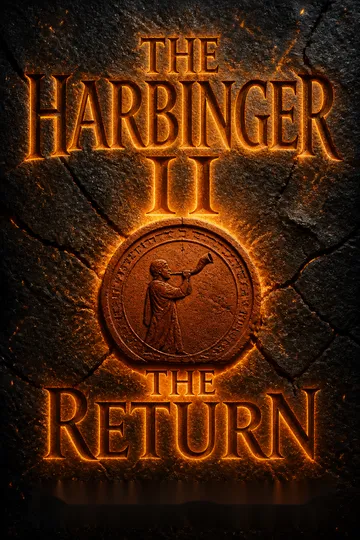
At a crowded book signing, a small girl in a light blue coat appears without any visible adult beside her. She waits quietly until Nouriel notices her, gives him a book to sign, then turns his palm upward and places an ancient clay seal in it. Her words sound unlike a child's as she tells him that his first assignment is complete and another revelation is approaching.
Before Nouriel can learn who sent her, she vanishes into the crowd. That night he studies the seal and finds a carved watchman sounding a ram's horn. The image recalls his earlier charge to warn the nation, so he returns to the Hudson River bench where he first met the prophet, hoping the new symbol will bring him back.
The girl brings the supernatural into an ordinary, public setting, but the crowd's failure to notice her makes the encounter isolating rather than spectacular. Her seal does not explain what Nouriel should do; it gives him a recognizable image and renews his uncertainty. The watchman matters because it makes the new mission feel like a continuation, not a replacement, of the old one. Nouriel responds by returning to a familiar place, revealing how habit and ritual help him manage an experience he cannot verify.
The Gate Opens
After waiting twice at the Hudson bench without finding anyone, Nouriel dreams that the prophet is beside him there. The prophet asks whether the first warning was heard, then says Nouriel's work is unfinished because most people have not heeded it. He lays out the book's governing pattern: ancient Israel was warned, shaken by an enemy, and given time to return; Nouriel believes the same sequence began in America on September 11, 2001.
In a later dream, an ancient city's fortified gate is battered down. The prophet then places Nouriel above New York Harbor and identifies Manhattan, the Hudson, Ellis Island, and the Statue of Liberty as America's modern gate, making the attacks in lower Manhattan the symbolic entrance of judgment.
The gate converts an abstract national warning into a specific geography: an island, a harbor, and a statue associated with entry. Nouriel is not merely told that America is vulnerable; he is made to see the city as a threshold through which people, trade, and power have moved. The sequence also sets the book's recurring interpretive method. A biblical image is first staged in an ancient setting, then mapped onto a modern place, with the mapping presented as revelation rather than conventional historical explanation.
Towers Fall at Dawn
In a dream that begins with a childhood classroom craft, Nouriel sees a paper tower fall, then watches an ancient stepped tower rise into the sky. The prophet explains that Babel's builders sought greatness apart from God, and that towers became visible monuments to the power and pride of civilizations.
The scene shifts into a modern skyline, where the highest structures become the World Trade Center's matching towers. Nouriel connects their destruction on September 11 to the biblical image of what is lofty being brought low. The prophet adds that the towers stood beside America's gate, New York City, so their fall joined two signs in one attack: the enemy struck the entrance and the high places guarding it.
The childhood art project gives the revelation a personal entry point, but its consequence is national: Nouriel is taught to read a skyscraper as more than a building. The twin form matters because the book links ancient paired gate towers to the World Trade Center. This interpretation turns technological height into a moral claim about what a society admires. The section's emotional force comes from reversal: structures designed to announce power become images of its vulnerability, and Nouriel's familiar skyline is recast as a warning.
The Broken Wall
A museum relief of an ancient siege comes alive in Nouriel's dream: attackers pound a city's walls until one breach lets the army pour inside. The prophet calls the gate, towers, and wall the three vulnerable points of a besieged city. When Nouriel cannot imagine a wall around America, the scene changes to the Pentagon's burning wreckage.
The prophet identifies the Department of Defense and its headquarters as the country's modern wall, then connects the damage there to the ancient warnings about fortified defenses falling. Because the attacks began in New York before reaching Washington, the sequence appears to Nouriel as gate, towers, then wall. He understands September 11 as an opening breach, not the final stage of the pattern.
The shift from carved relief to the Pentagon makes the book's symbolic method physically immediate: Nouriel walks through a representation and emerges into the place it supposedly signifies. The wall stands for institutional protection, but the dream's breach also unsettles trust in military systems. The prophet's interpretation directs attention away from individual victims and toward national vulnerability. That move supports the book's theological argument, while also making a real catastrophe carry an additional, explicitly moral meaning.
Prayers Before Daybreak
Nouriel dreams of a ruined Jerusalem and a grieving prophet praying among its stones. The ruins transform into Ground Zero, where the same figure sits amid twisted metal and ash. The prophet explains that Jewish prayers called the selichote ask for forgiveness and mercy during days associated with national calamity.
He tells Nouriel that those prayers were recited in New York during the nights before September 11 and concluded around dawn on the day of the attacks. The vision places worshippers across the city as the prayers are spoken, while the calamity approaches. Nouriel is struck by the timing: in the story's interpretation, words about destruction and pleas for mercy were being recited in the very city about to be devastated.
The mourning prophet links ancient textual memory to the contemporary work of grieving. Rather than treating prayer as a force that prevents catastrophe, the section presents it as a warning and a plea for mercy that coincides with disaster. Nouriel's shock comes from the calendar's apparent precision, but the scene also preserves the human cost through the image of a mourner at Ground Zero. Sacred language here does not erase the ruins; it gives the ruins a framework that Nouriel believes can be read.
September's Double Foundation
A collapsing mansion leaves Nouriel standing beside an older foundation stone, which becomes the deck of Henry Hudson's ship. The prophet takes him to Manhattan's first European discovery and identifies September 11 as the date Hudson's Half Moon entered the harbor.
Nouriel sees the city's founding joined to the later destruction of its towers: the day of planting has become the day of breaking down. In another vision, Franklin Roosevelt speaks to the nation after a naval clash with a German submarine.
The prophet identifies that September 11, 1941 address as the moment America effectively crossed into the Second World War and began its rise to military superpower status. Both economic and military power, Nouriel concludes, trace back to September 11.
The two revelations use date as a hinge between opposite events: discovery and attack, ascent and collapse. The foundation stone makes historical origin tangible, while Roosevelt's address shows how a political decision can be treated as the start of an era before formal war begins. For Nouriel, the repeated date suggests that national power is never self-originating. The section's inversion is emotionally unsettling because the date associated with American emergence also becomes, in the book's reading, a warning about what may be undone.
Pentagon's Hidden Birthday
Nouriel dreams of five builders crossing a river with foundation stones, then recognizes George Washington, Thomas Jefferson, Abraham Lincoln, and Theodore Roosevelt among them. Franklin Roosevelt waits on the far bank.
The prophet explains that the scene points not to Mount Rushmore but to the Pentagon's construction site across the Potomac. The stones form the building's five-sided shape, and an inscription identifies September 11, 1941, as the day its ground was broken.
Nouriel connects this to Roosevelt's radio address that same evening and to the Pentagon's later role as the emblem of American military power. The prophet also notes that the building's founding date stands sixty years before the 2001 attacks, turning the later strike into a symbolic return to the beginning.
The presidential figures first misdirect Nouriel toward a familiar monument, then guide him toward a less obvious foundation: the site of the Pentagon. Their stones make institutional history seem built by successive generations, while the date narrows that history to one charged day. The sixty-year interval strengthens the book's motif of return, in which an origin reappears at the moment of crisis. Nouriel's role is to connect clues, but each apparent discovery also increases his reliance on the prophet's interpretive authority.
The Ship in the Dust
In another dream, Nouriel watches people flee a modern city through a harbor filled with dust. A wooden ship appears among the ferries and tugboats. The prophet identifies it as the Half Moon, the vessel associated with Manhattan's discovery, and says it really was on the Hudson during the September 11 attacks as people escaped the city.
Nouriel sees the ship as an image of the city's founding passing through the ruins of its destruction. The prophet then directs him to the ancient Torah reading appointed shortly before September 11, a passage that describes both blessings and calamities for a nation that turns from God. Its imagery, Nouriel learns, includes invasion, ruined buildings, dust, and people fleeing in confusion.
The Half Moon is not simply another clue; it embodies the book's habit of placing past and present in the same frame. Against the dust cloud, the old ship makes historical origin visible at the moment of rupture. The appointed Torah passage deepens this structure by treating scripture as a calendar as well as a text. Nouriel's response shifts from surprise at a single coincidence to a growing conviction that objects, dates, and inherited words form one interlocking warning.
Trumpets No One Heard
The prophet expands the Torah reading into a series of images: enemy armies arriving like eagles, attacks on a city's gates, and warning trumpets. Nouriel then dreams of watchmen sounding horns while a city ignores them. The vision moves from ancient walls to modern rooftops, where Jewish worshippers sound the shofar during the month of Elul.
The prophet connects those rites to the morning of September 11, including the attackers' departure from Portland and Boston and the later strikes in New York and Washington. After these first revelations end, the blue-coated girl reappears at a television signing, returns Nouriel's original seal, and gives him another. She signals that the story has moved from the events of 9/11 to what followed.
The watchman image consolidates the book's central metaphor: warning is only useful if someone hears and acts. Nouriel's dream makes the city's indifference as consequential as the approaching army, turning failure to heed into a moral condition. The girl's return provides a structural hinge, not just another supernatural appearance. Her exchange of seals closes the first cycle and opens the second, while Nouriel's unanswered questions preserve uncertainty about how much of the mission he controls.
City on the Hill
On Thacher Island, Nouriel finally meets the prophet in waking life after tracing the girl's clue to Massachusetts Bay. The prophet identifies a dream of a radiant city built around a stone as the vision of Puritan leader John Winthrop, who imagined a model community that other nations would watch.
Nouriel sees that the city later darkened, abandoned its founding principles, and lost its foundation stone. The prophet says Winthrop's vision included warnings as well as hopes for blessing.
He then asks Nouriel to recall the nine harbingers from his earlier book: the attack, the fallen bricks, the defiant rebuilding, the quarried stone, the damaged sycamore, the replacement tree, and the leaders' repeated vow. Nouriel learns that these signs, in the prophet's reading, have continued.
Winthrop's vision supplies the ideological foundation for the sequel's argument: America is portrayed as a nation with a distinctive religious calling and therefore unusual accountability. The city first shines, then decays, making moral change visible as architecture and light. By having Nouriel recite the earlier harbingers himself, the prophet makes him an interpreter of his own past rather than a passive recipient. The scene also reveals a tension in Nouriel's role: he has already warned the public, yet the prophet insists that the warning has not been completed.
The Page Beneath Ruins
A seal and a dream lead Nouriel back toward Ground Zero, where the prophet tells him that a photographer found a surviving Bible page among the ruins. The page concerns Babel's tower, and Nouriel connects its call to build with the defiant rebuilding of the earlier harbingers and with One World Trade Center. The prophet then gives him a seal bearing a branch.
Nouriel dreams of a garden that withers despite care and finds the prophet walking with him in the New York Botanical Garden. The branch's condition, not its species, becomes the clue: the prophet reads withering as a sign of national decline. Nouriel recalls that the replacement tree at Ground Zero, named the Tree of Hope, has itself become sickly.
The found page makes the ruins seem to contain a message that survived the event, while the branch shifts attention from construction to ongoing decay. These clues complicate the earlier emphasis on rebuilding: a new tower can rise while the symbolic tree beside the site withers. Nouriel's search for a precise species fails, teaching him to notice condition instead of classification. The garden image also makes national decline intimate and domestic, a failure of care that persists even when caretakers keep trying.
The Ninth of Tammuz
A seal shaped like a classical temple and a dream of priests burning a parchment take Nouriel to the Supreme Court. The prophet identifies the five priests as justices and the parchment as the institution of marriage, which he says the Court altered through its 2015 ruling.
The dream's Babylonian army waits outside Jerusalem until smoke from the burning parchment signals that the city's wall is breached. Nouriel learns that June 26, 2015, corresponded to the Hebrew date known as the ninth of Tammuz, when Babylonian forces first penetrated Jerusalem's defenses.
The prophet interprets the legal decision as a modern breach, a turning point after which the nation's decline could intensify. Nouriel leaves with a new seal and a disturbing sense that the sequence has advanced.
The Supreme Court's architecture becomes a temple in Nouriel's vision, and legal authority becomes priestly power. The symbolism makes a court ruling part of a theological story about who defines sacred institutions. The ninth of Tammuz supplies the scene's temporal charge: a legal decision is mapped onto an ancient date of military breach. This framing is central to the book's argument, but it also narrows a complex public question into a single moral analogy, which explains both its force and its polemical edge.
Eight Words Above Manhattan
Nouriel deciphers a seal as a hidden word and climbs to the observatory of One World Trade Center with the prophet. There he learns that President Obama visited Ground Zero while the tower was still under construction and wrote an inscription on the beam that would crown it. The prophet interprets the inscription's three ideas, remembrance, rebuilding, and renewed strength, as a modern form of the ancient vow spoken after a calamity.
He further notes that the English inscription contains eight words, matching the number of words he assigns to the Hebrew vow. The beam is sealed inside the tower, so the words cannot be seen from the observatory. Nouriel leaves with the sense that the rebuilding itself has become part of the warning.
The hidden inscription literalizes the book's concern with words that shape a nation's course. A president's private act of writing becomes, in Nouriel's reading, a public vow embedded inside a monumental structure. The tower is therefore both a physical recovery project and a carrier of disputed meaning. The revelation's numerical symmetry gives Nouriel a feeling of precision, while the inscription's invisibility makes interpretation dependent on the prophet's account rather than direct inspection.
Kali Over Midtown
A seal showing a worshipper before an idol leads Nouriel to dream of a many-armed goddess rising over an ancient city. He notices that the creature's headdress resembles the top of the Empire State Building and finds the prophet on its observation deck.
The prophet identifies the figure as Kali, whose image was projected onto the building during a display about endangered animals. Nouriel is told that modern societies may worship success, money, pleasure, or the self without naming them gods, and that the projected image signifies this spiritual displacement.
He also learns that the biblical reading appointed for the day warned against idols. The revelation unsettles him: the city's celebrated landmark has become, in the prophet's interpretation, an image of what America serves.
The projection turns a temporary light display into a symbolic event that Nouriel reads through the language of idolatry. The Empire State Building is especially effective as an image because it already represents height, ambition, and civic pride in the story. The prophet's argument broadens ancient idol worship into modern consumer and self-centered values. Nouriel's fear is not only of a strange goddess above the skyline; it is of discovering that familiar aspirations can function as objects of devotion.
Rainbow on the White House
A dream of a ceremonial vessel cracking and colored light spilling onto a wall leads Nouriel from the Book of Daniel to the White House. The prophet connects the image to the president's public support for the Supreme Court's marriage ruling, followed that night by rainbow-colored illumination on the White House. He interprets the colors as a sacred sign used against its original meaning.
Later, a seal sends Nouriel to the Tree of Hope, which has withered and been removed. The prophet adds that a president's mistaken substitution of a word about a tree branch for one about a weapon, spoken near Ground Zero, echoed the biblical sign of a nation's branches being broken. Nouriel sees the tree's disappearance as another step in the pattern.
This section gathers separate signs around the idea of sacred objects being repurposed: a vessel, a rainbow, a scripture, and a tree. Their meanings depend on the prophet's readings, but their cumulative effect on Nouriel is clear. Each new event makes the earlier warning feel less like a closed historical episode and more like an advancing sequence. The withered tree is especially potent because its removal ends the hope it was planted to embody, converting a memorial landscape into evidence of failure.
Tophet's House of Faces
A seal bearing the word Tophet and a dream of Jeremiah smashing a clay jar lead Nouriel first to a Hebrew scholar, then to Albany. At the New York State Capitol, the prophet shows him carved faces that match the dream's strange house.
He identifies the building as the site where New York legalized abortion on demand in 1970, before the Supreme Court made it national policy. Nouriel connects the state's later expansion of abortion access to the ancient Valley of Hinnom, where children were sacrificed.
The prophet also links the Twin Towers' construction to the same year and state, treating them as high places over modern Tophet. When the state later celebrates a more expansive law by lighting the Ground Zero tower pink, Nouriel reads the act as another warning.
Tophet gives the book's moral argument its most severe form. The clay jar connects prophetic speech to a public place, while the carved faces make legislation feel inhabited by those affected by it. Nouriel's movement from a scholar's cautious reaction to a building's history turns an abstract word into a geographical investigation. The chapter's rhetoric deliberately collapses ancient sacrifice and contemporary abortion into one analogy, making the claim emotionally forceful but also sharply polemical.
The Nineteen-Year Shaking
After months without an answer, Nouriel meets the prophet in an emptied Times Square during the pandemic. The prophet compares the nineteen-year gap between ancient invasions of Judah and its destruction with the span from September 11, 2001, to 2020.
He interprets the pandemic as a greater shaking arriving after America failed to turn back. He connects its severity in New York City to the state's abortion history, then points to overflowing funeral facilities, burials at Hart Island's Potter's Field, and a possible treatment from Gilead Sciences as echoes of Jeremiah's prophecies about Tophet, death, and healing.
Nouriel is overwhelmed by the accumulating correspondences. The prophet insists that judgment is not the final word and presents mercy as still available.
The pandemic makes the book's timeline feel immediate: a prophecy that once concerned remembered history now seems to describe the reader's present. Nouriel's overwhelmed response is essential, because the revelations accumulate faster than he can assess them. The prophet distinguishes the suffering of individuals from his claim about a civilization, but still gives the pandemic a moral interpretation tied to abortion. The section's counterweight is mercy, which prevents the argument from becoming a simple forecast of punishment.
Prayers Beneath the Capitol
Seeking a way out of the pattern, Nouriel returns with the prophet to St. Paul's Chapel beside Ground Zero, where Washington's first government prayed for the new nation. The prophet calls the site America's ground of consecration and says the attacks brought the country back to it.
Nouriel then visits Lincoln's memorial and learns how a 1863 national day of prayer preceded turning-point victories at Gettysburg and Vicksburg. The prophet also recounts a 1980 prayer gathering on the National Mall, followed by Ronald Reagan's election, the release of American hostages in Iran, and the beginning of a period of national recovery.
Nouriel sees the same biblical promise at work in both episodes: repentance and prayer can precede restoration, though the later prosperity did not prevent America from drifting again.
The historical examples complicate the book's warnings by making return more than an abstract possibility. Lincoln's call and the 1980 gathering are presented as moments when prayer intersected with political and military change. Nouriel's journey through memorials turns public history into a map of spiritual choices. Yet the section resists a neat victory narrative: recovery did not permanently alter the nation's direction. Hope is therefore conditional and recurrent, not a once-and-for-all resolution.
Boston's Last Trumpet
At Boston's Spectacle Island, the prophet identifies the city across the water as Winthrop's original city on a hill and reveals that the September 11 attackers began their flights from Logan Airport, once Governor's Island, where Winthrop planted a garden.
Nouriel sees the warning return to its own founding ground. Later, during a boat journey from Battery Park, the prophet explains that the global lockdown coincided with Passover, when the lamb's blood marked homes for deliverance; he presents Jesus as the Lamb and urges Ana to consider that faith, though she does not decide.
At the Statue of Liberty, he reveals that believers had gathered there on September 11, 1999, and sounded a shofar toward the towers. He gives Nouriel a larger horn and charges him to warn others. Nouriel accepts and sounds it.
The ending brings the book's geography and theology together: Boston is both a founding center and the point from which the attack began, while the Statue of Liberty becomes the watchman's station. The Passover teaching redirects national catastrophe toward individual salvation, and Nouriel's appeal to Ana makes the private stakes explicit. Her hesitation leaves the invitation unresolved, but Nouriel's own task is not. Receiving the shofar converts revelation into action, closing the story with a warning sent outward rather than a prediction fulfilled.
Analysis
The Harbinger II is structured as an investigative religious narrative. Nouriel does not solve a conventional crime; he follows physical clues through a city and a country, then tests them against biblical texts and historical dates. The clay seals give the book forward motion, while Ana's questions provide a recurring check on Nouriel's increasingly elaborate interpretations. The prophet supplies a pattern that can join disparate details, from the Twin Towers to the pandemic, into a single account of warning, decline, and possible return.
The book's central idea is that national identity carries obligations. It portrays America as a society that received unusual blessings and therefore bears unusual responsibility when it turns away from its founding faith. Its repeated images of gates, walls, towers, trees, and foundations translate that claim into a visual grammar: protection can fail, pride can be brought low, and origins can be exposed. The recurring reversals make history feel less like linear progress than a return to unresolved choices.
That method is also the book's main interpretive risk. The narrative treats coincidences, dates, public ceremonies, and architectural features as signs within a providential design. Readers who share its theological premises may experience the pattern as revelation; readers who do not may see a chain of analogies built from selective correspondences. The story foregrounds that interpretive dependence through Nouriel's repeated uncertainty and Ana's need to ask what the clues mean.
Its emotional movement is from renewed awe to dread, then toward qualified hope. The pandemic intensifies Nouriel's fear that warnings have gone unheeded, but the Passover account redirects the climax from national fate to personal salvation. The final image of Nouriel sounding the shofar turns interpretation into action. The book ends not by resolving America's future, but by insisting that warning, repentance, and choice remain urgent.
Review Summary
The Harbinger II receives mixed reviews, with many praising its thought-provoking content and historical connections. Readers find the parallels between ancient Israel and modern America intriguing, though some criticize the repetitive nature and perceived leaps in logic. The book's central message of repentance and return to God resonates with many, while others question its interpretations. Some view it as a wake-up call for America, while others dismiss it as speculation. Overall, the book sparks discussion about faith, prophecy, and current events.
People Also Read
Characters
Nouriel
Reluctant watchmanNouriel is a writer and public messenger whose first book grew from encounters with a mysterious prophet. He is thoughtful, observant, and often unsettled by the meanings he is asked to draw from historical events. Rather than possessing certainty from the start, he searches museums, libraries, landmarks, and documents for clues, then tests each discovery against what the prophet has shown him. His relationship with Ana gives him a listener who can question him closely. Nouriel's central tension is between humility about his own abilities and the growing burden of public responsibility. He wants to understand what he has seen before speaking, but the prophet repeatedly insists that warning itself is part of his calling.
Ana
The searching listenerAna is Nouriel's longtime interlocutor and the person who draws his account into a coherent narrative. She asks direct questions, notices gaps, and resists being overwhelmed by claims that reach beyond ordinary explanation. Her curiosity is joined to caution: she wants to know what Nouriel has experienced, but she also asks why the revelations matter and what anyone can do with them. As the account turns from national signs to personal faith, Ana becomes more than an interviewer. She listens to Nouriel's appeal but remains uncertain, preserving the difference between hearing a warning and accepting its conclusions.
The Prophet
Interpreter of signsThe prophet is a mysterious guide who appears at the precise places and moments when Nouriel is searching for meaning. He interprets seals, dreams, biblical passages, and historical events as parts of a recurring pattern, but rarely gives Nouriel information before he is ready to seek it. His manner is patient and controlled, and he encourages Nouriel to notice connections rather than simply accept conclusions. He insists that warning is meant to invite return, not to celebrate destruction. For Nouriel, the prophet is both teacher and source of pressure: his revelations widen the task while leaving Nouriel responsible for carrying the message beyond their encounters.
The Girl in the Blue Coat
Messenger with sealsThe girl appears at public gatherings in a blue coat, unaccompanied and almost separate from the surrounding crowds. She brings Nouriel clay seals and speaks with an authority that contrasts with her young appearance. She does not explain the mysteries herself; instead, she marks transitions, tells Nouriel when a new stage is beginning, and leaves him to follow the clues. Her unexplained presence gives the story a thread of supernatural uncertainty. She connects the opening summons to later revelations and reminds Nouriel that his mission is not finished when he assumes it is.
John Winthrop
Founder of the visionWinthrop appears through Nouriel's dream and the prophet's account of the Puritan settlement in Massachusetts Bay. He represents the religious vision that the story treats as foundational to American identity: a community intended to be visible as an example to others. His importance lies not only in the hope attached to that vision but also in its warnings about abandoning its principles. Nouriel's later journey to Boston ties Winthrop's legacy to both America's beginning and the origins of the 9/11 attacks.
Franklin D. Roosevelt
Architect of wartime powerRoosevelt figures in two of Nouriel's dreams, first delivering a radio address that the prophet interprets as America's effective entry into the Second World War, and later appearing among the builders of the Pentagon. In the narrative, he marks the transformation of American military power and the creation of institutions that came to embody it. His role is historical rather than intimate, but his repeated appearance helps Nouriel connect a date, a political decision, and a national structure.
Abraham Lincoln
Voice of repentanceLincoln appears in Nouriel's revelations about the Civil War and the 1863 call for national prayer. The prophet presents him as a leader who recognized the war as bound to the nation's moral failure and called people to humility and repentance. His memorial becomes a place where Nouriel learns that the book's idea of national return has a historical precedent. Lincoln's significance comes from the contrast between political leadership and dependence on a power beyond politics.
George Washington
First national stewardWashington appears in Nouriel's dream as one of the builders carrying stones across the Potomac, a scene that points toward the founding of the Pentagon rather than Mount Rushmore. He also anchors the account of America's first day as a nation and the prayers offered at St. Paul's Chapel. The book uses him as a figure of beginnings: political authority, national consecration, and the question of what purposes a new country would serve.
Ronald Reagan
A turn toward renewalReagan enters Nouriel's account through the 1980 election and the prayer gathering that preceded it. The prophet links the gathering to Reagan's inauguration, the end of the Iran hostage crisis, and a period of economic and geopolitical change. Reagan's importance in the story is as a historical marker for a possible national recovery, not as a flawless figure. His appearance supports the idea that spiritual appeals and public events can intersect in ways that alter a nation's direction.
Jeremiah
Prophet among the ruinsJeremiah appears in Nouriel's dreams as a grieving prophet carrying and breaking a clay jar. His actions connect the ancient warning against Tophet to Nouriel's later search in Albany. He serves as a biblical counterpart to the book's modern watchman, confronting a society with the consequences of what it has normalized.
Moses
Keeper of appointed wordsMoses appears symbolically as an elderly keeper of scrolls who guides Nouriel toward the Torah reading appointed shortly before September 11. His role is to connect an ancient text with a modern calendar, bringing the story's interest in warnings, blessings, and historical recurrence into focus.
The Hebrew Scholar
Reader of ancient lettersThe Brooklyn bookseller and Hebrew scholar examines Nouriel's seal bearing the word Tophet. His alarmed reaction confirms the word's dark associations but offers no explanation of how it fits the larger mystery. He is a brief, practical guide who gives Nouriel enough linguistic certainty to continue investigating.
Plot Devices
Clay Seals
Clues that summon revelationsSmall ancient-looking seals arrive through the girl in blue or pass between Nouriel and the prophet. Each bears a compact image or word: a watchman, a city, a branch, or a temple. Nouriel studies them and follows their clues to places such as the Supreme Court, Ground Zero, and Massachusetts Bay. The seals structure the story as a chain of investigations, while their limited information forces Nouriel to act before he fully understands what he has been given. The repeated exchange of one seal for another also marks the movement from one stage of his assignment to the next.
Dreams and Encounters
Make history visibleNouriel's dreams place him inside ancient sieges, ruined cities, temples, gardens, and construction sites. The prophet then helps him connect these visions to modern locations and events. Sometimes the prophet appears inside a dream; later he meets Nouriel in waking life at the very site suggested by a seal. This uncertain boundary between dream and physical encounter keeps Nouriel questioning how revelations arrive. It also lets the book stage historical interpretation as something Nouriel sees and experiences, rather than merely hears described.
The Israel Template
Frame a national warningThe prophet presents ancient Israel's decline as a sequence: a nation turns from God, receives warnings, experiences a shaking, and is given time to return before greater calamity. Nouriel applies that sequence to America, beginning with September 11 and continuing through later events. This framework links otherwise separate revelations, from the towers and Pentagon to the pandemic. It is the book's main interpretive device, shaping both its predictions and its appeal for repentance.
Dates and Holy Days
Bind events to calendarsThe story repeatedly compares modern events with dates from Jewish and Christian calendars, including the selichote, the ninth of Tammuz, Passover, and the Feast of Trumpets. Nouriel is asked to notice when a prayer, ruling, disaster, or public act falls on one of these dates. The calendar creates the feeling that separate events are converging, and it gives the prophet a way to interpret timing as part of the warning rather than coincidence alone.
Foundations and Returns
Turn origins into warningsBuildings, trees, cities, and founding dates carry more than their practical meaning in the prophet's interpretations. Manhattan's discovery, the Pentagon's construction, America's consecration at St. Paul's Chapel, and Boston's founding all become origins to which later events return. A tower's fall exposes its foundation; a nation's crisis brings it back to its beginnings. This device gives the plot its recurring structure of reversal and supports the ending's choice between destruction and restoration.
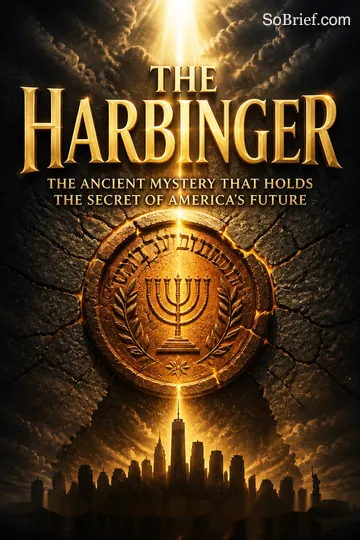
The Harbinger Series
About the Author
Download PDF
Download EPUB
.epub digital book format is ideal for reading ebooks on phones, tablets, and e-readers.








