

Key Takeaways
Build extraordinary outcomes one small, deliberate move at a time
Small acts make the picture. Andrews argues against the advice to ignore minor details: families, careers, and teams are built through many small choices. He compares a life to a painting, noting that even a masterpiece emerges from careful marks rather than one grand gesture. His opening story casts him as a Noticer, someone who spots overlooked details and asks what they could change. The practical question is not whether a detail seems impressive, but whether it affects the result being built.
Make attention useful. A small adjustment can be valuable when it changes a pattern, removes a recurring obstacle, or improves how people work together. The book’s central claim is that sustained attention to such details can distinguish excellent results from merely average ones.
The painting image makes a useful distinction between scale and significance: a detail can be tiny in size yet decisive in a system. This resembles reliability engineering, where a minor fault can compromise a complex machine. The lesson is not to scrutinize everything equally. Attention is finite, so the valuable skill is identifying which small elements influence the larger outcome. Otherwise, “sweat the small stuff” can become perfectionism in a nicer suit.
Earn your advantage before the moment everyone can see
Performance is prepared early. Andrews points to swimmer Michael Phelps winning an Olympic race by one hundredth of a second. The medal looked decided in the pool, but the book argues that such a narrow margin is built through preparation, rest, practice, and thought long before the race. It suggests that small choices made days or weeks earlier can create an edge when performance is measured in fractions of a second.
Look upstream. Rather than asking only how to perform better in the decisive moment, examine the habits and conditions that lead into it. The author’s point is not that one extra practice lap explains Phelps’s result; it is that tiny improvements accumulate before the visible test arrives.
This is a strong antidote to the fantasy of the last-minute breakthrough. In skill development, performance depends on a chain of preparation, feedback, and recovery, not simply effort at the point of evaluation. The caution is causal humility: the book speculates about which tiny factor might explain a hundredth of a second, but cannot identify it. The more dependable application is to improve the preparation system without pretending every marginal change can be measured or credited.
Inspect the small failure point that could reverse the whole result
One omission can undo much. Andrews retells Waterloo as a French victory turned into defeat after the captured British cannons were not disabled with nails. Once the British recovered them, they could fire back. The tale makes the point that superior forces and elaborate plans can still depend on a mundane detail. Another chapter recounts a hollow nickel containing microfilm. A Brooklyn newsboy found the separated coin, and the discovery helped authorities identify Soviet spy Rudolf Abel.
Check the weak link. Before a high-stakes effort, ask what small component could make success unusable or expose a hidden failure. The stories make overlooked details memorable, though they do not establish that every historical outcome hinges on one simple cause.
The stories work as compact lessons in failure analysis: inspect what could invalidate the apparent win, not just what makes the plan impressive. That is a useful habit in operations, security, and project review. Still, the Waterloo nails account is historically contested, so its evidentiary footing is weaker than its moral. The general principle survives that caveat. A vivid anecdote can prompt better questions, but it should not substitute for checking the history or diagnosing a real system.
Ask why when results are strong, not only when they fail
Success contains clues. Andrews observes that people often ask why when a plan breaks, then stop investigating once they find a fix. But a successful period can reveal more: what changed, who responded, and which conditions made the result possible? He describes a business region that recorded three consecutive quarters of double-digit growth. Instead of merely celebrating, leaders could ask why customers were buying there, when they purchased, and why they chose multiple items.
Learn the mechanism. Knowing how to repeat a tactic is useful; understanding why it works can make it transferable. Andrews depicts a progression from doing work, to teaching it, to leading it, and ultimately understanding the principles behind it. That deeper understanding can help apply lessons across different settings.
This is a practical form of positive-deviance analysis: study the parts of a system that outperform expectations, then look for conditions others can reproduce. It counters the tendency to treat success as self-explanatory. The questions should remain testable, however. A strong quarter may reflect seasonality, luck, or a competitor’s mistake rather than a repeatable principle. Asking why is most useful when it leads to evidence, comparison, and a modest experiment.
Test the opposite of the method everyone assumes is correct
Convention can hide friction. Andrews uses peeling a banana as a miniature example. People commonly begin at the stem because it looks like a handle, but the book says the softer end is easier to open. It then imagines a worker, Antonio, tripling his pay by peeling from that end rather than following the shared workplace routine. The point is not that every standard practice is wrong. It is that familiarity can make a method seem inevitable before anyone tests alternatives.
Keep beliefs revisable. Andrews also recalls Democritus challenging Plato’s account of matter with an early idea of atoms, while noting that Democritus’s own model was incomplete. Treat current knowledge as a working map, not a finished territory.
The banana is an unusually clear demonstration of how a plausible inference can become a habit without being tested. It invites a cheap experiment: reverse one step and compare the result. That is the core of scientific thinking at everyday scale. The chapter’s broader message is strongest when paired with intellectual modesty. Questioning consensus is not proof that the dissenter is right; Antonio’s gain matters because the method was tested against an outcome, not because it was unconventional.
Correct tiny course errors before distance magnifies them
Small angles travel far. At age twenty, Andrews and two companions took a boat offshore to fish. They could not find the oil rig they expected, ran short of fuel, and were eventually towed back. An electronics check later showed that the autopilot had been miscalibrated by two degrees. Over a journey of more than a hundred miles, that slight error sent them far from their destination.
Check your direction. The story turns navigation into a model for goals: a steady effort can still carry someone away from the intended result if the starting assumptions are wrong. Set checkpoints early, compare progress with the destination, and recalibrate before a small deviation becomes expensive. The useful lesson is not merely to persist, but to verify that persistence is aimed correctly.
The boat story neatly separates consistency from accuracy. In control systems, feedback matters because an open-loop process can keep operating while drifting away from its target. The same distinction helps with career plans and projects: effort is not evidence of alignment. A person needs meaningful checkpoints and permission to adjust course. The analogy has limits, since life goals are less fixed than a destination on a chart, but it makes a persuasive case for checking assumptions before doubling down.
Persist through rejection, but do not confuse endurance with wisdom
Quitting can become a pattern. Andrews remembers wanting to leave his sixth-grade football team. His father refused, believing that learning to quit whenever things became uncomfortable could shape future choices. Years later, Andrews faced fifty-one rejections while trying to publish his novel, The Traveler’s Gift. The fifty-second publisher accepted it, and the book went on to sell millions of copies in many languages.
Stay with meaningful work. The childhood lesson helped him endure rejection long enough to reach an opportunity that was not visible at the start. But persistence is not valuable simply because it lasts. Use the purpose of the effort, new evidence, and the cost of continuing to decide whether to keep going, change the approach, or stop.
The story is compelling because the early rejections did not reliably predict the book’s eventual reach. It highlights how persistence can preserve an option that premature discouragement would close. Yet one success story cannot show that every rejected project deserves more attempts. The distinction between grit and sunk-cost thinking matters: persistence serves a goal when learning and adaptation continue. Repeating the same attempt without new information is not automatically courage.
Make change personally valuable and convincing with clear evidence
Two conditions support change. Andrews rejects three familiar explanations: that change always takes time, requires a prior desire, or waits for rock bottom. He argues that a lasting change becomes possible when people see what they stand to gain and encounter proof strong enough to change their understanding. In his example, a father explains to his fourteen-year-old why disrespectful behavior could cost him future opportunities, connecting a new behavior to the teenager’s own goals.
Explain the benefit. Demands may enforce compliance while authority is present, but they do not necessarily create lasting commitment. When asking someone to change, make the benefit relevant to that person and show why the proposed action is likely to help. The book treats these as ingredients for change, not as a guarantee that every person will respond the same way.
This approach resembles motivational interviewing, where change is more durable when a person can connect it to personal values rather than merely comply with pressure. The example also shows why abstract scolding often fails: it supplies judgment without a persuasive reason. However, the claim that these two conditions are always necessary is stronger than the anecdote can establish. Habit, social support, incentives, and access to resources can also shape whether a change lasts.
Choose your response instead of feeding every offense
Feelings are not commands. Andrews argues that an offense can grow into anger, damaged relationships, and poor decisions if it is continually rehearsed. His practical distinction is between feeling upset and choosing how to act. A person can feel hurt without retaliating, holding a grudge, or allowing another person’s behavior to dictate the next move.
Separate emotion from conduct. The book’s cultural critique sometimes treats offense too broadly, as if people can simply decide not to feel it. A more careful application is to recognize the feeling, examine what happened, and choose a response that fits the situation. Some complaints identify real harm and deserve attention. The target is not sensitivity itself, but letting an unexamined reaction take control of behavior.
The distinction between emotion and action is valuable because it protects agency without requiring emotional denial. Cognitive therapies likewise distinguish an event from the interpretation and behavior that follow, though that does not make every emotional response voluntary. The book is less persuasive when it moves from personal self-command to sweeping claims about society. Offense can be used strategically, but it can also signal genuine exclusion or injury. Good judgment asks which is happening before dismissing the concern.
Shape expectations carefully, because belief can steer behavior
Expectation can change a decision. Andrews recounts Lewis and Clark using a rapidly firing air rifle during encounters with Indigenous peoples. Lewis demonstrated the weapon but kept its limits hidden, leading observers to believe the expedition could fire repeatedly without the usual pause to reload. The book presents this belief as a deterrent that helped the party avoid attacks. Its specialized term, belief imposition, means deliberately influencing what another person thinks is possible so that the belief affects behavior.
Use influence responsibly. Expectations can shape effort, confidence, and choices, but deception carries risks. In ordinary leadership, the constructive version is to communicate genuine capabilities clearly, reduce needless fear, and avoid promising what cannot be delivered.
This episode highlights a real strategic fact: people act on their model of a situation, not on facts they cannot observe. In organizations, credible expectations can coordinate effort; in conflict, misleading signals can deter or provoke. The historical account itself should be treated cautiously, and the ethical stakes are substantial. Using accurate information to strengthen confidence differs from manufacturing a false belief. Influence is most durable when it does not depend on discovery that the message was a bluff.
Choose a wider future than habit, fear, or the crowd permits
A narrow view can hide what remains possible. Andrews contrasts people who measure themselves against their peers with those who compare themselves to their own potential. He also tells how his wife photographed a vivid sunset in a car mirror while he drove without seeing the scene behind him. The sunset existed; his attention and painful memories kept him from noticing it. The story distinguishes the facts of a moment from the meaning assigned to them and the direction chosen afterward.
Expand the reference point. The author’s Christian conclusion asks believers to consider whether their personal picture of the best life is smaller than what God might intend. For any reader, the practical question is whether fear, habit, or social comparison has mistaken an existing limit for an unavoidable one.
The sunset story gives perspective a tangible image: attention can exclude real possibilities without changing the underlying facts. This is a useful corrective to both despair and automatic comparison with peers. Still, reframing should not become pressure to interpret every hardship as secretly beneficial. Some losses are simply losses, and material constraints are real. A wider perspective is most helpful when it makes room for grief and clear-eyed action, rather than replacing either with forced optimism.
Analysis
The book is a story-driven argument for disciplined attention. Its recurring move is to take an ordinary object or incident, a nail, a coin, a banana, a miscalibrated compass, and use it to expose the distance between what people notice and what determines outcomes. That structure is memorable because the examples make abstraction physical. The central idea is not merely that details matter, but that outcomes often depend on details whose importance is visible only after someone questions the accepted explanation.
The strongest practical tools are the call to investigate successful results, the distinction between effort and direction, and the change model that links a proposed behavior to a person’s interests and evidence. Together they encourage observation, testing, and explanation rather than exhortation alone. The book also offers an ethical reminder: people’s beliefs shape their choices, so leaders influence behavior through the expectations they create, whether deliberately or not.
Its weaknesses arise when a memorable principle becomes an absolute. Persistence is not always preferable to stopping. Feelings cannot simply be switched off, though behavior can be chosen. Change does not follow one universal recipe, and a compelling anecdote is not the same as historical proof or causal evidence. The author’s confidence occasionally outruns what his examples establish. The reader gets more value by treating stories as prompts for inquiry than as demonstrations that one small factor explains a complicated event.
The book’s Christian framing gives its final appeal a specific source of purpose: imagine a future larger than one’s current ambition and ask whether it aligns with divine intention. Readers who do not share that belief can still use its broader challenge to inspect self-imposed limits. The lasting method is practical: notice a detail, ask why it matters, test the assumption, and act with a clearer view of the whole.
Review Summary
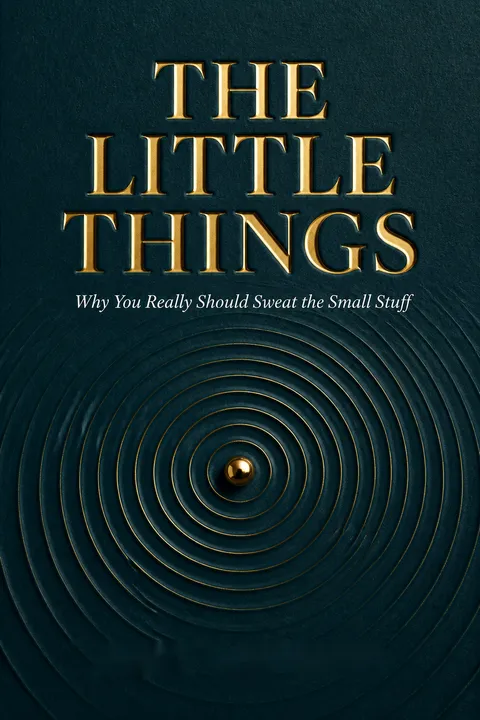
The Little Things receives mostly positive reviews, with readers praising Andrews' motivational style and emphasis on the importance of small actions. Many appreciate his anecdotes and insights on personal growth. Some criticize the book for being repetitive or preachy, particularly regarding religious content. Reviewers note Andrews' conversational tone and his ability to inspire readers to pay attention to life's details. The book's message about the impact of seemingly insignificant choices resonates with many, though some find it lacks practical advice.
People Also Read

Glossary
Noticer
Observer of overlooked detailsAndrews’s name for a person who notices details, patterns, or implications that others miss. In the book, noticing is more than passive observation: it means asking how an overlooked feature might affect a larger result. The author presents this habit as useful in family life, business, leadership, and personal decision-making.
Perspective
Meaning and direction assignedAndrews distinguishes perspective from perception. Perception concerns what someone believes the facts of a moment to be; perspective concerns what those facts mean for the direction taken from that moment. He argues that the same circumstances can lead toward different futures depending on how a person interprets them and acts.
belief imposition
Influencing belief to guide actionA deliberate attempt to influence what another person believes in order to affect how that person behaves. Andrews illustrates the concept with his account of Lewis and Clark displaying an air rifle while concealing its limitations. The idea can also describe ordinary efforts to shape expectations, though deceptive uses raise serious ethical concerns.
What’s in it for me?
Personal stake in changeOne of two ingredients Andrews says supports lasting change. It refers to the benefit a person sees for themselves, their family, team, or other responsibilities if they adopt a new behavior. The phrase is not presented solely as greed; it describes the need to connect a requested change to something the person values.
Proof beyond a reasonable doubt
Convincing evidence for changeThe second ingredient in Andrews’s account of lasting change. It means evidence or an explanation strong enough to persuade someone that a proposed change is worthwhile or necessary. The phrase is used informally, not as a claim that personal change follows a legal standard of proof.
z, D, T, L, H, and W
Levels of contribution and understandingAndrews’s progression for describing increasing levels of work and understanding. A z represents a person who struggles to perform; a D can do the work; a T can do and teach it; an L can also lead; an H understands how to reproduce a successful operation; and a W seeks why principles work and how to apply them across different settings.
average excellence
Strong results matched to peersAndrews’s label for achieving results that appear impressive while remaining close to the level of one’s peers. He argues that comparison with others can make a person satisfied with conventional outcomes. By contrast, he says exceptional achievers judge themselves against their own potential rather than the group’s average.
FAQ
What's "The Little Things: Why You Really Should Sweat the Small Stuff" about?
- Focus on Small Details: The book emphasizes the importance of paying attention to small details in life, as they can lead to significant outcomes.
- Challenging Conventional Wisdom: Andy Andrews challenges the common saying "Don't sweat the small stuff," arguing that small things can have a big impact.
- Practical Examples: Through various stories and examples, the book illustrates how minor adjustments in perspective and actions can lead to major successes.
- Personal and Professional Growth: It offers insights into how focusing on the little things can improve both personal life and career achievements.
Why should I read "The Little Things: Why You Really Should Sweat the Small Stuff"?
- Gain New Perspectives: The book provides a fresh perspective on how small actions and details can lead to significant changes.
- Improve Decision-Making: It helps readers understand the importance of small decisions and how they can affect larger outcomes.
- Enhance Personal Growth: By focusing on the little things, readers can achieve personal growth and improve their relationships and careers.
- Learn from Real-Life Examples: The book is filled with real-life stories and examples that illustrate the power of small details.
What are the key takeaways of "The Little Things: Why You Really Should Sweat the Small Stuff"?
- Small Details Matter: Paying attention to small details can lead to significant improvements in life and work.
- Challenge Conventional Wisdom: Questioning common beliefs can lead to new insights and better outcomes.
- Perspective is Powerful: A change in perspective can dramatically alter results without changing the facts.
- Embrace Change: Understanding and embracing change can lead to personal and professional growth.
What are the best quotes from "The Little Things: Why You Really Should Sweat the Small Stuff" and what do they mean?
- "Perspective is the only thing consistently more valuable than the answer itself." This quote emphasizes the importance of how we view situations, suggesting that perspective can be more impactful than the actual solution.
- "Good will always be the enemy of best." It highlights the danger of settling for good enough when striving for the best is possible.
- "A little more understanding can change the world." This suggests that even a small increase in understanding can lead to significant changes and improvements.
- "You can choose how you act, despite how you feel." This quote underscores the power of choice and self-control in determining our actions and reactions.
How does Andy Andrews define a "Noticer" in "The Little Things"?
- Unique Skill: A Noticer is someone who notices things that others might miss, which can lead to valuable insights and opportunities.
- Professional Noticer: Andy Andrews describes himself as a professional Noticer, using this skill to help individuals and organizations achieve success.
- Beyond Observation: Being a Noticer involves more than just observing; it requires understanding the significance of what is noticed.
- Application in Life: This skill can be applied to improve personal relationships, business strategies, and overall life satisfaction.
What is the significance of the "one" concept in "The Little Things"?
- Power of One: The book highlights how one small action, idea, or change can have a significant impact.
- Examples of Impact: It provides examples of how one degree, one second, or one idea can make a difference between success and failure.
- Encouragement to Act: Readers are encouraged to focus on making one small change that can lead to larger improvements.
- Understanding Value: Recognizing the value of one small thing can lead to greater appreciation and attention to detail.
How does "The Little Things" address the concept of change?
- Myths of Change: The book debunks common myths about change, such as the belief that it takes a long time or requires hitting rock bottom.
- Instantaneous Change: It argues that true change happens in an instant, though preparation and decision-making may take time.
- Elements of Change: Two key elements for change are understanding "What's in it for me?" and having "Proof beyond a reasonable doubt."
- Navigating Change: The book provides strategies for effectively navigating and embracing change in personal and professional contexts.
What role does perspective play in "The Little Things"?
- Choosing Perspective: The book emphasizes that perspective is a choice and can be more valuable than the facts themselves.
- Impact on Outcomes: A change in perspective can lead to different outcomes without altering the actual situation.
- Calm and Clarity: Proper perspective creates calm, which leads to clear thinking and better decision-making.
- Examples in Business: The book uses examples like Chick-fil-A's business strategy to illustrate how perspective can lead to success.
How does Andy Andrews use historical examples in "The Little Things"?
- Napoleon's Waterloo: The book discusses how a small oversight, like missing nails, led to Napoleon's defeat at Waterloo.
- Lewis and Clark's Air Rifle: It highlights how an air rifle helped Lewis and Clark navigate hostile territories without conflict.
- Rudolf Abel's Nickel: The story of a hollow nickel leading to a Soviet spy's capture illustrates the impact of small details.
- Lessons from History: These examples show how small things have historically led to significant outcomes and changes.
What is the "butterfly effect" as discussed in "The Little Things"?
- Concept Explanation: The butterfly effect refers to how small actions can lead to significant and far-reaching consequences.
- Positive and Negative Impacts: The book explores both the positive and negative impacts of small actions on larger systems.
- Application in Life: Understanding the butterfly effect encourages readers to be mindful of their actions and decisions.
- Real-Life Examples: The book provides real-life examples to illustrate how small changes can lead to major shifts in outcomes.
How does "The Little Things" address the idea of being different?
- Embrace Uniqueness: The book encourages readers to embrace being different as a path to achieving extraordinary results.
- Comparison to Others: It contrasts average people who compare themselves to others with extraordinary achievers who compare themselves to their potential.
- Value of Manners: Being different can include having exceptional manners, which can set individuals apart in a positive way.
- Encouragement to Stand Out: The book motivates readers to stand out and not be afraid of being perceived as different or odd.
What is the significance of the "half nickel" story in "The Little Things"?
- Spy Capture: The story of a hollow nickel leading to the capture of Soviet spy Rudolf Abel highlights the impact of small details.
- Life-Changing Event: For Jimmy Bozart, the discovery of the nickel changed his life, leading to financial success.
- Unexpected Consequences: The story illustrates how seemingly insignificant things can have unexpected and significant consequences.
- Lesson on Attention: It serves as a lesson on the importance of paying attention to small details and their potential impact.
About the Author
Other books by Andy Andrews






Download PDF
Download EPUB
.epub digital book format is ideal for reading ebooks on phones, tablets, and e-readers.








