

Key Takeaways
Treat conquest's promise of protection as a claim, not a guarantee.
A promise with an army. In 1846, the people of Las Vegas feared both an approaching American invasion and a Navajo raid. The raid came first, stealing livestock and taking a shepherd. Days later, General Stephen Kearny entered the town and promised that the United States would protect its residents from such attacks. His offer sounded persuasive because New Mexico's Spanish and Mexican governments had failed to stop the raids. Yet protection was also the language used to justify taking the territory.
The wider bargain. President James K. Polk wanted California and the lands between it and the United States. The Army of the West occupied New Mexico as part of that expansion, while Kearny inherited a long-running conflict he could not quickly resolve. The book's central tension is this: American conquest promised order, but it widened the reach of a nation whose own expansion helped produce new violence and displacement.
What's striking is how protection can be both a genuine local need and a powerful political justification. In security studies, this is a recurring dilemma: people may welcome relief from immediate danger while losing control over who governs them and what counts as safety. Kearny's promise addressed real vulnerability, but it also treated annexation as the remedy before the conquered population had freely chosen it. The distinction matters. A government can provide useful services and still lack legitimate consent. Measuring a takeover only by whether it solves one problem hides the question of who acquires the authority to define the next one.
Understand each Native nation on its own terms, not as one enemy.
A society built around movement. The Diné, or Navajo, were not simply raiders. They farmed, traded, wove renowned blankets, and raised sheep and goats in a seminomadic pattern called transhumance, the seasonal movement of livestock to find grazing. Sheep were food, clothing, wealth, and a foundation of social life. Horses gave young raiders the speed to steal livestock from New Mexican settlements, but those raids sat within a wider cycle that also included Mexican and Spanish slave-taking and reprisals.
No single chief. Navajo society was organized through extended family groups called outfits, not a central government able to command the whole people. Women held substantial authority, and local bands made their own decisions. A treaty signed by a few headmen therefore could not automatically end raids by every band. Understanding these institutions does not excuse violence; it explains why outsiders repeatedly misread the people they were trying to govern.
The book's cultural detail does important analytical work: it shows that a familiar political label, such as tribe, can conceal very different systems of authority and livelihood. State officials sought a single counterpart who could sign, command, and answer for everyone. The Navajo structure did not fit that template. This resembles a broader problem in governance: institutions often mistake what is legible to administrators for what is socially real. Still, cultural difference should not become a blanket explanation for every action. Raiding and captivity harmed people, and Navajo social organization helps explain political limits without making those harms disappear.
Maps and adventure stories can prepare the ground for conquest.
Exploration had a political job. John C. Fremont's expeditions were presented as scientific surveys, but their reports also made western routes seem knowable and usable. The first report helped encourage wagon migration along the Oregon Trail. The second clarified that the Great Salt Lake had no outlet to the Pacific, while its descriptions helped inspire further migration. Fremont's polished public image as a pathfinder drew heavily on the practical abilities of his guide, Kit Carson, who could track, find water, and keep a party alive.
Knowledge became access. The Army of the West followed the Santa Fe Trail into New Mexico, and Fremont's reports helped Americans imagine the region as reachable and destined for incorporation. The book also shows the gap between the explorer's claim to discovery and the knowledge already held by Native peoples, traders, and earlier travelers. Making a place legible to distant readers helped make it available to distant power.
What's striking is that maps and narratives do not merely describe territory. They shape what audiences believe can be reached, settled, and claimed. The same information can aid a traveler and serve a state project. This is a useful reminder for modern readers of maps, economic forecasts, and infrastructure plans: technical neutrality is not the same as political neutrality. Yet the book also shows that knowledge is never entirely controlled by the institutions that publish it. Carson's expertise came from long contact with Indigenous communities and local landscapes, even as the reports built a public mythology that often erased those prior relationships.
A gifted scout can become dangerous when loyalty replaces judgment.
The legend and the man. Carson was modest, highly capable, and unusually effective in crisis. He also lived with Native peoples, married Arapaho and Cheyenne women, spoke several languages, and later served as an advocate for some tribes. That intimacy did not prevent him from killing Native people. After an attack on Fremont's party at Klamath Lake, Carson joined a retaliatory assault on the Klamath village of Dokdokwas, killing residents and burning their homes. The attackers may have been Modocs, not Klamaths.
Orders and responsibility. In California, Fremont's vague instruction to do his duty preceded Carson's killing of three unarmed Mexican civilians. Carson's loyalty to his commander helps explain his actions, but does not absolve them. His public image as an uncomplicated rescuer obscured a more troubling truth: skill, personal kindness, and violence could coexist in one person.
This portrait resists the comforting idea that familiarity automatically produces fairness. Carson's language skills and relationships gave him unusual access to Native worlds, but they did not reliably interrupt vengeance or obedience. Organizational psychology offers a useful lens: people can do grave harm when authority, group loyalty, and a narrowed definition of duty converge. That explanation is not exoneration. The Klamath episode also illustrates the danger of reprisal without reliable identification of responsibility. A leader's restraint matters most when grief and certainty are both high, not when the facts are easy and the order is popular.
Treaties fail when one side assumes authority the other never granted.
Marks on paper, different meanings. In 1846, Navajo headmen met with Colonel Alexander Doniphan and signed a treaty promising peace with New Mexico and the United States. The Navajos had no central authority able to bind every local band, and many signers could not read the document. Less than a week later, raids resumed. The agreement had not settled the conflict's causes, including the competing theft of livestock and people.
The cost of misreading. In 1849, Colonel John Washington's expedition entered Navajo country claiming to seek peace. Its soldiers took corn, then fired on Navajos during a dispute over a horse. Shrapnel killed Narbona, the respected elder who had advocated diplomacy. A later treaty was negotiated with men who lacked authority to speak for the entire nation. American officials treated signatures as proof of consent; the Diné could see them as temporary agreements made under pressure. The mismatch made the paper look stronger than the peace it represented.
Treaties require more than signatures. They depend on shared assumptions about representation, territory, enforcement, and what consent means. The Americans approached negotiation as a transfer of political authority; the Navajo world distributed authority among local groups and family networks. That mismatch turned diplomacy into a ritual of apparent agreement rather than durable legitimacy. The lesson extends beyond cross-cultural encounters: when one party controls the meeting, the timetable, and the consequences of refusal, formal consent deserves scrutiny. At the same time, no institutional mismatch makes violence inevitable. Washington's decision to fire converted a solvable dispute into a deeper breach.
A bloodless occupation can still manufacture the next rebellion.
Kearny's careful opening. In 1846, General Kearny took Santa Fe without a battle. He tried to reassure residents about their religion, property, and safety, and his administration introduced legal and civic reforms. But the occupation remained a seizure of sovereignty. American troops and officials also brought insults, disease, and new political rules that threatened local religious and social power.
Resistance follows. In 1847, a revolt in northern New Mexico killed Governor Charles Bent and other Americans. The uprising had multiple causes, including anger over occupation, church-state changes, and local grievances. Colonel Sterling Price's forces crushed it at Taos Pueblo, killing many defenders; subsequent trials and executions raised questions about punishing people for treason while the war with Mexico continued. The book does not reduce the revolt to a simple clash between good and evil. It shows how an occupation can appear peaceful at the moment of entry while accumulating the resentments that make later violence more likely.
The contrast between Santa Fe's quiet occupation and the later revolt is a reminder that immediate compliance is a poor measure of political stability. Institutions can suppress visible resistance while intensifying grievances beneath the surface. The episode also complicates a common narrative of conquest as either benevolent reform or pure coercion: Kearny's reforms had real content, yet they were imposed by an occupying power. A fuller account must ask not only whether a new legal system works, but who authorized it and whose status it changes. Explaining the revolt's causes need not erase the killing of civilians or the suffering of those caught in reprisals.
When troops turn elsewhere, old border conflicts grow more dangerous.
A shifting battlefield. The Civil War drew soldiers away from New Mexico, leaving the territory exposed. In 1862, Confederate forces invaded from Texas, while Navajo raiding intensified during the military distraction. The conflict between the Diné and New Mexicans had never been one-sided, but American authorities generally demanded Navajo restraint while overlooking local slave-taking and retaliatory raids.
A festivity becomes a massacre. In 1861, a horse race at Fort Fauntleroy brought Navajos and soldiers together to trade and celebrate. After the Navajos protested that a horse had been sabotaged, a gunshot sparked a chaotic attack. Soldiers fired into the crowd, including women and children, and Colonel Manuel Chaves ordered artillery fire. More than twenty Navajos died, and many were wounded or captured. The killing deepened distrust and strengthened the argument of Manuelito, who had long urged resistance. Military absence did not create the old conflict, but it changed its balance and raised the stakes.
This section captures how a fragile truce depends on more than cordial gestures. The race offered genuine contact, but the imbalance of power remained: the fort's soldiers controlled the weapons, the rules, and the account of what had happened. When violence began, that imbalance shaped who paid. The Civil War adds a wider systems lesson: conflicts do not pause when institutions redirect their attention; local actors adapt to the resulting vacuum. It is also worth resisting a single-cause account. The massacre arose from a specific provocation and command failure within a much older structure of mistrust, not from inevitable cultural hostility.
Collective punishment made Navajo hunger the instrument of surrender.
A campaign against survival. General James Carleton ordered Kit Carson to force the Navajos to move to Bosque Redondo, a reservation on the Pecos River. Carson's campaign relied less on set battles than on destroying the means to endure: soldiers burned or consumed crops, killed or seized livestock, and guarded water and salt sources. Carson estimated that his men destroyed nearly two million pounds of food. Because Navajo families were scattered across difficult terrain, the army could rarely find them, but it could attack the resources they depended on.
The Long Walk. As famine spread, people surrendered in growing numbers. In 1864 and 1865, nearly 9,000 Navajos were forced to march hundreds of miles east. Roughly 500 died on the route from exposure, illness, and exhaustion. The Long Walk was not a single march but a series of removals. The policy turned the whole population into leverage for the actions of a smaller number of raiders, and its costs fell especially hard on the sick, poor, women, and children.
The campaign demonstrates the difference between defeating an armed force and coercing a society. By targeting food, animals, and access to water, the army attacked the conditions that let families survive, not merely the capacity of warriors to fight. In modern terms, this is population-level coercion: civilians bear pressure intended to change political behavior. Carleton framed removal as protection and reform, but benevolent language cannot make forced displacement voluntary. The book also requires a difficult distinction: raids and captivity were real harms, yet collective punishment did not discriminate between perpetrators and people who had no role in them.
A reservation cannot replace the homeland that gives a people meaning.
Bosque Redondo's false promise. Carleton imagined the reservation as a farming settlement where the Navajos would become self-sufficient. But the Pecos water was alkaline, firewood dwindled, disease spread, and the Navajos and Mescalero Apaches, historic enemies, were forced to live together. A cutworm destroyed the first major corn crop, while later floods and hail damaged others. The Mescaleros eventually escaped. About 3,000 Navajos died at Bosque Redondo, according to the book.
Place was not interchangeable. Carleton's plan also misunderstood what the Diné's homeland meant. Navajo mobility was organized around familiar lands, sacred mountains, and seasonal resources, not an aimless refusal to settle. Even successful farming could not compensate for exile from the places where their stories, ceremonies, and social life were rooted. The reservation was not simply a badly managed project. Its basic premise, that a distant place could substitute for home, was itself a source of harm.
Bosque Redondo is an unusually clear case of policy design overriding local knowledge. The plan treated a community as if it could be relocated like a workforce, then assumed that agriculture, schooling, and a new settlement would produce contentment. The crop failure exposed ecological limits; the deeper failure was political and cultural. A program may supply resources and still destroy the relationships that make those resources meaningful. There is a useful nuance here: the Navajos were farmers, so agriculture itself was not the problem. The coercion, poor location, imposed social density, and loss of homeland made the experiment untenable.
The Navajos returned through negotiation, but on a diminished map.
A demand to go home. In 1868, Navajo leaders Barboncito and Manuelito met with General William Sherman at Bosque Redondo. Barboncito described failed crops, hunger, and the loss of life, then asked not to be sent to another distant reservation. He wanted the people returned to the country where they had been born. Sherman acknowledged the force of that claim and discussed a defined Navajo territory.
Return with conditions. A treaty allowed the Navajos to leave Bosque Redondo and return west. The new reservation covered nearly 25,000 square miles, but its boundaries excluded the four sacred mountains. The return was a major achievement of Navajo diplomacy and collective endurance, not a simple restoration: the Diné came home to a smaller territory under federal rules. The epilogue's image of a coyote choosing west captures the people's direction of hope, while the treaty makes clear that homecoming did not undo the loss.
The ending gives agency back to Navajo leaders without pretending that agency erased the damage. Barboncito's speech translated lived experience into terms Sherman could hear, while the map gave the negotiation a concrete object. That combination of testimony and territorial definition helped secure return. The result remained unequal: the United States set the boundaries, and sacred sites lay outside them. This is why homecoming should not be mistaken for a clean resolution. The treaty ended one crisis, but it also institutionalized a reduced homeland. The distinction between survival and restoration is central to understanding the epilogue's hope.
Analysis
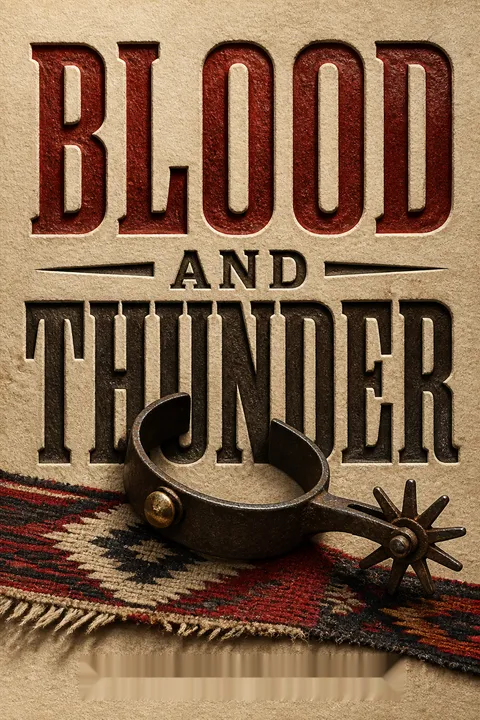
Blood and Thunder is a narrative history of conquest told through overlapping lives, especially Kit Carson's and the Navajo elder Narbona's. Its deepest achievement is to keep the scale of national expansion connected to ordinary decisions: who gets to name a mountain, whose authority a treaty recognizes, whether a commander treats a frightened visitor as a negotiator or a target. The result is not a simple reversal in which one side is virtuous and the other cruel. Navajo raids and New Mexican slave-taking were real, but the United States entered an existing conflict as a new and vastly more powerful actor, then converted local disorder into an argument for rule.
The book's narrative method makes this transformation vivid. Carson's mobility links exploration, military conquest, celebrity, and forced removal. His competence is never denied, but neither is it allowed to function as moral absolution. Fremont's ambition and Carleton's paternalism likewise reveal how personal virtues can serve projects with destructive consequences. The parallel between Carson's practical knowledge and the Army's campaign is especially revealing: intimate knowledge of land and people can protect travelers, but it can also make coercion more efficient.
The Navajo story provides the book's essential counterweight. The Diné appear as a complex society with pastoral wealth, local political autonomy, gendered authority, and a powerful attachment to homeland. Those features are not decorative ethnography. They explain why American officials repeatedly misjudged what treaties, settlement, and removal meant. Bosque Redondo fails not merely because of bad water and crop disease, but because its designers treated cultural and political difference as an engineering problem.
The narrative's dramatic focus on a handful of men necessarily compresses many Navajo voices and experiences. Its strongest corrective comes through oral histories and the final negotiation, where Barboncito's account reframes the reservation from the perspective of those forced to endure it. The book's moral force rests there: national acquisition can be measured in acreage, but its human cost appears in hunger, broken authority, and a people compelled to bargain for return to a homeland that was never truly theirs to surrender.
Review Summary
Blood and Thunder by Hampton Sides is widely praised as an engaging, well-researched history of the American Southwest, focusing on Kit Carson and the Navajo. Readers appreciate Sides' balanced portrayal of complex historical figures and events, vivid prose, and ability to weave multiple narratives. The book is lauded for its insights into Native American culture, the Mexican-American War, and westward expansion. Many readers found it educational and thought-provoking, comparing it favorably to other works of historical non-fiction. Some critics noted occasional repetition and digressions.
People Also Read


Glossary
Manifest Destiny
Expansionist national doctrineThe belief, popular among nineteenth-century Americans, that the United States was destined or entitled to expand across the continent. In the book, the phrase gives ideological cover to the Mexican War and the acquisition of western territory. It joins national ambition to claims of progress and providence, making territorial conquest appear inevitable rather than a political choice.
Diné
Navajo self-nameThe name Navajo people use for themselves, commonly translated in the book as the people. It distinguishes their own identity and understanding from names imposed by outsiders. The Diné were not a single centralized state: local family groups held substantial autonomy, while shared language, ceremonies, livelihood, and attachment to homeland connected them as a people.
transhumance
Seasonal livestock movementA pastoral way of life in which herders move livestock between grazing grounds as seasons and conditions change. The book uses the term to describe the Navajo practice of moving sheep and goats across familiar terrain rather than living as either fully settled farmers or unrestricted nomads. The animals supplied food, wool, wealth, and practical reasons for movement.
outfit
Extended Navajo family groupA local Navajo social unit made up of extended relatives who lived and worked near one another, often moving together across a shared area. Outfits formed a central level of political and economic organization. Because Navajo authority was distributed among these groups, no single leader could automatically bind every band to a treaty or halt every raid.
nahondzod
The Navajo fearing timeA Navajo term for the period of intensified hardship and fear described in the book. The Diné faced drought, hunger, attacks from multiple enemies, and mounting pressure from American forces. The term captures more than military danger: it reflects a crisis in which familiar resources, ceremonies, and expectations seemed unable to protect the people.
Bosque Redondo
Forced reservation on the PecosA reservation established by General James Carleton at a remote site on the Pecos River in New Mexico, also called the Round Forest. Carleton intended to move Navajos and Mescalero Apaches there and remake them as settled farmers. Poor water, crop failures, disease, cultural conflict, and enforced exile made the experiment disastrous.
Long Walk
Forced Navajo removalThe collective name for the forced marches that took Navajo people from their homeland to Bosque Redondo in 1864 and 1865. It was not one continuous journey but a series of removals over hundreds of miles. Nearly 9,000 Navajos made the journey, and roughly 500 died en route from exposure, illness, and exhaustion.
Kearny Code
Territorial legal codeA body of laws established under General Stephen Kearny after the American occupation of New Mexico. Drafted by Alexander Doniphan, it drew on established legal principles and remained influential in New Mexico law. Its reforms included a more formal civil government, but they were imposed as part of an occupation whose legitimacy many residents did not accept.
chindi
Death-related harmful presenceA Navajo concept associated with the harmful or contaminating presence connected to death. The book explains that a hogan in which someone died could become chindi and might have to be abandoned or destroyed. This belief shaped burial practices and reflects the Diné's strong concern with keeping the dead separate from the living.
About the Author
Other books by Hampton Sides

Download PDF
Download EPUB
.epub digital book format is ideal for reading ebooks on phones, tablets, and e-readers.








