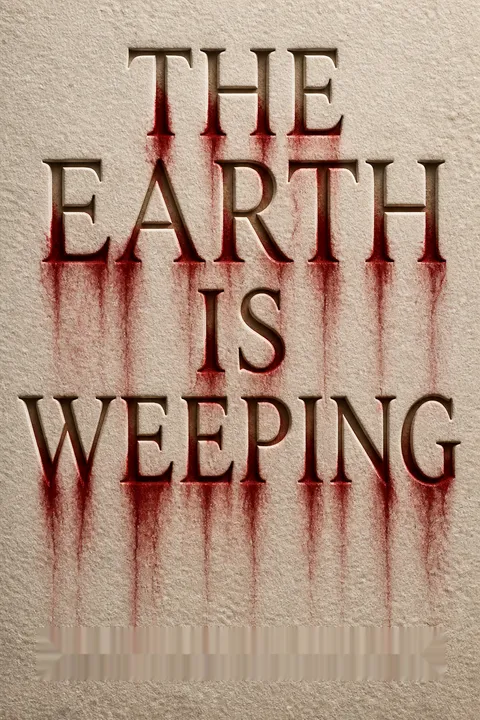


Key Takeaways
Read the Indian Wars as a struggle over land, not a morality play.
Land drove the conflict. In 1863, Cheyenne chief Lean Bear met Abraham Lincoln, received a peace medal, and returned west expecting his people to be treated as friends. In 1864, soldiers shot him as he approached with those papers visible. Months later, at Sand Creek, Colonel John Chivington’s troops massacred a Cheyenne village, including women and children. These episodes expose the gap between national promises and events on the frontier.
Balance is not equivalence. Peter Cozzens challenges histories that cast the army as either heroic civilizers or a single-minded machine of extermination. He shows different motives and conduct among Native leaders, settlers, agents, and soldiers, while tracing a larger pattern: settlers and government repeatedly took Native land, and resistance was met with force.
What's valuable here is the refusal to let a simple moral script replace explanation. Distinguishing a peace chief from a war leader, or a humane officer from a corrupt agent, reveals how decisions were made and how violence escalated. Yet complexity should not flatten the power difference. Native communities were defending homelands against a federal government able to move troops, settlers, and laws across a continent. Context can explain both sides' actions without making their capacities, choices, or consequences equal.
Treat every treaty as a bargain made under unequal power.
Paper promised protection. Early federal policy recognized tribes as political entities that could transfer land by treaty. The Fort Laramie Treaty of 1851 set boundaries and promised protection, while the 1868 treaty granted the Lakotas a vast reservation and closed the Bozeman Trail. Neither arrangement stopped white settlement or the government from changing its demands.
Promises narrowed choices. At Medicine Lodge in 1867, Southern Plains leaders were pressed to accept reservations and farming, while key promises, including off-reservation hunting rights, were omitted from the final text. In 1871, Congress ended treaty-making with tribes. By then, agreements increasingly treated Native people as wards rather than negotiating partners. Red Cloud could win concessions through war, but even his success fixed boundaries that made future dispossession easier.
Treaties functioned as both agreements and instruments of state expansion. Their language could restrain immediate conflict, but enforcement depended on the same government whose settlers and officials benefited from taking land. This resembles a bargaining problem in which one party controls the courts, the military, and the terms of renegotiation. The detail matters: treaty violation was not simply a series of broken promises. It gradually changed who counted as a political actor and who had the authority to define the bargain.
Look inside tribes for competing strategies, not a single Native position.
Nations were not blocs. Within tribes, peace advocates and war leaders competed for influence, and local bands could make different choices. Cheyenne peace chief Black Kettle sought accommodation, while the Dog Soldiers resisted settlers crossing their Kansas hunting grounds. Among the Lakotas, Red Cloud accepted an agency arrangement, while Sitting Bull and Crazy Horse continued to defend a mobile life beyond the reservations.
Alliances crossed ethnic lines. Shoshones, Crows, Pawnees, and other Native groups served alongside the army, often to protect their own people or oppose traditional enemies. Lakotas and Cheyennes also fought the Crow and Pawnee nations for hunting territory. During the 1876 campaigns, General Crook recruited warriors from several tribes to fight other Native groups. His coalition briefly created a shared sense of Indian identity, but it served the government’s military aims.
This attention to internal politics corrects a familiar simplification: there was no unified Native government capable of directing a continent-wide resistance. Kinship, rivalries, local security, and leaders' competing judgments shaped decisions. The risk is treating fragmentation as an explanation that absolves the expanding state. Division mattered because officials could exploit it, but the unequal pressure of settlement and federal policy helped make those choices urgent. Disunity is both a feature of Native political life and a resource the government used.
Learn how Native tactics exposed the frontier army's weaknesses.
The army was often unready. After the Civil War, frontier soldiers were poorly trained, underpaid, and scattered among isolated posts. Supply wagons limited how far they could operate. At the Fetterman Fight in 1866, decoys drew Captain William Fetterman’s command beyond its support, and all 81 soldiers died. The next year, breech-loading rifles helped defenders survive the Wagon Box Fight, showing how quickly weapons could change an encounter.
Scouts changed the odds. Native warriors used mobility, local knowledge, and carefully chosen ground; army officers often struggled to locate them without Native scouts. The army later relied on Pawnee, Crow, Shoshone, Apache, and Black soldiers known as Buffalo Soldiers. These allies were not accessories. Their skills and motives shaped campaigns, even as the army used their knowledge against other Native communities.
The military story is not just a sequence of battlefield outcomes. It is also an account of organizations learning under pressure. The army gradually adapted its weapons, logistics, and scouting practices, while Native tactics exploited the gaps between orders and conditions on the ground. The reliance on Native scouts complicates the image of a simple two-sided war: people could defend one homeland by helping the army enter another. Official casualty counts also deserve caution, since warriors often carried their wounded away.
Peace policy cannot work when promises contradict its enforcement.
Good intentions met bad administration. In 1869, President Grant’s Peace Policy gave religious groups, including Quakers, roles in managing agencies and aimed to move Native people onto reservations. But promises of food, land, and protection were routinely delayed or undermined by corruption and competing federal departments. The army could be told to keep peace while being ordered to punish people who resisted the policy.
Massacres wrecked trust. In 1870, Major Eugene Baker attacked a Piegan village on the Marias River despite instructions to spare a peaceful band. About 140 women and children were killed. The Modocs, forced toward a reservation after disputes over their homeland, fought in 1872 and 1873; their leader Captain Jack killed General Canby during failed negotiations. The government then exiled the surviving Modocs. Peace initiatives repeatedly arrived alongside coercion.
The Peace Policy illustrates a classic implementation failure: central authorities announced humane goals, while local incentives and fragmented oversight produced outcomes that contradicted them. Corrupt agents could profit from disorder, and commanders could interpret resistance as permission for force. The policy was not simply a sham; some officials did seek accommodation. But intentions mattered less to Native families than whether promised food arrived, whether land was protected, and whether violence against them was punished.
Treat the destruction of the buffalo as an attack on a whole society.
The herd sustained more than hunger. Plains peoples used buffalo for food, clothing, shelter, trade, and ceremony. When hide hunters crossed treaty boundaries to kill the animals, they dismantled the material base of Native independence. In three years, railroads carried more than 4.3 million hides east from Kansas. Kiowa leader Kicking Bird explained that buffalo were the people’s main resource for obtaining goods not supplied by the government.
Adobe Walls turned crisis into war. In 1874, Comanche medicine man Isa-tai and war leader Quanah Parker helped assemble a large coalition to attack buffalo hunters at Adobe Walls. The hunters’ powerful rifles repelled them. The army then launched the Red River War, destroying villages and killing more than a thousand ponies at Palo Duro Canyon. Without horses, food stores, or buffalo, resistance became nearly impossible.
The buffalo story shows how an economic market can become a weapon without requiring a formal military order. Hunters pursued profit, while officials recognized that the killing would force Native people into dependence. This is more revealing than treating the buffalo's disappearance as background scenery. At the same time, ecological change had several causes in the book, and the hunters were not the only pressure on the herds. The point is the deliberate use of destruction to make an existing way of life unsustainable.
Little Bighorn was a battlefield victory that accelerated Lakota dispossession.
The crisis preceded Custer. In 1874, an army expedition entered the Black Hills, which the 1868 treaty had reserved for the Lakotas, and publicized evidence of gold. The Grant administration then planned to provoke a conflict with non-treaty Lakotas rather than remove miners. In June 1876, Lakota and Cheyenne warriors defeated Custer’s force at Little Bighorn, but the victory did not stop the campaign against them.
Retaliation expanded state power. Congress funded new forts, increased troops, and authorized military control of agencies. The government pressured reservation chiefs to surrender the Black Hills and other lands, tying future food appropriations to their agreement. Sitting Bull escaped to Canada, and Crazy Horse surrendered in 1877, then died in army custody after a confused arrest. The battle became a public pretext for a harsher campaign already prepared by officials.
The reversal is central: tactical success did not equal strategic security. The Lakota and Cheyenne victory demonstrated their military strength, but it also intensified public support for a much larger federal campaign. In political terms, a dramatic defeat can strengthen an institution if leaders use it to justify new powers. The book also makes clear that the Black Hills dispute was not a side issue. It was woven into the government's choice to turn miners' trespass into a war against the people whose treaty rights stood in the way.
Do not confuse surrender with consent when survival is the only alternative.
Surrender often followed a long chase. Chief Joseph’s Nez Perce people fought their way across roughly 1,700 miles in 1877, avoiding battle when possible and protecting families as they fled. At Bear Paw, Joseph surrendered after leaders and warriors had been killed and children were freezing. The government had promised humane treatment and a return home, but instead sent the Nez Perces first to Kansas and then to Indian Territory.
The Northern Cheyennes faced the same trap. After defeat in 1876, Dull Knife and Little Wolf’s people were relocated south, where hunger and disease ravaged them. Dull Knife’s band escaped Fort Robinson in January 1879 after officials withheld food and firewood. Soldiers killed many during the flight. Little Wolf’s band later surrendered after a long journey north and was allowed to remain in its homeland. Outcomes depended partly on which officials held power, not simply on whether a tribe submitted.
These journeys clarify the difference between a formal surrender and freely chosen agreement. When a community faces starvation, confinement, and the loss of its land, compliance can be a survival tactic rather than acceptance of the terms. The contrast between the two Northern Cheyenne outcomes also reveals contingency: one official's decision to negotiate can save lives, while another's attempt to force compliance can make escape seem preferable to death. Promises are credible only when institutions honor them.
Treat local agents as causes of war, not background figures.
An agent could manufacture a crisis. At the White River Ute agency, Nathan Meeker tried to turn a peaceful people into farmers by moving the agency onto their favorite grazing land and ordering their racecourse plowed. He exaggerated threats, demanded troops, and ignored Ute objections. When Major Thornburgh’s soldiers crossed onto the reservation, fighting began. Meeker and agency staff were killed, and Colorado politicians demanded the Utes be expelled.
Forced relocation also drove Apache resistance. Chihenne Apache leaders Victorio and Loco had accepted several moves to unsuitable reservations, including San Carlos, where their people faced inadequate food and restrictions on hunting. Victorio eventually went to war, and Mexican soldiers killed him and dozens of followers at Tres Castillos in 1880. In both cases, the language of reform or security obscured decisions that Native people experienced as another seizure of home and livelihood.
These episodes make policy implementation visible at human scale. A distant government might speak of farming or public safety, but the agent's choice of a site, ration rules, or a request for troops could decide whether neighbors spoke or fought. This resembles a principal-agent problem: local officials had discretion, while the people affected had little recourse. The examples also warn against assigning all blame to a single official. Settler pressure and federal policy created the conditions in which a local mistake could become irreversible.
Adaptation did not mean consent, and resistance was not the only strategy.
Native leaders chose different forms of survival. Some adopted farming, schooling, or military service without abandoning their claims to land or community. Quanah Parker accepted reservation life after the Red River War and later worked with Ranald Mackenzie. Kicking Bird advocated peace among the Kiowas, while Sitting Bull farmed at Standing Rock yet continued to oppose the 1889 Lakota land cession.
Accommodation could still be coerced. The Dawes Act of 1887 divided reservation lands into individual allotments and opened surplus acreage to settlers. Lakota leaders were pressured to accept the 1889 land agreement; ration cuts followed before promised protections could take effect. These differences matter: an individual could adapt to new conditions while opposing the policy that made the old life impossible.
The distinction between adaptation and consent prevents two common errors: treating every accommodation as surrender, or every refusal as proof that peaceful coexistence was impossible. Individuals and communities could adopt selected practices while resisting the terms imposed on them. That is a form of agency, but it should not be romanticized as free choice when land and food were controlled by the state. The strongest reading holds both facts together: Native people made strategic decisions, and the available choices were being violently narrowed.
Wounded Knee followed dispossession, hunger, and panic, not a sudden uprising.
The Ghost Dance answered a crisis. In 1889, Paiute prophet Wovoka taught a peaceful religious movement promising renewal and urging believers to remain on good terms with whites. Lakota visitors brought the teaching home, where some leaders added militant claims about Ghost Shirts protecting dancers from bullets. Meanwhile, drought, ration cuts, land loss, and the Dawes Act had left families desperate. A frightened agent's warnings helped persuade Washington that the dances meant imminent war.
The last violence was not a fair battle. After Sitting Bull was killed during an attempted arrest in December 1890, Miniconjou chief Big Foot led his people toward Pine Ridge. Soldiers intercepted and disarmed them at Wounded Knee. A shot during a tense search for weapons sparked chaos; Hotchkiss guns then fired into the village and ravine. The army counted 146 Lakota dead, including women and children. Resistance ended, but the massacre did not prove consent to the system that followed.
Wounded Knee is best understood as the end point of accumulated distrust, not as an isolated eruption of religious fanaticism. A peaceful movement was interpreted through the lens of military threat, while hunger and land seizures made spiritual hope unusually compelling. The distinction between the original teaching and its Lakota adaptations matters, but so does the state's choice to deploy overwhelming force. Historical labels such as battle or massacre shape public memory; the evidence here makes the killing of noncombatants impossible to treat as a conventional fight.
Analysis
The book's strongest method is to replace a single battle narrative with a chain of decisions across four decades. A frontier officer's blunder, an agent's coercive scheme, a treaty clause, a mining rush, or a delayed food shipment could alter the choices available to a whole community. The result is a history of institutions as much as of famous leaders. It shows how army capacity, settlement, agency administration, and rival Native strategies interacted, while testimony from both Native and white participants gives many episodes more than one vantage point.
Its central corrective is valuable: neither Native peoples nor the army acted as unified blocs. Yet the language of balance requires care. Internal Native conflict and warfare between tribes are real parts of the history, but they do not make those conflicts equivalent to the federal seizure of land or the power imbalance between communities and a continental state. Explanation is not exoneration. The book is most persuasive when it shows how expansion made resistance more likely, and how resistance then gave officials opportunities to intensify control.
A further distinction helps make sense of the ending: intention and cumulative effect are not the same question. The book argues that the federal government did not set out with a unified plan of physical extermination, while documenting repeated massacres, hunger, forced migration, cultural suppression, and the removal of Native political authority. Those propositions can coexist. A policy need not be designed as genocide to destroy a society's economic basis and make its way of life unviable. By 1890, the decisive victory was not simply military. It was the creation of a system in which land, food, movement, and political recognition were controlled by the government. Wounded Knee dramatizes that system's violence, but the long sequence of choices explains its arrival.
Review Summary
The Earth Is Weeping is praised as a comprehensive, balanced account of the Indian Wars in the American West. Readers appreciate Cozzens' nuanced portrayal of both sides, detailed military history, and vivid storytelling. The book is commended for its extensive research and evenhanded approach, though some find it overly focused on battles. Critics note the graphic violence and dense information. Overall, it's considered an important work that challenges simplistic narratives and offers a thorough examination of this tragic period in American history.
People Also Read



Glossary
Peace Policy
Grant's reservation reformThe name given to President Ulysses S. Grant's approach to Native affairs beginning in 1869. It assigned religious groups, including Quakers, roles in administering agencies and aimed to move Native communities onto reservations, encourage farming, and reduce corruption. It still relied on coercion, and the army could be used against people classified as hostile.
policy of concentration
Relocating tribes to reservationsA federal policy of moving Native communities away from land desired by settlers and confining them on designated reservations. It also included consolidating smaller reservations and sometimes placing rival tribes together. Officials presented concentration as protection and a step toward farming, but it often reduced access to traditional lands, hunting, and independent movement.
Unceded Indian Territory
Lakota hunting lands beyond reservationThe name used for land north of the North Platte River that the 1868 Fort Laramie Treaty reserved from white settlement without Lakota permission. The area included parts of present-day northeastern Wyoming and southeastern Montana. Non-treaty Lakotas and Cheyennes continued to live and hunt there, while federal officials disputed what rights the treaty allowed.
Buffalo Soldiers
Black soldiers in frontier regimentsA name used by Plains tribes for Black soldiers serving in the U.S. Army's Ninth and Tenth Cavalry and Twenty-Fourth and Twenty-Fifth Infantry regiments. The term may have reflected respect for their fighting ability or the soldiers' hair. These units often faced racism and poor supplies, yet served with distinction in frontier campaigns.
Dreamer religion
Pacifist prophetic Native faithA religious movement associated with the Columbia River basin prophet Smohalla. It taught that the Creator could restore the dead and renew the land, and urged followers to reject the white man's way and leave the earth undisturbed. Federal officials often suspected the religion of encouraging violence, though the teaching itself was pacifistic.
Ghost Dance
Ritual for spiritual renewalA religious movement begun by Paiute prophet Wovoka in 1889. He taught that Jesus had returned, that the dead would be restored, and that Native people should dance and remain peaceful toward whites. Lakota leaders added more militant interpretations, including claims that Ghost Shirts could stop bullets. Fear of those claims helped precipitate the 1890 crisis.
Ghost Shirts
Sacred protection garmentsSpecial shirts worn by some Lakota Ghost Dance participants. Believers were told that the garments could protect them from bullets. The claim was part of a more militant Lakota interpretation of Wovoka's largely peaceful teaching. At Wounded Knee, many dead Lakota men were still wearing Ghost Shirts, a detail that became a powerful symbol of the movement's defeat.
Download PDF
Download EPUB
.epub digital book format is ideal for reading ebooks on phones, tablets, and e-readers.








