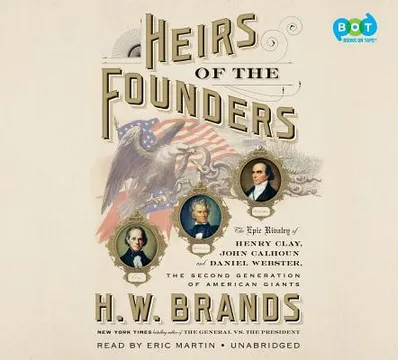


Key Takeaways
The founders left their heirs a Union no one agreed how to govern.
An unfinished inheritance. In January 1850, news of gold in California pulled the aging Henry Clay back to Washington. California wanted admission as a free state, and its sudden population forced Congress to confront slavery in the West sooner than expected. The Constitution had left uncertain where state authority ended and federal authority began. Clay, John Calhoun, and Daniel Webster had spent their careers arguing over that boundary; now they faced its most dangerous test.
Three answers to one problem. Clay saw the Union as the essential shelter for democracy and tried to preserve it through compromise. Calhoun increasingly argued that states must be able to resist a federal government threatening their interests, especially slavery. Webster held that the Constitution created a national government answerable to the people, not a loose agreement states could individually veto. Their rivalry was personal, but the stakes were structural.
What's striking is that the Constitution's ambiguity is both the story's engine and its hazard. Leaving contested powers unsettled can make agreement possible when a new republic is fragile. It also means later disputes are not merely about policy. They become fights over who has authority to decide what the rules mean. This resembles an incomplete contract: its authors cannot anticipate every future conflict, so institutions need legitimate ways to interpret the gaps. The trio's tragedy is that they never shared a trusted method for doing so.
A disastrous war made Clay and Calhoun famous, while Webster paid the price.
Ambition meets reality. Clay and Calhoun helped push the United States into the War of 1812, arguing that British seizures of ships and sailors threatened American independence. They also expected conquest in Canada. Instead, American forces suffered defeats, the British burned Washington in 1814, and the war ended without territorial gains. Webster, newly elected from antiwar New England, warned that the conflict endangered commerce and constitutional limits. He also helped stop an unpopular proposal to draft men into the army.
A victory rewrites the story. In January 1815, Andrew Jackson's army inflicted a devastating defeat on the British at New Orleans. The victory came after the Treaty of Ghent had already ended the war, but Americans treated it as proof that the war hawks had been right. Clay and Calhoun recovered their reputations. Webster's opposition, and New England's secessionist-sounding resistance, suddenly looked disloyal.
The episode shows how political reputations depend on outcomes as well as judgment. Clay and Calhoun were wrong about an easy victory, yet the spectacular finale let supporters recast the war as vindication. In political psychology, memorable events can outweigh a longer record because they offer a simple story to repeat. Webster's warning about costs did not fit the celebratory ending. The caution is not that foresight is useless, but that accurate analysis can lose to a result that feels like proof.
Build national connections before distance turns regional interests into rival worlds.
Clay's nation-building plan. The War of 1812 exposed the weakness of a government unable to move money, troops, or supplies reliably across the country. Clay changed his position and supported a national bank, then argued for federal roads, canals, and a protective tariff. Together these policies became the American System: a national program intended to strengthen the economy and tie distant regions together. Clay argued that roads and canals could make trade, travel, and common defense less dependent on geography.
Infrastructure changes loyalties. The Erie Canal, completed in 1825, showed the scale of the effect. It linked the Great Lakes to the Atlantic and cut the cost of moving goods from the interior by as much as 90 percent. New York City gained at New Orleans's expense. Clay's tariff proposal was more divisive: he hoped to protect young manufacturers, while free traders such as Webster warned that protection burdened consumers and commerce.
The American System treats infrastructure as political architecture. A road or canal does more than reduce transport costs: it creates repeated exchanges between people who might otherwise remain economically separate. That is a powerful account of how material networks can support political solidarity. Yet connection does not guarantee equal benefit. The canal enriched some regions and redirected commerce away from others, while tariffs redistributed costs and advantages. Nation-building projects therefore require more than a unifying purpose. Their distributional effects determine whether people experience integration as partnership or extraction.
Compromise can stop a crisis without solving the injustice beneath it.
Missouri's explosive admission. When Missouri sought statehood in 1819, Northern representatives tried to restrict slavery there; Southerners said Congress had no authority to impose the restriction. Clay helped link Missouri's admission as a slave state with Maine's admission as a free state. The resulting Missouri Compromise also drew the 36°30′ line across much of the Louisiana Purchase, excluding slavery from territory north of it while allowing it south of it.
Time, not resolution. The bargain eased the immediate confrontation, but its balance was fragile. It left slavery intact and relied on a geographic line to contain a moral and political dispute. Thomas Jefferson feared the line would deepen sectional divisions; Clay hoped gradual change would make the problem less urgent. When Missouri's constitution tried to exclude free Black people, the settlement nearly unraveled again, requiring another round of political maneuvering.
The Missouri bargain illustrates a real strength and a real limit of compromise. In a divided system, a partial settlement can prevent immediate escalation and preserve room for future bargaining. But stabilizing a conflict is not the same as correcting its underlying injustice. The bargain also turns geography into a proxy for moral choice, making each new territory another test of the same division. A durable settlement needs both a workable procedure and a credible path for addressing the interests it temporarily leaves unresolved.
In 1824, a House decision turned Clay's judgment into Jackson's grievance.
A new electorate changes politics. By 1824, nearly all white men could vote, and more states let voters choose presidential electors directly. Andrew Jackson won the largest share of the popular and electoral votes, but no candidate won a majority. The Constitution sent the choice to the House, where Henry Clay, eliminated from the final vote, supported John Quincy Adams over Jackson. Clay believed Adams was better prepared for office and feared elevating a military hero on his battlefield reputation alone.
Suspicion becomes political fuel. Adams made Clay secretary of state, a post often seen as a path to the presidency. Jackson's supporters called this a corrupt bargain, although the account presented here does not establish that the two men traded the office for Clay's support. The charge stuck. Jackson won in 1828, and the episode helped make popular resentment of political insiders a powerful force.
The controversy exposes a gap between constitutional legality and democratic legitimacy. The House had the authority to choose, but many voters saw the result as a defeat of their expressed preference. That perception mattered even without proof of a bargain. Modern political science distinguishes procedural legitimacy from outcome legitimacy: people may accept an authorized decision less readily when they believe it ignored their voice. Clay's reasoning could be defensible and still politically disastrous because the process looked remote from the expanding electorate.
When states claim a veto, constitutional disagreement can become armed confrontation.
Calhoun's theory of resistance. The Tariff of 1828 raised import duties to protect manufacturers, angering South Carolina, where cotton prices had fallen and planters were already in debt. Calhoun argued that a state could declare a federal law invalid within its borders. This doctrine, called nullification, treated states as constitutional guardians able to block federal overreach. In 1832, South Carolina nullified the tariffs and threatened to leave the Union if federal officials tried to collect them.
Webster's counterargument. In his celebrated exchange with Senator Robert Hayne, Webster argued that the Constitution came from the people and established a government acting directly on them. If every state could decide which laws applied, national law would become inconsistent and enforcement could turn violent. Clay brokered a tariff reduction over nine years; Congress also passed a force measure authorizing enforcement. South Carolina withdrew its tariff nullification, then symbolically nullified the force measure.
Nullification is more than a technical doctrine. It asks whether a political minority can protect itself by refusing a decision made through national institutions. That concern is not inherently irrational, particularly where minorities fear permanent subordination. The danger lies in giving each state a final, unilateral veto: the same rule can protect liberty in one dispute and disable collective government in another. A federal system needs genuine local autonomy, but it also needs an accepted way to resolve conflicts that cross state borders.
Jackson's bank war shows how populism and executive overreach can coexist.
A bank becomes a political symbol. Clay and Daniel Webster backed renewal of the Bank of the United States, which managed federal funds and helped stabilize the currency. President Jackson opposed it as an unconstitutional privilege for wealthy shareholders. He vetoed its renewal in 1832, arguing that government should not make the powerful richer through exclusive advantages. Many ordinary voters, wary of banks, welcomed his stand.
Power shifts to the president. Jackson then removed federal deposits from the national bank and placed them in state banks, despite resistance from his treasury secretary. Bank director Nicholas Biddle restricted lending, intensifying financial strain. Clay and Calhoun condemned Jackson's actions as a seizure of power; Jackson said the bank was using economic distress to force the government to restore its privileges. Later, state-bank lending helped fuel land speculation, and a financial panic struck in 1837. The episode made the bank's fate inseparable from party politics.
The conflict resists a tidy verdict. Jackson's attack spoke to a legitimate fear that concentrated financial power could shape public policy. His own actions, however, concentrated authority in the presidency and weakened institutional checks. This is a recurring populist dilemma: a leader may claim to speak directly for ordinary people while bypassing procedures meant to protect them from arbitrary rule. Biddle's pressure campaign also shows that private institutions can wield coercive power. Accountability must therefore apply to both public officeholders and economic elites.
The cotton boom made slavery more profitable, then Calhoun made it a moral creed.
Economics reversed expectations. Many founders assumed slavery would gradually decline. The cotton gin made short-staple cotton profitable across a wider area, while Andrew Jackson's military campaigns opened Gulf Coast lands to settlement. Demand for enslaved labor surged. By 1840, nearly 2.5 million people were enslaved in the United States, and the domestic slave trade moved people from the older Atlantic states to the expanding cotton South. Enslaved people also served as valuable collateral for planters' debts.
Defense hardens into ideology. Calhoun had once called slavery an evil, but later described it as socially beneficial and attacked abolition as a threat to Southern safety and political power. John Quincy Adams resisted the silencing of antislavery petitions in Congress, including through the gag rule that blocked their consideration. His struggle exposed a contradiction: a nation claiming popular government was refusing even to hear demands challenging slavery.
The shift from calling slavery regrettable to defending it as beneficial shows how material interests can reshape moral language. Once a system supports wealth, credit, and political influence, its beneficiaries have strong incentives to describe it as natural or protective. That explanation does not reduce belief to self-interest alone; people can sincerely adopt ideas that justify the institutions around them. The Adams episode adds a democratic dimension: protecting the right to petition matters most when the petition challenges a powerful, entrenched interest.
Every territorial gain reopened the question of slavery and national power.
Expansion sharpened the divide. Texas's independence from Mexico raised the question of whether the United States should annex a large slaveholding republic. Clay opposed acquiring it if annexation risked war or intensified sectional conflict, then softened his position during the 1844 campaign. Democrat James Polk won on expansion. After annexation, Polk sent troops into disputed territory and began a war with Mexico that brought California and New Mexico into American hands.
California accelerates the crisis. The Wilmot Proviso sought to bar slavery from territory taken from Mexico, but it failed in the Senate. Then gold triggered a rapid migration to California, whose residents wrote a constitution prohibiting slavery and asked for statehood. Clay had hoped the West would fill slowly. Instead, California's population forced Congress to decide at once whether its admission would upset the balance between free and slave states.
Territorial expansion made abstract constitutional theories concrete. Each new region affected representation, political power, and the future reach of slavery. The resulting conflict was not simply a disagreement about western land. It was a contest over whether national expansion would enlarge one section's power at the expense of another. Clay's hesitation also shows the political cost of treating territorial growth as an uncomplicated good. Expansion can strengthen a state while making its internal bargains harder to sustain.
The Compromise of 1850 bought time, while its fugitive-slave law deepened resistance.
Clay's final bargain. California entered as a free state; the other territories acquired from Mexico were left without a congressional decision on slavery. Texas surrendered part of its claim to New Mexico in return for federal assumption of its debt. The slave trade ended in Washington, D.C., but slavery remained there. The compromise also strengthened the recovery of people who escaped slavery, requiring more cooperation from the North. After the package stalled as one bill, Stephen Douglas helped pass its provisions separately.
The human cost came into view. Solomon Northup, a free Black New Yorker, was kidnapped in Washington and sold into slavery. He regained freedom after twelve years, but a court refused to hear his testimony against the man who sold him because he was Black. His story showed how easily legal protection could fail. The new fugitive-slave law intensified Northern anger by forcing people to assist in returning escapees.
The settlement's unequal burdens explain why a compromise can calm elected officials without reconciling the public. The South gained stronger enforcement against escapees; the North was asked to participate in a system many considered immoral. Northup's experience makes the institutional problem vivid: legal protections mean little when a person's testimony is excluded. The bargain preserved political cooperation for the moment, but it also brought slavery into Northern communities through enforcement, turning a distant sectional issue into a direct moral and civic conflict.
Lincoln used Clay's Unionism and Webster's words against Calhoun's secession logic.
Three legacies collide. Clay's 1850 compromise did not end sectional conflict. Calhoun died opposing it, Clay died in 1852, and Webster died later that year. Their political differences survived them. The 1850 law's fugitive-slave provisions angered Northerners, while many Southerners believed California's admission weakened their influence. The settlement bought years, not agreement.
The next generation inherits the argument. Congress repealed the Missouri Compromise in the Kansas-Nebraska Act, the Supreme Court's Dred Scott decision strengthened slaveholders' claims in the territories, and violence followed in Kansas. Abraham Lincoln drew on Clay's gradualist Unionism and Webster's defense of national unity. In 1861, secession led to war. The book's final lesson is not that the Union permanently settled every dispute over federal and state power, but that secession made the conflict over slavery a war rather than a constitutional argument.
The ending distinguishes preserving a political structure from resolving the moral conflict inside it. Clay and Webster believed national union was necessary to protect liberty, while Calhoun treated the Union as a danger to the South's established order. Lincoln inherited the first view, but the violent outcome does not make every earlier compromise wise or just. The episode also cautions against treating constitutional continuity as self-sustaining. Institutions endure when people accept their authority, and that acceptance erodes when law protects one group's freedom by denying another's.
Analysis
Brands structures a sprawling political history around a deceptively simple contrast: Clay and Webster tie liberty to national union, while Calhoun increasingly treats local sovereignty as protection against national domination. That contrast is clarifying, but it should not flatten the characters. Clay's compromise-making repeatedly preserved a political system that also preserved slavery. Webster's constitutional nationalism defended federal authority, yet his 1850 support for the Fugitive Slave Act required Northern citizens to help enforce bondage. Calhoun's concern about unchecked central power raises a real problem of minority protection, but his theory ultimately serves a slaveholding order and makes a state veto available against democratic decisions.
The book's strongest narrative insight is that constitutional arguments do not float above political economy. The national bank, tariffs, canals, western land, cotton, and slave collateral each redistribute power and wealth. Ideology both interprets these interests and gives them moral legitimacy. The 1812 war demonstrates a related dynamic: a humiliating record can be recast as vindication when one memorable victory supplies a compelling public story. Later, the 1824 election shows that lawful procedures can still lose public trust when voters see their preferences overridden.
The compromise episodes reveal the limits of procedural success. Clay could assemble coalitions and delay rupture, but delay worked only while political actors believed future bargaining remained possible. The Missouri line and the 1850 settlement contained disputes without removing the institution that repeatedly generated them. Northup's story supplies a corrective to debates conducted through abstractions: the constitutional conflict concerned a person who could be kidnapped, sold, and denied standing in court.
The narrative's continuing relevance lies less in a simple endorsement of central power than in its insistence that constitutional systems require both legitimate authority and substantive fairness. A Union can be preserved through accommodation only if the bargain does not demand that its most vulnerable members absorb the cost of political peace.
Review Summary
Reviews of Heirs of the Founders are largely positive, averaging 4.14/5. Readers praise Brands' accessible, engaging writing and his coverage of the often-neglected period between the founding era and the Civil War. Many appreciate the vivid portraits of Clay, Webster, and Calhoun and the book's modern relevance. Common criticisms include the book being too brief for its scope, lacking biographical depth, and relying heavily on primary source quotations. Several reviewers note that a stronger authorial voice and tighter focus would have strengthened the work.
Glossary
American System
National economic development programHenry Clay's program for strengthening the United States through a national bank, federally supported transportation improvements, and protective tariffs. Clay argued that these policies would develop American manufacturing, improve commerce and defense, and connect distant regions. Supporters saw an integrated national economy; opponents disputed the constitutionality of federal spending and objected to the unequal effects of tariffs.
Missouri Compromise
A sectional slavery settlementThe 1820 arrangement that admitted Missouri as a slave state and Maine as a free state, preserving the Senate's balance between slave and free states. It also prohibited slavery in most of the Louisiana Purchase north of latitude 36°30′, while permitting it south of that line, with Missouri as an exception. The agreement postponed, rather than resolved, the conflict over slavery's expansion.
nullification
State rejection of federal lawThe doctrine, most forcefully advanced by John Calhoun, that a state could declare a federal law unconstitutional and prevent its enforcement within that state. South Carolina invoked nullification against protective tariffs in 1832. Its opponents argued that allowing each state to decide which national laws applied would undermine uniform law and could lead to confrontation or secession.
Wilmot Proviso
Proposed ban on territorial slaveryA proposal introduced by Pennsylvania representative David Wilmot during the Mexican War to prohibit slavery in any territory acquired from Mexico. It passed the House of Representatives but failed in the Senate. The proposal became a central point of conflict between those seeking to restrict slavery's expansion and those insisting that slaveholders could take enslaved people into federal territories.
Compromise of 1850
A package settling sectional disputesA set of laws addressing disputes over territory acquired from Mexico. It admitted California as a free state, left slavery undecided in other territories, adjusted the Texas boundary and debt, ended the slave trade in Washington, D.C., and strengthened the process for returning people who escaped slavery. The package eased the immediate crisis while increasing Northern resistance through its fugitive-slave provisions.
Monroe Doctrine
Policy opposing European interventionA foreign-policy position announced by President James Monroe in 1823 and drafted by Secretary of State John Quincy Adams. It warned European powers against further colonization or intervention in the Americas, while the United States promised not to meddle in European affairs. The statement promoted a boundary between European and American political influence, though it was not called a doctrine at the time.
Great Triumvirate
Three dominant American senatorsA contemporary name for Henry Clay, John Calhoun, and Daniel Webster, whose careers overlapped for decades and whose speeches shaped national debate. Clay became known for brokering compromises, Calhoun for defending states' rights and slavery, and Webster for arguing for national authority and the Union. Their rivalry provides the book's central narrative framework.
About the Author
Download PDF
Download EPUB
.epub digital book format is ideal for reading ebooks on phones, tablets, and e-readers.








