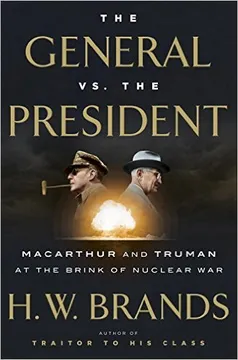


Key Takeaways
A battlefield genius can become a strategic danger when no one can question him.
Japan made MacArthur a legend. After Japan surrendered, MacArthur helped remake the country: he encouraged land reform, expanded women’s political rights, protected food supplies, and oversaw a new constitution that renounced war. His mixture of confidence, theater, and magnanimity won many Japanese people’s trust. But his success also strengthened his belief that his judgment outranked the doubts of distant officials.
Korea tested that belief. MacArthur dismissed warnings that China might enter the war, pressed American forces toward the Chinese border, and repeatedly challenged limits set by Washington. His brilliance was real, but so was his habit of treating disagreement as timidity or ignorance. The same force of personality that helped him govern Japan could make him dangerous when decisions affected the entire world.
What's striking is how success can blur the line between earned authority and assumed infallibility. MacArthur’s achievements in Japan gave him genuine credibility, but they could not prove that his next judgment was sound. In organizations, expertise is most useful when it remains open to correction, especially when consequences spill beyond the expert’s own domain. The warning is not that bold leaders should be restrained by default. It is that a leader’s record cannot replace independent scrutiny when the scale of risk changes.
Keep military commanders inside civilian policy, especially when nuclear stakes rise.
The president owned the whole risk. Truman had to consider more than battlefield success: a clash with China could draw in the Soviet Union, fracture the United Nations coalition, and leave Europe exposed. MacArthur, by contrast, focused on defeating the enemy in his theater. The gap was not simply about courage. It was about who had responsibility for the consequences across all theaters.
The constitutional tension was real. Truman sent American forces to Korea without a formal congressional declaration of war, relying on the United Nations resolution and his commander-in-chief authority. Yet he insisted that the military commander did not set national policy or decide independently to use atomic weapons. The episode shows both the need for civilian control and the difficulty of holding a president accountable when war begins without Congress formally declaring it.
This conflict resembles a problem of divided responsibility: the field commander sees the immediate danger, while civilian leaders must compare it with distant threats and political commitments. Neither viewpoint is complete on its own. Civilian control is not a claim that politicians know more about tactics; it is a rule for deciding whose judgment governs public policy. The constitutional discomfort remains important, though. Executive action may be necessary in a crisis, but necessity should not make legislative oversight seem optional or irrelevant.
Bold gambles can rescue a campaign, then tempt leaders to overreach.
Inchon turned the war around. In September 1950, MacArthur launched an amphibious landing behind North Korean lines at Inchon, despite extreme tides, narrow channels, and doubts from senior officers. The landing succeeded, Seoul was retaken, and the North Korean army’s supply routes were cut. The victory transformed a desperate defense around Pusan into a rapid advance north.
One success did not validate every risk. Inchon showed that surprise could defeat expectations, and MacArthur took it as proof that boldness would keep working. Afterward, his forces pushed toward North Korea’s border with China, despite warnings that Beijing might intervene. The operation’s success was extraordinary, but the reasoning that followed it treated a previous victory as if it guaranteed the next one.
Inchon illustrates the difference between a calculated risk and a reusable formula. MacArthur identified a specific vulnerability in North Korean supply lines and accepted operational danger to exploit it. That is different from assuming that audacity itself reliably produces success. In decision-making, a spectacular win can create outcome bias: people judge the quality of a choice by its result, not by what was knowable beforehand. The story honors bold initiative while cautioning against turning one brilliant solution into a general theory of war.
Treat an enemy's warnings as evidence, not merely propaganda.
China signaled its boundary. Through India, Chinese officials warned that American troops entering North Korea would meet Chinese resistance. Premier Zhou Enlai repeated the warning publicly and privately in October 1950. American officials doubted the messages, reasoning that China would not risk war with the United States. The CIA also judged major intervention unlikely.
The warning became an ambush. At Wake Island, MacArthur told Truman that Chinese or Soviet intervention was improbable and that any Chinese forces would be overwhelmed. Soon after, he ordered an advance toward the Yalu River. In late October Chinese troops attacked, then withdrew; in November, a much larger force struck again and drove UN troops south. The warnings were not proof of what China would do, but they deserved more weight than they received.
The episode exposes a common intelligence trap: a warning can be discounted because it conflicts with assumptions about what a rational opponent would do. That logic is fragile when the other side defines the stakes differently. At the same time, warnings are not self-interpreting. Governments issue threats for bargaining, deterrence, or domestic audiences, so treating every signal as a certain prediction can also produce escalation. The practical lesson is to test warnings against multiple scenarios and avoid building a plan that works only if the opponent is bluffing.
Limit a regional war before it consumes alliances and starts a global one.
Korea was not the whole map. Truman and his advisers viewed the Soviet Union as the larger strategic danger and Europe as central to the balance of power. They feared that widening the Korean conflict could pull in China or Russia, split the United Nations coalition, and weaken defenses elsewhere. Britain, especially, feared that attacks on China might endanger Hong Kong and destroy allied support.
A limited war meant accepting limits. Truman resisted MacArthur’s requests to attack across the Yalu, pursue Chinese aircraft into Manchuria, or use Nationalist Chinese troops. The president did not treat Korea as unimportant; he saw the defense of South Korea as a test of collective security. But he judged that victory in Korea could not justify actions that might trigger a much larger war.
The strategic problem is one of opportunity cost: every force committed to one theater is unavailable elsewhere, and every escalation changes what allies believe the coalition is for. A local commander can reasonably prize a decisive result; national leaders must also ask whether the means of winning would damage the larger system that makes security possible. Restraint can look like weakness when viewed from the front, but it can preserve options. The difficult caveat is that limiting a war does not guarantee peace or a satisfactory settlement.
Private disagreement is advice; public defiance can become a second command.
MacArthur took his case outside the chain. In 1950 he sent a policy message about Formosa to the Veterans of Foreign Wars without White House approval. In 1951 he endorsed Representative Joseph Martin’s demand to use Nationalist Chinese forces, then publicly issued a ceasefire challenge that collided with Truman’s diplomatic effort. He believed he was telling the country what military necessity required.
The effect was larger than the argument. Allies could no longer be sure whether Washington, the United Nations, or MacArthur spoke for American policy. Truman’s administration had instructed officials to clear political statements with Washington. MacArthur’s repeated public interventions undermined that arrangement and made it harder to negotiate. The central breach was not that he held different views, but that he used his command and public standing to contest policy while still responsible for carrying it out.
A commander’s duty to offer candid advice is essential; suppressing professional disagreement can leave civilian leaders poorly informed. But public dissent by an active commander changes the audience and the stakes. It can signal to allies that policy is unsettled, to opponents that commitments are negotiable, and to troops that orders are contested. MacArthur’s case shows why institutions need protected channels for frank advice and clear boundaries on public advocacy. The tension cannot be solved by demanding silence from experts or by letting every official speak as if authorized.
Nuclear ambiguity can turn careless phrasing into an international crisis.
Truman’s words traveled farther than intended. After Chinese forces entered Korea in late 1950, reporters asked whether the United States might use atomic weapons. Truman said every weapon was available and suggested the field commander would determine their use. He had not authorized MacArthur to use the bomb, but his wording made it sound as though the decision might rest with the general.
Allies heard a threat. Britain’s prime minister, Clement Attlee, rushed to Washington amid fears that a nuclear strike on China could bring Soviet retaliation and a world war. The White House clarified that only the president could authorize atomic use, and that no such authorization had been given. The clarification helped, but it could not erase the alarm created by the original exchange.
In a nuclear crisis, language is not merely descriptive. It can alter an opponent’s estimate of intent, unsettle allies, and narrow the room for retreat. Truman’s press conference shows how a brief answer, given under pressure, can create a policy impression that officials never intended. This is not an argument for secrecy at every turn. It is a case for disciplined communication: leaders need to distinguish capability, consideration, and authorization instead of letting those categories collapse in public.
Judge military options against actual capacity, not imagined limitless strength.
The United States had finite means. MacArthur argued that restrictions on attacking China prevented victory, but testimony to the Senate later revealed how stretched American forces already were. The Air Force was using roughly 80 to 85 percent of its tactical capacity in Korea. Senior officials also warned that attacks on Chinese territory could expose vulnerable airfields, supply routes, and evacuation operations to retaliation.
The limits cut both ways. China had not used its air force against UN bases in Japan or the main supply system, a restraint that benefited American forces. The Senate’s classified testimony also cast doubt on the fighting ability of Chiang Kai-shek’s Nationalist troops. The public heard MacArthur’s case for escalation, but crucial evidence suggested that escalation might weaken the United States more than it weakened China.
This is a reminder that military power is a portfolio, not an unlimited reserve. A weapon assigned to one mission cannot be assumed available for every other contingency, and an opponent’s restraint may be part of the balance rather than evidence of incapacity. The gap between public confidence and classified assessments also matters: democratic debate is healthier when citizens can understand the constraints shaping policy. Yet secrecy can be necessary during war, leaving leaders with the burden of acting on facts they cannot fully disclose.
In nuclear standoffs, preserving a limited peace can be the strategic victory.
Truman removed the commander who rejected his policy. After MacArthur publicly challenged efforts to limit the war, Truman relieved him in April 1951. The decision provoked enormous anger. MacArthur received a hero’s welcome at home and thunderous applause in Congress, while Truman faced demands for his impeachment. The Senate hearings examined their disagreements, but much of the most consequential military testimony remained classified.
The fighting ended without a grand victory. Matthew Ridgway restored the Eighth Army’s cohesion, and the front stabilized near the 38th parallel. An armistice followed in 1953, without a peace treaty or unified Korea. The book’s final judgment is not that Truman solved the conflict. It is that he resisted both communist aggression and pressure to expand a limited war into a nuclear catastrophe.
The ending resists the usual story in which victory proves wisdom. Korea remained divided, and the armistice was a compromise rather than a clean resolution. Yet the choice was not simply between victory and defeat: it was also between a contained conflict and a potentially wider war. That makes the outcome harder to evaluate, because the disaster avoided cannot be measured with the certainty of a battlefield result. The book’s case for Truman rests on comparative judgment under uncertainty, not on a claim that restraint made the underlying conflict disappear.
Analysis
The book’s deepest conflict is not simply Truman versus MacArthur. It is a clash between two legitimate but unequal kinds of knowledge. MacArthur possessed immediate operational experience, a vivid sense of battlefield possibility, and a record that made his confidence persuasive. Truman and his advisers faced a less visible burden: balancing Korea against Europe, alliance cohesion, military capacity, and the possibility of nuclear escalation. Each side could describe the other as dangerously mistaken because each saw a different scale of consequence.
The narrative also shows how prestige can distort institutional judgment. MacArthur’s occupation of Japan and the Inchon landing gave him exceptional authority. Those successes made his warnings about Washington’s limits sound like proof of strategic insight, even when his forecasts about Chinese intervention failed. Conversely, Truman’s cautious policy could appear irresolute to a public that valued decisive victory and did not see the classified evidence about American vulnerabilities. The public drama and the private record therefore tell different stories, not because one is wholly false, but because they expose different information and incentives.
The most difficult question is whether Truman’s restraint was wise or merely fortunate. The book supports the judgment that expanding the war could have shattered the UN coalition and risked conflict with the Soviet Union. It cannot establish with certainty what Moscow would have done. Nor does the eventual armistice prove that every decision made during the crisis was correct. Historical assessment must resist outcome bias in both directions: Inchon’s success did not make MacArthur’s later gamble sound, and avoiding world war does not make every restraint automatically wise.
The constitutional stakes sharpen the analysis. Truman acted without a formal declaration of war, yet asserted decisive civilian authority over a general. The episode therefore offers no simple celebration of executive power. It shows why a democracy needs both the capacity to act quickly and institutions that can scrutinize that action. The book’s lasting argument is that strategic restraint is not passive when it is chosen against pressure, fear, and the seduction of apparent military certainty.
Review Summary
Reviewers largely praise The General vs. the President as a fast-paced, engaging narrative history that balances its portrayal of both Truman and MacArthur fairly. Many appreciate Brands' storytelling and accessibility for general readers. However, some critics note the book sacrifices analytical depth for readability, lacking deeper insights into nuclear strategy, Soviet motivations, and Cold War hindsight. Most agree Truman's firing of MacArthur was justified and historically vindicated, while MacArthur is widely viewed as brilliant but dangerously egotistical. Overall, readers rate it highly as popular history, though scholars may find it insufficiently rigorous.
Glossary
containment
Resist expansion without general warA Cold War approach that sought to prevent communist power from expanding into additional countries or regions without necessarily trying to overthrow communist governments directly. In this account, Truman’s support for South Korea and his efforts to preserve the UN coalition reflect a strategy of resisting aggression while avoiding a wider war with China or the Soviet Union.
limited war
War restricted in scopeA conflict in which the aims, geography, or means of fighting are deliberately constrained rather than expanded to total war. In Korea, Truman opposed bombing Chinese territory, attacking beyond the peninsula, and using Nationalist Chinese forces because he feared those steps could widen the conflict and risk war with the Soviet Union.
collective security
Joint resistance to aggressionThe principle that countries cooperate to oppose aggression against a member or recognized state, rather than treating each attack as an isolated matter. Truman framed the defense of South Korea as a test of the United Nations’ ability to act jointly. He believed the coalition’s credibility and cohesion mattered beyond the Korean battlefield.
police action
War without formal declarationA label Truman accepted for the American-led military intervention in Korea under United Nations authority. It distinguished the operation from a formally declared war, even though large-scale combat followed. The term reflected the administration’s effort to present the intervention as enforcement of international decisions, but it also obscured the constitutional and political seriousness of sending troops into battle.
NSC 81
Korea policy guidanceA September 1950 National Security Council policy paper addressing the goal of a unified Korea and the risks of achieving it. It supported advancing north only if doing so did not create a substantial risk of general war with China or the Soviet Union. Its guidance favored limiting the use of non-Korean forces near the Chinese and Soviet borders.
sanctuary
Protected cross-border staging areaMacArthur’s term for territory beyond the Korean border where enemy forces and supplies could assemble beyond the reach of UN attacks. He argued that restrictions on bombing Manchuria gave Chinese forces a protected base from which to enter Korea. Washington viewed the same border limits as necessary to avoid provoking China or the Soviet Union.
Operation Chromite
Inchon amphibious counterattackThe code name for MacArthur’s September 1950 landing at Inchon, behind North Korean lines. The operation exploited surprise and cut supply routes supporting North Korean forces near Pusan. Despite difficult tides and serious doubts among some military advisers, the landing succeeded, helped retake Seoul, and transformed the course of the campaign.
no-war clause
Japan renounces warA provision in Japan’s postwar constitution, drafted under MacArthur’s occupation authority, by which Japan renounced war as a sovereign right. It was part of a broader program that reshaped Japanese government and society, including expanded civil liberties and women’s suffrage. The clause embodied the occupation’s ambition to make Japan a peaceful liberal democracy.
About the Author
Other books by H.W. Brands
Download PDF
Download EPUB
.epub digital book format is ideal for reading ebooks on phones, tablets, and e-readers.








