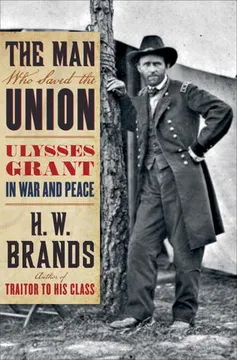


Key Takeaways
The failed civilian became the general who saved the Union
The wrong career fit. Ulysses Grant graduated from West Point, fought capably in the Mexican War, then struggled through peacetime army postings, farming, and real estate. He was so short of money that he returned to his father’s leather store in Galena. Nothing about this career suggested a future president or the Union’s indispensable commander. When secession began, Grant first helped organize Illinois volunteers, then accepted command of a disordered regiment. His years of frustration had not made him a natural businessman. They had left him prepared to recognize where his abilities did fit.
A new chance. Grant had wanted to leave the army and had failed to thrive outside it. The Civil War gave him a clear cause, a demanding job, and responsibility that suited his steady temperament. His rise was neither inevitable nor effortless: he had to prove himself repeatedly, from Missouri to Vicksburg and beyond.
What's striking is how the biography treats competence as a fit between a person and a task, not as a permanent trait. Grant was not secretly excellent at every pursuit; he was poor at managing a farm and awkward in politics, yet effective when he had to assess a battlefield and act. That distinction challenges the tidy success-story model in which every setback foreshadows triumph. War opened a role he could perform, but its human cost makes his professional rebirth no simple endorsement of conflict.
Treat fear as evidence, then move when the enemy fears you too
Fear in the field. Grant admitted that he dreaded his first encounters with the enemy. Before the skirmish at Florida, Missouri, he approached an abandoned Confederate camp with his heart pounding and wished himself back in Illinois. Finding that the enemy had fled, he realized the Confederates had been as afraid of him as he had been of them. That insight stayed with him. It did not erase anxiety, but it stopped him from treating his own fear as proof that the enemy was stronger.
Composure through action. In later battles, Grant often moved among his troops under fire, giving orders without spectacle. He was not immune to danger or doubt: command weighed on him more than serving as a subordinate. Still, he learned to act while uncertainty remained, instead of waiting for fear to disappear.
The episode turns fear from a private verdict into a clue about the situation. In military psychology, perceived danger often grows when only one side’s uncertainty is visible; the absent enemy can seem more confident than it is. Grant’s realization corrected that imbalance. It is a useful model for decisions under pressure, though it has limits: the enemy’s fear cannot be assumed, and confidence is no substitute for intelligence, preparation, or a sound plan.
Aim at the enemy's supply lines, not merely his famous strongholds
Rivers were strategic roads. Grant understood the Ohio, Tennessee, Cumberland, and Mississippi as the transportation network of the western war. Capturing Fort Henry and Fort Donelson opened waterways into Tennessee; taking Vicksburg would sever the Confederacy’s east-west supply corridor and restore Union control of the Mississippi. Vicksburg mattered not just as a fortified city, but as a hinge joining military movement, trade, and food supplies.
Attack the system. Grant repeatedly looked beyond the headline target to the routes that let armies move and eat. He considered the capture of enemy armies more decisive than occupying cities by themselves. This strategic focus helped him connect apparently separate battles across the West into a campaign to divide the Confederacy and limit its ability to keep fighting.
Grant’s river strategy resembles what modern strategists call a center of gravity: the system whose loss makes continued resistance much harder. In this case, waterways and railways carried food, weapons, and troops, so controlling them could matter more than a dramatic assault on a capital. The framework is powerful because it links geography to logistics. It also demands care: a network can be disrupted without automatically collapsing the people and institutions that depend on it.
When Vicksburg's river defenses blocked the front door, find another shore
The direct route failed. Vicksburg’s high bluffs let Confederate guns dominate the Mississippi, while swamps and floods frustrated Grant’s canals and routes through the Delta. After Sherman’s assault at Chickasaw Bayou failed and Confederate cavalry destroyed Grant’s supply depot at Holly Springs, the original plan was finished. Grant did not keep forcing the same approach.
Change the route. He ran gunboats and supply vessels past Vicksburg’s batteries, moved his army down the Louisiana bank, and crossed the Mississippi at Bruinsburg. Cut off from his normal supply line, he fed his troops from the country as they marched inland. In seventeen days, his forces fought five battles, took Jackson, and drove Pemberton’s army back into Vicksburg. The risky maneuver created the conditions for the siege and surrender.
This campaign shows flexibility without loss of purpose. Grant abandoned plans that geography had defeated, but he kept the objective, isolating Vicksburg, in view. The maneuver also depended on intelligence, river transport, and an army able to forage, not on courage alone. Foraging supplied the soldiers by transferring hardship to civilians, a reminder that operational ingenuity often shifts costs rather than eliminating them.
Persistence can win the war and still make its victories unbearably costly
Shiloh changed the scale. Grant’s army was caught off guard at Shiloh in 1862 and suffered about 13,000 killed, wounded, or captured. The battle taught him that a major Union victory would not make the Confederacy simply collapse. He concluded that the Union had to defeat its armies through sustained conquest.
Count the losses. Grant kept pressing Lee through the Wilderness and Spotsylvania, then ordered a disastrous assault at Cold Harbor that cost the Union about 7,000 men in a single morning. He later said he regretted that attack because it gained no advantage to compensate for the losses. His larger strategy relied on the North’s ability to replace soldiers more readily than the South. But replacing a number on a roster did not erase the death, grief, or political strain behind it.
Grant’s persistence was strategically consequential, but it was not cost-free, and the book does not require readers to admire every decision equally. Attrition favors the side with greater reserves only while that side’s public remains willing to spend them. The 1864 election made that condition uncertain. Cold Harbor is therefore both a military mistake and a warning: a commander can be right about the long contest yet wrong about the value of a particular attack.
Make emancipation part of victory, not a promise postponed until peace
A changing purpose. Grant did not begin the war as an abolitionist. At first, he focused on restoring the Union and treated slavery as a question for civilian leaders. The Emancipation Proclamation and the enlistment of Black soldiers changed both the Union’s war aims and its military resources. Grant backed the use of Black troops, arguing that their service strengthened the Union while weakening the Confederacy.
No return to the old order. By 1863, Grant told a political ally that the country could not live peacefully as one nation while preserving slavery. At Appomattox, he offered Confederate soldiers paroles, let them keep their horses, and arranged food for Lee’s hungry men. That generosity ended an army’s resistance; it did not mean surrendering the Union’s new constitutional commitments.
The shift matters because the book presents moral change as developing within wartime decisions, rather than appearing fully formed at the outset. Grant’s early caution gave way as emancipation and Black enlistment became central to Union success. Yet his explanation often remained strategic: Black soldiers were also described as a resource that weakened the enemy. The distinction matters. Military usefulness helped advance freedom, but freed people’s rights were not reducible to their usefulness to the Union.
Protect the ballot when local violence tries to decide who counts
Reconstruction needed enforcement. As president, Grant backed the Fifteenth Amendment and confronted the Ku Klux Klan, whose members used threats and murder to suppress Black voters and white Republicans. In South Carolina, after warnings and a public demand that the Klan disperse failed, Grant suspended habeas corpus in the worst-affected counties and sent federal forces to make arrests. The campaign disrupted the Klan’s organization and gave threatened communities some relief.
Power had a limit. Grant faced charges that military intervention threatened civil government, while his own cabinet and much of the public grew weary of Reconstruction. He argued that states should manage their own affairs, but not when local authorities tolerated violence and denied citizens their constitutional rights. His efforts could suppress a terror campaign; they could not make the country sustain that protection indefinitely.
This is the book’s sharpest test of the boundary between federal authority and local self-government. Grant’s position was that a state’s autonomy could not justify organized violence against citizens, especially when local institutions refused to act. That principle remains consequential wherever a majority can silence a minority through force. The tension is real, however: emergency powers can protect democracy, but they also require clear limits, evidence, and oversight to avoid becoming a standing substitute for civilian rule.
Finish the story yourself when illness threatens to define your legacy
A final campaign. After the Grant and Ward investment firm collapsed through partner Ferdinand Ward’s fraud, Grant lost most of his money and was left owing William Vanderbilt $150,000. Soon afterward, doctors diagnosed cancer in his throat. He began writing his memoirs while his illness made speaking and eventually swallowing painful. He worked from Mount McGregor, sometimes using pencil when his strength failed.
A record for his family. Grant finished the manuscript days before his death in July 1885. Mark Twain published it by subscription, a plan that helped the book reach a large audience and brought Julia about $400,000. The memoirs gave the family financial security and gave readers Grant’s account of the war. They also let a man whose public reputation had been contested shape how his story would be remembered.
The memoir is both an act of witness and an act of authorship. Grant had firsthand knowledge of the campaigns, but he was also selecting events, defending decisions, and writing for readers who had debated his reputation for years. Twain’s subscription model tied the book’s success to public loyalty as well as literary quality. The result is unusually immediate testimony, best read as a powerful participant’s account rather than a view from nowhere.
Analysis
Brands structures Grant’s life as a journey from misfit to national instrument, then asks what happens when battlefield competence meets the slower machinery of politics. Grant is not presented as a lifelong prodigy: he drifts through failed civilian ventures, finds purpose in war, and advances because he can decide under pressure, understand terrain, and keep armies moving. This narrative makes his rise persuasive without making it inevitable.
His military achievement rests on a distinctive union of strategic focus and operational flexibility. He treats rivers, railways, food, and troop movement as parts of one system. When a direct assault or supply route fails, he changes the means while preserving the objective. Yet his strategy also exposes the human cost of persistence. Shiloh and Cold Harbor make clear that an argument about national resources can become an argument about whose losses are considered replaceable. Grant’s later regret over Cold Harbor gives the story moral depth without erasing responsibility.
The harder test is Reconstruction. Grant understands that the Union’s victory has no settled meaning if violence can deprive Black citizens of constitutional rights. His enforcement of the Ku Klux Klan Act shows federal power used to make citizenship more than a promise. The limits are equally visible: northern political will fades, and protection recedes. His policies toward Native peoples reveal another tension. He favors peace and humanitarian administration, yet imagines security through reservation life and assimilation while settler expansion continues.
The biography’s central claim is strongest when read institutionally, not as the triumph of one hero. Grant could lead an army and use federal power, but he could not permanently reconcile national ideals with regional resistance, partisan exhaustion, or his own imperfect judgment of associates. His late memoirs complete the narrative: after power, scandal, and illness, he turns to the difficult work of telling the record himself. The book honors his achievements while showing that preserving a democracy requires not only victory, but durable institutions and public commitment.
Review Summary
Reviews of The Man Who Saved the Union are overwhelmingly positive, averaging 4.13/5. Readers praise Brands for rehabilitating Grant's unfairly tarnished reputation, countering "Lost Cause" historical revisionism. The Civil War sections are consistently highlighted as compelling and well-contextualized. Critics note the biography's straightforward, unadorned style lacks deep psychological analysis and occasionally glosses over negatives. Grant's presidency coverage surprises many readers, revealing his underappreciated civil rights efforts. Most agree it's an accessible, thoroughly researched biography that restores Grant's rightful place as a pivotal American figure.
People Also Read

Glossary
Anaconda plan
Union strategy of containmentThe Union strategy associated with General Winfield Scott, built around surrounding the Confederacy, blockading its coast, and controlling the Mississippi River. Its purpose was to restrict Southern trade and movement until the rebellion weakened. The book contrasts this gradual approach with Grant’s preference for direct offensives against Confederate armies and their supply routes.
Manifest Destiny
Ideology of continental expansionA nineteenth-century belief that the United States was destined, often with divine approval, to expand across North America. The book uses the idea to explain support for annexing Texas and acquiring territory from Mexico. Expansion was presented as spreading democracy, but it also intensified disputes over slavery and displaced Indigenous peoples.
contraband
Escaped enslaved people retained by Union forcesA wartime label applied to enslaved people who escaped to Union lines. Rather than return them to enslavers, some commanders treated them as property seized from the Confederacy and kept them within Union camps. Congress later barred their return and permitted their labor to support the Union war effort.
General Order No. 11
Grant’s expulsion order against JewsGrant’s December 1862 order expelling Jews as a group from his military department, ostensibly to curb illicit trade that aided the Confederacy. The order targeted people by religion rather than individual conduct and was revoked after protests reached President Lincoln. It became a lasting example of Grant’s wartime overreach and prejudice.
Ku Klux Klan Act
Federal law against political terrorThe 1871 law that allowed the federal government to prosecute conspiracies denying citizens their rights and authorized the president to use military force and, under specified conditions, suspend habeas corpus. Grant used it against the Klan and related groups when local authorities failed to protect voters and enforce the law.
peace policy
Grant’s approach to Indian relationsGrant’s effort to reduce conflict between the United States and Indigenous nations by reforming Indian agencies, appointing Quakers and army officers, and encouraging reservation life and assimilation. The policy sought to limit fraud and violence, but it operated alongside expanding white settlement and did not prevent future conflict over Indigenous land.
About the Author
Other books by H.W. Brands
Download PDF
Download EPUB
.epub digital book format is ideal for reading ebooks on phones, tablets, and e-readers.








