

Key Takeaways
Read Little Bighorn as two defeats, not one heroic last stand
Two endings, one collision. The familiar legend gives Custer a small band of doomed heroes facing an immense enemy. Philbrick complicates that image: Custer's force was destroyed, but Sitting Bull's Lakota and Cheyenne victory began a new assault on their independence. The battle took place in 1876, as the United States celebrated its centennial, and its shock helped the government intensify military pressure and build forts on Native land.
The victory did not end the story. Sitting Bull surrendered in 1881, then was killed during an arrest in 1890. Two weeks later, the Seventh Cavalry took part in the massacre at Wounded Knee. The book's central reversal is that the battle was not simply Custer's Last Stand. It was also a decisive moment in the Lakota and Cheyenne struggle to remain free.
What's striking is how the phrase last stand assigns dignity to one side while making the other side's survival seem like a footnote. Philbrick restores the wider timeline: a battlefield victory can be followed by political retaliation that changes what victory means. The distinction matters beyond this episode. Public memory often freezes a dramatic moment, while the people who lived through it experience the policies and losses that follow. The myth is not wholly false, but it is radically incomplete.
Trace the battle to gold, broken treaties, and an invasion of Lakota land
Gold changed the stakes. The 1868 treaty granted the Lakota the Black Hills and extensive hunting rights across the northern plains. In 1874, Custer led an expedition into the hills and confirmed the presence of gold. Miners soon flooded the region. When the Lakota refused to sell, the Grant administration chose war rather than stop U.S. citizens from taking the land.
The campaign was not simple defense. Officials ordered the Lakota to report to reservations by January 31, 1876, during a season when travel could be impossible. The army then launched a three-column campaign to find and subdue those who did not comply. Philbrick stresses that the fighting took place on territory the United States had promised the Lakota, not on land already settled by American towns or farms. Gold fever, political expediency, and broken promises made the confrontation.
The causal chain matters because it changes the moral framing of the battle. A story about soldiers defending settlers becomes a story about a government unable or unwilling to restrain its own citizens, then using force against the people whose land was targeted. Philbrick's account also shows how economic pressure can turn a treaty into an inconvenience in the eyes of those who want its resources. The legal language did not protect the Lakota once powerful interests decided the hills were more valuable than the agreement.
Judge Sitting Bull by his strategy for survival, not just his battlefield courage
Leadership meant holding a people together. Sitting Bull led the Hunkpapa and helped unite a large, diverse village, but Lakota decisions were usually reached by consensus. Some leaders favored reservation life; others supported seasonal visits for government supplies; Sitting Bull pressed for autonomy. The movement called iwashtela meant gradually living alongside white society. Sitting Bull resisted that course, fearing that dependence would cost his people their way of life.
Peace remained an option. Sitting Bull's religious life centered on Wakan Tanka, the Lakota Great Mystery. During a sun dance, he envisioned soldiers falling into the village, but urged his people not to take the enemy's goods. When Reno's soldiers first appeared, Sitting Bull reportedly sent his nephew forward with a shield to seek peace. The warriors' defense of the village soon made negotiation impossible.
The portrait resists the tidy categories of warrior and peacemaker. Sitting Bull's resistance was not simply an appetite for combat. It was a political strategy shaped by the shrinking choices available to his people, and it included restraint as well as force. His story also complicates the assumption that a leader's authority depends on issuing commands: Lakota consensus required persuasion and coalition-building. Philbrick's account does not make Sitting Bull infallible, but it makes his choices intelligible within a society facing a narrowing future.
Notice when Custer's hunger for a decisive victory overruled caution
Custer was more than a reckless caricature. He had shown real skill in Civil War cavalry battles and could adapt his approach. After the controversial attack at the Washita, he pursued diplomacy with Cheyenne leaders. Yet he also thrived on speed, danger, and public attention. In 1876 he faced financial trouble, had recently clashed with President Grant, and hoped a quick victory would restore his standing before the nation's centennial celebrations.
Ambition narrowed his options. Custer rejected extra cavalry and Gatling guns, then pushed ahead despite uncertain intelligence and a village far larger than expected. His own regiment had repeatedly learned that he could be brave and effective. That trust mattered, but it could also make subordinates less willing to challenge him. Philbrick presents a gifted officer whose desire to act decisively helped turn initiative into overreach.
Custer's career shows why courage and judgment should not be treated as the same virtue. A leader's appetite for action can be valuable when hesitation is costly, yet the same impulse can become a liability when the information is weak and the consequences are irreversible. Philbrick also connects public image to battlefield behavior: Custer did not fight only against an enemy, but against the fear that his reputation was slipping. That does not explain every decision, but it makes ambition part of the operational story rather than mere biography.
Keep forces together when maps, intelligence, and orders are unreliable
The plan rested on uncertain ground. The army's map contained guessed sections of rivers, including the Little Bighorn. General Terry planned a coordinated movement with Gibbon's Montana Column and Custer's cavalry, but the distances and terrain made cooperation difficult. His written orders directed Custer south even if the Indian trail turned west, while verbal instructions gave Custer discretion to attack if he judged it wise.
The regiment was divided before the battle. Custer led five companies, Reno three, Benteen three, and a separate escort guarded the pack train. The resulting four groups could not easily support one another across broken hills and ravines. Custer's decision to refuse additional troops and artillery made the force leaner but left little margin for error. Conflicting orders, poor maps, and delayed messages turned separation into a serious vulnerability.
This is a case where the map is not merely a background object. It shapes what commanders believe is possible, how quickly they move, and whether their units can find one another. The book's account suggests a general principle of operational design: when communication is slow and terrain hides movement, a plan needs reserves and clear authority, not just confidence. Custer's choices contributed to the danger, but Terry's ambiguous instructions and distant command helped create the conditions in which those choices became so consequential.
Recognize how hesitation and distrust can turn an attack into flight
Reno's attack briefly unsettled the village. His battalion charged toward the Hunkpapa end of the camp, where women and children were caught by surprise. The soldiers killed noncombatants as well as warriors. Reno then halted and formed a skirmish line. That pause gave Lakota and Cheyenne fighters time to gather their horses and organize a counterattack. When the soldiers retreated, they did so in confusion, and many were killed crossing the river.
Survival required others to take charge. Reno was drinking and failed to lead the withdrawal coherently, though the book does not reduce his entire career to cowardice. Benteen, who had delayed on the way to Custer, helped organize the defense on the hill. His men endured a two-day siege alongside Reno's survivors. Their conduct was mixed: hesitation and personal animosity mattered, but so did exhaustion, fear, and the overwhelming pressure of combat.
Philbrick avoids the easy verdict that one officer was a coward and another a hero. The more useful distinction is between a decision and the character label later attached to it. Reno's halt may have looked prudent in a frightening situation, yet it surrendered the shock of the charge. Benteen's later effectiveness does not erase his delay. This distinction is valuable in any institutional failure: precise scrutiny of actions reveals more than sorting people into heroes and villains.
Count horses, ammunition, and terrain before counting courage
The village was larger than Custer could see. Sitting Bull's camp held about eight thousand people and roughly twenty thousand ponies. Hills and river bends hid much of it, so Custer initially mistook a partial view for the whole. The warriors could move through ravines unseen, while the soldiers' horses were worn down by poor forage and long marches. The regiment's pack mules were badly trained, slowing the ammunition and supplies needed for a mobile fight.
The weapons were not evenly matched. Most soldiers carried single-shot Springfield carbines, which could jam after repeated firing. Archaeological study of the battlefield found evidence of many weapons, including modern Henry and Winchester repeaters. Estimates suggest several hundred warriors had these faster-firing rifles. The soldiers fought bravely, but courage could not compensate for a divided force, tired horses, unreliable resupply, and an enemy able to use the landscape.
The battle is often remembered as a clash of personalities, but its outcome also depended on mundane constraints: water, horse condition, ammunition, visibility, and time. These are not secondary details. They determine which choices are available when pressure rises. The contrast between the soldiers' logistical burdens and the village's mobility makes clear that tactical skill is inseparable from material conditions. Celebrating courage alone risks turning preventable weaknesses into destiny.
Treat every battle account as evidence shaped by memory and motive
The record is a hall of mirrors. Soldiers had reasons to defend their reputations, and the official inquiry into Reno's conduct did not settle blame. Lakota and Cheyenne witnesses faced interpreters, questioning, and fears of retaliation. Some testimony was recorded decades after the battle, when memories had changed and participants had new reasons to emphasize particular details.
Different evidence can narrow, not erase, uncertainty. Historian Walter Mason Camp interviewed many survivors. Private Peter Thompson's account contains vivid details, but also confusing chronology and disputed identifications. In 1983, a fire exposed parts of the battlefield to archaeological study; cartridge cases helped researchers map firing positions and identify weapons. Such evidence can challenge a familiar story, but it cannot reveal every movement or motive. Philbrick's method is to compare sources and acknowledge where certainty ends.
What's valuable here is not the promise of a final, flawless reconstruction. It is the habit of asking who made a claim, when it was recorded, and what the speaker stood to gain or fear. Oral testimony, official paperwork, physical artifacts, and maps each preserve different kinds of information. None is neutral, but they are not equally useful for every question. The tension between evidence and interpretation is part of the history, not a reason to give up on historical judgment.
Measure victory by what it unleashes, not only who survives the field
The battle accelerated dispossession. The defeat of Custer's command shocked the public and gave the government political support for a stronger campaign against the Lakota and Cheyenne. The buffalo were disappearing, agency rations were inadequate, and by 1881 Sitting Bull had surrendered in Canada. His later life at Standing Rock brought celebrity, surveillance, and conflict with officials who sought to weaken his influence.
The losses continued beyond 1890. Sitting Bull was killed during an arrest; two weeks later, the Seventh Cavalry massacred Lakota at Wounded Knee. Philbrick also follows the consequences into the twentieth century: dams built on the Missouri River in the 1940s flooded 550 square miles of tribal land, displacing families and submerging sacred places. The descendants of the victors did not experience Little Bighorn as a completed victory.
A narrow measure of success counts bodies on the day of battle. A fuller measure asks what power the result enabled, what losses followed, and whose descendants still carry them. Philbrick's ending refuses to treat history as sealed by a famous date. That perspective is especially important when a military victory is followed by policies that reshape land, livelihood, and memory. It also prevents the contemporary observer from confusing a monument, a reenactment, or a popular legend with the whole human consequence.
Analysis
Philbrick builds the book around a productive contradiction: the Little Bighorn is both a sharply localized military disaster and a long, uneven process of dispossession. The narrative moves between the decisions of individuals and the pressures of systems. Custer's ambition, Sitting Bull's political judgment, Reno's impaired leadership, and Benteen's resentment matter, but none operates apart from unreliable maps, poor equipment, unstable alliances, and an expanding campaign driven by the Black Hills gold rush. This scale shifting prevents the battle from becoming either a morality play about one commander or an abstract story of inevitable cultural collision.
The book's strongest interpretive move is to treat the Lakota and Cheyenne not as a single force with one intention, but as people with internal disagreement, family obligations, spiritual commitments, and conflicting strategies for survival. Sitting Bull's hope for peace at the moment of attack unsettles the familiar image of a battle sought by two heroic antagonists. The title's Last Stand is similarly revised: Custer's death became a national myth, while the victory marked the beginning of a coercive campaign against the people who won it.
The reconstruction is necessarily provisional. Military testimony, Native oral accounts, later recollections, and archaeological traces each have different weaknesses. Philbrick makes uncertainty visible rather than hiding it, though a vivid narrative can still give conjectural sequences the feel of witnessed fact. That tension is especially important in the final battle, where the exact order of events remains contested. The book's broader conclusion does not depend on solving every tactical mystery. Its durable achievement is to show how myth edits consequences: public memory keeps Custer's smile and the fallen cavalry, while the larger record includes a broken treaty, a shrinking buffalo economy, reservation confinement, Wounded Knee, and continuing losses of land. The result is not simply a revised account of who won. It is a challenge to decide what counts as winning, whose experience defines the story, and how far the effects of a battle extend.
Review Summary
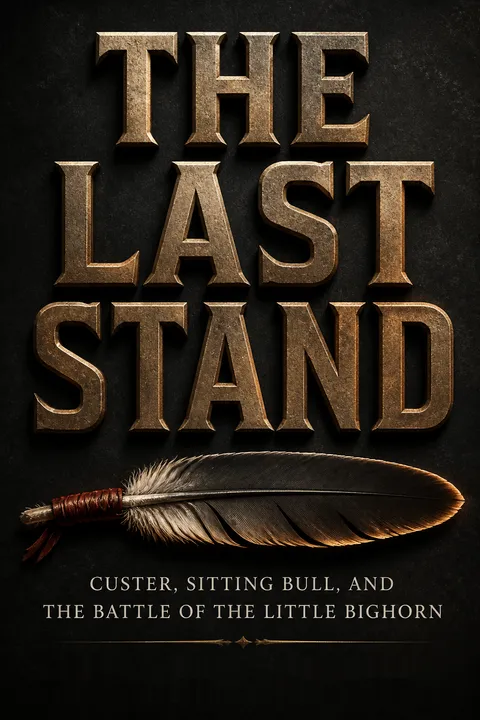
The Last Stand by Nathaniel Philbrick receives generally positive reviews (4.05/5) for its well-written, accessible account of the Battle of Little Bighorn. Readers appreciate Philbrick's balanced portrayal of both sides, excellent maps, and engaging narrative style. The book examines Custer's complex character alongside figures like Sitting Bull, Reno, and Benteen. Some critics note it doesn't offer much new scholarship for experts, reading more as popular history than groundbreaking analysis. Several reviewers praise how Philbrick makes the battle comprehensible while acknowledging uncertainties. The book successfully appeals to general readers seeking an introduction to this iconic American historical event.
People Also Read


Glossary
Wakan Tanka
Lakota sacred powerA Lakota term Philbrick renders as the Great Mystery or Great Spirit. It refers to the sacred, powerful reality underlying life, encountered through prayer, dreams, visions, and the natural world. Sitting Bull's spiritual authority and his appeals for the welfare of his people are presented in relation to Wakan Tanka.
counting coup
Warrior honor through daringA Lakota warrior honor earned through a brave deed in battle, especially touching or striking an enemy without killing him. Other recognized acts included rescuing a comrade, being wounded, or capturing horses. The practice reflects a system in which courage and personal achievement mattered as much as killing.
iwashtela
Gradual accommodation with whitesA movement among some Lakota for gradually living alongside white society rather than rejecting all contact. Its supporters could use reservation agencies for food and supplies while maintaining ties to hunting life. Sitting Bull opposed this path, believing accommodation risked dependence and loss of Lakota autonomy.
winter counts
Pictorial year-by-year recordsLakota chronological records in which a pictograph, often with a brief explanation, marks the event by which a year is remembered. Philbrick uses these records to show how Lakota communities represented their own history, including warfare, new technologies, disease, and growing contact with white society.
Ghost Dance
Religious movement of renewalA late nineteenth-century Native religious movement associated with the Paiute medicine man Wovoka. It promised a renewed world in which the buffalo and ancestors would return and the white population would disappear. Wovoka urged pacifism, but U.S. authorities feared an uprising. Interest in the movement contributed to the events surrounding Sitting Bull's arrest and Wounded Knee.
washichus
Lakota term for whitesThe Lakota word used in the book for white people. It appears in accounts of Sitting Bull's resistance to white expansion, his criticism of dependence on government supplies, and the conflict over Lakota land. The term helps situate the story within Lakota language and perspective rather than treating white society as the only reference point.
About the Author
Other books by Nathaniel Philbrick




Download PDF
Download EPUB
.epub digital book format is ideal for reading ebooks on phones, tablets, and e-readers.








