

Key Takeaways
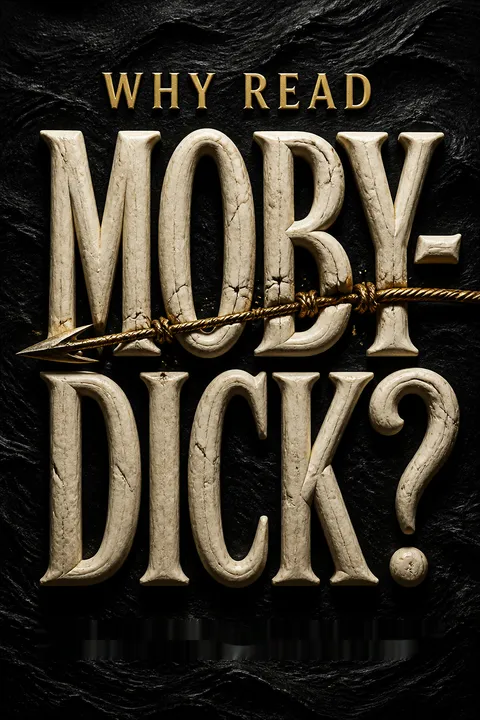
Read Moby-Dick as America's argument with itself, not just a whale hunt.
A story inside history. Nathaniel Philbrick presents Melville's novel as a voyage that reflects the United States in 1850. The country was expanding westward and celebrating liberty while the Fugitive Slave Act made the capture of escaped enslaved people a national responsibility. The Pequod's pursuit of a whale becomes a way to explore a nation racing toward conflict while avoiding the contradiction at its center.
A classic found late. Moby-Dick sold only 3,715 copies by Melville's death in 1891, far fewer than his earlier bestseller Typee. Its reputation rose after World War I, when writers recognized how its unruly form could speak beyond its original moment. Philbrick's central argument is that readers return to it because each generation can recognize its own crises in the voyage.
What's powerful here is the novel's ability to hold national ideals and national violence in the same frame. Political myths often work by separating a country's self-image from the material costs of its actions. Melville's ship makes that separation difficult: its crew, labor, and pursuit all belong to the same enterprise. The risk is that readers turn the whale into a convenient stand-in for whichever current enemy they already oppose. Philbrick's historical grounding helps resist that shortcut, keeping the book tied to the specific American conflicts that shaped it.
Let the sea unsettle your certainty about strangers and safety.
Civilization changes meaning. Melville sailed on a whaling voyage in 1841 and heard the story of the Essex, a ship destroyed by a whale. Its crew refused to sail toward the Marquesas because they feared the people there. After months of suffering at sea, survivors resorted to cannibalism. Melville later visited the Marquesas and chose to leave his own ship to live among the people whom the Essex crew had feared.
A reversal worth keeping. In Moby-Dick, Ishmael begins by fearing Queequeg, a tattooed man from the Pacific. Sharing a room with him forces Ishmael to question the assumption that Christian civilization makes someone safer or more humane. Philbrick calls the deeper condition landlessness: being cut off from settled assurances, where familiar categories no longer guarantee moral clarity.
The sea works as more than scenery: it removes the institutions and routines that make people feel certain about who belongs and who can be trusted. That connects the voyage to modern encounters across cultures, where unfamiliar customs can be mistaken for moral inferiority. Ishmael's change of mind is valuable because it comes through proximity, not an abstract declaration of tolerance. Still, an encounter with one person cannot stand in for an entire culture. The stronger lesson is to suspend judgment long enough to meet the person before applying the label.
Use Ishmael's irreverence to face danger without mistaking it for safety.
A buoyant narrator. Ishmael begins the voyage from a depressed state of mind, but he is curious, funny, and drawn to danger as well as to the whale itself. He knows whaling can bring sudden death, yet he refuses to let that knowledge dictate every choice. Philbrick describes this stance as desperado philosophy: a lively, self-mocking way of meeting life's uncertainty, including the possibility that events may be absurd and that the joke may fall on oneself.
Not the captain's creed. Ishmael's humor differs from Ahab's rage. Ahab turns pain into a single explanation and a single target; Ishmael keeps room for surprise. The difference matters when the voyage becomes disastrous. Ishmael survives to tell the tale, not because he controls events, but because his perspective is less rigid than the captain's.
Humor can create psychological distance from fear, a function recognized in research on coping and cognitive reframing. Ishmael's jokes do not prove the world is harmless; they let him remain responsive when certainty is impossible. That is a more durable form of resilience than forced optimism. There is a limit, however: a comic attitude cannot repair injustice or undo material danger. Its value is not that it solves the crisis, but that it can keep a person from confusing one explanation, especially a furious one, with the whole truth.
Watch how Ahab recruits a crew to serve his private grievance.
A performance of consent. Ahab does not initially tell the Pequod's crew that the voyage's real purpose is his revenge on Moby Dick. On deck, he asks questions that draw the men into a shared rhythm, offers a gold coin as a reward for spotting the whale, then reveals his personal injury. The crew responds with excitement and a pledge to join the hunt. Starbuck objects, but Ahab turns the pursuit into a test of loyalty and skill.
A circle of enablers. Fedallah, Ahab's secret adviser, helps sustain the captain's fixation. The crew's participation matters as much as Ahab's charisma: their rituals, labor, and silence make his private obsession the ship's public mission. Philbrick reads this scene as a portrait of demagoguery, in which emotional staging can make a crowd feel it has freely chosen a leader's purpose.
Ahab's speech shows how collective enthusiasm can be manufactured through participation: the crew answers, watches, celebrates, and then finds itself implicated. Political science distinguishes persuasion from coercion, but real movements often mix the two, making dissent socially costly before it is formally forbidden. The scene is therefore a useful warning about leaders who turn personal grievance into a loyalty test. It is not a reason to distrust every charismatic appeal. The better question is whether followers can challenge the mission, see its costs, and leave without being cast as traitors.
Test national ideals against the labor and bodies that sustain them.
The ship as an economy. The Pequod is both a working whaling vessel and, in Philbrick's reading, a portrait of America. Whale oil fueled lamps and machinery, while sailors endured dangerous, exhausting labor to produce it. The Quaker owners speak the language of religion and peace yet seek profit and drive hard bargains with their workers. Melville exposes the distance between virtuous belief and economic practice.
A mixed crew, unequal power. The Pequod's sailors come from many places, including the Pacific, Africa, and Native communities in New England. Ishmael calls them Isolatoes, people with separate origins joined on one ship. An image of the Black harpooneer Daggoo carrying the white officer Flask makes their unequal status visible. The book's democratic ideal sits beside the fact that the United States still depended on slavery.
This is a materialist way to read political ideals: ask who performs the work, who receives the profit, and whose suffering gets treated as ordinary. The ship's diverse crew complicates the image of a homogeneous nation, while its hierarchy prevents diversity from being confused with equality. That distinction remains useful in discussions of labor and representation. A limit of the ship metaphor is that a crew's practical interdependence does not automatically produce justice. Shared danger can make cooperation necessary without making authority fair.
Keep the whale real when human meanings threaten to swallow it.
An animal before an emblem. Ahab treats Moby Dick as the visible source of every injury and evil he cannot otherwise reach. Philbrick insists that the whale must also be read as a real creature, with a body, behavior, and power that do not depend on Ahab's interpretation. Melville's descriptions of whale anatomy and whaling practices prepare readers for the final attack by making it feel physically possible, not merely symbolic.
The costs of the hunt. The novel records an industry that killed whales for oil and describes the danger of exhausting the animals being pursued. Ishmael doubts that whales can be wiped out because of their vast habitat and access to polar waters. Philbrick notes that later industrial whaling devastated populations, while sperm whales had begun to recover by the time he wrote. Petroleum replaced whale oil, bringing a different set of environmental costs.
The tension between symbol and animal speaks to environmental humanities, which asks readers to notice nonhuman life without reducing it to a mirror of human concerns. Moby Dick can carry many meanings, but the whale's physical reality resists Ahab's fantasy that killing one creature will settle a metaphysical account. That resistance matters when nature is treated as a resource or as a convenient symbol in political argument. Philbrick's account also shows why ecological predictions require humility: Ishmael's confidence about survival met a history of industrial slaughter that his reasoning did not foresee.
A mission becomes monstrous when it makes human ties expendable.
The price of usefulness. Pip, the Pequod's Black cabin boy, is frightened during a whale hunt. After he jumps from the boat a second time, Stubb's crew leaves him behind to keep chasing the whale. Ishmael points to the brutal calculation beneath the decision: the whale's market value outweighs the boy's safety. Pip is rescued, but the experience leaves him psychologically changed and makes him a living reminder of what the ship's pursuit can cost.
A final chance refused. Ahab's own mission also overrules family and friendship. In a quiet exchange, he admits that years at sea have made him absent from his wife and child. Starbuck urges him to abandon the hunt and return home. Ahab briefly recognizes the loss, but cannot turn away. His failure is not simply that he wants too much; it is that he treats love and ordinary life as lesser claims.
Pip's abandonment is a compact study of how institutions convert people into costs, especially when profit or a celebrated mission sets the terms of value. Ahab's regret adds a different dimension: a person can recognize the human cost and still be unable to stop repeating the choice that created it. This complicates the comforting idea that insight alone produces change. The practical test is structural as well as personal: are there rules, relationships, and opportunities for dissent that can interrupt a harmful mission before the most vulnerable person pays?
Read the digressions as part of Melville's argument about knowledge.
A novel that wanders. Moby-Dick begins with collected whale references and moves among adventure, history, comedy, science, and reflection. Ishmael even tries to sort whales into a classification system, then acknowledges that his categories cannot capture every kind. Melville's broad reading, including Shakespeare and the Bible, feeds a book that refuses to keep its knowledge in one tidy genre.
An unfinished map. Philbrick describes the novel's disorder as careful rather than accidental. The ship's story repeatedly slows for details about whaling, whale anatomy, or the act of writing itself. Those detours challenge the idea that an orderly account can make the world fully manageable. They also test the reader's patience. The book rewards attention, but not every reader needs to move through every chapter at the same speed.
The form makes a useful epistemic point: categories help organize experience, but they also reveal what their maker cannot account for. That is familiar in science, where a model can clarify a pattern without being identical to the world. Melville's shifting modes let readers feel that gap rather than merely hear it explained. The challenge is distinguishing purposeful digression from simple excess. Philbrick's defense of the novel is strongest when the detour changes what the reader sees, not when disorder is treated as valuable by itself.
Let borrowed voices enlarge your work without making it derivative.
A novel transformed. Melville brought his own whaling experience and a library of accounts about the fishery to his book. He also immersed himself in Shakespeare. In August 1850, he met Nathaniel Hawthorne, whose fiction he admired for confronting moral darkness beneath a polished surface. Melville had thought his whaling novel nearly finished; after meeting Hawthorne, he reworked it into a stranger, more ambitious book centered on Ahab and the limits of certainty.
Influence as conversation. Philbrick emphasizes that Melville did not simply imitate Hawthorne. The older writer supplied emotional and intellectual stimulus, while Melville used that stimulus to find his own method. Letters between the two reveal the exhilaration and strain of the creative period. Their relationship helps explain how a work can be shaped by another person's attention without surrendering its distinct voice.
Creative work is rarely solitary in the simple sense. Writers inherit genres, arguments, and techniques, then alter them through use. Melville's case suggests that influence becomes generative when it provokes a new problem rather than supplies a ready-made answer. The friendship also complicates the familiar image of the isolated genius: recognition from a trusted reader can change what a writer believes a book may attempt. Yet influence is not automatically fruitful. The crucial distinction is whether borrowing deepens the maker's own inquiry or merely reproduces another person's style.
Keep skepticism and hope together when certainty refuses to arrive.
No easy theology. Melville repeatedly worried about death and whether anything waits beyond it. Moby-Dick lets Ishmael entertain both the possibility of a spiritual order and the fear that the universe may be indifferent. The narrator does not settle the question. Philbrick sees this unresolved balance as central to the book: Ishmael is neither securely religious nor content to declare that belief is foolish.
Survival without triumph. The Pequod sinks, and Ishmael is rescued by the Rachel, a ship still searching for its own missing son. He survives, but his rescue does not erase the voyage's losses. Melville's novel also found its audience long after its author died. Philbrick connects these histories of abandonment and belated recognition to the book's enduring appeal: hope persists, but it does not arrive as proof that life is fair.
This is a form of intellectual humility rather than indecision. A person can acknowledge the limits of evidence without treating every hope as childish, and can value hope without pretending it has been proven. Philosophical traditions from pragmatism to existentialism explore similar ways of living without final guarantees. The balance is difficult because uncertainty can become an excuse to avoid judgment. Ishmael's survival offers a counterweight: doubt need not prevent telling the story, recognizing suffering, or continuing to care about what happens.
Analysis
Philbrick's answer to the question in his title is not that Moby-Dick supplies a single interpretation. Its value lies in the collision of interpretations: a whaling manual becomes a national allegory, a comic travel narrative turns toward tragedy, and a whale remains an animal even as Ahab loads it with metaphysical meaning. That range gives the book unusual staying power, but it also makes it easy to misuse. A reader can recruit Ahab as a label for any disliked leader, or turn the whale into a symbol so complete that the real creature disappears. Philbrick's insistence on historical and physical detail is therefore more than a defense of literary realism. It is a check on interpretive vanity.
The book also joins public history to private biography without making either a substitute for the other. The country's conflict over slavery gives the Pequod's labor and hierarchy political force; Melville's friendship with Hawthorne helps explain the artistic transformation that made the novel possible. Neither context explains everything. The text's unruly chapters, uncertain theology, and unresolved ending resist a neat causal account. This resistance is part of the experience Philbrick recommends: readers must keep adjusting their view rather than wait for a final key.
The most useful lesson may be ethical. Ahab's certainty makes him powerful, but it narrows what he can see, until crew, family, and the whale itself become instruments of his grievance. Ishmael's survival depends on a less totalizing imagination, one capable of humor, observation, and doubt. That contrast does not make the novel a handbook for good conduct. Instead, it makes it a demanding test of attention: can a reader recognize the concrete people and creatures behind grand explanations? The book's difficulty is not incidental to its value. It forces interpretation to remain answerable to reality.
Review Summary
Why Read Moby-Dick? by Nathaniel Philbrick is a short book of essays exploring the enduring relevance and significance of Melville's classic novel. Readers appreciate Philbrick's passion and insights, finding the book helpful in understanding Moby-Dick's themes, historical context, and literary value. Many reviewers feel inspired to revisit or attempt reading Moby-Dick after engaging with Philbrick's work. While some find the book's brevity limiting, most agree it serves as an excellent companion to Melville's masterpiece, enhancing appreciation for its complexity and timeless themes.
People Also Read


Glossary
Landlessness
Life without settled certaintyPhilbrick uses landlessness for the existential condition associated with the open sea: a person is removed from familiar protections and forced to face uncertainty without a secure shore of explanation. In Moby-Dick, it describes both the physical exposure of sailors and the deeper difficulty of finding stable answers about human nature, God, and fate.
desperado philosophy
Humorous courage amid uncertaintyIshmael's informal approach to danger and absurdity. Rather than deny the possibility of death or pretend that life is orderly, he meets uncertainty with curiosity, humor, and a willingness to be the joke's target. Philbrick contrasts this flexible outlook with Ahab's rigid effort to turn suffering into one all-consuming mission.
Isolatoes
Separate people sharing one shipIshmael's name for the Pequod's crew members, who come from different places and live as distinct individuals, yet are joined by one vessel and one dangerous enterprise. The term captures both their separation and their practical interdependence. Philbrick uses it to draw attention to the crew's varied backgrounds and to the limits of treating them as a single, equal community.
The Whiteness of the Whale
A symbol of unsettling emptinessA chapter in which Ishmael considers the emotional and cultural meanings people attach to whiteness, then focuses on the color's capacity to evoke blankness, fear, and the possibility of annihilation. The chapter helps explain why Moby Dick frightens Ishmael differently from Ahab. It also shows how an object can invite interpretation without yielding one final meaning.
careful disorderliness
Purposeful narrative wanderingA phrase used in Moby-Dick to describe a method that allows a work to remain irregular rather than forcing every part into a tidy sequence. The novel's chapters shift among plot, science, history, comedy, and reflection. Philbrick argues that these detours are often deliberate, challenging the assumption that orderly classification can contain the complexity of life.
enchanted calm
A still center in chaosThe quiet space Ishmael describes at the center of a confused, panicked whale herd. For a moment, the hunters and whales seem to share a peaceful scene, including mothers with calves. Philbrick reads it as an image of intimacy and refuge inside surrounding danger, while the episode's sudden collapse shows how fragile that calm can be.
FAQ
What's "Why Read Moby-Dick?" by Nathaniel Philbrick about?
- Exploration of Moby-Dick: The book is an exploration of Herman Melville's "Moby-Dick," examining its themes, characters, and cultural significance.
- Philbrick's Perspective: Nathaniel Philbrick offers his personal insights and interpretations, drawing connections between the novel and American history.
- Literary Analysis: It provides a detailed literary analysis, discussing Melville's writing style, influences, and the novel's impact on literature.
- Cultural Context: The book places "Moby-Dick" within the context of its time, exploring its relevance to contemporary issues.
Why should I read "Why Read Moby-Dick?" by Nathaniel Philbrick?
- Deepens Understanding: It deepens your understanding of "Moby-Dick," offering insights that enhance the reading experience.
- Historical Context: The book provides historical context, helping readers appreciate the novel's themes and its reflection of 19th-century America.
- Philbrick's Expertise: Nathaniel Philbrick is a renowned historian and author, bringing a wealth of knowledge and a unique perspective to the analysis.
- Relevance Today: It highlights the novel's continued relevance, drawing parallels between Melville's time and modern issues.
What are the key takeaways of "Why Read Moby-Dick?" by Nathaniel Philbrick?
- Melville's Genius: The book emphasizes Melville's genius in creating a complex, multifaceted narrative that explores profound themes.
- American Identity: It discusses how "Moby-Dick" encapsulates the genetic code of America, reflecting its promises, problems, and ideals.
- Timeless Themes: Philbrick highlights the novel's timeless themes, such as obsession, revenge, and the struggle between man and nature.
- Literary Influence: The book explores the novel's influence on subsequent generations of writers and its place in the American literary canon.
How does Nathaniel Philbrick interpret Ahab's character in "Why Read Moby-Dick?"?
- Complexity of Ahab: Philbrick portrays Ahab as a complex character, driven by obsession and a desire for revenge against the White Whale.
- Symbol of Leadership: Ahab is seen as a symbol of leadership gone awry, illustrating the dangers of monomania and unchecked ambition.
- Reflection of Melville: Philbrick suggests that Ahab reflects aspects of Melville himself, particularly his ambition and symbolic worldview.
- Tragic Figure: Ahab is depicted as a tragic figure, whose quest ultimately leads to his downfall and the destruction of the Pequod.
What role does Nathaniel Hawthorne play in "Why Read Moby-Dick?" by Nathaniel Philbrick?
- Influence on Melville: Hawthorne's influence on Melville is significant, inspiring him to delve deeper into the darkness and complexity of human nature.
- Literary Friendship: The book explores the friendship between Melville and Hawthorne, highlighting how it impacted Melville's writing.
- Hawthorne's Darkness: Philbrick discusses how Hawthorne's "power of blackness" influenced Melville's portrayal of Ahab and the novel's themes.
- Emotional Inspiration: Hawthorne served as an emotional inspiration for Melville, encouraging him to explore the darker aspects of his characters.
How does "Why Read Moby-Dick?" by Nathaniel Philbrick address the theme of landlessness?
- Melville's Experience: Philbrick connects the theme of landlessness to Melville's own experiences at sea and his sense of displacement.
- Symbolic Meaning: Landlessness is symbolic of the existential quest for meaning and the search for identity in an uncertain world.
- Cultural Reflection: The theme reflects the cultural and historical context of 19th-century America, a nation in the midst of expansion and change.
- Philosophical Exploration: Philbrick explores how landlessness in "Moby-Dick" represents the ultimate truth and the soul's independence.
What are the best quotes from "Why Read Moby-Dick?" by Nathaniel Philbrick and what do they mean?
- "Contained in the pages of Moby-Dick is nothing less than the genetic code of America." This quote highlights the novel's reflection of American identity and its enduring relevance.
- "To write timelessly about the here and now, a writer must approach the present indirectly." Philbrick emphasizes the importance of using historical and symbolic narratives to address contemporary issues.
- "Ahab is a man divided, seared and parboiled by the conflagration raging inside him." This quote captures the complexity and internal conflict of Ahab's character.
- "Moby-Dick is a true epic, embodying almost every powerful American archetype." Philbrick underscores the novel's epic scope and its exploration of universal themes.
How does Nathaniel Philbrick describe the writing process of Herman Melville in "Why Read Moby-Dick?"?
- Intense Immersion: Philbrick describes Melville's intense immersion in the writing process, often working for hours without pause.
- Literary Influences: Melville drew on a wide range of literary influences, including Shakespeare, Hawthorne, and the Bible, to craft his narrative.
- Creative Struggle: The book highlights Melville's creative struggle, as he grappled with the novel's themes and his own artistic ambitions.
- Personal Sacrifice: Philbrick notes the personal sacrifices Melville made, including the strain on his health and family life, to complete the novel.
What is the significance of the White Whale in "Why Read Moby-Dick?" by Nathaniel Philbrick?
- Symbol of Obsession: The White Whale symbolizes Ahab's obsession and the destructive power of revenge.
- Nature's Indifference: It represents the indifference of nature and the futility of man's struggle against it.
- Complex Symbolism: Philbrick explores the complex symbolism of the whale, which can be interpreted in various ways by different characters.
- Reality vs. Symbol: The book emphasizes that the White Whale is not just a symbol but a real, formidable creature in the narrative.
How does "Why Read Moby-Dick?" by Nathaniel Philbrick explore the theme of democracy?
- Diverse Crew: The diverse crew of the Pequod reflects the democratic ideals of America, with individuals from various backgrounds working together.
- Democratic Dignity: Philbrick discusses the concept of "democratic dignity," where merit and ability are valued over race or background.
- Contradictions of Democracy: The book highlights the contradictions of democracy, particularly in the context of slavery and exploitation.
- Ahab's Tyranny: Ahab's tyrannical leadership serves as a counterpoint to the democratic principles embodied by the crew.
What insights does Nathaniel Philbrick provide about Melville's personal life in "Why Read Moby-Dick?"?
- Family Struggles: Philbrick discusses Melville's family struggles, including financial difficulties and the impact of his writing on his marriage.
- Literary Ambitions: Melville's literary ambitions and the pressure to succeed are explored, highlighting his drive to create a masterpiece.
- Friendship with Hawthorne: The book delves into Melville's friendship with Hawthorne, which provided emotional support and inspiration.
- Personal Reflections: Philbrick includes Melville's personal reflections and letters, offering a glimpse into his thoughts and feelings during the writing process.
How does "Why Read Moby-Dick?" by Nathaniel Philbrick address the theme of existentialism?
- Search for Meaning: The book explores the existential themes in "Moby-Dick," particularly the search for meaning in an indifferent universe.
- Ahab's Quest: Ahab's quest for the White Whale is seen as an existential struggle against the absurdity of life.
- Ishmael's Perspective: Ishmael's reflections on life, death, and the universe provide an existential framework for the narrative.
- Philosophical Inquiry: Philbrick highlights the novel's philosophical inquiry into the nature of existence and the human condition.
About the Author
Other books by Nathaniel Philbrick

Download PDF
Download EPUB
.epub digital book format is ideal for reading ebooks on phones, tablets, and e-readers.








