

Key Takeaways
Scientific ambition outgrew the institutions built to receive it.
A country at sea. In 1838, the United States sent six vessels and 346 people into a four-year voyage of exploration. The mission answered practical needs: American whalers, traders, and diplomats needed reliable knowledge of the Pacific, while the young nation wanted scientific standing alongside European powers. The expedition covered 87,000 miles, but the country had no well-developed system for organizing results on this scale.
The voyage was only a start. The Ex. Ex. gathered specimens, observations, and charts faster than American institutions could preserve, study, and publish them. Its achievements depended on a fragile network of naval officers, scientists, politicians, and supporters. That mismatch between ambition and capacity helps explain why the expedition could accomplish so much and still struggle to secure lasting recognition.
The expedition resembles modern big-science projects: fieldwork is only one stage in a chain that also requires data management, skilled analysis, publication, and public access. A government can fund daring work without building a reliable system to turn results into shared knowledge. The Ex. Ex. makes that gap visible. Its weak infrastructure was not evidence that its scientific goals were frivolous. It showed that institutions must be designed around the full life cycle of research, not just the dramatic moment of discovery.
Treat accurate charts as infrastructure for commerce and sovereignty.
Maps made routes usable. In the early nineteenth century, Pacific sailors often navigated with incomplete charts or secondhand sketches. Coral reefs, hidden shoals, and uncharted islands could wreck a vessel before its crew saw land. The expedition surveyed 280 Pacific islands and produced more than 240 charts, including work on the Columbia River, San Francisco Bay, and the Pacific Northwest coast.
Knowledge carried political weight. Better charts could protect whalers and traders, but the surveys also made distant places more legible to the United States as it competed with Britain and France. The expedition mapped roughly 800 miles of Pacific Northwest coastline, information that mattered to future American claims. Its maps remained useful to mariners for generations, including during World War II.
A chart is not merely a picture of geography. It changes what ships can safely attempt, what commerce can reach, and what governments can plausibly claim to know. That makes mapping a form of public infrastructure with political consequences. The expedition's practical benefits were real, but its surveys also translated Pacific places into information useful to American power. A fuller account of any mapping project should ask whose knowledge is recorded, whose interests the map serves, and what existing local knowledge it overlooks.
A leader's insecurity can turn shared danger into internal warfare.
Command changed Wilkes. Charles Wilkes was a capable surveyor, but he had little experience commanding a large squadron. He also left home without the acting captain's rank he believed necessary to lead it. Under the strain of the voyage, he worked relentlessly, grew isolated, and began treating disagreement as a threat. At Rio de Janeiro, after exhausting himself with scientific experiments and command duties, he collapsed.
The crew felt the change. Wilkes increasingly adopted the rigid behavior of a martinet, a commander who relies on strict discipline and constant control. He ordered frequent all-hands calls, limited contact with officers, and drove himself and others with little rest. William Reynolds, who began the voyage as Wilkes's admirer, became one of his sharpest critics.
The story shows how personal insecurity can become an organizational hazard. In high-risk work, leaders need clear authority, but they also need accurate information from people closest to a problem. A commander who reads every disagreement as disloyalty cuts off that information and makes the whole team less adaptable. Modern safety research often emphasizes psychological safety, meaning that people can report concerns without expecting retaliation. The comparison has limits: a sailing squadron required strict coordination. But discipline and personal suspicion are not the same thing.
Make authority credible before asking people to obey it.
Rank was not a detail. Wilkes was appointed to command as a lieutenant, while many officers under him had equal or higher seniority. He had expected temporary promotions that would make his authority clearer, but government officials did not grant them before departure. The ambiguity became a source of resentment in a navy where rank governed command and promotion shaped careers.
Wilkes made matters worse. He dismissed or punished officers including Craven, Lee, and Dale, often after disputes that his subordinates considered unjustified. He later gave himself a captain's uniform and a commodore's pennant while far from American oversight. His treatment of officers cannot be explained by rank alone, but the unresolved status problem gave personal conflicts a ready institutional spark.
Procedural justice matters because people are more likely to accept difficult decisions when authority is legitimate, consistent, and explainable. Wilkes's appointment left a real command problem: responsibility exceeded formal rank. Yet self-promotion and selective punishment did not repair that problem. They blurred the line between the authority of an office and the will of its occupant. The episode suggests that organizations should resolve role ambiguity before a crisis, especially when formal hierarchy and actual responsibility do not match.
Separate evidence of discovery from the desire to own the headline.
The first sighting was contested. On January 16, 1840, William Reynolds and Henry Eld saw what they believed was land from the masthead of the Peacock. Captain William Hudson did not confirm their observation or record it in the ship's log. Wilkes claimed that his own ship had sighted land on January 19, a date challenged during his later court-martial. French explorer Dumont d'Urville also reported land that day and landed on the coast shortly afterward.
Mapping strengthened the claim. Wilkes's lasting contribution was not simply seeing a distant coastline. He charted about 1,500 miles and assembled evidence that it belonged to a continent. Later aerial reconnaissance confirmed the broad accuracy of his mapping, despite some errors in estimated distances.
Discovery is a process, not a single heroic instant. An observation becomes persuasive when it is recorded, checked, mapped, and compared with other evidence. Wilkes's contribution was substantial, but the dispute over dates and credit shows the danger of letting a leader's reputation stand in for a reliable record. At the same time, a glimpse of land does not by itself establish a continent. The stronger claim rested on the scale and continuity of the surveyed coast, built through the work of several ships and observers.
Do not turn grief or danger into collective punishment.
The loss was personal. In Fiji, Lieutenant Joseph Underwood and Midshipman Wilkes Henry were killed during a failed effort to trade for food near the village of Sualib on Malolo. Their deaths followed tense negotiations and an attack by Fijian fighters. The surviving Americans returned with wounded men and the bodies of their shipmates. Wilkes's grief was genuine, and the officers and sailors demanded retaliation.
Retaliation reached beyond the attackers. Wilkes sent an armed force that burned villages and plantations and killed people on the island. Women and children were caught in the violence, and the surviving community was forced to submit and supply provisions. The expedition had entered Fiji to survey, trade, and assert American presence. In Malolo, its response to a deadly attack became a devastating act of coercion.
This episode calls for a distinction between protecting a crew and punishing a population. The officers had faced real danger, and the killings of Underwood and Henry were not incidental. But collective retaliation predictably harmed people who were not shown to have taken part in the attack. The asymmetry of power matters: armed naval vessels could destroy homes and demand submission in ways the islanders could not match. The account also comes largely through American records, a limitation that makes the victims' own explanations and experiences harder to recover.
Meet Pacific peoples as knowledgeable societies, not props in an American voyage.
Reynolds revised his assumptions. In Tahiti and Samoa, he began questioning the idea that Western customs were a universal measure of civilization. He saw that islanders possessed practical knowledge and social habits suited to their environments, even when those habits differed sharply from American norms. This shift is an example of cultural relativism: interpreting customs in their own setting rather than judging them only by one's own standards.
Hale studied connected knowledge. Expedition linguist Horatio Hale compared Polynesian vocabularies and used the voyage's weather observations to explain how early navigators could travel east against prevailing trade winds. Westerly winds occurred in some months, allowing outward voyages and seasonal return routes. The findings helped make Polynesian travel intelligible as skilled navigation, not chance drift.
The expedition's observations challenge a familiar colonial habit: treating unfamiliar societies as passive subjects rather than holders of knowledge. Hale's work connects language, weather, and navigation, showing how careful listening can reveal systems that outsiders initially fail to recognize. Cultural relativism does not require approval of every practice, nor does it make all claims equally sound. It asks for better interpretation before judgment. Reynolds's own changing view is valuable partly because it remains incomplete and shaped by the assumptions of his era.
Treat dangerous terrain as a problem for local expertise, not bravado.
The river punished haste. The mouth of the Columbia was a shifting bar where river water met the Pacific in violent breakers. In July 1841, Captain William Hudson tried to bring the Peacock across without first using the Flying Fish to locate the channel, despite having earlier planned to do so. The ship grounded, was battered by waves, and eventually broke apart. Its crew had to escape by boat.
Rescue came from local knowledge. A young Black sailor, John Dean, organized a rescue party that included a Chinook pilot. Their canoe reached the wreck in conditions Hudson had considered too dangerous for a small boat. The episode sits beside the expedition's broader lesson: formal command and confidence cannot substitute for knowledge of a particular place.
In contemporary risk management, a useful principle is that expertise should follow the hazard. People who know a river, mountain, or machine often notice dangers that outsiders miss. The Peacock's loss was not simply bad luck. It followed a decision to proceed without adequate local guidance, then depended on local skill for rescue. Bravery remains important, but it cannot make an unsafe plan sound. Organizations facing unfamiliar environments benefit from giving local experts real authority, including the ability to halt action.
Fund analysis and stewardship before collecting a continent's worth.
The collection overwhelmed its keepers. The expedition returned with 50,000 pressed plant specimens representing 10,000 species, thousands of artifacts, and extensive animal, geological, and observational records. Its charts and field notes were carefully connected through a cataloguing system, but the early caretakers lacked the lists needed to interpret the crates. Specimens were mishandled, and some scientific material was damaged.
Preservation required institutions. The collection moved from the Patent Office to the Smithsonian, while expedition members worked for years to prepare reports. James Dana's publications on geology and marine life became important scientific works. The expedition also helped strengthen the National Museum, the Botanic Garden, the Naval Observatory, and the Hydrographic Office. Gathering knowledge mattered, but so did the patient work of keeping and understanding it.
The expedition exposes a recurring weakness in research planning: collection is visible and exciting, while curation and analysis are slow, costly, and easy to underfund. Modern science faces the same problem with data repositories and long-term maintenance. Without documentation, trained custodians, and time to interpret evidence, a collection can become a warehouse rather than a source of knowledge. The Ex. Ex. did help build those institutions, but its early disorder shows why stewardship must be part of a project's design, not an afterthought.
Do not let a flawed commander erase a real public achievement.
The record contains both sides. The expedition surveyed islands, coasts, and harbors, charted Antarctic coastline, and gathered material that supported American science. Many charts remained useful long after the voyage. Yet Wilkes's harsh command, unlawful flogging, disputed claim about the first Antarctic sighting, and public conflicts with his officers shaped how the expedition was remembered. A court-martial found him guilty of illegally flogging sailors and marines and issued a public reprimand.
Recognition followed a different route. Wilkes later became widely known for seizing Confederate diplomats from the British ship Trent during the Civil War, an act that created an international crisis. His obituaries emphasized that episode more than the exploration. The expedition's work survived in charts, collections, and institutions, even as its leader's character complicated its public story.
Historical judgment need not choose between celebrating results and excusing conduct. Wilkes's ambition helped drive a remarkable voyage, while his cruelty and appetite for control damaged its people and reputation. The work was also collective, involving scientists, sailors, artists, and officers whose contributions could disappear behind the commander's name. A careful account separates achievement from moral absolution and credits labor more broadly. That approach avoids both the tidy hero story and the equally tidy claim that misconduct makes every accomplishment meaningless.
Keep sailors' lives in the record, not only officers' verdicts.
Erskine preserved a neglected view. Charles Erskine joined the voyage as a young sailor and had already been brutally flogged under Wilkes before the expedition sailed. At first he could neither read nor write. During the voyage he taught himself, wrote to his mother, and eventually published a memoir in 1890. His account remembered the labor, fear, punishment, and humor that official reports often pushed to the margins.
The archive has a hierarchy. Officers kept journals because the Navy required them, while enlisted men had fewer ways to make their experiences public. Reynolds's private journal reveals a richly observed voyage, but it is still an officer's perspective. Erskine's later book makes the expedition's history larger than its commanders and courts-martial.
Archives do not simply preserve the past. They preserve what institutions asked people to record and what readers considered worth publishing. Erskine's self-education altered his place in that system: the punished cabin boy became a witness who could describe the voyage in his own words. His memoir cannot stand for every sailor, and it was written decades afterward, but it changes the questions a reader asks. Who did the work? Who bore the risk? Who had the means to tell the story?
Analysis
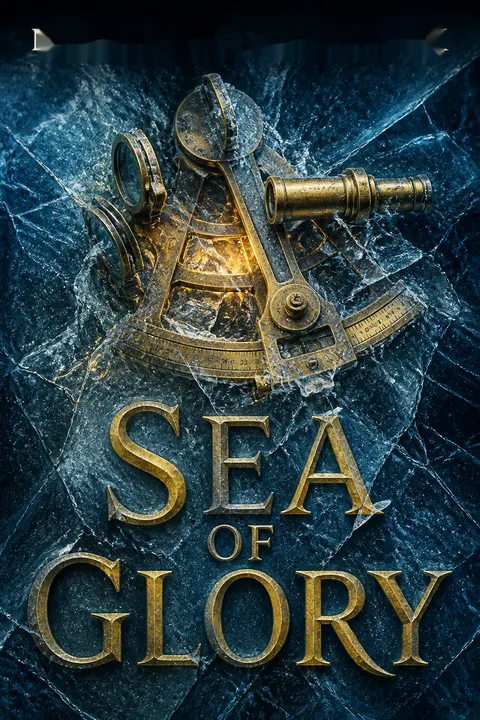
Sea of Glory is both an expedition narrative and a study of how achievement is made, recorded, and remembered. Its central tension is not simply that Charles Wilkes was a gifted explorer with a difficult personality. The voyage placed ambitious scientific work inside an improvised institution, then gave extraordinary responsibility to a commander whose formal rank, experience, and emotional steadiness did not match the task. Those weaknesses interacted. Rank disputes fed personal conflict, personal conflict narrowed the flow of information, and the resulting courtroom battles competed with the expedition's scientific record for public attention.
The narrative's strongest method is to set Wilkes's account against William Reynolds's journals and the testimony of officers, scientists, and sailors. This turns the question of Antarctic discovery into a test of evidence and makes the crew's experience visible beside the commander's. It also reveals a limitation: most surviving voices belong to Americans in the expedition. Fijians, Tahitians, and other Pacific peoples appear largely through records made by outsiders, often during encounters shaped by trade, missionary pressure, or armed force. Their knowledge is present, but their own explanations are less available.
The book resists two easy verdicts. Wilkes's cruelty does not cancel the charts, surveys, collections, and institutions the expedition helped produce. Those accomplishments do not excuse his treatment of subordinates or the violence in Fiji. The broader lesson is institutional: a society's capacity to explore depends not only on courage and expertise, but also on fair authority, trustworthy records, careful stewardship, and a willingness to hear people with less power. The expedition's legacy is therefore neither pure glory nor simple disgrace. It is a valuable body of work produced by a fractured organization, remembered through competing accounts, and made more credible when its achievements and costs are examined together.
Review Summary
Sea of Glory by Nathaniel Philbrick recounts the largely forgotten U.S. Exploring Expedition of 1838-1842. Led by the controversial Charles Wilkes, the expedition made significant scientific discoveries and charted vast areas of the Pacific and Antarctica. Despite its achievements, internal conflicts and Wilkes' leadership flaws overshadowed its legacy. Readers praise Philbrick's engaging narrative style and thorough research, though some note a lack of critical perspective on colonialism. The book offers insights into early American exploration, naval history, and the complex personalities involved in this epic voyage.
People Also Read
Glossary
U.S. Ex. Ex.
American exploring expeditionThe shorthand name for the United States South Seas Exploring Expedition of 1838 to 1842. A six-vessel naval squadron, carrying officers, sailors, artists, and scientists, surveyed Pacific islands and coastlines, explored Antarctic waters, and gathered extensive scientific and cultural collections. Its results helped establish several American scientific institutions.
passed midshipman
Examined junior naval officerA young naval officer who had served at sea and passed demanding examinations in seamanship and related subjects. Before the U.S. Naval Academy existed, this status marked an important step in an officer's training. During the expedition, passed midshipmen often carried responsibilities normally assigned to more senior lieutenants.
quincunx method
Survey using linked trianglesA surveying system that establishes positions through a network of interlocking triangles. Wilkes used this approach to make detailed coastal and island surveys, combining measured angles, known positions, soundings, and observations from multiple vessels. It offered a more systematic alternative to rougher estimates and helped the expedition produce accurate charts.
geodesy
Study of Earth's shapeThe scientific study of the size, shape, and gravitational features of the Earth. In the expedition, geodesy involved observations with surveying instruments and pendulums at different locations. Comparing measurements could help scientists infer variations in gravity and the density of the Earth's interior.
Antarctic Convergence
Boundary between ocean water massesA zone where relatively warm northern waters meet colder surface waters farther south. Crossing it brought marked changes in water temperature and conditions, as well as differences in the marine life observed by the expedition. It helped explorers recognize that they had entered a distinct Southern Ocean environment.
cultural relativism
Interpret customs in contextAn approach to understanding a society by considering its customs within its own cultural and environmental setting, rather than treating another society's practices as automatically inferior to one's own. Reynolds and Pickering began to question Western standards while observing Pacific peoples, though their views remained shaped by their nineteenth-century assumptions.
mask of command
Role adopted to project authorityA phrase used for the public manner a leader adopts to meet the demands of command. In the expedition, Wilkes increasingly presented himself as a strict disciplinarian, using distance and rigid control to project authority. The posture could support obedience, but it also intensified his isolation from officers whose knowledge he needed.
lee shore
Shore a wind drives towardA coast lying downwind of a vessel, where wind and waves can push a ship toward rocks or land and make escape difficult. The expedition repeatedly faced this danger, including when the Relief was trapped near Noir Island. A lee shore could turn a poor anchorage or delayed decision into a threat to the entire crew.
About the Author
Other books by Nathaniel Philbrick
Download PDF
Download EPUB
.epub digital book format is ideal for reading ebooks on phones, tablets, and e-readers.








