


Plot Summary
Prologue
As workers stream out of a Dallas skyscraper, security guard Carl Santiago and transportation manager Gloria Jackson worry that David Ponder has remained upstairs for four days. They know the man behind the headlines: once bankrupt, he rebuilt his fortune without borrowing, created a vast charitable foundation, and treated them as friends when he had little to give.
Now David is wealthy again but withdrawn, and neither the building’s motion sensors nor the activity on his computer can tell them whether he is well. Their concern opens a story about a man whose public success cannot protect him from private grief.
Carl and Gloria introduce David through the people who have seen his character at close range, rather than through his wealth or fame. Their loyalty is reciprocal: David once offered them work and practical guidance when they were struggling, and they now worry about him without being asked. The skyscraper embodies his recovery, but the locked upper floors suggest that achievement can also become a refuge from other people. Their uncertainty prepares the reader for the central contradiction of the opening: David has mastered material adversity, yet cannot find a way through bereavement.
Ellen's Empty Chair
Eight months after his wife Ellen dies unexpectedly, seventy-four-year-old David Ponder sits alone in the penthouse he built for her, unable to resume a manuscript they had planned together.
He remembers the poverty and bankruptcy that once stripped them of their wealth, then the software idea that restored his fortune and funded a global charitable foundation. Those reversals had taught him that loss could be survived, but Ellen's absence has left him unable to imagine another beginning.
At his desk, David lays out the Seven Decisions he collected during his earlier travels through history. As he weeps over them, the archangel Gabriel appears. He explains that humanity faces a decisive crisis and summons David to lead a council of Travelers from across history.
David's despair is not presented as simple ingratitude or a failure to remember his principles. He has used those principles through bankruptcy, rebuilding, and philanthropy, yet grief has made their familiar language feel unusable. The objects on his desk matter because they are both evidence of his past transformation and a test of whether that transformation can survive a new loss. Gabriel's arrival does not erase bereavement; it places David's private sense of purposelessness beside a collective emergency. The story thus makes leadership begin not with confidence, but with a person who admits he cannot see what to do next.
The Last Travelers Gather
Gabriel carries David to a vast, circular theater, where Winston Churchill arrives before the other historical Travelers. Churchill treats the strange venue with comic impatience, but he takes David's appointment as leader seriously.
Soon figures from many eras fill the rising seats, including Abraham Lincoln, Christopher Columbus, and Joan of Arc. Gabriel sets an hourglass on the table, gives the council five attempts, and asks what humanity must do, individually and collectively, to return to a successful civilization.
David initially hears success as prosperity. He and Churchill examine the wording more carefully and conclude that the task concerns a lost direction, not merely wealth. The Travelers are allowed to call five advisers, one at a time, while the sand measures their limited deliberation.
The theater converts an abstract moral crisis into a constrained practical problem. The hourglass makes delay visible, while the council's rules prevent David from simply outsourcing responsibility to a crowd of celebrated figures. Churchill's humor helps David manage the shock of meeting the dead, but his analytical reading of the question also counters the assumption that success means money or status. The distinction between a prosperous society and a successful civilization is the first intellectual correction the group makes. Yet their procedural confidence also carries a risk: they begin to believe that defining the question accurately will be enough to solve it.
Joan's Answer Fails
Joan of Arc joins the council carrying the sword and armor associated with her military campaign. She recounts how, as a young peasant, she persuaded the dauphin to give her troops, lifted the siege of Orleans, and led him to his coronation at Reims. Joan says that hope gave a defeated people the nerve to act, and she argues that every living person still has work ahead.
Churchill and David recognize the force of her account, and the gathered Travelers applaud her proposed remedy: restore hope. David submits it to Gabriel. Gabriel agrees that hope belongs in the solution but rejects it as the whole answer. The first confident conclusion collapses, leaving Joan, Churchill, and David to reconsider what they mistook for a complete remedy.
Joan's history makes hope more than an encouraging feeling: it is a resource that changes what people believe they can attempt. Her account links private conviction to collective action, since the French army's military fortunes shift when people begin to expect that resistance can work. The first failure is important because the council's answer is not foolish; it is incomplete. Gabriel's judgment forces the Travelers to distinguish a necessary virtue from the principle that can organize it with other virtues. For David, this is also the first public failure of his leadership. The group must learn to treat error as information rather than evidence that the search itself is pointless.
Lincoln Searches Wisdom
After Joan's proposal fails, the council considers what hope might belong to and summons Abraham Lincoln. Lincoln reports that many Travelers in the audience favor wisdom, then helps the table examine what wisdom means: learning from other lives, seeking truth, listening, reflecting, and anticipating the consequences of present choices.
Churchill, Joan, Lincoln, and David agree that knowledge alone is not wisdom, and that humility keeps a person searching. The answer seems to fit the question and to contain the earlier appeal to hope.
David presents seek wisdom to Gabriel. Again, Gabriel confirms the virtue's importance but says it is not the solution. The remaining Travelers are left with two confirmed pieces and no governing principle, while the council's confidence begins to thin.
Lincoln's contribution turns wisdom from a store of facts into a discipline of judgment. The group recognizes that wisdom depends on intellectual humility, because certainty can close the very search that might correct a mistaken course. Yet their failure shows that describing a virtue in depth does not make it the answer to a civilizational question. The rejected proposal is especially destabilizing because it is both morally persuasive and associated with David's own Seven Decisions. The council must now resist a common reasoning error: assuming that a set of admirable components automatically reveals the structure that binds them together.
The Spy's Hidden War
The next adviser introduces himself as Eric Erickson, a businessman whose name David does not recognize. Churchill does. He explains that Erickson posed as a Nazi sympathizer, sacrificed his reputation and American citizenship, then used the trust of German officials to map the Reich's oil facilities.
Allied bombers used his intelligence to cripple fuel production, helping bring the war machine to a halt. Erickson admits that he acted while frightened and that his work cost lives among the people assisting him.
He argues that courage means acting despite fear, and the council chooses show courage as its third answer. Gabriel again calls the answer incorrect, though he confirms that courage, like hope and wisdom, is essential. Three useful virtues have now failed as complete solutions.
Erickson's history gives courage an ethically complicated shape. His performance as a Nazi sympathizer required him to accept public disgrace so that private resistance could succeed; bravery here involves strategic concealment, not merely visible heroism. His account also refuses to make courage synonymous with fearlessness. Nevertheless, the council's third failure exposes the limits of exemplary biographies as templates. Erickson's extraordinary actions demonstrate what courage can accomplish, but they do not explain how a whole society might cultivate it. The repeated distinction between necessary and sufficient becomes the summit's central intellectual pressure, and David must continue leading even as each admired figure's certainty proves premature.
A Civilization Forgotten
With three answers rejected, Gabriel explains that hope, wisdom, and courage all belong to the true answer, but humanity's larger obstacle is pride. He challenges the Travelers' assumption that their era represents the peak of civilization and describes evidence of an older society whose engineering, measurement, and astronomical knowledge surpass modern capabilities.
That society, Gabriel says, disappeared through arrogance, greed, selfishness, ingratitude, and lost faith. He also condemns humanity's reliance on chance as a way of explaining existence, pointing to the precise relationships among Earth, its moon, and the sun.
David asks whether humanity can still change direction. Gabriel says it can, but warns that only two attempts remain. His departure leaves the council chastened and under sharper pressure.
Gabriel shifts the debate from individual virtue to civilizational self-understanding. Humanity's danger, in his account, is not merely that people make bad choices, but that they mistake technical power for moral or historical superiority. The lost civilization functions as a counterexample to linear progress: advanced tools cannot guarantee a durable society if its people become arrogant and self-serving. Gabriel's challenge to chance similarly targets a worldview that can turn contingency into an excuse for avoiding responsibility. His warning raises the stakes without removing agency. The future remains open, but the council must stop treating its own era as the unquestioned standard by which every answer is judged.
David's Sling and Shadow
After the council struggles with discouragement, Churchill describes how he guarded himself against depression, and Lincoln explains that he deliberately chose walks, company, and books instead of habits that deepened his low moods. Their discussion leads David to ask for new counsel.
King David arrives, and Joan formally presents her sword to him as a warrior before a king. The biblical ruler proposes self-discipline and produces the sling he used against Goliath, explaining that success depended on years of practice.
He then admits that abandoning restraint led him to take Bathsheba and arrange the death of her husband, Uriah. The council connects self-discipline to hope, wisdom, courage, and sacrifice, then submits exhibit self-discipline. Gabriel rejects the fourth answer too.
The king's sling makes discipline tangible: the famous victory was not an isolated miracle but the result of repeated, unglamorous practice. His account of Bathsheba and Uriah gives the same principle its darker counterpart. A person's power can magnify harm when desire goes unchecked, so discipline is not simply a route to achievement; it is a restraint on the capacity to injure others. Lincoln and Churchill extend this idea inward, showing how deliberate behavior can interrupt the habits that reinforce despair. Still, the council again mistakes a powerful mechanism for the answer itself. Their fourth failure leaves them with one formal attempt and a deeper need to identify the larger moral structure.
Carver's Measure of Greatness
As the Travelers debate more familiar virtues, a surge of agreement spreads through the theater. Their final adviser is George Washington Carver, the scientist and educator whose work helped farmers find new uses for crops.
Carver argues that hope, wisdom, courage, and self-discipline are not separate answers but parts of character. The council adds that habits shape character and that leadership becomes more dangerous as power grows. They submit build character, and Gabriel smiles, prompting the room to erupt in celebration.
Then Lincoln notices that Gabriel has not actually confirmed anything. He asks, and Gabriel admits that the answer is wrong. The apparent victory becomes the council's sharpest defeat: all five allotted attempts have been used, and humanity's hourglass continues to run.
Carver's insight gives the earlier answers a coherent relationship: virtues become meaningful when they are embodied as a pattern of conduct. His modesty also contrasts character with reputation, which depends on public perception rather than private action. The false celebration reveals a different problem from the previous failures. This time the council does not merely misjudge an idea; it mistakes an emotional cue for a judgment, projecting hope onto Gabriel's smile because the Travelers need relief. Their humiliation therefore tests the very character they have been discussing. They must decide whether a failed search has exhausted their responsibility or whether responsibility persists after formal permission seems to have ended.
The Hourglass Stops
While the Travelers regroup, Benjamin Franklin notices that the hourglass contains more sand than it should. He and Churchill connect its changing level to humanity's choices: the clock can slow or accelerate. Franklin gathers the audience and allows everyone to offer ideas, while Anne Frank watches the sand. When it begins to rush toward empty, a voice from the seats urges the council to act.
The sand stops. Its owner, Joshua Chamberlain, explains that at Little Round Top his outnumbered Union soldiers had run out of ammunition. A voice had pushed him to act, so he ordered a bayonet charge that captured the attacking force. David recognizes the same command as their possible answer and asks Gabriel to hear a final argument.
The hourglass changes from a countdown into a measure of collective moral agency. Franklin's discovery suggests that time is not only a resource consumed by human behavior; it may also respond to it. Chamberlain's arrival gives the council a historical precedent for action under uncertainty. At Gettysburg, waiting for perfect information would have left his depleted regiment exposed, while a decision created a possibility that passivity could not. The stopping sand does not yet guarantee rescue, but it alters the meaning of the crisis. David's task is no longer to find a flawless abstraction before the deadline. He must persuade the council to act on a principle that can begin under imperfect conditions.
The Work Begins Now
David argues that Gabriel's earlier words allow the Travelers to present one more answer, despite their exhausted attempts. Chamberlain explains how acting at Little Round Top changed the battle; Lincoln recalls unemployed men he urged to serve neighbors while seeking work; Franklin and Churchill argue that shared work can bridge divided communities.
Other Travelers add that action can begin with whatever a person already has. David submits do something, and Gabriel asks the council to put the answer into a declaration rather than immediately accepting it.
The Travelers write a commitment to act for family, neighbors, and strangers, even when fear or discouragement makes action difficult. David presents the document. Gabriel accepts the answer, and the council's urgency becomes a responsibility carried back to humanity.
The final answer is deliberately smaller than the crisis it addresses. It does not promise that one person can solve every problem, only that each person can interrupt passivity with a useful act. The declaration makes the principle social and repeatable: its examples move from family to strangers, linking private conduct to public consequence. This also resolves the earlier virtues without making them redundant. Hope gives action a future, wisdom helps choose its direction, courage enables it under fear, self-discipline sustains it, and character makes it trustworthy. David's leadership finally becomes effective not by discovering a perfect argument alone, but by helping others turn the principle into a shared commitment.
Epilogue
Gabriel returns David to his Dallas office and leaves him with a white feather as evidence that the summit happened. David keeps the Seven Decisions because they steady him when grief returns. In the book's closing frame, journalist Remington Hanson later interviews David before a worldwide audience.
When she suggests that people are eager to hear him, he distinguishes listening from understanding: careful attention alone can produce impressive results, but the deepest understanding requires people to pursue truth and act on it. David's public appearance therefore extends the summit's lesson. The council's declaration asks people to begin; his final message asks them to understand what their actions are for.
The feather completes a pattern of physical reminders: David's collected papers, the summit's declaration, and now a token from Gabriel all make conviction material enough to revisit. The closing interview then widens the story beyond David's private testimony. Remi's question initially treats public attention as proof that people are ready to receive a message, while David insists that reception is not the same as comprehension. The distinction reframes the book's call to action: doing something matters, but meaningful action depends on understanding the truth it serves. The ending leaves readers not with a guarantee of change, but with a demand to hear deeply and respond.
Analysis
The novel builds its argument through a sequence of plausible but incomplete answers. Hope, wisdom, courage, self-discipline, and character are not discarded as false values; each is shown to be necessary, then exposed as insufficient when treated as a final remedy. This structure dramatizes a problem of moral reasoning: people often confuse an important component with the organizing action that can make it effective. The eventual answer is deliberately plain. Its simplicity is not a denial of systemic danger, but a refusal to let scale become an alibi for inaction.
David's leadership develops through repeated correction. He begins the summit grieving and expects his accumulated principles to make the answer recognizable. Instead, Gabriel's refusals force him to listen without treating confidence as proof. His most consequential growth is not becoming the wisest person at the table. It is accepting responsibility for the next attempt after failure, then persuading the council to keep working when its formal opportunities appear exhausted. The final document turns that act of persistence into a shared social practice.
The historical figures supply more than inspirational examples. Their lives expose different ways power can be used: Joan lends hope to a demoralized army, Erickson accepts the danger of covert resistance, King David demonstrates both practiced skill and desire's destructive consequences, and Carver connects knowledge with service. Their presence also challenges the assumption that modern technical capacity automatically means moral progress. Gabriel's account of an older civilization makes the possibility of collective collapse concrete, while the hourglass links human behavior to the time left for correction.
The closing interview extends the distinction between receiving a message and understanding it. Listening can produce admiration without changing conduct; hearing, in David's account, demands deeper thought and application. The book therefore closes on a double obligation: seek truth carefully, then act in ways that make that truth visible to other people.
Review Summary
The Traveler's Summit receives mostly positive reviews, with readers praising Andrews' storytelling and the book's inspirational messages. Many appreciate the historical figures and life lessons presented. Some readers find it thought-provoking and relevant to current times. A few critics mention it being similar to the previous book or having a disappointing ending. Overall, readers enjoy the blend of fiction and personal growth elements, with many recommending it as a worthwhile read.
People Also Read








Characters
David Ponder
The Reluctant Human GuideDavid is an aging businessman, husband, father, philanthropist, and former Traveler whose earlier encounters with historical figures shaped his Seven Decisions for Success. He is practical and personable, but also capable of financial overreach and deep anger when life contradicts what he believes he has learned. His greatest strength is not unbroken confidence; it is his willingness to keep searching after failure. At the summit, he must lead people whose achievements dwarf his own, even as he doubts his fitness for the role. His character joins ordinary vulnerability to public responsibility, making him a bridge between the historical council and the present-day humanity it hopes to reach.
Gabriel
The Unyielding Heavenly GuideGabriel is the archangel charged with transporting David, convening the Travelers, setting the rules, and judging their proposed answers. He is direct to the point of discomfort and often struggles to understand the emotional conventions humans use to encourage one another. His impatience comes from seeing the danger humanity has created, but he remains bound to a role of service rather than control. Gabriel does not solve the council's problem for it; he makes the stakes plain and forces its members to exercise judgment. His otherworldliness is balanced by an unexpected curiosity about human feeling, which gives his sternness a more complicated edge.
Winston Churchill
The Wry Veteran CounselorChurchill joins David as the first adviser and stays beside him through the summit's repeated failures. He is theatrical, argumentative, and fond of testing Gabriel's patience, yet his humor serves as a tool for surviving fear and disappointment. His own experience of political isolation and depression gives him a hard-earned understanding of second chances and the work required to resist despair. Churchill respects courage but is not sentimental about it; he knows that boldness often begins while a person remains afraid. His exchanges with David combine intellectual discipline with companionship, helping the younger leader keep his balance when confidence falters.
Joan of Arc
The Hopeful WarriorJoan is a young French military leader whose campaign against the English transformed the prospects of her country. She is disciplined, devout, blunt, and intensely committed to her understanding of purpose. Her experience teaches the summit to take hope seriously as a force that can move people from defeat toward action. Joan is also alert to the cost of leadership and to the way history can distort a person's motives into legend. She approaches the other Travelers as both a soldier and a young woman who has had to command respect in a world that doubted her. Her clear convictions can be a strength, though they can also make her conclusions arrive quickly.
Abraham Lincoln
The Patient Moral ThinkerLincoln brings a reflective, humane intelligence to the council. He is attentive to the consequences of political choices and to the emotional needs that public life often conceals. His own history of grief and depression informs his practical account of how deliberate habits can alter a person's state of mind. He treats laughter not as denial but as a way of surviving pain with other people. Lincoln admires wisdom while remaining conscious of his own limits, and he is skilled at turning a broad moral claim into a concrete example. His calm presence supports David without taking leadership away from him.
Eric Erickson
The Quiet Wartime SaboteurEric Erickson is an American engineer and oil businessman whose wartime work depended on deception, nerve, and exact memory. He is modest about his achievements and uncomfortable when others make his life into a heroic tale. Eric understands that fear remains present even when someone acts bravely, and he is wary of explanations that make courage sound effortless. His experience gives the council a view of moral risk beyond the battlefield: he endured public rejection and worked inside a dangerous regime while trying to disrupt its resources. His practical manner and skepticism help keep the summit's discussion grounded.
King David
The Shepherd KingThe biblical king arrives with the authority of a ruler and the memory of a shepherd who learned through practice. He brings his sling as proof that celebrated skill can be built through repeated effort. King David is candid about the gap between his public victories and his private failures, particularly the harm caused when desire overruled restraint. His willingness to expose shame gives his counsel moral weight. He sees leadership as inseparable from self-command, since a ruler's unchecked choices can damage a family and a nation.
George Washington Carver
The Humble Working ScientistCarver is a scientist and educator whose research found practical uses for crops and helped farmers improve their livelihoods. He is warm, modest, and delighted to meet people he admires, but he redirects attention from reputation to the substance of a person's conduct. His perspective helps the Travelers connect individual virtues with the enduring patterns that shape a life. Carver's emphasis on usefulness and service reflects a belief that knowledge earns its value through what it does for others.
Benjamin Franklin
The Timekeeping OrganizerFranklin is an inventive statesman with a lifelong interest in practical improvement and the passage of time. During the council's darkest interval, he studies the hourglass closely enough to notice that its sand does not behave as expected. He then organizes the larger group and records its suggestions, turning scattered urgency into a process. His curiosity is both intellectual and civic: he looks for patterns, then asks how people might use them together.
Joshua Chamberlain
The Gettysburg Decision MakerChamberlain is a Union officer and former teacher remembered for his command at Little Round Top during the Battle of Gettysburg. He is thoughtful rather than self-congratulatory, and he remains aware that decisive action can appear uncertain from the inside. His recollection gives the council a concrete example of leadership under extreme pressure. Chamberlain's humility helps keep the focus on the choice itself and on the people whose lives depended on it.
Anne Frank
The Watchful Young WitnessAnne is a lively, perceptive girl whose experience of persecution gives the council's discussion of hope a deeply human scale. She is affectionate with David and eager to speak with the other Travelers, but she is also attentive to what is happening around her. During the final crisis, she watches the hourglass carefully and notices when its sand begins to move faster. Her presence joins youthful energy with an understanding of how much the future depends on the choices adults make.
Ellen Ponder
David's Closest CompanionEllen is David's wife and most trusted partner. She shares his long history of financial struggle and recovery, brings a strong eye for beauty and home, and helps keep his ambitions connected to ordinary family life. She is loving but not blindly credulous, especially when David describes his impossible travels. Her steadiness allows them to meet hardship as a team rather than as two people defending separate versions of events.
Carl Santiago
The Loyal Security GuardCarl is a longtime security guard at David's Dallas building. David's advice helped Carl and his family build financial stability without debt, and Carl remembers him as a friend rather than merely an employer. At the story's opening, he notices David's unusual isolation and stays on duty because he wants someone familiar nearby if help is needed. His concern grounds the story's portrait of David in the relationships built through practical kindness.
Gloria Jackson
The Trusted Transportation ChiefGloria runs transportation for David's organization and has known him since he employed her and her husband during lean years. She is capable, observant, and deeply loyal, but her concern is personal rather than merely professional. When David withdraws from view, she asks Carl whether he is all right and makes herself available if he needs her. Her history with David shows how trust can persist beyond the exchange of wages and favors.
Remington Hanson
The Attentive InterviewerRemington Hanson, known professionally as Remi, is a celebrated journalist who admires David and has followed his story for years. She is polished and confident, but she can also acknowledge when an interview has gone wrong and adjust her approach. Her conversation with David gives his final reflections a public audience.
Jenny Ponder
David's DaughterJenny is David and Ellen's daughter. She experiences the family's financial collapse while young, then builds a life of her own and later helps oversee the charitable work created by her parents. Her presence connects David's choices to the next generation.
Michael
Joan's Battle ProtectorMichael is the archangel who accompanies Joan during her military campaigns. His presence in her account supports her understanding that her victories were part of a purpose larger than her own ambition.
Plot Devices
The Summit Hourglass
Makes Time a Shared StakeGabriel places the hourglass beside the council table to impose a visible limit on the Travelers' deliberations. Its sand appears to mark the time available for their attempts, increasing pressure as the council's answers fail. Later, Franklin notices that the amount of sand changes in ways that cannot be explained by a simple countdown, linking the hourglass to humanity's collective conduct. Anne's close attention to it helps the group recognize an accelerating crisis, and the sudden halt of the sand becomes the opening for Chamberlain's intervention.
The Seven Decisions
David's Portable WisdomDavid keeps the Seven Decisions gathered in a worn tobacco pouch, physical reminders of the lessons he received during his earlier travels through history. At the beginning, he lays them out while grieving, showing how closely his identity is tied to the principles that once helped him rebuild his life. The decisions inform his understanding of hope, wisdom, courage, and persistence, but they do not hand him an immediate answer. Their role is to provide a foundation from which David can listen, reconsider, and continue after his familiar principles prove insufficient on their own.
The Historical Council
Turns History into CounselThe gathering of Travelers gives David access to people whose choices shaped different eras, but it is not simply a parade of famous names. Each adviser offers a lived example that tests a proposed answer: Joan's leadership illuminates hope, Erickson's covert work tests courage, King David's sling and failures explore discipline, and Carver's service reframes character. The council's structure forces these perspectives into discussion rather than allowing any one life story to settle the question. The historical figures therefore act as witnesses and counterexamples, helping the group distinguish inspiring stories from principles that can guide an entire civilization.
The Personal Declaration
Turns Principle into PracticeAfter the Travelers identify action as the answer, they write a declaration that translates a brief imperative into repeatable choices. Its commitments address fear, discouragement, self-discipline, and service to family, friends, and strangers. The document matters because the council does not treat the answer as a slogan that can remain safely abstract. Writing it together forces the Travelers to specify what action looks like and who should benefit from it. David carries the declaration back with him as a tangible reminder that a principle becomes meaningful only when someone puts it into practice.
FAQ
1. What is "The Traveler's Summit" by Andy Andrews about?
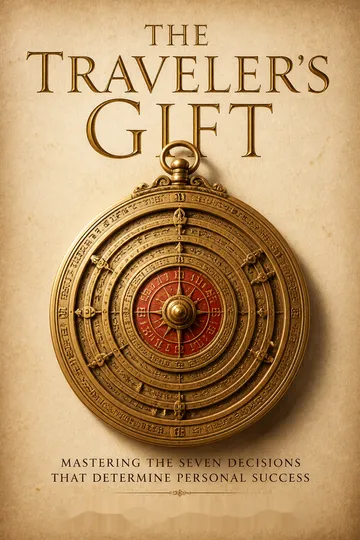
- Sequel to The Traveler’s Gift: The book follows David Ponder, the protagonist from "The Traveler’s Gift," as he is summoned by the archangel Gabriel to lead a summit of history’s greatest “Travelers” to answer a question that will determine humanity’s future.
- A Quest for Civilization’s Salvation: The Travelers must answer, “What does humanity need to do, individually and collectively, to restore itself to the pathway toward successful civilization?” within a limited time, or risk the end of civilization as we know it.
- Blending Fiction and Life Lessons: Through a blend of historical fiction, time travel, and philosophical discussion, the book explores timeless principles for personal and societal success.
- Ensemble of Historical Figures: The narrative features real-life figures like Winston Churchill, Joan of Arc, Abraham Lincoln, King David, and George Washington Carver, each contributing their wisdom to the summit.
2. Why should I read "The Traveler's Summit" by Andy Andrews?
- Inspiration and Motivation: The book is designed to inspire readers to take action in their own lives, offering practical wisdom through engaging storytelling.
- Unique Storytelling Approach: Andy Andrews uses a creative narrative device—bringing together historical figures in a supernatural summit—to deliver life lessons in an entertaining way.
- Timeless Principles: Readers gain insight into principles such as hope, wisdom, courage, self-discipline, and character, all of which are essential for personal and collective growth.
- Applicable to Modern Life: The book’s central message, “Do something,” is a call to action relevant to anyone feeling stuck, overwhelmed, or searching for purpose.
3. Who is the main character in "The Traveler's Summit" and what is his role?
- David Ponder as Protagonist: David Ponder, a once-ordinary man who previously traveled through time in "The Traveler’s Gift," is chosen to lead the summit.
- Representative of the Common Man: He is selected because he embodies the “common man,” having experienced both failure and success, and is seen as relatable to all.
- Tasked with Leadership: David must guide a group of history’s greatest minds to answer a question that will determine the fate of humanity.
- Personal Struggles: Throughout the book, David grapples with grief, self-doubt, and the weight of responsibility, making his journey both personal and universal.
4. What is the central question or challenge in "The Traveler's Summit" by Andy Andrews?
- Restoring Civilization’s Path: The summit’s challenge is to answer, “What does humanity need to do, individually and collectively, to restore itself to the pathway toward successful civilization?”
- High Stakes: The fate of humanity hangs in the balance; failure to answer correctly could mean the end of civilization as we know it.
- Time Constraint: The Travelers are given a limited amount of time (represented by an hourglass) and only five chances to answer the question.
- Collaborative Problem-Solving: The challenge requires input from a diverse group of historical figures, each offering their unique perspective.
5. Who are the "Travelers" in "The Traveler's Summit" and what do they represent?
- Historical and Legendary Figures: The Travelers include Winston Churchill, Joan of Arc, Abraham Lincoln, King David, George Washington Carver, and others.
- Embodiments of Virtues: Each Traveler represents a key virtue or principle—hope, wisdom, courage, self-discipline, character, and more.
- Diverse Backgrounds: The group spans different eras, cultures, and experiences, symbolizing the collective wisdom of humanity.
- Advisers and Collaborators: They serve as advisers to David Ponder, contributing their life lessons and historical insights to solve the summit’s challenge.
6. What are the key concepts and virtues discussed in "The Traveler's Summit" by Andy Andrews?
- Hope: Explored as the foundation for perseverance and overcoming adversity; without hope, all is lost.
- Wisdom: Defined as the ability to foresee the consequences of choices; wisdom is gained through seeking, experience, and association.
- Courage: Not the absence of fear, but acting in spite of it; courage is necessary to enact change and inspire others.
- Self-Discipline: The ability to make oneself do what is necessary, even when it’s difficult; self-discipline bridges the gap between desire and achievement.
- Character: Ultimately, the book concludes that building character is essential for both individual and societal success.
7. What is the final answer or solution reached in "The Traveler's Summit" and what does it mean?
- The Answer: “Do Something”: After exploring hope, wisdom, courage, self-discipline, and character, the Travelers realize that the essential action is to “do something.”
- Action Over Inaction: The message is that when faced with uncertainty or adversity, taking action—any positive action—is better than doing nothing.
- Universal Application: This principle applies to individuals, communities, and nations; progress and restoration begin with action.
- Personal Declaration: The book ends with a declaration encouraging readers to act now, reinforcing the importance of immediate, purposeful action.
8. How does Andy Andrews use historical figures to convey lessons in "The Traveler's Summit"?
- Dialogue and Debate: Historical figures engage in thoughtful discussions, sharing their experiences and perspectives on key virtues.
- Personal Stories: Each Traveler recounts pivotal moments from their lives, illustrating how principles like hope, courage, and self-discipline shaped their destinies.
- Role Modeling: By showing how these figures overcame adversity, the book provides role models for readers to emulate.
- Collective Wisdom: The diversity of the Travelers’ backgrounds demonstrates that universal truths transcend time, culture, and circumstance.
9. What are the Seven Decisions from "The Traveler’s Gift" and how do they relate to "The Traveler's Summit"?
- The Seven Decisions: Responsibility, seeking wisdom, being a person of action, having a decided heart, choosing happiness, greeting each day with a forgiving spirit, and persisting without exception.
- Foundation for the Summit: These decisions are referenced throughout "The Traveler’s Summit" as foundational principles for success and fulfillment.
- Applied in New Context: The summit’s challenge builds upon these decisions, requiring the Travelers to synthesize and apply them to a global problem.
- Personal Growth: David Ponder’s journey demonstrates how living by these decisions leads to transformation and the ability to impact others.
10. What are the key takeaways and actionable advice from "The Traveler's Summit" by Andy Andrews?
- Take Action Now: Don’t wait for perfect circumstances—start with what you have and do something positive.
- Build Character: Focus on developing virtues like hope, wisdom, courage, and self-discipline; character is the foundation of greatness.
- Overcome Fear and Inertia: Fear is a misuse of imagination; action is the antidote to fear and despair.
- Value of Struggle: Adversity and setbacks are opportunities for growth and learning; persistence is essential.
- Influence Others: By acting, you inspire and empower those around you, creating a ripple effect of positive change.
11. What are the best quotes from "The Traveler's Summit" by Andy Andrews and what do they mean?
- “Do something. And do it now.” – The central message, emphasizing the importance of immediate action in the face of uncertainty.
- “Adversity is preparation for greatness.” – Suggests that challenges are necessary for personal growth and future success.
- “It is not circumstances, but character alone that makes the man.” – Highlights the primacy of character over external conditions.
- “We can know the Truth without having the Best. But we will never have the Best without knowing the Truth.” – Stresses the need for deep understanding to achieve the highest outcomes.
- “Never feed a black dog.” – Churchill’s metaphor for not indulging negative thoughts or depression, but instead focusing on positive action.
12. How can readers apply the lessons from "The Traveler's Summit" by Andy Andrews to their own lives?
- Start Small, Act Now: Don’t wait for the perfect plan; take the first step toward your goals or in helping others.
- Develop Core Virtues: Work on building hope, wisdom, courage, self-discipline, and character in daily life.
- Embrace Adversity: View challenges as opportunities to grow stronger and wiser, rather than as setbacks.
- Lead by Example: Your actions can inspire others to act, creating a positive impact in your community and beyond.
- Make a Personal Declaration: Commit to doing something meaningful every day, reinforcing the book’s call to purposeful action.
About the Author
Other books by Andy Andrews







Download PDF
Download EPUB
.epub digital book format is ideal for reading ebooks on phones, tablets, and e-readers.








