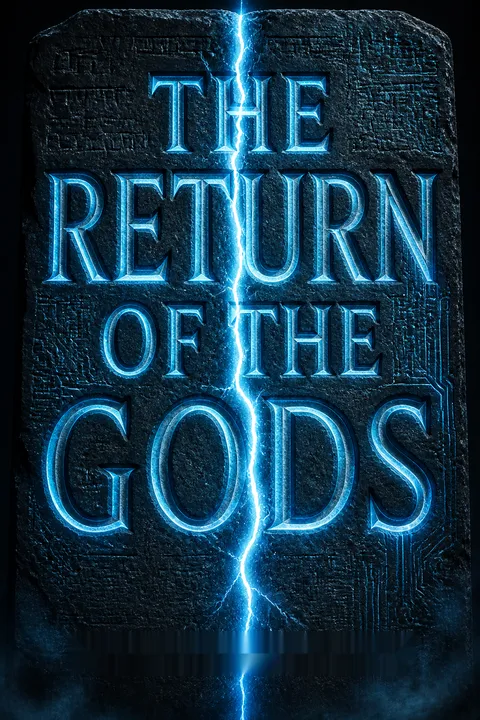


Key Takeaways
Read modern upheaval as spiritual succession, not merely a sequence of events
The book’s central claim. Jonathan Cahn argues that ancient gods did not simply disappear when Christianity spread. In his account, the spiritual powers behind pagan deities were driven from Western civilization, then returned as modern ideas, movements, and institutions after the West turned away from Christianity. The gods, he says, do not need statues or temples: they can work through contemporary beliefs and cultural change.
A modern mythic lens. The narrative moves from ancient Israel and Rome to America, treating cultural shifts as episodes in an ongoing spiritual conflict. Cahn reads familiar events, from changing public values to new political movements, as signs of that conflict. His central warning is that the spiritual story behind a society may be larger than the explanations visible on the surface.
The framework takes religious conviction seriously as a force that shapes public life, rather than treating belief as private decoration. It also offers readers a clear lens for connecting shifts in values to changes in institutions. The key distinction is between interpreting events spiritually and establishing that supernatural agents caused them. The book often moves quickly from resemblance to causation, so readers can appreciate its theological argument while asking what historical or social evidence would independently support each link.
Track what a society honors, because worship can outlast its old names
From shedim to demons. Cahn begins with the Hebrew term shedim, used in biblical passages about people sacrificing to foreign gods. He connects it to daimonia, the Greek term used in the Septuagint, an ancient Greek translation of Jewish scripture, and in Paul’s discussion of pagan sacrifice. He argues that behind the named gods of antiquity were real spiritual beings, not merely human inventions.
A change in civilization. Cahn presents Jesus’ casting out of spirits, the growth of Christianity, and the decline of pagan worship as parts of one transformation. In his telling, that change also elevated the value of children, women, the poor, and human life generally. The chapter’s argument is theological: Christianity displaced both pagan worship and the values Cahn associates with it.
This account links religious practice to moral imagination: what a community treats as sacred can shape whom it protects and what it permits. That connection is valuable even for readers who do not accept the book’s claims about spirits. The historical story, however, is more complex than a single religious transition. Social change has many causes, and ancient and Christian societies were not uniform. The strongest reading treats Cahn’s account as a theological interpretation of history, not a complete explanation of it.
A spiritual vacuum, in Cahn’s reading, invites a harsher replacement
The empty-house warning. Cahn interprets Jesus’ parable of an unclean spirit returning to an empty, cleaned house as a warning about whole societies. In the story, the spirit returns with others, leaving the house worse off than before. Cahn applies the image to Western civilization: Christianity drove out pagan gods, but a society that later rejects Christianity leaves its spiritual home vacant and vulnerable to repossession.
A darker sequel. He argues that a post-Christian society can produce evils more severe than those of a pre-Christian one. To illustrate the claim, he contrasts ancient Roman emperors with modern totalitarian leaders, and pagan sacrifice with the Holocaust. The parable becomes the book’s central model for explaining why the return of the gods would be dangerous.
The empty-house image is memorable because it turns the loss of shared commitments into a question of what fills the gap. Secular political theories and national ideologies can also demand loyalty and define moral boundaries, a point that strengthens Cahn’s broader concern about replacement beliefs. But the parable’s original religious setting does not itself prove a historical law about civilizations. Comparing different atrocities also risks flattening their distinct causes. The analogy works best as a warning about moral responsibility, not as a predictive formula.
Notice when money, technology, or ideology starts acting like a master
Baal in modern dress. In Cahn’s account, Baal represents apostasy, prosperity, and mastery. He argues that the modern version need not be called Baal: money, success, pleasure, work, and self-fulfillment can become competing objects of ultimate devotion. He points to Wall Street’s bull as an unintended echo of Baal’s bull imagery, and to the pursuit of wealth as a modern form of worship.
The idols we make. Cahn extends the argument to technology, especially computers and digital life. He connects the Greek word techne, which he associates with human making and idols, to modern technology. His point is that tools can become masters when people organize life around them. He also warns that replacing one shared truth with competing personal truths can make ideologies function like unquestionable gods.
The idea of functional worship is useful beyond theology: attention, time, and sacrifice often reveal what people value more reliably than stated beliefs. Technology can enable human agency while also capturing attention and reshaping daily routines, so the tension is real without requiring a literal deity behind a device. Cahn’s symbolic readings of the bull and the word techne are suggestive, but symbolism is not proof of intent or supernatural influence. The practical question is what a tool or pursuit asks people to give up.
Separate cultural change from the claim that an ancient goddess caused it
Ishtar as Cahn’s symbol. The book’s second figure in the Dark Trinity is Ishtar, an ancient goddess associated in its account with sexuality, war, magic, and blurred gender boundaries. Cahn interprets the sexual revolution, pornography, changing gender roles, and the growing visibility of transgender identities as evidence that her influence has returned. He connects her mythology and priesthood to contemporary cultural developments.
A sweeping interpretation. Cahn describes these shifts as stages in a transformation of Western civilization, from separating sex from marriage to challenging conventional definitions of gender. He sees the pattern as a revival of pagan values and practices. The book’s claim is not simply that norms have changed, but that an ancient spiritual power is behind those changes.
The comparison shows how ancient societies used stories and rituals to organize ideas about sex, power, and gender. It can prompt thoughtful questions about how modern cultures define identity and belonging. Yet the resemblance between an ancient myth and a current social movement does not establish descent or spiritual causation. Nor does a religious interpretation justify treating people with different identities as agents of evil. A careful reader can examine Cahn’s argument while keeping the people affected by these debates distinct from the polemical symbols used to explain them.
Treat striking date patterns as prompts for inquiry, not proof of hidden control
Stonewall as a mythic hinge. Cahn presents the 1969 Stonewall uprising in New York as the moment when Ishtar’s influence reentered public life. He links the bar, the surrounding street, and the riot to motifs in Ishtar’s mythology, including taverns, gates, gender crossing, and conflict. He then connects the timing to the Mesopotamian month of Tammuz and its full moon.
The calendar argument. Cahn emphasizes that Stonewall was sealed by a warrant dated June 26, 1969, and that three later Supreme Court rulings concerning same-sex relationships and marriage were also decided on June 26: Lawrence v. Texas in 2003, United States v. Windsor in 2013, and Obergefell v. Hodges in 2015. He reads these coincidences as evidence of an ancient spiritual pattern at work.
The sequence is rhetorically powerful because exact dates make an abstract spiritual claim feel concrete. But coincidences become persuasive evidence only when a method explains in advance which dates count, which do not, and how many comparisons were considered. The book supplies a theological interpretation, not a demonstration that ancient forces determined legal outcomes. Stonewall also has a traceable social and political history. Readers can investigate the date pattern without confusing a meaningful coincidence with proof of hidden coordination.
Examine how sacred language can sharpen, or distort, moral debate
Molech and sacrifice. The third figure in Cahn’s Dark Trinity is Molech, whom he associates with child sacrifice. He describes how ancient accounts and biblical passages condemn the offering of children to pagan gods, then argues that abortion in modern America revives Molech’s demand for the lives of the young. He presents the sanctity of life as a defining difference between biblical faith and pagan culture.
A moral indictment. Cahn links the sexual revolution to increased pregnancies outside marriage, and then to abortion as a means of preserving opportunity or avoiding hardship. He cites the legalization of abortion in the Soviet Union in 1920 and the United States Supreme Court’s 1973 Roe v. Wade ruling as milestones. The book uses the language of sacrifice to portray abortion as both a personal and civilizational crisis.
The analogy expresses the author’s conviction that human life deserves protection, and its intensity makes the moral stakes unmistakable. At the same time, equating abortion with ritual child sacrifice is a polemical comparison, not a neutral historical description. It can obscure differences in context, motive, and the circumstances faced by pregnant people. Moral seriousness does not require dehumanizing those who disagree. The argument is more useful when it invites careful consideration of the value of unborn life, competing obligations, and the real effects of public policy.
Defend conviction without turning cultural opponents into spiritual enemies
From welcome to control. Cahn argues that the gods first return through cultural openness, then seek dominion once established. He connects this reversal to what he describes as political correctness, wokeness, cancel culture, pressure on Christians, and demands for ideological conformity. In his view, institutions and technology can be used to silence dissent, making a society that once celebrated tolerance increasingly intolerant.
The book’s response. Its final answer is Jesus: Cahn urges readers to reject idols, return to God, and resist evil through Christian faith. He draws on the biblical distinction between people and spiritual powers, insisting that the conflict is not against flesh and blood. The epilogue adds a call for repentance and revival, arguing that legal change alone cannot transform a nation without changed hearts.
The distinction between criticizing ideas and condemning people is essential to the book’s own appeal to love and compassion. It also offers a test for political rhetoric: does a warning protect room for disagreement, or does it cast neighbors as agents of darkness? Concerns about compelled speech and institutional pressure deserve scrutiny across political camps. The book’s analysis is strongest when it applies that scrutiny consistently, including to its own side, and when its call to faith produces care rather than contempt.
Analysis
The book’s defining method is to read modern events through an ancient religious pattern. It moves from biblical terms for spirits, through the Christianization of the Roman world, to a parable about an emptied house, then maps the figures Baal, Ishtar, and Molech onto changes in American culture. That narrative gives the work coherence and urgency. Its major interpretive strength is the insistence that societies are shaped by ultimate commitments, whether those commitments are religious, political, or economic.
Its main weakness is evidentiary slippage. The argument moves among several different kinds of claim: scriptural theology, ancient historical description, symbolic resemblance, and causal explanation. A bull image that resembles an ancient symbol, or a modern event that falls on a date associated with an ancient calendar, may be meaningful within Cahn’s faith framework. Neither, by itself, establishes that a supernatural agent caused the event. The same distinction matters when broad social changes are presented as the return of one deity. Historical analogy can illuminate a pattern without proving a direct lineage.
The book also presents a sharp moral contrast between Christianity and paganism. This makes its account of human dignity forceful, especially in its concern for vulnerable life, but it can understate the variety within both ancient and modern societies. Its account of current debates over sexuality and gender is particularly polemical. Readers should distinguish criticism of cultural ideas from judgments about the dignity or motives of people living with them.
The most productive way to read the book is neither as neutral history nor as a mere catalogue of coincidences. It is a theological warning about what can happen when a society loses shared moral commitments and gives ultimate authority to other powers. Its spiritual explanation remains a matter of faith. Its questions about worship, power, technology, truth, and responsibility remain open to examination by readers of many beliefs.
Review Summary
Reviews of The Return of the Gods are deeply divided. Supporters praise Cahn's research, compelling parallels between ancient pagan gods and modern cultural shifts, and his ability to explain America's moral decline through a spiritual lens. Critics argue the book relies on speculative, poorly-sourced scholarship, drawing heavily from ancient mythology rather than Scripture. Many across both camps note the writing is repetitive and sensationalist. Several critics also take issue with the book's perceived political conservatism, characterizing it as dismissive of women's and LGBTQ+ rights.
People Also Read

Glossary
Shedim
Spirits behind pagan godsA Hebrew term that appears in biblical passages concerning sacrifice to foreign gods. Cahn connects it to the Greek term daimonia used in ancient translations and New Testament writings. He treats the shedim as spiritual beings operating behind pagan deities, rather than as figures existing only in human mythology.
The House of Spirits
A civilization open to returnCahn’s name for his interpretation of Jesus’ parable about an unclean spirit returning to an empty house. He reads the house as Western civilization: Christianity cleansed it of pagan spirits, but turning away from Christianity leaves it open to renewed spiritual influence. The phrase is the book’s central model for cultural change.
The Dark Trinity
Three forces of cultural transformationCahn’s framework for three ancient deities or spiritual powers that he sees as especially important in Israel’s apostasy and the modern West’s transformation. Baal represents apostasy and material mastery, Ishtar represents sexuality and transformation, and Molech represents child sacrifice and destruction. The framework is a theological interpretation, not a standard historical classification.
Baalim
Baal in plural formsThe Hebrew plural of Baal, which Cahn interprets as the many forms of the master or lord. He applies the idea to modern pursuits that can take ultimate priority, including money, success, pleasure, work, technology, and addiction. In this usage, the Baalim are not only ancient idols but also contemporary forces that command devotion.
Junium
June linked to TammuzCahn’s term for the claimed correspondence between June and the ancient month and rites associated with Tammuz, Ishtar’s mythological lover. Drawing on the early Christian writer Jerome and other interpretations, he connects the timing of modern Pride observances to ancient midsummer festivals. The proposed correspondence is part of the book’s argument, not an uncontested calendar fact.
About the Author
Download PDF
Download EPUB
.epub digital book format is ideal for reading ebooks on phones, tablets, and e-readers.








