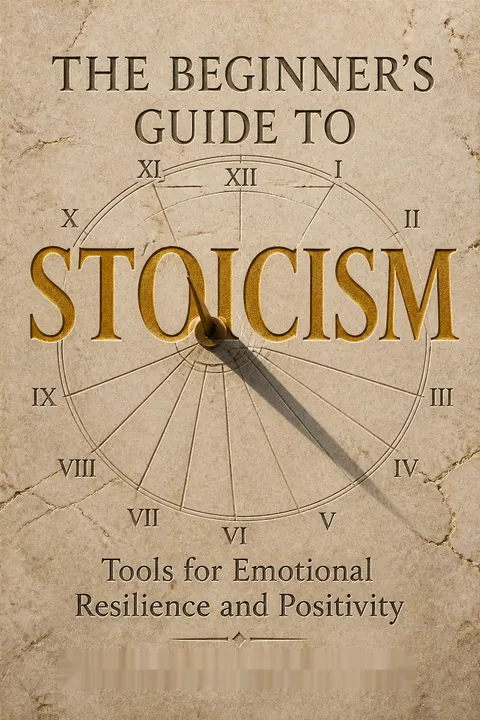


Key Takeaways
Build a good life around choices Fortune cannot take away
The aim is flourishing. Stoicism is a practical philosophy for living well through changing circumstances. Its goal, eudaimonia, means human flourishing: a life shaped by virtue, or practical moral excellence. The author distinguishes this from merely suppressing feelings. Stoicism aims for a fuller emotional life, with less power given to fear and anger and more room for joy and care for others.
A philosophy born from loss. Zeno, the founder, was a merchant whose shipwreck left him without his former livelihood. He turned to philosophy and developed a school focused on living well, not escaping life. The author also describes Stoicism as a source of direction alongside the mental tools he learned through therapy for anxiety.
What's compelling is the shift from happiness as a reward for favorable conditions to flourishing as a way of meeting conditions. That resembles psychological flexibility: a person can feel distress and still choose actions consistent with important values. The distinction between emotional skill and emotional suppression is especially useful, since outward calm can conceal unresolved suffering. Yet a philosophy of inner agency should not imply that every hardship is privately solvable. Poverty, illness, and unsafe environments constrain choices. Stoicism is strongest as a guide to action within reality, not as a claim that reality's burdens are imaginary.
Spend effort on your judgments and actions, not outcomes you cannot command
Sort the controllable. The Dichotomy of Control is the Stoic practice of separating what is fully up to a person from what is not. Epictetus places opinions, desires, aversions, and actions on the first side. The body, reputation, possessions, and other people's decisions belong on the second, because they can change despite effort.
Agency without passivity. This distinction does not mean abandoning responsibilities. A shelter manager during Hurricane Sandy refused unsuitable food donations because some families could not eat them. His job security was uncertain, but the fairness of his own decision was his responsibility. The practice asks people to direct effort toward sound choices, while recognizing that results depend on circumstances beyond their command.
The framework is a sharp antidote to rumination because it turns an amorphous problem into a question about agency. It also resembles the distinction between controllable inputs and uncertain outputs used in decision theory. The strict boundary can be less clear in ordinary life: health behaviors affect health without guaranteeing it, and collective action can influence institutions without controlling them. Treating the division as a practical sorting tool, rather than a claim that influence is all or nothing, preserves its usefulness without confusing influence with certainty.
Treat first impressions as signals, not verdicts
Pause before the story. The Discipline of Assent trains attention to the judgments attached to events. The book separates an initial impression, recognizing what happened, and a value judgment about what it means. A noise outside is first a sound; concluding that danger is certain adds an interpretation that may not be true. The Stoic task is to notice the interpretation and examine it before accepting it.
Make room for judgment. A frightened passenger in a storm may feel an automatic bodily reaction. Stoicism does not demand that the body stay calm; it asks the person not to turn the reaction into a certainty that disaster is coming. Bracketing an impression means holding it apart from assumptions long enough to assess it clearly and choose a useful response.
This account makes a valuable distinction between a reaction and the meaning assigned to it. That distinction is central to cognitive approaches that examine how interpretations shape distress, and it can give a person a brief space in which to respond rather than react. The important caveat is that impressions are not always verbal thoughts. Fear can be embodied, learned, or tied to trauma, and it may not yield to a reasoned correction on demand. The practice works best as curious examination, not as an order to disbelieve every alarm.
Use wisdom, courage, justice, and moderation as your compass
Four angles on excellence. Stoic virtue means acting at one's best in the moment. The four central virtues make that aim concrete: wisdom guides judgment, courage meets difficulty, justice governs dealings with others, and moderation guides choices. They are connected rather than separate traits. A fair action, for instance, also needs sound judgment and restraint.
Separate goodness from good fortune. Stoics call things outside moral choice indifferents, meaning that they are not inherently good or bad. Health, money, reputation, and work may be useful, and health is generally preferable to illness, but none guarantees a good life. Their moral value depends on how a person uses them. Virtue remains the reliable standard when external advantages shift.
The four virtues work as a compact ethical checklist, balancing judgment, resilience, social responsibility, and self-restraint. That is more substantial than defining success as personal calm, since it makes conduct toward other people part of flourishing. The distinction between moral worth and external fortune can also reduce status anxiety. A potential misunderstanding is to treat health or security as trivial because they are classified as indifferent. The more humane reading is that such goods matter greatly in practice, but they cannot by themselves tell a person whether a life or an action is good.
Want to act well more than you want events to obey you
Redirect desire inward. The Discipline of Desire teaches people to place their strongest wants and fears on what they can govern: their own character and choices. If happiness depends on a promotion, another person's approval, or perfect conditions, it remains vulnerable to events. Wanting to behave wisely and avoid wrongdoing gives a person a more dependable aim.
Return to the present. Circling the present means narrowing attention to the moment and asking what can be done now. A delayed flight cannot be changed by rehearsing imagined disasters, but a person's next response can be chosen. Acceptance is not surrendering the wish to improve things. It means starting with what is actually happening, rather than spending energy demanding that reality already be different.
This is a powerful reorientation from outcome dependence to process commitment. It shares ground with acceptance-based approaches, which distinguish accepting a present fact from approving of it. That distinction matters: acceptance can make effective action possible, while denial or endless protest often consumes attention. Still, external goals are not empty. Wanting safety, fairness, or a promotion can motivate valuable work. The Stoic refinement is to pursue these goals without making personal worth or emotional stability conditional on success.
Serve others while measuring success by the quality of your effort
Action is social. The Discipline of Action asks people to make choices that benefit both themselves and others. Its reserve clause is a way to pursue a plan while acknowledging that circumstances may prevent its completion. The gardener may intend to work that afternoon, while recognizing that weather or urgent duties could intervene. This keeps commitment from turning into a demand for a guaranteed result.
Justice under pressure. The author describes refusing donations during Hurricane Sandy because the meals included food some shelter residents could not eat. His position risked his job, but he focused on whether he acted fairly, not on whether his role would be protected. In Stoic terms, the effort and intention were his; the final outcome was not entirely his to command.
This approach preserves ambition while loosening the grip of outcome dependence. It also gives ethical action a social test: a decision should not improve one person's position by unfairly burdening others. In organizations, however, intention alone is not enough. Good motives can still produce harmful effects, so responsible action also requires listening, learning, and revising plans when evidence changes. The reserve clause is most useful when it supports persistence and flexibility, rather than becoming an excuse to avoid accountability for foreseeable consequences.
Correct negative judgments without pretending pain is unreal
Name the mental pattern. Stoic passions are unhealthy states rooted, in this account, in mistaken judgments about what is good or bad. The four main passions are fear, appetite, pleasure, and distress. Their healthier counterparts are caution, wish, and joy. The aim is not to become emotionless, but to stop tying well-being to things that can disappear or to imagined outcomes that may never occur.
Return to a workable moment. When someone cuts in line, anger may arise quickly. A person can notice that reaction, decide whether to address the unfairness, and speak without letting anger dictate the response. The author’s Festival practice reframes an irritating crowd as ordinary human company, inviting patience instead of resentment. These tools aim to keep a difficult moment from defining the whole day.
The account is at its best when it treats emotion as information to examine, rather than a command to obey. It connects naturally to emotion-regulation strategies that identify appraisals and create alternatives. Its strongest claim, that negative emotion always reflects a mistaken judgment, is harder to apply universally. Grief, fear, and anger can be proportionate responses to real loss or danger, even when they do not dictate what should happen next. A humane practice distinguishes feeling pain from endorsing every interpretation or action that pain invites.
Rehearse hardship so surprise does not dictate your character
Prepare in imagination. Negative visualization means deliberately imagining a difficult event, then practicing how to respond according to Stoic principles. A person might consider what would remain within their control during illness, loss, or failure, and how they would act with courage or justice. The purpose is preparation, not pessimism: anticipated difficulty may be less disorienting when it arrives.
Practice impermanence gently. Seneca periodically chose simpler food and lodging to test whether comfort was necessary for a good life. The author presents this as a voluntary exercise, not a requirement to punish oneself. Remembering mortality serves a related purpose: it can sharpen attention to the present and soften the assumption that present advantages will last forever.
Mental rehearsal is a familiar feature of performance preparation: imagining obstacles can help make a response more available under pressure. Here, the rehearsal is ethical as well as practical, since it asks not only what might happen but what kind of person to be when it does. The exercise needs limits. Repeatedly dwelling on catastrophe can intensify anxiety, especially for people already prone to intrusive thoughts. A bounded rehearsal should end with a concrete response and renewed attention to present life, not an expanding catalogue of fears.
Expand your circle of concern without surrendering sound boundaries
Practice widening care. Oikeiosis is the Stoic idea that concern can grow from oneself and close family outward toward friends, community, and humanity. The author uses the image of concentric circles: the practice is to draw people on the outer rings closer in thought and action. It supports the Stoic belief that human beings are social and have responsibilities to one another.
Compassion can coexist with distance. Stoics explain harmful behavior as arising from a person's mistaken view of what is good. This can reduce hatred and invite a measured response, but it does not require accepting mistreatment. Marcus Aurelius compares difficult encounters to a wrestling match: notice the risk, maintain a friendly distance, and do not confuse understanding someone with trusting them.
The expanding-circle image offers a practical correction to moral tribalism: concern can be deliberately extended beyond people who are familiar or easy to like. It also makes compassion compatible with discernment. In contemporary terms, understanding why someone behaves harmfully is not the same as excusing the harm or granting continued access. The framework's challenge is that universal concern can feel abstract beside urgent local obligations. Its value lies in turning broad respect into concrete, proportionate conduct, rather than treating love of humanity as a substitute for boundaries.
Turn Stoicism into a routine, not a collection of impressive ideas
Make practice repeatable. The author recommends memorizing a short phrase, keeping a journal, and establishing a daily routine. A morning reflection can prepare for difficult encounters; an evening review can examine what went well, what went poorly, and what remains to be done. Marcus Aurelius's private journal illustrates how reflection can be a working record of effort rather than a polished display of wisdom.
Progress includes restarting. The point is not to perform every technique perfectly or to lecture other people about philosophy. It is to notice where conduct falls short and try again. Stoicism becomes useful when its ideas are available during ordinary stress: a commute, a tense conversation, or a disappointment. Repetition helps make the chosen response easier to recall when attention is under pressure.
The emphasis on routines recognizes a simple feature of human behavior: a principle remembered only in calm moments may be unavailable under stress. Short reminders and written reflection can make values easier to retrieve and turn vague self-criticism into specific learning. Journaling can also become repetitive or self-punishing if it records failures without context. A constructive review should include successes, conditions that shaped behavior, and one realistic next step. The book's insistence on practice over philosophical display keeps the focus on conduct rather than identity.
Analysis
This book turns Stoicism into a practical curriculum rather than a history of abstract doctrines. Its strongest organizing move is the sequence from attention, to desire, to action, with the four virtues supplying standards for how those capacities should be used. That structure helps a beginner connect a mental technique to an ethical purpose. The examples also keep the philosophy grounded: a threatened job, an anxious commute, a difficult relationship, or an irritating crowd becomes a place to practice judgment rather than a test of whether life is fair.
The central psychological insight is that events do not mechanically determine responses. This overlaps with cognitive approaches that examine interpretation, and with acceptance-based approaches that distinguish a painful fact from the choices still available. Yet the book's Stoic account can be read too literally. Not every emotion is a voluntary judgment, and not every person has equal freedom to respond. Bodily states, trauma, disability, economic pressure, and social power can shape both perception and available action. A compassionate application therefore treats control as a way to locate agency, not as a reason to blame people for distress.
The ethical dimension prevents the philosophy from collapsing into private serenity. Justice and service require attention to other people, while the Hurricane Sandy story shows how values can demand consequential choices. Still, outcomes matter to those affected, even when they cannot be guaranteed by an individual. The most responsible synthesis is to judge a decision by both its intention and its foreseeable effects, then learn from what happens. Stoicism offers steadiness amid uncertainty, not immunity from consequences.
Its practical exercises are strongest when used flexibly. Rehearsing adversity can prepare rather than frighten; reframing can clarify rather than invalidate; acceptance can support action rather than excuse passivity. The book's durable invitation is to make ordinary moments into ethical practice, and to measure progress by returning to that practice after failure.
Review Summary
The Beginner's Guide to Stoicism receives mixed reviews. Many readers find it a helpful introduction to Stoic philosophy, praising its practical tools and accessible approach. Some appreciate its concise nature and focus on applying Stoic principles to daily life. However, others criticize it for lacking depth, structure, or sufficient examples. Some readers expected more philosophical content rather than self-help advice. Despite these criticisms, many still recommend it as a starting point for those interested in Stoicism, noting its potential to improve mental resilience and positivity.
People Also Read






Glossary
Eudaimonia
Human flourishingThe Stoic goal of living well, often described as human flourishing or a good flow of life. It is not simply pleasure or favorable circumstances. In this book, it comes from developing virtue and living in harmony with the world, so that a person can act well even when external conditions are difficult.
Dichotomy of Control
Sort what is yoursA Stoic practice of distinguishing what is fully within one's control from what is not. Opinions, choices, desires, aversions, and actions belong to the first category. The body, reputation, possessions, and outcomes affected by other people or events belong to the second. The distinction directs effort toward judgment and conduct rather than guaranteed results.
Discipline of Desire
Train wants and fearsThe Stoic discipline of directing desire and aversion toward what a person can reliably govern: their own character and actions. It aims to reduce dependence on external outcomes, which can change or remain unavailable. Its practices include accepting the present, focusing on virtue, and limiting attention to what can be acted on now.
Discipline of Action
Act for the common goodThe Stoic discipline concerned with conduct and relationships. It asks people to act justly, take others' interests into account, and contribute to their community while recognizing that external outcomes are uncertain. Its practical methods include planning with a reserve clause and judging success by the quality of one's effort, not only by the result.
Discipline of Assent
Examine each judgmentThe Stoic practice of pausing before accepting an interpretation of an event as true. A person distinguishes an initial impression from a neutral recognition of what happened, then examines the value judgment added to it. This space for evaluation can prevent an uncertain assumption from becoming an automatic source of fear, anger, or distress.
Indifferents
Things not morally goodIn Stoicism, things outside virtue and vice are called indifferents. They are not necessarily unimportant or emotionally neutral; health, work, money, and reputation can matter greatly. The term means that these things do not, by themselves, make a person morally good or guarantee a flourishing life. Their significance depends partly on how they are used.
Passions
Disturbing mistaken judgmentsThe Stoic term for unhealthy states of mind that arise from mistaken judgments about what is good or bad. The book names fear, appetite, pleasure, and distress as the main passions. Stoic practice aims to notice and correct the judgments that fuel them, rather than suppressing emotion or becoming indifferent to other people.
Eupatheiai
Healthy rational emotionsThe Stoic term for reasonable, healthy states of mind grounded in sound judgments. The book describes three: joy, a present-focused appreciation; wish, a reasonable hope or striving; and caution, a sensible avoidance of wrongdoing. These states contrast with passions because they support virtuous action rather than dependence on external fortune.
Oikeiosis
Expanding human affiliationA Stoic account of how concern can expand outward. It begins with care for oneself and close relations, then can extend to friends, community, and humanity. Hierocles illustrates the idea with concentric circles and urges people to draw the outer circles nearer. The concept grounds Stoic claims that human beings are social and owe care beyond their immediate group.
Reserve clause
Act while allowing uncertaintyA Stoic way of stating an intention while acknowledging that circumstances may prevent its completion. A person plans to do something while adding, in effect, that the plan depends on nothing intervening. This preserves commitment without pretending to control external events, and helps separate the quality of an effort from its eventual outcome.
Negative visualization
Rehearse possible hardshipA Stoic exercise in which a person imagines a difficult future event and considers how to respond with virtue. It is intended to reduce the shock of adversity and clarify what remains within one's control. Related practices include temporarily accepting less comfort and reflecting on mortality. The purpose is preparation and appreciation, not pessimism.
FAQ
What's "The Beginner's Guide to Stoicism" by Matthew Van Natta about?
- Introduction to Stoicism: The book serves as an introductory guide to Stoicism, a practical philosophy that helps individuals cultivate emotional resilience and positivity.
- Structure and Content: It is divided into three parts: Foundations, Your New Emotional Tool Kit, and Stoicism for Life, each building on the last to provide a comprehensive understanding of Stoic philosophy.
- Personal Journey: The author shares his personal journey with Stoicism, detailing how it helped him manage an anxiety disorder and improve his life.
- Practical Application: The book emphasizes practical applications of Stoic principles, offering tools and exercises to help readers implement Stoicism in their daily lives.
Why should I read "The Beginner's Guide to Stoicism"?
- Emotional Resilience: The book provides tools to develop emotional resilience, helping readers handle life's challenges with a calm and positive mindset.
- Practical Philosophy: It offers a practical approach to philosophy, focusing on actionable strategies rather than abstract theories.
- Personal Growth: Readers can learn to cultivate virtues like wisdom, courage, justice, and moderation, leading to personal growth and a more fulfilling life.
- Community and Service: The book encourages readers to engage positively with their communities, promoting a sense of service and interconnectedness.
What are the key takeaways of "The Beginner's Guide to Stoicism"?
- Dichotomy of Control: Focus on what you can control—your thoughts, actions, and desires—and let go of what you cannot.
- Virtue as the Only Good: Stoicism teaches that virtue is the only true good, and everything else is indifferent.
- Emotional Management: The book provides techniques to manage emotions, cultivate positivity, and build resilience against negative thoughts.
- Community Engagement: Stoicism encourages active participation in community life, emphasizing justice and cooperation.
What are the best quotes from "The Beginner's Guide to Stoicism" and what do they mean?
- "Waste no more time thinking about what a good person should be, just be one." - Marcus Aurelius: This quote emphasizes action over contemplation, urging readers to embody virtue rather than merely theorize about it.
- "People feel disturbed not by things, but by the views they take of them." - Epictetus: It highlights the Stoic belief that our perceptions, not external events, shape our emotional responses.
- "The only possession the wise person has is virtue, and of this they can never be robbed." - Seneca: This underscores the Stoic idea that virtue is the only true possession, immune to external circumstances.
- "To obstruct each other is unnatural. To feel anger at someone, to turn your back on him: these are unnatural." - Marcus Aurelius: It reflects the Stoic view of human interconnectedness and the importance of cooperation.
How does "The Beginner's Guide to Stoicism" define Stoicism?
- Practical Philosophy: Stoicism is defined as a practical philosophy that helps individuals lead flourishing lives by focusing on what they can control.
- Virtue-Centric: It emphasizes the cultivation of virtues such as wisdom, courage, justice, and moderation as the path to a good life.
- Emotional Resilience: Stoicism teaches emotional resilience by encouraging acceptance of the present and focusing on virtuous actions.
- Community Focus: The philosophy promotes a sense of duty and service to others, viewing all humans as part of a larger community.
What is the Dichotomy of Control in "The Beginner's Guide to Stoicism"?
- Core Concept: The Dichotomy of Control is a central Stoic concept that distinguishes between what is within our control and what is not.
- Focus on Control: It advises focusing only on our own thoughts, actions, and desires, which are within our control, and letting go of external events.
- Emotional Freedom: By accepting this dichotomy, individuals can free themselves from unnecessary worry and emotional turmoil.
- Practical Application: The book provides exercises to help readers apply this concept in daily life, fostering a more peaceful and resilient mindset.
How does "The Beginner's Guide to Stoicism" suggest cultivating positivity?
- Focus on Virtue: Cultivating positivity involves focusing on virtuous actions and thoughts, which are within our control.
- Joy, Wish, and Caution: The book introduces the good passions—Joy, Wish, and Caution—as positive mental states that arise from rational judgments.
- Present Focus: It encourages living in the present moment and appreciating what we have, rather than longing for what we don't.
- Practical Exercises: The book offers practical exercises, such as the "View from Above," to help readers maintain a positive outlook.
What are the Stoic virtues discussed in "The Beginner's Guide to Stoicism"?
- Wisdom: Practical knowledge and good judgment in making decisions.
- Courage: Mastery over fears and the ability to act rightly in the face of challenges.
- Justice: Fairness and cooperation in interactions with others, promoting the common good.
- Moderation: Control over desires and maintaining balance in life.
How does "The Beginner's Guide to Stoicism" address negative emotions?
- Passions as Diseases: Negative emotions, or passions, are seen as diseases of the mind that arise from incorrect value judgments.
- Tools for Resilience: The book provides tools like the Dichotomy of Control and the Discipline of Assent to manage and overcome negative emotions.
- Focus on Virtue: By focusing on virtue and what is within our control, we can reduce the impact of negative emotions.
- Practical Exercises: Techniques such as "Festival" and "Physical Definition" help readers reframe situations and maintain emotional balance.
What is the role of community and service in "The Beginner's Guide to Stoicism"?
- Natural Social Beings: Stoicism views humans as naturally social beings meant to engage in healthy relationships with others.
- Service to Others: The book emphasizes the importance of serving the community and working for the common good.
- Justice and Cooperation: It encourages actions that benefit both the individual and the community, promoting justice and cooperation.
- Practical Engagement: Readers are encouraged to actively participate in their communities and contribute positively to society.
How does "The Beginner's Guide to Stoicism" suggest continuing the Stoic journey?
- Consistent Practice: The book emphasizes the importance of consistent practice, including memorization, journaling, and establishing a daily routine.
- Community Involvement: It encourages joining Stoic communities, both online and in-person, to share experiences and learn from others.
- Reading the Classics: The author recommends reading classic Stoic texts like the Enchiridion, Meditations, and Letters from a Stoic for deeper understanding.
- Personal Reflection: Regular reflection on personal values and progress is suggested to maintain and deepen one's Stoic practice.
What are some practical exercises from "The Beginner's Guide to Stoicism"?
- Circle the Present: Focus on the present moment, letting go of past regrets and future anxieties.
- View from Above: Gain perspective by imagining oneself from a higher vantage point, seeing personal challenges in a broader context.
- Negative Visualization: Mentally rehearse worst-case scenarios to prepare for challenges and reduce their emotional impact.
- Festival Mindset: Reframe crowded or stressful situations as festivals, embracing the presence of others with acceptance and joy.
Download PDF
Download EPUB
.epub digital book format is ideal for reading ebooks on phones, tablets, and e-readers.








