

Key Takeaways
Treat communication as the operating system that lets ideas scale
Ideas need advocates. This book argues that communication is not a decorative skill added after the real work. It is how people understand an idea, trust it, and decide to act. In 1994, Jeff Bezos met with about sixty potential investors to explain an unfamiliar online bookstore. Twenty-two invested. They were backing not just a product, but Bezos and his vision.
A repeatable advantage. Amazon’s first job listing called for strong communication skills, even for a technical role. As the company grew, Bezos built methods for writing, pitching, and aligning teams that could be used without him in every room. The book’s central lesson is that clear communication helps ideas travel through an organization and attract the people, money, and effort needed to make them real.
What’s striking is the shift from communication as personal charisma to communication as organizational infrastructure. A shared, comprehensible account of a project lets people coordinate without relying on constant access to its founder. That is especially valuable in large or distributed teams. Still, communication is an amplifier, not a substitute for a sound idea or capable execution. A polished vision can attract support before its assumptions are tested, so persuasive clarity should invite scrutiny as well as enthusiasm.
Remove reading friction without removing the hard idea
Simplicity takes work. Bezos’s 2010 Princeton speech explained a serious idea in language readable at roughly a seventh-grade level. Across 24 shareholder letters, his writing averaged about 19 words per sentence, and 94 percent of sentences used the active voice. His final letter was easier to read than his first, showing that clear writing develops with practice.
Choose, then phrase. Simplicity means selecting what the audience needs, not squeezing every fact into fewer words. Use familiar terms, put the actor and action near the start, choose energetic verbs, and vary sentence length. Amazon’s Leadership Principles were kept short enough to understand and remember. A readability score can flag dense writing, but it cannot decide whether the idea itself is well explained.
The distinction between reducing friction and reducing substance matters. Shorter sentences can help readers follow difficult reasoning, but a low reading level is not proof of intellectual quality or accuracy. In technical, legal, or scientific settings, some specialized language is necessary. The useful test is whether each term earns its place and whether the writer helps newcomers cross the gap. Plain language is most powerful when it makes complexity accessible rather than pretending complexity does not exist.
Draft the argument before you decorate it with slides
Narrative exposes the logic. In 2004, Bezos replaced PowerPoint at Amazon’s senior leadership meetings with written memos. A narrative memo uses connected sentences and paragraphs to explain an argument, rather than relying on fragments and bullet lists. The point was not that slides are always bad. Writing forces the author to make relationships, evidence, and priorities explicit before presenting.
Read before debating. Amazon meetings begin with participants silently reading the memo, then discussing it together. The practice gives everyone the same context. The case for complete reasoning is stark: an investigation into the Columbia shuttle disaster criticized presentation slides that obscured key technical information. A short memo is not automatically good, but the discipline of building a coherent account can reveal gaps that attractive slides conceal.
This method treats writing as a form of thinking, not merely a channel for reporting decisions already made. Silent reading also changes the meeting’s social dynamics: participants can inspect the argument before the most senior voice frames it. Yet a document can create its own risks if readers mistake confident prose for strong evidence. Narratives should make assumptions and uncertainties visible, and visual displays remain useful when spatial or quantitative patterns are central to the decision.
Lead with the sentence that answers, “Why should I care?”
Put the point up front. A logline is a concise sentence that states what an idea or story is about. The military’s related technique, BLUF, means putting the bottom line at the beginning. Both approaches respect a listener’s limited time and give the details a clear purpose. Amazon’s announcement that Bezos would step down as CEO began with the transition itself, not a long preamble.
Distill before adding proof. Ask “So what?” about a topic, then ask it again until the audience benefit or essential claim becomes clear. The Gallo Method applies this by pairing one central message with three supporting points. Virginia’s proposal for Amazon’s second headquarters began as a vast submission, then the team selected six distinctive claims to make its case. The supporting evidence matters, but it should serve the main point.
A strong opening acts like a map: it lets the audience decide how each detail fits. This is particularly helpful when presenting to busy decision-makers or people outside the speaker’s specialty. The danger is mistaking brevity for completeness. A logline should orient the audience, not smuggle a disputed conclusion past them. When the stakes are high, the opening claim should be followed by the evidence, limitations, and alternatives needed to judge it.
Translate abstraction with comparisons people can picture
Give an idea a shape. A metaphor describes one thing in terms of another, while an analogy explains the relationship in more detail. Bezos’s Day One image gave Amazon employees a shorthand for staying curious and inventive as the company grew. The flywheel made a reinforcing business cycle easier to picture. The two-pizza-team image turned a complicated discussion about coordination into an intuitive prompt about team size, although Amazon found that team leadership and focus mattered too.
Choose the comparison carefully. In a 2003 talk, Bezos argued that the internet’s future resembled electricity’s long path of new applications more than a gold rush with a finite supply. A study described in the book found that readers of scientific explanations with comparisons from distant fields remembered more after a week than readers given closer comparisons. A vivid analogy can clarify, but it can also mislead if the differences matter.
Analogy gives audiences a structure they can reuse, which explains why a compact image can influence decisions long after a meeting ends. The strongest comparisons illuminate a relationship, not just create a memorable phrase. Their limits deserve equal attention: a business cycle is not literally a machine, and a small team is not automatically effective because it fits a food metaphor. Naming where the comparison stops helps preserve its explanatory power without turning it into dogma.
Design from the customer’s delighted reaction backward
Start with the experience. Amazon’s Working Backwards method begins by imagining what a customer would value, then asks what must be built to deliver it. Teams often write a mock press release and a set of frequently asked questions before development. The press release describes the customer problem, the proposed solution, and its benefits in everyday language. The questions test what remains uncertain or difficult to build.
Kindle began on paper. The future press release made the team confront why a reader would want the device, including the ability to get a book quickly without connecting to a computer. Amazon Web Services also spent about eighteen months refining written proposals before coding began. The method is deliberately demanding: if the team cannot explain who benefits and why, it may not understand the opportunity well enough to invest in it.
Working backwards is a useful counterweight to the tendency to confuse what a team can build with what people need. It forces product advocates to translate internal features into an external benefit. The approach also makes an idea easier to challenge before development costs accumulate. Its customer focus needs care, however: imagined enthusiasm is not evidence of real demand. Interviews, prototypes, and observed use can test whether the press release describes a genuine problem or merely a persuasive one.
Give the pitch a protagonist, obstacle, and visible change
Stories make stakes legible. A three-act story sets up a person and a goal, shows the obstacles that threaten it, then reveals a resolution and what changed. Useful moments include the event that starts the effort, the doubts before taking a risk, and a setback that nearly ends the attempt.
Keep the true story selective. Netflix cofounder Marc Randolph’s compact origin story begins with a late fee for a rented film, moves through the company’s financial trouble and failed approach to Blockbuster, and ends with Netflix’s shift toward streaming. Canva founder Melanie Perkins faced more than one hundred investor rejections; her pitch improved when she explained the frustration that had inspired the product. Neither account contains every detail. A good business story chooses truthful moments that reveal the problem, the values, and the transformation.
A narrative gives an audience more than a sequence of events: it shows why a decision felt risky and what the outcome means. That can make a founder’s values concrete in ways a mission statement cannot. The compression also demands ethical restraint. A clean hero’s journey can erase collaborators, luck, or unresolved costs, making success look inevitable in hindsight. The most trustworthy version keeps the arc but does not turn every setback into proof that the hero was right.
Repeat a short mission until it guides decisions
Make purpose usable. Bezos repeatedly described Amazon’s aim as serving customers above all. The repetition gave employees a shared reference point across teams and years. A company mission is more than a slogan when it helps people choose between competing priorities. The book also stresses that leaders must keep explaining the purpose, rather than assume a statement will spread on its own.
Give the message a physical cue. In early Amazon meetings, an empty chair represented the customer whose interests were being discussed. Desks made from recycled doors reminded employees that spending should favor what affected customers over office comfort. These symbols made abstract principles visible in daily work. A mission can align people, but it must be backed by behavior: repeated words cannot repair a gap between a company’s stated purpose and its actual choices.
Repetition reduces the distance between a stated value and an ordinary decision. A physical symbol can make that value harder to ignore because it places the reminder inside the setting where choices happen. The important question is not whether employees can recite a mission, but whether it changes trade-offs when goals conflict. Purpose can create commitment, yet it can also become a branding gloss. Credibility depends on whether leaders accept real costs to honor the principle.
Turn big numbers into human-sized evidence
A number needs a frame. Bezos noticed that internet use was growing by 2,300 percent a year, a figure that helped him see an opening for an online business. But most audiences cannot act on a statistic they cannot interpret. The book recommends connecting numbers to familiar measures of size, distance, or time, and choosing only the figures that matter to the audience.
Show what the metric means. Bezos noted that 28 percent of Amazon purchases took three minutes or less, then contrasted that with the time involved in a typical trip to a physical store. The comparison turns speed into a benefit people can evaluate. Data becomes more persuasive when paired with a concrete example or a human story, such as a family whose early Amazon shares eventually helped with a home purchase. Context should clarify a statistic, not manipulate it.
Human-scale comparisons help people reason about quantities that otherwise remain abstract. They also force the presenter to state what a statistic is meant to prove. That second step matters because the same data can support different interpretations depending on the baseline, time period, or omitted costs. A useful data story makes its comparison inspectable. Emotional examples can make a metric memorable, but they should illustrate a pattern rather than stand in for evidence about how typical it is.
Read widely, rehearse deliberately, and build on your strengths
Delivery is learned. The book compares early and later Bezos speeches: his natural humor and topic knowledge were present early, while his pacing, sentence control, and comfort improved with experience. Its AMP model separates a speaker’s relatively stable abilities from two changeable factors, message and practice. Recording a talk can expose filler words, unclear structure, or slides that are hard to read.
Practice has inputs. Bezos’s senior team read and discussed books to acquire ideas they could apply to business. Reading fiction and nonfiction gives speakers more examples, perspectives, and language to draw on. The book also emphasizes rehearsal, including practicing until the speaker can deliver naturally rather than reciting mechanically. Its rule of three suggests limiting a message to a central claim and a few supporting ideas so the audience can retain the structure.
This account resists the comforting myth that compelling speakers are simply born that way. Practice can reduce avoidable friction while preserving a speaker’s personality, and broad reading supplies richer material than rehearsing one’s own expertise alone. The caution is that rehearsal should not make delivery sound overproduced. Authenticity depends less on spontaneity than on whether the speaker appears present, responsive, and genuinely committed to the message.
Analysis
The book’s most useful claim is that communication can be engineered without becoming mechanical. Its examples move from Bezos’s sentences to Amazon’s meetings, product planning, and culture, showing how a message can serve both an individual speaker and a large organization. The progression matters: plain language helps an idea be understood, narrative makes its reasoning inspectable, and repeatable practices help teams act on it.
The strongest contribution is the insistence that clarity is produced before delivery. A logline, written memo, or imagined press release forces the communicator to decide what matters and for whom. These are not merely presentation tricks. They are tests of whether the proposer understands the problem, can defend the choices, and has connected internal work to a real audience need. Stories, analogies, symbols, and humanized data then make the reasoning easier to carry and remember.
There is a productive tension in the book’s Amazon model. Repetition and strong principles can create alignment, but alignment is not the same as independent judgment. A vivid metaphor can help a team coordinate while concealing exceptions. A customer-centered mission can focus product decisions while leaving other stakeholders less visible. The practical lesson is not to copy Amazon’s rituals wholesale. It is to borrow their underlying discipline, then ask who benefits, what evidence supports the claim, and what the chosen frame leaves out.
The book also risks making successful communication look like a primary cause of Amazon’s success when it is better understood as one important contributor among many. Its methods are valuable because they improve the odds that good ideas will be understood, tested, and coordinated. They cannot guarantee that the idea is good. The most trustworthy communicator therefore does two things at once: makes the case easy to grasp, and makes its assumptions easy to question.
Review Summary
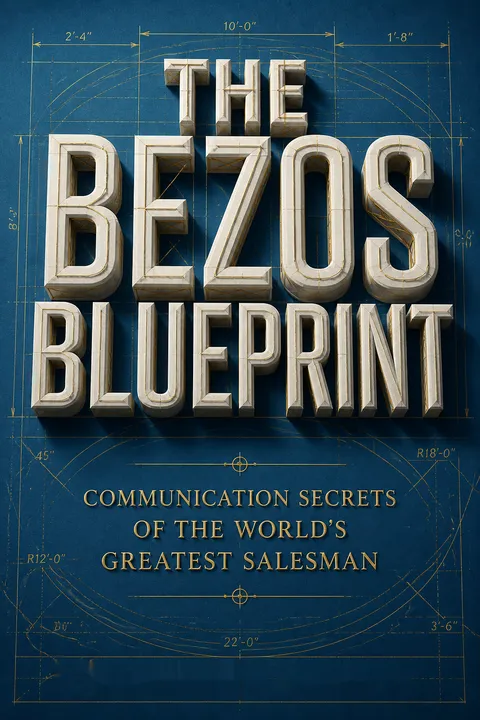
The Bezos Blueprint receives mostly positive reviews, praised for its insights into effective communication and leadership strategies. Readers appreciate the practical tips, engaging storytelling, and focus on simplifying messaging. Many find value in the book's exploration of Bezos' communication style and its applications beyond business. Some criticize the repetitive content and perceived bias towards Bezos. Overall, reviewers consider it a useful resource for improving communication skills, though opinions vary on its depth and originality.
People Also Read









Glossary
Day One
beginner’s innovation mindsetA term Bezos used for the mindset of a young, learning organization, even as it grows large. It signals curiosity, experimentation, and continued invention rather than complacency. In the book, it is a recurring reminder at Amazon that size should not end the habits that help a start-up adapt.
logline
one-sentence idea summaryA concise, compelling sentence that explains what a story, project, or proposal is about. Adapted from screenwriting, it gives an audience the central idea before supporting detail. In business communication, it should make the value or stakes clear enough to encourage people to keep listening.
BLUF
bottom line firstAn abbreviation for bottom line up front, a military communication technique that puts the most important conclusion at the start of a briefing or document. It helps audiences understand the purpose immediately, especially when time is limited or stress makes long explanations harder to follow.
Working Backwards
plan from customer valueAmazon’s approach to developing ideas by starting with the customer experience the team wants to create, then reasoning backward to the work required. Teams may write a hypothetical announcement and questions before building. The exercise tests whether the customer benefit is clear and whether the idea can be made feasible.
PR/FAQ
future announcement and questionsA planning document used at Amazon that pairs a proposed future press release with frequently asked questions. The announcement explains the intended customer benefit in plain language. The questions expose implementation challenges and uncertainties. Together, they help a team refine an idea before committing to development.
narrative
reasoning in connected proseIn the Amazon meeting practice described in the book, a narrative is a written account built from complete sentences and paragraphs rather than relying on slide fragments and bullet points. Its purpose is to make the reasoning, evidence, and relationships among ideas explicit before a group discusses a decision.
The Hero’s Journey
adventure and transformation patternJoseph Campbell’s name for a recurring pattern found in heroic stories across cultures. A central character leaves familiar circumstances, faces trials and setbacks, and returns changed, often carrying something valuable to share. The book uses this pattern as an adaptable source for business and founder stories.
Gallo AMP model
speaker development modelA presentation-development model organized around Ability, Message, and Practice. Ability refers to a speaker’s existing strengths, while message quality and rehearsal can be deliberately improved. The model encourages speakers to build on what comes naturally and invest effort in the parts of performance they can change.
Message Map
one-page presentation outlineA communication planning tool associated with the Gallo Method. It organizes a presentation around one central idea supported by a small number of main points, which can then be developed with examples, data, or comparisons. The map helps a team align before expanding the material into a presentation.
Rule of three
three-part message structureA communication principle that uses three supporting ideas or examples to make a message easier to follow and remember. The book connects it to limits on short-term memory and to research on persuasive product claims. It is a practical guide, not a rule that every idea must contain exactly three parts.
flywheel
self-reinforcing growth cycleA metaphor for a system in which improvements in one part reinforce other parts, increasing momentum over time. Bezos used it to describe how better customer experience, greater traffic, more sales, and improved efficiency could support further growth. The image helps explain a cycle rather than a one-time tactic.
two-pizza teams
small autonomous teamsAn Amazon term for keeping teams small enough to be fed with two pizzas. It expressed a preference for groups that could communicate and make decisions quickly. The book notes that team size alone does not guarantee success: suitable leadership, authority, and a clear focus also matter.
single-threaded leader
leader focused on one initiativeA leader assigned to concentrate on one major initiative without competing responsibilities. The idea borrows from computing, where a single thread processes one sequence of work at a time. At Amazon, the role was intended to give a project clear ownership, attention, and the ability to move forward.
FAQ
What's The Bezos Blueprint about?
- Focus on Communication: The Bezos Blueprint by Carmine Gallo explores Jeff Bezos's communication strategies at Amazon, highlighting the importance of clear and effective communication in business.
- Writing and Storytelling Skills: The book emphasizes how Bezos's writing and storytelling skills contributed to Amazon's growth, showcasing the power of narrative in persuasion and team alignment.
- Practical Tools and Techniques: Gallo provides actionable tools and techniques for enhancing communication and presentation skills in various professional settings.
Why should I read The Bezos Blueprint?
- Learn from a Visionary: Gain insights into Jeff Bezos's communication methods, which have transformed multiple industries, and apply them to your career.
- Improve Communication Skills: The book offers practical advice on writing, storytelling, and presentation skills, essential for success in leadership roles.
- Real-World Examples: Includes insights from former Amazon executives and other leaders, illustrating how effective communication drives business success.
What are the key takeaways of The Bezos Blueprint?
- Simplicity is Key: Emphasizes using short, clear sentences and familiar words to convey complex ideas effectively.
- Customer Obsession: Highlights the importance of prioritizing customer needs and working backwards from those needs to develop products and services.
- Narrative Writing Matters: Advocates for narrative writing over traditional presentations, fostering better understanding and decision-making.
What are the best quotes from The Bezos Blueprint and what do they mean?
- “It’s always Day 1”: Reflects Bezos's philosophy of maintaining a startup mentality, focusing on innovation and customer obsession.
- “Sell dreams, not products”: Stresses the importance of vision in business, inspiring others with a compelling vision rather than just selling a product.
- “Good intentions never work, you need good mechanisms to make anything happen.”: Highlights the necessity of structured processes to achieve goals.
How does The Bezos Blueprint define effective communication?
- Clear and Concise: Effective communication is clear and concise, using simple language easily understood by a broad audience.
- Engaging and Persuasive: It should capture the audience's attention and persuade them to take action or adopt a new perspective.
- Structured Approach: Advocates for a structured approach, including storytelling techniques and the three-act structure, to enhance message delivery.
What is the Gallo Method mentioned in The Bezos Blueprint?
- Structured Communication Tool: A framework for crafting clear and compelling messages, organizing thoughts effectively for pitches or presentations.
- Logline and Supporting Messages: Involves creating a logline that encapsulates the main idea, followed by three supporting messages for clarity.
- Use of Stories and Analogies: Encourages using stories, data, and analogies to make content relatable and engaging for the audience.
How does The Bezos Blueprint suggest using storytelling in business?
- Three-Act Structure: Recommends using a setup, challenge, and resolution to craft compelling business stories.
- Engage the Audience: Storytelling should engage the audience emotionally, making them relate to the characters and journey.
- Memorable Messages: Incorporating personal anecdotes and relatable experiences makes business messages more memorable and impactful.
What role do metaphors play in The Bezos Blueprint?
- Simplifying Complex Ideas: Metaphors simplify complex ideas, making them more relatable and easier for audiences to understand.
- Creating Mental Images: They help create vivid mental images, enhancing audience engagement and message retention.
- Driving Home Key Points: Effective metaphors make key points memorable, ensuring they stick in listeners' minds.
How does Bezos's approach to presentations differ from traditional methods?
- Ban on PowerPoint: Bezos banned PowerPoint in favor of narrative memos, encouraging deeper thinking and clearer communication.
- Focus on Written Narratives: Writing structured narratives articulates ideas clearly, allowing thorough discussion and understanding.
- Silence for Reflection: Reading memos in silence at meetings' start gives attendees time to absorb information, leading to productive conversations.
What is the significance of the "Day One" mindset in The Bezos Blueprint?
- Continuous Innovation: Encourages a culture of continuous innovation and learning, motivating employees to think creatively and embrace change.
- Customer Obsession: Reinforces prioritizing customer needs and working backwards from those needs to develop products and services.
- Avoiding Complacency: Serves as a reminder to avoid complacency and stasis, which can lead to decline in a rapidly changing market.
How does The Bezos Blueprint define customer obsession?
- Central to Amazon's Mission: Defined as the relentless focus on understanding and meeting customer needs, guiding all decisions.
- Listening and Inventing for Customers: Leaders should actively listen to customers and invent on their behalf, tailoring products to enhance experiences.
- Long-Term Trust Building: Involves building long-term trust and loyalty, differentiating Amazon from competitors.
How can I apply the principles from The Bezos Blueprint in my own work?
- Embrace Customer Obsession: Prioritize customer needs in decision-making, seek feedback, and adapt strategies based on insights.
- Practice Narrative Writing: Use the Gallo Method to structure messages, making them engaging and memorable.
- Foster a Culture of Learning: Encourage continuous learning and curiosity, empowering team members to share ideas and innovate.
About the Author
Other books by Carmine Gallo

Download PDF
Download EPUB
.epub digital book format is ideal for reading ebooks on phones, tablets, and e-readers.








