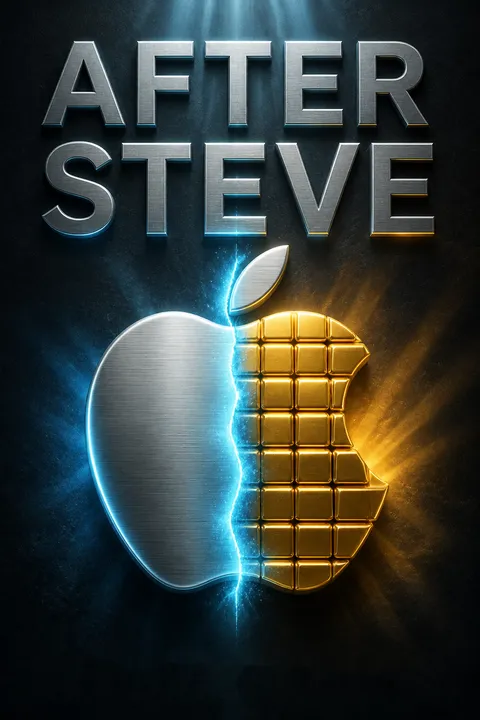


Key Takeaways
Build succession around complementary strengths, not a founder impersonation
A different kind of leader. Steve Jobs chose Tim Cook, a supply-chain specialist, to run Apple, not a second visionary in his own image. Jobs had watched companies such as Disney and Sony lose creative momentum after their founders died. His warning to Cook was not to guess what he would have done, but to make the right decision in the present. Cook’s first product launch, the iPhone 4S, drew a tepid response, and Apple’s share price fell. Yet the company did not need Cook to become Jobs. It needed someone who could keep its business working while its creative teams continued making products.
Continuity without imitation. Cook preserved Apple’s focus on a small number of strong products, but brought his own strengths in analysis, logistics, and corporate diplomacy. The appointment proved that succession can mean changing how a company is led while protecting what it is for.
What's striking is that Jobs understood the danger of turning his own judgment into a permanent template. In organizational terms, succession is not simply replacing a person; it is transferring enough knowledge and authority for others to act without rehearsing the founder's instincts. That is harder when the founder has been the company's chief decision system. Cook's operational strengths gave Apple continuity, but they could not reproduce Jobs's creative judgment. The distinction matters: a successor can preserve an institution's capabilities without preserving its original style. The risk is that an organization may mistake continuity of values for continuity of outcomes.
Give creative partnerships authority without making one person indispensable
A productive contrast. Jobs and Jony Ive worked as a creative pair. Jobs was forceful and quick to reject ideas; Ive was quieter, deeply attentive to form, and often able to redirect Jobs without escalating conflict. Together they shaped products including the iMac, iPod, iPhone, and iPad. Jobs gave the design team unusual power, supported expensive choices, and visited its studio frequently. That authority let designers pursue ideas engineers considered impractical, including the translucent, colorful iMac.
A hidden vulnerability. The same arrangement made the studio dependent on Jobs's feedback and Ive's leadership. After Jobs died, designers felt less certain about their work. When Ive took on software and watch responsibilities as well as industrial design, the creative partnership could not be replaced by a job title or a larger team.
The pair illustrates a familiar advantage of cognitive diversity: people with different temperaments can challenge one another without sharing the same blind spots. The important condition is that disagreement remains attached to the work, rather than becoming a contest for status. Jobs's authority made the partnership unusually productive, but it also concentrated judgment in two people. A durable creative culture needs both trusted collaborators and routines that distribute their standards. Otherwise, the partnership becomes a bottleneck, and the people who learned from it cannot confidently continue without its original members.
Treat manufacturing as part of design, not a constraint at the end
From drawing to object. Ive's father taught him to sketch before building and to ask how everyday objects were made. At Apple, that curiosity extended from a product's shape to its materials and factory process. While making the aluminum Power Mac G5, Ive stopped production over a plastic vent that looked painted rather than properly finished. The team developed a more costly metal-plating process instead. Later, Apple engineers traced streaks in aluminum to the metal's composition and learned to control the alloy itself.
Design across the chain. Ive helped bring industrial design, product design, and manufacturing design into closer collaboration. Each group considered a different part of the product: its appearance, its components, and how it could be assembled. This let Apple translate fine-grained aesthetic demands into repeatable production methods, not just polished prototypes.
This approach resembles design for manufacture, where production knowledge informs the concept from the start rather than being consulted only to reduce cost. It also recognizes that materials carry tacit knowledge: a designer may see a flaw that only a supplier or process engineer can explain. The partnership can produce breakthroughs, as Apple's control of alloys and finishes suggests. Its limit is economic. Not every barely visible improvement creates enough value to justify extra tooling, labor, or delay. The useful discipline is to ask whether manufacturing precision changes the user's experience, not merely whether perfection is technically possible.
Operational discipline can create room for bold products
The invisible breakthrough. When Cook joined Apple in 1998, the company had nineteen days of inventory and was short of cash. He treated stock sitting in warehouses as a costly liability, cut inventory to two days, and moved production toward contract manufacturers such as Foxconn. The savings and flexibility helped Apple respond to demand for the iMac and later scale products such as the iPod and iPhone. Cook also spent aggressively when speed mattered, authorizing extra iMac production equipment and securing supplies of memory and strengthened glass for new devices.
Process as strategy. Cook's operations team helped secure advanced manufacturing capacity and parts that competitors could not easily obtain. This was not merely back-office efficiency. It enabled Apple to make ambitious designs at enormous volume, often before rivals could match them.
Lean operations can turn a creative ambition into a viable product, but low inventory and concentrated suppliers also make a company more exposed to disruption. Apple's model was powerful because it combined disciplined logistics with extraordinary demand, not because efficiency is automatically wise. The case also complicates the familiar division between inventive designers and uncreative operators. A supply chain can be a source of innovation when it develops new capabilities, although bargaining power can push costs and risk onto suppliers and workers. Operational excellence deserves evaluation by both what it enables and what it externalizes.
A beautiful device still needs a reason people cannot ignore
A platform without a clear job. Ive imagined the Apple Watch as a personal computer, a health device, and a fashionable timepiece. The team studied watchmaking history, developed interchangeable bands, and created a digital crown to navigate the small screen. But important health features, including an electrocardiogram, were dropped, and the first model could do little beyond measuring heart rate. It also had weak battery life and delayed notifications. The company had forecast demand for 40 million watches in its first year, then cut production sharply after the launch.
Beauty was not enough. The watch was admired, but reviewers struggled to explain why it was essential. Apple shifted its emphasis from fashion toward fitness, adding GPS and water resistance in a later model. The product eventually became a substantial business, but its first release exposed the cost of launching before its purpose was clear.
The watch shows how a product can be technically impressive and still lack a convincing reason to change behavior. In product strategy, a broad platform can sound ambitious while leaving the first customer unsure what problem it solves. Fashion, health, and communication were all plausible benefits, but they required different audiences and proof points. The watch's later growth cautions against treating a weak debut as a final verdict. At the same time, patience cannot repair every product. A company needs a way to distinguish an early market learning curve from a launch whose central promise is too diffuse.
Replace founder-led integration with clear decision rights, not endless meetings
A new structure, a new failure. Jobs organized Apple so that senior leaders reported directly to him, and he personally joined teams when products needed direction. After the disastrous launch of Apple Maps in 2012, Cook removed software chief Scott Forstall and divided software design from engineering. He wanted greater collaboration across divisions, rather than the rivalries Jobs had managed himself. But teams still needed someone to reconcile competing priorities.
Coordination has a cost. Apple Maps had been tested heavily in California and too lightly elsewhere. Its faulty directions and missing landmarks became public immediately. Cook required an apology and directed customers to rival maps. Later, software and hardware groups clashed over AirPods, while Ive's part-time leadership left designers waiting for decisions. A more collaborative organization did not automatically create integrated products.
The episode points to a problem of organizational design, not simply a contrast between a bold founder and a cautious successor. Centralization can make decisions fast, but it can also suppress dissent and create dependence on a single integrator. Collaboration can surface more knowledge, but without clear authority it creates delay and unresolved tradeoffs. A functioning middle ground assigns decision rights, defines when disagreements escalate, and makes cross-team dependencies visible. Apple's experience suggests that removing internal rivalry is not the same as designing cooperation. Either approach needs a mechanism that brings the whole product together.
Diversify before your largest market becomes a single point of failure
Growth with leverage. Cook spent six years pursuing a distribution deal with China Mobile, then the world's largest wireless carrier, with 760 million subscribers. The agreement helped propel iPhone sales in China and showed Cook's skill as a negotiator and diplomat. Apple also relied on China as the manufacturing base for millions of devices, making the country central to both demand and supply.
The dependency cuts both ways. Trade tensions, government restrictions on Apple services, and competition from lower-priced Chinese phones later weakened the company's position. In late 2018, demand for the iPhone XR fell short, and Apple cut production orders. Cook reduced its quarterly revenue forecast from $89 billion to $84 billion. Blaming only China's economy obscured the broader problem: customers in several regions were holding onto phones that still worked, while newer models offered less reason to upgrade.
A large market can provide growth, but concentration turns a commercial advantage into political and operational exposure. Global supply chains are efficient partly because production and demand are geographically specialized; the same specialization can transmit shocks across many companies at once. Apple's China strategy therefore raises a general planning question: what is the cost of resilience, and who bears it when resilience is absent? Diversification need not mean abandoning a valuable market. It means avoiding the assumption that today's access, consumer preference, or trade rules will remain stable.
Use the installed base to fund services, but earn users' trust
From devices to recurring revenue. As iPhone growth slowed, Cook looked for ways to earn more from the enormous customer base Apple already had. The Beats acquisition gave Apple music-industry expertise and helped launch Apple Music. When Taylor Swift objected to Apple's plan not to pay artists during a free trial, Cook changed the policy before launch. Apple Music reached 10 million paying subscribers in six months, a milestone Spotify had taken years to reach.
The platform becomes the product. Cook also promoted subscriptions, digital content, payments, and App Store revenue. Apple's control over iPhones made these services easier to distribute, but it also meant the company could charge developers a substantial commission. In 2019, Apple presented services as a major business in their own right, shifting attention from selling devices toward selling what people could access through them.
The installed base is a powerful distribution asset: a new service can reach customers without building a new hardware market from scratch. Yet distribution is not the same as user affection. Apple Music's response to artists showed that a service depends on relationships beyond the customer interface, while App Store fees invite scrutiny over whether the platform is both referee and competitor. Recurring revenue can smooth a hardware business's fluctuations, but it also increases the importance of fair rules and credible governance. The more Apple controls access, the more its legitimacy depends on how it exercises that control.
Make public principles consistent across markets, or they become marketing
A public act of leadership. In 2014, Cook publicly said he was gay, explaining that he hoped his position could help young people facing isolation or discrimination. He also criticized Alabama lawmakers for lacking protections for LGBT workers. The decision was significant for a CEO who had guarded his privacy and represented a personal risk as well as a public statement.
Principles meet pressure. In 2016, Cook resisted an FBI order to help unlock an iPhone, arguing that custom software could weaken security for many users. The FBI eventually found another way into the device, so the broader legal dispute remained unresolved. The book also describes Apple storing Chinese customers' data on servers in China to comply with local law. That compromise sits uneasily beside Cook's universal language about privacy, illustrating how principles can collide with market access and state power.
The distinction between an admirable personal decision and a consistent corporate policy matters. A leader's public example can widen what employees and outsiders imagine is possible, but institutional claims are tested by what happens when they become costly. Privacy, safety, equality, and market access are not always easy to reconcile. A company can explain why local compliance is necessary, yet it should also acknowledge who bears the resulting risks. Credibility comes less from claiming moral purity than from stating limits openly, applying standards consistently where possible, and explaining exceptions without disguising them as universal principles.
Do not confuse enduring excellence with repeating disruption
A different kind of victory. Under Cook, Apple's value and reach soared, and the company became the first U.S. business to reach a $1 trillion market value in 2018. Its wearables, including the Apple Watch and AirPods, grew into a major business. Yet the company did not produce a new device with the transformative effect of the iPhone. Cook expanded the ecosystem around the products Jobs had created, while Ive grew frustrated with finance, bureaucracy, and the growing number of meetings.
Success changed the company. Ive left Apple in 2019 after more than two decades, later continuing design work through LoveFrom. Cook preserved and enlarged the business, but the design studio lost its former central authority. The book's central tension is not simply that Apple lost its soul. It is that the company survived by becoming more operational, more financially disciplined, and less dependent on one artist's vision.
The ending resists the easy story that commercial success proves creative vitality, or that reduced novelty proves failure. A mature company can create real value through reliability, service, and incremental improvements, even when it no longer remakes entire industries. But scale also raises the hurdle for experimentation: a project that once seemed worth trying can look negligible beside billions in existing revenue. The deeper test is whether the organization preserves the capacity to explore ideas whose returns are uncertain. Apple became more durable under Cook, while the conditions that once made radical design central became harder to sustain.
Analysis
After Steve is not chiefly a story of a visionary company declining after its founder dies. It is a study of what changes when a founder-built institution must serve two masters: the creative ambition that made it distinctive and the operational demands created by its own success. Jobs joined product judgment to personal authority. Cook inherited a company too large for that arrangement to remain uncomplicated, and he brought skills that Jobs lacked: inventory control, supplier leverage, financial discipline, and political negotiation. Those skills did not merely maintain Apple. They expanded it dramatically.
Ive's arc reveals the cost of trying to preserve creative authority by expanding its reach. He wanted influence over software, materials, manufacturing, retail, and architecture. Each added responsibility offered control, but also pulled him away from the small design group and close feedback loop in which he was strongest. His part-time arrangement then left teams with authority that was neither fully delegated nor reliably available. The organizational failure was not that one leader cared more than another. It was that the company did not establish a stable way to integrate design, engineering, and operations once Jobs and Ive no longer provided the integration personally.
The book's title also invites a sharper distinction between soul and style. Apple's original style was visible: minimal products, theatrical launches, and a founder who made risk feel like conviction. Its underlying strengths were less visible: concentrated teams, unusually close collaboration, supplier capabilities, and a willingness to spend on product quality. Cook preserved some of these capabilities while changing the company's identity. The result was financially extraordinary, but not emotionally equivalent to the Jobs era.
That tension complicates the usual business verdict. A company can be more successful by conventional measures while becoming less able to surprise. Conversely, expecting every mature institution to reinvent an industry repeatedly may confuse a founder's exceptional run with a sustainable corporate obligation. Apple's post-Jobs story is both a triumph of stewardship and a warning: when growth makes every experiment expensive, the machine can keep winning while quietly narrowing the range of futures it is willing to attempt.
Review Summary
After Steve receives mostly positive reviews, with readers praising its detailed insights into Apple's post-Jobs era. Many appreciate the thorough research and engaging narrative style. Critics note the book's focus on the contrast between Jony Ive's design philosophy and Tim Cook's operational approach. Some readers find it overly long or repetitive, while others consider it essential reading for those interested in Apple's recent history. The book's portrayal of Apple's shift from innovation to services draws mixed reactions, with some agreeing and others finding it biased.
People Also Read







Glossary
Cook Doctrine
Apple's stated operating principlesA set of principles Tim Cook articulated while running Apple during Steve Jobs's 2009 medical leave. It emphasized focused product selection, simplicity, control of key technologies, close collaboration, and high standards. The phrase later described how Cook presented Apple's culture in public, rather than a formal written management system.
starfish
Founder-centered company structureA metaphor for Apple's pre-succession organization, in which Jobs sat at the center and could personally connect with design, engineering, marketing, and operations. The divisions functioned like the limbs of a starfish, but the founder's ability to move among them held the whole together. The structure enabled speed and focus while making the company dependent on one person's judgment.
manufacturing design
Designing how products are assembledApple's term for work focused on turning a product concept into a repeatable manufacturing process. It complemented industrial design, which shaped appearance, and product design, which addressed components and function. The approach brought designers and factory specialists into closer contact so that material choices and assembly methods could support the intended look and quality.
Project Purple
Apple's first iPhone effortThe internal name for Apple's effort to create a mobile phone combining an iPod, a phone, and an internet-connected computer. The project brought together hardware, software, and design teams under Steve Jobs's direction. It produced the first iPhone, whose multitouch interface and integrated software helped define the modern smartphone.
Project Titan
Apple's car development effortThe codename for Apple's attempt to enter the automotive field, initially pursuing an electric vehicle with autonomous driving capabilities. The project assembled specialists in software, batteries, sensors, and automotive engineering. Its scope and leadership proved difficult to coordinate, and Apple eventually narrowed its effort toward developing autonomous-driving software rather than completing a car on its original schedule.
going dark
Law enforcement loses phone accessA term used by law enforcement for cases in which encryption prevents investigators from accessing information on a locked phone, even with legal authorization. The San Bernardino investigation made the dispute public: the FBI wanted Apple to create software that bypassed an iPhone's passcode protections, while Apple argued that such a tool could put many users at risk.
GovtOS
Proposed iPhone bypass softwareApple's internal label for the custom software the FBI sought in the San Bernardino case. The requested tool would have removed safeguards that limited attempts to guess an iPhone passcode. Apple argued that creating it could establish a reusable method for weakening security, even though the immediate request concerned one phone.
ticktock cycle
Alternating redesign and refinementApple's iPhone release pattern of making a major design change in one year, then refining that design in the next. Spreading product changes across alternating releases helped distribute manufacturing costs and create a predictable development rhythm. The pattern became difficult to maintain as Apple planned the tenth-anniversary iPhone and sought a more substantial update.
FAQ
What's After Steve: How Apple Became a Trillion-Dollar Company and Lost Its Soul about?
- Apple's Transformation: The book chronicles Apple's journey to becoming a trillion-dollar company after Steve Jobs's death, focusing on leadership changes and strategic shifts.
- Leadership Dynamics: It highlights the contrasting styles of Tim Cook and Jony Ive, exploring how their partnership evolved and impacted Apple's culture and innovation.
- Cultural and Political Context: The narrative examines the broader cultural and political influences on Apple's strategies, including its relationship with China and the impact of U.S. politics.
Why should I read After Steve?
- Corporate Strategy Insights: Gain a deep understanding of how Apple adapted its strategies in a rapidly changing tech landscape, offering lessons on leadership and innovation.
- Behind-the-Scenes Access: The author provides insider perspectives from interviews with over two hundred Apple employees, revealing the inner workings of the company.
- Cultural Relevance: As Apple continues to shape technology and consumer behavior, understanding its evolution is crucial for anyone interested in business, technology, or design.
What are the key takeaways of After Steve?
- Leadership Styles Matter: The book emphasizes the importance of leadership styles in shaping a company's direction, contrasting Cook's operational focus with Ive's design-centric approach.
- Innovation Requires Collaboration: It illustrates how collaboration between departments is essential for innovation, highlighting the merging of design and engineering teams at Apple Park.
- Navigating Challenges: The narrative showcases Apple's ability to adapt and pivot its strategies in response to market competition and political pressures.
What are the best quotes from After Steve and what do they mean?
- “An institution is the lengthened shadow of one man.”: Reflects Steve Jobs's profound impact on Apple, suggesting his vision shaped the company's identity.
- “We play for the long term.”: Tim Cook's statement during the China Mobile deal signifies Apple's commitment to sustainable growth over short-term gains.
- “Leave it better than you found it.”: Encapsulates Cook’s philosophy for Apple’s future, emphasizing improving the world through technology and innovation.
How did Tim Cook’s leadership style differ from Steve Jobs’s in After Steve?
- Operational Focus: Cook is more methodical and analytical, emphasizing data-driven decision-making and operational efficiency compared to Jobs's visionary style.
- Collaborative Approach: Cook fosters collaboration among teams, unlike Jobs, who thrived on competition and conflict, aiming to unify Apple's departments.
- Emphasis on Accountability: Cook encourages open discussions about failures and successes, creating a culture of learning and improvement.
What challenges did Apple face after Steve Jobs’s death in After Steve?
- Market Competition: Apple struggled to maintain market dominance amid fierce competition from rivals like Samsung and the rise of Android smartphones.
- Innovation Concerns: There were doubts about Apple's ability to innovate without Jobs, affecting the company’s stock and public perception.
- Leadership Transitions: The transition in leadership created uncertainty, highlighting internal power struggles and the need for a cohesive vision.
How did Jony Ive’s role evolve in After Steve?
- From Designer to Leader: Ive transitioned to taking on leadership responsibilities for software design, influencing both aesthetics and functionality.
- Focus on Collaboration: His leadership style emphasized collaboration among designers and engineers, fostering a more integrated approach to product development.
- Struggles with Identity: Ive grappled with maintaining his creative vision amid corporate pressures and the absence of Jobs.
What impact did Scott Forstall’s departure have on Apple in After Steve?
- Shift in Software Design: Forstall’s exit marked a move from skeuomorphic designs to a minimalist approach under Ive, modernizing Apple's user interface.
- Increased Collaboration: His departure allowed for a more collaborative environment within Apple’s leadership, enhancing communication and teamwork.
- Crisis Management: Forstall’s ouster after the Maps debacle highlighted the need for accountability and a shift in leadership style.
How did Apple’s marketing strategy change after Jobs in After Steve?
- Focus on Brand Identity: Apple shifted its marketing to emphasize brand identity and values rather than just product features, aiming to reconnect with customers.
- Response to Competition: The marketing strategy began addressing the competitive landscape more directly, particularly in response to Samsung’s advertising.
- Emphasis on Collaboration: Under Cook, the marketing team became more collaborative, integrating feedback from various departments for a cohesive message.
What role did Apple’s supply chain play in its success in After Steve?
- Operational Efficiency: Cook’s management of the supply chain improved operational efficiency, reducing inventory costs and streamlining production.
- Supplier Relationships: Cook emphasized building strong relationships with suppliers while demanding high standards, securing the best components at competitive prices.
- Adaptability: The supply chain’s adaptability allowed Apple to respond quickly to market demands, maintaining its competitive edge.
How did the iPhone change Apple’s trajectory in After Steve?
- Market Dominance: The iPhone’s launch propelled Apple to become the world’s most valuable company, redefining the smartphone market.
- Cultural Impact: It transformed how people interacted with technology, impacting industries like music, photography, and social media.
- Revenue Growth: The iPhone became a significant revenue driver, allowing Apple to expand its product ecosystem and services.
What does the future hold for Apple according to After Steve?
- Continued Innovation: Apple is expected to continue innovating, with potential new products like augmented reality devices and electric vehicles.
- Evolving Business Model: The shift towards services is likely to deepen, creating a more sustainable revenue model and enhancing customer engagement.
- Challenges Ahead: Apple will face ongoing challenges, including regulatory scrutiny and competition, determining its long-term success and relevance.
Download PDF
Download EPUB
.epub digital book format is ideal for reading ebooks on phones, tablets, and e-readers.








