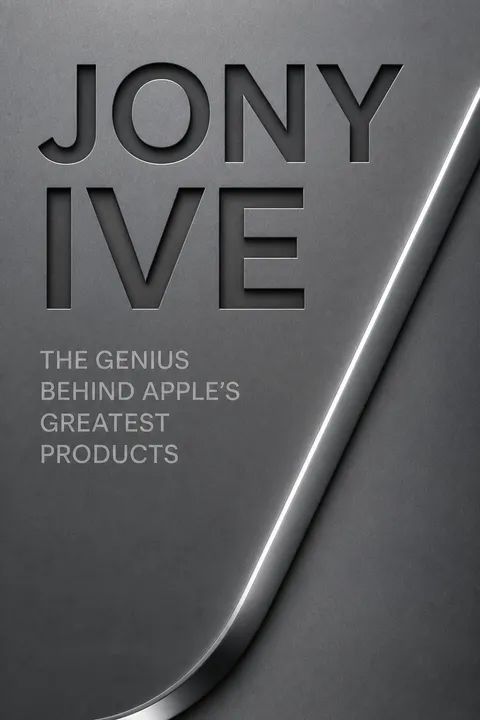


Key Takeaways
Apple’s breakthroughs began when design stopped being decoration
Design reaches beyond appearance. Jony Ive’s work joined a product’s shape to how it was made, how it worked, and how people felt using it. His father, a silversmith and influential advocate for design education in Britain, encouraged him to examine everyday objects and make things by hand. At school, Jony took apart radios, then learned to turn ideas into working models. A Mac later showed him that technology could feel thoughtfully made rather than forbiddingly technical.
Care has to travel through the whole product. At Apple, that meant details such as the iMac’s welcoming handle and the iPod’s simple controls, but also the hidden engineering needed to make them work. The central idea is not that products should merely look elegant. Their materials, construction, operation, and emotional effect should feel like parts of the same decision.
What's striking is how this account treats design as a form of systems thinking. A handle is simultaneously a physical feature, a cue to touch, and a signal about who is in control. That connects industrial design to human-computer interaction, where small interface choices can shape confidence and behavior. The same principle applies to services: a polished screen cannot redeem a confusing process behind it. Still, coherence is not automatically usability. A product can feel beautifully resolved to its makers while leaving some users confused, excluded, or unable to repair it.
Prototype until the idea becomes something people can judge
Make ideas tangible early. A design concept can sound convincing while hiding practical flaws. Jony’s school project for a portable overhead projector was rejected after he accidentally reinserted its lens backward before judging. The mistake exposed how fragile an idea can be when it has not been tested carefully. At college, he built about a hundred subtly different models of a phone concept, using physical variation to investigate what worked rather than trusting a single sketch.
Use making to clarify purpose. A design story is the account of what a product is for and what experience it should create. Jony used this kind of framing to guide choices before settling on details. Models made abstract disagreements concrete: people could hold, compare, and question an object. His process joined sketching, making, and revision, with manufacture considered as part of the idea rather than a distant final step.
Prototypes work as external thinking. Once a form exists outside the mind, a team can notice proportions, awkward motions, and hidden assumptions that language tends to conceal. This resembles learning-by-doing in education and iterative testing in engineering: each version produces information. The useful measure, however, is not the number of models. A hundred variations can become expensive ritual if they do not answer a meaningful question. The strongest prototype is the cheapest one that makes the next important uncertainty visible.
Join design to engineering before either side locks the product
Consulting revealed the limits of distance. At the London design firm Tangerine, Jony worked across products from combs to power tools. The firm’s clients often changed designs during production, sometimes removing the qualities that made them distinctive. A proposed bathroom collection for Ideal Standard, inspired by water and given striking sculptural forms, was rejected as too costly and unfamiliar. The team then had to adapt the work to the client’s production expectations.
Move closer to the decisions. Apple’s Project Juggernaut brought Jony and Tangerine into exploratory work on future mobile devices. The project produced no commercial product, but Apple’s design chief, Robert Brunner, saw Jony’s unusually complete concepts and recruited him. Working inside Apple gave Jony more influence over engineering and production, where core choices were made. The lesson is structural: designers can create more ambitious work when they participate before technical and business decisions become irreversible.
Embedding designers with engineers shortens the distance between an idea and the evidence that can improve it. This is a familiar lesson in systems engineering, where late-stage handoffs often expose incompatible assumptions at great cost. Yet proximity alone does not guarantee good collaboration. A design group with too much power can dismiss manufacturing, service, or cost concerns as obstacles rather than sources of useful knowledge. The productive arrangement is early participation paired with shared goals and clear responsibility for the consequences of the final product.
Cut the product line before asking a small team to innovate
Focus repaired a company in crisis. When Steve Jobs returned to Apple in 1997, the company sold about forty products, including confusingly similar computer models. Jobs reduced the computer strategy to four categories: consumer and professional products, each in desktop and portable form. This 2x2 product plan gave teams a limited set of problems to solve and customers a simpler set of choices. Jobs also closed projects, including the Newton handheld, and reduced inventory by about $300 million in a year.
Fewer bets can create room to do better work. Before this reset, Apple’s many divisions negotiated through committees, producing slow decisions and compromised products. The smaller portfolio helped concentrate talent and simplify operations as the company struggled financially. It also made the design team’s ambition legible: build a few coherent products rather than a catalogue of variations. Focus here was not just a slogan. It changed what the company funded, built, and stopped building.
The 2x2 plan shows how strategy can reduce cognitive and organizational load at once. Customers face fewer confusing choices, while teams spend less effort coordinating overlapping products. This resembles portfolio management in other industries: resources become more effective when priorities are explicit. But radical focus also creates exposure. If the chosen categories are wrong, or a market shifts, a narrow portfolio can leave fewer alternatives. The lesson is not that every organization should sell four things. It is that priorities must be clear enough to guide both investment and refusal.
Build for human feeling, then let difference follow
The iMac began with people, not specifications. Apple initially considered a simple network computer for internet access. Jony’s team instead asked what the product should feel like to use. Their early egg-shaped concept looked playful, and its translucent shell made the internals visible. A handle invited people to touch a device that might otherwise intimidate them. Apple also chose USB and dropped familiar connectors and the floppy drive, accepting short-term complaints to make a simpler computer.
The market rewarded the complete experience. Reviewers attacked the missing floppy drive, but the iMac sold 278,000 units in its first six weeks and 800,000 by year’s end. About 32 percent of buyers were first-time computer owners, while 12 percent switched from other platforms. Its success came from more than color: the machine combined an approachable form, easier setup, and internet access. The design stood out because the team pursued a coherent product, not difference as an end in itself.
The iMac illustrates how design can lower the psychological threshold to adopting technology. A handle, visible components, and a straightforward setup made the computer seem less like specialist equipment. In behavioral terms, the product reduced friction and made an unfamiliar action feel approachable. Its sales also warn against treating expert reviews as a perfect proxy for customer needs. Yet aesthetic appeal alone is not proof of broad usefulness. The iMac worked because the visual invitation was supported by a real function: getting ordinary buyers online with less hassle.
Remove controls and parts only when the user’s path gets clearer
The iPod made a complicated library navigable. Early MP3 players were either bulky or held very little music. A small Toshiba hard drive offered five gigabytes of storage, enough at the time for roughly a thousand CDs. Apple paired it with iTunes and a scroll-wheel interface that made long lists easier to move through. The team removed an on-off switch and sealed the battery inside, reducing controls and simplifying the case. The original model cost $499 and worked only with Macs, so early reception was doubtful.
Simplicity involves tradeoffs. Fewer parts can make an object compact and coherent, but they can also limit repair or user choice. The iPod’s stainless-steel back scratched easily, and its sealed battery drew criticism. Its later success depended not only on its physical design, but also on compatibility with Windows and the music store that made acquiring songs easier. Reduction mattered when it made the whole path from finding music to hearing it simpler, not merely when it removed hardware.
This is a useful distinction between minimal appearance and minimal effort. The scroll wheel reduced the work of navigating a large collection, while the missing power switch simplified interaction because the device managed that state itself. But simplification can transfer costs from the object to its owner. Sealed construction may improve compactness while making repair harder, and fewer controls can reduce accessibility for some users. Good reduction removes decisions that users do not need to make. It should not disguise a loss of agency as elegance.
Treat manufacturing as part of design, not the last mile
A beautiful form must survive production. Apple’s early plastic products pushed molding limits, while the Titanium PowerBook exposed problems with paint and joined parts. The design team increasingly worked directly with suppliers to refine materials and processes. The unibody process, developed for products such as the MacBook Air, carved a frame from a solid aluminum block instead of assembling many separate pieces. In one example, a block weighing more than two and a half pounds became a precise part weighing about a quarter pound.
Fewer joints changed the product. On a redesigned iPhone, the team reduced the number of interfaces between parts from nearly thirty to five. This approach could make devices thinner, stronger, and more precisely finished, but it required costly tooling and close supplier relationships, increasingly in Asia. Manufacturing was not simply where a finished idea got copied. It shaped which designs were possible and demanded new capabilities from factories.
Manufacturing knowledge can be a source of invention, not merely a constraint. A process that removes material rather than joining many parts changes the designer’s options, much as new instruments can change scientific questions. It also creates a strategic barrier: competitors need more than a similar sketch if the design depends on specialized tooling and supplier expertise. The tradeoff is substantial capital investment and dependence on complex supply chains. Precision at the product level cannot be separated from labor conditions and environmental effects at the production level.
Protect exploration with parallel experiments, then converge decisively
Separate exploration from delivery pressure. Robert Brunner used parallel design investigations at Apple: teams developed speculative concepts outside the immediate production schedule. Project Juggernaut, for example, explored tablets and portable computers years before those categories became central to Apple’s business. Such work let designers test future possibilities without requiring each idea to ship.
Then coordinate the entire route to market. Apple’s New Product Process, or ANPP, documented the work required across design, engineering, operations, marketing, finance, and support. It used concurrent engineering, in which departments work in parallel rather than passing a product from one group to the next. The design studio remained small and collaborative, with regular sketching and model reviews. Exploration created options; a disciplined process helped turn selected ideas into products that could be built and supported.
Innovation requires both divergence and convergence. Parallel exploration protects uncertain ideas from being judged only by immediate schedules, while coordinated execution catches problems across departments before launch. This resembles ambidextrous organizations, which preserve experimentation while reliably delivering established work. The tension is real: too much structure can smother discovery, while too little can leave a parade of attractive prototypes with no viable product. A further risk comes from secrecy. It can protect prototypes, but also prevent useful criticism from people who understand different users or contexts.
Give bold design authority, but keep reality in the room
Craft does not guarantee a hit. Jony’s Twentieth Anniversary Macintosh took years to develop, but its special-edition positioning and roughly $9,000 launch price were badly matched to the original ambition. The Power Mac Cube advanced manufacturing but sold about 150,000 units, roughly a third of Apple’s projection. Even the successful iMac had a round mouse that many users found uncomfortable. These cases show how a refined object can still miss its audience or fail in ordinary use.
Authority can protect ideas and magnify mistakes. Jobs gave Jony’s team the power to resist engineering-led compromises, helping designs reach production. The same concentration of influence could make it harder for objections to change direction. A strong design process needs champions who can push through inertia, alongside ways to test ergonomics, price, repair, and real customer behavior before a decision becomes too costly to reverse.
The failures make the success story more credible. They show that design excellence is not a magical substitute for market fit, pricing, or usability testing. Strong leadership can prevent organizations from diluting a good idea through consensus, but it can also silence evidence that conflicts with a leader’s conviction. Research on group decision-making points to the value of dissent when it is specific and informed, not merely oppositional. The practical standard is constructive resistance: protect a promising concept while making its assumptions testable.
Challenge a successful design language before it hardens into a cage
A signature can become a constraint. Apple moved through translucent color, white plastic, glass, and aluminum as technologies and products changed. Each design language made the company recognizable, but its success also risked turning a once-radical alternative into the new establishment. The book notes the concern that customers could begin anticipating what Apple products would look like, limiting the shock and freshness that had helped define them.
Apply coherence to software, too. In 2012, Jony took responsibility for Apple’s human interface design, and the company moved away from software decorated to resemble physical notebooks, shelves, or leather. The change aligned the interface more closely with the clean visual language of the hardware. But restraint is not inherently clarity: visual cues can help unfamiliar users understand what an interface does. A design language stays alive when its principles guide change, rather than freezing a company into one look.
Design systems are valuable because they help people recognize and predict how products behave. Their danger is confusing consistency with repetition. A style that once expressed a new idea can become an identity maintained for its own sake. Software makes the problem especially visible: removing visual decoration can create calm, but it can also remove useful signposts. The relevant question is not whether minimalism or ornament is superior. It is whether each element helps people understand, act, and feel oriented in the particular context.
Analysis
This biography’s most persuasive argument is not that one designer single-handedly invented Apple’s products. It is that Ive’s particular strengths became consequential inside an organization that gave them room to operate. His education emphasized making, his consulting years exposed the cost of losing control at production, and Brunner built a small internal studio that could behave like a consultancy. Jobs then supplied something the studio lacked: authority to narrow priorities and carry contentious ideas through a large company. Cook’s operations system and Asian manufacturing partners supplied another necessary condition, the ability to produce demanding designs at scale.
That chain complicates the familiar genius narrative. The iMac, iPod, iPhone, and iPad were collective achievements, shaped by software, engineering, sourcing, marketing, and timing. The book’s own examples show that design excellence cannot guarantee commercial success: the Cube and anniversary Mac were technically ambitious but commercially misjudged, and the iMac mouse was a conspicuous ergonomic flaw. The portrait is also based partly on interviews with people inside an unusually secretive company, so some accounts of credit, conflict, and causation remain contested. The narrative is strongest when it shows processes and objects, and less conclusive when it assigns motives or sole authorship.
The deeper lesson is organizational. Design-led work requires enough focus to avoid committee-made mediocrity, enough technical partnership to make ideas real, and enough dissent to keep a powerful design group from mistaking conviction for evidence. Apple’s secrecy and concentrated authority protected fragile concepts, but also narrowed who could question them. Its exacting products additionally carry costs in tooling, supply-chain dependence, and repairability. The achievement is not simplicity as a visual style. It is the difficult coordination of user experience, engineering, manufacturing, and meaning. That coordination can create products people welcome into daily life, but it remains accountable to the people who use, make, maintain, and eventually discard them.
Review Summary
Jony Ive receives mixed reviews, with praise for its insights into Apple's design process and Ive's career, but criticism for its lack of depth and repetitive content. Some readers found it inspiring, while others felt it focused too much on Apple rather than Ive himself. The book's writing style and translation quality were also points of contention. Overall, it's recommended for Apple enthusiasts and those interested in design, but may disappoint readers seeking a comprehensive biography.
People Also Read










Glossary
design story
Product purpose and perceptionA design story defines what a product is for and what experience or meaning it should create before its form is finalized. Ive used this framing to guide choices about shape, interaction, and detail. For the Newton, the story helped make it legible as a notepad; for the iPhone, it focused attention on the display.
fiddle factor
A tactile point of engagementThe fiddle factor is a small feature that invites people to touch, handle, or play with a product, adding personal pleasure beyond its basic function. Ive explored the idea in a pen with a movable top mechanism and in details that made later devices satisfying to pick up and use. The feature matters when tactile appeal supports the product’s purpose.
parallel design investigations
Exploration outside production deadlinesParallel design investigations are exploratory projects conducted apart from immediate product schedules. They let designers examine future technologies, forms, and product categories without requiring every concept to ship. Apple used such investigations to generate options and test directions that could inform later products, while protecting early creative work from the demands of a current production deadline.
Apple new product process (ANPP)
Cross-company product checklistThe Apple new product process is a documented system that specifies the work and responsibilities involved in developing and delivering a product. It includes groups such as design, engineering, operations, marketing, finance, and support. The process uses concurrent engineering, so departments can address connected problems in parallel rather than waiting for sequential handoffs.
2x2 product plan
Four focused computer categoriesJobs’s 2x2 product plan divided Apple’s computer offerings into consumer and professional products, each available as a desktop or portable. It replaced an unwieldy range of models with four clear categories. The plan helped narrow investment, simplify customer choices, and focus teams on a smaller set of products.
unibody process
Machined single-piece enclosureThe unibody process makes a product’s structural enclosure from a single piece of material, commonly aluminum, by machining away unwanted material. Replacing a collection of joined parts can reduce seams and interfaces while producing a thin, rigid, precisely finished structure. At Apple, this approach required substantial investment in tooling and close coordination with manufacturers.
FAQ
What's Jony Ive: The Genius Behind Apple's Greatest Products about?
- Focus on Jony Ive: The book chronicles Jony Ive's journey from a curious child in England to Apple's Chief Design Officer, highlighting his impact on technology design.
- Apple's Design Evolution: It details how Ive's design philosophy transformed Apple's product line, leading to iconic devices like the iMac, iPod, iPhone, and iPad.
- Collaboration with Steve Jobs: The narrative emphasizes the collaborative relationship between Ive and Steve Jobs, showcasing their combined vision that reshaped the tech industry.
Why should I read Jony Ive: The Genius Behind Apple's Greatest Products?
- Insight into Design Philosophy: Readers gain a deep understanding of the principles that guided Jony Ive's design process, inspiring creativity across various fields.
- Behind-the-Scenes Stories: The book offers exclusive anecdotes and insights into the development of influential products in modern history.
- Lessons on Innovation: It provides valuable lessons on innovation, teamwork, and the importance of design in technology, relevant for designers, entrepreneurs, and tech enthusiasts.
What are the key takeaways of Jony Ive: The Genius Behind Apple's Greatest Products?
- Design as a Collaborative Process: Successful design often results from collaboration, as seen in the partnership between Ive and Jobs.
- Importance of User Experience: The book emphasizes creating products that resonate emotionally with users, moving beyond mere functionality.
- Simplicity and Elegance: A recurring theme is the value of simplicity in design, with Ive advocating for reducing complexity to enhance user interaction.
What are the best quotes from Jony Ive: The Genius Behind Apple's Greatest Products and what do they mean?
- "It’s very easy to be different, but very difficult to be better.": This quote reflects the challenge of not just standing out in design but ensuring superior functionality and user experience.
- "Design is the fundamental soul of a man-made creation.": It emphasizes that design is integral to the identity and purpose of a product, not just about aesthetics.
- "When you move on, you leave some things behind.": This speaks to the necessity of progress in technology, suggesting that embracing new ideas often requires letting go of outdated practices.
How did Jony Ive's childhood influence his design career?
- Early Curiosity: Jony's fascination with how things worked led him to dismantle radios and cassette players, sparking his interest in design.
- Parental Influence: His father, a silversmith, nurtured Jony's creativity by engaging him in discussions about design and craftsmanship.
- Education and Dyslexia: Despite being diagnosed with dyslexia, Jony excelled in design technology, demonstrating that passion and dedication can overcome challenges.
What was Jony Ive's design philosophy at Apple?
- Simplicity and Functionality: Jony believed in reducing complexity in design, focusing on essentials to enhance user experience.
- Emotional Connection: He aimed to create products that users would feel a personal connection with, making technology approachable and intuitive.
- Iterative Design Process: Jony emphasized prototyping and refining designs through hands-on experimentation, a hallmark of his work at Apple.
How did Jony Ive contribute to the development of the iMac?
- Radical Design Shift: Jony's design for the iMac introduced a colorful, translucent aesthetic, breaking away from traditional beige boxes.
- User-Centric Features: He incorporated a handle to encourage interaction, making the iMac feel more approachable for users.
- Collaboration with Engineers: Jony worked closely with engineers to ensure the iMac's design was visually appealing and functional.
How did Jony Ive's relationship with Steve Jobs impact Apple's design direction?
- Shared Vision: Their collaboration fostered a design-driven culture at Apple, where aesthetics and user experience became central to product development.
- Support for Innovation: Jobs's willingness to back Jony's bold design choices allowed for groundbreaking products that redefined consumer technology.
- Focus on Simplicity: Together, they emphasized the importance of simplicity in design, leading to products that were both functional and visually appealing.
How did Jony Ive influence Apple's design philosophy?
- Shift to Minimalism: Jony's approach led to a shift in Apple's design language from colorful, complex designs to sleek, minimalist aesthetics.
- User-Centric Design: He emphasized designing products that prioritize user experience, ensuring technology feels accessible and intuitive.
- Collaboration with Steve Jobs: Their partnership was crucial, as they shared a vision for creating products that were functional, beautiful, and emotionally resonant.
What challenges did Jony Ive face while designing Apple products?
- Material Limitations: Jony encountered challenges with materials, such as difficulties with titanium for the PowerBook, leading to issues like paint flaking.
- Balancing Aesthetics and Functionality: He navigated the fine line between creating visually stunning products and ensuring practicality and durability.
- High Expectations: The pressure to meet Steve Jobs's high standards and public expectations for innovation added significant stress to the design process.
What role did collaboration play in Jony Ive's design process?
- Team-Based Approach: Jony fostered a collaborative environment where designers worked together, sharing ideas and refining concepts collectively.
- Feedback and Iteration: The design process involved constant feedback from team members, allowing for rapid prototyping and improvement.
- Cross-Disciplinary Interaction: Jony encouraged interaction between departments, ensuring design, engineering, and marketing worked together seamlessly.
How did Jony Ive's designs impact consumer expectations?
- Raising the Bar: Jony's work set new standards for design in consumer electronics, making aesthetics and user experience as important as functionality.
- Cultural Icon Status: Products like the iPod and iPhone became cultural icons, influencing technology, fashion, and lifestyle trends.
- Consumer Loyalty: The emphasis on beautiful, functional design fostered strong brand loyalty among Apple users, who began to expect innovation and quality in every new product.
About the Author
Other books by Leander Kahney

Download PDF
Download EPUB
.epub digital book format is ideal for reading ebooks on phones, tablets, and e-readers.








