

Key Takeaways
Fear-based institutions can manufacture the rebellion they claim to prevent
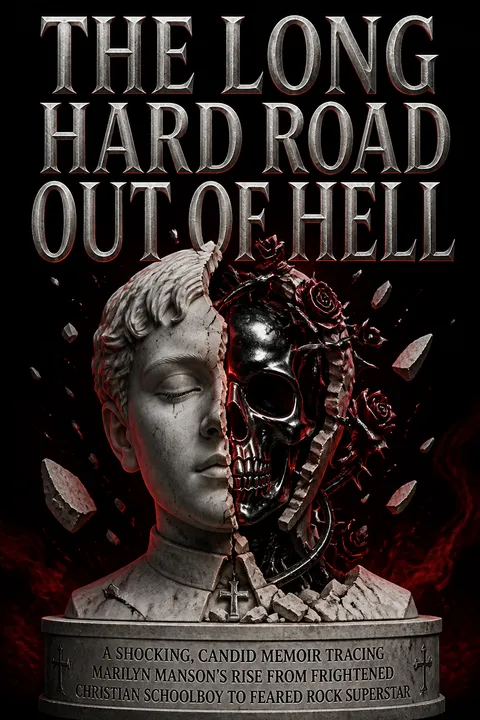
Fear was taught. At Christian school, Brian Warner was told that bar codes might mark people for the apocalypse, and that refusing Christianity could bring horrific punishment. The warnings frightened him, but when the predicted end never came, fear gave way to suspicion. He came to see the school’s rules and certainty as a source of the distress they claimed to rescue children from.
Private life complicated piety. As a boy, he and his cousin explored his grandfather’s cellar and discovered pornography and other hidden objects. The contrast between public respectability and private secrets fed his distrust of moral authorities. His account presents rebellion not as a sudden pose, but as a response to rules that made difference feel dangerous and dishonesty seem normal.
What's striking is how prohibition becomes an unintended curriculum. The school teaches not only what to avoid, but which forbidden things promise escape, excitement, and identity. Psychological reactance, the familiar tendency to resist perceived control, helps explain why rigid rules can strengthen the appeal of whatever they ban. Yet this is not a universal argument against religious education. The memoir describes a particular atmosphere of frightening certainty and punishment. Its sharper lesson is that institutions lose credibility when they demand conformity while refusing honest questions.
Turn rejection into a creative practice, not a verdict on your worth
Writing came first. In Florida, Warner sent stories and poems to magazines and collected rejection letters. One short story appeared in a small publication, but most submissions went nowhere. He kept writing, worked as a music journalist, and began reading poems at an open-mike night. Audience members told him the poetry was poor but his voice might suit a band. He resisted, then recognized a possible route to reach people.
Make the work anyway. Before forming a group, he tried selling candy, homemade magazines, and music at Christian school, often breaking rules and getting caught. These schemes were not admirable models of conduct, but they show an early instinct to turn limited access into self-made opportunity. The band began when his writing found a form that could travel beyond the page.
The useful distinction here is between rejection and information. A rejection letter says a piece did not fit one editor's needs; it cannot reliably judge the writer's future. Warner's open-mike audiences supplied a different kind of feedback: perhaps the material was not working, but the voice had force. In creative work, that separation can preserve persistence without requiring denial. The memoir also complicates the familiar romance of the outsider: inventiveness can generate opportunity, but rule-breaking and manipulation can injure other people.
Use a persona to expose the contradictions respectable people conceal
A name became an idea. Warner chose Marilyn Manson as a stage name by combining the images of Marilyn Monroe and Charles Manson. He meant the pairing to hold glamour and violence, innocence and menace, in the same frame. He had also found that people who presented themselves as wholly moral often concealed ordinary desires and contradictions. The name offered a way to make that split visible rather than pretend it did not exist.
The mask became the band. He first needed a pseudonym to write about his own music in a publication where he worked. The invented identity soon became the center of the group’s public image. The memoir argues that the persona was both performance and personal expression, not simply a character that could be switched off. That ambiguity gave the work its charge, and made it harder to separate the artist from the image.
The persona functions like a theatrical mask: it can reveal truths that polite speech hides, while also giving its creator room to experiment. Branding works similarly. A recognizable identity makes complex ideas legible, but it can flatten them into a single symbol, especially when audiences fixate on the most sensational half. The memoir sees the name as a deliberate study of contradiction. Its risk is that a public character can become a demand: once people expect menace, ordinary vulnerability may seem like failure.
Shock earns attention only when the provocation carries an argument
Disgust was deliberate. In early shows, the band used staged gore, cages, fake wounds, and messy props to unsettle audiences. Warner says the point was to challenge assumptions about innocence, violence, religion, and entertainment. For example, a piñata that he urged the audience not to break contained animal offal, turning the crowd’s predictable curiosity into part of the spectacle. A staged shower of chocolate syrup from a papier-mâché cow mocked the boundary between artifice and cruelty.
The method had costs. The performances also included self-injury and scenes of sexual humiliation. The memoir frames many as performance art, but a claimed message does not settle questions about consent, safety, or the people turned into material. Warner wanted audiences to think about their own reactions. Their reactions were part of the artwork, but not proof that every stunt made its intended point.
Provocation can work as an attention device: it interrupts routine perception and forces an audience to ask why an image feels intolerable. That does not make shock inherently insightful. A useful test is whether the audience can identify the target of the critique, or whether the spectacle merely reproduces the harm it claims to expose. Performance also distributes risk unevenly. The artist may control the framing, while participants and viewers bear consequences that the concept cannot fully predict.
Ambition without boundaries can turn creative freedom into self-destruction
The album stalled. Warner imagined Antichrist Superstar as a transformation from an insecure outsider into a figure powerful enough to shake the culture around him. In New Orleans, the recording sessions instead became consumed by drugs, conflict, and delay. The band spent months talking about the album while producing little; equipment was damaged, members fell out, and Warner felt increasingly isolated from both his collaborators and his own work.
A crisis forced a choice. After a drug-related collapse landed him in a hospital, he returned to the same unfinished project and same damaging habits. He eventually stopped using drugs and began recording with a different producer, Sean Beavan, rather than keep waiting for approval from people who had lost faith in the direction. In his account, the album became possible when he stopped treating chaos as proof of artistic seriousness.
The memoir usefully separates intensity from productivity. Creative mythology often romanticizes exhaustion and excess, as though damage proves commitment. But a project also needs attention, repeatable work, and enough stability for collaborators to disagree without destroying the process. The recording sessions show how an idea can be both motivating and consuming. Warner's change of course restores agency, though the story cautions against treating a dramatic crisis as a necessary route to clarity. A safer lesson is to notice when the conditions around the work are preventing the work.
Never let an artistic concept turn vulnerable people into props
Confession was not a cure. On tour, Warner and tour manager Tony Wiggins invited fans to tell them painful secrets. One young woman described sexual abuse by boys and then by her father. Warner recalls feeling unable to offer more than reassurance. In another episode, Wiggins restrained a runaway boy during questioning until the tour crew heard that police were nearby. The memoir presents these encounters as attempts to understand fans, but also reveals how unprepared and unsafe the situation could be.
Consent needs context. Elsewhere, the book recounts scenes of sexual degradation involving fans, crew, and band members, often described as willing participants. Fame, intoxication, group pressure, and the desire to belong can complicate that willingness. A performance may intend to expose cruelty, yet still use real people’s vulnerability as material. The gap between artistic intention and a participant’s actual experience is part of the story, not a detail the concept can erase.
The scenes expose a sharp boundary between making art about vulnerability and taking responsibility for a vulnerable person. A performer can attract disclosures without having the training or setting to respond safely. Power differences matter too: a fan may agree while seeking acceptance from an admired artist, and intoxication can further cloud what meaningful consent looks like. The memoir's candor makes this tension visible, but candor alone does not repair harm. Ethical provocation requires planning for participant welfare, not just audience impact.
Notice when drugs become the work's substitute, not its tool
The judgment was inconsistent. Warner recalls looking down on his bassist Brad Stewart for heroin addiction, treating it as weakness even as Stewart’s drug use disrupted the band and nearly killed him. Later, Warner's own cocaine use became part of the New Orleans recording routine. He describes days lost to getting high, rising paranoia, and a hospital stay after a dangerous episode involving drugs and his irregular heartbeat.
Dependence changes the question. Earlier in the memoir, he jokes that he can tell a user from an addict by whether drugs run their life. In practice, he finds himself using substances to work, sleep, and manage daily life. He eventually stops, recognizing that the drugs are consuming the time and ambition he wants to devote to music. The turning point is not a claim that he has solved every problem, but that he sees the contradiction clearly enough to act.
This arc is most persuasive where it punctures the narrator's earlier moral certainty. Addiction is not a tidy contest between strong and weak character; it can narrow choice while making a person defend the very habit that is taking over. The distinction between using a substance and needing it is a useful self-check, although it cannot diagnose a disorder by itself. The memoir's experience also argues against stigma: contempt for another person's dependence is a poor safeguard against developing dependence oneself.
Public outrage can magnify a persona, while falsehood poisons the debate
The accusations escalated. As the band drew attention, religious organizations, politicians, and venues opposed performances. The book reproduces affidavits that it identifies as fabricated, including lurid claims of animal abuse, rape, and drugging children. Warner says these stories turned a controversial stage act into a public menace that many people believed without checking. In New Jersey, a court issued a preliminary injunction allowing the band to perform at Giants Stadium after the venue barred it on moral and safety grounds.
Attention is not vindication. The controversy helped make the band more visible, a result that suited the shock strategy in one sense. But fabricated allegations are not simply free publicity: they blur the line between documented performance and invented misconduct, making serious criticism harder to distinguish from panic. The memoir treats censorship as proof of hypocrisy, while its own record of reckless stunts makes the underlying debate more complicated.
The case joins two distinct questions: whether offensive performance should be protected, and whether accusations about it are true. Collapsing them weakens both free-expression arguments and legitimate scrutiny. Publicity can reward the spectacle of outrage, creating a feedback loop in which each side benefits from portraying the other as extreme. The court's preliminary order, as described here, addresses access to a venue, not the truth of every claim or the ethics of every performance. Careful evidence matters most when the subject is already polarizing.
Track when the persona you built starts resembling what you feared
Success changed the mirror. By 1997, Antichrist Superstar had reached number three on the charts, and Warner was performing for huge audiences. Yet he describes recognizing in himself traits he once associated with feared adults: anger, secrecy, and a capacity to treat others as objects. Returning to his grandfather’s cellar after the man’s death, he sees how much he has come to resemble the figure who horrified him as a child.
The ending stays unsettled. The book also records Warner's guilt after a roadie's death and his renewed appreciation of his parents' support. These moments do not undo the damage described elsewhere, nor do they offer a clean redemption. They show a person beginning to question the cost of the identity he built. The memoir's final tension is that becoming powerful did not guarantee becoming free of the patterns that shaped him.
The basement return gives the memoir's transformation a moral shape: the child who studied a frightening adult recognizes parts of that adult in himself. Identity is not only what a person declares; it is also the pattern others experience. Success can validate a public persona while concealing its costs to relationships and judgment. The memoir's self-critique is valuable precisely because it remains incomplete. Recognition is not the same as repair, but it is a necessary condition for choosing differently.
Analysis
This memoir is both a rise-to-fame narrative and an argument about who gets to define deviance. Its central movement is from frightened child to deliberately constructed public menace, then toward the recognition that a persona can become a trap. The early Christian-school lessons make transgression vivid; the band turns that forbidden material into a performance; the backlash then supplies a national stage. The same cycle fuels artistic reach and narrows the narrator's ability to be seen outside the image.
The book's most revealing conflict is not simply between artist and censor. It is between the stated purpose of exposing hypocrisy and the actual treatment of people caught inside the spectacle. Warner describes some stunts as critique, but also recounts reckless drug use, humiliation, self-injury, and situations where fans' vulnerability becomes part of the show. Those details resist a flattering account in which intention alone makes harm meaningful. The memoir's force comes partly from this unresolved contradiction.
Its voice is intentionally provocative, funny, and self-dramatizing. That style makes scenes memorable, but readers should distinguish recollection, interpretation, and verified public record. The book itself labels some accusations against the band as fabricated; its own sensational episodes are still the narrator's account, not independent corroboration. This matters because the memoir is not a neutral report. It is also an act of image-making, written by someone who understands the power of an outrageous story.
The durable insight is therefore double-edged: cultural conformity can produce the rebellion it fears, but rebellion does not automatically become liberation. Art can force people to inspect their assumptions, yet the artist remains accountable for how the provocation affects actual people. The story's achievement is not a clean conversion from weakness to power. It is the harder recognition that power can reproduce the very cruelty it was meant to oppose.
Review Summary
People Also Read





Glossary
Delusional Self
Belief in personal influenceWarner's term for his belief that thoughts and speech shape events around him, making apparent coincidences feel connected to his own life. He extends the idea into a conviction that dreams may reveal or affect reality. The memoir presents this as his personal worldview, not as a psychological finding or a validated method.
Antichrist Superstar
Album and transformation conceptThe title of Marilyn Manson's 1996 album and the central transformation it represents in the memoir. Warner frames it as the movement from an insecure outsider toward a powerful, feared figure, using apocalyptic and religious imagery to challenge conventional morality and public conformity. The album's making becomes inseparable from the conflicts and self-destruction surrounding it.
Marilyn Manson and the Spooky Kids
Early band nameThe name of Warner's early South Florida band before it was shortened to Marilyn Manson. The group combined his writing and stage persona with industrial and rock music, theatrical makeup, and confrontational performance art. Its local shows gave the concept an audience and helped establish the deliberately unsettling identity that later reached a national scale.
Download PDF
Download EPUB
.epub digital book format is ideal for reading ebooks on phones, tablets, and e-readers.








