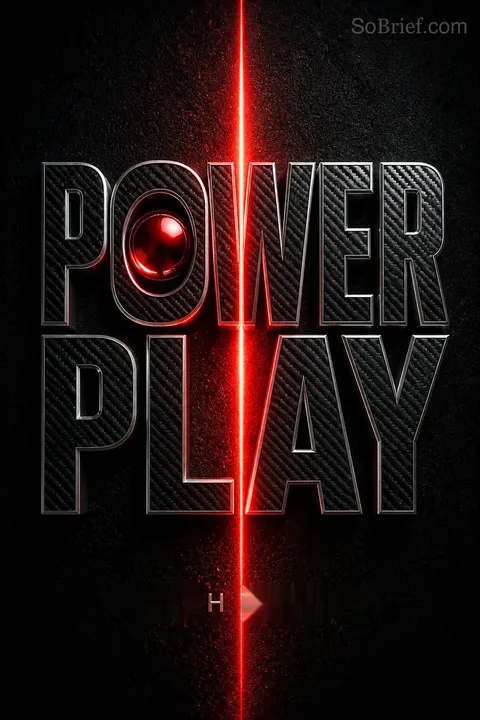


Key Takeaways
Make the electric car desirable before trying to make it cheap
Start with the battery. Tesla grew from a practical engineering insight: lithium-ion cells, familiar from laptops, could be assembled into a lighter, more powerful car battery than the older lead-acid packs. JB Straubel and other early EV engineers saw a route to long range, while Martin Eberhard wanted an electric car with the speed and appeal of a sports car. The failed GM EV1 had shown the trap of trying to sell an expensive, short-range electric car to ordinary buyers.
Sell excitement first. Eberhard’s answer was the Roadster, a high-priced sports car built around electric performance. Its quick acceleration made the technology tangible in a way that spreadsheets and environmental arguments could not. The strategy did not solve battery costs, but it gave electric cars a new image and drew attention from customers, suppliers, and investors.
The move resembles a classic technology adoption pattern: early buyers pay a premium for performance or novelty, helping a technology gain visibility before broader affordability arrives. Tesla’s choice also challenged the assumption that environmental products must win through virtue alone. A car could be lower-emission and thrilling. The limitation is that prestige products do not automatically finance mass adoption. A premium launch can validate demand, but it can also trap a company in a narrow market if costs and production learning fail to improve.
Turn each premium model into a stepping stone toward mass adoption
A ladder, not a leap. Elon Musk’s plan linked three products: first an expensive sports car to attract attention and capital, then a luxury sedan at a lower price, then a more affordable car for a much larger market. The Roadster was meant to fund development of the Model S, and the Model S to build experience and credibility for the Model 3. The plan made Tesla’s first product part of a longer industrial strategy, rather than a profitable destination in itself.
The promise drew believers. Musk’s 2016 Model 3 reveal offered a $35,000 starting price. More than 115,000 people placed deposits soon after the event, and reservations eventually exceeded 500,000. That response suggested enormous interest, but a reservation was not a delivered, profitable car. The gap between desire and affordable production remained the central test.
This is a form of strategic sequencing: use a smaller, higher-margin market to develop capabilities that a broader market requires. The logic appears in industries from computing to renewable energy, where early specialized products can help establish suppliers, expertise, and consumer confidence. Yet each step must create transferable learning, not merely brand heat. A company can mistake a waiting list for validated economics. The crucial measures are conversion, production cost, and repeatable delivery, not applause at a launch.
In carmaking, cash flow can kill a profitable-looking plan
Factories consume cash early. Tesla’s founders estimated that the Roadster would cost about $49,000 to build and expected to reach profitability after selling a few hundred. The real costs rose sharply. By 2007, outside reviewers estimated early cars could cost far more than the intended selling price, while Tesla lacked a reliable bill of materials and a clear account of what parts actually cost. Even a product with buyers could threaten the company if every vehicle drained cash.
Timing matters as much as margin. Batteries bought in Japan, assembled in Thailand, installed in the United Kingdom, and shipped to California created a long payment cycle. Suppliers needed money before Tesla could collect from customers. During the 2008 financial crisis, Tesla had only about $9 million in cash, and Musk put personal money into payroll and expenses. The company survived through new financing, supplier deals, layoffs, and his willingness to risk nearly everything.
This distinction between accounting profit and liquidity is fundamental in capital-intensive businesses. A factory can show attractive unit economics on paper and still fail because wages, inventory, and supplier invoices come due before sales receipts arrive. The story also shows why operational visibility matters: without dependable cost data, leaders cannot tell whether growth is improving the business or accelerating its losses. Musk’s personal financing bought time, but relying on a founder’s fortune is not a scalable substitute for working capital discipline.
Founder vision can attract capital while concentrating dangerous control
Control changed the company. Musk initially invested heavily in Tesla and became chairman while Eberhard served as CEO. As funding needs grew, Musk’s influence grew with them. In 2007, after a review exposed severe cost and schedule problems, Eberhard was removed and eventually pushed out of the company he had founded. The episode reflects a genuine tension: Eberhard had initiated the business and helped bring the Roadster into being, while Musk supplied much of the capital and pressed for a larger ambition.
A forceful style had costs. Musk challenged conventional assumptions, moved quickly, and intervened in product decisions. That could break deadlocks, but executives who disagreed could lose authority or their jobs. Tesla’s leadership changed repeatedly, and the public company did not adopt a dual-class share structure that would have formally protected Musk’s control. His influence remained immense, but it depended on ownership, board relationships, and investor belief.
Founder-led companies can preserve a coherent product vision when established institutions are cautious or fragmented. The same concentration can also suppress information and make succession difficult. Organizational research distinguishes productive dissent, which surfaces risks, from personal opposition, which leaders may interpret as disloyalty. Tesla’s history presents both sides: decisive control helped keep an unusually ambitious project alive, yet it also made candor costly. A useful governance question is not simply whether a founder has power, but whether the organization can correct that founder.
Sell the experience customers need, not merely the machine
The test drive did the selling. Tesla learned that many people were interested in electric cars but failed to buy. Tim Watkins and Antonio Gracias found that a ride in the Roadster, especially its immediate acceleration, was often the emotional turning point. They built a mobile sales team around events and test drives instead of relying only on expensive stores. Bookings rose sharply after the company made the experience easier to try.
Retail became education. George Blankenship, who had helped create Apple’s stores, designed Tesla showrooms as places to encounter and understand an unfamiliar product. Staff acted more like product guides than traditional dealership salespeople. Direct sales also let Tesla control the customer relationship, though state franchise laws blocked the model in some places. Tesla used educational galleries and remote ordering to work around those restrictions.
The approach recognizes that adoption depends on reducing uncertainty, not just presenting features. A test drive let customers experience instant torque, while a showroom could answer questions about charging and ownership. This is especially valuable for products that ask consumers to change routines. But Tesla’s own experience shows that education must connect to competent follow-up and service. A welcoming store cannot compensate for missed sales calls, long repair waits, or confusion about financing. Customer experience is a whole operating system, not a room design.
At scale, reliable processes beat heroic midnight rescues
Building cars is its own invention. Tesla repeatedly learned that designing a compelling vehicle and producing it consistently are different achievements. The Model S launch involved hand-built cars, improvised workstations, and repairs after assembly. For the Model X, Musk’s elaborate falcon-wing doors, late design changes, and difficult parts pushed teams into last-minute reconstruction. The spectacle of a successful launch could conceal a factory that was not yet ready to repeat the result.
Automation was not a shortcut. For the Model 3, Musk pushed an extremely automated factory concept, later nicknamed the Alien Dreadnought. Robots were packed so tightly that workers struggled to reach and repair them. In 2018, Tesla added less automated assembly lines, and people helped reach the target of 5,000 cars in a week. Musk acknowledged that excessive automation had been a mistake. The practical lesson was not that robots were useless, but that automation must fit the process and the factory’s capacity.
Manufacturing is a sociotechnical system: equipment, software, workers, suppliers, and workflow must function together. Automation can increase speed only when the task is stable and the equipment can be maintained. Otherwise it converts ordinary variation into expensive stoppages. Tesla’s late-night recoveries display improvisational strength, but repeated rescue should be treated as evidence that the process is not controlled. In high-volume production, the quiet achievement is not one record week. It is a predictable line that produces good vehicles again tomorrow.
Speed without feedback creates safety and labor debts
Risks do not vanish under pressure. Tesla’s engineers knew lithium-ion cells could overheat and trigger thermal runaway, a chain reaction in which one failing cell ignites nearby cells. The company developed ways to limit heat propagation, but later Model S fires showed another vulnerability: road debris could puncture the battery pack. Engineers used software to raise the car’s suspension temporarily, then added physical protection. In 2016, a driver died while using Autopilot, Tesla’s driver-assistance system for functions such as lane keeping and adaptive cruise control. The crash exposed the danger of users treating assistance as full autonomy.
Workers carry production strain. During Model X and Model 3 ramps, employees reported injuries, unpredictable overtime, and pressure to keep flawed parts moving. The factory’s injury rate exceeded the industry average in 2015. A union drive gathered support, but Tesla fired worker Richard Ortiz, a decision later found to violate labor law by the National Labor Relations Board.
Safety engineering depends on feedback loops: near misses, defects, worker reports, and field failures must travel upward quickly enough to change design and practice. A culture that rewards speed but treats warnings as obstruction weakens those loops. Tesla’s rapid software response to battery fire risks shows the advantage of a connected, updateable vehicle. Yet software cannot erase the need for physical safeguards, attentive drivers, or protected workers. The challenge is to make speed compatible with dissent, rather than requiring people to choose between raising a concern and keeping their place.
A compelling story buys time, but trust remains the real balance sheet
Belief financed the bet. Investors valued Tesla more like a technology company than a conventional automaker, giving it access to capital despite years without annual profit. Its 2013 quarterly profit included $68 million from selling regulatory credits to automakers that needed help meeting emissions rules. Short sellers argued that the valuation outran production and earnings; supporters saw a company forcing the industry toward electric vehicles.
Publicity could become a liability. Musk’s frequent online attacks and bold promises kept Tesla in the news, but his 2018 claim that funding was secured to take the company private triggered an SEC investigation. He eventually settled, paid a fine, gave up the chairman title temporarily, and accepted review of certain public statements. His proposed acquisition of SolarCity, a financially troubled company tied to his family, also raised concerns about conflicts of interest and governance. The story that attracted capital could also weaken confidence.
Narrative is not merely decoration for a young company. It coordinates employees, attracts customers, and gives investors a reason to fund uncertain development. But narrative has a credibility budget. If forecasts repeatedly outrun evidence, stakeholders begin pricing in the possibility that disclosures are promotional rather than informative. Tesla’s case also complicates the simple claim that markets reward fundamentals alone: investor enthusiasm and regulatory-credit income helped sustain the business, while scrutiny of governance and execution remained justified. Hope can finance a bridge, but it cannot replace the far bank.
Scale suppliers and geography before promising mass adoption
Batteries set the ceiling. Tesla’s Model 3 ambitions depended on lower battery costs and far greater supply. The Nevada Gigafactory was conceived with Panasonic to expand production and reduce shipping and manufacturing costs. The plan required billions of dollars and a huge site, and its early operations suffered from crowded automation, wasted materials, and delays. Tesla’s later effort to secure additional battery suppliers reflected a hard-won lesson: a single partner can become a bottleneck.
A global factory changed the odds. Tesla’s Shanghai plant began with a muddy site in January 2019 and was producing cars by the end of that year. Local support, lower-cost construction, and lessons from Fremont helped the company move faster. By 2020, the China operation offered a second production base as the pandemic shut Fremont temporarily. Tesla reached profitability across 2020, but its growth still relied on capital access, regulatory credits, and strong demand, leaving the long-term contest unsettled.
Scaling a new technology requires more than a successful prototype. It requires supplier capacity, manufacturing knowledge, distribution, and service that can grow together. Tesla’s move from dependence on one battery maker toward multiple sources reduced a strategic vulnerability; its Shanghai plant added geographic resilience. The experience also cautions against treating scale as a single factory target. Local institutions, labor markets, regulation, and logistics shape what can be replicated. A scalable product needs a scalable ecosystem, and those systems mature at different speeds.
Analysis
Power Play is strongest as a history of industrial learning under financial pressure, not as a simple portrait of a singular genius. Tesla’s story repeatedly moves between two worlds: Silicon Valley’s preference for rapid iteration and Detroit’s accumulated knowledge of quality, cost, suppliers, and repeatable production. The company’s advantage came partly from refusing assumptions that incumbents treated as fixed. Its weakness came when it treated hard-earned operational disciplines as mere bureaucratic drag.
The product sequence is central. The Roadster made electric performance vivid, the Model S established that an electric sedan could compete on desirability, and the Model 3 tested whether the proposition could reach a much larger market. But the ladder required each stage to deliver more than publicity. It needed to build engineering capability, supplier confidence, cash, and manufacturing competence. Tesla’s repeated production crises reveal that these assets do not automatically accumulate just because a company launches another model.
Musk’s leadership is portrayed as both a resource and a hazard. His willingness to risk personal wealth and force attention onto a neglected technology gave Tesla unusual staying power. His impatience with dissent and tendency to promise before execution were costly, especially as the company became publicly traded and operationally complex. The book’s reporting also restores people often eclipsed by the founder narrative: Eberhard’s original commercial insight, Straubel’s battery work, Watkins’s operational diagnosis, and many employees’ factory labor.
The result is neither a straightforward triumph nor a debunking. By 2020, Tesla had helped establish electric vehicles as a serious direction for the global industry and built capacity that once seemed implausible. Yet the evidence of success coexisted with uneven quality, contentious labor relations, volatile finances, and dependence on investor confidence. The lasting lesson is that technological disruption is not a moment of invention. It is the difficult coordination of product, capital, institutions, and people, repeated until the extraordinary becomes dependable.
Review Summary
Power Play receives mixed reviews, with an average rating of 4.09 out of 5. Many readers find it an engaging and well-researched account of Tesla's history, praising its detailed insights into the company's challenges and Elon Musk's leadership. Some criticize the book's potential bias and dramatization, while others appreciate its balanced portrayal. Readers note the book's fast pace and comprehensive coverage of Tesla's journey, though some question its accuracy. Overall, it's considered a worthwhile read for those interested in Tesla, Musk, or corporate history.
People Also Read






Glossary
Secret Tesla Motors Master Plan
Three-stage product strategyMusk’s strategy for using an expensive electric sports car to attract attention and generate resources, then developing a lower-priced luxury sedan, and finally a more affordable mass-market car. The Roadster, Model S, and Model 3 were intended to represent successive steps. The plan also connected electric vehicles with sustainable electricity generation.
thermal runaway
Battery overheating chain reactionA dangerous battery failure in which an overheated or defective cell releases intense heat and can ignite neighboring cells. Because Tesla’s early battery packs contained thousands of lithium-ion cells, a single failure could potentially spread through the pack. Tesla engineers tested spacing, cooling, and heat-dissipating materials to reduce the risk.
first principles thinking
Reason from basic factsA problem-solving approach that questions inherited assumptions and rebuilds an answer from fundamental constraints. At Tesla, the method meant not accepting a conventional automotive design or process merely because established companies used it. The approach encouraged novel engineering, but it did not remove the need to account for safety, cost, and manufacturing limits.
Gigafactory
Large-scale battery factoryTesla’s name for its large battery-production facility developed with Panasonic in Nevada. The project was meant to increase lithium-ion cell and battery-pack supply, reduce manufacturing and shipping costs, and support lower-priced vehicles at far greater volume. Its scale was itself a major gamble, requiring extensive capital, construction, equipment, and coordination between partners.
Alien Dreadnought
Highly automated factory conceptMusk’s label for an ambitious vision of a densely packed, heavily automated Model 3 production system. The concept aimed to increase speed and reduce reliance on human labor. In practice, tightly arranged robots were difficult to access and troubleshoot, and automation became a production bottleneck. Tesla added more manual assembly capacity to raise output.
Autopilot
Driver-assistance softwareTesla’s driver-assistance system, which included functions such as adaptive cruise control and lane keeping. It was not a fully autonomous driving system, and drivers were expected to remain attentive and ready to take control. The 2016 fatal crash involving a Model S using Autopilot intensified scrutiny of how the system worked and how Tesla described its capabilities.
FAQ
What's Power Play: Tesla, Elon Musk, and the Bet of the Century about?
- Tesla's Journey: The book chronicles Tesla's rise, detailing the challenges and triumphs faced by the company and its CEO, Elon Musk. It explores the electric vehicle industry and Tesla's revolutionary impact.
- Elon Musk's Vision: It highlights Musk's ambition to create sustainable energy solutions and his relentless pursuit of innovation, portraying his unique leadership style and the risks he took.
- Industry Context: The narrative provides insights into the automotive industry, detailing the historical context of electric vehicles and the competition Tesla faced from established automakers.
Why should I read Power Play: Tesla, Elon Musk, and the Bet of the Century?
- In-depth Analysis: The book offers a comprehensive look at Tesla's history, making it a valuable resource for anyone interested in business, technology, or environmental issues.
- Lessons in Leadership: Readers can learn about Musk's unconventional leadership style and how it influenced Tesla's culture and operations, illustrating the importance of vision and resilience.
- Understanding Innovation: It sheds light on the complexities of innovation in the automotive sector, particularly in the context of electric vehicles, highlighting the interplay between technology and market dynamics.
What are the key takeaways of Power Play: Tesla, Elon Musk, and the Bet of the Century?
- Importance of Vision: A clear vision is crucial for driving innovation and change, as demonstrated by Musk's transformative goals for Tesla.
- Navigating Challenges: The book illustrates the significance of perseverance in overcoming financial crises and production delays, serving as a reminder that success often requires navigating difficult times.
- Collaboration and Teamwork: It highlights the role of collaboration among Tesla's team members, underscoring the importance of leveraging diverse talents and perspectives.
What are the best quotes from Power Play: Tesla, Elon Musk, and the Bet of the Century and what do they mean?
- “This is really important for the future of the world.”: Reflects Musk's belief in the transformative potential of electric vehicles and sustainable energy, encapsulating Tesla's mission-driven approach.
- “Either they become a niche manufacturer like Porsche or Maserati...or they crack the code on a $30,000 car.”: Highlights the critical juncture Tesla faced in scaling production while maintaining quality and affordability.
- “I’m doing this because I believe in the goddamn mission.”: Reveals Musk's deep personal investment in Tesla's success, illustrating the passion and determination that drive him as a leader.
How did Elon Musk's leadership style impact Tesla's development in Power Play: Tesla, Elon Musk, and the Bet of the Century?
- Visionary Leadership: Musk's strong vision for the future inspired his team and attracted investors, positioning Tesla as a leader in the industry.
- Risk-Taking Approach: Known for taking significant risks, Musk often bet his own fortune on Tesla's success, a strength and source of controversy.
- Hands-On Involvement: Musk's direct involvement in technical details fostered a culture of innovation but also led to tensions within the team.
What challenges did Tesla face in its early years, as described in Power Play: Tesla, Elon Musk, and the Bet of the Century?
- Financial Struggles: Tesla faced severe financial challenges, including cash flow issues and the need for continuous funding, often on the brink of bankruptcy.
- Production Delays: Numerous production delays hindered Tesla's ability to deliver vehicles on time, exacerbated by supply chain issues.
- Market Competition: Tesla contended with skepticism from established automakers and the broader market, facing pressure to prove itself in a competitive landscape.
How did Tesla's Model 3 become a pivotal product, according to Power Play: Tesla, Elon Musk, and the Bet of the Century?
- Mass Market Appeal: Designed to be an affordable electric vehicle, the Model 3 aimed at a broader audience, crucial for making electric cars mainstream.
- Production Goals: Ambitious production targets for the Model 3 were essential for Tesla's long-term viability, determining its ability to scale and compete.
- Investor Confidence: The Model 3's launch restored investor confidence, representing a significant step toward profitability and demonstrating market demand for electric cars.
How did Tesla's partnerships with other companies influence its success, as outlined in Power Play: Tesla, Elon Musk, and the Bet of the Century?
- Strategic Collaborations: Partnerships with companies like Panasonic for battery technology were critical, allowing Tesla to leverage existing expertise and resources.
- Supply Chain Management: Collaborations helped Tesla navigate supply chain challenges, ensuring quality and reliability while focusing on core competencies.
- Market Validation: Partnering with reputable companies provided market validation, enhancing Tesla's credibility and positioning it as a serious player in the industry.
How did Tesla's marketing strategy differ from traditional automakers, as described in Power Play: Tesla, Elon Musk, and the Bet of the Century?
- Direct Sales Model: Tesla sold cars directly to consumers, bypassing traditional dealerships, allowing greater control over the customer experience.
- Leveraging Social Media: Tesla utilized social media to engage with customers and build a community, creating a loyal customer base and generating buzz.
- Focus on Experience: Emphasizing customer experience, Tesla offered test drives and events to showcase its vehicles, contrasting with conventional marketing tactics.
What role did the Gigafactory play in Tesla's future, according to Power Play: Tesla, Elon Musk, and the Bet of the Century?
- Battery Production: Central to reducing battery costs and increasing production capacity, the Gigafactory aims to achieve economies of scale for affordability.
- Sustainability Goals: Designed to be powered by renewable energy, the Gigafactory aligns with Musk's vision of sustainability, a key aspect of Tesla's brand.
- Job Creation: The Gigafactory's construction and operation are expected to create thousands of jobs, contributing to local economies and gaining government support.
How did Tesla's acquisition of SolarCity impact the company, as discussed in Power Play: Tesla, Elon Musk, and the Bet of the Century?
- Increased Debt Load: The acquisition significantly increased Tesla's debt, raising concerns about financial health and sustainability.
- Strategic Integration: Musk aimed to integrate solar energy solutions with Tesla's vehicles, creating a sustainable energy ecosystem, but faced execution challenges.
- Investor Skepticism: The deal was met with skepticism, questioning its rationale and potential to distract from Tesla's core automotive business.
What are the implications of Tesla's growth for the automotive industry, as portrayed in Power Play: Tesla, Elon Musk, and the Bet of the Century?
- Shift to Electric Vehicles: Tesla's success accelerated the industry's shift toward electric vehicles, prompting traditional automakers to invest in EV technology.
- New Market Dynamics: Tesla's rise changed market dynamics, with new entrants and startups increasing competition and innovation in the electric vehicle space.
- Sustainability Focus: Tesla's emphasis on sustainability influenced consumer preferences and regulatory policies, pushing the industry to consider environmental impacts.
Download PDF
Download EPUB
.epub digital book format is ideal for reading ebooks on phones, tablets, and e-readers.








