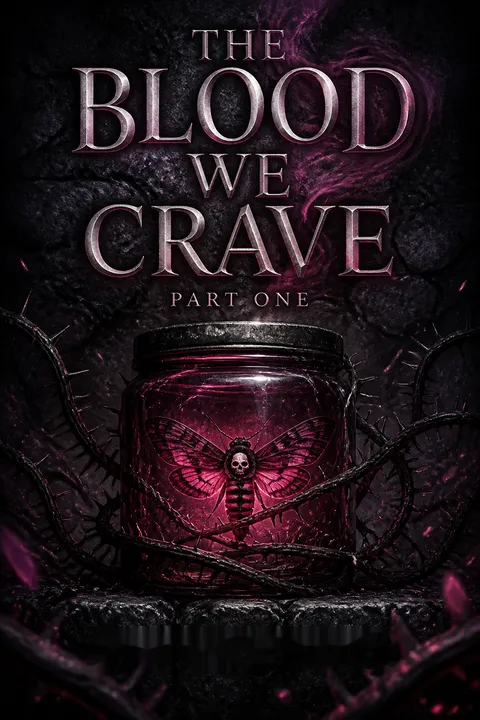


Plot Summary
Prologue
At nearly eight, Scarlett Abbott wakes to her mother Phoebe’s fear and is hidden in a closet as Henry Pierson enters their home. Henry kills Phoebe while Scarlett watches through a crack in the door. When Henry’s young son Thatcher is left alone with the body, Scarlett strikes him with a shoe and demands to know what he has done.
Instead of killing her, Thatcher places coins on Phoebe’s eyes, explains their meaning, and tells Scarlett to hide from his father. She obeys. The boy who could have finished the murder lets her live, and the two children carry the secret of that night into adulthood.
The closet makes survival inseparable from helpless witness: Scarlett lives because she remains unseen, but the hiding place also becomes the scene where her childhood self fractures. Thatcher’s small act of care, the coins for Phoebe, complicates his role before the story can settle into a simple victim-and-monster pattern. The children are shaped by the same violence in opposite directions. Scarlett remembers the mercy as a bond; Thatcher treats it as a failure he must bury. Their later fixation grows from an asymmetry neither can escape: she was saved by the boy who was meant to help kill her.
The Ghost Wants Lessons
Years later, Lyra Abbott is a Hollow Heights student whose insect displays, solitary habits, and silent devotion to Thatcher Pierson keep her close to the boy who once spared her. She follows his routines, collects his discarded clothes, and has recently killed a man while protecting him, awakening urges she cannot manage.
When her friends return to Ponderosa Springs, Lyra asks Thatcher to teach her how he lives with the desire to kill. He refuses, insisting she already is a killer, then turns her request into a wager: if she wins their dangerous game of tag, he will teach her; if she loses, she must stop pursuing him. Lyra accepts, choosing risk over remaining alone with her appetite.
Lyra’s stalking is not presented as ordinary courtship but as an attempt to remain near the one person who shares her buried history. Her request for instruction disguises a more urgent need: she wants someone to name the impulses she fears and show her they can be survived. Thatcher’s wager converts intimacy into a contest he can control, echoing the rules that governed his childhood. Yet Lyra accepts on her own terms. The central tension begins as a struggle over who gets to define her: the girl who hides, the killer she fears, or the student Thatcher claims he can discipline.
A Killer Composes
Before the game, Thatcher’s own routine reveals what Lyra is asking to learn. In a hidden basement, he tortures Walter Hendricks, a man who murdered young women, while working out a piano composition inspired by the hunt. Thatcher sees himself not as his father’s copy or a public avenger but as a more exacting killer who targets other murderers to prove his superiority.
His victims’ fear gives him the power he believes his father took from him, and his careful methods distinguish him from Henry’s impulsive brutality. After Walter dies, Thatcher records another kill in his private count. His artistry and discipline do not restrain his violence; they give it a form he can claim as his own.
Thatcher’s self-image depends on a distinction between inheritance and authorship. He admits Henry helped shape his violence, but treats technique as proof that he has surpassed his father. The piano lets him narrate killing as composition, turning another person’s terror into material for a finished work. His stated target selection may sound like moral judgment, yet the scene makes clear that superiority, control, and the pleasure of mastery drive him more strongly than concern for victims. The book therefore refuses an easy vigilante alibi: Thatcher’s code limits his prey, but it does not make his violence benevolent.
Dead Man’s End
At Black Sands Cove, the Hollow Boys turn tag into a hunt through a rain-soaked forest. Briar Lowell is caught in a rope trap, and Lyra and Sage Donahue must burn through the rope before the men reach them. Lyra then knocks Rook Van Doren down with a branch so her friends can escape.
Thatcher tracks her to Dead Man’s End, a cliff above the surf, and waits for her to run out of ground. With seconds remaining, Lyra chooses the drop rather than let him claim the wager. She survives the fall into the water and declares victory. Thatcher is furious at her recklessness, but the bargain now binds him: he must teach the girl he once told to disappear.
The game translates Lyra’s emotional predicament into physical space. Thatcher assumes pursuit will end with her cornered and obedient; the cliff gives her a third option, self-endangerment that turns his control back against him. Her choice is courageous, but the narrative does not disguise its cost or its proximity to self-destruction. Lyra is willing to risk death not because she has no desire to live, but because she believes instruction is her only route to surviving herself. The moment establishes the romance’s volatile grammar: each seeks closeness through danger, and each mistakes peril for proof of connection.
Silas Sets the Course
Thatcher and his friends drive to visit Silas Hawthorne, who is receiving psychiatric care after a severe breakdown. Rook blames himself for Silas’s condition, while Thatcher insists the treatment is necessary and promises the group will bring Silas home when he is ready. The conversation turns to the Halo, a sex-trafficking network connected to fifteen missing girls and Rosemary Donahue’s death.
Thatcher initially wants no further involvement, but Silas makes the stakes personal by asking whether he would act if Rosemary were among the missing. Thatcher agrees to help. Lyra arrives for her weekly chess game with Silas, and Thatcher, unsettled by her closeness to his friend, accepts the teaching bargain and schedules their first lesson.
The visit reveals that the Hollow Boys’ loyalty is both their strongest bond and their chief vulnerability. Rook’s guilt turns Silas’s illness into a private accusation, while Thatcher’s practical assurances try to keep the group from collapsing under it. Silas redirects their attention from abstract risk to Rosemary, making their investigation an act of fidelity rather than civic virtue. Thatcher’s agreement is similarly relational: he will take risks for the people he has chosen, even while denying that care motivates him. Lyra’s arrival unsettles the hierarchy of those bonds, introducing a rival claim on Thatcher’s attention that he cannot comfortably acknowledge.
The Tower Keeps Secrets
Seeking quiet, Lyra studies in the sealed tower above Hollow Heights’ library, a neglected place that feels suited to someone who has spent her life unseen. A hidden door opens onto dark stairs, where she finds a candle and a music box decorated with a moth; someone has left the gift for her, though she cannot identify who.
Later, Briar and Sage bring Lyra information about Coraline Whittaker, a missing girl whose privileged background does not fit the Halo’s usual victims.
A photograph shows Coraline’s father James with Dean Stephen Sinclair, former teacher Greg West, Mayor Frank Donahue, and Lyra’s friendly professor, Conner Godfrey. With several men already dead or under scrutiny, Lyra realizes she can investigate Conner from inside his circle.
The tower and the photograph offer two different models of secrecy. The tower hides a private gift whose sender remains unknown, suggesting that Lyra is being watched by someone who understands her tastes. The photograph makes secrecy political: men who occupy respectable civic roles share a history that may connect them to the missing women. Lyra’s ability to disappear, once a defense against attention, becomes a practical investigative skill. Yet the section also destabilizes her trust in Conner, whose kindness has offered her an alternative to isolation. Her choice to keep him close is both strategic and emotionally costly.
A Grave for Lyra
Thatcher begins Lyra’s lessons in the Pierson family cemetery, where he explains that killing gives him a sense of power over another person’s fear and fate. Lyra describes the first time her own urge surfaced: at eleven, she wanted to kill an older girl who was forcing a younger child to walk over broken glass.
She admits that the impulse later grew beyond protection, sometimes making her wish others would commit wrongdoing so she could justify hurting them. Thatcher says he does not kill children and usually targets people who prey on them, then tells Lyra to accept that she has already killed. He gives her a shovel and orders her to dig a grave exactly six feet deep, using the exercise to test whether she will stay.
The lesson frames recognition, rather than technique, as Lyra’s first obstacle. Thatcher refuses to let her treat the killing she committed as an isolated emergency; he presses her to see a recurring desire beneath it. His own explanation of power reveals the source of his fixation on control, while the grave reproduces a childhood ordeal in which Henry forced him to bury his mother. By making Lyra reenact a piece of his past, Thatcher crosses from teaching into coercion. The exercise gives her a glimpse of his history, but it also shows how readily he repeats the methods that formed him.
A Rose in the Courtyard
During class, Conner offers Lyra an opportunity to apply for a forensic entomology internship, a future built around her passion for insects and crime scenes. Before she can decide what leaving Ponderosa Springs would mean, students find a bleached human leg beside the old campus oak, marked with a rose and a message from Henry Pierson, Thatcher’s imprisoned father.
Lyra relives the night Henry murdered her mother, and Thatcher pulls her away from the crowd before panic overtakes her. In the mausoleum, he gives her a private lesson that turns into their first intimate encounter, mixing his blood and hers with desire. He later receives an anonymous warning to leave town, making the threat feel larger than Henry alone.
The severed limb forces the past into public view, while Lyra’s trauma remains intensely private until Thatcher recognizes its signs. His ability to steady her makes him both a source of safety and the person most capable of reopening her wounds. Their intimacy follows that imbalance: care, power, violence, and desire become difficult to separate. The internship sharpens the conflict by offering Lyra a plausible life beyond the town, but she is not ready to imagine it apart from her friends or Thatcher. The anonymous warning further unsettles the story’s boundaries, leaving open whether the danger comes from Henry, the Halo, or someone exploiting both histories.
The Ghost Becomes Bait
Thatcher reacts to the intimacy by trying to erase it, scrubbing himself in the shower and deciding their lessons must end. His grandmother May challenges his belief that he is only his father’s creation, while a mysterious letter warns him that Ponderosa Springs may become fatal if he stays. Meanwhile, the Hollow Boys ask Lyra to watch Easton Sinclair, Stephen’s son, because he notices when they follow him.
Thatcher opposes the plan, but the group leaves the decision to Lyra. Hurt by Thatcher’s rejection and determined to help the missing girls, she agrees to act as their quiet observer. He fears she will be exposed, though he cannot explain why her safety matters more to him than the others’ judgment.
Thatcher’s retreat shows that intimacy threatens the identity he has built through control. Instead of interpreting his response to Lyra as attachment, he treats it as contamination that can be washed away. May’s intervention offers a counterweight to Henry’s legacy, but it cannot simply absolve Thatcher of what he chooses to do. Lyra’s decision to spy on Easton is likewise double-edged: she is exercising agency and serving her friends, while placing herself inside a danger Thatcher recognizes. His opposition exposes concern he cannot name, and his failure to persuade her reveals the limits of his authority over her.
The Circus Turns Hostile
At Ponderosa Springs’ Halloween Nightmare Circus, Lyra follows Easton through the crowd, hoping to learn how he is connected to the Halo. Thatcher, Rook, and Alistair wait in the parking lot, expecting her to return by nine. When she is late, Thatcher grows alarmed. Easton arrives alone and reveals that he noticed Lyra trailing him, but claims he last saw her leave the circus.
Thatcher attacks him and threatens to kill him, stopping only when Alistair locates Lyra’s phone inside the grounds. The group rushes back. Lyra has disobeyed the plan by following Easton home and entering the Sinclair residence to investigate. Two masked men have abducted her and are torturing her inside the circus tent.
The failed surveillance plan exposes the cost of treating Lyra’s invisibility as a resource without fully accounting for her judgment. Her decision to continue alone is driven by shame at returning without useful information, a familiar pressure to earn her place by taking greater risks. Thatcher’s panic breaks through his usual composure, while his attack on Easton reveals that his concern has become physical and immediate. The circus, designed for staged danger and spectacle, becomes a real space of coercion. Its bright public setting offers no protection when the people in power can isolate Lyra behind the show.
The Blood Tank
The abductors bind and beat Lyra, threaten sexual violence, and prepare to drown her in a tank of pig’s blood. She calls for Thatcher just before they push her under. He and the others reach her in time and pull her from the tank, then capture one of the men while his partner escapes.
Thatcher tortures the captive, Michael, until he admits that Stephen Sinclair hired them and that Easton redirected the attack from Sage to Lyra. Lyra insists on taking part. Thatcher gives her the knife, and she kills Michael by driving blades into his eyes. Her act is deliberate, not a reflex to save Thatcher; she chooses to own the violence she has feared.
The rescue answers Lyra’s childhood abandonment with an action she can consciously register: this time, someone hears her and comes. Yet rescue does not restore innocence or erase what was done to her. Thatcher’s interrogation provides concrete evidence connecting Stephen and Easton to the attack, while Lyra’s decision to kill Michael makes her participant rather than protected object. The scene treats agency as morally complicated: she claims power over the man who harmed her, but she also crosses a threshold she cannot uncross. Thatcher’s approval intensifies their bond while placing their shared violence at its center.
No Clean Escape
After Lyra kills Michael, Thatcher takes her to his estate instead of leaving her to face the aftermath alone. He carries her inside, gives her the privacy of his room, and bandages the cuts and bruises left by the abductors. While tending to her, he notices the freckles on her skin and treats her with a tenderness that contrasts with his earlier cruelty.
Their intimacy deepens into sex, with Lyra’s injuries and blood still present, making comfort and danger inseparable. For Thatcher, the encounter breaks through his lifelong aversion to touch; for Lyra, it confirms the closeness she has pursued. Neither can return to pretending their connection is only a lesson or a wager.
The aftermath refuses a clean division between care and harm. Thatcher’s practical attention to Lyra’s wounds is a genuine departure from his usual emotional distance, but the couple’s erotic language still draws on blood, possession, and control. Their intimacy gives Lyra comfort after an assault without presenting sex as a cure for trauma. It also forces Thatcher into bodily vulnerability: touch, previously experienced as contamination, becomes something he seeks. Their bond becomes more reciprocal in sensation but not necessarily more equal in power, a distinction the story leaves deliberately unsettled.
Terminal Thirteen
At Tilly’s Diner, Lyra tells the group what she discovered while inside Stephen Sinclair’s office: he plans to run for mayor, Conner appears on his payroll, and a locked room sits behind a bookshelf. She also found a schedule tied to Terminal Thirteen, a nearby shipping port that could be used to move kidnapped girls. The clues strengthen the group’s suspicions but do not yet prove the entire network.
Soon afterward, federal investigators Odette Marshall and Gerrick Knight approach the friends with questions. Thatcher refuses to cooperate without a lawyer, but Odette notices his instinctive effort to shield Lyra. In his car, Thatcher finds a severed hand, a rose, and a warning, then decides his growing attachment makes Lyra a liability.
The investigation gains its first logistical shape: money, a concealed room, and a shipping schedule connect the respectable Sinclair household to a possible trafficking route. But the evidence remains circumstantial, keeping the group trapped between the need to act and the danger of exposing its own crimes. The federal agents add another pressure, and Odette’s attention to Thatcher’s protective reflex shows how intimacy can become evidence. The severed hand turns that risk into a direct threat. Thatcher interprets his attachment as a weakness to remove, repeating his established strategy of cutting away anything that might compromise control.
The Empty Routine
Thatcher disappears for nearly two weeks, abandoning the routines Lyra has followed for years. When his grandmother says he is away, Lyra searches his room for traces of him, then visits Silas, who quietly shares that his phone can locate the boys’ cars. The information leads Lyra to the abandoned Abbott home where her mother was killed.
Thatcher is waiting in Phoebe’s bedroom, hoping Lyra will not find him there. She tells him his absence has made her feel alone and refuses his attempt to dismiss her as a mistake. When she challenges him to kill her if their parents’ history truly defines them, Thatcher presses a knife to her throat but cannot cut. Lyra kisses him, and he lets her.
Thatcher’s disappearance is an attempt to restore distance by removing the habits that made him accessible. Lyra experiences that absence not as a romantic test but as the collapse of her daily structure, revealing how deeply her obsession has organized her sense of safety. Returning to the murder house gives their confrontation a precise moral setting: the room where their parents’ violence first joined their lives. Lyra’s challenge forces Thatcher to test his own fatalistic story about inherited monstrosity. He can threaten her, but his refusal to kill her is stronger evidence than his claims of indifference.
A Body in Snow
On the first morning of December, Lyra heads to Thatcher’s estate for their next lesson, having recently rebuffed Conner’s warning that Thatcher may be involved in the murders. At the house, police cars and an ambulance crowd the drive. Officers keep Lyra back as a radio report identifies a person dead inside, and Alistair and Rook emerge from the house visibly shaken.
Lyra keeps moving toward the entrance, certain she will see Thatcher alive. Instead, uniformed officers bring out a covered body marked by blood. She collapses in the snow, overwhelmed by the belief that Thatcher is dead. The book ends without identifying the body, leaving Lyra’s fear unresolved and the threat against the Hollow Boys still active.
The ending converts the novel’s central fear of abandonment into an image with no reliable answer. Lyra has spent her life surviving death by hiding, then surviving it through her bond with Thatcher; now she reaches the house and cannot tell whether that bond has been severed. The covered body denies both confirmation and consolation, making uncertainty itself the final shock. Her collapse also interrupts the movement toward future plans, from the internship to the investigation, with a question the first volume refuses to settle. The cliffhanger makes attachment powerful but not protective: love can guide Lyra to the scene, not guarantee what she will find.
Analysis
The novel’s central relationship is built from a contradiction: Lyra experiences Thatcher as the person who saved her, while Thatcher experiences the same childhood moment as a failure of control. Their adult intimacy grows from that mismatch. She seeks recognition and a way to live with violent impulses; he offers instruction in a language of rules, threat, and mastery. Each sees the other more clearly than they see themselves, but that recognition does not automatically produce safety or ethical change.
The book also interrogates the fantasy of the controlled monster. Thatcher’s careful methods distinguish him from Henry in his own mind, yet artistic precision does not neutralize his brutality. Lyra’s first deliberate killing similarly gives her a sense of agency without healing the trauma underneath. Violence can interrupt helplessness, but it cannot undo what happened or supply a stable moral identity. Their bond makes this tension intimate: protection and possession, comfort and coercion, are repeatedly allowed to overlap.
Ponderosa Springs extends the same problem into civic life. Its powerful families and institutions make public respectability compatible with exploitation, while the young protagonists operate outside the law because they distrust the people meant to enforce it. Their investigation of the Halo is therefore not a clean struggle between heroes and villains. The group seeks justice while concealing its own violence, and every new clue risks exposing them as well as their targets.
The ending refuses the reassurance that love can defeat danger. Lyra reaches Thatcher’s home believing their relationship and shared history might still hold, only to encounter police, a death report, and an unidentified body. Her collapse leaves both the romance and the conspiracy unresolved. The first part’s deepest claim is not that damaged people heal one another, but that intimacy can make survival imaginable while also creating new vulnerabilities. Seeing someone is powerful; it is not the same as being able to save them.
Review Summary
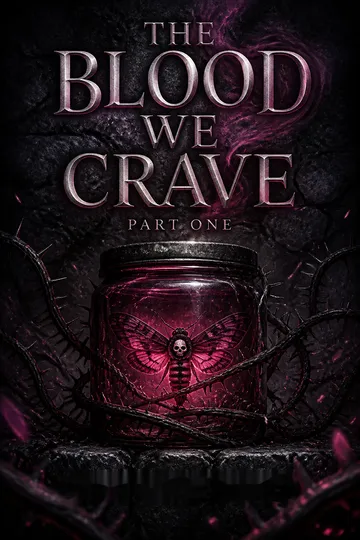
The Blood We Crave receives mostly positive reviews, with readers praising its dark romance, complex characters, and intense plot. Many enjoy the dynamic between Thatcher, a psychopathic serial killer, and Lyra, his obsessive stalker. Readers appreciate the author's writing style, character development, and integration of Greek mythology. Some find the blood kink and violent themes disturbing, while others revel in the darkness. The cliffhanger ending leaves many eager for part two. Overall, it's a polarizing but captivating addition to the Hollow Boys series.
People Also Read

Characters
Lyra Abbott
The invisible insect keeperA Hollow Heights biology student, Lyra studies insects and preserves them in elaborate displays, finding order and beauty in creatures others overlook. Her mother’s murder when Lyra was a child left her with trauma, a habit of disappearing into the background, and frightening impulses toward violence. She is observant, emotionally intense, and more resilient than her quiet manner suggests. Her long fixation on Thatcher is rooted in the night he spared her, but her desire to understand her own urges becomes an independent motive. Lyra wants a future in forensic entomology and feels responsible for the missing girls in Ponderosa Springs, even as she struggles to imagine a life beyond the people and memories that hold her there.
Thatcher Pierson
The controlled killerA wealthy Pierson heir and gifted pianist, Thatcher was raised under the influence of his father, Henry, whose violence shaped his view of power, discipline, and emotion. He describes himself as a psychopath and kills men he identifies as serial predators, treating each murder as a carefully composed work. Routine and cleanliness help him maintain control, while his loyalty to his three closest friends is far stronger than he admits. Lyra unsettles the distance he has built between himself and other people. He is both perceptive and manipulative, capable of tenderness but wary of what it asks of him, and he interprets vulnerability as a danger to be mastered or cut away.
Rook Van Doren
The reckless firestarterA member of Thatcher’s close-knit circle, Rook uses jokes, confrontation, and pyromania to manage a painful home life. His love for Sage makes him protective and impulsive, while his guilt over Silas’s illness keeps him searching for someone to blame, often himself. Rook’s humor brings warmth to the group, but it can also conceal how quickly he turns to violence when the people he loves are threatened.
Alistair Caldwell
The guarded strategistOne of the Hollow Boys, Alistair is controlled, commanding, and often the person who steadies the group when Rook acts on impulse. His history with a demanding family has left him protective of his autonomy and wary of weakness. He is devoted to Briar, though their relationship is private and guarded. Alistair values loyalty and control, and he tries to keep the group’s dangerous choices from becoming careless ones.
Briar Lowell
Lyra’s fierce confidanteLyra’s closest friend, Briar is intelligent, direct, and protective, with a history that has taught her to defend herself and the people she loves. Her relationship with Alistair is private, but her loyalty to Lyra is open and fierce. Briar helps investigate the missing girls and pushes back when the Hollow Boys dismiss the danger. Her concern can become controlling, especially when she believes Lyra is placing herself at risk.
Sage Donahue
The survivor seeking answersSage is a resilient young woman whose polished social presence conceals a difficult history and deep loyalty to her twin sister, Rosemary. She is in a volatile relationship with Rook and is determined to learn what happened to the missing girls. Sage can be sharp and commanding, but her resolve comes from personal grief as much as from a sense of justice. She values her friends’ solidarity and expects them to confront danger together.
Silas Hawthorne
The quiet chess playerSilas is one of Thatcher’s oldest friends, a skilled hacker and chess player who speaks sparingly and notices more than he reveals. He is receiving psychiatric care after a severe breakdown, and his absence weighs heavily on the group, particularly Rook. His bond with Rosemary remains central to his emotional life. Silas values privacy and self-determination, but he understands how loyalty can move people to act even when they would rather stay uninvolved.
Henry Pierson
The imprisoned serial killerThatcher’s father is a notorious serial murderer whose actions shaped the Pierson family’s fearful reputation and left lasting trauma in Lyra’s life. He is controlling, manipulative, and skilled at making violence seem like a lesson or an obligation. Henry’s influence persists through the rules he taught Thatcher and the town’s memory of his crimes. His imprisonment does not erase the damage he caused or the fear that his name still commands.
May Pierson
Thatcher’s steady grandmotherThatcher’s grandmother helped raise him after Henry’s arrest and treats him with a steadiness that does not depend on pretending his nature is harmless. She cares for him while recognizing the damage his father inflicted, and she refuses to let Thatcher reduce his entire identity to Henry’s legacy. Her garden and her quiet attention offer a rare counterpoint to the estate’s history of violence.
Conner Godfrey
The approachable professorA former guidance counselor turned organic chemistry professor, Conner is kind to Lyra and encourages her interest in insects and forensic entomology. His easy manner makes him one of the few adults she trusts, and he offers her a possible future beyond Ponderosa Springs. His long association with Stephen Sinclair and other town figures complicates that trust. Conner’s warmth may be genuine, but Lyra’s friends have reason to question what he knows.
Stephen Sinclair
The dean with ambitionsThe dean of Hollow Heights is a powerful local figure with political ambitions and long-standing ties to influential families. He is connected to Conner Godfrey and his son Easton, and Lyra’s friends suspect that his public respectability conceals something darker. Stephen’s position gives him access to money, institutions, and people who might otherwise be difficult to control.
Easton Sinclair
The privileged adversaryStephen Sinclair’s son, Easton is wealthy, socially confident, and antagonistic toward the Hollow Boys. His past with Sage and his hostility toward Rook keep him close to the group’s conflicts. Easton knows how to read a room and recognizes when someone is following him, making him a dangerous subject for Lyra’s covert investigation.
Rosemary Donahue
The lost source of lightSage’s twin sister and Silas’s beloved, Rosemary is remembered by the group for her warmth, laughter, and acceptance of people others judged. Her death binds the Hollow Boys and their friends to the town’s history of vengeance. Even in her absence, Rosemary remains a measure of the gentleness Ponderosa Springs has failed to protect.
Phoebe Abbott
Lyra’s murdered motherPhoebe was Lyra’s loving mother, an accomplished biologist who raised her daughter largely on her own. Her death becomes the defining trauma of Lyra’s childhood and the beginning of the bond between Lyra and Thatcher. Phoebe’s strength and care remain vivid in Lyra’s memories, especially through the keepsakes and interests she left behind.
Odette Marshall
The federal investigatorA federal investigator brought in to consult on the recent murders, Odette is observant and adapts quickly when a suspect refuses to cooperate. She notices the relationships among the Hollow Boys and recognizes that their loyalties may offer a route into the case.
Gerrick Knight
Odette’s federal partnerGerrick accompanies Odette as a federal investigator. Physically imposing and economical with words, he supports her interviews and watches the group closely while they assess the murders.
James Whittaker
The missing girl’s fatherJames is Coraline Whittaker’s father and one of the established men in Ponderosa Springs whose past connections appear in an old photograph. His strained relationship with Stephen Sinclair makes him a possible lead in the investigation.
Plot Devices
The closet memory
Trauma’s origin pointThe childhood murder of Phoebe Abbott explains why Lyra hides, why she associates Thatcher with both terror and safety, and why she develops an intense interest in death. The closet also becomes a recurring psychological image: a place of survival that can turn into isolation. Later, Thatcher’s presence helps Lyra return from traumatic memories, but the book does not treat that comfort as a simple cure. The memory keeps shaping their choices, making their present relationship inseparable from the violence that first brought them together.
The ferryman’s coins
Mercy inside a murderThatcher places coins on Phoebe’s eyes according to a Pierson family custom meant to pay for safe passage to the afterlife. For Lyra, the gesture distinguishes him from Henry in the very moment she expects to die. It becomes a lasting sign that Thatcher can perform a small act of care even while remaining dangerous. The coins also connect later scenes involving the Pierson family, Silas, and the boys’ shared past, giving the image a private meaning that outsiders cannot readily read.
Thatcher’s murder rules
Control disguised as craftThatcher adapts the rules Henry taught him into a private system for hunting, killing, and avoiding detection. Routine, planning, and exactness help him distinguish his methods from his father’s, while piano compositions turn the process into something he can call art. When Lyra asks to learn, Thatcher’s lessons begin with control and recognition rather than a simple manual. The rules reveal both the discipline that keeps him functional and the violence that discipline serves.
The moth displays
A map of Lyra’s mindLyra’s insect collecting and taxidermy give her a field of attention beyond her obsession with Thatcher. She studies how small creatures live, adapt, and die, and her displays make preservation feel like a form of care. Moths especially reflect her attraction to what can destroy them, while her interest in forensic entomology offers a possible vocation that joins science with crime investigation. These interests keep her connected to the child she was before violence reshaped her life.
The Halo investigation
A town’s hidden machineryThe Halo links the missing girls, the deaths of people around Ponderosa Springs, and the respectable networks surrounding the Sinclairs. The investigation advances through partial clues: a photograph of connected town figures, payments, a concealed door, and a schedule associated with Terminal Thirteen. Because the group has committed crimes of its own and cannot trust local authorities, each discovery creates danger as well as direction. The conspiracy drives the thriller plot without resolving it by the book’s end.
Hollow Boys Series Series
About the Author
Other books by Monty Jay


Download PDF
Download EPUB
.epub digital book format is ideal for reading ebooks on phones, tablets, and e-readers.








