

Plot Summary
Prologue
Four years before the main story, fourteen-year-old Phi watches St. Gabriel's Church burn after setting it alight to kill Oakley Wixx and Jude Sinclair. Oakley survives and is arrested; Jude is taken away too.
Phi hides her own role from her father, Judge Rook Van Doren, while Jude catches sight of her across a police car. The fire does not bring the revenge she wanted. Instead, it becomes the first link in a chain of blame that drives Jude from town and leaves Phi alone with the reason she wanted him dead.
The fire gives the novel its governing image and its central moral confusion: destruction can be both retaliation and concealment. Phi's plan is not a triumphant act of justice but a child’s attempt to regain agency after a violation she cannot explain. Jude's arrest makes him bear the consequences of a crime he did not commit, while Phi's silence turns trauma into a false history that both characters live inside. The church's sacred setting sharpens the irony. The fire offers neither absolution nor truth; it only makes their separate wounds look like one shared feud.
Fire in the Church
At eighteen, Phi has turned herself into Ponderosa Springs' reckless Vixen: she steals a boy's car after a party, races through town with her sister Andromeda and family friend Atlas, and refuses to return it when her father catches her. Rook's disappointment hurts more than his punishment, but Phi keeps him at a distance rather than tell him what changed her four years earlier.
Her acceptance to MIT has been revoked, and she has stopped caring about the future she once planned. Beneath the parties, sex, weed, and racing, she is protecting a secret from her tightly bonded family. Each new stunt makes it easier for them to see a troublemaker and harder for them to see the girl she believes has disappeared.
Phi's rebellion is not simply adolescent defiance. It is a method of controlling exposure: she chooses fast cars, casual sex, and public notoriety because those forms of risk are visible and self-directed, unlike the violation she keeps hidden. Her father's love complicates this defense. Rook's faith in his daughter offers safety, but accepting it would require her to risk his pain and her own secrecy. Her destructive reputation thus functions as both armor and evidence of distress. The family sees the behavior; Phi experiences it as proof that the old, beloved self is already gone.
Jude Returns to Judgment
After his father Easton dies, Jude Sinclair returns to Ponderosa Springs expecting to collect the money that could carry him to California and a writing fellowship. At the will reading, he learns the trust is locked until he turns twenty-one, with Sage Van Doren controlling it in the meantime.
Easton has also named Sage as Jude's guardian, a final request that wounds Jude because his father left her an apology but gave his son none. Jude rejects the Van Dorens' offer of help and learns his half-uncle Alistair Caldwell is another possible lifeline. With no money, housing, or easy work, Jude's plan to escape now depends on people whose families helped make his life unbearable.
Jude's inheritance is a deliberately unstable form of security. Money exists, but his access to it is deferred and placed in the hands of a woman tied to his father's unresolved past. The arrangement reproduces his central injury: adults make consequential decisions about his life while he is left to absorb their consequences. His refusal of help preserves dignity, but also repeats the isolation that kept him trapped with Easton. The scene frames pride as both a survival skill and a barrier. Jude is not rejecting comfort because he has no need for it; he is rejecting the humiliation he expects to accompany it.
Strangers Above the Town
At a bonfire party, Phi flees a police raid and runs into the dark forest, cutting her hand before reaching the town's rusting water tower. Heights terrify her, and once she climbs to the platform she clings to the tank, shaken by memories she cannot keep out of her mind. A young man nearby distracts her with a conversation about loneliness, science, and whether human lives matter in an immense universe.
His touch steadies her enough to turn around. The moon reveals Jude Sinclair, the boy she believes helped Oakley harm her. The brief refuge collapses into hostility: Jude recognizes the famous Vixen, and both discover that the stranger who made the other feel less alone is also the enemy they have been taught to despise.
The tower briefly suspends the characters' inherited identities. Phi can speak as a curious, frightened person rather than a local legend, and Jude responds to that person before he knows her name. Recognition then restores the social script with brutal speed. Their intimacy is real, but it has been formed under false assumptions and cannot survive unchanged once the family names return. The height also externalizes Phi's struggle with control: she is physically endangered, yet the conversation offers a form of contact she has avoided for years. The scene makes vulnerability both a relief and a risk.
One Night of Treason
On the tower, Jude and Phi trade accusations about the fire, their fathers, and the histories that put them on opposite sides. Jude removes part of the railing and threatens her, then pulls her away from the edge when their argument tips into a charged, consensual sexual encounter. The next morning, both treat what happened as a weapon rather than a beginning.
Jude calls Phi a traitor to her family; Phi buries her guilt under contempt and decides the encounter must never be repeated. Yet she carries the memory into Andromeda's birthday gathering, where she sees Jude's marks on her skin and struggles to act as if nothing has changed. Their bodies have crossed a line their loyalties still refuse to acknowledge.
The scene deliberately entangles danger, desire, and choice, a volatile combination that defines the romance rather than resolving it. Phi's defiance gives her a sense of agency, but the danger around the encounter also echoes the conditions under which she has learned to confuse intensity with control. Jude uses the language of revenge to protect himself from recognizing tenderness. Afterward, both characters convert intimacy into accusation because blame is more manageable than attachment. The result is not reconciliation but a new secret, one that intensifies the very family loyalties each claims to defend.
Race at the Graveyard
At the Graveyard, the abandoned racetrack where Ponderosa Springs' young drivers compete, Phi and Jude draw one another as opponents. They make a wager: if Jude wins, Phi will cover the night's bets, but if he loses, he must leave her alone. The race is fierce. Phi cuts for the inside lane on the final turn, overreaches, and nearly loses control, then uses Jude's attempt to unsettle her against him.
She sends his motorcycle skidding across the track and crosses the finish first. Jude survives with road rash, but refuses to accept the race as the end of their conflict. His challenge leaves Phi with the uneasy sense that winning the encounter has only started a larger contest.
The Graveyard turns the pair's emotional conflict into a contest of embodied skill. Phi's driving gives her competence and command, but her victory depends on the same appetite for danger that helps her avoid grief. Jude respects her ability even as he resents losing, revealing an important distinction between his inherited hostility and his personal response to her. The wager promises a clean boundary, yet neither character can keep the agreement emotionally. Their competition exposes how both use rules selectively: they invoke terms when those terms protect pride, then disregard them when attraction or anger takes over.
An Offer with Strings
Jude leaves Oakley Wixx after finding heroin in the drug house where he has been sleeping and selling marijuana. When Oakley mocks his fear of becoming like his addicted father, Jude punches him and walks out with his belongings. Soon afterward, Jude assaults the owner of a coffee shop who humiliates him while refusing to hire him.
Sage pays his bail and offers him a place with the Van Dorens, along with a route toward Stanford and the writing fellowship he wants. Jude resists until he sees that refusing would leave him homeless and cut off from his only dream. He accepts one year of help, knowing the arrangement will put him under the same roof as Phi.
Jude's break with Oakley is a small but decisive act of self-definition. He does not claim moral purity; he recognizes that remaining in the drug house would keep him inside a pattern he fears repeating. The assault at the coffee shop shows how little distance he has yet gained from that pattern. Sage's offer is powerful because it addresses a concrete need, education and shelter, rather than asking Jude to forgive the past first. Still, help comes with emotional costs. His acceptance is neither trust nor surrender, but a calculated choice to preserve a future he has never been able to afford.
Enemies Under One Roof
Jude moves into the Van Doren home, where Rook warns him to stay away from both daughters and offers him a job at Inferno Garage. Phi treats Jude as an intruder, searches his room for leverage, and begins a petty campaign that includes wrapping his Skyline in plastic and later covering it with paint.
Jude retaliates by sabotaging her coursework, turning their hostility into a private contest played out around family dinners and college classes. Meanwhile, Phi overhears Rook resisting Jude's admission into the family, while Sage insists he deserves a chance. Reign separately warns Phi not to endanger their parents by getting involved with a Sinclair, reinforcing the rule she is already struggling to obey.
Forced proximity makes the family home a contested psychological space. To Jude, its photographs, meals, and casual affection expose what his own childhood lacked; to Phi, his presence threatens both her secrecy and her family's fragile equilibrium. Their pranks offer a safer channel for desire and anger because each can pretend the conflict is only comic. Rook's warning reflects a genuine protective instinct shaped by history, but it also risks repeating the town's habit of treating Jude as a family name rather than an individual. The household becomes a test of whether care can coexist with suspicion.
Oakley's Call Breaks the Story
While Jude cleans the graffiti from his car at Inferno Garage, Oakley calls from a drug-fueled party and boasts about what he did to Phi four years earlier. He says he used her to punish Rook and had told her Jude knew about the abuse. Jude realizes that Phi's hatred was built partly on a lie, and that his own loyalty to Oakley helped keep him beside the person who hurt her.
He ends the call and smashes his phone against the garage wall. The revelation does not erase Jude's silence or the damage the fire caused him, but it changes the meaning of Phi's hostility. For the first time, he understands that she has been carrying the crime alone.
The revelation reorganizes the novel's moral map without making its injuries symmetrical. Jude discovers that his assumed guilt was manufactured by Oakley, while Phi's belief that he was complicit was grounded in his visible friendship with the abuser. His shock arises not only from Oakley's crime but from recognizing how trust made him useful to it. The broken phone is an impulsive rejection of the channel through which Oakley controlled him. Yet knowledge alone cannot repair harm. Jude now knows why Phi has treated him as an enemy, but he must still decide what responsibility looks like when he did not knowingly participate.
Blood at Gallows Reef
During the Gauntlet, the annual contest between Ponderosa Springs and West Trinity Falls, Phi finds her town's key in Lovers Cove and heads toward the marked finish with Atlas and Nora. Fog separates her from the group, and a Waster with a paintball gun corners her, then threatens sexual violence. Jude arrives before the threat can become an assault and beats the attacker until he dies.
The immediate danger has passed, but the body lies nearby as the two give in to their attraction in the woods. A siren announces West Trinity's win before Phi can return the key. She calls her father, and Rook and the other family patriarchs arrive to remove the body and keep Jude from facing the law.
The Gauntlet transforms a game built on rivalry into a setting where violence is not metaphorical. Jude's intervention protects Phi, but his lethal response also reveals how easily protection can merge with destruction in his moral imagination. Phi's call to Rook shows that she still relies on her family when danger becomes unmanageable, even while withholding the truth that matters most. The town's leaders erase the evidence, a practice that saves Jude from immediate consequences but reinforces the family system's dependence on secrecy. The episode binds the couple through danger without pretending that shared danger is the same as healing.
Poetry Through the Wall
After the Gauntlet, Phi lies to her friends about the night's events and wonders why Jude killed for her. On their adjoining balconies, she overhears him working on a poem and asks to see it. His writing reveals a wounded, reflective self she has not allowed herself to imagine. When she asks whether the killing was for her, Jude says she deserved protection and begins to apologize for failing her years earlier.
Phi cannot accept the gesture. She strikes the wooden partition between their balconies until she cuts her foot on broken glass, then tells him to leave her alone. Jude's kindness reaches the wound, but its arrival also forces her to confront how long she has been waiting for someone to notice it.
The poem creates an alternative form of intimacy: Jude can reveal what he cannot yet say directly, and Phi can receive it without first negotiating the power struggle of their usual banter. But his offer of protection carries a painful implication that he could have prevented the past. Phi rejects the comfort because it risks recasting her as someone to be rescued and him as a belated hero. Her physical attack on the partition makes the emotional boundary visible, while the cut foot brings the cost of that anger back into her body. The scene shows that recognition is necessary, but not automatically welcome.
Her Truth in Public
At a crowded party near the anniversary of the assault, Phi finds Oakley in the bathroom and finally names what he did to her. Oakley denies responsibility and threatens Andromeda, so Phi punches him and attacks again before Jude pulls her back. Oakley taunts Jude for discovering the truth and tries to turn the confession into another weapon.
Instead, Jude slams him into a wall and drives him from the house. Phi understands from Jude's response that he had not known what Oakley did or helped him conceal it. The realization breaks the justification for years of hatred, and her body tips into panic. Jude refuses to let her leave alone and stays with her as she struggles to breathe.
Speaking the assault aloud shifts Phi's secret from private shame into a fact another person can witness. Her physical attack on Oakley is not a complete restoration of power, but it is an action she chooses in response to a threat against her sister. Jude's violence is also newly legible: he is no longer defending his friend or family pride, but rejecting Oakley's entitlement. Phi's realization that she misjudged Jude does not erase the fire's consequences or make her responsible for his exile. It does, however, collapse the story she used to organize her anger, leaving her exposed to grief and guilt at once.
The Tower's Second Confession
Jude takes Phi to the water tower when she cannot face her family after the party. There, she explains how Oakley gained her trust, how her first red dye job made her feel connected to Sage, and how he assaulted her after she followed him to a Halloween party. She also admits that she set St. Gabriel's Church on fire, intending to kill Oakley and Jude because she believed Jude knew.
Her lie helped get Jude arrested and driven from town, and she expects him to hate her. Jude instead tells her that Oakley's actions were not her fault and that her pain shaped the choices she made. Phi leans against him as dawn arrives, and they agree to make a private world beyond their family histories.
The confession joins the novel's two central injuries without equating them. Phi's assault explains the desperate act that exiled Jude, while Jude's childhood abuse explains his fury at being judged by a legacy he did not choose. His refusal to demand an apology interrupts the familiar exchange of injury for punishment. That does not make the harm disappear; it changes what the characters do with it. Their imagined private universe is an act of temporary authorship, not a magical escape from history. They can name themselves apart from their families, even if the larger town still has power over their lives.
Love Kept in Secret
Phi and Jude begin seeing each other in secret, trading messages, poems, late-night conversations, and stolen hours while their families slowly grow more comfortable with Jude. He shares what life with Easton was like, including the overdose that ended his father's life and the childhood memories that make grief complicated.
Phi sees that Jude can condemn his father's abuse while still missing the man who read to him and loved books. At Inferno Garage, Alistair admits he tried to bring Jude into his home when Jude was young and apologizes for not fighting harder.
He offers support and warns Jude that Rook should hear about the relationship from them, not discover it by accident. Their future begins to feel possible, but secrecy still protects it.
Their relationship develops through ordinary acts of attention rather than a single declaration: shared messages, questions, and the willingness to hear an answer that complicates judgment. Jude's account of Easton resists the clean categories of villain and loving father, while Alistair's apology acknowledges that good intentions do not cancel years of absence. These moments widen Jude's sense of family without requiring him to deny his anger. For Phi, intimacy becomes less about using desire to numb pain and more about being known. Yet the secrecy that shelters their bond also preserves the danger of discovery, making private tenderness structurally precarious.
Fire Turns Back on Oakley
Oakley abducts Phi at Tilly's, forcing her into his car at gunpoint and taking her to an abandoned warehouse. He beats and restrains her, then threatens to kill Jude after using her to get at Rook. Phi waits until Oakley's drugs and agitation distract him, dislocates her thumb to slip her bonds, and kicks him off balance.
She uses a metal chair to beat him severely, then carries the fight to its brutal end with gasoline and fire. The warehouse burns as Phi escapes, but she is left gravely injured. Jude discovers she is missing, searches Oakley's trailer and St. Gabriel's, and finally runs to Rook for help. Phi reaches the hospital with severe head and facial injuries and is placed in a medically induced coma.
The climax returns fire to the story, but changes who controls it. In the prologue, Phi's fire is a concealed attempt to regain power; here, she survives by acting against the person who has repeatedly used her vulnerability as leverage. Her escape is costly and violent, not a clean fantasy of recovery. Jude's search exposes the helplessness that has defined his history with loved ones, but asking Rook for help marks a break from his reflexive isolation. Their separate actions converge at the hospital, where neither can undo what happened and both must wait for Phi's body to endure its consequences.
Home After the Inferno
Phi wakes after two days and finds Sage and Rook beside her. She immediately asks whether Jude is safe, then reassures her father that Jude had nothing to do with Oakley's past. When she later wakes at night, she asks Jude to hold her, and he climbs carefully into the hospital bed. Phi admits that she killed Oakley; Jude accepts the truth without condemning her.
As she heals, her family fills the room with flowers and children's handprints, making the life she nearly lost tangible again. At Christmas, Jude gives her a sun-shaped medallion and she gives him a handmade LEGO typewriter. They tell each other they love one another and choose to build a future together, even without certainty that it will be easy.
The resolution does not present romance as a cure for trauma. Phi has survived, but she still carries physical injuries, a history of silence, and the knowledge of what she did to stay alive. Jude's role is not to repair her; it is to remain present without turning her pain into a debt she owes him. Her family's care matters too, especially after years in which she withheld the truth to spare them. The Christmas gifts translate their private symbols into objects: his writing, her science-minded creativity, and their shared idea of finding a way home. Their commitment is hopeful precisely because it does not promise a painless ending.
Analysis
The novel's central conflict is not simply whether two enemies can fall in love. It is whether either can stop treating inherited history as proof of personal guilt. Ponderosa Springs turns family names into verdicts: Jude is punished for the Sinclair legacy, while Phi is protected by the Van Doren reputation even as she hides the choices and pain that complicate it. Their attraction begins inside that distorted moral system, where desire feels like betrayal and violence can masquerade as care.
Phi and Jude both use control to manage helplessness, but in different forms. Phi performs danger through racing, sex, and spectacle, choosing visible risks over the private vulnerability she cannot bear to expose. Jude withdraws into silence, work, and poetry, believing dependence will make him vulnerable to the same abandonment and abuse he has known. Their relationship becomes meaningful when they begin to offer forms of attention that do not require the other to be fixed: Jude listens to Phi's account without turning it into a demand for absolution, and Phi makes room for Jude's grief without asking him to simplify his father into a single judgment.
The story also distinguishes explanation from excuse. Oakley's abuse helps explain Phi's self-blame and the fire, but does not erase the consequences of her actions. Easton's addiction and violence help explain Jude's rage, but do not absolve him when he responds with lethal force. The novel's most consequential acts of care are therefore not clean rescues. They are choices to remain present amid damage, while still acknowledging that some harm cannot be undone.
Its romance remains deliberately dark: danger and desire are repeatedly entangled, and the characters' private universe offers shelter without dissolving the forces around them. The ending is hopeful not because love cures trauma or history, but because Phi and Jude choose a future in which neither has to carry pain alone. Belonging becomes an ongoing practice, not a birthright or a perfect ending.
Review Summary
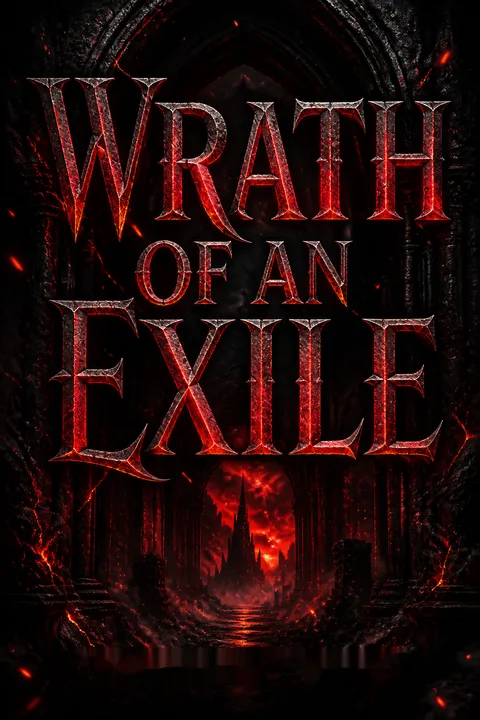
Wrath of an Exile received mixed reviews, with many praising its poetic writing, intense romance, and connection to the Hollow Boys series. Readers enjoyed the enemies-to-lovers dynamic and found the characters compelling. However, some criticized the lack of plot and rushed ending. The book's handling of trauma and family dynamics polarized opinions. Many appreciated seeing the original characters as parents but felt conflicted about the new generation. Overall, fans of dark romance and the author's previous work found it captivating, while others struggled with pacing and character choices.
Characters
Seraphina Van Doren
The self-made wildfirePhi, usually called by that nickname, is the adopted daughter of Judge Rook and Sage Van Doren and the sister of Reign and Andromeda. Her public identity is built from speed, sexual bravado, sharp humor, and a talent for turning attention into a shield. Beneath it, she remains a physics-minded, curious person who once imagined a future at MIT and still wants genuine connection. Her fierce loyalty to her family can become self-erasure when she believes that telling the truth would hurt them. Phi's defining psychological conflict is between controlling how others see her and risking the vulnerability required to be known.
Jude Sinclair
The exile with a penJude, born Elias Jude Sinclair, is a young writer who returns to Ponderosa Springs after his father's death. Town residents treat him as an extension of the Sinclair family's notorious history, while his own experience is shaped by poverty, abuse, and years of trying to care for an unstable parent. He is guarded, quick to anger, and fiercely proud of his independence, but poetry gives him a language for feelings he otherwise buries. His ambition to study writing in California represents a life that might belong to him rather than to his family name. He wants connection, though he distrusts the cost of accepting it.
Rook Van Doren
The protective judgeRook is Phi's adoptive father, a respected judge whose authority is matched by a fearsome reputation in Ponderosa Springs. He believes in rules and accountability, yet his love for his children is personal and deeply protective. His history with the Sinclair family makes him wary of Jude, and his instinct to shield Phi can sometimes keep him from seeing what she is hiding. Rook's relationship with his daughter carries the ache of a parent who senses a change but does not know its cause.
Sage Van Doren
The patient family anchorSage is Phi's adoptive mother and Rook's wife. She leads with calm attention, combining an artist's sensitivity with a hard-earned capacity to confront painful history. Her relationship with Easton Sinclair gives her reason to understand Jude as a person rather than as a surname. Sage is often the first in the family to notice when someone needs help, though she cannot force them to accept it. Her patience is not passivity; she will challenge her husband and protect a young person who has been denied a fair chance.
Andromeda Van Doren
The quiet star childAndromeda, called Andy, is Phi's younger sister. Artistic, empathetic, and uncomfortable with attention, she contrasts with Phi's loud public persona while sharing a deep bond with her. Andy's connection to Ezra Caldwell is long-standing and intimate, though both are still young enough to struggle with what that bond asks of them. She is a source of tenderness in the family, but her gentleness should not be mistaken for weakness. Her quiet presence makes Phi's protectiveness especially intense.
Reign Van Doren
The golden older brotherReign is Phi and Andromeda's older brother, a gifted soccer player with a charismatic, impulsive streak. He is close to Phi and protective of the family, but the changes in her behavior have strained their once-easy bond. Reign tends to express fear as anger and to trust rules that promise to keep people safe. His confidence makes him a natural center of attention, while his loyalty can make him blunt when he thinks someone he loves is in danger.
Oakley Wixx
The charming dangerOakley is Jude's longtime friend and a drug dealer whose charm and easy access to people conceal a volatile, self-serving nature. He has a history with Phi and a grievance against Rook, which shapes how he moves through the town's divided social world. His bond with Jude rests partly on their shared experience of difficult fathers, but loyalty becomes a vulnerability when one friend uses it to control the other. Oakley represents the danger of mistaking familiarity for trust.
Atlas Caldwell
Phi's steadfast best friendAtlas is Ezra's twin brother and Phi's lifelong friend, known for warmth, humor, and a willingness to show up when she needs him. He belongs to the close-knit group of children raised like cousins by the Van Doren, Caldwell, Hawthorne, and Pierson families. Atlas often lightens tense moments, but his concern for Phi is serious; he notices when her reassurances do not quite add up. His loyalty offers her a dependable connection even when she refuses to explain herself.
Ezra Caldwell
The shadowed musicianEzra is Atlas's twin, Andromeda's closest companion, and a musician who gravitates toward solitude. His dark, detached manner differs sharply from Atlas's openness, and his drug use worries the people who care about him. Ezra is observant enough to notice how people change, though he often protects himself by keeping his own feelings out of reach. His knowledge of Phi and Jude's wider circle helps expose the private lives hidden behind Ponderosa Springs' polished family image.
Alistair Caldwell
The absent uncle returnedAlistair is Jude's half-uncle and Atlas and Ezra's father. He is a powerful local businessman with a history of anger and violence, but his concern for Jude is complicated by years in which he failed to secure a place for him. Alistair understands that money cannot make up for lost care, and he struggles to offer support without demanding immediate trust. His relationship with Jude is shaped by kinship, guilt, and the possibility of a bond that can begin late.
Easton Sinclair
The gifted, broken fatherEaston is Jude's father, a man whose addiction and abuse make home unsafe, yet whose love of books and writing gives Jude some of his most meaningful childhood memories. His history with Sage and Rook ties the Sinclair family to the Van Dorens' past. Easton is difficult to reduce to either monster or victim: his suffering helps explain his behavior but does not excuse the harm he causes. His absence continues to shape Jude's anger, grief, and ambitions.
Nora Hawthorne
The gentle loyalistNora is one of Phi's closest friends and part of the extended family that has raised the young Heathens together. A dedicated ballet dancer, she is kind without being fragile and has a protective streak when someone she loves is threatened. Nora's return home after a disrupted career gives her a different perspective on ambition and starting over. She offers Phi affection without demanding that she perform toughness in return.
Silas Hawthorne
The formidable uncleSilas is Nora's father and one of the older men who helped raise Phi and her friends. Physically imposing and intimidating to outsiders, he is gentle with the children in his family circle. His protectiveness is expressed through practical care and quiet affection, making him a stable adult presence in Phi's world.
Thatcher Pierson
The severe family guardianThatcher is a close friend of the Van Doren family and a stern, unsettling presence whose loyalty to them is unquestioned. He and his wife Lyra have loved the younger generation as their own. His manner is dry and severe, but his actions reveal a deep commitment to keeping the family safe.
Lyra Pierson
The darkly tender auntLyra is Phi's aunt by choice, a theatre leader and a source of calm, affectionate counsel. She sees the difference between Phi's appetite for attention and her discomfort with being truly seen. Her steady warmth gives Phi a model of care that does not depend on blood or achievement.
Plot Devices
St. Gabriel's fire
The lie that exiles JudeThe church fire links Phi's concealed trauma to Jude's public punishment. Because Phi believes Jude knew about Oakley's abuse, she intends to kill both young men; Jude's arrest and exile then appear to confirm the town's prejudice against his family. The fire keeps the protagonists apart through a shared event neither understands in the same way. Its later truth forces them to confront both the damage caused by Oakley and the consequences of Phi's desperate choice.
The water tower
A refuge for unguarded truthThe tower first gives Phi and Jude a brief meeting outside the social identities imposed by their families. Returning there later allows Phi to describe her past and the fire in a place associated with their earliest moment of unexpected honesty. Its height and isolation make it a private stage for vulnerability, but it does not erase the dangers waiting below. The tower functions as a recurring site where fear can be spoken rather than hidden.
The Gauntlet
A game that becomes lethalThe annual contest between Ponderosa Springs and West Trinity Falls disguises serious danger as local tradition. Teams hunt for keys while navigating fog, violence, and opponents willing to exploit the rules. In the story, the game separates Phi from her friends and creates the circumstances in which Jude intervenes against an attacker. It also exposes the town's willingness to normalize injury and death as the price of competition.
Easton's trust
Forced proximity with a future at stakeEaston leaves Jude money that cannot be accessed until age twenty-one and places Sage in control of the trust. The arrangement makes Jude dependent on the very family he resents, while Sage's offer of housing and a path toward Stanford gives him a reason to stay. The trust turns legal inheritance into a test of pride, need, and whether accepting help must mean surrendering autonomy.
Jude's poetry
A private language for painJude's notebooks and poems reveal feelings that his guarded manner conceals. Phi first encounters this side of him through writing overheard across their adjoining balconies, then gradually begins to understand how he interprets family, violence, and loneliness. Poetry allows Jude to make meaning without asking for immediate forgiveness or approval. It also gives the pair a way to recognize one another beyond their inherited names and public reputations.
FAQ
Synopsis & Basic Details
What is Wrath of an Exile about?
- Second-generation dark romance: The story follows Seraphina "Phi" Van Doren and Jude Sinclair, whose families are deeply entwined in the history of Ponderosa Springs, exploring themes of dark romance, revenge, and redemption.
- Exile and return: Jude, an exile from the town due to his family's past, returns, stirring up old conflicts and igniting a dangerous attraction with Phi, the "Queen of Disaster."
- Secrets and lies: The narrative delves into the characters' past traumas, secrets, and the challenges they face as they navigate their forbidden desires and the expectations of their families and community.
Why should I read Wrath of an Exile?
- Complex characters: The novel offers a deep dive into the psyches of its characters, exploring their motivations, vulnerabilities, and the impact of their pasts on their present actions.
- Intense emotional journey: Readers can expect a rollercoaster of emotions, from the thrill of forbidden love to the pain of betrayal and the hope of redemption, all set against a backdrop of dark secrets and high stakes.
- Exploration of dark themes: The book tackles difficult subjects such as trauma, abuse, and addiction, providing a raw and unflinching look at the darker aspects of human nature and the potential for healing and forgiveness.
What is the background of Wrath of an Exile?
- Small-town secrets: The story is set in the fictional town of Ponderosa Springs, Oregon, a place with a dark history involving sex trafficking and founding families with deep-seated rivalries.
- Generational conflict: The narrative explores the legacy of past events on the present generation, with the children of the Hollow Boys grappling with the consequences of their parents' actions.
- Class divisions: The novel highlights the stark contrast between the wealthy "Heathens" and the less privileged residents of West Trinity Falls, adding another layer of complexity to the characters' relationships and motivations.
What are the most memorable quotes in Wrath of an Exile?
- "Fire feels no fear.": This quote from the prologue encapsulates Phi's initial state of mind, highlighting her desire to be a force of destruction, untouched by fear or remorse.
- "It's impossible to survive my brand of chaos.": This line, spoken by Phi, reveals her self-awareness and the belief that her destructive tendencies make her incapable of maintaining meaningful relationships.
- "You're lonely too. All that endlessness bullshit? It's a cover-up. If it wasn't, you'd know we give meaning to the universe, not the other way around.": This quote from Jude exposes Phi's vulnerability and hints at his ability to see through her defenses, challenging her nihilistic worldview.
What writing style, narrative choices, and literary techniques does Monty Jay use?
- Dual perspectives: The story is told from the alternating viewpoints of Phi and Jude, providing insight into their individual thoughts, emotions, and motivations, while also creating dramatic irony and suspense.
- Dark and atmospheric prose: Monty Jay employs vivid descriptions and evocative language to create a sense of unease and tension, immersing the reader in the dark and gritty world of Ponderosa Springs.
- Foreshadowing and symbolism: The narrative is rich with subtle hints and recurring motifs that foreshadow future events and deepen the thematic resonance of the story, such as the recurring imagery of fire and water.
Hidden Details & Subtle Connections
What are some minor details that add significant meaning?
- The Styx oath: The oath "On the Styx" signifies a sacred promise among the characters, highlighting the importance of loyalty and the weight of their commitments to each other.
- Tattoos as character markers: The characters' tattoos reveal aspects of their personalities and histories, such as Jude's "Riddle of Strider" ring, hinting at his hidden depths and his father's influence.
- The significance of names: Character names often carry symbolic weight, such as Andromeda's connection to the constellation and Phi's name meaning "fire," reflecting their respective personalities and destinies.
What are some subtle foreshadowing and callbacks?
- The water tower scene: The initial encounter between Phi and Jude at the water tower foreshadows their complex and volatile relationship, setting the stage for their later interactions and the blurring of lines between hatred and desire.
- References to the Halo: The frequent mentions of the Halo and its impact on Ponderosa Springs serve as a constant reminder of the town's dark past and the legacy of trauma that continues to affect the characters' lives.
- The significance of music: The songs and bands mentioned throughout the story often reflect the characters' emotional states and foreshadow upcoming events, such as the use of Carlos Santana's guitar solo during Phi's car theft.
What are some unexpected character connections?
- Alistair Caldwell's relation to Jude: The revelation that Alistair Caldwell is Jude's half-uncle adds a layer of complexity to their relationship and challenges the traditional rivalry between the Heathens and the Sinclairs.
- Sage Van Doren's past with Easton Sinclair: The history between Sage and Jude's father, Easton, creates tension and complicates the dynamic between Jude and the Van Doren family, forcing them to confront their shared past.
- Ezra Caldwell's drug use: The subtle hints about Ezra's drug use and his connection to Oakley Wixx create a sense of unease and foreshadow potential conflicts within the Heathen group.
Who are the most significant supporting characters?
- Atlas Caldwell: As Phi's best friend and confidant, Atlas provides emotional support and a grounding presence in her life, often serving as a voice of reason and offering a different perspective on her actions.
- Nora Hawthorne: Nora's resilience and optimism serve as a counterpoint to Phi's cynicism, offering a glimpse of hope and the possibility of healing from past traumas.
- Reign Van Doren: As Phi's brother, Reign's protectiveness and loyalty highlight the importance of family bonds and the lengths to which they will go to defend each other, even in the face of conflict.
Psychological, Emotional, & Relational Analysis
What are some unspoken motivations of the characters?
- Phi's self-sabotage: Phi's reckless behavior and self-destructive tendencies stem from a deep-seated fear of vulnerability and a belief that she is unworthy of love and happiness, leading her to push people away before they can hurt her.
- Jude's need for redemption: Jude's desire to prove himself and escape his family's legacy drives him to make amends for his father's actions and to protect those he cares about, even at his own expense.
- Rook's overprotectiveness: Rook's fierce protectiveness of Phi stems from his own past traumas and a desire to shield her from the darkness that he has witnessed, often leading him to make decisions that may not be in her best interest.
What psychological complexities do the characters exhibit?
- Phi's trauma response: Phi exhibits symptoms of post-traumatic stress disorder (PTSD) related to her past trauma, including flashbacks, nightmares, and a tendency to self-isolate, impacting her relationships and her ability to trust others.
- Jude's internal conflict: Jude struggles with the internal conflict between his desire for redemption and the pull of his family's legacy, often battling his darker impulses and questioning his own worthiness.
- Ezra's escapism: Ezra's reliance on drugs and alcohol suggests a deeper struggle with his own identity and a desire to escape the pressures and expectations of his family and community.
What are the major emotional turning points?
- Phi's confession to Jude: Phi's vulnerability and honesty with Jude about her past trauma and her feelings of guilt and shame mark a significant turning point in their relationship, allowing them to connect on a deeper level and begin to heal.
- Jude's realization about Oakley: Jude's discovery of Oakley's true nature and his role in Phi's trauma leads to a profound shift in his perspective, prompting him to take action and protect her from further harm.
- The confrontation at the warehouse: The violent confrontation between Phi and Oakley forces both characters to confront their deepest fears and insecurities, leading to a cathartic release of pent-up emotions and a reevaluation of their priorities.
How do relationship dynamics evolve?
- From animosity to intimacy: The relationship between Phi and Jude evolves from mutual hatred and distrust to a complex and passionate connection, driven by their shared pain and a growing understanding of each other's vulnerabilities.
- From rivalry to alliance: The dynamic between Jude and Rook shifts from animosity to a grudging respect and alliance, as they find common ground in their shared love for Phi and their desire to protect her from harm.
- From dependence to independence: Phi's journey involves a gradual shift from relying on others for validation and protection to embracing her own strength and independence, learning to trust her instincts and make her own choices.
Interpretation & Debate
Which parts of the story remain ambiguous or open-ended?
- The long-term impact of trauma: The novel leaves open the question of whether Phi and Jude will fully heal from their past traumas and whether their relationship can withstand the challenges they will inevitably face in the future.
- The future of the Heathens: The ending does not explicitly state whether the Heathens will be able to overcome their internal conflicts and maintain their close-knit bond, leaving the reader to wonder about the long-term stability of their relationships.
- The true nature of Ponderosa Springs: The novel hints at deeper secrets and power dynamics within Ponderosa Springs, leaving the reader to speculate about the extent of the town's corruption and the potential for future conflicts.
What are some debatable, controversial scenes or moments in Wrath of an Exile?
- The initial sexual encounter between Phi and Jude: The scene on the water tower, where Phi and Jude engage in a violent and emotionally charged sexual encounter, may be seen as controversial due to its blurring of lines between consent and coercion.
- Phi's act of revenge against Oakley: Phi's brutal beating of Oakley in the warehouse may be seen as morally ambiguous, raising questions about the justification of violence and the potential for revenge to perpetuate a cycle of harm.
- The glorification of violence: The novel's depiction of violence, particularly in the context of protecting loved ones, may be seen as problematic, raising concerns about the normalization of aggression and the potential for it to be used as a means of control.
Wrath of an Exile Ending Explained: How It Ends & What It Means
- A fragile hope for the future: The ending offers a glimmer of hope for Phi and Jude's relationship, suggesting that they have the potential to create a new beginning for themselves, free from the constraints of their pasts.
- The power of choice: The final scene emphasizes the importance of making conscious choices and taking control of one's own destiny, even in the face of overwhelming challenges and external pressures.
- The enduring legacy of trauma: The ending acknowledges that the scars of the past will always be a part of Phi and Jude's lives, but that they can choose how those scars define them, using their experiences to build a stronger and more resilient future together.
About the Author
Other books by Monty Jay


Download PDF
Download EPUB
.epub digital book format is ideal for reading ebooks on phones, tablets, and e-readers.








