

Key Takeaways
Read the body's evidence alongside the documents that try to define it.
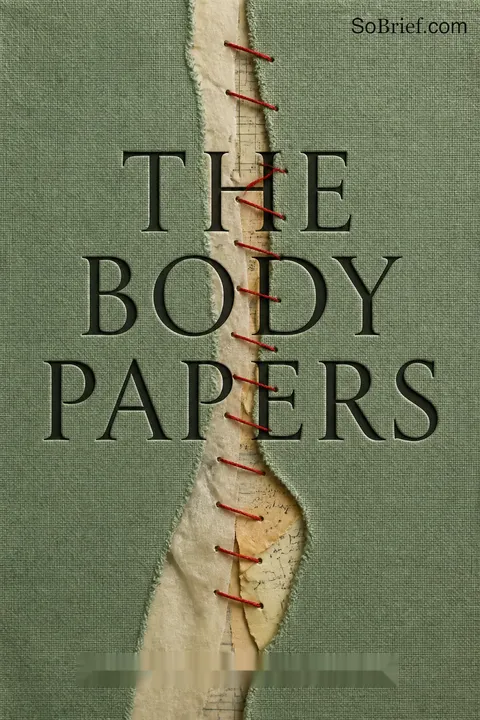
Paper and memory differ. Talusan builds her memoir from photographs, journals, family stories, medical records, and immigration files. A government file revealed that she arrived in the United States at age two in summer, although she remembered arriving at three in winter. The record corrected a detail, but it could not contain the whole experience of migration or what her body carried afterward. Her title, The Body Papers, points to the collision between official documents and private knowledge: forms classify a person, while memory and sensation preserve what forms leave out.
Evidence has limits. Records can anchor a story, especially when a person has been doubted, but they cannot make every memory indisputable. The memoir keeps those tensions visible rather than pretending that paper settles everything.
The method is powerful because it treats memory neither as perfect testimony nor as unreliable noise. Personal history often depends on different kinds of evidence that answer different questions: a file can establish a date, while a photograph may reveal an expression that the file cannot name. The distinction also guards against a common error in bureaucratic thinking, where what is documented is mistaken for all that happened. Still, records are not neutral. They are created by institutions with their own categories and omissions, so their authority should be examined alongside the person whose life they describe.
Name abuse when silence is protecting the wrong people.
Secrecy preserved danger. From age seven to thirteen, Talusan was sexually abused by her grandfather. As a child, she could not understand the violation clearly and believed that enduring it might protect her siblings or spare the old man punishment. Her silence also grew inside a family shaped by loyalty, fear, and the idea that private troubles should stay private. A teacher noticed that the once lively student had changed, but Talusan told her nothing.
Disclosure broke the pattern. After the abuse stopped, Talusan told her parents that she did not want her grandfather returning to the home. Her father cut ties with him, despite conflict with relatives over the decision. The memoir shows that speaking can have serious consequences, but silence had already made the child bear the cost alone.
The section makes an important distinction between a survivor's silence and consent. A child may protect the family, fear disbelief, or lack the language to identify what is happening. Those responses are adaptations to power, not evidence that the harm was wanted. The call to speak should not become another demand placed on survivors, however. Disclosure can involve real risks, and the survivor should retain control over when, how, and to whom a story is told. Responsibility for protection belongs to adults and institutions, not to children navigating danger.
Understand family violence without turning history into an alibi.
The past shaped the household. Talusan imagines her father as a boy of ten, standing on crates with a rope around his neck while his mother prepared dinner below. He survived, but carried the humiliation and fear into adulthood. He tried to protect his own children from the violence he had known, yet struggled with anger, affection, and the language of emotional care. His history helps explain why the family learned to minimize pain and treat painful stories as ordinary.
Explanation is not absolution. The memoir traces violence and secrecy across generations without claiming that poverty, colonial history, or earlier abuse made the grandfather's actions inevitable. After learning what happened to his daughter, Talusan's father wrote to his own father and severed the relationship. That decision disrupted family expectations, but made clear whose safety mattered.
This is a more useful account of inherited trauma than a simple chain of blame. Family history can explain the emotional tools people inherit, including silence, humor, and aggression, without converting those tools into excuses. The father's effort to protect his children sits beside his limitations, allowing affection and injury to remain part of the same portrait. The tension matters: understanding a person's past can widen compassion, but compassion becomes morally evasive when it asks the harmed person to absorb the consequences. Context should clarify responsibility, not dissolve it.
Immigration papers can make a settled child feel disposable.
Status overruled belonging. Talusan's family came from the Philippines while her father trained and worked as a doctor. Their permission to stay expired, and years of delayed paperwork left her, her parents, and her older sister vulnerable to deportation, despite their home, work, taxes, and lives in the United States. As a teenager, she learned that her younger siblings were citizens while she and her older sister could be ordered to leave. In 1986, immigration reform created a path toward legal status; Talusan became a citizen in 1995.
Return did not erase distance. As an adult, she went back to the Philippines as a balikbayan, a person returning to a country of origin after living abroad. She looked Filipino, but had lost most of her first language and felt foreign in her birthplace.
The memoir reveals how legal identity can contradict lived identity. A child may grow up in one country, build relationships there, and still experience belonging as conditional because a file says otherwise. That gap is especially vivid when the person later returns to a place that is technically home but no longer feels fully familiar. The story also resists the idea that citizenship repairs every form of displacement. Legal security matters enormously, but language, memory, and social acceptance develop through daily life, not through a ceremony alone.
Privilege changes by country, while hierarchy keeps its grip.
A familiar face can be misread. In Manila, Talusan sometimes blends into the crowd, but a stranger may assume she is a white visitor's domestic worker. Her white friend, meanwhile, receives special treatment because light skin carries status in a society shaped by colonial history. On the streets, Talusan feels exposed to traffic, while her friend finds that drivers stop for her. Talusan's Black husband experiences relief from anti-Black racism in the Philippines, but being read as American also brings him advantages he does not receive at home.
Power is relational. The contrasts reveal how race, class, nationality, and skin tone work together. A person can be marginalized in one setting and privileged in another, while people with less money or status remain vulnerable in both.
The cross-border shifts complicate any account of privilege that treats it as a fixed personal possession. Status depends on the surrounding society and on the categories that society rewards. Yet changing location does not make inequality disappear; it can simply change who receives protection and who is exposed. The scenes also show why individual friendliness is not enough to explain unequal treatment. A driver's caution around a white pedestrian, for instance, reflects a broader social valuation of bodies, not just a private judgment about one person.
Treat inherited cancer risk as a decision, not a prophecy.
Knowledge brought choices. Talusan learned that she carried a BRCA1 gene mutation associated with sharply increased risks of breast and ovarian cancer. The memoir gives her estimated lifetime risks as up to 87 percent for breast cancer and up to 60 percent for ovarian cancer, compared with general-population estimates of 13 percent and 1.5 percent. Cancer had already affected her grandmother, aunts, and sister, sometimes at younger ages in successive generations.
Prevention had a price. Talusan chose a preventive mastectomy, then faced the decision to remove her ovaries and fallopian tubes. That surgery would reduce cancer risk but end her chance of carrying a pregnancy and bring early menopause. The test did not predict exactly what would happen. It made her responsible for choosing among uncertain futures, bodily loss, and medical risk.
Genetic information changes the experience of time: an illness that has not appeared can still shape present decisions. The memoir captures how risk percentages can feel at once abstract and intimate, especially when relatives have experienced the disease. Such numbers guide choices, but they are not individual destinies. The distinction between risk and certainty deserves care, as does access to counseling that explains both options and trade-offs. Talusan's story makes prevention neither an obvious triumph nor a regrettable overreaction. It is a decision made under uncertainty, with real costs attached.
Let aunt-love matter without pretending infertility does not hurt.
Grief remained real. Talusan wanted children, but her husband was unsure about becoming a parent. As her cancer risk made preventive surgery more urgent, the couple considered fertility treatment and freezing embryos. At a consultation, she saw that her husband was moving toward parenthood mainly because she wanted it. She decided not to build a family through a choice he did not truly share, and later had her ovaries removed. The decision brought grief, not instant acceptance.
Care took another shape. Talusan devoted time and affection to her nieces and nephews, whom she took to museums, helped with schoolwork, and listened to closely. Her niece described her as a second mother. That recognition mattered, but it did not erase the children Talusan had imagined. The memoir holds both truths: she found a meaningful role in her family, and she mourned a future she would not have.
This account avoids two familiar traps: treating childlessness as a deficit that defines a life, or insisting that other forms of love make reproductive grief disappear. Caregiving can be profound without being a consolation prize, and grief can persist without invalidating that care. The couple's decision also foregrounds a difficult ethical principle: parenthood should not be pursued as a unilateral sacrifice that one partner quietly resents. The result is not a tidy substitute for motherhood, but a more expansive account of how family bonds can be lived.
Make room for wonder without using it to look away.
Yogurt offered a small marvel. While living in Manila, Talusan learned to make yogurt from milk and a spoonful of starter culture, then experimented until carabao milk gave her the texture she liked. The process offered routine, pleasure, and a sense that something living could transform one thing into another. She shared the results with her husband and visitors, and talked about the project with her niece.
Comfort had limits. Yogurt also distracted Talusan from scenes she found difficult to face, including a family sleeping beside a wheelbarrow and girls at an orphanage who longed for parents. She does not pretend that a domestic pleasure can repair poverty or protect every child. The practice mattered because it gave her a moment of delight inside a painful setting, not because it solved the setting.
Small rituals can restore a sense of agency when the larger world feels unstable. Repetition, sensory attention, and making something by hand give experience a manageable scale. The memoir is alert, though, to the risk that comfort can become a way of avoiding what demands attention. That tension makes the yogurt more than a charming detail: it shows how people may need both refuge and witness. Private pleasure can sustain compassion, but it cannot substitute for confronting the social conditions that make others unsafe.
Write to witness, not to manufacture a clean ending.
Storytelling made experience visible. Talusan assembled essays around personal memories, photographs, family papers, medical records, and the writing of her uncle Alfrredo Navarro Salanga. His letters helped her see that words could matter even when telling the truth carried risk. Her own book does not turn trauma into a simple story of recovery: depression, grief, family conflict, and bodily consequences remain part of her life.
Witness can connect people. Talusan wrote partly for readers who might recognize their own isolation in experiences specific to her. Her cousin Ramon, facing cancer, told her the book gave him strength. The memoir's value is not that writing fixes the past or guarantees reconciliation. It creates a record, gives language to what had been hidden, and allows readers to meet a life without reducing it to a diagnosis or a single injury.
The book treats testimony as both an artistic act and a social relation. A story can help its teller organize experience, but its meaning also depends on readers who receive it with attention rather than treating it as spectacle. That exchange does not guarantee healing, and publication can alter relationships or expose private pain. The memoir takes those risks seriously. Its strongest claim is modest and consequential: a truthful account can make isolation less absolute, even when the past remains unresolved and the teller continues to live with its effects.
Analysis
The memoir's structure mirrors its central problem: a life cannot be understood through one continuous, settled account. Essays move between Manila and New England, childhood and adulthood, official records and bodily memory. Repeated images, including streets, eyes, scars, food, and family documents, connect episodes that might otherwise appear unrelated. The form asks readers to make connections without pretending that every gap can be closed.
Talusan's father is the book's most revealing counterweight to a simple story of victim and villain. He is both a survivor of violence and a caring parent who cannot always express care in ways his daughter needs. His history illuminates the family's habits of silence, but the memoir does not let that history excuse abuse or erase its consequences. This moral precision also informs its account of immigration and colonial inheritance. Power is not abstract: it determines who can cross a street safely, who is assumed to belong, and whose life can be moved by a file or a genetic result.
The title joins two forms of evidence. Papers authorize, classify, and preserve; bodies register what official language cannot fully hold. Photographs and government records support memory, but the memoir also makes room for uncertainty, conflicting recollections, and what remains undocumented. That approach is especially important in a narrative about trauma, where silence and dissociation can leave the survivor unsure of what others will believe.
The work does not present disclosure as a universal cure. Telling brings relief, but also family rupture, grief, and renewed vulnerability. Likewise, returning to the Philippines brings recognition and alienation at once. The book's hope is therefore not a clean triumph over suffering. It lies in more specific acts: a parent breaking with an abusive elder, an aunt showing up for children, a couple making a painful decision honestly, and a writer giving readers language for experiences that are often kept private. The result is a memoir of survival that refuses to confuse survival with being untouched.
Review Summary
The Body Papers is a powerful memoir that resonates with many readers, especially immigrants and Filipino-Americans. Talusan's honest, eloquent writing tackles difficult topics like sexual abuse, immigration, and cancer with clarity and compassion. Many praise her ability to weave complex themes into a cohesive narrative, finding her story relatable and emotionally impactful. While some readers found the structure disjointed, most were deeply moved by Talusan's resilience and insight. The book is frequently described as stunning, brave, and an important contribution to immigrant literature.
People Also Read


Glossary
The Body Papers
Records against lived memoryThe memoir's title and organizing idea. It refers to the documents attached to a life, including immigration records, medical results, photographs, and family papers, as well as the body's memories and sensations. These forms of evidence can support and complicate one another, but official records cannot fully describe a person's experience.
balikbayan
A returnee to the PhilippinesA Filipino who returns to the Philippines after living abroad. In Talusan's account, the word describes a person who is returning to her country of birth but may still be treated as foreign because of her language, accent, habits, and long absence.
pasalubong
Gifts brought homeA gift brought to relatives or friends after a journey or a period of work away from home. The memoir describes Filipino travelers returning with pasalubongs for loved ones, making the gifts part of the emotional work of migration, separation, and reunion.
TNT
Hiding from immigration authoritiesA Filipino community term shortened from the Tagalog phrase tago ng tago, literally meaning hiding repeatedly. It refers to living while avoiding immigration authorities. Talusan's family used it to describe the fear and uncertainty surrounding their expired visas, although her father said they were not literally hiding because immigration knew their address.
BRCA1
A hereditary cancer-risk geneA gene associated with increased risks of breast and ovarian cancer when a person carries a harmful mutation. Talusan's family history of cancer led her to genetic testing, which confirmed that she carried a BRCA1 mutation. The result indicated elevated risk, not certainty that she would develop cancer.
previvors
People with inherited riskA term used for people who carry a genetic predisposition to a disease but have not developed that disease. Talusan encountered the word through a community for people affected by hereditary cancer. It names a situation in which someone must make medical and personal decisions because of elevated risk before any cancer diagnosis.
bilateral salpingo-oophorectomy
Removal of both ovaries and tubesA surgical procedure that removes both ovaries and both fallopian tubes. Talusan considered it as a preventive measure against ovarian cancer because of her BRCA1 mutation. The operation could reduce cancer risk, but it would also end her ability to conceive naturally and bring on surgical menopause.
FAQ
What's "The Body Papers" about?
- Memoir of Grace Talusan: "The Body Papers" is a memoir by Grace Talusan that explores her life as an immigrant, her experiences with trauma, and her journey towards healing.
- Themes of Identity and Family: The book delves into themes of identity, family dynamics, and the immigrant experience, particularly focusing on the Filipino-American perspective.
- Personal and Universal Stories: Through personal essays, Talusan shares her own stories that resonate on a universal level, touching on issues like sexual abuse, cancer, and cultural displacement.
Why should I read "The Body Papers"?
- Insight into Immigrant Life: The book provides a deep understanding of the immigrant experience, particularly from a Filipino-American perspective, which is often underrepresented in literature.
- Courageous and Honest Narrative: Talusan's writing is both courageous and honest, offering a raw and unfiltered look at her life and the challenges she has faced.
- Empathy and Connection: Readers can find empathy and connection through Talusan's stories, which address universal themes of family, identity, and resilience.
What are the key takeaways of "The Body Papers"?
- Power of Storytelling: The memoir highlights the power of storytelling as a means of healing and understanding one's past.
- Complexity of Identity: It explores the complexity of identity, especially for immigrants who navigate multiple cultures and expectations.
- Resilience and Healing: Talusan's journey emphasizes resilience and the possibility of healing from trauma through self-reflection and writing.
How does Grace Talusan use documents in "The Body Papers"?
- Forensic Approach: Talusan uses documents like report cards, photographs, and timelines to create a forensic, documentary feel in her memoir.
- Validation of Memories: These documents serve to validate her memories and experiences, providing a tangible connection to her past.
- Narrative Structure: The inclusion of these papers helps structure the narrative, offering readers a deeper insight into her life and the events that shaped her.
What role does family play in "The Body Papers"?
- Central Theme: Family is a central theme in the memoir, influencing Talusan's identity and experiences throughout her life.
- Complex Relationships: The book explores complex family dynamics, including love, support, and the challenges of maintaining connections across cultures.
- Source of Strength and Conflict: Family serves as both a source of strength and conflict, shaping Talusan's journey and her understanding of herself.
How does "The Body Papers" address the immigrant experience?
- Filipino-American Perspective: The memoir provides a unique insight into the Filipino-American immigrant experience, highlighting cultural displacement and identity struggles.
- Assimilation and Erasure: Talusan discusses the challenges of assimilation and the erasure of cultural identity that often accompanies immigration.
- Universal Themes: While specific to her experience, the book touches on universal themes of belonging, identity, and the search for home.
What is the significance of the title "The Body Papers"?
- Literal and Metaphorical: The title refers to both the literal documents that trace Talusan's life and the metaphorical "papers" of her body, representing her physical and emotional experiences.
- Connection to Identity: It underscores the connection between identity and documentation, exploring how papers can define and confine one's sense of self.
- Narrative Device: The title serves as a narrative device, framing the memoir as a collection of personal and historical documents that tell Talusan's story.
How does Grace Talusan address trauma in "The Body Papers"?
- Personal Experiences: Talusan candidly shares her personal experiences with trauma, including sexual abuse and cancer, offering an unflinching look at their impact on her life.
- Healing Through Writing: She emphasizes the healing power of writing and storytelling, using her memoir as a means to process and understand her trauma.
- Empathy and Awareness: By sharing her story, Talusan raises awareness about the prevalence and impact of trauma, fostering empathy and understanding among readers.
What are the best quotes from "The Body Papers" and what do they mean?
- "A book is a balm": This quote reflects the healing power of storytelling and literature, suggesting that books can provide comfort and solace.
- "I was a child of four or five when I finally put the scissors in my mouth": This quote illustrates the intense fear and confusion Talusan experienced as a child, highlighting the impact of trauma on her development.
- "I am the kind of Filipino whose parents left to look for a better life elsewhere": This quote encapsulates the immigrant experience, emphasizing the sacrifices and challenges faced by those who leave their homeland in search of a better future.
How does "The Body Papers" explore the theme of identity?
- Cultural Displacement: The memoir delves into the theme of cultural displacement, exploring how Talusan navigates her identity as a Filipino-American.
- Intersectionality: It examines the intersectionality of identity, considering factors like race, gender, and immigration status in shaping one's sense of self.
- Search for Belonging: Talusan's journey is marked by a search for belonging, as she grapples with the complexities of her identity and the desire to find a place where she truly fits.
What impact does "The Body Papers" have on the reader?
- Emotional Resonance: The memoir has a strong emotional impact, resonating with readers through its honest and vulnerable storytelling.
- Increased Awareness: It raises awareness about important issues like immigration, trauma, and identity, encouraging readers to reflect on their own experiences and biases.
- Inspiration and Empathy: Talusan's story inspires empathy and understanding, motivating readers to consider the power of storytelling in fostering connection and healing.
How does Grace Talusan's writing style contribute to "The Body Papers"?
- Eloquent and Honest: Talusan's writing is eloquent and honest, capturing the complexity of her experiences with clarity and depth.
- Narrative Structure: The memoir is structured as a series of essays, allowing for a multifaceted exploration of themes and events.
- Imagery and Detail: Her use of vivid imagery and detail brings her stories to life, immersing readers in her world and experiences.
Download PDF
Download EPUB
.epub digital book format is ideal for reading ebooks on phones, tablets, and e-readers.








