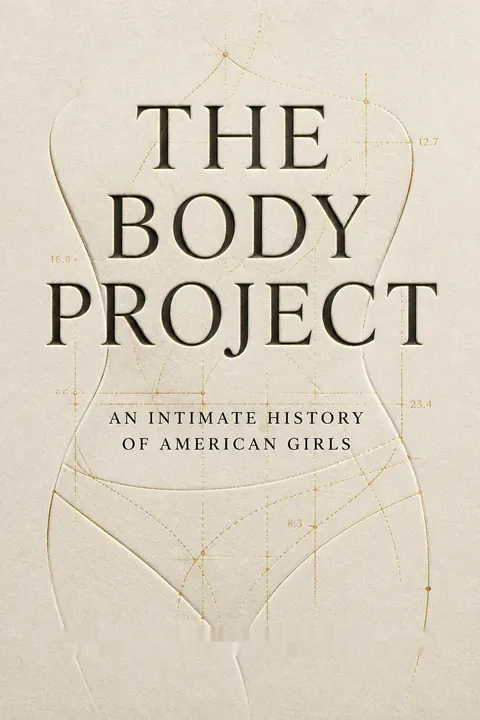


Key Takeaways
Treat the body problem as history, not a private failure
The pressure has a past. Brumberg uses girls’ diaries from the 1830s through the 1990s to show how the meaning of growing up in a female body changed. Girls in every era worried about appearance, but nineteenth-century diarists more often resolved to improve their character, serve others, or study. By the 1990s, one girl’s improvement plan included weight loss, makeup, clothes, and accessories. The body had become a central way to define the self.
Freedom can carry new costs. The book contrasts the Victorian corset with modern grooming and body display. The clothes changed, but commercial culture increasingly encouraged girls to monitor and alter their appearance. Brumberg’s point is not that the past was better. It is that body anxiety is shaped by social conditions, and cannot be understood as an individual girl’s vanity or failure.
The historical lens changes the question from what is wrong with girls to what their culture asks them to manage. That shift resembles a basic insight in sociology: private distress can reflect public arrangements. The diary method makes the argument unusually tangible, since abstract changes in gender norms appear in everyday entries about clothes, periods, and pimples. Diaries are not a transparent record of all girls, however. Their writers and surviving archives skew toward people with time, literacy, and access to preservation, a limitation that makes the book’s attention to class and race especially important.
Earlier puberty without adult judgment makes girls vulnerable sooner
The timetable moved. Brumberg reports that menarche, or a girl’s first menstrual period, shifted from a typical age of fifteen or sixteen in the early nineteenth century to just over twelve by the book’s era. Better nutrition and fewer infectious diseases helped girls grow larger and mature earlier. Yet physical development did not bring a matching advance in judgment, abstract reasoning, or emotional maturity. In the 1990s, the average age at first intercourse was just under sixteen.
The mismatch matters. A girl may look older than she is and be treated accordingly, while still thinking like a child. Brumberg links early maturation with greater vulnerability to depression, risky peer settings, and early sexual activity. Her argument is not that early puberty causes a fixed outcome, but that it raises the need for informed adult support during a longer stretch of childhood in a changing body.
This is a developmental mismatch, not a moral diagnosis. The body can acquire adult capabilities before the skills needed to anticipate long-term consequences are reliable, which makes context and supervision consequential. The idea also cautions against treating visible maturity as evidence of readiness. A useful qualification is that average ages describe populations, not individual girls, and early maturation alone does not determine a life course. Support should respond to a young person’s actual needs, rather than turn a biological milestone into a forecast of trouble.
Teach menstruation as a life change, not just a shopping task
Hygiene became the script. In the nineteenth century, menstruation was often hidden, and some girls were unprepared for their first period. In the twentieth century, medical advice, schools, mothers, and manufacturers made practical instruction more common. Yet lessons often centered on preventing stains and choosing sanitary products, rather than explaining fertility, sexuality, or the emotional meaning of maturation. Brumberg calls this a modern American menstrual script: a culturally shaped way of handling periods that prioritizes cleanliness and concealment.
Products filled the silence. By the 1990s, the sanitary-products industry was worth more than $2 billion annually. Its educational materials made information accessible, but could also substitute a pamphlet or sample for a personal conversation. The Disney film The Story of Menstruation, shown to an estimated 93 million American women, explained the process without discussing sexuality or reproduction. Knowing what to buy was not the same as understanding what was happening.
The shift from silence to product-centered instruction shows how markets can solve a practical problem while narrowing the questions people ask. Commercial education was not simply harmful: it offered information where embarrassment or family reticence had left gaps. The key distinction is between access to facts and the ability to interpret them in a life context. Health education works best when it treats bodily knowledge as relational and ongoing, not as a one-time delivery of instructions attached to a brand.
When clear skin becomes health, perfection gains medical authority
Pimples acquired new meaning. In the nineteenth century, acne could be treated as evidence of dirt, moral failure, or sexual misconduct. As dermatology developed, doctors increasingly recognized the distress blemishes caused and offered treatments. Parents began investing in skin care as a legitimate way to protect a daughter’s emotional and social prospects. By the mid-twentieth century, acne was a familiar concern for girls and boys, and products such as Clearasil promised not only clearer skin but greater confidence and popularity.
Care can raise the standard. Brumberg shows how effective treatment and parental concern made blemishes less acceptable, even as they became easier to manage. The pressure also differed by race and class. Jewish girls could read skin as a barrier to acceptance, while Black girls faced both acne concerns and a society that privileged lighter skin. The same attention could offer relief and reinforce the belief that a face needed correction.
This history reveals a double edge in medical care. Treating a condition that causes genuine distress can expand a young person’s comfort and social freedom. But when appearance becomes a health mandate, ordinary variation can start to look like a defect requiring intervention. The racial history sharpens the point: beauty standards do not operate on a neutral surface, but inherit the inequalities surrounding who is considered attractive or respectable. The challenge is to provide care without making conformity the hidden measure of wellness.
Fashion’s freedom can shift control inside the body
The silhouette changed. In the 1920s, the fashionable ideal moved away from the Victorian hourglass toward a slimmer, flatter figure. Girls began dieting and counting calories, practices that had not previously organized adolescent life in the same way. Yvonne Blue, a Chicago teenager, grew nearly six inches and gained more than forty pounds between thirteen and fifteen. She came to see her natural growth as a problem, then tried to lose thirty pounds in one summer, at times restricting herself to an unsafe extreme.
Control became personal. The flapper’s shorter clothes and greater freedom of movement did not end regulation. They made the body more visible, while dieting, exercise, and grooming increasingly asked girls to control it from within. Later, 1950s training bras and figure-control garments made breasts and proportions targets of early attention. New options could express independence, while also teaching girls to see their bodies as projects requiring constant adjustment.
The shift from corsets to dieting is a powerful example of how control can change form without disappearing. A less restrictive garment may expand movement, yet a visual ideal can relocate discipline into daily habits and self-surveillance. This insight helps explain why empowerment and pressure can coexist, rather than cancel each other out. Still, fashion is not only imposed from above. Girls also use clothes to experiment, belong, and signal identity. A careful account must preserve that agency while examining the standards that shape its available choices.
Do not confuse sexual openness with consent, safety, or maturity
Virginity lost its old authority. In the Victorian era, the hymen was treated as proof of chastity, although physicians knew it could not reliably establish whether a person had had sex. During the twentieth century, petting, tampons, changing medical practice, and premarital sexuality weakened the membrane’s social importance. Doctors increasingly treated adolescents as sexually active patients who needed confidential care, rather than as girls whose bodies belonged to parents or future husbands.
Openness did not remove danger. Brumberg’s diary examples show growing frankness about sexual desire, but also pressure, harassment, and uncertainty about saying no. Sarah Compton, a middle-school student, recorded boys rating girls’ bodies and making sexualized remarks that left her frightened and reduced to an object in their eyes. Sexual autonomy matters, but it requires more than information about contraception. Girls also need the language, confidence, and support to recognize coercion and expect mutual consent.
The distinction between sexual knowledge and sexual agency is essential. A person can know the vocabulary of sex, have access to contraception, and still face pressure that constrains genuine choice. The book’s historical account of the hymen also demonstrates how a supposedly objective bodily marker can become a tool of social control. At the same time, confidential health care can protect adolescents’ access to help. The strongest position preserves that privacy while refusing to treat independence as proof that a young person needs no guidance.
Give girls adult allies without restoring Victorian control
Protection once had a network. From the 1880s into the early twentieth century, groups such as the Girl Scouts, the YWCA, and literary societies connected girls with older women and shared activities. Brumberg calls this network a protective umbrella. It could impose narrow rules about innocence and respectability, and it did not serve every girl equally. Yet it also offered companionship, adult attention, and projects beyond appearance. Lou Henry, later First Lady, wrote about the young teachers who encouraged her interests and listened to her and her friends.
Support need not mean silence. The book argues for renewing intergenerational guidance without reviving the belief that girls must be controlled for their own good. Adults can help girls interpret media, understand their development, and set boundaries, while taking their questions and choices seriously. The aim is not to turn back the clock, but to make room for intellectual, social, and creative growth alongside bodily change.
This proposal avoids a false choice between unrestricted autonomy and paternalistic protection. Development is supported by relationships, not only by information or rules, and trusted adults can help young people practice judgment rather than simply obey. The historical clubs matter because they supplied shared purpose, not just surveillance. Rebuilding that kind of connection today would require attention to who is included and whose values dominate. A supportive network should widen a girl’s options, not enforce one approved version of femininity.
Invest in every girl, especially where poverty magnifies biological risk
Risk is unevenly distributed. Brumberg argues that early maturation matters across social groups, but its consequences are intensified where poverty, discrimination, unsafe schools, and weakened community support restrict a girl’s options. In the book’s 1990s context, girls under fifteen in the United States were reported to give birth at least five times as often as girls of the same age in other industrialized countries. The author warns against reducing teenage pregnancy to personal irresponsibility or welfare policy; age, coercion, opportunity, family conditions, and access to care all matter.
Advocacy must be collective. Brumberg rejects a return to chastity rules and calls instead for education, responsible adult guidance, and a shared ethic of safety, reciprocity, and responsibility. She also argues that investment should extend beyond one’s own daughter. A girl’s body should not become her only source of status or possibility. Schools, families, health professionals, and communities all influence whether early physical maturity becomes a manageable transition or a dangerous burden.
The emphasis on structural conditions guards against blaming girls for outcomes shaped by unequal resources and power. It also connects bodily development to public policy: education, safety, health care, and economic opportunity affect how much room a young person has to choose. The historical statistic should be read as evidence from the book’s period, not as a current estimate. More broadly, social class and race do not erase individual agency, but they change the costs of exercising it. Effective advocacy has to address both.
Analysis
The book’s central achievement is to make the adolescent body an archive of social change. Brumberg does not treat menstruation, acne, weight, bras, tampons, or sexual behavior as isolated topics. She traces how medicine, commerce, family life, popular culture, and changing sexual norms alter what those bodily experiences mean. The diary form gives the argument its force: Yvonne Blue’s severe dieting, Ruth Teischman’s attention to sanitary products, and Sarah Compton’s record of sexual harassment turn broad historical claims into recognizable moments of girlhood.
The book’s most useful tension is that modernization brings real gains and new burdens at once. Better health, more education, medical treatment, sexual knowledge, and personal freedom matter. So do the costs of a culture that makes appearance a measure of identity and expects young people to manage risks without enough adult help. Brumberg’s strongest alternative is neither Victorian chastity nor unbounded individualism. It is informed, relational support that takes girls’ development seriously without treating them as property.
The method also has limits worth keeping in view. Diaries reveal private language and emotional texture, but they are uneven records, shaped by literacy, family access, and what a writer felt safe recording. The book acknowledges that its evidence centers largely on middle-class girls, even as it brings race, immigration, and poverty into the analysis. Its 1997 statistics and descriptions capture a particular historical moment, not present-day prevalence. The argument is most durable when understood as a method of inquiry rather than a timeless inventory: ask who profits from a bodily ideal, who supplies guidance, who is exposed to risk, and which forms of agency are actually available. That framework lets readers distinguish a genuine expansion of choice from a new demand disguised as freedom.
Review Summary
The Body Project received mixed reviews. While many found the historical information on female body image interesting, critics noted its focus on white middle-class girls and outdated perspectives. Readers appreciated the use of diary excerpts but found some arguments unconvincing. The book's exploration of changing attitudes towards menstruation, sexuality, and beauty standards was praised. However, some felt the conclusion was problematic and the author's personal opinions too prominent. Overall, it was viewed as a flawed but thought-provoking examination of girls' relationships with their bodies over time.
People Also Read



Glossary
body project
Appearance as self-improvementA body project is sustained attention to changing or managing the body as a way to express identity and improve one’s prospects. Brumberg uses the term for practices such as dieting, skin care, shaping breasts, and grooming. These projects are historically specific: the desired body and the methods used to pursue it change with culture.
ovulatory revolution
More menstrual cycles over lifeBrumberg’s term for the historical rise in the number of ovulatory cycles women experienced over a lifetime. Better nutrition and health supported earlier maturation, while later marriage and fewer pregnancies meant fewer years spent pregnant or breastfeeding. Together, these changes contributed to more menstrual periods across a woman’s life.
ovarian determinism
Ovaries define female capacityA nineteenth-century medical ideology that treated the ovaries and reproductive cycles as the primary determinants of women’s health and abilities. Its proponents argued that intellectual exertion could harm developing girls by diverting energy from reproductive development. Brumberg shows how this view was used to oppose women’s higher education and prescribe domestic training.
protective umbrella
Adult guidance around girlsBrumberg’s description of the network of single-sex clubs, teachers, volunteers, and community groups that supported and supervised girls from the late nineteenth century into the twentieth. The network promoted chastity and respectability, sometimes repressively, but also offered mentoring, shared activities, and adult attention beyond the family.
normative obsession
Ordinary fixation on weightA term Brumberg attributes to psychologist Judith Rodin for the widespread preoccupation with weight and thinness among women and girls who do not necessarily have a clinical eating disorder. It describes a culturally normalized vigilance in which self-esteem and daily choices become tied to monitoring food, weight, and appearance.
dermal consciousness
Heightened awareness of skinA term used in the book, attributed to psychologist G. Stanley Hall, for intense attention to the skin, especially adolescent concern about pimples and complexion. Brumberg traces how mirrors, medical treatment, and visual media increased the importance of skin in girls’ self-scrutiny and made clear complexions seem socially consequential.
modern American menstrual script
Hygiene-centered period practicesBrumberg’s name for the culturally shaped pattern through which American girls are taught to manage menstruation. It emphasizes cleanliness, preventing stains, and choosing sanitary products, with instruction commonly supplied by mothers, schools, doctors, and manufacturers. The script can make periods easier to manage while giving less attention to sexuality, reproduction, and emotional transition.
FAQ
What's The Body Project about?
- Exploration of American girlhood: The book delves into the intimate history of American girls, focusing on how societal expectations and cultural norms shape their experiences and perceptions of their bodies.
- Historical context: It traces the evolution of adolescent girls' body image from the Victorian era to the late twentieth century, highlighting changes in attitudes towards sexuality, beauty, and health.
- Impact of culture: Joan Jacobs Brumberg examines how commercial culture, media, and peer influences contribute to the pressures girls face regarding their physical appearance and sexual behavior.
Why should I read The Body Project?
- Understanding societal pressures: The book provides valuable insights into the historical and cultural factors that influence young women's self-image and body-related issues.
- Awareness of body image issues: It raises awareness about the ongoing struggles with body image, eating disorders, and sexualization that many girls face today.
- Historical perspective: By offering a historical perspective, Brumberg helps readers understand the roots of current societal expectations and the evolution of female identity.
What are the key takeaways of The Body Project?
- Body as a project: The book emphasizes that the female body has become a central project for American girls, often leading to anxiety and self-scrutiny.
- Cultural influences: Brumberg illustrates how cultural forces, such as media and advertising, shape girls' perceptions of beauty and self-worth.
- Historical evolution: The experiences of girls have changed significantly over time, with earlier generations facing different societal pressures compared to those of today.
What are the best quotes from The Body Project and what do they mean?
- “I would have girls regard themselves not as adjectives but as nouns.” This quote emphasizes the importance of self-identity beyond physical appearance.
- “The body is at the heart of the crisis of confidence.” This highlights the central role that body image plays in the self-esteem and mental health of adolescent girls.
- “Adolescent girls today are more vulnerable than boys of the same age to eating disorders, substance abuse, and dropping out of school.” This underscores the unique challenges faced by girls.
How does The Body Project address the issue of puberty?
- Changing experiences: The book discusses how the onset of puberty has shifted over time, with girls maturing earlier but lacking adequate support.
- Cultural perceptions: Brumberg highlights that contemporary girls often view menarche as a hygienic crisis rather than a significant developmental milestone.
- Impact on identity: Puberty is framed as a critical moment that shapes girls' self-perception and societal expectations.
What role do diaries play in The Body Project?
- Primary source material: Brumberg extensively uses diaries to access the personal thoughts and feelings of girls throughout history.
- Reflection of societal norms: The diaries reveal how girls have historically documented their body image concerns, relationships, and societal pressures.
- Intimacy and honesty: The use of personal diaries allows for a candid exploration of adolescent angst.
How does The Body Project discuss the impact of media on body image?
- Media influence: The book examines how advertising and popular culture create and perpetuate unrealistic beauty standards.
- Commercialization of beauty: Brumberg discusses the rise of the beauty industry and its role in shaping girls' perceptions of their bodies.
- Cultural expectations: The media's portrayal of women contributes to a culture where appearance is prioritized.
What historical changes in body projects are discussed in The Body Project?
- Evolution of beauty standards: The book traces how ideals of beauty have shifted from the Victorian emphasis on modesty to contemporary pressures for thinness.
- Impact of feminism: Brumberg discusses how feminist movements have influenced girls' understanding of their bodies.
- Changing societal roles: The historical context reveals how girls' body projects have been shaped by broader social changes.
How does The Body Project address the issue of eating disorders?
- Rising prevalence: The book highlights the alarming increase in eating disorders among adolescent girls.
- Psychological impact: Brumberg discusses how body dissatisfaction can lead to severe mental health issues.
- Need for awareness: The text emphasizes the importance of recognizing the signs of eating disorders.
What is the significance of the title The Body Project?
- Body as a focus: The title reflects the central theme of the book, which is the idea that girls view their bodies as projects to be managed.
- Cultural commentary: It serves as a critique of societal expectations that place undue emphasis on physical appearance.
- Empowerment and identity: The title invites readers to consider how girls can reclaim their bodies as sources of strength.
How does The Body Project suggest we can support adolescent girls today?
- Encouraging open dialogue: Brumberg advocates for honest conversations between mothers and daughters about body image.
- Promoting body positivity: The book emphasizes the importance of fostering a culture that values diverse body types.
- Educational initiatives: Brumberg calls for educational programs that address body image issues.
How does The Body Project address the relationship between mothers and daughters?
- Generational disconnect: Brumberg explores the generational disconnect between mothers and daughters regarding body image and sexuality.
- Role of maternal guidance: The book emphasizes the importance of maternal guidance in helping daughters navigate adolescence.
- Changing dynamics: Brumberg discusses how the dynamics of the mother-daughter relationship have changed over time.
Download PDF
Download EPUB
.epub digital book format is ideal for reading ebooks on phones, tablets, and e-readers.








