

Key Takeaways
Use a 15-day reset to build momentum, then graduate into ordinary food.
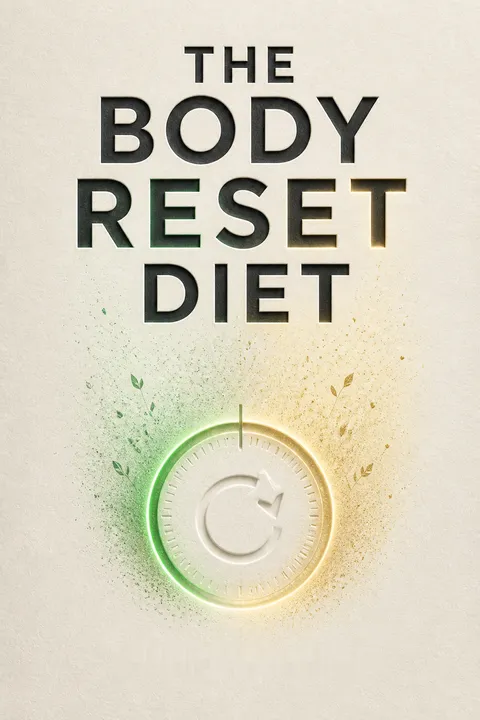
Start with a clear runway. Harley Pasternak argues that many diets fail not because people lack discipline, but because the plans demand too much time, money, restriction, or patience. He points to his experience on the television show The Revolution: participants who lost more weight early were more likely to keep following the program afterward. The Body Reset Diet turns that observation into a short, structured start designed to produce visible progress without extreme fasting or punishing workouts.
Momentum is the point. The plan lasts 15 days, divided into three five-day phases, and gradually replaces smoothies with solid meals. Its larger aim is to teach routines that can continue after the initial push. The book promises rapid results, but individual outcomes vary, and early scale changes do not necessarily represent fat loss alone.
What's striking is the emphasis on the emotional mechanics of behavior change. A visible early result can make an effort feel worthwhile, much as early feedback helps people persist when learning a difficult skill. That is a useful design principle: make progress observable, and make the first steps achievable. The caution is that rapid results can become a misleading proxy for health or lasting change. A short reset works best as a structured experiment, not as a test of character or a promise that everyone will lose weight at the same pace.
Build meals around protein, fiber, produce, and a modest source of healthy fat.
Use a repeatable template. For smoothies, Pasternak recommends four components: a liquid base, lean protein, healthy fat, and a high-fiber fruit or vegetable. A sample breakfast blends an apple with its skin, banana, Greek yogurt, milk, almonds, and cinnamon. The point is not to memorize recipes, but to learn a structure that can be varied with available ingredients. The same logic shapes the snacks and solid meals: pair fiber-rich foods with a protein source instead of eating fruit or crackers alone.
Make food satisfying. The book frames protein and fiber as anchors that can help meals keep hunger at bay, while fats such as avocado, nuts, or seeds add flavor and help make a meal complete. It favors ordinary supermarket foods over exotic ingredients and elaborate recipes, lowering the effort required to follow the plan.
A template is more useful than a forbidden-food list because it helps a reader assemble meals in different kitchens, budgets, and cultures. Protein and fiber can support satiety, while whole produce contributes volume and a broad range of nutrients. The framework also invites substitutions, which makes it less brittle than a recipe-only diet. Still, the book sometimes treats its specific mix of macronutrients as universally necessary. Individual needs differ, and a balanced meal does not have to contain every category in precisely the same proportion.
Blend whole produce rather than stripping away its pulp for juice.
Keep the whole plant. Pasternak makes the blender the plan's signature kitchen tool because it is fast and keeps the fruit or vegetable pulp in the drink. That pulp supplies fiber, which juice usually loses when it is separated from the liquid. The book compares a cup of orange segments with a cup of orange juice: the segments contain fewer calories and carbohydrates, and substantially more fiber. Its apple comparison likewise presents a blended drink as lower in sugar and higher in fiber than apple juice.
Fiber supports fullness. The book describes soluble fiber as helping slow sugar absorption, while both soluble and insoluble fiber support digestion. It also cites research associating additional fiber with lower calorie intake and weight loss. The practical advice is simple: retain edible skins, use whole fruit, and choose smoothies over juice when the goal is to preserve fiber.
The strongest insight here is not that blending unlocks extraordinary nutrition, but that food form matters. Keeping pulp preserves fiber, and a thicker, more substantial drink may be more filling than a clear juice. This principle also extends beyond smoothies: whole fruit generally asks the eater to chew and takes longer to consume. Blending does not make unlimited fruit harmless, however, and liquid calories can be easy to drink quickly. For some people, eating produce whole may provide more satisfaction than drinking it.
Schedule five eating occasions to avoid arriving at meals ravenous and unprepared.
Create a steady routine. The Body Reset calls for five eating occasions each day, spaced at predictable times. In Phase I, those are three smoothies and two snacks. Phase II changes the mix to two smoothies, two snacks, and one solid meal. Phase III includes one smoothie, two snacks, and two solid meals. Readers choose the timing that fits their day, then plan ahead so a missed grocery trip or a rushed afternoon does not turn into an impulsive meal.
Do not confuse routine with metabolism magic. Pasternak argues that frequent, smaller meals help stabilize blood sugar, reduce cravings, and keep metabolism active. The useful behavioral lesson is to prevent long gaps that leave someone feeling out of control. The stronger claim that eating more frequently reliably increases fat burning is not established by the book's examples alone.
Regular eating can help people whose work schedules, medication needs, or hunger patterns make long gaps difficult. Planning also reduces decision fatigue: the choice is made before stress or intense hunger narrows the options. But meal frequency is a tool, not a metabolic law. Evidence does not show that everyone burns more energy simply by eating five times rather than three. Some people prefer fewer meals and do well with them. The meaningful test is whether a schedule supports adequate nutrition, comfort, and consistency.
Make ordinary movement your baseline, not a workout your only activity.
Count the day, not just the gym. Pasternak distinguishes planned exercise from everyday physical activity: walking to speak with a colleague, taking stairs, pacing during a call, or getting up from a desk all contribute to movement. He argues that a hard workout cannot erase a day spent almost entirely sitting. During the 15-day plan, readers aim for 10,000 steps daily, a target the book equates with roughly four miles, tracked with a pedometer.
Build movement into routines. Suggested tactics include parking farther away, walking during errands, and taking brief loops throughout the day. The step target is meant to make activity visible and repeatable, rather than requiring a gym visit or an intense class. The book also warns that exhausting exercise can increase appetite or lead to injuries that disrupt activity.
This distinction anticipates an important idea in public health: a person can exercise regularly and still spend most waking hours sedentary. Frequent movement breaks are a practical complement to dedicated workouts, and a step counter can turn an abstract intention into feedback. The fixed 10,000-step target should be treated as a motivating benchmark, not a universal medical threshold. Starting points, mobility, disability, and health conditions vary. For many readers, a gradual increase from their current baseline is more useful than chasing a number at any cost.
Add brief, progressive strength work instead of relying on punishing workouts.
Train for durability. In Phase I, the plan emphasizes walking alone. In Phase II, it adds a short resistance circuit three days a week. Phase III alternates two circuits on five days a week. The first circuit focuses on muscles at the back of the body, including the upper back, triceps, lower back, hamstrings, and glutes. The second adds work for the chest, legs, sides, and abdomen. Exercises have beginner, intermediate, and advanced versions, with repetitions and circuits increasing as strength improves.
Consistency beats spectacle. The book's exercises use body weight or ordinary objects such as water bottles, making the routine easier to do at home. It presents strength training as support for muscle, posture, mobility, and body composition, rather than as a way to burn large numbers of calories during a few minutes of exercise.
The graduated structure is a welcome alternative to fitness programs that mistake exhaustion for effectiveness. Resistance training can preserve or build strength, which matters for function as well as appearance, and progressive difficulty gives the body a reason to adapt. The posterior-first emphasis also responds to the book's concern about forward-leaning desk and phone habits. The exact circuit and schedule are not mandatory for everyone, though. Exercise selection should fit the individual's abilities, and pain, injury, or a medical condition may call for professional guidance.
Change your portions and surroundings before asking willpower to do all the work.
Design the default. The book argues that people tend to eat more when more food is placed in front of them. It cites an experiment in which participants served themselves 56.8 percent more ice cream when given both larger bowls and larger serving spoons. Pasternak recommends smaller plates, pre-portioned snacks, putting away food before sitting down, and avoiding meals in front of screens, where it is easy to lose track of what has been eaten.
Plan before hunger hits. Shopping with a list, keeping basic ingredients on hand, and preparing meals ahead reduce reliance on last-minute takeout. The book's solid meals, called S-meals, are built around simple categories such as salads, sandwiches, soups, scrambles, and stir-fries. Their purpose is as much logistical as culinary: make cooking familiar and fast enough to repeat.
Portion cues show how behavior is shaped by the setting, not just by conscious intention. Smaller serving tools and pre-portioned snacks reduce the number of decisions required in the moment, a principle that also appears in choice architecture and behavioral economics. The bowl experiment is persuasive as an illustration, though it does not prove that dishware alone determines body weight. Planning must also remain flexible: rigid shopping lists can fail when money, time, or access to fresh food are limited. Good design accommodates real constraints rather than blaming people for them.
After the reset, keep the routine and reserve two meals weekly for flexibility.
Make the handoff explicit. After 15 days, Pasternak recommends one smoothie, two snacks, and two solid meals each day, alongside continued walking and resistance training. He also allows two free meals each week, when the usual food rules do not apply. He prefers this to a full cheat day, which can turn planned flexibility into an invitation to overeat or make the other six days feel unreasonably strict.
Return to structure when needed. The book suggests using parts of the reset again after an indulgent period or when someone wants a short-term boost. The more durable lesson is to keep convenient staples available, plan meals around work and social life, and treat flexibility as part of the pattern rather than as a failure. A reset is useful only if its habits can coexist with ordinary life.
The move from a rigid opening phase to planned flexibility recognizes that eating is social as well as nutritional. A defined allowance can reduce the all-or-nothing thinking that often follows a perceived lapse. Yet labeling two meals as completely rule-free may not suit everyone; for some, it can encourage a restriction-and-overindulgence cycle. The sturdier principle is permission without punishment: enjoyable foods can fit within a broad pattern of nourishing meals. Long-term success depends less on preserving a named protocol than on finding a routine that remains livable.
Analysis
The book is best understood as an adherence system wrapped around a 15-day diet, not as a new discovery about metabolism. Its most persuasive contribution is practical: reduce the burden of meal preparation, make food choices repeatable, keep movement visible, and increase exercise gradually. Smoothies serve as a convenient bridge into more produce and fiber, while the three phases prevent the opening restriction from becoming the permanent menu. The progression from three smoothies to solid meals is central because it treats the initial phase as a transition rather than a sustainable endpoint.
The book's narrative also identifies a real psychological problem. Many people abandon health plans when the costs arrive immediately and the rewards seem distant. A short program with clear daily tasks can create early feedback and a sense of competence. That logic is strongest when success is measured not only by the scale, but by routines gained, stamina, and the ability to prepare meals. Rapid weight loss is not a dependable or necessary sign of success, and some early changes may reflect water or other short-term shifts.
Its scientific claims need more caution than its practical advice. The text sometimes presents meal frequency as a way to accelerate metabolism, implies that particular combinations unlock fat burning, and makes sweeping claims about blending and nutrient availability. Those assertions are stronger than the evidence described in the book. Meal frequency does not automatically increase energy expenditure, and weight change reflects a complex interaction of intake, activity, physiology, medication, environment, and adherence. The plan's fixed step and water targets also cannot be assumed to suit every reader.
The most lasting idea is therefore not that every body needs this exact reset. It is that sustainable change often depends on reducing friction while preserving enough pleasure and choice to continue. A useful adaptation keeps the book's strongest tools, simple meals, planned routines, daily movement, and brief strength work, while treating its timeline and numerical targets as adjustable starting points rather than guarantees.
Review Summary
Readers generally find The Body Reset Diet helpful, with an average rating of 3.93/5. Many appreciate its simple approach, focusing on balanced nutrition, portion control, and increased physical activity. The book offers practical tips, recipes, and a 15-day reset plan. Some readers found success in weight loss and improved eating habits. However, a few critics noted that the information could be better organized and that some advice may not align with personal preferences. Overall, most readers found value in the book's strategies for healthier living and weight management.
People Also Read









Glossary
The Body Reset Diet
A phased 15-day eating planHarley Pasternak's program begins with three smoothies and two snacks daily, then gradually replaces smoothies with solid meals over three five-day phases. It combines this eating structure with daily walking and brief resistance training. After the initial 15 days, the book recommends a more flexible routine intended to continue over the long term.
C-snacks
Planned protein-and-fiber snacksThe book's name for its portable snacks, with the C referring to crunchy or cut foods. Examples include vegetables with a protein-rich dip, fruit paired with cheese or turkey, and selected high-fiber crackers. The book's suggested snack criteria include protein and fiber, with limits on calories and sugar.
S-meals
Simple single-dish mealsThe book's label for quick solid meals designed to make the transition from smoothies easier. The S refers to salads, sandwiches, soups, scrambles, and stir-fries. These meals use familiar ingredients and simple preparation, while aiming to include protein and fiber as part of a balanced plate.
Harley's Reset Template
A repeatable meal-building structureThe book's general approach to assembling meals with consistent categories of ingredients and limited preparation time. For smoothies, the template combines a liquid base, a lean protein, a healthy fat, and a high-fiber carbohydrate. It is meant to make substitutions easier and reduce dependence on fixed recipes.
About the Author
Other books by Harley Pasternak M.Sc.

Download PDF
Download EPUB
.epub digital book format is ideal for reading ebooks on phones, tablets, and e-readers.








