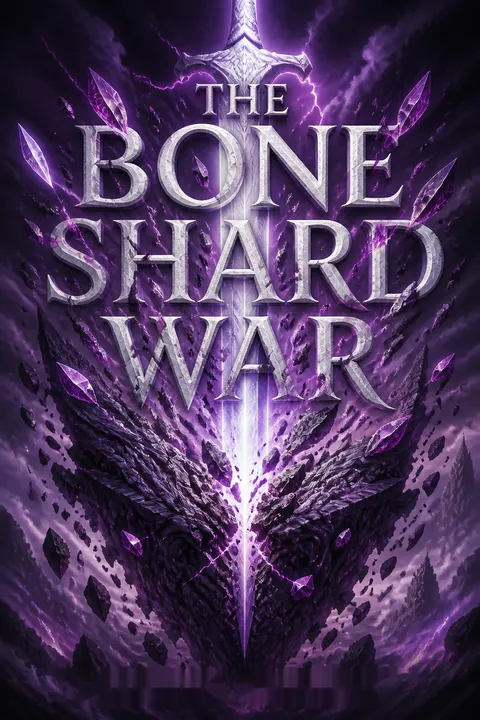


Plot Summary
Ragan Unbound
On Gaelung, Nisong and Ragan hide in ruined Alanga country while professional assassins close in. Ragan insists they will die unless she removes the bone shard Lin placed in his body, but Nisong knows the shard is her only leverage over a man who has already tried to hurt her. When the attackers threaten them both, she finally reaches inside him and pulls it free.
Ragan answers with lethal water magic, killing the assassins while Lozhi, Nisong’s growing ossalen, fights at her side. The victory makes Ragan’s appetite for violence unmistakable. He takes Nisong’s remaining shards and points toward the palace, promising to remind the Empire what it means to live among Alanga.
Nisong’s choice is both rescue and surrender. She frees Ragan from Lin’s command, but also gives up the only restraint she can enforce on him. Her calculation is understandable: she wants power enough to make her friends’ deaths mean something, and she has spent years surviving by finding leverage in unequal relationships. Yet the scene shows how a desperate desire for control can reproduce the very danger it hopes to master. Ragan’s violence is not a temporary tactic; his calm after killing reveals that he experiences power as permission. Nisong sees the warning and follows him anyway, because being alone seems worse than being endangered beside someone she might still influence.
A Consort and a Head
Two years after Jovis vanished, Emperor Lin visits Riya to stop Governor Iloh from breaking the Empire over the witstone mining ban. Trade is slowing, caro nut oil is scarce, and the governors threaten secession. Lin offers Iloh the position of consort to secure his allegiance, sacrificing the future she once imagined with Jovis.
Before they can settle the arrangement, a box arrives containing Governor Urame’s severed head, marked with Ragan’s name. Dione then visits the palace with Shardless Few followers, apparently to discuss peace, but a hidden accomplice steals a white-bladed sword from Lin’s rooms. Lin recovers it and learns the theft was a feint: the Shardless Few have already invaded Nephilanu.
Lin’s decision exposes the personal cost of ruling through inherited institutions. She makes a marriage proposal not from affection but from a political need to keep governors from pulling the Empire apart. The severed head and stolen sword then reveal how little control her bargain buys: violence is already moving faster than diplomacy. Lin’s first instinct is to use the terrifying authority her father modeled, but she deliberately lowers the water she raised against Iloh and chooses negotiation instead. That restraint is not weakness; it is an effort to separate legitimate power from the habit of making others afraid. Still, the arrival of Ragan’s message shows that ethical restraint cannot by itself stop an organized assault.
The Maelstrom’s Orders
Jovis has spent two years under Ioph Carn leader Kaphra’s control, raiding Imperial ships for witstone and using Alanga water magic against their crews. He tells himself that compliance gives him a chance to escape, but each raid leaves people dead and deepens his shame. Kaphra sends him to destroy ships near Imperial, then orders him to devastate a city after Jovis intervenes when an angry crowd attacks two newly awakened Alanga.
Jovis recognizes the crowd’s fear, but cannot stop Kaphra from forcing his hand. The violence is part of a larger design: Kaphra wants Alanga eliminated so no one can challenge his grip on power. Jovis’s old identity as a folk hero is now a dangerous disguise he cannot reclaim.
Jovis’s captivity makes coercion psychologically more complicated than simple obedience. Kaphra controls his body through commands and threatens Mephi, but Jovis also begins adapting himself to survive, finding comfort in praise and familiar banter. The danger is not that his original goodness vanishes; it is that repeated compromises make the distinction between performance and desire harder to feel. His actions against the city therefore carry two kinds of guilt: responsibility for what he did and grief at how little freedom he believed he had. The book refuses an easy equation between survival and innocence. Jovis’s task is not merely to escape a controller; he must decide what responsibility remains possible after control has distorted his choices.
Nephilanu Under Siege
As the Shardless Few land on Nephilanu, Ranami directs civilians into the palace and sends guards to hide food and caro nuts. Their general, Halong, is her old street companion, but he now commands Dione’s army and demands control of the island’s farms. Ranami surrenders to keep her people from dying in a hopeless defense, while Ayesh slips away into the forest.
Far from home, Phalue prepares to return, but Lin explains that a lone ship would deliver her straight into the blockade. Phalue refuses at first, then accepts Lin’s expedition to find another white-bladed sword on the condition that Lin send troops to Nephilanu and establish orphanages. Phalue chooses a longer route to help her family, though the island has already fallen.
The invasion tests two different forms of courage. Phalue’s instinct is to put her body between danger and her family, while Ranami’s is to preserve the people who cannot fight by accepting temporary captivity. Ayesh complicates both responses: she has survived the streets and possesses Alanga power, yet Ranami still sees a child who deserves protection. Halong’s presence makes the attack more than a contest between armies. He and Ranami once survived together, so his alignment with Dione turns political disagreement into a breach of intimate trust. Phalue’s conditions also push Lin toward obligations beyond weapons and statecraft. The crisis makes clear that a policy is measured not only by its strategic result, but by the vulnerable people it leaves behind.
The Key Beneath Anau
Lin follows the family line of Tianlu, one of the first sword bearers, to Anau, but the descendant she seeks has been dead for a year. Her belongings ledger lists no sword, only a small box sold to Eina, a pancake seller.
Lin discovers a hidden key beneath its false bottom just as a Shardless Few ship approaches. The key’s pierced metalwork casts a map of Maila, where another sword may lie. On Gaelung, Lin and Phalue seek a route through Maila’s deadly reefs and meet a former construct hiding among coral vendors.
When Lin alters his commands to help him, he rejects the change and kills himself. Before dying, however, he gives them the reef passage and identifies his ship, leaving Lin with a route forward and another failure she cannot repair.
The expedition makes Lin’s search for power inseparable from the question of how power is used. The key is found through patience and ordinary records, not prophecy, while the construct’s death exposes the violence hidden inside Lin’s attempt to help. She believes that changing his commands will save him; he experiences the intervention as another violation of his identity. The scene echoes Lin’s own origins as a constructed person and complicates her confidence in benevolent rule. Phalue sees the danger more plainly, but she also chooses to continue because the swords may protect her daughter. Their cooperation develops through disagreement: trust here is not agreement, but the willingness to let the other person’s judgment remain uncomfortable.
The Sword at Hualin
Kaphra sends Jovis and Philine to steal a newly discovered white-bladed sword from the Scholars’ Academy at Hualin Or, ordering Jovis to kill anyone who sees him take it. Ragan and Nisong arrive with Lozhi, and the ensuing fight forces Jovis to defend the Academy rather than simply complete Kaphra’s theft.
Chancellor Buphan gives Jovis the sword so he can hold Ragan off, but Ragan defeats him and takes it. During the retreat, Kaphra’s command pushes Jovis to kill Buphan for witnessing the theft.
Jovis realizes that Buphan handed him the weapon rather than having it stolen from him, so the command’s wording no longer applies. He escapes without killing his former teacher, discovering that careful interpretation can loosen the commands inside him.
Jovis’s first real opening is linguistic rather than magical. He cannot yet remove the shards or overpower Kaphra, but he notices that commands depend on meanings, not just force. The distinction between taking and receiving becomes a narrow moral passage through which he can act without obeying literally. This is not a clean victory: Ragan still gets the sword, and Jovis remains under Kaphra’s control. But the episode returns agency in a form suited to Jovis’s defining skill, his attention to words and loopholes. Buphan’s role sharpens the point. Jovis saves the life of a teacher who once treated him carelessly, not because the past is repaired, but because he refuses to let old injury dictate his present conduct.
The Cave That Heals
Held beneath the Shardless Few hideout, Ranami uses conversation and Ayesh’s secret visits to keep pressure on Halong while searching for a way to help Nephilanu’s sick. She and Ayesh carry a small cache of caro nuts through hidden tunnels, hoping to get medicine to people without surrendering the island’s entire supply.
A cut on Ranami’s hand closes when she touches a cavern pool, but she later discovers a blank space in her memory. When Halong’s white-bladed sword wounds Ayesh and her Alanga healing fails, Ranami remembers the pool and takes her there. Ayesh survives, but loses several months of memories. The cure saves her body by taking part of her past, revealing that the pool’s gift is never free.
The pool links bodily survival to the fragile continuity of identity. Ranami’s first contact seems harmless, even miraculous, because it closes a small cut. Only later does she recognize the missing memory as a cost, and by then the pool becomes the only chance to save Ayesh from a wound that ordinary healing cannot mend. Ranami’s decision is shaped by love and urgency, not a clean understanding of the magic. Her political choices echo the same dilemma: hoarding caro nuts protects a future supply but lets people suffer now. She searches for a third option, hiding a smaller cache to reduce harm. The scene presents care as practical compromise, with every available solution carrying a consequence someone must bear.
Jovis Breaks the Leash
Kaphra orders Jovis to kill two Alanga at a cloudtree monastery on Riya. Jovis reaches the monastery with Philine and Mephi, but his commands force him to attack when the monks confront him.
He avoids killing them by interpreting the order to kill as applying to two ants, and the monks confirm that bone shards are controlling him. They cannot remove the shards, but they shelter him from Ragan, who pursues them up the mountain. Jovis saves Philine from falling and then lies to protect her from the monks.
He learns that Kaphra has also placed a command preventing him from approaching or identifying himself to Lin. When Mephi escapes captivity and Philine chooses revolt, Jovis helps her seize the Ioph Carn from Kaphra, who is carried into the sea by summoned sea serpents.
Freedom arrives in layers. Jovis first discovers that Kaphra’s orders can be interpreted around, then learns that the commands still shape where he can go and whom he can reach. The monastery offers protection but no simple cure, and its own severe discipline prevents it from becoming an uncomplicated refuge. Jovis’s decision to spare Philine and later stand with her shows a moral life re-emerging through particular acts rather than a sudden return to innocence. Philine, too, moves from ambition within Kaphra’s organization to open leadership against him. Their alliance is not friendship declared aloud; it is a series of costly choices that make trust possible.
Riya Falls Into Sea
Lin reaches Maila, finds the buried white-bladed sword, and escapes Dione’s pursuit by turning the sea against his ship. She later abandons the search and sends Phalue toward Nephilanu with Imperial troops, choosing the occupied island and its caro nuts over an uncertain weapon.
At Riya, Ragan kills Huan and her ossalen; the creature’s bones crumble like witstone. Lin recognizes the connection: the islands themselves are ossalen, and their mineral is their bones.
Ragan enters the mine and uses the white-bladed sword to kill Riya from within. Lin flees with Thrana as the island collapses. Jovis, newly recaptured by Kaphra, escapes into the sea, helps drive refugees beyond the sinking island, and is captured again after a local sailor saves him.
Riya’s destruction turns a political resource crisis into a literal anatomy of the Empire. Witstone is not simply a scarce commodity; it is the remains of living beings, and mining has made the islands vulnerable long before Ragan weaponizes that vulnerability. Lin’s earlier policies and her family’s history now acquire a bodily consequence. The revelation also reframes the white-bladed swords: they are not merely anti-Alanga weapons but instruments capable of killing the land itself. Jovis’s rescue of refugees offers a counterpoint to the catastrophe. He cannot save Riya, but he uses his power to carry people away from it. The difference between failure and responsibility is drawn at the scale of what someone can actually do.
Philine Takes Command
After Riya sinks, Kaphra captures Jovis and Mephi and confines them aboard his ship. He keeps Mephi under threat of the white-bladed sword while Jovis is locked in a cell beside Philine, whom Kaphra has already maimed. Jovis escapes his cell and offers Philine a chance to leave with him. Instead, she takes the opportunity to challenge Kaphra for leadership of the Ioph Carn.
The crew divides, and Jovis fights beside her while Mephi summons sea serpents to overwhelm Kaphra’s remaining loyalists. The serpents drag Kaphra overboard. Philine claims the organization, while Jovis asks to be taken to Nephilanu so he can reach Lin. He is still not free of every command, but he is no longer Kaphra’s prisoner.
Philine’s mutiny is a change in the story’s distribution of power. For much of Jovis’s captivity, she appears to be one of the people enforcing his confinement, but her ambition is more complicated than loyalty to Kaphra. She has built a place for herself inside the organization and fears what leaving it would cost. Jovis cannot resolve that conflict for her; he can only offer solidarity when she chooses to act. Mephi’s intervention completes the reversal: the creature Kaphra treated as leverage becomes the force that removes him. The scene makes liberation collective and practical. No one escapes alone, and the institution survives only by changing who commands it.
Ranami Reclaims the Few
Phalue reaches Nephilanu with Imperial troops and meets Jovis, who warns her that Riya has vanished. Rather than charge the thinning blockade, she listens to General Yeshan and approaches the Shardless Few under a peace flag.
She reunites with Ranami, who has survived imprisonment and persuaded Halong to question Dione’s priorities. When Ragan splits the Shardless Few and claims leadership, Ranami argues that neither Dione’s hidden agenda nor Ragan’s vengeance can build a fair future.
The remaining faction chooses her. Earlier, Ayesh’s sword wound was healed in the cave pool, but the child lost months of memory. Ranami now leads former captors and allies alike, while Phalue returns to her family and prepares to distribute Nephilanu’s caro nuts.
Ranami’s leadership grows from the very skills that once seemed politically modest: listening, remembering shared hardship, and recognizing the motives beneath slogans. She does not deny the Shardless Few’s grievances, but she refuses to confuse justified anger with a trustworthy plan. Her appeal to their common experience lets former enemies imagine a future beyond revenge. Phalue’s changed approach matters too. Instead of forcing her way into Nephilanu, she accepts counsel and approaches the island as someone who must earn cooperation. Ayesh’s lost memories underline that even victory leaves damage behind. The family reunites, but neither its emotional bonds nor its political alliances return to their earlier forms.
Jovis Comes Home
Lin’s ship returns to find Imperial City burned and Dione’s army at the palace. Jovis arrives with Phalue’s forces, slips through the Shardless Few patrols, and asks Lin to meet him blindfolded and tied to a chair. The commands prevent him from approaching her as himself, so he has arranged the encounter to let her come to him.
Lin reaches into his chest and removes Nisong’s shards. They reunite physically, but the city is under siege and Jovis cannot promise he will fight. He admits that Kaphra’s punishments, threats against Mephi, and his own choices have left him afraid of becoming a weapon again. Lin listens without using his guilt to compel him, even as the armies close in.
The reunion restores intimacy without restoring the past. Lin can remove the physical mechanism of Jovis’s coercion, but she cannot instantly undo what the commands and punishments taught him about himself. The blindfolded meeting makes the asymmetry of their situation visible: he cannot safely identify himself, so he must construct conditions in which she can reach him. Their closeness is real, yet it does not function as a cure. Lin’s restraint becomes important because she has the political power to demand his help. Instead, she lets him describe what happened and accepts that love does not grant her ownership of his recovery. Their relationship must now contend with both memory and its absence.
The Palace Surrenders
Dione gives Lin until evening to abdicate, but Ragan’s faction attacks the palace before the deadline. Lin leads her defenders against the invading Shardless Few, then sees the refugees and guards being overwhelmed.
She stops the fighting and offers to abdicate if Dione will establish a Council and compensate the people whose homes were destroyed. Dione accepts, but Ragan rejects the settlement and urges the army to seize the palace and eliminate every possible rival. Lin’s surrender has bought no safety.
The Shardless Few turn toward the palace, while Jovis, shaken by the sight of Nisong and the white-bladed sword, runs from the battle. Lin escapes with civilians into the mountains, leaving the city and throne behind to prevent further slaughter.
Lin’s abdication is not a collapse of conviction but a shift in what she believes authority is for. She gives up the throne to protect people who are trapped between armies, hoping the political structure can be replaced without more deaths. Ragan exposes the limits of that hope: he treats surrender as an opening to erase opponents, not as an invitation to build something new. Jovis’s flight also complicates the scene’s moral field. His fear is not a refusal to care; it is the residue of being made to fight against his will. Lin cannot solve every crisis by remaining the strongest person in the room. The choice to retreat preserves lives, but leaves the future dependent on people she cannot command.
Sand Turns the Tide
After Ragan’s forces enter the palace, Nisong leaves them and finds Lin hiding in the mountains with the refugees. She carries shards engraved with a hidden command that can override the commands she placed in Ragan’s Alanga and constructs.
Lin accepts the shards and persuades Nisong, who now asks to be called Sand, to fight alongside her. While Sand begins turning Ragan’s followers against his orders, Jovis finds Ayesh racing toward the palace and follows despite his terror of Nisong.
At the gates he joins Lin’s defense, then pursues Ayesh and Ragan underground when Ragan heads for the island’s core. Sand’s choice does not erase her earlier violence, but it gives Lin a way to separate the people under Ragan’s control from the leader using them.
Sand’s defection is neither absolution nor a simple change of allegiance. She recognizes that Ragan’s promises of belonging have become another form of possession, and her hidden command is the one piece of power she kept for herself. Offering it to Lin requires her to act against the person she once depended on, without any guarantee that the people harmed by her will trust her afterward. Jovis’s return to the fight is similarly imperfect. He is afraid and does not suddenly regain his old confidence, but he chooses to protect Ayesh rather than let fear make the decision for him. These choices create an alliance from damaged people, not purified heroes.
The Island’s Last Breath
In the caverns beneath the palace, Ragan tries to reach Imperial’s heart and sink the island. Ayesh confronts him first, using her shield and sword until Jovis arrives. Jovis keeps Ragan away from the vulnerable ground, but Ragan tricks him with a piece of cloudtree bark and drives a white-bladed sword into his belly.
As Ragan prepares to finish him, Jovis feels Imperial stirring beneath the stone and draws strength from the island itself. He beheads Ragan before the sword can reach the island’s core. Jovis is dying from his wounds, so Lin takes him to the healing pool. It restores his life, but erases all his memories. Mephi remains beside him, and Sand, nearly dead, is rebuilt with Thrana’s shards and freed from her commands.
The climax brings the book’s central costs together in the same cavern: the island’s life, the people living above it, and Jovis’s own body. He defeats Ragan not by being unafraid but by accepting the risk that fear has repeatedly made him avoid. Imperial’s response is not a triumphant mastery of nature; it is a brief, reciprocal aid from a living place that Jovis asks rather than commands. The healing pool then preserves his life at the cost of the self built from memory. Sand’s restoration offers a parallel possibility, but not a reversal of what she has done. Survival here is real and precious, yet never free of loss.
A Council Takes Root
Lin formally abdicates, and Ranami accepts the task of building a Council with representatives from the islands. Dione agrees to dissolve the Shardless Few and teach Alanga knowledge rather than rule through it. Ranami and Phalue begin rebuilding Imperial and welcoming displaced families, while Ayesh is encouraged to study and grow beyond the need to fight.
Lin stays with Jovis as he wakes with no memory of her or Mephi. He eventually leaves with Mephi to discover who he is without other people’s recollections defining him. Seasons later, Jovis returns to Lin’s beach, still unable to recover his former memories, but able to use Alanga water magic. He asks to know Lin again from the beginning, and she agrees.
The ending refuses restoration as its measure of success. The old Empire does not return, Jovis does not recover his former self, and Lin does not remain on the throne simply because she once fought to claim it. Instead, each survivor must make a new relationship to power: Ranami shares it, Dione teaches rather than commands, Sand accepts accountability, and Jovis chooses a beginning without pretending it is a reunion with the past. Lin’s willingness to know him again is not a guarantee that their earlier love can be reproduced. It is an ethical offer of companionship without imposing an identity on him. The book’s final hope is therefore provisional, grounded in choice rather than destiny.
Analysis
The Bone Shard War asks what happens when the language of protection is used by people with unequal power. Lin wants to protect the Empire, Kaphra wants to protect his organization, Dione wants to protect the Alanga, and Ragan wants to protect himself from ever being powerless again. Each motive can sound legitimate until its costs are transferred to someone else. The novel’s sharpest test is whether characters can recognize that transfer before it becomes ordinary.
Its magic makes that question bodily. Bone shards turn command into a physical presence inside another person; witstone turns living ossalen into fuel; the healing pool saves bodies by taking memories. None of these systems is simply evil or useful. Their ethics depend on who consents, who benefits, and who is made to absorb the damage. Jovis’s obedience and Lin’s attempts to alter constructs show how good intentions can still violate another person’s agency. Sand’s eventual choice matters because she stops treating her own suffering as a license to control others.
The political alternative is not a perfectly wise ruler. Lin eventually accepts that her ability to make fast decisions is not proof that she should make them alone. Ranami’s Council is slow, difficult, and vulnerable to disagreement, but it places decision-making nearer to the people who live with its consequences. That change also requires attention to mundane needs: medicine, refugees, children, food, and travel. The epic’s scale repeatedly collapses into these concrete obligations.
Finally, the book resists the fantasy that healing means restoration. Jovis survives but loses his memories; Sand is given a chance to live with what she has done; Lin gives up the throne without knowing whether the new order will succeed. Their futures depend on renewed consent, not on recovering a supposedly complete former self. The ending’s hope is therefore modest but demanding: people may change, yet repair requires time, accountability, and the freedom to choose what comes next.
Review Summary
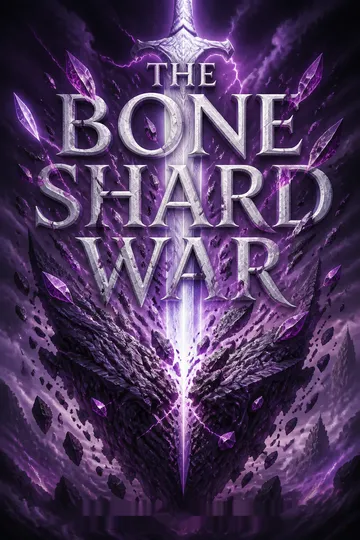
The Bone Shard War receives mixed reviews as the final installment of The Drowning Empire trilogy. Many readers praise the satisfying conclusion, character development, and unique magic system. Some find the pacing slow and repetitive in parts, with excessive dialogue and negotiations. The time jump at the beginning surprises some readers. Critics argue the book could have been shorter and more focused. Despite these concerns, most reviewers appreciate the emotional impact, world-building, and overall series arc. The animal companions, especially Mephi, are consistently highlighted as fan favorites.
People Also Read









Characters
Lin Sukai
Reluctant reforming emperorLin is an Alanga and the Emperor of the Phoenix Empire, yet she was created through her father’s experiments rather than born into the identity she inherits. She tries to distinguish her rule from his by ending the Tithing Festival, limiting witstone mining, and treating constructs as beings rather than property. Her habits of secrecy and control are understandable: she grew up inside a palace where knowledge was power and affection could be conditional. Lin’s central tension is between protecting people herself and allowing them a role in governing their own lives. Her bond with Thrana and her love for Jovis expose a more private, vulnerable self beneath the office, but neither relationship cancels her responsibility to those beyond the palace.
Jovis
Smuggler with a rescuer’s heartJovis is a half-Poyer sailor, former smuggler, and folk hero whose instinct to help others has repeatedly pulled him into danger. He is quick-witted and resourceful, often using language, improvisation, and a knowledge of the sea to escape situations that strength alone cannot solve. His love for Lin is bound up with his desire to be useful, but he struggles to separate genuine care from the fantasy that he must always save everyone. Mephi is his closest companion, and the bond between them anchors him when guilt or fear threatens to make him disappear into another role. Jovis’s humor can deflect pain, but his deeper challenge is accepting responsibility without confusing it with a demand to be perfect.
Nisong
A survivor seeking powerNisong is a construct made from human remains and memories, once an ally of Lin and now driven by grief over the companions she lost. Her memories of a former life give her a history that is not entirely hers, while her present experiences make her fiercely individual. She wants recognition and authority partly because she has spent so long being treated as a failed experiment or an expendable servant. Nisong is strategic, proud, and capable of tenderness, especially toward Lozhi, but the need to make old losses meaningful can draw her into dangerous loyalties. Her story asks how someone shaped by another person’s choices can claim agency without denying the harm she herself causes.
Ranami
A streetwise political bridgeRanami is Nephilanu’s governor’s wife, a former street orphan, and a longtime member of the Shardless Few. She distrusts easy promises because she knows how often the poor are asked to wait for justice that never arrives. Unlike Phalue, Ranami rarely assumes that decisive action is the same as a good solution. She listens closely, remembers people’s motives, and uses language to keep disagreements from hardening into violence. Her care for Ayesh is shaped by her own childhood, especially her understanding that safety cannot be imposed without also respecting a child’s agency. Ranami’s compassion is not softness without limits; it is a disciplined effort to keep anger from becoming the only political language available.
Phalue
A governor who acts decisivelyPhalue governs Nephilanu and is Ranami’s wife. Broad-shouldered, direct, and trained to fight, she is most comfortable when a problem has a visible opponent and a practical next step. Her confidence can become impatience, especially when people she loves are in danger. Ranami challenges her to see how power and privilege shape even well-intentioned decisions, while Lin forces her to confront responsibilities beyond her island. Phalue’s loyalty to her family is fierce, but it grows more thoughtful as she learns to listen before acting. She also advocates for orphans, recognizing that children should not have to become soldiers simply because adults have failed to make their world safe.
Dione
An ancient rebel with regretsDione is the last survivor of the old Alanga and the hidden leader behind the Shardless Few. He has lived long enough to see friendship turn into betrayal and political ideals become excuses for violence. His experience gives him formidable magic and a deep understanding of how resentment can organize people, but it also leaves him trapped by guilt over the past. Dione speaks of a Council and protection for the common people, yet he cannot easily separate those aims from his desire to make the Sukai Empire answer for the Alanga purge. He is neither a simple tyrant nor a trustworthy liberator. His conflict with Lin comes from both of them believing they know what protection requires.
Ragan
A monk hungry for masteryRagan is a former cloudtree monk whose talent and ambition were never matched by patience or restraint. He interprets discipline as humiliation and believes he has been denied a position he deserved. That grievance feeds a sharp, volatile pride: he can be charming, funny, and persuasive, but any challenge can turn quickly into violence. His Alanga power and training make him dangerous, while his need for recognition makes him vulnerable to flattery and followers who share his anger. Ragan wants more than political victory. He wants a world that proves he was right to resent the people who held him back, even if the cost is paid by those who never wronged him.
Iloh
A governor bargaining for powerIloh is the governor of Riya and a skilled political operator. His objections to Lin’s witstone restrictions are rooted partly in the real strain on trade and public health, but his island’s wealth also gives him personal reasons to resist her policy. He understands that a threatened Empire creates opportunities for ambitious governors, and he bargains accordingly. Iloh is not guided by the same ideals as Lin or Ranami; his loyalty follows the balance of advantage. That makes him difficult to trust, but also legible. He responds to concrete concessions and political leverage more readily than to appeals about shared purpose.
Ayesh
A child refusing helplessnessAyesh is a former gutter orphan adopted by Ranami and Phalue. She has lost a hand and wears a shield prosthetic, a visible reminder of the violence that shaped her life before she found a home. Her Alanga powers and fighting ability make adults rely on her, while her own history makes her wary of being protected at the cost of agency. Ayesh can be impulsive and defiant, but she is also perceptive about danger and fiercely loyal to her family. Ranami and Phalue want her to have the childhood they were denied in different ways. Ayesh’s struggle is to imagine a future beyond mere survival without being told that the skills which kept her alive are shameful.
Thrana
Lin’s steadfast ossalenThrana is Lin’s ossalen companion, a powerful creature who grows from a small, vulnerable animal into a huge, intelligent presence. She can heal quickly, move through water with extraordinary ease, and produce wind, while her voice and judgment become increasingly distinct. Thrana is affectionate without being obedient by nature; she chooses Lin and continues to question her when Lin mistakes authority for certainty. Her loyalty is intimate, but not passive. She represents a form of power based on relationship and consent, in sharp contrast to the human practice of carving commands into bodies. As she grows, Lin must learn that loving Thrana also means accepting that she has a life and perspective of her own.
Mephi
Jovis’s stubborn companionMephi is Jovis’s ossalen, a warm, curious creature who grows into a formidable partner while retaining a playful appetite and an instinct for kindness. He often sees Jovis more clearly than Jovis sees himself, offering comfort without pretending that the consequences of Jovis’s actions do not matter. Mephi resists being treated as property and is especially sensitive to the difference between protection and control. His bond with Jovis gives the sailor a reason to keep living, but it also makes him vulnerable to people who threaten Mephi to force Jovis’s compliance. Mephi’s loyalty is freely given, which makes it fundamentally different from the commands imposed on Alanga and constructs.
Philine
Kaphra’s calculating lieutenantPhiline is Kaphra’s tracker and lieutenant, a skilled fighter who has built a place for herself inside the Ioph Carn. Her sharpness and composure protect her from appearing vulnerable, and she measures people carefully before choosing what to reveal. She recognizes Jovis’s talent and frustration but does not automatically treat him as a friend. Her ambition is practical: the Ioph Carn gave her food, shelter, and a community after she lost her parents. Philine’s loyalty is therefore tied to belonging as much as power. She is capable of risking that security when the organization’s leadership becomes intolerable.
Huan
Lin’s capable guard captainHuan serves as Lin’s Captain of the Imperial Guard. She is practical, disciplined, and accustomed to protecting others, while her family life on Imperial gives her a connection to ordinary city concerns beyond palace politics. Her bond with a newly awakened ossalen changes how she understands the future she had expected for herself. Huan is not a grand strategist, but she observes carefully and speaks plainly when Lin needs a reality check. Her loyalty grows from duty and personal trust rather than unquestioning reverence for the throne.
Ikanuy
Lin’s steady palace stewardIkanuy is Lin’s experienced steward, responsible for the administration that keeps the palace and its people functioning. She is orderly and composed, but the burdens Lin leaves her eventually exceed the bounds of routine work. Her care for her family and the people inside the palace gives her practical stakes in Lin’s decisions. Ikanuy rarely occupies the center of political debate, yet her labor makes clear how much of government depends on people whose names are not attached to its grand decisions.
Yeshan
Lin’s disciplined generalYeshan commands the Imperial army and is known for trusting careful reconnaissance over impulsive confidence. She weighs risks before committing soldiers, but once she decides, she moves decisively. Her leadership provides a counterweight to Phalue’s eagerness for action and Lin’s tendency to carry every crisis herself. Yeshan’s discipline is practical rather than ideological: she wants the army to survive, follow clear orders, and protect the people it is meant to serve.
Plot Devices
Bone shard commands
Power written into bodiesBone shards engraved with commands can govern the actions of constructs and, as the story reveals, Alanga. Lin uses this magic to restrain Ragan, while Nisong later places shards in Ragan and other Alanga to control them. Kaphra’s commands keep Jovis obedient and include specific limits on what he can reveal or where he can go. The commands are powerful but depend on their wording and hierarchy, giving Jovis ways to evade their literal meaning and Nisong a hidden means to overrule her own work. The device makes control physical, intimate, and difficult to distinguish from a person’s own choices.
White-bladed swords
Weapons against AlangaThe white-bladed swords are old weapons associated with the first rulers of the Empire. Their wounds resist ordinary healing and can kill Alanga and their ossalen. Ragan steals one from the Scholars’ Academy, and Lin searches for another by following its inheritance through old family records. The swords’ function proves more terrible than Lin first suspects when Ragan uses one against the living being beneath Riya. Their discovery links the history of the Alanga purge to the present threat of islands sinking.
Ossalen bonds
Magic through chosen kinshipAn ossalen bond gives a person access to Alanga powers, including command of water, wind, and earth. The bond is intimate and consequential: an ossalen’s death can kill its companion, while the creature itself may outlive that person. Ossalen are not simply mounts or magical tools. They speak, make choices, and form relationships beyond their bonded partner, as Mephi’s care for Jovis and Sand demonstrates. Their growth also explains the islands’ living nature, tying personal companionship to the physical world the characters inhabit.
The healing pool
Life at a memory costA pool beneath the palace and a similar pool beneath Nephilanu can heal severe wounds. Lin was grown in the Imperial pool, which her father also used in experiments. The water does not restore a person without consequence: it takes memories from the one it heals, though neither the timing nor the memories lost are predictable. Ranami discovers the cost when a gap appears in her past, and Ayesh loses months of memories after the pool heals a sword wound. It becomes Jovis’s only chance of survival after the final battle.
Witstone
Fuel made from island bonesWitstone powers ships and underpins trade between the Empire’s islands. Lin’s ban on mining it is intended to prevent more islands from sinking, but the restriction slows travel and worsens shortages of caro nut oil and other goods. At first, the mineral seems like an economic resource; the story gradually reveals that it is part of the islands’ living ossalen bodies. Excessive mining weakens them, while the white-bladed swords can kill them directly. Witstone therefore embodies the cost hidden inside a system that treats the natural world as an inexhaustible supply.
The Drowning Empire Series
About the Author
Other books by Andrea Stewart

Download PDF
Download EPUB
.epub digital book format is ideal for reading ebooks on phones, tablets, and e-readers.








