


Plot Summary
The Emperor Below
Lin, newly ruling the Phoenix Empire after killing her father, sneaks beneath the palace to study his bone-shard experiments. She drinks a flask of memory fluid and relives Shiyen discovering a concealed key. It opens a deeper cavern, where a huge construct attacks her.
Jovis, her former smuggler Captain of the Imperial Guard, has followed her with his companion Mephi. He distracts the beast long enough for Lin to dismantle it, then the three pursue a flying spy construct through the palace gardens and across the rooftops.
It escapes over the harbor. On the walk back, Jovis reveals that Mephi gives him extraordinary strength and that he can control water. Lin recognizes the power from stories of the Alanga, the supposedly vanished magic-wielding people.
Lin's first act of rule is also an act of trespass into the machinery of her inheritance. The hidden rooms make governance inseparable from investigation: to repair Shiyen's damage, she must learn what he concealed, even when the knowledge may endanger her. Jovis's rescue complicates the formal hierarchy between Emperor and guard. He protects Lin before he understands her, while Lin saves him from the construct through expertise he lacks. Their shared suspicion gradually becomes a shared secret, an intimacy founded not on trust already earned but on recognizing that both are implicated in a danger neither can yet name.
A Knife at Court
While Lin interviews candidates for palace steward, Meraya poisons and stabs Jovis, knocks Lin's construct Bing Tai aside, and attacks the Emperor. Lin survives by instinctively flinging a pillow with inhuman force, while guards kill Meraya before Lin can learn who sent her.
Jovis recovers, and the gray-haired applicant Ikanuy earns the steward's post by organizing the aftermath without hesitation. Lin then orders every construct she still commands dismantled, including Bing Tai, though he had protected her.
She also plans a tour of the islands to build support against the scattered constructs. Jovis, meanwhile, continues reporting to the Shardless Few, whose leaders want him to undermine Lin. His old associate Philine catches him passing coded messages, making his double allegiance harder to keep hidden.
The attack converts an abstract historical danger into a political liability. Lin can no longer treat the Alanga as distant legend, but publicly opposing them may expose her own unexplained abilities. Her dismantling of Bing Tai shows the cost of signaling reform: the construct is not merely an instrument of Shiyen's state but Lin's companion and protection. Jovis's secret reporting creates an opposing pressure. He wants a fairer Empire, yet keeps serving a movement whose strategy may destabilize the government he now helps defend. Both characters are trying to act ethically while withholding information, and each concealment makes their future cooperation more fragile.
Nisong's Burning March
Far from Imperial, Nisong leads constructs recovered from the mind-fog on Maila through a campaign against the islands. She burns villages and kills governors who resist, arguing that the Empire has marked constructs for destruction.
Her five closest companions, Shell, Leaf, Grass, Frond, and Coral, share meals and scraps of memory as they follow her. When a governor's guards ambush the group, Shell dies protecting Nisong. The loss hardens her resolve.
She orders new constructs made from villagers' bodies and shards, then sends others to assassinate Lin and recruit more fighters. Nisong's memories of her former life with Shiyen surface unpredictably, but they do not soften her campaign. She believes the Empire's bounty has already made peace impossible.
Nisong is not introduced as a simple conqueror but as someone whose violence grows from a credible experience of abandonment. The Empire's bounty confirms her conviction that its rulers will never recognize constructs as persons. Yet her methods reproduce the system she condemns: she takes villagers' shards and makes their bodies serve a political purpose. The surviving friends make this contradiction emotionally legible. They are not a faceless army to her, but the more she tries to protect them through force, the more she asks them to risk their lives for her vision. Grief does not merely fuel her vengeance; it narrows the future she can imagine.
A Stolen Pouch
On Nephilanu, governor Phalue and her wife, Ranami, prepare to meet Gio, leader of the Shardless Few, while trying to contain unrest left by Phalue's father. Gio offers a truce if they halt caro-nut shipments to Imperial, which would deprive sick people of the oil used to treat bog cough.
Phalue accepts the terms because she lacks guards to fight him. Soon afterward, a starving girl steals the pouch containing the Emperor's letter. Phalue catches her, but the child collapses before they can question her.
Ayesh explains that she escaped Unta after earthquakes split the island apart and sank it. She had survived by hiding aboard a ship, leaving everyone she knew behind. Her arrival turns the distant disasters into a human loss Phalue cannot ignore.
Phalue and Ranami's political disagreement grows from different forms of survival. Phalue tends to believe that direct responsibility can repair harm, while Ranami knows how quickly a public gesture can become leverage for a stronger faction. Ayesh unsettles both positions. Her theft looks like a security threat, yet her thin body and lost home make punishment morally inadequate. The sinking of Unta also undermines the Empire's reassuring explanations of earlier disasters. By making this news arrive through a child who was simply trying to live, the narrative refuses to let catastrophic policy remain a question for governors alone.
Riya's Wet Welcome
Lin reaches Riya to find Governor Iloh too inconvenienced to greet her, so she walks uphill in ceremonial clothes through heavy rain. Instead of retaliating, she gives Iloh his citizens' bone shards and proposes a permanent imperial envoy.
At dinner, his court questions why the islands need an Emperor at all. Lin reads the room, discovers that Iloh loves Governor Pulan but cannot afford to marry her, and offers imperial resources to develop Pulan's small witstone mine.
Iloh agrees to marry Pulan and gives Lin some guards, though he refuses the full contingent she needs. Assassins then attack Lin's rooms. She and Jovis fight them together, and Lin kills one attacker after he threatens her. The episode ends with a limited alliance, not trust.
Lin's diplomatic education begins when ceremony fails. Iloh's slight is not defeated by a stronger display of rank; Lin gains ground by noticing a private problem and offering an exchange that benefits more than one island. Her ability to read faces becomes a political instrument, but it is also a form of attention her father rarely practiced for anyone else's sake. The assassination forces her to act without the distance of a ruler issuing orders. Fighting alongside Jovis gives their relationship a bodily trust that their formal roles cannot explain, even as the attack shows how little control either of them has over the threats surrounding them.
The Mines Go Quiet
Phalue and Ranami give Ayesh food and shelter, then learn that she came from Unta, which has disappeared beneath the sea. Phalue also teaches her to fight, recognizing the same stubbornness she had as a girl.
When Lin arrives on Nephilanu, she returns the citizens' shards, but Phalue and Ranami demand that she abdicate in favor of a council. They have withheld caro nuts under Gio's terms, despite the risk to people with bog cough. A war-construct attack on Lin's attendants kills one maidservant, prompting Lin to leave at once.
She then confirms that Unta has sunk and, after reviewing her father's notes, orders witstone mining halted because the mines may destabilize islands. Her attempt to protect lives threatens the trade and political support she needs.
The competing leaders are not divided into compassion and indifference. Lin, Phalue, and Ranami all want a less abusive order, but they disagree over whether centralized authority can be reformed or must be replaced. The island disasters make every position costly. Lin's mining ban may prevent further sinkings, yet it also threatens trade and alienates governors; Phalue's compliance with Gio's embargo may weaken Lin, yet it endangers the sick. The maidservant's death sharpens Lin's sense that grand strategy can obscure the vulnerable people nearest her. Her policy changes therefore become tests of whether her declared concern can survive pressure.
Dione's Forbidden Journal
Back on Imperial, Lin meets Ragan, a young cloudtree monk who reveals that he is also Alanga and has an ossalen companion named Lozhi. Jovis studies an Alanga journal with Mephi's help and learns that the first Emperor, Ylan Sukai, knew Dione, one of the Alanga, before the Sukais massacred his people.
The discovery unsettles the heroic history taught across the Empire. Lin finds a white-bladed sword hidden in her father's lower cavern, while reports say Alanga artifacts are awakening on distant islands.
Jovis also discovers a birth record showing that the Emperor's legitimate daughter died at three. He withholds the finding, unsure whether Lin knows the truth. With islands sinking and constructs organizing, the group sails toward Hualin Or seeking allies and answers.
The journal destabilizes the Empire's moral origin story before it explains the new crisis. The Sukais may have defended commoners from Alanga violence, but the defense required exterminating families and then controlling how that history could be remembered. Jovis's reading gives the dead a human scale: the Alanga had friends, disagreements, and ordinary lives before becoming the Empire's chosen monster. Ragan's presence adds another possibility, that Alanga are emerging within the population rather than invading from elsewhere. Yet Jovis's discovery about Lin's birth records shows that history is not the only hidden story. The state's public identities may be as constructed as its official past.
Hualin's Borrowed Family
In Hualin Or, Lin's supposed aunt Wailun welcomes her coolly and refuses to commit the island's guards. Lin breaks into Wailun's rooms at night and finds that the governor's journals stopped being personal records years earlier.
When Wailun catches her, Lin reaches into her body and finds bone shards holding commands. She realizes Shiyen murdered Wailun's family and replaced them with constructs, including Wailun and the relatives surrounding her. Lin returns the shards in haste, but misplaces one.
Wailun's body later fails, and her family attacks when Lin tries to prove the truth to Wailun's adopted son, Chala. Lin rewrites several constructs to fight on her side. Chala, grieving the family he believed was real, agrees to support her and send guards against the coming army.
The revelation makes Lin confront the difference between a false origin and a false relationship. Chala's family were constructs, but his affection for them was not counterfeit, and their care for him may have been more than mechanical obedience. Lin recognizes this because she too fears being reduced to the circumstances of her creation. Her mistake with Wailun's shards carries a concrete cost: an investigation meant to expose Shiyen's deception becomes the immediate cause of further deaths. Chala's decision to help is therefore not a simple political conversion. He chooses to act while grieving, without pretending that knowledge can restore the family he has lost.
The Sword Says Die
Jovis steals the white-bladed sword from Lin's belongings and substitutes another blade he found in the Shardless Few's hidden rooms. He takes the stolen weapon to Kaphra, the Ioph Carn leader, hoping to secure caro nuts for his family on Anau. Kaphra refuses to release him and uses the sword to cut Jovis and wound Mephi, revealing that its edge can harm Alanga.
Lin follows Jovis into the fight and saves him with a storm of water. They kiss in the wreckage, but Lin pulls back, afraid their unequal stations and her resemblance to Jovis's dead wife make the intimacy unfair. When Jovis later examines the blade Lin recovered, he finds a carved command on its hilt: die. The swords were made to kill Alanga, not to decorate imperial legend.
Jovis's attempted bargain shows how readily past obligations can reassert control. He tells himself that the theft will protect his family, but Kaphra's use of the sword turns that compromise into a threat against Mephi. The weapon is political history made physical: the Empire's founding violence survives in an object that can still wound the people it once hunted. Lin's rescue and kiss briefly collapse the distance between Emperor and guard, then her retreat restores it. Both understand that affection cannot erase power differences or grief. The sword's inscription makes their private vulnerability part of a larger danger.
Nisong Rejects the Past
On Gaelung, Lin meets Nisong, the commander whose army is made from constructs and dead villagers. Lin offers her a replica of Shiyen, hoping Nisong will stop the invasion and leave with the man she once loved. Nisong refuses.
She does not want a reconstructed romance or a future dependent on Lin's uncertain research; she wants the Empire to suffer as the abandoned constructs have suffered. She gives Lin until morning to surrender. Lin's own memories of Shiyen reveal why: he made her from citizens' body parts and tried to fill her with memories of Nisong.
Jovis knows Lin is not Shiyen's daughter, and Lin finally confesses that she is a replica, not a construct. Then he admits he spied for the Shardless Few and concealed that he knew her origin. Lin sends him away before the battle.
Lin's offer assumes that shared memory can restore a bond, but Nisong refuses to be treated as a sequel to someone else's marriage. She has become a person with political aims, not a vessel waiting to resume her old life. Lin's confession to Jovis is a parallel rejection of inherited identity: she risks his judgment because she wants to be known as herself. His own confession arrives too late to establish that trust. The rupture is painful precisely because each has a defensible fear. Lin cannot govern beside someone who has deceived her; Jovis cannot protect her without first facing the consequences of his divided loyalties.
The Monk Turns
After Lin dismisses him, Jovis uses the memory fluid he took from Lin to witness Ragan's past. He learns that Ragan poisoned the monastery's well, stole forbidden texts, and trapped Lozhi in a cavern until the creature bonded with him.
The memory turns Ragan's polished helpfulness into a warning. Jovis returns toward the palace, while Lin builds a crude construct from volunteers' shards and sends it into Nisong's camp to alter enemy commands. Nisong discovers the infiltrator and attacks before dawn.
Ragan reveals Lin's Alanga abilities to the soldiers, then uses his magic against her and tries to force her to join him. Lin embeds a fragment of Thrana's horn, carved with a command preventing Ragan from killing, in his side. The move weakens him, but the battle is already underway.
Ragan's history clarifies that power does not automatically produce freedom. He escaped institutional limits by turning his companion into the instrument of his escape, repeating the coercion he resented in his teachers. Lin faces a related temptation when she builds a construct from donated shards, but the volunteers consent and she limits its purpose. The distinction is ethically significant, though it does not make her choice harmless. Her horn-shard tactic shows how intimate knowledge of a companion can become a weapon without becoming a betrayal. Ragan's public exposure of Lin forces her to choose between political survival and protecting people who may now fear her.
Gaelung's Night Battle
Nisong's attack comes at night, before Lin's army is ready. Phalue brings Nephilanu's guards despite Ranami's fear that Gio will seize the island while she is away. Lin and Ragan clash on the slopes as the constructs advance.
Jovis returns after learning how Ragan abused Lozhi, but Ragan knocks Lin down and turns to face him. The Shardless Few then arrive under Gio, shifting the balance for reasons Jovis cannot yet understand. The defenders hold the approaches while Lin's altered construct begins confusing Nisong's forces.
Nisong counters by sending a fully grown sea serpent toward the palace gates. Its charge kills soldiers and breaks the defenses. Phalue and her longtime sparring partner Tythus lead the effort to stop it, but the beast kills Tythus and smashes through the entrance.
The battle draws together political choices that had previously seemed remote from one another. Phalue's decision to leave Nephilanu is not a conversion to Lin's rule; it is a refusal to let civilians elsewhere pay for her disagreement. Jovis's return likewise begins as an act of duty, not an assumption that Lin must forgive him. The arrival of the Shardless Few exposes the inadequacy of simple factional labels: Gio's people fight beside the Emperor they had sought to depose. Tythus's death prevents the battle from becoming a clean victory story. Even a disciplined defense cannot guarantee survival when the opposing force has turned the Empire's old instruments against it.
The Serpent Falls
Lin climbs the sea serpent's neck and rearranges its shards, making it collapse, but Nisong's army continues fighting. Ragan attacks Lin again, and she carves a fragment of Thrana's horn with a command that prevents him from killing.
Jovis faces Ragan until Mephi seizes Lozhi, forcing the monk to hesitate. Gio reveals devastating control of wind and water, scattering fighters and battling the serpent. Lin then reaches the creature a second time, changes its commands, and escapes as it falls apart around the palace.
The constructs lose their advantage, and the defenders survive. Nisong flees with Coral, but an arrow wound kills her companion. The battle ends with Gaelung saved and the construct army broken, though Nisong escapes with scattered followers and the costs are severe.
The climax tests whether power can be used without reproducing the hierarchy that created the crisis. Lin rewrites a monster rather than simply destroying it, and her horn-shard command restrains Ragan instead of killing him. These choices are not morally effortless, but they contrast with Nisong's coercive army and Ragan's demand for obedience. Gio's intervention further complicates the victory: the Empire is saved partly by the insurgent leader whose political project remains opposed to Lin's. Tythus and Coral's losses resist any interpretation of success as restoration. The battle stops an immediate conquest, but it cannot return the dead or settle who should rule.
A Crown in the Open
After the fighting, Lin expects the soldiers to fear her once they recognize her as Alanga. Jovis instead invokes an old story of Arrimus defending a city from a sea serpent and leads the survivors in acclaiming Lin. The crowd joins him, accepting her not because her origin is conventional but because they witnessed her fight to protect them.
In private, Jovis tells Lin that Kaphra has taken Mephi and that he knows where the Ioph Carn leader will go. Lin lets him leave to rescue his companion, though she wishes she could follow. She and Jovis share a final kiss and he promises to return. Meanwhile Nisong carries the dying Coral from the battlefield, accepts that their campaign has failed, and turns toward escape rather than surrender.
Lin's legitimacy shifts from ancestry to witnessed action. The crowd has not solved the fear attached to Alanga, but it has seen Lin place herself among the people at risk rather than above them. Jovis's use of the Arrimus story gives the crowd a familiar frame through which to understand what it saw, showing how inherited narratives can be redirected instead of merely obeyed. Their reconciliation remains incomplete: Jovis must leave, and Lin cannot abandon the Empire. Nisong's retreat offers a painful counterpoint. She also wants a home for her people, but the lives spent pursuing revenge have left her with almost no one beside her.
Dione Behind Gio
In Gaelung's aftermath, the Shardless Few help clear wreckage and treat the injured instead of demanding Lin's abdication. Lin reads the final pages of Dione's journal and learns that Ylan Sukai's friendship with Dione ended in betrayal: Ylan made swords designed to kill the Alanga, then sent others to hunt them.
When Lin confronts Gio, she identifies him as Dione, the surviving Alanga whose damaged eye and long life match the journal's account. Gio explains that he has spent years living under another identity while trying to bring his people back.
His work with the Shardless Few and his rescue of children from the Tithing Festival are bound to that deeper purpose. Lin offers cooperation, but Gio refuses to trust a Sukai and leaves as a future threat.
The revelation refuses to let the war settle into a simple succession of villains. Gio has fought the Tithing system and helped save Gaelung, yet his history is inseparable from a survivor's grief and a long effort to restore the people the Sukais destroyed. Lin's offer of cooperation is sincere, but the family name she inherited carries the violence of the massacre even though she did not commit it. The final pages of Dione's journal also revise the sword's meaning: a celebrated defense of the Empire began as a betrayal among friends. Political reconciliation cannot be achieved by good intentions alone when historical injury remains active.
Shark Finds a Home
While Phalue is away, Ranami discovers that Phalue's imprisoned father has been feeding information to the Shardless Few through a palace servant. She releases him from the cell but expels him from the palace, choosing to limit his power rather than keep him as a symbol of punishment.
Ranami then follows Ayesh, still unsure whom the girl trusts. On the beach, she finds Ayesh sharing food with Shark, a small talking creature like Mephi and Thrana. Ayesh explains that she rescued Shark after escaping Unta and hid the creature because she did not know whom to trust.
Ranami welcomes them both. The book closes with Phalue still away from Nephilanu, Jovis gone after Mephi, and Lin newly acclaimed but facing the unresolved return of Alanga and the Shardless Few.
Ranami's ending completes a smaller but important transformation: she uses suspicion as a tool without allowing it to become her whole identity. Her investigation correctly identifies Phalue's father, yet she responds by removing his access to power rather than indulging revenge. With Ayesh, she recognizes the logic of secrecy from her own childhood and chooses welcome over interrogation. Shark also changes the meaning of Ayesh's arrival. The girl was not merely a refugee to be protected; she had already formed a bond and made a choice to save someone else. The closing remains deliberately unsettled, balancing a new family with political threats that no single victory can erase.
Analysis
The novel's central political problem is not simply who deserves the throne, but whether a system built on bodily extraction can be repaired without repeating its logic. The Tithing Festival makes state power intimate: the Empire does not merely tax its subjects, it takes pieces of them and converts those pieces into obedient labor. Lin's dismantling of that machinery is ethically necessary, yet it leaves her with fewer defenses at precisely the moment when constructs and insurgents exploit the resulting vacuum. Her predicament resists the comforting idea that moral reform automatically produces stable outcomes.
The story also treats identity as something assembled from memory, institution, and relationship. Lin learns that her body and public history were made through Shiyen's experiments, but neither fact determines what she chooses to do. Chala's grief over his construct family similarly insists that a relationship can be emotionally real even when its official basis is false. In contrast, Ragan's coercion of Lozhi shows how a bond can become another command system. The relevant distinction is not whether a person or creature is natural, artificial, mortal, or magical; it is whether they can refuse, change, and be recognized as more than a function.
The book's competing political actors embody different responses to historical injury. Gio seeks collective rule but sometimes accepts civilian suffering as an instrument. Nisong seeks safety for the abandoned constructs but increasingly reproduces the violence that made her fear the Empire. Lin tries to preserve a central government while refusing its inherited cruelties, yet she too is tempted to use bone-shard magic when ordinary tools fail. None of these aims can be judged apart from their methods. The story's hard lesson is that justice cannot be secured by naming a future good while treating present lives as expendable. Its tentative hope comes instead from acts of accountability, shared risk, and care that leave others room to choose.
Review Summary
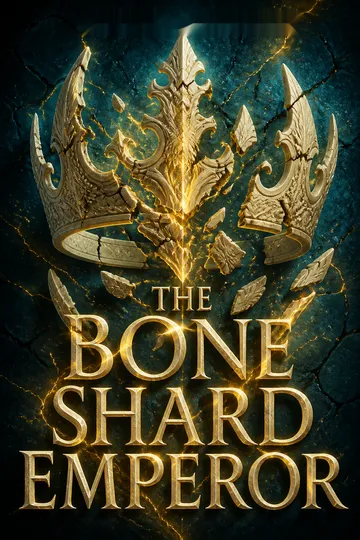
The Bone Shard Emperor receives mostly positive reviews, with readers praising its complex world-building, character development, and political intrigue. Many find it an improvement over the first book, with a compelling plot and satisfying reveals. The magic system and animal companions are particularly well-received. Some criticize the pacing as slow in parts, and a few find the romantic subplot unnecessary. Overall, readers appreciate the unique setting, diverse characters, and the exploration of power dynamics, eagerly anticipating the final installment in the trilogy.
People Also Read








Characters
Lin Sukai
The reforming EmperorLin inherits an Empire damaged by her father's Tithing Festival, secret experiments, and years of distant rule. She is observant, stubborn, and hungry to prove that authority can serve the people rather than consume them. Her isolation at court has made her guarded, and her need to investigate every concealed room reflects both intelligence and a deep distrust of easy explanations. Lin cares intensely about the people harmed by policy, but she is also tempted to use the same powers her father used when crises leave her few choices. Her relationships with Thrana, Jovis, and the island governors test whether she can be both a political leader and a person capable of trust.
Jovis
The reluctant folk heroJovis is a half-Poyer former smuggler whose reputation for rescuing children gives him public legitimacy that Lin lacks. He is resourceful, funny, and impulsively compassionate, often acting before he has decided what his loyalties require. His devotion to Mephi grows from a life shaped by grief, including the loss of his wife, Emahla, and years of estrangement from his family. Jovis distrusts institutions because they have repeatedly excluded or exploited him, yet he has a strong instinct to protect individuals caught in their machinery. His divided service to the Shardless Few and the Emperor reflects his effort to make moral choices without certainty that any faction deserves his allegiance.
Phalue
The soldier-governorPhalue succeeds her father as governor of Nephilanu after years of benefiting from a system she had not understood. Broad-shouldered, direct, and more comfortable with a sword than courtly display, she learns to examine the effects of her family's policies on farmers, orphans, and the sick. Her affection for Ranami draws her toward greater empathy, while her instinct to act can make her impulsive. Phalue wants to govern differently without pretending that love for her father cancels the harm he caused. Her loyalty is practical and embodied: when people need help, she is willing to leave the palace and stand beside them.
Ranami
The watchful reformerRanami is Phalue's wife, a former gutter orphan whose experience of hunger and exploitation gives her a keen sense for danger and unequal power. She is politically perceptive, cautious, and often quicker than Phalue to notice how private information can be turned into public leverage. Her skepticism protects the people she loves, but it can also make trust difficult, especially with children who remind her of her own survival-driven past. Ranami believes in social change but refuses to excuse Gio when his methods endanger civilians. She and Phalue balance one another: Ranami tempers impulsive action, while Phalue offers the safety and affection that make Ranami's guardedness less necessary.
Nisong
The avenging commanderNisong leads constructs who have awakened from the mind-fog and found themselves feared, hunted, and treated as disposable. Memories of a former life with Shiyen coexist with her fierce investment in the companions she has chosen in the present. She sees violence as the only language the Empire has left her, and each loss deepens her conviction that mercy will only expose her people to further harm. Nisong's capacity for attachment is genuine, but she repeatedly subordinates it to vengeance, even as that choice costs her the people she wants to protect. Her struggle is not simply to claim power, but to decide whether a home can be built from retaliation.
Gio
The rebel leaderGio leads the Shardless Few, a movement that seeks to replace hereditary rule with representation by the islands. He is patient, intimidating, and skilled at turning public grievances into political leverage. His arguments about equality carry real force, but his willingness to withhold medicine and risk civilian lives reveals the danger of treating people as acceptable costs in a future revolution. Gio understands how power works because he has lived under it and learned to wield it. His history is bound to the Empire's oldest violence, giving his distrust of Lin's family a depth that political negotiation alone cannot resolve.
Mephi
Jovis's bonded companionMephi is a talking, horned creature Jovis found near the sea and raised from a very young age. Playful, curious, food-motivated, and increasingly independent, he behaves less like a pet than a companion with his own judgments. His bond gives Jovis unusual strength and access to magic, but their relationship is grounded in daily care, shared danger, and affection. Mephi frequently challenges Jovis when fear or guilt makes him withdraw from people who need help. His growth into a larger, more capable creature parallels Jovis's gradual acceptance that responsibility cannot be abandoned simply because it is painful.
Thrana
Lin's steadfast companionThrana is a horned, furred creature Lin rescues from the hidden cavern where Shiyen experimented on her. Early trauma makes her wary and easily frightened, especially around men, but her trust in Lin slowly allows her to become bolder. She communicates in short, direct phrases and offers comfort through presence rather than elaborate reassurance. Thrana's bond with Lin provides strength and magic, yet the relationship is notably reciprocal: Lin listens to her fears and protects her from being treated as an instrument. As Thrana grows, she becomes both a practical defender and a reminder that care must include a companion's agency.
Ragan
The ambitious monkRagan is a young cloudtree monk, a gifted fighter, and an Alanga with abilities resembling Lin's and Jovis's. He speaks with confidence and enjoys correcting others, partly masking the pressure he feels to fulfill his teachers' expectations. His desire for forbidden knowledge and recognition has hardened into a belief that he deserves authority over people he considers lesser. Ragan's relationship with Lozhi reveals how ambition can disguise coercion as destiny. He is useful to Lin because he knows more about the Alanga than she does, but his certainty that power entitles him to obedience makes him a dangerous ally.
Ayesh
The stubborn young refugeeAyesh is a twelve-year-old orphan who survives the destruction of her home by trusting her own speed and instincts. She is hungry, suspicious of authority, and determined not to be helpless again. Losing a hand has not diminished her wish to learn how to fight; instead, she asks Phalue for training and works hard to adapt. Ayesh's first impulse is to conceal what she has and to keep moving, habits formed by a life in which safety was temporary. Phalue and Ranami's offer of family gives her a different possibility, but she remains an independent child with her own history and loyalties.
Ikanuy
The capable stewardIkanuy becomes Lin's steward after responding calmly to an assassination attempt during her interview. Educated, practical, and experienced in managing a large household, she can keep the palace functioning while Lin is consumed by diplomacy and crisis. Ikanuy is not simply an administrator: she asks direct questions, tracks the scattered facts about constructs and trade, and helps Lin understand the scale of her father's neglected responsibilities. Her grounded competence gives the new Emperor a form of support that does not depend on flattery or magical power.
Iloh
The calculating governorIloh governs Riya, an island whose witstone mine gives it influence in imperial trade. He is politically cautious and initially treats Lin as a young ruler whose authority can be tested. His private affection for Pulan and his financial concerns reveal a more vulnerable person beneath his calculating manners. Iloh is willing to bargain when Lin offers a solution that respects his interests, but he remains focused on protecting Riya first. His position illustrates the difficulty Lin faces in building unity: governors may agree with reform in principle while refusing to risk their own people for an uncertain central authority.
Urame
Gaelung's steady governorUrame is the governor of Gaelung, an agricultural island threatened by Nisong's advancing army. She is direct about her limited defenses and does not disguise the desperation of her situation. Though wary of Lin's precarious rule, she offers support because Lin ended the Tithing Festival and because Gaelung needs help immediately. Urame's willingness to contribute her own shard to Lin's plan shows that political trust can begin as a concrete risk shared between people. She remains attentive to the civilians who will bear the cost of the approaching battle.
Chala
The orphaned governorChala becomes governor of Hualin Or after growing up as a gutter orphan and being taken into Wailun's household. He has learned to watch powerful people closely, but he is not too cynical to value the family he believes he has found. When Lin's actions overturn his understanding of that household, he must confront grief and political responsibility at once. Chala's experience of street life helps him recognize that survival does not make someone disloyal or unworthy. He is willing to help Lin, but he does not confuse cooperation with uncomplicated trust.
Tythus
Phalue's trusted captainTythus is Phalue's longtime sparring partner, friend, and Captain of the Guard. His years of practice with Phalue make them effective together in a fight, while his experience with his own family gives him a life beyond the palace and its politics. He respects Phalue without simply agreeing with her, and he understands the risks she takes when she leaves Nephilanu. Tythus represents the ordinary human ties that make a governor's decisions personal: his loyalty is to the people he protects and to the friends who stand beside him.
Ongren
Jovis's practical motherOngren is Jovis's mother, a cook from Anau whose blunt concern cuts through courtly formality. After years without contact, she seeks out her son and confronts him about the dangerous life he has chosen. She treats Lin with unexpected warmth, feeding her and urging her to rest rather than approaching her as an untouchable ruler. Ongren's care is practical rather than ceremonial, shaped by family habits and a refusal to let status replace ordinary kindness. Her presence reminds Jovis what his estrangement has cost.
Wailun
Hualin Or's governorWailun is Nisong's sister and the governor of Hualin Or. She receives Lin with formal courtesy but gives little indication that family ties will translate into political support. Wailun is composed, guarded, and difficult to read, making Lin uncertain whether the distance between them comes from grief, caution, or political calculation. Her household carries a long history of connections to the imperial court. She represents the challenge of meeting a family whose shared past is filtered through years of separation and the demands of public office.
Coral
Nisong's gentle confidanteCoral is one of the first constructs to recover from the mind-fog alongside Nisong. She is compassionate and often questions the violence of the campaign, though her loyalty keeps her close to Nisong even when their judgments differ. Coral remembers that grief and fear do not make every act necessary. She offers comfort to Nisong and tries to imagine a future for their group beyond conquest. Her presence gives Nisong a relationship in which challenge and care can coexist.
Leaf
Nisong's thoughtful allyLeaf is one of Nisong's recovered constructs and a practical member of her inner circle. He sees the military and moral costs of the campaign more clearly than Nisong wants to, and he questions whether their dwindling group can survive its own strategy. His caution does not erase his loyalty, but it makes him a useful counterweight to Nisong's certainty.
Shiyen
Lin's dead predecessorShiyen is the former Emperor and Lin's supposed father, whose rule depended on the Tithing Festival, constructs, and strict control of information. His private experiments were driven by grief and a desire to defeat death, while his public authority relied on fear and historical propaganda. Even after his death, Lin encounters the consequences of his choices in the form of hidden rooms, broken commands, false histories, and people harmed by his experiments. His relationship with Lin was defined by her yearning for approval and his inability to see her as a person apart from his ambitions.
Plot Devices
Bone-shard constructs
Power written into boneThe Empire removes bone shards from citizens and carves commands into them, then places them in bodies to create constructs used for war, trade, administration, and spying. The practice is presented as protection against the Alanga, but it drains the lives of those tithed and gives rulers a way to command both bodies and institutions. Lin inherits the knowledge and the political consequences, then dismantles the system even as enemy constructs turn it against her. The device makes power literal and inspectable: a command can be read, altered, or misplaced, while the people affected by it are often denied any say in how their bodies are used.
Ossalen bonds
Companions grant magicOssalen are strange, intelligent creatures who bond with certain people and enable abilities such as strength, healing, earth tremors, and control of water. Mephi's bond with Jovis and Thrana's bond with Lin are presented through daily companionship as much as through combat. Their growth, fear, appetite, and independent choices make clear that they are not equipment. Ragan's treatment of Lozhi provides a contrasting example of a bond formed through coercion. The creatures therefore test the difference between gaining power through relationship and claiming power over another being, a distinction that becomes central to the battle against the constructs.
Shiyen's memory machine
The past enters the bodyShiyen's hidden machine stores memories in a fluid made through an alchemical process involving blood, witstone ash, and Thrana. Lin drinks the liquid and experiences fragments of her father's life, gaining clues about his experiments, his feelings for Nisong, and the secrets concealed beneath the palace. Jovis later uses the same process to witness Ragan's past. The memories offer evidence but not neutral truth: they arrive in fragments and can blur the boundary between the observer and the remembered person. The machine turns inherited history into a bodily experience, while warning that knowing another person's memories is itself an invasive form of power.
The white-bladed swords
Weapons against the AlangaA white-bladed sword hidden beneath the palace and another found in the Shardless Few's tunnels connect the Empire's founding legend to a more violent history. Kaphra uses a similar blade to injure Jovis and Mephi, showing that it can harm Alanga in ways ordinary weapons cannot. Carved writing on a hilt identifies its lethal purpose. The swords originated in the alliance and betrayal between Ylan Sukai and Dione, and their existence complicates the story that the first Emperor simply defeated a monstrous enemy. They are both practical weapons and evidence that the Empire's heroic history conceals a massacre.
Witstone and sinking islands
Trade may erode the landWitstone powers fast travel between islands and sustains the Empire's interconnected trade, including the movement of caro nuts used to treat bog cough. Yet Deerhead, Unta, and Luangon sink after having witstone mines, leading Lin to suspect that extraction weakens the islands themselves. Her order to stop mining may protect people from future disasters, but it threatens supplies, income, and the alliances she needs to defend the Empire. The device ties environmental risk to political choice: the same resource that makes the Empire cohesive may be undermining the ground beneath it, and the evidence arrives only after communities have already been lost.
The Drowning Empire Series
About the Author
Other books by Andrea Stewart

Download PDF
Download EPUB
.epub digital book format is ideal for reading ebooks on phones, tablets, and e-readers.








