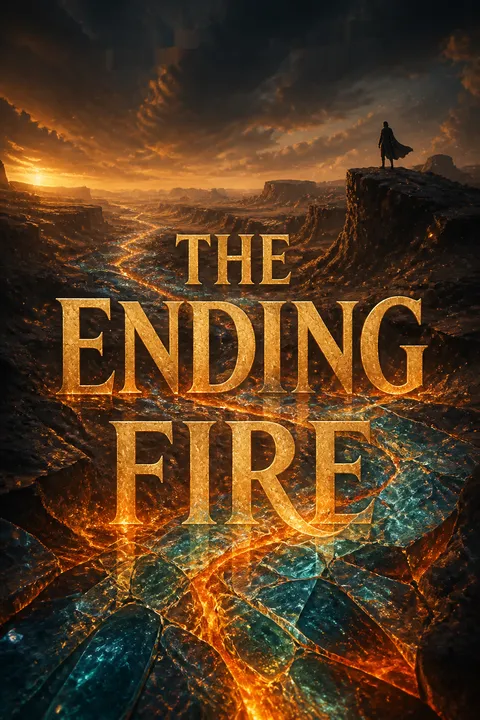


Plot Summary
Prologue
As the tidewind tears through the Keep, Gorn stands in Anoor’s abandoned room wearing armor altered to conceal its owner’s identity. She once tried to follow Anoor and her grandmother, Yona, but turned back after seeing the workers suffering in the plantations.
Now she lets the storm strip the room of its clothes, jewelry, and private traces, choosing to leave the wardens with nothing that belonged to Anoor. Grief for Anoor and Kwame hardens into a mother’s resolve: Gorn will make the rulers answer.
The prologue turns a private room into a political act. Gorn does not merely mourn Anoor’s absence; she destroys the objects through which the Keep could claim to remember or possess her. The storm’s violence is already indiscriminate, but Gorn directs its force toward a deliberate refusal of the wardens’ ownership. Her hesitation at the plantations matters too: the impulse to find one loved person collides with recognition of a larger population enduring the same system. Grief becomes commitment, though the cost of that conversion is isolation.
Sylah Returns to Ruin
In the underground Nest, Hassa is practicing bloodwerk when Sylah, her old friend and fellow survivor of the Sandstorm, returns from across the sea. Their reunion collapses into grief: Kwame, Hassa’s beloved, has been tortured to death, and Lio, Sylah’s estranged mother, died investigating disappearances from a relief shelter.
Anoor, accused of murdering her mother, has vanished with Yona and the other disciples. Hassa explains that the shelter was draining people’s bone marrow, and Sylah recognizes the method as the work of the Zalaam, a group whose power she has encountered abroad. Hassa wants her to help the coming war; Sylah admits she returned to find Anoor. Hassa sends her away, then begins planning without her.
The reunion places two forms of loyalty in direct conflict. Hassa’s grief is not an abstraction: Kwame’s murder has turned her attention toward collective defense, while Sylah’s love for Anoor narrows her field of concern. Neither choice is simply selfish or noble. The scene asks whether solidarity requires abandoning intimate attachment, or whether the individual relationship is precisely what gives resistance its human scale. Hassa’s anger also exposes a painful asymmetry: she needs Sylah as a comrade, but Sylah arrives carrying a separate emergency. Their friendship survives the rupture, though it cannot yet absorb it.
Anoor Enters the Foundry
Anoor crosses the sea with her grandmother, Yona, and several former disciples, leaving Tanu behind to disguise their departure. When the ship’s sailors disappear during a storm, Anoor notices blue blood beneath Yona’s nails but accepts her explanation.
At the Volcane Isles, Yona presents Anoor to the Zalaam and brings her into the Foundry, where metal creations are being prepared for war. Anoor secretly adds a full vial of life-giving formula to a queller, a giant spider-shaped machine, and rides it as it rampages through the workshop and settlement.
She stops it only by using the rune that permanently disables it. The dead include twenty-five people. Yona mourns the lost machine more than the victims, and Anoor begins learning how the Zalaam define sacrifice.
Anoor’s first exercise of creation magic fuses exhilaration with irreversible harm. Her mistake is not simply technical: she has been trained to see power as proof of competence, so the freedom to use it feels like self-discovery until its consequences become visible. Yona’s response then supplies an interpretive script, directing Anoor to treat deaths as useful offerings rather than human losses. This is how coercive belief takes hold: not by denying pain, but by giving pain a purpose that makes doubt feel disloyal. Anoor’s longing to become powerful is real, and that makes the manipulation more effective.
Jond Seeks a Navy
Jond, another former Sandstorm child, travels with the flighter Kara to the Entwined Harbor, a floating nation led by Captain Shola. Kara asks for its navy to join the Blood Forged against the Zalaam. Shola delays her decision, reminding Kara that earlier diplomacy cost twenty-seven lives, then a violent storm forces the harbor to shelter families and abandon a stranded vessel.
Kara risks her strength to flight to a child’s home and bring the girl back. Shola later loses her captaincy to a rival, who rejects the alliance. Kara and Jond leave for the Winterlands to seek another fleet. Their arrival triggers an avalanche; they fall into a buried building and find its dead ruler, leaving them trapped with Kara badly injured.
Jond and Kara encounter political caution in a world where delay is not neutral. Shola’s hesitation is grounded in prior deaths, while Jond sees every postponement as another chance for the Zalaam to worsen the crisis. Kara’s rescue of the child complicates that debate: she acts decisively when a life is immediately before her, even though her broader diplomacy has been shaped by consequence and calculation. The Winterlands’ buried ruler makes the cost of environmental collapse physical and intimate. The alliance plot is therefore not a simple recruitment quest; it tests competing duties to the endangered present and the uncertain future.
Tanu Becomes a Captive
Back in Nar-Ruta, Sylah follows Tanu, the returning disciple who claims Anoor is dead, and captures her in an eru stable. Tanu will not give a clear account of Anoor’s fate, but Sylah recognizes that the disciples belong to the same hidden movement as the Zalaam.
After the tidewind passes, Sylah finds leaflets across the Duster Quarter claiming the wardens have concealed the existence of other countries and the Ghostings’ original claim to the land. The anonymous Truthsayer calls people to gather where the plantations have burned. Sylah follows the clue toward the Keep, hoping Tanu’s return will lead her to Anoor, while the leaflets point toward a rebellion whose stakes exceed her search.
Sylah’s captivity of Tanu reveals how readily the skills of resistance can become instruments of coercion. She is trying to extract information, but her enjoyment of Tanu’s fear unsettles her because it resembles the violence she once opposed. The leaflets offer a different form of force: information distributed beyond official control. Where Sylah’s response is personal and bodily, the Truthsayer’s intervention changes what a whole population can know. These methods are not yet reconciled. The section sets up the novel’s central political problem: liberation can reproduce domination if it relies only on the tools the oppressor made familiar.
Hassa Finds Her Father
Hassa persuades the armorsmith Vahi to build a bloodwerk inkwell she can operate without hands. She has lied that she can locate his daughter, but when Vahi explains that his lost lover was Dahlia, Hassa realizes he is her father. She tells him the truth: she is the child he never knew survived.
Their reunion gives Hassa a family connection beyond the Ghosting community, while Vahi’s device lets her draw runes independently. When Hassa tests it, her blood moves a sheet of paper with enough force to tear it apart. Soon afterward, she and Vahi join the crowd answering the Truthsayer’s call. Hassa sees that the rebellion can become more than anger: Ghostings can claim both power and public voice.
The inkwell and the revelation of parentage perform parallel work. Both give Hassa access to something withheld from her: magical agency in one case, a family history in the other. Yet neither restores an untouched past. Vahi’s absence was caused by a system that made their relationship dangerous, and Hassa’s new ability arrives through a device made by someone whose life was shaped by the same hierarchy. Her power is therefore relational rather than solitary. The scene also complicates liberation as self-sufficiency: Hassa becomes more capable not by denying dependence, but by turning a hidden connection into shared knowledge.
The Queen Beneath Snow
Jond and Kara escape the buried Winterlands building by painstakingly copying flight runes onto their arms. Jond’s concussion and blood loss leave him unconscious, while Kara reaches the City of Rain and forces the council to send a healer. During his recovery, Olina arrives with fifty Winterlands soldiers and three ships, but an assassin kills Councillor Zenebe before he can heal the attacker’s victim.
The assassin’s message announces that the Zalaam will bring war to the Drylands. Under pressure from the council, Kara reveals that she is Karanomo, the presumed-dead Queen of Tenio and also a councillor of the Academy. She addresses the people as both roles at once, turning her survival into a promise of resistance.
Kara’s dual identity is not a disguise revealed for shock value; it is the social structure she has used to preserve a self beyond the demands of monarchy. The assassination tests whether the Blood Forged can protect allies without becoming a closed elite, while Zenebe’s death removes a source of healing and institutional continuity. Karanomo’s public reappearance makes authority visible and vulnerable at once. Her speech does not erase the losses or guarantee support; it gives a frightened population a person around whom it can organize. The scene frames leadership as an exposed performance that can invite danger while making collective action possible.
The Child of Fire
Yona takes Anoor through the Volcane Isles, where each blood-colored commune has prepared for the prophesied Child of Fire. Anoor is welcomed, dressed in protective armor, and treated as a figure whose presence justifies the Zalaam’s coming war. In the red commune, one woman challenges her claim; Teta kills the woman before Anoor can respond.
Anoor begins to question whether the godbeasts will distinguish the wardens from the Ghostings and Dusters caught under their rule. Yona answers by insisting that everyone who served the empire must be destroyed. Soon Qwa dies in an accident at the Foundry. Yona turns his death into a lesson in sacrificial purpose, and Anoor repeats the teaching to comfort Faro, even as grief begins to change her.
Anoor’s new identity offers a remedy for the humiliation and helplessness she experienced in the Keep, but it also narrows what she is permitted to feel. The communes’ reverence gives her social importance before she has decided what she believes, while Teta’s killing demonstrates the cost of contradicting that authority. Qwa’s death becomes a further test: Anoor can either mourn him as a friend or use the language of sacrifice that keeps her place among the Zalaam. She does both imperfectly. Her growing certainty is not evidence that she has become free; it is the emotional adaptation of someone trying to make unbearable loss coherent.
The Truthsayer Unmasks
At the burned plantation fields, the armored Truthsayer reveals that Gorn has been organizing resistance from beneath the city. She tells the crowd that the empire concealed other nations and that its founding wardens took land from the Ghostings. Hassa demonstrates that her clear blood can use bloodwerk, proving that magical ability is not confined to Embers.
The Wardens’ Army arrives and fires into the crowd, but the Truthsayer escapes through the tunnels. Gorn’s disclosure ignites revolt across the city. Sylah learns from Tanu that Anoor went willingly with the disciples and is the Zalaam’s Child of Fire. Her hope of rescuing a prisoner gives way to the more painful knowledge that Anoor may now be fighting for the enemy.
Gorn’s revelation changes the political meaning of ordinary life: class distinctions that seemed natural become evidence of a founding theft. Hassa’s public demonstration matters because testimony alone would leave the old hierarchy’s assumptions intact; a Ghosting’s blood visibly performing magic makes those assumptions fail in front of witnesses. Sylah’s personal revelation arrives alongside the political one, but it cannot be absorbed as easily. The woman she loves is not simply hidden behind enemy lines. Sylah must confront the possibility that Anoor has chosen a cause, however manipulated, rather than merely been taken from her. Knowledge liberates the crowd and wounds the lover at the same time.
The Wardens Lose Nar-Ruta
Gorn organizes the newly awakened rebellion, while Turin offers her Gummers and bargains for authority in the future government. Sylah, still fixated on Anoor, brings the captive Tanu to Gorn and learns the Zalaam regard Anoor as their prophesied leader.
The rebellion advances, but the wardens’ defeat comes through the Keep’s servants: Sami and other workers lock the rulers in the courtroom, while sleeping herbs weaken the army. The wardens surrender with few casualties.
Hassa returns with Vahi and a Ghosting force from the north, and the group proclaims the Dryland Republic rather than accepting another single ruler. Their first governing agreement remains provisional, but the former subjects now have a claim to shape the country they have reclaimed.
The fall of the Keep is deliberately less spectacular than the regime’s own mythology would predict. Servants, people treated as background infrastructure, exploit their access to the household and make the ruling center helpless. This shifts the meaning of political power from possession of weapons to knowledge of routines and dependencies. The arrival of the Ghosting army then complicates victory: reclaiming land does not automatically answer who should govern it. Hassa’s insistence on collaboration and Memur’s authority expose a productive tension between immediate wartime command and long-term political accountability. The republic begins not as a finished ideal, but as a promise vulnerable to the habits of its founders.
A Costly Passage
On the Volcane Isles, Anoor discovers that the Zalaam’s pale formula comes from prisoners whose bone marrow is being harvested. She knows the practice is cruel, yet her grief for Sylah’s presumed death and her anger at the wardens help her accept Yona’s claim that the victims are necessary sacrifices.
When the Tannin blocks the fleet’s passage, Anoor orders the cannons used against Faro’s ship after Faro refuses to surrender its prisoners. The ship sinks, and the Tannin takes its victims, allowing the Zalaam fleet through. The army then lands at Jin-Laham and unleashes quellers on the city. The massacre destroys the community that had begun experimenting with government by popular vote.
Anoor’s moral collapse is presented as a sequence of decisions, not a sudden transformation. The marrow harvest gives her concrete evidence of atrocity; Yona’s doctrine supplies a way to relabel its victims; grief supplies the emotional pressure to accept that relabeling. Faro’s refusal interrupts the process, but Anoor chooses military success over the relationship and the lives on that ship. Jin-Laham’s destruction then makes the consequences impossible to confine to abstractions about the wardens. The episode examines how a liberatory cause can become genocidal when leaders make identity, rather than conduct, the basis for deciding who deserves to live.
The Tannin Is Bound
As Karanomo gathers allies for the final campaign, Jond joins Ads and Elyzan in an attempt to bind the Tannin with steelweed strengthened by bloodwerk. The operation begins badly: the monster damages their ship and injures students, leaving too few hands to complete the runes. Jond joins the work, and Ads finally knots the creature’s jaw until it cracks.
The fighters keep binding it until the Tannin collapses into rubble beneath the sea. The tidewind stops for the first time in generations. But the victory comes with a new danger: Hassa has overheard Yona say that Anoor is to ride the Zalaam’s clawmaw, a creation designed to drain her life. The storm is gone, yet the war has become more urgent.
The Tannin’s defeat answers an environmental crisis through cooperation across disciplines: plant growth, blood manipulation, navigation, and physical courage all become necessary. The victory is not clean or complete. Jond’s willingness to bleed for the binding exposes the body as both weapon and finite resource, while the sudden calm uncovers a more intimate danger that the larger campaign had obscured. Hassa’s discovery changes the meaning of the prophecy: what looked like a symbol of leadership is also a mechanism for sacrificing Anoor. Ending the storm does not end violence; it removes one form of threat and reveals the next.
The Republic Takes Shape
After the wardens fall, Hassa and Vahi reach Nar-Ruta with the returning Ghosting army and learn that the Zalaam have already destroyed Jin-Laham. Hassa and Sylah reconcile after their earlier argument, and Memur accepts a wartime alliance between the Ghostings and Gorn’s rebellion under the name Dryland Republic.
When Hassa learns that Anoor is being prepared for sacrifice, the council refuses a rescue mission because it cannot spare soldiers. Hassa challenges that calculation, but Sylah goes anyway. Hassa joins her, and together they enter the Zalaam camp, find Anoor drugged with joba seeds, and carry her toward the tunnels. Sylah kills Tanu when she attacks them, then uses Anoor’s disc to disable the pursuing sentinels as they escape.
The rescue tests whether a newly founded republic can live by principles different from those of the empire. Memur’s refusal is strategically defensible, but Hassa recognizes how easily the language of necessity can make one person disposable. Her earlier argument with Sylah now returns in altered form: the individual matters, yet rescuing Anoor also puts many others at risk. The choice is not resolved by a slogan. Sylah and Hassa act together, accepting danger rather than pretending that love and collective responsibility can be cleanly separated. Anoor’s drugged state makes rescue only a beginning; returning her body does not instantly restore her judgment or identity.
A New Kind of Fire
Back in the Keep, Anoor wakes believing she has reached the Zalaam’s paradise. Sylah and Gorn explain that she survived and that Yona’s sweetened tea contained addictive joba seed powder. Anoor admits she joined the Zalaam willingly and helped cause deaths; she and Sylah begin repairing their bond without pretending the harm can be erased.
As Anoor recovers, she offers the Blood Forged knowledge of the Zalaam’s army and builds Retribution, a stone creation reshaped from Sylah’s failed eru. Meanwhile, Hassa combines clear bloodwerk with sharj oil and produces a blue flame hot enough to melt iron. The two discoveries give the republic a chance against the creations, but neither can guarantee survival.
Recovery here refuses the comforting fiction that rescue cancels complicity. Anoor must face both chemical dependence and choices she made while under Yona’s influence; Sylah’s love offers contact, not absolution. Her work on Retribution converts technical knowledge from the culture that harmed her into a tool she can choose to use differently. Hassa’s fire is similarly collaborative: it depends on clear blood, inherited knowledge, and Vahi’s metalworking. The innovations are powerful precisely because they cross boundaries the empire enforced. Yet each is fragile, and the narrative keeps invention distinct from mastery. A new tool changes the odds, not the moral or material cost of war.
The Battle Breaks Open
The Zalaam’s first assault reaches the Dryland Republic from beneath the Jin-Dinil lakes, where hollowers have carried soldiers through tunnels under the Blood Forged lines. Kara flights into the fighting, and Jond takes a blade through the throat while saving her. Niha repairs the severed artery but cannot restore Jond’s voice.
On the second day, Ads and Elyzan use plants to trap and poison attackers, but Elyzan is killed. Griot Sheth dies firing from a rooftop, and Hassa’s fire operation destroys more creations at the cost of Ala’s life. The Entwined Harbor finally arrives, and Shola’s steelweed nets trap a force of sentinels. Meanwhile, the armies prepare for a final assault, with Anoor’s creation as their last answer to the clawmaw.
The battle’s escalating losses dismantle any fantasy that technical ingenuity will make resistance painless. Each victory is local and costly: plant magic delays the Zalaam but cannot shield Elyzan; Hassa’s fire destroys machines but claims Ala; naval reinforcements help only after the eastern front has already been ravaged. Jond’s injury shifts leadership from physical command toward dependence on others, especially Niha’s healing and the community’s willingness to understand a voiceless officer. The deaths also sharpen the difference between the sides. The Zalaam spend lives as fuel; the republic’s fighters try to preserve one another, even when the distinction is difficult to maintain.
Retribution Meets the Clawmaw
On the third day, Yona pilots the clawmaw, feeding it her own bone marrow and summoning a fresh storm. Anoor has transformed Retribution into a matching human-shaped creation and climbs aboard, knowing its power will drain her. Sylah reaches her but cannot persuade her to stop. The two creations fight until Retribution pins the clawmaw down.
Sylah rushes to pull the needles from Anoor, but Yona frees one arm and breaks Sylah’s ribs, then turns the clawmaw’s hand toward Anoor. Sylah uses the diffuse disc to disable it. As Anoor’s strength fails, she remembers Sylah’s lesson about a fatal cut and drives her stylus into Yona’s neck. The storm ends; Anoor and Sylah disappear beneath the battlefield’s shifting sand.
The climax makes creation a contest over what power is for. Yona’s clawmaw treats Anoor as the resource that will complete a prophecy; Anoor’s Retribution is designed to protect rather than command her, though it still demands her body as fuel. Sylah’s attempt to save Anoor is both loving and perilous, and her injury forces Anoor to act rather than remain the object of rescue. Killing Yona with a lesson learned from Sylah turns Anoor’s earlier dependence into agency. The ending with both women missing preserves the cost of this transformation: victory arrives without immediate proof that either has survived.
The Glass River
With the final Zalaam machines crossing the Tongue, Hassa is struck by an arrow but reaches the trigger rune before collapsing. Her fire spreads across the iron bridge, melting the quellers as they advance; the weakened structure gives way and pours the molten machines into the Ruta River. The heat turns the quicksand into glass, ending the assault and the war.
Jond survives, though his voice is damaged, and he leaves the republic with Shola and Rascal to recover and learn sign languages. Karanomo joins him after arranging for the world to believe the queen died in battle, choosing a life beyond the throne. Hassa declines a political title and goes to study bloodwerk. Sylah and Anoor remain missing until the epilogue.
Hassa’s final act gathers the book’s competing histories into one image: the river that once separated social districts becomes a glass monument to a bridge destroyed in order to stop an invading army. The fire is not a clean instrument of justice; it saves the republic while consuming the structure and lives caught upon it. The aftermath resists a single victory narrative. Jond’s damaged voice redirects him toward learning, Karanomo relinquishes inherited rule, and Hassa refuses a title in favor of study. Their choices suggest that liberation must alter not only who governs, but also how knowledge, authority, and care circulate.
Epilogue
Beneath a clear sky, Sylah and Anoor claw their way out of a sand dune and lie recovering side by side. They have survived the battle, though they do not know where the shifting desert has carried them.
Anoor laughs at their impossible escape, and Sylah studies her clear-eyed face with relief. A kori bird crosses overhead. The women choose each other again, holding close while the future remains unseen.
The epilogue resolves the most intimate uncertainty without pretending to settle every political consequence. Sylah and Anoor are alive, but their location is unknown and the narrative gives them no immediate route back to the republic. The desert, which concealed their bodies and threatened to erase them, becomes a temporary refuge. The kori bird recalls Anoor’s abandoned attempt to create a messenger and her belief that birds should not be caged. Its free passage quietly contrasts with the machines and doctrines that tried to make her life serve a fixed purpose. Their reunion is not a return to innocence; it is a chosen beginning after complicity, grief, and survival.
Analysis
The Ending Fire treats liberation not as a clean reversal of power but as a struggle over the habits power leaves behind. The wardens classify people by blood, restrict education, and turn Ghosting bodies into instruments of silence. The Zalaam oppose that empire yet reproduce its logic when they divide the world into believers and nonbelievers, harvest prisoners for marrow, and call mass death sacrifice. The novel’s political question is therefore sharper than which side deserves victory: can a movement defeat an oppressive system without inheriting its permission to decide whose lives count?
Anoor’s arc carries that question into intimate territory. Yona offers her a role that answers real wounds: the humiliation of being underestimated, the grief of losing Kwame and her mother, and the desire to matter. Joba seed tea intensifies the manipulation, but it does not erase Anoor’s agency or responsibility. Her return requires her to face both. Sylah’s love cannot absolve Anoor; it gives her a relationship in which truth can be spoken without making her irredeemable. Their reunion is meaningful precisely because the story refuses to treat affection as a substitute for accountability.
The book also relocates power from inherited institutions to shared practice. Hassa’s inkwell makes bloodwerk accessible to a Ghosting; Ads combines laws the Academy kept in separate fields; Griots carry forbidden history; servants use their intimate knowledge of the Keep to make it surrender. These actions are political because they redistribute the capacity to know and act. Yet the final fire still kills, and the republic’s first leaders must decide how to prevent justice from hardening into revenge. The ending offers no perfect constitution, only a difficult beginning: knowledge must be shared, leadership questioned, and the dead remembered without turning their suffering into a license for more.
Review Summary
People Also Read


Characters
Anoor Elsari
The contested heirAnoor is a thoughtful, imaginative young woman raised in the Wardens’ Keep, where her intelligence and taste for fashion coexist with the constraints placed on her as a daughter and disciple. She longs to improve the lives of ordinary citizens, but her grief and need for belonging make her vulnerable to people who offer certainty and purpose. Her attraction to creation magic reflects a genuine talent and a desire to shape the world rather than merely endure it. Anoor’s relationships with Sylah, Yona, and the communities around her pull her between intimacy, inherited loyalty, and political conviction. Her central struggle is not simply choosing a side, but learning to distinguish chosen responsibility from a role imposed through love, prophecy, or pain.
Sylah Alyana
The blade with a heartSylah is a trained fighter raised by the Sandstorm to become a weapon against the wardens. Her instincts favor decisive action, and she often hides grief beneath anger, alcohol, or a refusal to ask for help. Love for Anoor gives her a future beyond rebellion, while friendship with Hassa reminds her that personal devotion cannot erase obligations to the people who suffer around her. Sylah is capable of tenderness, but her history makes tenderness feel risky and sometimes unfamiliar. She also carries guilt over sacrifices made during her journeys and the violence she commits in the name of protection. Her development turns on whether she can keep fighting without allowing old training to dictate what a life is worth.
Hassa
The clear-blooded tacticianHassa is a Ghosting, a member of a people whose hands and tongues were removed at birth as part of the empire’s system of silencing. She communicates through a language her community created and has learned to move between servitude, espionage, and resistance without surrendering her judgment. Hassa’s grief for Kwame makes her furious, but her patience and technical curiosity turn that anger into plans. She thinks carefully about the cost of leadership and the danger of replacing one hierarchy with another. Her bonds with Sylah and Vahi reveal different forms of family: chosen loyalty and a history stolen by the empire. Hassa seeks agency through knowledge rather than status, even when others begin to call her a leader.
Jond Alnua
The reluctant generalJond is a former Sandstorm child trained to fight before he could choose what kind of life he wanted. He is blunt, observant, and more tender than his military role suggests, finding comfort in books, his cat Rascal, and the act of protecting frightened people. His sense of not belonging follows him across countries and political causes. Kara’s challenge to his assumptions helps him recognize that duty need not cancel personal desire, while his friendship with Sylah carries the weight of shared childhood and loss. Jond’s leadership grows from practical care rather than appetite for command. He repeatedly measures victory against the lives that can still be saved.
Yona Elsari
Anoor’s formidable grandmotherYona is Anoor’s grandmother, a commanding woman whose scars and bearing make her difficult to overlook. She combines technical brilliance with a severe understanding of discipline, sacrifice, and public authority. Her care for Anoor is genuine, but it is inseparable from her expectations of what Anoor must become. Yona knows how to shape a room, a ritual, or a machine so that other people accept her interpretation of events. Her history as a master crafter gives her practical authority, while her religious convictions provide a language for grief and political violence. Yona’s defining tension is between affection for her family and devotion to a future she believes requires terrible costs.
Kara, Queen Karanomo
The queen who is twoKara is an exceptional flighter and a councillor of the Academy who has learned to manage the demands of public responsibility with sharp wit and meticulous control. She is also Karanomo, Queen of Tenio, a role whose expectations have shaped her relationships and narrowed her freedom. Her grief over a lost pregnancy and the collapse of her homeland sit behind her measured diplomacy. Kara often appears cold because she has trained herself to make each choice serve a purpose, yet acts of rescue expose the compassion beneath that discipline. Her connection with Jond tests whether affection can exist outside political exchange. She wants to be valued as a whole person, not as an office or an alliance.
Gorn Rieya
The hidden truth-tellerGorn serves Anoor in the Keep and becomes a central organizer of resistance. She is practical, guarded, and deeply affected by the losses around her, but she can turn private grief into public action. Her knowledge of the Keep’s systems helps her expose what the wardens have concealed. Gorn’s leadership is rooted in her ability to see both the immediate person in danger and the larger population being harmed. She does not mistake a successful uprising for a complete political solution.
Tanu Alkhabbir
The divided discipleTanu is a former Disciple of Knowledge and one of the people raised within the Sandstorm’s network. Quick, guarded, and loyal to the cause that gives her a sense of belonging, she understands both the empire’s violence and the attraction of a new creed. Her knowledge of godpower makes her useful to those around her, while her convictions make her difficult to persuade. Tanu’s relationship with Sylah is shaped by their shared history as Stolen and their opposed ideas about what liberation requires.
Vahi
The armorsmith fatherVahi is an accomplished armorsmith whose quiet life was shaped by a forbidden love and a long separation from his child. His skill with metal becomes important to the resistance, but his gentleness is equally consequential. He is willing to help Hassa without demanding that she erase the years they lost. Vahi approaches craftsmanship as a practical form of care, making equipment that allows others to act for themselves.
Shola
The scholar captainShola leads the Entwined Harbor, a floating community that prizes books, debate, and collective judgment. She is confident and teasing, but her political caution comes from having seen diplomacy carry a human cost. Shola values stories as a kind of emotional knowledge, not merely entertainment, and she uses that belief to understand outsiders. Her relationships with Kara and Jond reveal both old political debts and an ease with people who do not fit their assigned roles.
Niha Oh-Hasan
The healing scholarNiha is a former Academy student and healer whose humor and fondness for proverbs soften the severity of his work. He has experienced exile and enslavement, yet retains curiosity about other people and a practical faith in learning. His loyalty to Jond is expressed through care rather than grand declarations, while his medical skill makes him essential to the Blood Forged. Niha understands that healing can preserve a life without undoing what has happened to it.
Faro
The uneasy discipleFaro is a former Disciple of Duty who travels with Anoor and Qwa to the Volcane Isles. Reserved and observant, Faro is often more aware of the costs of the Zalaam’s plans than they are willing to say aloud. Their relationship with Qwa gives them a private source of tenderness amid the military preparations. Faro’s caution contrasts with the certainty demanded by Yona’s cause.
Qwa
The skeptical companionQwa is a former Disciple of Truth and Faro’s partner. His blunt questions and sometimes careless humor puncture the formality surrounding the Zalaam. Although he does not always express himself tactfully, his skepticism helps Anoor notice the distance between the liberation she wants and the war being prepared around her.
Memur
The Chrysalis commanderMemur is a respected Ghosting leader from the Chrysalis who commands the returning Ghosting army. She prizes discipline and understands the burden of making decisions that expose many people to danger. Her outlook is shaped by generations of persecution, which makes her wary of quick political experiments during wartime. She respects Hassa’s intelligence while insisting that leadership must account for the whole force.
Ads
The restless innovatorAds is a young Ghosting with unusual access to education and a restless appetite for experimentation. She develops practical ways to combine the Academy’s laws with bloodwerk, often seeing possibilities that more experienced leaders overlook. Others sometimes dismiss her as childish, but her curiosity is disciplined by a willingness to test ideas under pressure. Ads represents a future in which technical knowledge need not belong to one blood class.
Ala
The quiet craftswomanAla is a Ghosting servant who has chosen familiarity and survival over the risks of leaving the city. She is perceptive, skilled with practical repairs, and more politically alert than her quiet manner suggests. Her relationship with Hassa is marked by disagreement over what freedom should look like. Ala’s competence becomes especially valuable when the rebellion needs more than fighters.
Turin
The ambitious powerbrokerTurin rose from the world of the maiden houses to become Warden of Crime, building influence through money, information, and a sharp sense of opportunity. She is flamboyant and calculating, but her past gives her a knowledge of exploitation that she rarely displays as vulnerability. Turin treats politics as a negotiation in which survival depends on securing leverage. Her alliance with others is often conditional, and her ambition makes her an unsettling presence in any coalition.
Teta
The Yellow Commune leaderTeta leads the Yellow Commune and is accustomed to enforcing the Zalaam’s religious and political order. She is decisive, ambitious, and alert to the value of being recognized by Yona. Her public composure conceals a strong desire to prove herself capable of command. Teta’s faith gives her a framework for violence, while her political instincts make her more than a ceremonial follower.
Elyzan
The growth-law teacherElyzan is a councillor of the Academy’s first law, skilled in plant growth and committed to teaching. He approaches innovation as a collaborative process, encouraging students such as Ads to test their ideas. His work links ecological knowledge to military defense, while his friendships within the council give the Academy a personal center beyond its formal titles.
Zenebe
The generous healerZenebe is a councillor of the third law whose skill in healing is matched by patience as a teacher. He has helped students through difficult work and is deeply valued by colleagues such as Niha and Elyzan. His presence represents the Academy’s capacity to preserve life through shared knowledge.
Griot Sheth
The keeper of storiesSheth is a Duster storyteller who learns to use the griot network to carry history and political truth beyond the wardens’ official record. His storytelling began as a way to give workers relief from hard lives, then became a means of organizing memory. He understands that a story can comfort an audience while also teaching it what power has tried to hide.
Kwame
Hassa’s lost belovedKwame is an Ember kitchen worker and Hassa’s beloved. He is remembered for his warmth, practical kindness, and skill with food. His relationship with Hassa crosses the divisions the empire treats as law, making his care both intimate and politically charged.
Rascal
Jond’s steadfast catRascal is a sand cat who attaches herself to Jond and follows him through journeys, recovery, and battle. Her simple insistence on closeness gives him comfort in periods when he expects to lose everyone he loves.
Plot Devices
The Tidewind and Tannin
A storm with a sourceThe tidewind is a nightly storm that tears through the Wardens’ Empire, while the Tannin is a sea creature feared as an old legend. The book connects the storm to the Tannin and to the wider imbalance caused by bloodwerk. This turns weather from background danger into a political and magical problem: the Zalaam’s marrow-powered creations intensify environmental harm, while the Blood Forged’s attempt to bind the Tannin offers a way to stop the tidewind. The device makes the cost of magic visible in the landscape and gives the war a danger beyond victory or defeat.
Bloodwerk and Godpower
Magic made from bodiesBloodwerk lets people manipulate objects by drawing runes with blood, while the Zalaam’s fifth law uses formula and bone marrow to animate creations. The distinction between the systems shapes the conflict: one can be learned and shared more widely than the empire permits, while the other produces powerful machines at a severe human and ecological cost. Characters combine the laws in new ways, from Hassa’s fire to Ads’s steelweed and Anoor’s Retribution. The magic is never detached from the body. Each use asks who supplies the power, who controls the knowledge, and who bears the damage.
The Child of Fire Prophecy
A destiny used as leverageThe Zalaam’s prophecy identifies a Child of Fire who will bring the Battle Drum and begin the Ending Fire. Yona interprets Anoor as that figure and uses ritual, praise, and political expectation to give her a place in the Zalaam’s plan. The prophecy can be read as promise, duty, or threat, and its ambiguity allows Yona to direct Anoor’s grief toward the war. The book eventually gives the Battle Drum a bodily meaning, making the apparent honor of the title part of the danger. It shows how a prediction can shape behavior without proving that destiny is real.
Joba Seed Tea
Comfort concealing controlJoba seeds are an addictive drug that can produce euphoria and a dreamlike state. Yona adds their powder to Anoor’s bitter leaf tea, disguising the drug within a comforting routine and a trusted family relationship. Anoor’s dependence dulls her distress and makes the Zalaam’s beliefs easier to accept, while withdrawal later brings the harm into focus. The tea works as a plot device because it blurs the boundary between faith, grief, and chemical influence without making Anoor’s decisions meaningless. Her choices remain hers, but they are made under conditions someone else has deliberately altered.
Griots and Leaflets
Truth carried beyond authorityGriots preserve knowledge through stories, while printed leaflets spread direct claims about the empire’s hidden history. The two forms complement each other: the leaflets can quickly alert a crowd, and the griot network can repeat, interpret, and carry the information to other cities. Gorn’s Truthsayer identity gives the disclosures a public face, but Hassa’s bloodwerk demonstration makes the claims materially persuasive. Together these devices let the rebellion contest the wardens’ monopoly over education and history. They also reflect a central concern of the book: political power depends not only on force, but on who gets to describe the past.
The Ending Fire Trilogy Series
About the Author


Download PDF
Download EPUB
.epub digital book format is ideal for reading ebooks on phones, tablets, and e-readers.








