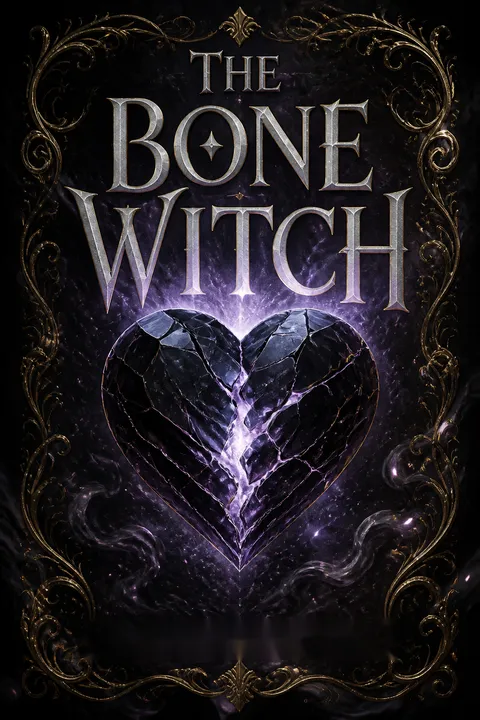


Plot Summary
Prologue
At seventeen, Tea stands alone on a gray beach among the bones of ancient monsters. She kills an akvan, a daeva, then removes the magic stone from its throat as a wandering storyteller watches. The Bard has followed a dream to find her and asks permission to record her history.
Tea distrusts him, so she tests his truthfulness with a bezoar that darkens for lies. It shines blue. She gives him seven days to hear her story, though the black heartsglass at her throat suggests that the tale will lead somewhere stranger than he expects.
The frame makes the act of storytelling a negotiation rather than a neutral record. The Bard arrives with a reputation, but Tea insists that he prove himself before she gives him access to her past. Her test stone makes truth briefly visible, while her own appearance resists easy moral judgment: she is young, exiled, and powerful enough to command a monster. The opening also plants the distance between the girl Tea was and the feared figure she has become. Her history will explain how that distance formed, but not excuse every choice made along the way.
A Grave Refuses Fox
In Knightscross, twelve-year-old Tea Pahlavi spends her days reading while her blacksmith father and witch sisters indulge her curiosity. Her childhood breaks when a letter reports that her eldest brother, Fox, died while serving Odalia against a daeva. At his funeral, Tea insists he is still moving beneath the earth, then traces an unfamiliar rune with her bloodied hands.
The grave opens, and Fox climbs out, dead but recognizable. The village recoils from Tea as if she has become another monster. Mykaela of the Hollows, an experienced bone witch, arrives, treats Tea's fever, and explains that the girl has awakened Dark magic. The law requires Tea to train as an asha, so she agrees to leave home to protect Fox.
Tea's first use of magic grows directly from a child's refusal to accept the finality imposed by adults. Her grief is not simply an emotion that triggers power; it becomes a claim about Fox's wishes, and his return confirms that the dead retain agency. The scene also establishes the cost of being seen differently. Tea's neighbors reinterpret her familiar childhood as evidence of danger as soon as her ability becomes visible. Her decision to train is therefore both an act of love for Fox and the first moment she accepts a future chosen by law and necessity rather than family custom.
Murkwick's Ten-Year Grave
On the road east, the travelers stop in Murkwick, where villagers welcome Mykaela and ask her to tend an old woman's illness. Tea watches her mentor read sickness in the colors of heartsglass and prepare practical remedies rather than miraculous cures. The next morning, Mykaela leads Tea and Fox into the woods to retrieve a decaying bezoar from a buried taurvi.
The monster bursts from its mound and fixes its paralyzing gaze on Tea, but Mykaela binds it, commands it to kneel, and kills it so she can take its stone. She explains that daeva rise when their bezoars decay, and Dark asha must control them before they kill again. When Tea reaches greedily for the spell's pleasure, Mykaela forces her to feel its danger.
The taurvi lesson turns a frightening spectacle into a model of both public service and private risk. Mykaela's authority saves Tea, but the mentor also demonstrates that the same magic can overpower a person who has not learned restraint. Her work is morally awkward: she kills a creature that can be controlled because leaving it alive would expose villages to future attacks. Tea's attraction to the power is therefore not presented as simple corruption. The pleasure is real, and so is its danger, making discipline a continuing choice rather than a virtue she can claim once and keep forever.
The Oracle's Burning Price
At the spring celebration in Kneave, Tea meets Prince Kance, the young Odalian heir, and a hooded boy whose silver heartsglass flashes before he disappears. She then crosses into Kion with Mykaela and Fox, overwhelmed by the city's abundance of magic. At the oracle's shrine, Tea must burn a valuable sapphire and answer whether she truly wants to return to Knightscross.
She admits that she wants to learn Dark magic, despite the villagers' rejection and the danger ahead. The oracle predicts that Tea will change the kingdoms and gives her a riddle about a mind with three heads. Tea enters House Valerian as a servant under its formidable mistress, Parmina, who refuses to accept her as an apprentice until she proves her place.
The oracle's test forces Tea to distinguish homesickness from desire. She has spent the journey imagining a return to the life she lost, yet her honest answer reveals that the power itself has become part of what she wants. The burned sapphire makes that choice tangible: advancement requires surrender, and beauty is not protected from being consumed by ritual. Parmina's refusal then replaces prophecy with labor. Tea may be destined to change kingdoms, but in Ankyo she is first treated as an unproven girl expected to scrub floors and earn the right to learn.
The Falling Leaf's Dead
After a year of chores, Tea sneaks out to deliver Lady Shadi's clothes and instrument to the Falling Leaf teahouse. Zoya and several asha force Tea into Shadi's outfit and use her to entertain Prince Kance, then humiliate her when they learn she cannot play.
A stolen seeking stone drives Tea past her limits. She raises rats and half the Ankyo cemetery, including King Randrall, whose corpse exposes a royal adultery centuries old. Mykaela shields Tea from prison and explains that the stone amplified her magic.
Tea also learns that Mykaela once gave her heart to King Vanor, Kance's uncle, and lost both her heartsglass and her power when he withdrew from her. Parmina responds to the disaster by ending Tea's servitude and beginning her formal training.
Tea's catastrophe begins with other people's cruelty, but the scale of its consequences cannot be reduced to the prank. The seeking stone exploits a genuine vulnerability in a novice who has little control over her power. Raising Randrall turns a private crisis into public history, showing how the dead can unsettle the stories that rulers use to preserve legitimacy. Mykaela's account of Vanor also changes the meaning of the empty heartsglass Tea has watched for months. It is not merely a mark of her mentor's profession. It records a choice that left her emotionally exposed and politically diminished.
Asha Lessons, Hidden Threats
Tea begins lessons in dance, music, etiquette, healing, history, and combat, finding confidence in movement and sword practice even as singing remains difficult. Fox accompanies her through Ankyo and secretly trains with soldiers, while Tea befriends Likh, an assistant at Chesh's hairpin shop. Likh reveals that his silver heartsglass will force him into Deathseeker training, though he longs to dance as an asha.
Tea helps him plan a performance at the coming festival. She also meets the Heartforger, who takes a memory from her and gives her a stone that can resist mental control. Soon after, Tea sees a black-clad, shadowless skeleton stalking her through the Willows. Fox destroys it, but they cannot identify who sent it.
Training widens Tea's world while sharpening her sense of how institutions sort people into useful roles. Likh's predicament echoes hers: both possess abilities that make others decide their futures before they can speak for themselves. Tea's willingness to help him shows her growing instinct to challenge those rules, though she has not yet learned how costly public defiance can be. The Heartforger's protection stone and the stalker's attack introduce a less visible battlefield. Tea's body is not the only thing she must defend; someone is testing the boundaries of her thoughts and watching her movements.
Four Sisters, One Familiar
Mykaela returns from putting down another daeva visibly weakened, and her friends Polaire and Althy insist that she rest. They take over parts of Tea's education, while Parmina arranges a sisters' ceremony that includes Zoya, despite Tea's anger at the asha who humiliated her. At the ceremony, Fox is welcomed into the Valerian household.
Mykaela later teaches Tea to blood him with her own blood, giving him a heartsglass and restoring warmth, strength, and healing to his body. Meanwhile, Likh persuades the atelier Rahim to make him a hua for the festival. The asha elders refuse to let Likh join their ranks, but permit his appeal to be reconsidered after his heartsglass ceremony.
This section makes care visible as a network rather than a single mentor's gift. Mykaela's declining health requires other women to share the work of raising Tea, while Fox's blooding turns Tea's sibling bond into a form of chosen responsibility. The ritual does not make him alive, but it gives their relationship a new physical tenderness. Likh's appeal exposes the limits of that community: its members can support his talent and still refuse to change the rule that excludes him. Tea's anger matters because the institution's kindness is real, yet conditional.
The Three-Headed Intruder
At the darashi oyun, Likh performs the Fox Spirit dance and reveals that he can wield Fire magic, earning astonished applause. During the main performance, a three-headed azi erupts beneath the stage and attacks the audience. The asha and Deathseekers cannot injure it. When Mykaela tries to command the creature, it nearly kills her, so Tea breaks ranks and enters its mind with a Compulsion rune.
She finds a storm of rage, hunger, and fear, then turns the monster away from Mykaela. Tea cannot bring herself to order its death. Instead, the azi flies toward the moon, leaving the festival in ruins and several people dead. Tea collapses from the effort, and the elders accelerate her path toward becoming a full asha.
Tea's first confrontation with the azi reveals a moral limit before it reveals a tactical achievement. She can reach the creature's mind and interrupt its violence, but she cannot reduce it to a target without remainder. Her hesitation is costly: the beast escapes, and its departure leaves the threat unresolved. Yet the encounter also distinguishes her from Mykaela. The older asha sees a dangerous creature to contain; Tea senses an interior life, however chaotic. The question of whether empathy can coexist with public safety becomes the central problem of her next decision.
Tea Earns Her Hua
After the attack, Tea passes the asha association's examination in dance, medicine, history, and etiquette. When the elders ask her to retrieve a hoop with magic, she refuses because the hall contains no dead thing for her to command. They count that restraint as the highest answer.
Tea is formally made an asha and completes her debut before the oracle, sacrificing a hairpin and admitting that she wants to find another way to control daeva without consuming Dark asha. Likh makes his case to the elders, who deny his request for now. The attack's dead are buried, including three asha. Tea's new work quickly fills her calendar, and reports of the azi's attacks turn celebration into dread.
Tea's examination rewards an ability to stop herself, not merely an ability to act. Her refusal frustrates the test's surface demand but demonstrates the judgment the elders need from someone whose power can invade another mind. This is a meaningful contrast with the uncontrolled cemetery disaster: she has not mastered the Dark, but she can recognize a moment when using it would be wrong. Likh's rejection shows that personal excellence does not automatically reform a tradition. Tea advances inside the system while remaining newly conscious of the people it leaves outside.
The Council Says No
The Heartforger reports that the azi has resurfaced near Lake Strypnyk after killing twenty Deathseekers. Tea identifies the lake from the creature's earlier thoughts and asks the Willows' elders for permission to hunt it. They refuse, insisting that Deathseekers should bear the risk. Tea uses her earnings to persuade Parmina to grant a month away, but the association still forbids the journey.
Polaire, Zoya, and Fox join her anyway. At the lake, they find the surviving Deathseekers badly hurt and learn that the azi has adapted to their attacks. Kalen, Kance's severe bodyguard and a Deathseeker, remains hostile, but he agrees to help after Polaire takes command of the injured fighters.
Tea's request exposes a contradiction in the institution's treatment of Dark asha: it depends on their dangerous labor but resists letting them determine when and how to perform it. She does not act alone or from pure confidence. She secures leave through Parmina's finances, then assembles allies who can compensate for her inexperience. Kalen's presence adds another form of distrust, rooted in personal grief as well as professional duty. At the lake, the damaged Deathseekers make the council's decision concrete: delay is not neutral when the enemy is already learning how to defeat them.
The Dragon's Borrowed Mind
As dusk falls, Tea enters the lake and reaches for the azi's sleeping mind. A second presence attacks her thoughts, overwhelms her, and seizes control of the creature. Inside the dragon's body, Tea first experiences its fury as her own, then recognizes that she is still Tea, not a daeva. She turns the creature's heads against one another and drives the foreign awareness from its mind.
On the shore, Fox's deliberate injuries help the dragon feel the pain of the human body it has bitten, giving Tea a path back to herself. Once she regains control, she refuses to kill the azi. She guides it beneath the lake, where it can remain without attacking people, and tells her companions she knows who tried to control it.
The possession sequence makes identity a struggle fought through sensation rather than abstract self-knowledge. Tea recognizes herself by refusing the creature's appetite for violence, but that refusal becomes effective only after Fox finds a way to transmit pain across their connection. Their bond functions as an anchor without erasing Tea's agency. Her decision to spare the azi carries forward the choice she made at the festival, now with greater control and a clearer risk. Compassion here is not softness. It is a hard-won intervention that keeps a dangerous being alive without leaving it free to harm others.
Kana's Mask Falls
Back in Ankyo, Tea identifies the Faceless leader Aenah as Kana, the gentle maid who had worked beside her for years. The clues include Kana's false family history, her Yadoshan expressions, and the shadowless figure that had stalked Tea. When Aenah attacks Fox's mind and threatens to torment him, Tea's companions help hold her off.
Chief, Tea's dead horse familiar, crashes through a wall and distracts Aenah long enough for Tea to free Fox. Together, Tea, Polaire, Althy, Zoya, and Kalen overpower and capture the Faceless leader. Tea reveals that Zoya had once been rejected by the Valerian, explaining some of her resentment, and chooses not to expose Zoya's private feelings about Shadi.
The reveal works because Aenah has been close enough to appear ordinary, not because she has been absent. Tea has to revise familiar memories, noticing that small inconsistencies were warnings she had been compelled to ignore. The confrontation also makes cooperation more important than individual power: Tea cannot reach Fox through Aenah's mental barrier until Chief creates an opening and the other asha attack together. Her treatment of Zoya afterward shows a new kind of authority. Tea can expose a secret, but she chooses not to use every truth as leverage.
A Secret Kept in Kion
After her recovery, Tea learns that the captured Aenah is being held under magical guard in the palace. Rather than tell the elders what she discovered inside the azi's mind, Tea plans to use Aenah's knowledge of Dark magic to learn how to control daeva without sacrificing her life. She tells the oracle that she has both a living familiar and one that has known neither life nor death, but conceals the full extent of her powers.
The oracle warns that Tea could endanger the Willows and Kion if left unchecked. Outside the shrine, Kance waits to thank her for saving his kingdom and agrees to have dinner with her. Tea's victory has brought her recognition, but she keeps its most consequential knowledge to herself.
Tea's secrecy marks a shift from rebellion against institutional limits to a willingness to work beyond institutional oversight. She believes the elders would prevent the very research that might spare future Dark asha, but concealing her intentions also gives her power without accountability. The oracle's warning is not simply a prediction of danger; it names the political problem Tea is creating by deciding that her judgment outranks collective consent. Kance's gratitude offers an intimate counterpoint, yet Tea's private plan remains more consequential than the recognition she receives in public.
Seven Beasts Face Daanoris
The Bard's account of Tea's past finally catches up with the seventeen-year-old woman he met on the ash beach. She explains that the rulers and the Faceless have taken people she loved, and that she intends to make them answer for it. Using bezoars and her black heartsglass, Tea has gathered seven daeva, including the azi she refused to destroy.
She raises a dead man from the grave and takes his hand, while her brother remains in the Willows, no longer on her side. The resurrected Kalen joins her as she sets out toward Daanoris. Tea invites the Bard to continue with her, and he follows, leaving the beach with a story that has become a march toward war.
The frame's ending transforms the story of Tea's apprenticeship into the origin of a political rupture. The girl who once feared being made into a weapon now gathers monsters and chooses where to point them. Her motives remain emotionally legible: grief, injustice, and the desire to protect others from the burdens imposed on Dark asha. But the scale of her answer has grown beyond protection. By making a family from the dead and placing herself at its center, Tea risks reproducing the coercive power she once resisted. The novel closes not with judgment settled, but with the consequences approaching.
Analysis
The Bone Witch makes power inseparable from social classification. Tea's heartsglass identifies her as someone whom the kingdoms need, while the label bone witch marks her as someone they would rather fear than honor. The contradiction is practical, not merely symbolic: villages need Dark asha to prevent daeva from rising, yet councils limit their authority and leave their work to a dwindling few. Mykaela's exhaustion is the bodily result of this arrangement.
Tea's apprenticeship is also a story about learning the difference between ability and permission. Her first uncontrolled summoning produces real harm, but subsequent tests reward restraint, and her later mastery depends on recognizing that the dead and the daeva have wills of their own. Her refusal to kill the azi is not a simple victory of mercy over violence. The creature remains dangerous, and Tea's choice creates obligations that she cannot discharge by declaring herself compassionate. The novel lets her empathy carry both moral force and political risk.
The Willows offers women training, income, and influence, yet preserves rules that exclude Likh and pressure asha to perform beauty as part of their labor. Its apparent freedoms are real but conditional, shaped by money, gender, and reputation. The Heartforger's trade in memories extends this logic: even grief and happiness become resources when someone else has the means to extract them.
By the ending, Tea has gained the skills and recognition she once wanted, but she has also begun to conceal decisions from the people who trained her. Her plan may arise from a legitimate desire to spare future Dark asha and punish injustice, yet the seven daeva make the danger unmistakable. The book's deepest question is not whether Tea is good or evil. It is whether a person resisting an unjust system can acquire enough power to reproduce its coercions while believing she is using that power for better ends.
Review Summary
The Bone Witch receives mixed reviews, with praise for its unique world-building, magic system, and character development. Critics appreciate the geisha-inspired asha concept and the heartglass magic. However, many find the pacing slow, with excessive descriptions and info-dumping. Some readers enjoy the character-driven narrative, while others desire more action. The dual timeline structure intrigues some but confuses others. Tea, the protagonist, garners mixed reactions, with some finding her compelling and others viewing her as a typical "chosen one." The book's ending leaves readers curious about the sequel.
People Also Read




Characters
Tea Pahlavi
The reluctant bone witchTea begins as a bookish girl from Knightscross who wants to believe that knowledge can make the world orderly. Her gift for Dark magic forces her into a public identity associated with death, fear, and political necessity. She is curious, quick to learn, and unusually sensitive to other people's motives, yet she can be impulsive when anger or affection overrides caution. Her bond with Fox gives her a deep source of loyalty and comfort, while Mykaela teaches her that power without restraint can consume its wielder. Tea's central psychological tension is between wanting to be seen as a person and accepting the authority her feared role can command.
Fox Pahlavi
Tea's steadfast brotherFox is Tea's eldest brother and the person who made her feel protected before she had any reason to fear her own abilities. Quiet, practical, and dryly funny, he tends to express care through action rather than reassurance. His soldierly instincts make him alert to danger, but he also respects Tea's right to choose a difficult path, even when he worries about her. Their closeness is unusually intimate, and Fox often understands her distress before she can explain it. He serves as both a reminder of the family Tea left behind and a companion who must discover a life beyond being her protector.
Mykaela of the Hollows
The battle-worn mentorMykaela is an elegant, formidable Dark asha who has spent years carrying out a task most people fear and few understand. She combines practical skill with hard-earned caution, treating illness, managing politics, and confronting daeva without confusing power with wisdom. Her love for Tea is shaped by experience rather than sentimentality: she offers guidance, but she also insists on limits because she has seen what happens when Dark magic takes command. Mykaela's private grief makes her warnings about giving away one's heart more than professional advice. She embodies the cost of service when a society depends on people it is reluctant to honor.
Mistress Parmina
The Valerian's iron matriarchParmina governs House Valerian through discipline, calculation, and an exacting sense of responsibility. She initially treats Tea as a servant and is often cruel in small, deliberate ways, yet she understands that training an asha is an investment requiring resources and protection. Her affection rarely appears as tenderness; it is more likely to take the form of arranging lessons, securing work, or making a decision that benefits the house. Parmina's sharp business sense can seem selfish, but it also gives Tea a practical education in how influence and money operate within the Willows.
Polaire
The blunt combat mentorPolaire is a powerful asha with a loud appetite for food, freedom, and saying what others would rather leave unsaid. She is a poor fit for the polished expectations attached to asha, but her strength in combat and her instinct for people make her an effective mentor. She jokes to puncture fear, then takes command when a real danger appears. Polaire is fiercely protective of Mykaela and Tea, though she refuses to soften her warnings for comfort. Her irreverence masks serious judgment about how institutions use Dark asha while denying them recognition.
Althy
The healer with a fistAlthy is an accomplished healer and bodyguard whose gentle manner can make people underestimate her. She teaches Tea to read illness in heartsglass, prepare remedies, and notice the practical details that magical spectacle often obscures. Her competence is paired with an unpretentious sense of humor and a willingness to confront people who exploit the sick. Althy offers Tea a model of strength that does not depend on grand gestures: it can look like cooking a restorative meal, demanding clean bedding for patients, or standing quietly beside a frightened apprentice.
Zoya
The brilliant rivalZoya is a gifted performer and spellbinder, ambitious enough to resent any obstacle that limits her place in the Willows. She understands how reputation, rank, and spectacle shape an asha's prospects, and she can use that knowledge with unnerving precision. Her sharpness toward Tea grows from more than simple malice; she carries unresolved feelings about House Valerian and her own position in its community. Zoya is difficult to trust, but she is not shallow. Pride, hurt, and professional skill coexist in her, making her both a dangerous opponent and a possible ally.
Likh
The aspiring dancerLikh works at Chesh's hairpin shop and has a gift for design, music, and movement. He longs to become an asha despite traditions that reserve the role for women, while the alternative path open to him carries dangers he fears he cannot survive. His quietness should not be mistaken for passivity: he practices in secret, learns a broad repertoire, and eventually asks powerful people to judge him by his ability. Through Likh, the novel explores the difference between talent being admired and a person being permitted to build a life around it.
Prince Kance
The attentive young princeKance is the heir of Odalia, raised amid political obligations and the expectation that his life will serve the kingdom. He is observant, courteous, and more emotionally open than his royal position might suggest. His interest in Tea begins with a remembered encounter and grows through conversation rather than spectacle. Kance listens closely to people whom others dismiss, though he remains bound by duties that shape his choices. His relationship with Tea offers her warmth and recognition, but it also introduces the vulnerability of caring for someone whose safety is watched by others.
Kalen
The guarded DeathseekerKalen is a skilled Deathseeker and Kance's devoted bodyguard. Reserved and severe, he measures people by the danger they may pose to the prince, and his suspicion of Tea is shaped by painful family history. He prefers direct action to courtly reassurance, which makes him a demanding sparring partner and an uncomfortable political presence. Beneath his guarded manner is a strong sense of duty and a capacity to revise his judgment when evidence requires it. Kalen's loyalty is both his strength and his limitation, because it can make protection look like control.
Khalad
The Heartforger's successorKhalad is Prince Kance's older brother, an unusually perceptive young man trained by the Heartforger. He is thoughtful, helpful, and drawn to work that can ease another person's suffering. His craft requires him to handle memories as ingredients, a practice that raises questions about what it means to use private experience for public benefit. Khalad's gentle temperament contrasts with the Heartforger's cynicism, though he is not naïve about the costs of his work. He provides Tea with a rare kind of attention: curiosity that does not demand ownership of her story.
Lady Shadi
The Valerian's shining dancerShadi is a talented, gracious apprentice whose dancing and musical skill make her popular across Ankyo. She understands the expectations placed on a public asha and carries herself with confidence without becoming cruel. Her success has consequences for the people around her, including those who compare themselves with her or feel left behind. Shadi offers Tea practical guidance about etiquette and the realities of performing for patrons. Her presence shows that an asha's apparent ease often rests on years of practice and careful navigation of an exacting social world.
Kana
The friendly housemaidKana is a young maid in House Valerian who enjoys pretty things and remains closely attached to her family and home district. Her warmth makes the household's servant quarters feel less lonely to Tea, and she appreciates small kindnesses, especially food and companionship. Kana's ordinary routines place her near the people and politics of the Willows without giving her the protections that trained asha enjoy. Her presence helps the story show how easily a familiar face can be trusted when daily work creates intimacy.
Farhi
The wary Drychta maidFarhi is a maid who maintains her Drychta customs and keeps a careful distance from the magic practiced around her. She is practical, proud, and reluctant to accept favors that might make her feel indebted. Her reserve distinguishes her from Kana's easy friendliness, but it does not make her unkind. Farhi represents the people who must work inside institutions they do not fully trust, balancing employment, belief, and personal boundaries. Her caution often reflects an effort to preserve dignity rather than a lack of compassion.
The Heartforger
The keeper of memoriesThe Heartforger is an elderly craftsperson who collects memories and forges them into artificial heartsglass for clients, especially people whose hearts have been taken or compromised. He is shrewd, impatient, and guarded about his emotions, yet he recognizes the prejudice Dark asha face and maintains a practical alliance with them. His work makes memory both intimate and transactional. He gives Tea information and protection in exchange for access to her memories, forcing her to consider how much of a person's past can be shared without surrendering its meaning.
Councilor Ludvig
The strategic elderLudvig is a retired Isteran political adviser whose sharp mind remains fixed on military strategy and the danger of complacency. He distrusts public displays of force when intelligence and careful planning would save more lives. At parties, he is blunt enough to unsettle other guests, but Tea values his willingness to explain the reasoning behind his warnings. He treats her as a student capable of understanding politics rather than as a child to be placated.
The Oracle
The veiled truth-tellerThe Oracle lives in a secluded shrine at the center of the Willows and speaks in spare tests, sacrifices, and riddling predictions. Her authority comes less from explaining events than from making visitors confront what they already know but have not admitted. She requires Tea to surrender precious ornaments and answer difficult questions honestly. The Oracle's distance protects her from easy interpretation; she can be a guide, a judge, or a warning, and the people who leave her chamber must decide what to do with what they have heard.
Aenah
A hidden political forceAenah is a powerful figure associated with the wider conflict surrounding the kingdoms and the use of Dark magic. She is patient, strategic, and skilled at finding the private grievance that can make a person easier to influence. Her methods unsettle the distinction between physical presence and mental intrusion, leaving others uncertain about when they are acting freely. Aenah's role is defined by her challenge to the Willows' authority and by her belief that power should not remain in the hands of institutions that fear it.
Plot Devices
Heartsglass
Makes inner states visibleHeartsglass are worn pendants that reflect a person's magical capacity and changing emotions through color and rhythm. They help asha detect sickness, fear, and deception, and they can be given away, replaced, or altered through specialized magic. Their use makes private feeling partly legible, but never perfectly so: a person can conceal a pendant, manipulate what others see, or misread its signals. In Tea's world, the heart is at once a personal possession, a public credential, and a possible instrument of control.
Dark Runes
Give command over deathRunes are magical symbols drawn through deliberate movement and will. Dark runes allow a bone witch to summon the dead, compel minds, and control daeva, but they cannot be used like the elemental runes wielded by most asha. Their power is seductive and physically costly, especially when drawn too often or without adequate strength. Tea's training therefore involves more than learning to cast: she must recognize consent, resist compulsion, and know when to stop before the magic consumes her judgment.
Daeva Bezoars
Set the monsters' cycleEach daeva carries a bezoar, a potent stone with a distinct magical property. The stones decay over time, and the daeva rise when their bezoars fail. Dark asha must raise the creatures before they reach full strength, control them long enough to remove the stones, and send them back to their graves. Bezoars are also valuable to rulers, healers, and artisans, so the cycle ties public safety to political ownership and private profit. The duty protects communities, but repeatedly performing it exacts a severe toll on the few asha able to do it.
Familiars and Blooding
Bind life to companionshipA familiar is linked to an asha through a bond that allows each to sense the other's distress. When the familiar is dead, the bond can be strengthened through blooding, which gives the familiar a heartsglass and a more lifelike body. The practice does not erase death, but it grants the familiar renewed strength and the ability to heal. For Tea, this magic connects her responsibilities as an asha to the intimacy of family, raising questions about whether care means keeping someone close or allowing them to choose their own terms.
The Seeking Stone
Amplifies power, invites controlA seeking stone locates people with exceptional magical ability and magnifies their power by draining their strength. When it is hidden near Tea, it pushes her beyond what she can safely control and helps keep the dead she raises moving after she collapses. The Heartforger later reshapes part of the stone into protection against mental intrusion. The device thus changes meaning: first it is an exploitative weapon, then a reminder that defensive magic can resist another person's will without making Tea invulnerable.
The Bone Witch Series

About the Author

Download PDF
Download EPUB
.epub digital book format is ideal for reading ebooks on phones, tablets, and e-readers.








