

Plot Summary
The Missing Book Returns
In 2005, eighty-six-year-old Eva Abrams recognizes a battered religious book in a newspaper photograph. The Berlin librarian holding it is searching for the book’s rightful owner, and Eva knows its worn cover and gilded title from a life she has kept hidden from her son, Ben. The volume once held a secret record she made with Rémy, the man she loved during the war.
The article appears just before the anniversary of Victory in Europe Day, bringing old grief sharply back. Eva books a flight to Berlin, then lets Ben believe she has postponed the trip. At the airport, she rejects his call and boards anyway. Recovering the book, she decides, means facing the years she has spent pretending the past was over.
The story begins with an object that remembers more accurately than the people around it. Eva has made a life in which her son knows her only as a librarian and mother, but the book exposes the cost of that protective silence. Her decision to travel is not simply a quest for property: it challenges a habit of treating survival as a reason to disappear. The frame also establishes the book’s double function. It is both a physical artifact stolen by history and a container for identities Eva fears she can no longer restore.
The Knock Before Dawn
In July 1942, Eva Traube is a Sorbonne student in Paris, the French-born daughter of Polish Jewish parents. Joseph Pelletier, a fellow student with underground connections, warns her that a mass arrest is imminent, but Eva and her parents struggle to believe the danger is immediate.
Her father, Leo, quietly prepares her for the possibility of flight and asks her to promise she will escape if the police come. Two nights later, French officers arrive while Eva and her mother, Faiga, are watching their neighbors’ children.
Eva sees her father leave under arrest and cannot stop the police. With Faiga collapsing in grief and the little girls frightened, Eva chooses first to protect her mother, then to seek help before the officers return for them.
The roundup turns abstract persecution into an intimate, irreversible choice. Eva’s silence at the door is not indifference but the paralysis of someone watching power operate at a scale she cannot interrupt. Her father’s earlier preparations give her an obligation as well as a practical route forward, while Faiga’s grief makes that obligation emotionally complicated. The episode also establishes the book’s central tension: protection may require a person to leave loved ones behind, but leaving can feel indistinguishable from betrayal.
Names Borrowed in Ink
Eva carries a typewriter to her father’s former employer, Monsieur Goujon, expecting him to prepare the false papers her father arranged. Goujon will only provide blank forms and colored pens, so Eva must use her drawing skill to invent official stamps herself.
She gives Faiga a fabricated Russian identity and becomes Colette Fontain on paper, borrowing the name of a Christian neighbor. After Madame Fontain returns and orders them out, Eva and Faiga leave Paris with a suitcase and the handmade documents.
Their papers pass cursory checks on the train south. In Aurignon, they find a room at Madame Barbier’s boardinghouse. The hostile welcome is followed by food and shelter, while Eva begins to suspect that the town’s people know more about their documents than they admit.
Eva’s first forgeries transform an artistic skill into a survival instrument, but they also introduce the moral ambiguity of borrowed identities. Her invented names do not erase her Jewishness; they make it possible for her and Faiga to move through a system designed to expose them. The episode’s kindness is deliberately uneven. Madame Fontain’s earlier dependence on the Traubes does not prevent her from casting them out, while strangers in Aurignon offer care without first demanding proof of deservingness. Eva learns that trust must be judged by actions, not social labels.
Drancy’s Ledger Opens
In Aurignon, a limping priest, Père Clément, reveals that he and local allies forge documents for people escaping persecution. Eva joins them only after he offers a way to petition for her father’s release: a counterfeit letter claiming Leo is Argentine.
Rémy Duchamp, the group’s gifted, cocky forger, supplies a more convincing identity and papers. He accompanies Eva to Drancy, where French police keep thousands of Jews behind wire. Their forged letter cannot help Leo: the camp ledger records that he left on a convoy bound for Auschwitz days earlier.
Eva returns to Aurignon devastated, and Faiga blames her for leaving Paris too late to save him. Though she cannot promise her father will return, Eva chooses to stay and make papers for others whose families have been taken.
The ledger is a cruel instrument of administrative certainty: it confirms Leo’s removal with a line of ink, not a personal explanation or a chance to appeal. Eva’s failed rescue makes her feel responsible for a machine she did not create and could not control. Faiga’s accusation gives that guilt a human voice, even as her own terror narrows her ability to imagine a future. Eva’s choice to help other refugees does not resolve her grief; it converts helplessness into work, a form of agency that will both sustain and endanger her.
A Code Beneath Scripture
Rémy teaches Eva how lactic acid can erase Waterman’s blue ink from genuine documents, while Eva devises a hand-printing press method to reproduce official stamps faster. Their growing workshop supplies false identities to Jewish children, Resistance workers, and downed Allied pilots.
Eva fears that the children will lose their birth names along with their families, so she persuades Rémy to help encode both their real and assumed names inside an old church book, Epitres et Evangiles.
He uses the Fibonacci sequence to choose page numbers, making the marks look meaningless to anyone else. The book becomes their private register. As the Swiss border closes to many refugees, Faiga grows bitter at Eva’s work and church attendance, reading them as signs that her daughter is abandoning family and faith.
The workshop joins technical ingenuity to an ethical question: how can a false identity preserve a person rather than erase them? The codebook answers by separating public survival from private memory. Eva accepts that a child may need a new name to cross a border, but refuses to let the invented name become the only surviving account of who that child was. Faiga’s objections arise from the same fear of erasure, though she interprets Eva’s compromises as surrender. Their conflict is not between love and indifference, but between two incompatible strategies for remaining intact.
A Kiss Before Departure
As Eva and Rémy work side by side, their professional partnership deepens into a love neither knows how to acknowledge. Eva’s mother urges her toward Joseph Pelletier, a Jewish childhood acquaintance who has returned under the Resistance name Gérard Faucon, but Eva’s attachment is turning toward Rémy.
When a raid threatens children hidden in Aurignon, Eva and Rémy finish their papers through the night. He kisses her, then abruptly withdraws, afraid that loving her will give him another person to fail.
Soon afterward, Rémy leaves to escort children toward Switzerland, choosing a more dangerous role than forgery. Eva is left with the work and the knowledge that her feelings are real, while Faiga sees her growing closeness to a Catholic man as another step away from Jewish family life.
The romance develops through shared labor rather than escape from it. Eva and Rémy’s intimacy grows while they make documents that protect strangers, so desire becomes inseparable from the risks each takes for others. Rémy’s sudden retreat reveals how responsibility has become fear: he treats attachment as a promise he might be unable to keep. Faiga’s resistance is likewise more than prejudice. In a world actively destroying Jewish continuity, she regards religious difference as a threat to the family’s remaining bonds. Eva is caught between her mother’s need and her own emerging life.
The Forgers Lose Rémy
After Rémy’s departure, Geneviève Marchand arrives from another forgery network to help Eva meet the swelling demand. She and Eva improve the workshop’s output, while Joseph brings better paper supplied through the Allies.
On a courier mission, Rémy is arrested near Annecy because a gendarme recognizes the real person behind one of his borrowed identities. Geneviève searches the Journal Officiel and finds a naturalized Austrian whose records can support a new identity.
Eva makes the replacement papers, and Père Clément persuades the authorities that Rémy is an ashamed, foolish immigrant rather than a Resistance courier. Rémy survives, but the network keeps him away from the border route and sends him north to use his chemistry expertise. Before leaving, he hides a promise to return in the codebook.
This crisis demonstrates that a convincing document is only as strong as the social world around it. Rémy’s papers fail not because Eva’s craft is poor, but because a local official recognizes the identity they borrowed. Geneviève’s archival research and Père Clément’s negotiation show the network’s strength as cooperation among distinct skills. Rémy’s coded promise offers Eva emotional support without changing the danger of his work. The book, once a ledger of children, becomes a private channel between lovers, expanding its function from record keeping to communication across separation.
The German in the Bakery
One night, Eva overhears Père Clément speaking with a German soldier about raids and a list of names. Fearing that the priest has betrayed the network, she tries to reach Joseph, but Madame Noirot, the bookseller who first welcomed her, urges her to ask Père Clément directly. He leads Eva to the bakery and introduces Erich, a Catholic German soldier who has been warning the network about planned raids.
Erich explains that his conscience has turned him against the persecution he serves in uniform. His information has helped save children, but discovery would mean execution. Eva accepts that appearance cannot determine allegiance, and agrees to prepare escape papers should Erich ever need them.
The revelation destabilizes the easy equation between uniform and character without minimizing the danger Erich represents. Eva’s first instinct is suspicion, a reasonable response to a conversation that sounded like a betrayal. Père Clément’s insistence on trust asks her to risk judgment without abandoning caution. Erich’s position is morally uncomfortable because he benefits from the institution he opposes and can be discovered at any moment. His presence broadens the novel’s account of resistance: conscience becomes consequential only when it alters behavior, not merely private belief.
The Border Splits Them
When Erich warns that their cell has been compromised, Eva prepares documents for the children and makes a new identity for herself. At the Lyon station, she meets the supposed husband assigned to guide her and recognizes Rémy. Together they protect four children from a suspicious gendarme, then travel through Annecy to a safe house near the Swiss border.
Rémy explains that the Resistance needs him for armed sabotage and wants Eva safely across. At night, they lead the children through patrol gaps and under a section of cut barbed wire. The children reach Switzerland. Eva, however, cannot bring herself to leave Rémy; she returns with him to a safe house in France, where they finally confess their love and spend the night together.
The border makes visible the different futures Eva and Rémy imagine for one another. He treats her safety as a prerequisite for his own freedom to fight, while she experiences departure as another form of abandonment. Their successful crossing for the children proves the value of the work they have done, yet cannot settle the lovers’ conflict. Eva’s decision to remain is an assertion of agency, but also a choice made under emotional pressure and amid collapsing danger. The scene’s tenderness is therefore inseparable from its cost: reunion does not guarantee a shared future.
Faiga Taken in Aurignon
By dawn, Rémy has left the safe house, leaving Eva a letter urging her to go to Switzerland. Before she can follow, Madame Trintignant reaches the safe house with news that German raids have swept through Aurignon. Madame Barbier and other allies have been arrested, and Faiga was taken after refusing to reveal where Eva had gone. Eva returns despite warnings that the Germans are searching for her.
Père Clément, bruised but free, meets her in a ransacked schoolhouse and explains that their network has been betrayed. He offers to negotiate for Faiga’s release, but Eva decides she cannot leave her mother to the Germans. She disguises herself as an older, ill widow and enters the prison in Clutier to learn whether Faiga is alive.
Eva’s return reverses the direction of the previous escape. The Swiss border offered a chance to survive, but the news about Faiga makes survival feel morally empty to her. Her decision reflects both love and guilt: she still believes that her choices helped bring danger to her mother. Père Clément proposes a strategic alternative, but Eva cannot accept a plan that asks her to wait while someone she loves is imprisoned. Her disguise is an extension of her craft, now used not to move refugees onward but to approach the source of her own grief.
The Traitor’s Last Bargain
A French gendarme tells Eva that Faiga has been executed and that Madame Barbier is dead. Eva seeks the Resistance at a farm and finds Geneviève mortally wounded in the loft. Before she dies, Geneviève identifies Joseph as the informer who traded names to save himself and promised the Germans Eva, the document forger.
Eva reaches the church and confronts Joseph, who admits he betrayed their network and killed Geneviève when she refused to help him find Eva. As he threatens to torture her, Eva hurls a Bible at him. Erich enters and shoots Joseph, then kills himself to distract the arriving Germans and give Eva time to escape. She flees with the codebook still hidden in the church.
The betrayal turns a familiar face into the most intimate form of danger. Joseph’s self-preservation is not presented as an abstract flaw: he exchanges people’s lives for a promised future, then recasts their refusal to assist him as their fault. Geneviève’s resistance to that logic costs her life, while Erich’s final act uses the uniform that once concealed him to create Eva’s escape. The novel sharply distinguishes culpability from compromised circumstance. Erich’s history is morally burdened, but his last decision protects another person; Joseph’s choices repeatedly protect only himself.
A Father Comes Home
After escaping Aurignon, Eva survives in Switzerland and returns to Paris after liberation. At the Hôtel Lutetia, where returning camp prisoners are matched with searching families, she recognizes Leo among the skeletal survivors. He asks first about Faiga, and Eva has to tell him she died in the winter of 1944. Leo mourns his wife, but refuses to let Eva turn her survival into an accusation against herself.
When she tells him about Rémy and her fear that she betrayed her parents, Leo explains that Faiga’s wishes were shaped by grief and that Eva must live her own life. He urges Eva to return to Aurignon and learn what happened to Rémy. For the first time since the war began, Eva has both a living parent and permission to hope.
Leo’s return overturns the certainty Eva built around his disappearance, but it does not undo the loss of Faiga. His survival gives him authority in Eva’s mind, yet he uses that authority not to demand obedience but to restore her freedom of judgment. He recognizes that parents can mistake their fears for the best interests of a child. This exchange recasts Eva’s guilt as an attempt to impose control on events no one could control. Her father’s counsel redirects the story from endurance toward the unfinished question of love.
The Book’s Last Clue
Eva returns to Aurignon and finds Père Clément alive, though weakened by imprisonment. He tells her Rémy died in June 1944 while trying to capture Besnard, the gendarme who had betrayed French allies. The church library was looted by the Germans, and the Book of Lost Names is gone. In the stripped room, Eva finds a copy of The Adventures of Tom Sawyer that Rémy left with a dated note.
A tiny mark beside a passage about boys presumed dead suggests to Eva that Rémy may have intended to fake his own death. She cannot know whether the mark is deliberate, but the possibility keeps her returning to the Mazarine Library in Paris, hoping he will appear. Her uncertainty becomes a fragile reason to keep waiting.
The apparent confirmation of Rémy’s death is paired with an artifact that refuses to settle the question. The missing codebook represents a second loss: Eva can no longer consult the names she risked so much to preserve. The marked passage in Twain becomes powerful precisely because it is ambiguous. It offers no evidence strong enough to be trusted, but it gives Eva a way to remain emotionally connected to the future she and Rémy imagined. Hope here is neither simple optimism nor mere denial; it is a wager made in the absence of reliable information.
The Life She Buried
In 1946, Leo dies of cancer, and Eva is alone again. He had asked her to stop waiting for Rémy, but she has spent years returning to the Mazarine steps, unable to decide whether the mark in Twain was a promise or a stain. One autumn, she meets Louis Abrams, an American visitor who shares her love of books.
His companionship offers a future built on steadiness rather than the consuming uncertainty she associates with Rémy. Eva accepts Louis’s proposal and moves to the United States. She learns to live as a wife and librarian, then raises Ben without telling him about the Resistance, her forgeries, or the people she lost. Her silence protects the family she built, but also leaves her past isolated from the son who loves her.
Eva’s marriage to Louis is neither a counterfeit life nor a replacement for Rémy; it is a choice for continuity after years in which every plan could be destroyed. The cost is that she treats memory as something that must remain private for the new life to function. By withholding her history from Ben, she repeats, in a quieter form, the erasure she once fought in the codebook. The pattern is psychologically legible: after trauma, concealment can feel like protection, even when it gradually narrows intimacy. Her late-life journey begins when she recognizes that silence has become another inherited burden.
Berlin Opens the Archive
In Berlin, Eva meets librarian Otto Kühn and finally holds the recovered book. The marks still record the children’s real and assumed names, but Rémy has added no answer to her later coded plea that he marry her. Eva tells Kühn how the book worked, how she and Rémy used the Fibonacci sequence, and how she later sent more than a hundred remembered names to Yad Vashem without identifying herself.
Kühn offers to help decode the remaining entries. His kindness lets Eva see that the work mattered even without public recognition. Rather than leave after the disappointment, she agrees to help restore the children’s identities and calls Ben, ready to tell him who she was before she became his mother.
The missing reply initially confirms Eva’s deepest fear: she sent her most important message too late. Yet the book’s return also makes her labor legible again, and Kühn’s offer turns private memory into collaborative recovery. The story reframes recognition as more than praise. Eva does not need to become a celebrated hero; she needs the children’s names to survive and her son to know the person who carried them. Her call to Ben is a small but decisive refusal to repeat the family silence that once seemed necessary.
The Library Reunion
That evening, a white-haired visitor arrives outside the library insisting that the recovered book belongs to him. When Eva steps outside with Kühn, she recognizes Rémy. He had been gravely wounded confronting Besnard in 1944, evacuated to England, and kept there by years of recovery and bureaucratic delays.
He returned to the Mazarine after the war and waited, but was told Eva had died. Eva had waited there too, then left for America believing Rémy was gone.
He explains that the mark in Twain had been his attempt to signal a possible staged death, not proof he had survived. Eva tells him that she encoded a marriage proposal in the lost book. Rémy accepts, and the two finally reunite, their decades of silence broken at the place where the book’s story began.
The reunion does not erase the years each spent grieving; it reveals how survival can be obscured by injury, borders, paperwork, and unreliable reports. Both lovers made reasonable decisions from incomplete evidence, and those decisions produced a separation neither intended. The recovered book cannot restore their lost time, but it makes their crossed messages visible at last. Their meeting also completes the novel’s movement from concealment to disclosure: Eva can reclaim not only a stolen object and the children’s names, but the intimate truth she once believed had died with Rémy.
Analysis
The novel treats identity as something both vulnerable and actively made. Nazi policy reduces people to categories that can be recorded, transported, and erased; the resistance forgers answer with papers that imitate those categories well enough to interrupt their machinery. Yet Eva refuses to accept survival through impersonation as a complete victory. Her codebook preserves the names beneath the names, insisting that a child’s continuity matters even when safety requires concealment. The distinction is ethical as well as practical: a false identity can be an instrument of care when it protects someone without claiming to replace their history.
Eva’s changing relationship with Faiga gives that problem its intimate scale. Both mother and daughter fear disappearance, but they answer it differently. Faiga clings to family and religious continuity after Leo’s arrest, while Eva turns outward toward the children and the network. Neither response is simply right or wrong. Trauma makes each woman interpret the other’s survival strategy as abandonment. Eva’s later silence toward Ben shows how a protective choice can harden into distance; the 2005 journey is partly an attempt to interrupt that inheritance before it becomes permanent.
The book also questions whether people can be judged by national, religious, or institutional identity alone. Erich’s uniform and Joseph’s shared Jewish background complicate any simple map of virtue. The novel does not make moral character a matter of origin; it locates it in decisions made under pressure, especially whether one uses another person’s vulnerability for advantage or accepts danger to protect them. Rémy and Eva’s craft, Père Clément’s shelter, and the townspeople’s everyday assistance are all forms of resistance, though they carry unequal risks.
Finally, the recovered book and the delayed reunion resist tidy consolation. Eva loses her parents, friends, and decades with Rémy, and the return of the book cannot restore those years. What it can do is make the hidden record readable again. The ending’s hope does not cancel grief; it arrives through the recognition that the past was not wholly lost, and that telling it now may still change the future.
Review Summary
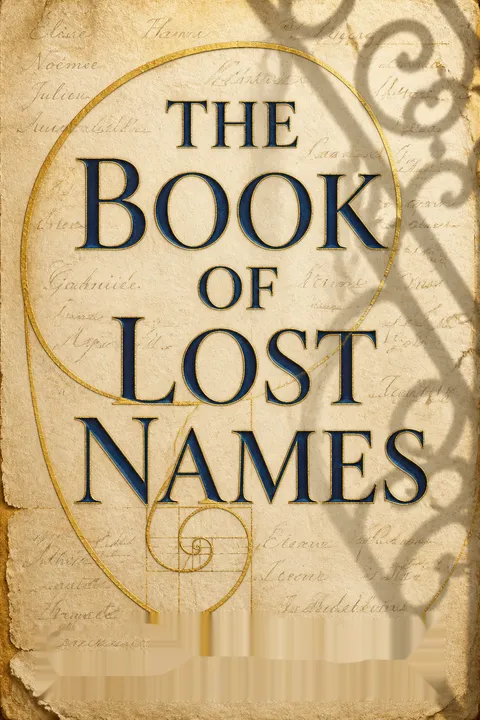
The Book of Lost Names by Kristin Harmel tells the story of Eva Traube, a Jewish woman in WWII France who becomes a forger creating identity documents for Jewish children escaping to Switzerland. Reviews are mixed: many praise the emotional depth, compelling storyline, and Eva's character development, while others criticize the predictable romance, Eva's naïve mother, and historical implausibility. Common complaints include too much focus on romance over the resistance work, unrealistic character decisions, and concerns about cultural authenticity. Positive reviews highlight the ingenious coded naming system and the moving ending. Overall ratings range from 1-5 stars.
People Also Read









Characters
Eva Traube Abrams
Reluctant master forgerEva is a French-born Jewish literature student whose love of books and talent for drawing become practical tools under occupation. She is observant, imaginative, and initially more comfortable interpreting danger through stories than acting against it. Family loyalty weighs heavily on her, especially when her choices conflict with Faiga’s expectations. Eva’s defining impulse is to preserve what persecution tries to erase, whether that means creating papers that let a child escape or keeping the child’s original name recorded. Her later life as a librarian and mother is shaped by the history she chooses not to share. She is neither naturally fearless nor untouched by guilt; her courage comes from continuing to act while afraid.
Rémy Duchamp
Restless resistance forgerRémy is a gifted document forger with a background in chemistry and a confidence that can shade into arrogance. His humor helps him survive tense encounters, while his pride sometimes makes collaboration difficult. He is deeply loyal once he trusts someone and sees resistance as a duty that cannot be confined to the workshop. His partnership with Eva grows through shared craft, mutual respect, and a common insistence that endangered people deserve more than an assumed identity. Rémy is also shaped by loss, though he rarely discusses it directly. His impulse to protect Eva and his desire to fight for France pull him in opposing directions.
Faiga Traube
Grieving, protective motherFaiga, whom Eva calls Mamusia, is a Polish Jewish émigrée devoted to her husband and daughter, religious tradition, and the ordinary rituals that make a family feel secure. Before the roundup, she believes kindness is a way of resisting dehumanization. The loss of her husband’s safety and the collapse of familiar life make that faith harder to sustain. She fears that Eva’s work, Christian cover, and growing bond with Rémy will sever her from her people. Her objections are often sharp, but beneath them lies terror of losing the last family member she can still protect. Faiga’s grief and Eva’s purpose create a painful conflict between love and autonomy.
Joseph Pelletier
Charming Resistance contactJoseph is Eva’s handsome Sorbonne acquaintance, a socially assured young man who appears to move easily through the underground. He is connected to the Resistance and later uses the alias Gérard Faucon. His history with Eva gives him unusual access to her family’s trust, while his confidence makes him persuasive in tense situations. He has known Eva since before the occupation transformed their lives, and Faiga regards him as a suitable match for her daughter. Joseph’s public charm and practical competence make him a complicated presence in Eva’s work and personal life. He embodies the difficult question of how much a familiar past can tell someone about the person they become.
Père Clément
Priest of the escape networkPère Clément is the Catholic priest who organizes Aurignon’s clandestine aid network from the church. He is thoughtful, patient, and willing to make decisions that expose him to danger, but he does not mistake faith for certainty. He recruits Eva because her artistic skill can help refugees, then encourages the codebook that preserves the children’s birth names. His pastoral manner allows him to challenge Eva without dismissing her doubts. He also gives shelter to people whose identities and beliefs differ from his own. For Eva, he becomes a mentor and a model of faith expressed through concrete protection rather than doctrine alone.
Geneviève Marchand
Exacting fellow forgerGeneviève arrives from another Resistance forgery center and brings speed, precision, and a sharp eye for inconsistencies. Her work strengthens Eva’s operation, and her own family losses give her a powerful reason to continue helping others. She is guarded about her private life, but not unfeeling; she becomes a dependable colleague and an important friend to Eva. Her connection with Joseph also places her within the personal tensions surrounding the Resistance. Geneviève’s practical competence and quiet loyalty make her more than a replacement for Rémy at the workshop table.
Erich
Soldier with a conscienceErich is a German soldier and Catholic whose service in the occupying army conflicts with his conscience. His presence complicates Eva’s understandable distrust of uniforms and national allegiances. He is careful about whom he trusts and understands that even a small act of help could cost him his life. Through him, the story distinguishes a person’s institutional position from the choices he makes within it, without pretending that moral opposition removes his complicity or danger.
Leo Traube
Eva’s steadfast fatherLeo, whom Eva calls Tatuś, is a Polish Jewish typewriter repairman who has built a life in France with Faiga. A devoted father and lover of books, he teaches Eva to notice the gifts she might one day need. He is cautious enough to arrange false papers before the roundup, yet hopeful enough to believe the family may remain safe. His affection is practical: he prepares Eva to act if he cannot protect her himself. Leo’s relationship with Eva helps shape her talent, her conscience, and her belief that courage can be learned.
Otto Kühn
Restitution-minded librarianOtto Kühn is a Berlin librarian who devotes himself to identifying books looted by the Nazis and returning them to their owners. He is curious about the code in Eva’s volume, but his professional interest is tempered by empathy for the people and histories attached to stolen books. When Eva arrives, he treats her not as a research subject but as the rightful owner of a meaningful object. His work gives the novel’s present-day frame a concrete purpose: restitution can begin even when the original theft is decades old.
Louis Abrams
Book-loving American husbandLouis is an American visitor to Paris who shares Eva’s love of literature and offers her companionship after the war. He represents a possible life built through steadiness, shared interests, and a willingness to begin again. Eva values his kindness and the chance to practice English with someone who understands her devotion to books. Their relationship also becomes part of the story Eva tells herself about leaving the past behind. Louis knows the life Eva allows him to see, not the full wartime history she has kept private.
Ben Abrams
Eva’s grown sonBen is Eva’s adult son, raised to know her as a librarian and devoted mother rather than as a young woman shaped by war. He is protective and practical, and his concern about Eva traveling alone reflects how he understands her, not necessarily who she is. Their relationship contains genuine affection alongside a long silence about her past. Ben’s presence in the 2005 frame makes Eva confront what secrecy has preserved and what it has withheld.
Madame Barbier
Austere boardinghouse keeperMadame Barbier runs the Aurignon boardinghouse and has a direct, suspicious manner that initially unsettles Eva. Her knowledge of forged papers and her ties to local helpers make her an important guide to the town’s underground life. She offers food and shelter to Eva and Faiga, while also insisting that they understand the risks they face. Her own grief has made her tough rather than cold, and she often expresses care through practical acts instead of tenderness.
Madame Noirot
Bookseller and quiet allyMadame Noirot owns the Aurignon bookshop and recognizes Eva’s love of books during their first brief encounter. Her kindness helps draw Eva toward the community of people who shelter refugees. She knows when to ask questions and when to offer a book, a supply, or a warning instead. As a bookseller, she connects Eva’s private refuge in literature with the public work of saving people through documents.
Madame Travere
Teacher to hidden childrenMadame Travere shelters Jewish children in her home and keeps their education going despite the danger of discovery. She is strict with adults who might expose her wards, but her rules serve the children’s safety and future. Her decision to preserve lessons, books, and routines gives the children more than concealment; it allows them to keep developing as children. She is one of Aurignon’s clearest examples of resistance carried out through daily care.
Monsieur Goujon
Reluctant document supplierMonsieur Goujon is Leo’s former employer at the police prefecture. Afraid for his own family, he does not create the false papers he once promised, but gives Eva blank forms, supplies, and a destination that may help her escape. His limited assistance leaves Eva to discover her own skill under pressure.
Frania Kor
Young refugee and readerFrania is a young Jewish child hidden in Aurignon under an assumed identity. She loves books and draws hope from stories of characters finding their way home. Her birth name becomes one of the identities Eva is determined to preserve, even while creating the papers that let her travel safely.
Madame Trintignant
Baker and network helperMadame Trintignant runs Aurignon’s bakery and helps Père Clément’s network. She is part of the town’s web of ordinary people who turn work, food, and local knowledge into practical support for those in danger.
Madame Fontain
Traube family neighborMadame Fontain lives near the Traubes in Paris and asks Eva and Faiga to care for her young daughters during the roundup. Her strained relationship with the family becomes a reminder that shared streets do not guarantee solidarity.
Madame Trintignant
Baker and network helperMadame Trintignant runs Aurignon’s bakery and helps Père Clément’s network. She is part of the town’s web of ordinary people who turn work, food, and local knowledge into practical support for those in danger.
Plot Devices
The Book of Lost Names
A hidden identity archiveThe eighteenth-century Epitres et Evangiles becomes a covert record of the children whose identities Eva and Rémy must replace to keep them alive. Using marked letters and a Fibonacci sequence, they encode each child’s birth name alongside the assumed identity on official papers. The method protects the list from casual discovery while giving Eva a way to preserve what the Nazis and the false documents threaten to erase. The book later becomes the object that draws the elderly Eva back into her own history and connects the wartime plot to the search for stolen books.
Forged identities
A passport through dangerEva and the Aurignon network make identity cards, travel permits, ration cards, certificates, and supporting records that allow Jews, children, Resistance workers, and Allied pilots to move through occupied France. Their methods combine artistic copying, real identities borrowed from official registers, chemical erasure, and carefully matched paper and ink. Each document has to withstand both a quick inspection and the possibility that an official recognizes the person named on it. The forged identities are not simply disguises: they create routes toward safety while making the preservation of each person’s original identity an urgent problem.
Lactic acid and printing press
Faster, harder-to-detect papersRémy uses his chemistry knowledge to erase Waterman’s blue ink with lactic acid, allowing genuine forms to be altered. Eva improves the operation by using a hand-printing press to reproduce official stamps in batches, cutting the time needed to prepare papers for the growing number of refugees. Later, better paper supplied through the Resistance helps address a weakness that exposes forged documents to scrutiny. These techniques make the workshop’s work possible at scale, while the repeated need to adapt shows how forgery is a contest between careful craft and changing enforcement.
The Twain clue
A signal beneath ordinary printAfter the war, Eva finds a tiny mark in Rémy’s copy of The Adventures of Tom Sawyer beside a passage about children presumed dead. She interprets it as a possible sign that he planned to fake his death if his work against the gendarme Besnard went wrong. The clue cannot prove that Rémy survived, but it gives Eva reason to keep returning to the Mazarine Library. Its meaning is clarified only much later, when Rémy explains that he had intended to use the passage as a signal about his plan.
The Berlin book search
A past brought into the presentA newspaper article about a Berlin librarian trying to return Nazi-looted books reveals that Eva’s treasured volume has resurfaced. This discovery creates the frame for the wartime narrative and gives the elderly Eva a reason to revisit memories she has kept from Ben. The book’s recovery promises an answer about the coded names, but it also forces her to confront the personal message she once left for Rémy. Its return ultimately brings together restitution, memory, and the possibility of recovering a relationship that both lovers believed lost.
About the Author
Other books by Kristin Harmel




Download PDF
Download EPUB
.epub digital book format is ideal for reading ebooks on phones, tablets, and e-readers.








