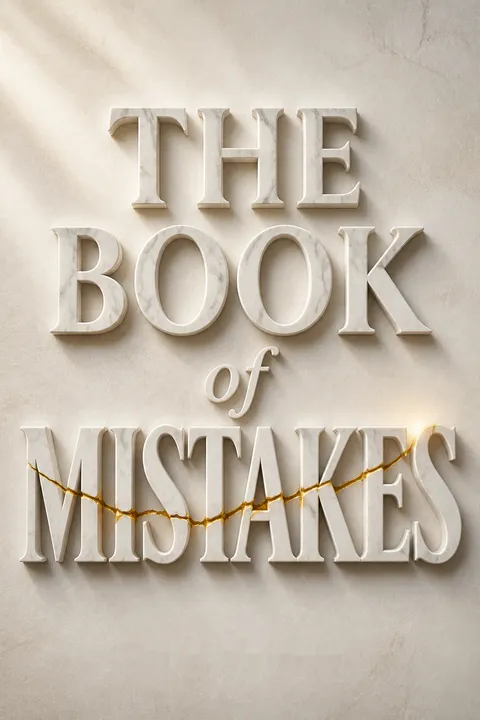


Plot Summary
Prologue
In an English abbey in 1425, a monk hides the final copy of an ancient book in a wall while a thief hunts for it. The monk is nearly strangled, but the Keeper intervenes and carries off the attacker.
The original has already been burned, leaving the book’s wisdom protected in scattered copies. As the monk returns to prayer, the secret passes safely into another generation.
The book begins by making its wisdom a contested inheritance rather than a set of useful sayings. The monk obeys without knowing the full design, while the Keeper acts unseen to preserve knowledge from someone who wants power without understanding. That contrast anticipates the fable’s central distinction between possessing advice and practicing it. The danger is not that the lessons are mysterious, but that they can be used to control others. Secrecy therefore functions as both protection and a moral test: the knowledge must reach people ready to apply it responsibly.
David Finds the Invitation
David1 begins the day with overdue bills, credit card debt, and a boss who has placed him on a final warning after blaming him for mistakes he did not make. He has hidden his anxiety from his parents, who believe his career is thriving. On his walk to work, he helps a young woman2 gather windblown papers, then finds one of them later with an invitation to meet a celebrated local benefactor.3
At the café, the Old Man3 listens as David1 admits his fears and hopes. Rather than hand over the promised lessons, he explains that David1 must be ready to learn them. David1 agrees, though he still has no idea how the teachers will find him.
David’s crisis is not simply financial or professional. He has built an identity around appearing capable, so asking for help feels like admitting that the whole picture has failed. The Old Man’s first intervention is therefore not advice but attention: David has to describe his life honestly before he can change it. The invitation makes curiosity an action rather than a mood. Its unexplained arrival also gives the fable a providential mechanism, suggesting that opportunity often becomes visible only after a person stops defending the old story about himself.
Aria Escapes the Fire
In 1771, eighteen-year-old Aria2 steals the manuscript from her uncle Raymond’s4 house as armed men search for it. She sets the house ablaze to draw them away, escapes with the book, and sees Alexander,5 the young man she loves,5 speaking with Ulrick,6 a longtime enemy of her uncle.6 At Raymond’s4 bedside, she discovers he has survived his illness.
He takes her through the house’s escape route, explains that the book’s nine lessons must be guarded, and names her the next Keeper. He shows her the first hidden Law, Desire, then sends her to retrieve supplies while he prepares to flee. Aria2 accepts the task, but Alexander5’s presence leaves her unable to trust what she thought she knew.
Aria’s inheritance begins as an act of physical courage, then becomes an ethical burden. Saving the manuscript requires her to destroy the home that represents her childhood security. Raymond’s appointment of her as Keeper also reverses the expected hierarchy: her youth and gender make her easy for enemies to underestimate, but they do not make her unfit to lead. Alexander’s ambiguous appearance sharpens the cost of that responsibility. Aria must separate emotional longing from evidence without yet knowing whether the two can be reconciled.
Choose Your Own Measure
The Playwright7 introduces the first mistake by describing how she once performed roles written by others, then chose to create stories herself. David1 recognizes that he entered a large company largely because his father and professor approved of it, not because it matched his ambitions. At the bank, the Banker8 uses ordinary coins to show him how labels can conceal value.
She recalls abandoning advanced mathematics after others predicted she would fail, and urges him not to accept the same kind of verdict about himself. David1 asks for practical help with his debt as well as the lesson. The two meetings turn his unease into questions: what work does he actually want, and whose judgment has he mistaken for his own worth?
The first two lessons distinguish external conformity from internalized judgment. David is not merely following a career chosen by other people; he has also adopted their evaluations as if they were facts about his capacity. The Playwright’s metaphor of authorship gives him a way to see his work life as chosen or unchosen, while the Banker’s coins separate worth from public recognition. Her financial guidance matters because the book does not present confidence as a substitute for material constraints. Change requires both a revised self-understanding and a concrete response to debt.
Reclaim the Inner Mic
At the gym, the Trainer9 tells David1 how a cancer survivor, his girlfriend’s grandmother, pushed him to stop treating illness and doubt as permanent limits. He names David1’s habit of making excuses and shows how self-talk can either reinforce or interrupt it. Later, at a pub, the Bartender10 identifies the influence of friends who complain, criticize, and normalize stagnation.
David1 hears his own companions doing exactly that and realizes the problem is not only his job. He must choose people who encourage responsibility rather than feed resentment. These encounters turn the lessons into a social practice: David1 begins examining both the voice inside his head and the voices he allows to shape his expectations.
The book treats excuses and social influence as mutually reinforcing systems. A person can explain away inaction internally, while a circle of friends confirms that such inaction is sensible. The Trainer’s story complicates the idea that hardship automatically produces growth: illness becomes formative only when the person changes how he responds to it. The Bartender then widens the lens from individual psychology to group norms. David’s new task is not to condemn friends for struggling, but to notice which relationships repeatedly make avoidance feel like belonging.
Discomfort Becomes Practice
In an old bookstore, the Bookseller11 teaches David1 that comfort can keep a person from testing what he might become. Soon after, he meets an Entrepreneur12 whose ventures have repeatedly collapsed through shortages, disputes, and poor decisions.
Instead of treating each setback as proof he cannot succeed, the Entrepreneur12 studies what went wrong and tries again. David1 recognizes how one humiliating teenage sales job had become a lasting verdict on his abilities. He begins treating failure as information rather than identity.
At work, he also stops living only to avoid dismissal and starts exploring a future business. The two lessons make risk more manageable: discomfort is part of growth, and a setback remains temporary unless he lets it define him.
These lessons give failure a specific psychological timeline. An unpleasant event can become a permanent identity when a person freezes its meaning before trying again. The Entrepreneur’s candor interrupts that process by turning setbacks into evidence to examine, not shame to conceal. The Bookseller’s emphasis on discomfort supplies the behavioral counterpart: insight has little value if David keeps choosing only familiar situations. Together, the lessons recast courage as repeated experimentation. The aim is not fearlessness, but the ability to act while fear and uncertainty remain present.
Aria Inherits the Burden
After Raymond4 dies, Aria2 reads the second Law, Gratitude, and tries to remember what he gave her rather than only what she has lost. Ulrick6 arrives with Alexander5 and other men, claiming a manuscript belongs to his family. Aria2 lets them search Raymond’s4 office while slipping away with decoy papers.
She follows her uncle’s4 final clue, discovers a hidden bottom in his box, and finds the third Keeper law along with gold. When Ulrick’s6 men track her through the countryside, Alexander5 directs them toward the bridge instead of revealing where she has crossed the stream. Aria2 distracts Ulrick6 with a slingshot, takes his horse, and escapes toward the docks with Mae’s16 help and the manuscript.
Grief does not make Aria’s responsibility lighter; it makes the responsibility inseparable from the person she has lost. Gratitude gives her a way to remember Raymond without denying the violence around her. Her escape depends on skills he quietly taught through childhood games, so memory becomes practical equipment. Alexander’s choice to misdirect the search complicates the suspicion planted at the burning house, but Aria cannot pause to resolve their relationship. The scene frames leadership as acting under incomplete information while protecting something more vulnerable than one’s own safety.
Make a Distinctive Life
David’s former music teacher, now a Conductor,13 warns him against blending in and urges him to distinguish himself through authentic work. The Artist14 follows with the lesson that another person’s success does not reduce his own prospects. David1 even adds brushstrokes to her painting, then asks a successful acquaintance for advice and contacts a struggling friend to offer support.
Meanwhile, Aria’s2 escape ends with passage across the water; she carries the manuscript away from Ulrick’s6 search. Her flight is the practical test of the laws Raymond4 entrusted to her: she keeps moving, uses what she has, and does not let fear dictate the route. David1 and Aria2 are each learning to act beyond inherited limits.
Standing out and believing success is abundant address two forms of comparison: hiding to avoid judgment and resenting those who attract recognition. The Artist’s invitation to paint makes the principle bodily; David has to risk leaving a visible mark before he can decide whether he has talent. His choice to seek advice rather than envy success converts comparison into learning. Aria’s escape offers a sharper, material counterpart: the laws are not abstractions when she must use a ribbon, a stone, a horse, and a trusted ally to survive.
Time Finds Its Teacher
After his unusual keynote succeeds, David1 sees that he can leave corporate work and build a firm of his own. During his company’s volunteer day, he visits a hospice, where patients speak openly about love, purpose, and the limited time available to act. The Doctor15 teaches him the final mistake: assuming there will always be more time, while also warning that some decisions need reflection rather than haste.
David1 then meets Aria,2 the young woman whose scattered papers began his journey,2 and learns that she has followed a parallel path. In 1774, Aria2 reads the final Keeper law on Belief, selects Alexander5 as one of her teachers, and builds a life with him. The separate journeys converge in a shared charge to pass the wisdom onward.
The final lesson prevents ambition from becoming endless postponement. David’s work has changed, but the hospice forces him to measure success against relationships and purpose, not merely a new professional identity. The Doctor’s distinction between urgency and haste keeps the lesson from collapsing into frantic productivity. Aria’s final law extends the same logic across generations: belief is meaningful when it is multiplied by teaching others. Their meeting joins parallel stories without erasing their differences. David has learned through a succession of mentors; Aria has inherited a guarded tradition and must decide whom to trust with it.
Epilogue
Years later, David1 wakes with purpose rather than dread and shares his life with Aria,2 now his wife.2 The Old Man3 has left them his copy of the book on the condition that they teach its lessons to people ready to use them.
David1 keeps the Banker’s8 coins as a reminder that others do not determine his value. Preparing to meet a new student, he understands that the once-secret knowledge has become his work: to pass it on without mistaking possession for practice.
The ending completes the book’s chain of transmission. David, who once arrived at the café hoping for a powerful ally or an escape from his job, now takes responsibility for guiding someone else. The coins preserve a material reminder of the second lesson, while the book represents a responsibility that cannot be fulfilled by keeping it safe on a shelf. His partnership with Aria links the contemporary plot to the Keeper’s older history. The final image suggests that success is not a finished condition but a practice renewed whenever one person helps another begin.
Analysis
The fable presents success as a sequence of corrections to ordinary habits, not as a mysterious gift bestowed on the naturally exceptional. David1’s troubles are recognizable and specific: debt he has avoided, work he entered to satisfy others, an unfair label from his boss, and friends whose complaints make resignation feel normal. Each teacher converts a private mistake into an observable behavior David1 can change. That structure makes the advice actionable, though it also simplifies the role of external constraints by placing much of the burden on attitude and choice.
Aria2’s parallel story tests the same principles under far greater physical and emotional pressure. David1 can experiment with a new career while still earning a paycheck; Aria2 must carry a manuscript through pursuit, grief, and uncertainty. Her inherited laws give the lessons a history, but her survival depends on practical preparation and help from others, not belief alone. The narrative therefore balances self-direction with interdependence: David1 benefits from peers and mentors, while Aria2 depends on Raymond4’s training and Mae16’s timely support.
The book’s deepest structural claim is that knowledge becomes wisdom through use and transmission. The manuscript is protected from those who want its power, but the ending rejects permanent secrecy. David1 and Aria2 inherit a duty to teach, turning private transformation into a repeated social act. Success finally means more than reaching one’s ambitions. It means choosing ambitions deliberately, treating setbacks as revisable, valuing time and other people, and helping someone else begin.
Review Summary
The Book of Mistakes receives mostly positive reviews, with readers praising its engaging storytelling and valuable life lessons. Many appreciate the parable-style narrative and find the nine mistakes relatable and applicable. Readers describe it as motivational, inspiring, and easy to read. Some critics note that the advice is not entirely novel, and a few find the storytelling forced. Overall, reviewers recommend it as a helpful guide for personal growth and success, particularly for young adults and recent graduates.
People Also Read








Characters
David
The reluctant dreamerA young employee whose debt, workplace anxiety, and concealed disappointment make him vulnerable to other people’s definitions of success. He is curious but initially hopes a powerful contact will solve his problems. As teachers challenge his habits, he learns to examine his assumptions and take purposeful risks.
Aria
The young KeeperRaymond’s4 niece, raised under his protection and taught to observe, prepare, and act decisively. Her love for Alexander5 sits uneasily beside her duty to guard the manuscript. She is compassionate and emotionally open, but danger forces her to make hard choices without waiting for certainty.
The Old Man
The first guideA wealthy, unassuming benefactor who listens more than he lectures. He treats David1’s willingness to be honest as the start of learning and guards an old book whose lessons must be practiced, not merely read.
Uncle Raymond
Aria’s mentorA beloved guardian, lawyer, and Keeper who prepares Aria2 through stories, escape routes, and carefully concealed instructions. His affection is inseparable from his seriousness about duty; he trusts her with difficult work because he has watched her learn.
Alexander
The uncertain suitorA former soldier and apprentice whose courtship of Aria2 begins with warmth and shared laughter. His unexplained connection to Ulrick6 makes him difficult for her to read, while his humility and guardedness complicate her judgments.
Ulrick
The manuscript seekerA hostile pursuer who believes the manuscript should be his and is willing to use intimidation and deception to obtain it. His desire for the book’s power contrasts with the Keepers’ effort to preserve its lessons.
The Playwright
The author of choiceA celebrated former actress who turned from performing other people’s stories to writing her own. She understands how easily a person can mistake a role assigned by others for a chosen life.
The Banker
The keeper of valueA capable financier who once let others’ assumptions about women and mathematics narrow her choices. She now helps David1 face practical debt while separating human potential from the labels attached to it.
The Trainer
The challenger of excusesAn organizational trainer whose history of illness makes him alert to the difference between a real obstacle and a surrendering explanation. He encourages David1 to notice and redirect his internal self-talk.
The Bartender
The reader of companyAn observant tavern owner who has moved through several careers and values the life he has built. Watching customers gives him a practical understanding of how repeated complaints and encouragement shape a person’s choices.
The Bookseller
The guide beyond comfortThe proprietor of a bookshop that resists modern trends. She notices David1’s eagerness for something new and presses him to accept the awkwardness of learning rather than retreat into familiar routines.
The Entrepreneur
The practiced returnerA candid business builder who describes failed ventures alongside a later success. He treats setbacks as material for revision and offers David1 a model of resilience without pretending that every attempt works.
The Conductor
The teacher of distinctionDavid1’s former music teacher, a warm mentor who uses musical history to explain ambition and authenticity. He wants David1 to stop confusing fitting in with being accepted or effective.
The Artist
The maker of possibilityA painter and business owner who welcomes David1 into her studio and lets him contribute to a canvas. Her experience with envy has taught her to treat another person’s success as a chance to learn and help.
The Doctor
The witness to timeA hospice physician who has learned about living from patients nearing death. He speaks calmly about limited time, the value of the present, and the need to distinguish timely action from haste.
Robert and Mae
Aria’s sheltering alliesFriends of Raymond4 who give Aria2 refuge after the loss of her home and later help her evade Ulrick6. Mae16 in particular responds decisively when Aria2 needs a distraction and a head start.
Plot Devices
The Book of Mistakes
Wisdom under guardAn old manuscript gathers nine common errors into lessons that can redirect a life when acted upon. Copies are held by teachers, while the Keeper protects the original from people seeking its influence for control. In David1’s story, each teacher uses personal experience to make a lesson concrete. In Aria2’s, the manuscript creates an inheritance of danger, leadership, and responsibility.
The Nine Teachers
Lessons made personalA succession of people appear in David1’s ordinary settings, from a bank to a gym, bookstore, art studio, and hospice. Each teacher connects one lesson to a mistake in their own history, so David1 encounters the principles as tested experience rather than abstract instruction. Their unusual timing also sustains the fable’s suggestion that a seeker may find guidance in unexpected places.
The Three Laws
A Keeper’s compassDesire, Gratitude, and Belief are hidden pages reserved for the Keeper, offering leadership principles that complement the nine lessons. Raymond4 entrusts the first law to Aria2, and she later discovers the final page through his clues. The laws shape her choices under pressure and explain why protecting the manuscript means more than protecting paper: a Keeper must choose how and whom to teach.
Download PDF
Download EPUB
.epub digital book format is ideal for reading ebooks on phones, tablets, and e-readers.








