Plot Summary
House on the Edge
Simon Watson, a solitary librarian, lives in a decaying house perched precariously on a Long Island bluff. The house, battered by storms and neglect, is a physical reminder of his family's decline. Simon's life is marked by loss: his mother, Paulina, a circus mermaid, drowned herself when he was a child; his father faded away in grief, leaving Simon to raise his younger sister, Enola. The house is filled with ghosts—memories of laughter, pain, and the weight of inheritance. Simon's days are spent patching leaks, worrying about money, and clinging to the hope that Enola, now a traveling fortune-teller, might return. The sea gnaws at the land, threatening to erase everything he has left, and Simon feels the pull of both the water and the past.
The Book Arrives
One day, Simon receives a heavy, water-damaged book from a stranger, Martin Churchwarry, an antiquarian bookseller. The book, an old circus ledger, contains sketches, names, and cryptic notes. Inside, Simon finds his grandmother's name, Verona Bonn, and a web of connections to other women—performers, mermaids, fortune-tellers—many of whom drowned. The book's arrival coincides with Enola's announcement that she's coming home, stirring up old wounds and unresolved questions. As Simon pores over the fragile pages, he senses that the book is more than a curiosity; it is a key to understanding his family's tragic history, and perhaps a warning.
Drowned Women's Names
Simon's research into the book and public records reveals a disturbing pattern: generations of women in his family, from Bess Visser to Celine Duvel to Verona Bonn to his own mother, have drowned—often by suicide—on July 24th. The coincidence is too precise to ignore. Each woman left behind a daughter, and each daughter inherited the same fate. The book's pages, filled with sketches of tarot cards and circus acts, seem to echo the cycle of loss. Simon becomes obsessed with the date, the drownings, and the possibility of a curse. The weight of history presses in, and the approaching July 24th looms like a storm.
The Wild Boy's Secret
Interwoven with Simon's story is the tale of Amos, a mute boy abandoned in the woods in the late 1700s. Amos survives by vanishing into the landscape, until he is discovered by Hermelius Peabody, the charismatic leader of a traveling show. Peabody takes Amos in, making him the Wild Boy—a spectacle for curious crowds. Under the tutelage of Madame Ryzhkova, a fierce Russian fortune-teller, Amos learns the language of tarot and the art of reading people. The show becomes his family, and he finds kinship with other outsiders. But Amos's gift for disappearing is both a blessing and a curse, foreshadowing the vanishing acts that will haunt his descendants.
Tarot and Bloodlines
Madame Ryzhkova's tarot deck, hand-painted and powerful, becomes a central symbol. She teaches Amos to read the cards, warning him of the dangers of fate and the burden of knowledge. The cards—especially the Tower, the Devil, and the Queen of Swords—recur in readings, always portending disaster, water, and loss. Ryzhkova's own past is marked by tragedy: her father was drowned by a river spirit, and she fears the same fate for Amos. The cards are passed down, gathering the hopes, fears, and curses of each generation. The line between prophecy and self-fulfilling doom blurs, binding the family's women to the water.
The Curse Unfolds
As Simon's obsession deepens, Enola returns home, bringing with her a battered deck of tarot cards—passed from their mother, and before her, through generations. Enola is restless, haunted by bad readings and a sense of impending doom. Simon's research, aided by Alice (his childhood friend and secret love), uncovers more drowned women, all linked by blood and the date July 24th. The house's decay accelerates, mirroring the unraveling of the family. The curse, once a vague fear, becomes a tangible threat as the anniversary approaches and Enola's behavior grows more erratic.
Patterns in Water
The natural world reflects the family's turmoil: horseshoe crabs swarm the beach, tides rise, and storms batter the coast. Simon's house is condemned, forcing him to confront the reality of loss. He discovers that the book's original owners—Amos, Evangeline, and their daughter Bess—were caught in a catastrophic flood, the likely origin of the curse. The tarot cards, passed down through the women, are revealed as the true carriers of the family's doom, each reading reinforcing the cycle. Simon realizes that the only way to break the pattern is to destroy the cards and the history they carry.
The Carnival's Pull
Enola urges Simon to leave with her, to join the carnival and abandon the house and its ghosts. The carnival, with its misfits and performers, offers both freedom and repetition—the same acts, the same dangers. Simon is torn between the pull of the past and the possibility of a new life. His relationship with Alice deepens, but is threatened by secrets and the legacy of betrayal between their families. The carnival becomes a crucible, testing whether the siblings can escape their inheritance or are doomed to repeat it.
Siblings Reunited
Simon and Enola, after years of distance and resentment, find moments of connection—reminiscing about childhood, sharing memories of their parents, and confronting the pain of abandonment. Enola confesses her fears and her sense of being cursed, while Simon admits his guilt and longing for family. Their bond is tested by the return of Enola's boyfriend, Doyle, and the revelation of more family secrets. Together, they face the crumbling of their home and the approach of the fateful date, clinging to each other as the only constants in a world of loss.
The Past Resurfaces
The truth about the family's curse comes to light: the tarot cards, imbued with generations of grief and fear, have become vessels for tragedy. Simon learns that the book was sent to him by Churchwarry, a distant relative and descendant of Ryzhkova, drawn by the same mysterious pull. The house collapses into the sea, taking with it the last physical traces of the past. Simon, Enola, and Alice must decide what to carry forward and what to let go. The act of burning the book and the cards becomes both a ritual of mourning and a bid for freedom.
The Flooded Archive
A storm floods the town and the library, destroying books and records—another erasure of history. Simon, Enola, and Doyle take refuge in the library, trying to save what they can. The flood becomes a metaphor for the unstoppable force of the past, washing away both pain and memory. Simon realizes that preservation is not always possible or desirable; some stories must be allowed to end. The siblings confront the reality that their family's legacy is not just one of tragedy, but also of survival and love.
The Bonfire and the Cards
In a final act of defiance, Simon, Enola, and Doyle gather the remnants of the past—Frank's heirlooms, the book, and most importantly, the tarot cards—and burn them in a bonfire on the beach. The fire is both destructive and purifying, a way to sever the ties that have bound them to sorrow. As the flames consume the cursed objects, a storm breaks, and the sea rises once more. The ritual is incomplete, however, as the true heart of the curse—the cards—must be returned to the water.
Breaking the Cycle
Simon, realizing that burning the cards is not enough, wades into the sea with the box of tarot cards, intending to bury them in the depths. The horseshoe crabs swarm him, echoing the family's history of drowning. He nearly succumbs, but is pulled back to life by Alice and Enola. The act of letting go—of the house, the cards, the past—breaks the cycle. The curse is not erased, but transformed; survival becomes an act of will, and the future is no longer dictated by the past.
The Last Drowning
In the aftermath, Simon is cared for by Alice, Enola, and Doyle. The family, fractured by generations of loss, is remade through acts of love and forgiveness. Frank, Alice's father and the keeper of many secrets, is left to mourn his own losses. The sea, once a source of death, becomes a place of renewal. The siblings, no longer bound by the curse, are free to choose their own paths. The drowned women are remembered, not as victims, but as part of a lineage of survivors.
New Beginnings, New Stories
Simon, Alice, Enola, and Doyle leave Long Island, heading south to Savannah, where Simon has been offered a job at an archive. On the journey, Simon begins to write a new book—a family history that blends fact and invention, honoring both the pain and the resilience of his ancestors. The past is not forgotten, but it no longer dictates the future. The family, once defined by tragedy, is now defined by the stories they choose to tell and the love they share. The cycle is broken, and a new story begins.
Characters
Simon Watson
Simon is the novel's anchor—a solitary, introspective librarian burdened by the weight of his family's history. Orphaned young, he became both brother and parent to Enola, sacrificing his own desires to keep the family together. Simon is defined by his sense of responsibility, his longing for connection, and his fear of loss. The arrival of the circus ledger awakens his obsessive curiosity and his need to make sense of the tragedies that have shaped his life. Simon's journey is one of unraveling the past, confronting the possibility of a curse, and ultimately learning to let go. His relationship with Alice offers a chance at love and redemption, but is complicated by secrets and guilt. Simon's development is marked by his transition from passive victim to active agent, willing to risk everything to save his sister and himself.
Enola Watson
Enola is Simon's younger sister, a wild, impulsive spirit shaped by abandonment and grief. She flees the suffocating house and her brother's care, seeking freedom in the itinerant world of carnivals and fortune-telling. Enola is both vulnerable and fierce, haunted by the family's legacy and her own sense of doom. Her relationship with Simon is fraught—she resents his protectiveness but ultimately relies on his love. Enola's compulsive tarot readings and erratic behavior signal her struggle with the curse, but also her desire to break free. Her bond with Doyle, another outsider, offers her a chance at happiness. Enola's arc is one of self-acceptance, forgiveness, and the courage to choose life over fate.
Alice McAvoy
Alice is Simon's childhood friend and eventual lover, the daughter of Frank McAvoy. Practical, intelligent, and compassionate, Alice is the emotional ballast in Simon's stormy world. She is deeply loyal, but not immune to hurt—her family's entanglement with the Watsons brings both comfort and pain. Alice's relationship with Simon is marked by unspoken longing, mutual support, and the challenge of overcoming the past. She is a bridge between worlds—between the living and the dead, the past and the future. Alice's development is subtle but profound: she learns to assert her own needs, to forgive, and to help Simon build a new story.
Frank McAvoy
Frank is both neighbor and surrogate father to Simon and Enola, but also a man haunted by his own regrets. His unrequited love for Paulina, Simon's mother, and his role in the family's history create a web of guilt and longing. Frank's generosity is genuine, but often complicated by his inability to let go of the past. His relationship with Alice is strained by his obsession with the Watsons, and his attempts to help Simon are both a blessing and a burden. Frank's confession of his affair with Paulina shatters the illusion of stability, forcing all involved to confront uncomfortable truths. He is a tragic figure, unable to save those he loves or himself.
Paulina Watson
Paulina is the absent center of the novel—a circus performer, fortune-teller, and "mermaid" who could hold her breath for impossible lengths of time. Her beauty, restlessness, and sadness define the family's mythology. Paulina's suicide is the original wound, the act that sets the cycle of loss in motion. She is remembered through stories, objects, and the rituals of swimming and tarot. Paulina's legacy is both a curse and a gift: she passes down both the pain of drowning and the strength to survive. Her presence lingers in the water, in the cards, and in the memories of her children.
Hermelius Peabody
Peabody is the leader of the traveling show in the historical narrative—a larger-than-life figure who collects lost souls and turns them into performers. He is both a visionary and a pragmatist, capable of great kindness and ruthless calculation. Peabody's relationship with Amos is paternal, but also exploitative; he sees both the humanity and the marketability of his "Wild Boy." Peabody's ambition drives the show forward, but also leads to disaster. His legacy is the creation of a family of outsiders, bound by both love and tragedy.
Madame Ryzhkova
Ryzhkova is the matriarchal force in the historical narrative—a Russian fortune-teller whose tarot deck becomes the vessel of the family's fate. She is both nurturing and terrifying, teaching Amos the language of the cards and the dangers of prophecy. Ryzhkova's own history is marked by loss and fear of water spirits. Her attempt to protect Amos from Evangeline, and her final curse upon the cards, set the cycle of drowning in motion. Ryzhkova's presence endures through the deck, her descendants, and the stories that refuse to die.
Amos
Amos is the original "Wild Boy," a mute child who finds family in Peabody's show and love with Evangeline. His journey from animalistic outsider to apprentice seer mirrors the family's evolution. Amos's inability to speak is both a limitation and a source of power—he communicates through cards, gestures, and presence. His love for Evangeline and their daughter Bess is deep, but ultimately doomed by the curse. Amos's vanishing act becomes the template for the family's disappearances, both literal and metaphorical.
Evangeline
Evangeline is Amos's lover and the first in the line of drowned women. Born of a human mother and a mysterious, possibly supernatural father, she is marked from birth as an outsider. Evangeline's life is shaped by violence, escape, and the longing for belonging. Her ability to hold her breath and survive underwater makes her both a marvel and a target. Evangeline's guilt over the deaths she causes, and her eventual surrender to the water, set the pattern for her descendants. She is both victim and agent, a woman who chooses her own end to save her child.
Martin Churchwarry
Churchwarry is the antiquarian bookseller who sends Simon the circus ledger, setting the events of the novel in motion. He is a distant relative, a descendant of Ryzhkova, drawn by a mysterious sense of kinship. Churchwarry is both a seeker and a facilitator, helping Simon uncover the truth while grappling with his own place in the story. His actions are motivated by curiosity, empathy, and the desire to find meaning in the past. Churchwarry's role is that of the archivist—preserving, connecting, and ultimately letting go.
Plot Devices
Dual Timelines and Interwoven Narratives
The novel alternates between Simon's contemporary story and the historical narrative of Amos, Peabody, Ryzhkova, and Evangeline. This structure allows the reader to see the origins of the family's curse and the ways in which history repeats itself. The interweaving of timelines creates suspense, deepens emotional resonance, and highlights the cyclical nature of trauma and inheritance. The past is not merely background, but an active force shaping the present.
Tarot as Symbol and Structure
Tarot cards are both literal objects and metaphors for the family's history. The recurring images—the Tower, the Devil, and the Queen of Swords—foreshadow disaster and reflect the characters' fears. The act of reading the cards becomes a ritual that both predicts and enacts tragedy. The cards are passed down, gathering the energy of each generation, until they become vessels of the curse. The structure of the novel itself echoes the logic of a tarot spread: layered, recursive, and open to interpretation.
The House and the Sea
Simon's house, perched on the edge of the bluff, is a living symbol of the family's precariousness. Its decay mirrors the unraveling of the Watsons, and its collapse marks the end of an era. The sea is both a source of life and death—a place of beauty, danger, and transformation. The recurring motif of drowning ties the characters to the water, blurring the line between accident and fate. The natural world reflects and amplifies the characters' inner turmoil.
Foreshadowing and Repetition
The novel is rich in foreshadowing: the repeated date of July 24th, the swarming horseshoe crabs, the bad tarot readings, the storms. These patterns create a sense of inevitability, trapping the characters in cycles of loss. At the same time, the act of recognizing and breaking these patterns becomes the key to survival. The tension between fate and agency is at the heart of the story.
Objects as Carriers of Meaning
The circus ledger, the tarot deck, and Frank's heirlooms are more than objects—they are repositories of memory, trauma, and hope. The act of burning or destroying these items is both a literal and symbolic attempt to break the curse. The question of what to preserve and what to let go is central to the characters' journeys.
Analysis
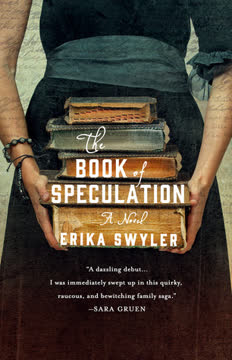
The Book of Speculation is a novel about the ways in which the past shapes the present, and the struggle to break free from cycles of loss. Through its dual timelines and rich symbolism, the book explores the tension between fate and agency, the burden of family history, and the possibility of redemption. The recurring motif of drowning—both literal and metaphorical—serves as a powerful metaphor for depression, grief, and the weight of secrets. The tarot cards, with their ambiguous meanings, reflect the uncertainty of life and the danger of self-fulfilling prophecy. Ultimately, the novel suggests that survival depends not on denying the past, but on transforming it—by telling new stories, forging new connections, and choosing love over fear. The act of letting go—of objects, of guilt, of inherited pain—is both painful and necessary. In the end, The Book of Speculation is a celebration of resilience, the healing power of narrative, and the courage it takes to begin again.
Last updated:
Review Summary
The Book of Speculation receives mixed reviews averaging 3.61 stars. Readers praise Swyler's atmospheric writing, dual narratives alternating between librarian Simon Watson and 1700s circus performers, and magical realism elements involving tarot cards, mermaids, and a family curse. Many compare it favorably to The Night Circus. However, critics cite slow pacing, flat characters, especially protagonist Simon, and disconnected storylines. Positive reviews highlight the beautiful prose, illustrations, and interconnected family saga. Detractors find it boring, with tedious research scenes and unlikable characters. The circus history and Amos/Evangeline storyline generally engage more than Simon's present-day narrative.