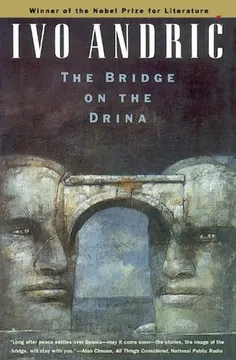


Plot Summary
The Kapia, Town's Heart
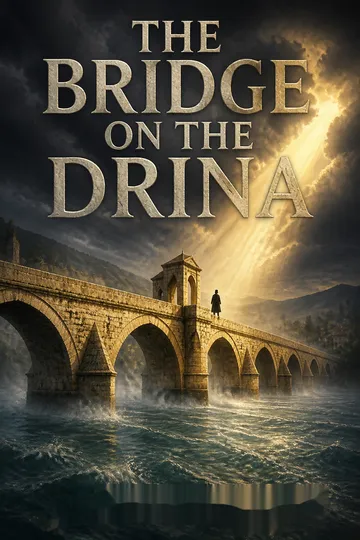
Višegrad sits where the Drina breaks from a mountain gorge, and its eleven-arched bridge joins the town to the road toward Sarajevo. At the bridge’s midpoint, the kapia offers benches, a fountain, and room for coffee, conversation, trade, courtship, weddings, and public punishment.
Children learn the crossing through games and stories: Christians and Muslims explain ancient hoofprints according to their own heroes, while tales of buried twins and a dangerous spirit gather around the central pier.
The bridge is neither a neutral backdrop nor simply a useful road. Its stones organize the town’s daily encounters, even as the people give them competing meanings. The chronicle follows both: the structure’s long history and the changing lives that gather upon it.
The kapia functions as the town’s public memory, but not as a place where difference disappears. Children share the same stones while inheriting incompatible explanations for them; adults gather there while retaining distinct religious and political loyalties. This makes the bridge a meeting point without making it a solution to conflict. The structure holds together what its inhabitants cannot fully reconcile. By beginning with ordinary uses and local legends, the chronicle teaches the reader how public space can preserve belonging and division at once.
The Boy in the Pannier
In 1516, Ottoman soldiers take a ten-year-old Christian boy from Sokolovići as part of the tribute of children sent to the Sultan’s service. At the Drina ferry, he watches his mother and the other families lose sight of their children on the opposite bank. The boy grows into Mehmed Pasha Sokolli, an admiral and powerful statesman, but the memory of that crossing remains a pain he cannot master.
He decides to replace the unreliable ferry with a permanent bridge, joining the country of his birth to the imperial world that claimed him. His commission brings masons, materials, and forced labour to Višegrad. The bridge begins as an act of public benefit, but also as one man’s attempt to build across the break in his own life.
Mehmed’s project cannot undo the violence that separated him from his mother and homeland. Instead, it converts a private wound into public infrastructure. That transformation is morally unstable: a bridge will spare later travellers the danger of the ferry, yet its construction will be imposed on people with little power to refuse. The boy’s memory gives the monument emotional force, while the machinery of empire makes its creation possible. The story therefore refuses a simple distinction between benevolent legacy and coercive rule. The same act can relieve suffering in the future and produce suffering in the present.
Radisav Defies the Vezir
The bridge’s overseer, Abidaga, drives the work with beatings, unpaid labour, and threats against the entire district. Christian peasants are seized from their villages, their animals pressed into service, and their fields left unattended.
Radisav of Unište organizes a small band to damage the construction at night, hoping that rumours of a river spirit will make the work stop. Guards catch him on a makeshift raft and Abidaga tortures him for the names of accomplices. Radisav refuses to expose anyone.
Abidaga orders him impaled alive on the scaffolding, where townspeople and workers must watch. The execution terrifies the crowd, but Radisav’s resistance gives the oppressed a figure to remember, while the bridge project continues under the weight of his suffering.
Radisav’s sabotage is less a realistic bid to defeat the empire than a refusal to let coerced labour appear inevitable. His decision gives private exhaustion a collective form, even though the revolt is small and quickly crushed. Abidaga’s spectacle is designed to restore control by making pain visible; instead, it creates a martyr whose meaning escapes the authorities. The episode also complicates the monument’s beauty. The bridge may outlast its builders, but the chronicle insists that its permanence is inseparable from human bodies spent in its making. Remembering the victim becomes a counter-history to the official story of the benefactor.
Stone Rises from Chaos
Radisav’s body is secretly buried by Christian workers, and the leader of the guards, shattered by the execution, is sent away as a madman. Winter halts construction. When spring returns, the Vezir replaces Abidaga after learning that he stole the building funds and forced hundreds to work without pay.
Arif Beg takes charge, pays the labourers, and keeps the project moving without Abidaga’s theatrical violence. Mastro Antonio and the stonecutters gradually reveal the eleven arches, while a falling block crushes the young Arab, Antonio’s assistant.
In 1571, the completed bridge opens beside a new caravanserai. Mehmed Pasha is assassinated soon afterward, but the town grows around his buildings, which continue to shape trade and travel after their patron is gone.
The replacement of Abidaga shows that brutality is not the only means of enforcing imperial ambition; orderly administration can be both less cruel and more effective. Yet better management does not erase the original coercion or the death of the Arab. The bridge’s unveiling invites genuine wonder, and the celebration gives townspeople a sense of shared ownership, although they did not choose the project. Mehmed’s assassination then separates the work from its maker. His legacy survives not as personal control but as a structure that other generations must inhabit, reinterpret, and eventually lose.
The Han Falls Quiet
For a century, travellers use Mehmed Pasha’s caravanserai without thinking about the distant lands whose revenues maintain it. When Ottoman territory in Hungary is lost, that income stops reaching Višegrad. Dauthodja Mutavelić spends his own money, then borrows from relatives, trying to keep the Stone Han repaired.
He dies while fixing its roof; without him, the building empties and decays. The bridge needs no such constant care. During a catastrophic flood, the Drina and the Rzav surge over the town and submerge the bridge’s roadway, destroying homes, shops, and stored goods.
The arches emerge intact. Merchant Kosta Baranac, ruined by risky speculation in plums and walnuts, dies during the winter that follows. The townspeople rebuild, then return to the kapia and its familiar routines.
The fate of the han distinguishes physical durability from institutional continuity. A building created through wealth and imperial reach cannot survive when the system that funds it collapses, while the bridge keeps serving people who may no longer know how it is maintained or why it was built. The flood makes this contrast visible without turning the bridge into a magical refuge: the town suffers, and Kosta cannot recover from his losses. Memory helps the survivors endure, but it also changes catastrophe into a story they can retell. The town’s return to ordinary life is neither proof that nothing mattered nor a victory over loss. It is a practiced form of continuation.
Heads on the Kapia
When Serbia rises against Ottoman rule, Višegrad becomes a tense frontier town. Turkish soldiers build a wooden blockhouse over the kapia to inspect travellers and suppress rebellion. Its first victims are Jelisije, an old Serbian pilgrim, and Mile, a mill worker seized after singing a song associated with the insurgents.
Both are beheaded, and their heads are displayed above the bridge. Executions continue through the years of revolt; even Pop Mihailo, a respected priest who once helped the town through the great flood, is killed.
The kapia’s everyday traffic and conversation disappear beneath military control. Once the uprising subsides, a fire consumes the blockhouse. The old meeting place reopens, but the people carry memories of the heads and punishments into the generations who did not witness them.
The blockhouse does more than guard a strategic crossing. It changes what the crossing means, turning a place of ordinary contact into a public theatre of state power. The victims’ varied positions, from pilgrim to worker to priest, show how repression expands beyond organized resistance and catches the vulnerable as well as the politically committed. Burning the structure restores the kapia’s physical openness, but not its innocence. The bridge can shed visible traces of violence more easily than the community can. The episode also reveals how memory travels: stories preserve the victims after official attention has moved elsewhere.
Fata Refuses Nezuke
Fata, the beautiful and sharp-witted daughter of Avdaga Osmanagić, is promised to Nail-beg Hamzić, although she has no wish to marry him. Her father has accepted the match after Mustajbeg Hamzić helped him through financial trouble, and Fata cannot bring herself to defy her father’s pledged word.
She prepares her trousseau while privately resolving not to enter the Hamzić home. On the wedding day, the procession pauses at the kapia, where Fata asks her younger brother to shorten her stirrups.
She then leaps from her horse over the parapet into the Drina. The river returns her body the next day. Avdaga withdraws from public life and dies that winter; Nail-beg marries someone else. The town keeps Fata alive in song, where her refusal outlasts the bargain made over her future.
Fata’s choice is shaped by a social world in which a daughter’s will carries less authority than a father’s promise, yet her act makes that will impossible to ignore. She cannot imagine a route through the marriage that preserves both her father’s honour and her own refusal. The bridge becomes the exact point where family obligation meets personal agency, and the river offers an escape only at the cost of life. The town’s song remembers her as exceptional, but that commemoration risks smoothing the coercion that made her desperate. Her story asks what counts as choice when every available path has already been narrowed by others.
Austria Crosses the Drina
In 1878, news spreads that Austria-Hungary will take control of Bosnia. The mufti of Plevlje urges Višegrad’s Muslims to resist, but Alihodja Mutevelić argues that an improvised uprising will only bring ruin.
Osman Effendi Karamanli presses for a last defence and invokes the local legend that a Muslim saint will rise to stop Christian troops. As the Austrians approach, Karamanli’s men bind Alihodja and nail his ear to an old beam on the kapia. Austrian soldiers release him, then post a proclamation promising order and equal protection.
Alihodja reads it and understands that his community’s world has changed, though the language offers no comfort. When the army formally enters the next day, the town’s Muslim, Christian, and Jewish representatives meet its colonel, who responds briskly and without warmth.
Alihodja’s opposition to armed resistance is not consent to Austrian rule. He recognizes that strategic defeat is already likely and fears that religious fervour will expose the town to avoidable destruction. Karamanli, by contrast, converts a legend into a political instrument because he cannot accept the limits of his power. The Austrians arrive speaking of protection, but their proclamation cannot persuade Alihodja that sovereignty has not been taken from his community. His wound makes the transition bodily, while the official notice makes it administrative. The scene captures a recurring feature of the chronicle: one authority may present its arrival as rescue even as those governed experience it as dispossession.
The Town Learns New Rules
Austrian soldiers give way to civil servants, craftspeople, and families from across the empire. They survey the land, regulate markets, improve streets, and replace the ruined Stone Han with a barracks.
Shemsibeg Branković refuses every innovation, keeps his household away from the new schools and authorities, and eventually withdraws from the market as the town changes around him. Alihodja fights successfully to save his shop from demolition, while the kapia gradually admits people and habits previously kept away, including women from newcomer families.
Lotte, a resourceful Jewish widow, establishes a hotel near the bridge, where merchants, officers, and local notables drink, gamble, and conduct business. The newcomers’ order creates jobs and new pleasures, but it also makes the old town’s landmarks and customs increasingly vulnerable.
Occupation works through mundane systems as much as military force. Surveys, regulations, roads, and commercial spaces alter daily life gradually, making change easier to accept and harder to resist. Shemsibeg’s withdrawal preserves a private form of refusal, but it cannot halt public transformation. Alihodja’s successful defence of his shop shows that resistance can sometimes negotiate a limited boundary without reversing the larger process. Lotte’s hotel embodies the new economy: it gathers people across communities while converting their leisure and appetites into business. The contrast is not simply between tradition and progress. Each side contains adaptation, self-interest, and loss.
A Game Takes Everything
Milan Glasičanin, a wealthy young landowner consumed by gambling, meets a calm stranger at an inn and follows him to the moonlit kapia for another game of cards. Milan loses his money, animals, fields, and houses, then stakes his life against everything he has lost. At dawn, the stranger and the game vanish; Milan survives, but the experience leaves him withdrawn and changed.
The next day, Bukus Gaon, a poor barber’s son, finds a gold ducat lodged between the kapia’s stones. He breaks the Sabbath to retrieve it, then uses the money to enter the gambling room. His early win draws him into the habit that takes him away from his family. The same crossing that gathers the town also gives chance a place to take hold.
The paired gambling episodes show how desire can become a mechanism of self-erasure. Milan’s supernatural-seeming opponent gives the compulsion a visible face, but the stranger’s ordinariness keeps the explanation uncertain. Bukus’s ducat works differently: a small, material windfall turns poverty into a sudden vision of escape. In both cases, the kapia marks the threshold between ordinary limits and imagined abundance. The losses are not interchangeable, however. Milan wagers from established property, while Bukus risks the future he hopes to build. The episodes suggest that the same promise of luck can seduce people with very different resources and vulnerabilities.
Ćorkan Dances Above Water
Salko Ćorkan, a one-eyed drifter who entertains Višegrad’s drinkers, becomes the target of their jokes when they tell him that the poor seamstress Paša secretly wants him. He half believes them, even after Paša marries the wealthy Hadji Omer as his second wife. One winter night, the men urge Ćorkan to prove his courage by walking the icy parapet.
He climbs onto the narrow stone and begins in fear, but soon dances across above the river, carried by drink, rhythm, and the imagined journey to a richer life. The crowd cheers when he reaches the far side. His feat gives the town a story of comic daring, but Ćorkan’s private fantasy briefly transforms humiliation into a world where he can be loved and chosen.
Ćorkan’s performance is both an act of agency and a product of exploitation. He uses the same imagination that makes him vulnerable to the drinkers’ cruel stories to step beyond the identity they assign him. The parapet walk makes that transformation visible: a man usually treated as a joke briefly commands the crowd’s attention. Yet his triumph does not change his poverty or secure Paša’s affection. The scene refuses to dismiss fantasy as mere foolishness. For Ćorkan, imagining another life is a genuine source of vitality, even when the people around him consume that hope as entertainment.
Fedun Misses His Post
During an Austrian crackdown on cross-border rebels, the young soldier Gregor Fedun guards the bridge with an older local recruit. Spring distracts him, and he becomes absorbed by a Turkish girl who crosses repeatedly in a bright shawl.
The girl is Jelenka, a Christian villager helping her lover, the outlaw Jakov Čekrlija, escape toward Serbia. She disguises Jakov as her elderly grandmother and leads him past Fedun, who is watching her instead of the supposed passenger.
Jakov is discovered after losing his way through town, but he escapes across the Rzav while Jelenka is detained. Fedun accepts responsibility for his lapse and faces a court-martial. Before he can be sent away, he kills himself in the barracks. Pop Nikola insists that he receive a Christian burial.
Fedun’s failure begins in a moment of ordinary distraction, but the military system turns that lapse into an absolute judgment on his worth. Jelenka’s successful deception depends not on elaborate disguise alone but on the young soldier’s longing to be noticed. His suicide exposes the gap between a human mistake and an institution that treats duty as indivisible from identity. Pop Nikola’s decision to bury him resists that institutional finality: he refuses to reduce a dead young man to the regulations governing his confession or conduct. The episode echoes the bridge’s larger function as a place where private feeling collides with political surveillance.
The Railway Bypasses the Bridge
At the turn of the century, engineers repair the bridge’s worn stone and reinforce its foundations. They later carry a new water supply across it, while the town welcomes clean water despite Alihodja’s suspicion of foreign methods. The railway brings a more decisive change.
Its line reaches the station on the Rzav side without crossing the Drina, shifting traffic and trade away from the old road. Journeys to Sarajevo that once took two days can now be made in hours; packhorse owners lose their livelihood, and the road beyond the bridge begins to grow over.
Most townspeople adapt without dwelling on what has vanished. Alihodja warns that speed is not automatically progress and wonders what purposes the railway serves beyond convenience. The bridge remains beautiful and intact, but its role as a route between worlds has begun to fade.
The railway does not destroy the bridge; it changes the network of attention around it. This quieter displacement is as consequential as the violent occupations because it makes the old crossing unnecessary to commerce without requiring a battle. The townspeople gain speed, clean water, and new opportunities, yet those improvements redistribute work and weaken inherited routes. Alihodja’s objection is not simple nostalgia. He asks who benefits from technical change and what new forms of control accompany it. The bridge’s continued physical presence beside declining use makes the difference between survival and relevance impossible to ignore.
Young Men Imagine Freedom
By 1908, newspapers, student associations, and political organizations carry new arguments into Višegrad. Young people debate national unity, socialism, religion, and the future of Bosnia on the kapia, while authorities monitor speech as carefully as action.
In 1913, students returning from universities make those discussions more urgent. Janko Stiković promotes a united South Slav state; socialist Jacov Herak argues that national liberation without economic justice will leave peasants and workers oppressed.
Toma Galus imagines a free country building its own institutions, while Fehim Bahtijarević questions whether inherited centres of power can simply be replaced. Their arguments expose both courage and youthful vanity, but they also draw poor clerks and apprentices into a world larger than the town’s routines.
The students inherit political ideals that earlier generations could barely voice, but expanded speech does not mean expanded power. Their confidence is partly intellectual and partly performative: abstract programmes let them feel capable of action before the costs of action arrive. The disagreement between nationalism and class politics is not a decorative debate. It asks whose freedom a new state would actually secure. Fehim’s reserve complicates the more fluent arguments, suggesting that inherited experience may resist slogans without providing an easy alternative. The kapia becomes a political classroom, but the young people have not yet learned how sharply history grades its pupils.
Zorka Waits for an Answer
Stiković begins a brief affair with schoolmistress Zorka, then leaves her with polished notes and little explanation. Nikola Glasičanin, who loves Zorka, tells her that Stiković’s attention was driven by vanity rather than lasting care.
Their conversations help her recover from shame, and Glasičanin proposes that they marry and emigrate to America, where he believes they can work freely. Zorka asks for time to decide. As Sarajevo’s assassination and the threat of war draw near, Glasičanin tells her he is joining other young men fleeing to Serbia.
He leaves without receiving her answer. Zorka watches him go, grieving both the departure of a good man and the future she cannot bring herself to choose. Her private uncertainty unfolds beside a public crisis that will soon make choices for everyone.
Zorka’s indecision is not a simple contest between two suitors. Stiković has injured her capacity to trust her own experience, while Glasičanin offers care in a form that also asks her to abandon home and begin again. Her delay protects her from making another choice under emotional pressure, but events overtake that protection. Glasičanin’s departure gives political duty a human cost without turning it into a heroic abstraction: he leaves a woman who may have chosen him, but has not yet done so. Private love and public history move at different speeds, and neither waits for the other to catch up.
Vidovdan Ends in Fear
On Vidovdan in 1914, gendarmes interrupt a Serbian outing at Mezalin and send the crowds home after Archduke Franz Ferdinand and his wife are assassinated in Sarajevo. The town’s young men are watched, arrests begin, and some Serbs escape across the frontier, including Glasičanin.
After Austria declares war on Serbia, authorities organize a Schutzkorps of local opportunists to hunt Serbs. Pavle Ranković’s delegation asks the prefect to protect Serbian lives and property, but he refuses responsibility. In the square by the bridge, three men are condemned for signalling toward Serbia and hanged.
Austrian and Serbian artillery then begin firing across the town. The festival, the gallows, and the first shells arrive in quick succession, turning a familiar public square into a place where survival depends on who controls it.
The sudden transition from festival to repression shows how quickly a political event can reorganize social reality. The violence does not emerge from nowhere; it takes advantage of old suspicions and an authority willing to abandon legal restraint. The Schutzkorps makes neighbours into instruments of state policy, while the prefect’s refusal leaves the threatened community without institutional protection. The executions are public not because justice requires it, but because fear is meant to be witnessed. War’s opening force lies in this redistribution of roles: citizens become suspects, familiar streets become military ground, and ordinary festivity becomes dangerous.
The Town Takes Cover
Serbian mountain guns strike the bridge and Austrian howitzers answer from the hills. Though the shells initially do little lasting damage to the stonework, the town empties as families flee the exposed centre.
Muslims shelter with Muslim households and Serbs with Serbian families, a sharp contrast to the solidarity they once found during floods. Mujaga Mutapdžić, a refugee who has repeatedly fled changing borders, tells Alihodja that he can see no safe place left for his family. At the Ristić home, Mihailo comforts Peter Gatal’s wife without telling her that her husband has been shot as a hostage.
Lotte leads her family across the bridge to a Turkish house, then suffers a breakdown when war strips her of the work and order that had sustained her. Pavle sits under guard, held responsible for a mined bridge he cannot control.
The bombardment dismantles more than buildings. It breaks the town’s familiar means of coping, including the cross-community companionship that had briefly formed during earlier disasters. Refuge becomes segregated by faith, while civilians are assigned responsibility for military decisions beyond their control. Mujaga’s repeated displacement makes the conflict feel cumulative: each new frontier revives the losses of the last. Lotte’s collapse exposes the fragility beneath her competence, and Pavle’s hostage status turns a lifetime of careful calculation into helpless waiting. The bridge remains central, but now as a military asset whose fate is imposed on the people living beside it.
The Seventh Pier Falls
After weeks of bombardment, the Austrian army withdraws from Višegrad, leaving Alihodja alone in his shop near the bridge. He hides in his narrow storeroom as the explosives placed years earlier beneath the central pier detonate.
The blast throws him against the floor and sends a block of bridge stone through his roof. Serbian fighters enter the town and rebuke him for leaving his shop open, but he is too shaken to answer. Outside, the seventh pier is gone, severing the arches on either side of the kapia.
Alihodja understands at last why the Austrians had worked beneath the bridge, then struggles uphill toward home as his heart fails. The crossing that outlasted floods, revolts, and changing empires has been cut apart by war, and the chronicle ends with its witness collapsing under the sight.
The bridge’s destruction fulfils the threat planted when Austrian engineers mined its central pier, but the final rupture is not presented as a triumph for either side. Military strategy reduces a revered public work to a means of controlling movement, and withdrawal converts that calculation into irreversible damage. Alihodja has spent years distrusting the new order’s repairs and regulations; seeing the blast confirms his suspicion while offering no satisfaction. His death binds private bodily weakness to the collapse of a civic landmark, without suggesting that one causes the other. The ending refuses the comfort of permanence: what seemed almost eternal depended on historical choices, and history has finally reached its stone.
Analysis
The novel treats history less as a sequence of rulers than as a succession of pressures entering ordinary life. Empires alter borders, labour systems, trade routes, and public language; residents then adapt, resist, or retreat using the limited choices available to them. The bridge offers continuity, but not escape from history. It survives changing governments and natural disasters while its social purpose is repeatedly transformed, and finally it becomes a military target. Its material endurance therefore carries no promise that human arrangements will endure with it.
The chronicle’s many short stories resist the idea that one hero can represent an entire community. Mehmed Pasha’s homesickness produces a work of public benefit through imperial power. Radisav resists the same project because he experiences its cost directly. Alihodja distrusts both the departing Ottoman order and the incoming Austrian administration, while younger students imagine political futures that older generations regard with suspicion. Their disagreements are not solved by the bridge’s shared presence. Instead, the structure makes their competing claims visible in one place.
Andrić also distinguishes survival from justice. The town repeatedly rebuilds after floods, war, and economic change, but recovery does not undo a death, restore an uprooted family, or compensate a labourer. Storytelling helps people carry what they cannot repair. Legends preserve local meanings; jokes provide temporary relief; songs turn private grief into communal memory. Yet memory can simplify as well as preserve, turning people into martyrs, fools, or symbols.
The final destruction of the central pier breaks the appearance of permanence that has governed the town’s imagination. Alihodja is vindicated in his suspicion that the bridge’s new guardians have prepared it for demolition, but being right cannot protect him or restore the crossing. The ending’s force lies in that refusal of consolation. Human beings make lasting works from care, ambition, and sacrifice, yet no design can remove those works from the reach of political decisions. What remains is the obligation to remember the lives that history’s grand structures have carried, displaced, and failed.
Review Summary
The Bridge on the Drina is a highly regarded historical novel spanning 400 years of Balkan history, centered around a bridge in Bosnia. Readers praise Andrić's masterful storytelling, rich character development, and ability to capture the region's complex cultural tapestry. The novel's themes of time, change, and human resilience resonate deeply. While some find the pacing slow or the narrative structure unconventional, most consider it a profound exploration of Balkan history and human nature. The book's enduring impact is evident in its continued relevance and acclaim.
Characters
The Drina Bridge
The town's enduring centreThe bridge is the chronicle’s central presence: a crossing with eleven arches and a broad gathering place at its middle. People use it to trade, court, celebrate, mourn, travel, and witness punishment. Its appearance remains remarkably steady while its political and economic functions change around it. The bridge does not speak or choose, but its placement draws human lives together and gives events a shared setting. It represents neither perfect unity nor simple endurance. Its stones hold different communities’ legends and memories, and its usefulness depends on routes and powers beyond the town. Through the bridge, the story measures the distance between permanence as people imagine it and the vulnerability of what they build.
Mehmed Pasha Sokolli
The homesick imperial builderBorn a Christian peasant in Sokolovići, Mehmed Pasha is taken as a child into Ottoman service and rises to become a powerful statesman. The memory of being separated from his mother at the Drina ferry gives his commission a personal motive, though the resulting bridge serves many travellers beyond himself. His life joins two worlds without reconciling them: he belongs to the empire that elevated him and remembers the homeland from which that empire took him. The bridge expresses his capacity to turn memory into public action, but also the limits of such an act. He can change the crossing; he cannot restore the childhood and family ties that were taken from him.
Alihodja Mutevelić
The stubborn bridge guardianAlihodja is a Muslim shopkeeper and hodja whose family has long been associated with Mehmed Pasha’s endowment. Independent-minded and sharply observant, he distrusts both reckless resistance and the promises of foreign rulers. His arguments often sound eccentric to neighbours, yet he notices how administrative changes, new technology, and military planning alter the town’s life. His attachment to the bridge is practical, religious, and personal: he sees it as a sacred bequest, a public good, and part of the world in which he grew up. He is neither a passive traditionalist nor an easy convert to modernity. He wants people to understand what they are accepting before the consequences become irreversible.
Lotte
The hotel’s tireless operatorLotte runs the hotel beside the bridge with commercial intelligence, social tact, and a disciplined private life. She manages drunken guests, negotiates business, and helps relatives and poor acquaintances far beyond Višegrad. Her public warmth conceals a sharp understanding of money and human appetite. She measures security through work, family responsibility, and carefully managed resources, rather than through political abstractions. That practical outlook makes her a forceful presence in the changing town, but also leaves her exposed when the economy and public order shift beyond her ability to calculate. She is generous without being naïve and self-reliant without being untouched by the burdens she carries.
Fata Osmanagić
The proud unwilling brideFata is Avdaga Osmanagić’s only daughter, known for her beauty, quick wit, and strong sense of family honour. The town’s fascination with her makes her an object of public fantasy before she has much control over her own future. She is deeply attached to her father, which makes defying his decision painful rather than simple. Her character is defined by the collision between personal refusal and the obligations placed on a daughter in her community. Fata is neither merely a romantic legend nor a symbol detached from daily life. Her intelligence allows her to see the trap closing, even when she cannot find a painless way through it.
Radisav
The labourers' resisterRadisav is a Christian peasant from Unište who recognizes that the bridge’s construction is consuming the labour and livelihood of the surrounding villages. He quietly persuades other workers to sabotage the building, using local beliefs about a river spirit to disguise human resistance. His courage is practical and communal, not grandly theatrical. Radisav knows the odds are against him, yet chooses action over waiting for his family and neighbours to be worked into exhaustion. His place in local memory grows beyond the scale of the revolt itself, showing how communities turn a defeated act of resistance into a lasting account of injustice.
Abidaga
The brutal overseerAbidaga supervises the bridge’s construction on Mehmed Pasha’s behalf. He relies on fear, beatings, and impossible demands, treating the workers’ bodies as instruments of his ambition. His public severity conceals an intense fear of losing the Vezir’s favour and the status he has built through service. He is not simply cruel for pleasure; he believes that control and visible punishment are safeguards against failure. That belief makes him especially dangerous to those with less power, while exposing how insecurity can reproduce itself as tyranny.
Arif Beg
The measured administratorArif Beg replaces Abidaga as overseer of the bridge project. Tall, composed, and attentive to the accounts, he stops the system of unpaid forced labour and keeps the work moving through regular management. His restraint contrasts with Abidaga’s bluster, though he still serves the same imperial commission and enforces its demands. Arif Beg demonstrates that competence need not depend on cruelty, but his more humane conduct does not undo the coercive circumstances under which the project began.
Avdaga Osmanagić
Fata’s formidable fatherAvdaga is a respected merchant from Velje Lug, admired for his generosity, courage, and blunt opinions. Asthma interrupts his forceful speech, but it does not lessen his influence in the market. He loves his daughter and sees himself as responsible for protecting the family’s honour, yet accepts a marriage arrangement that leaves Fata little room to choose. His character carries the painful tension between affection and authority. He is neither a distant tyrant nor a father able to see how his decision closes in on the person he loves.
Nail-beg Hamzić
The determined suitorNail-beg is the only son of Mustajbeg Hamzić and a member of a wealthy, close-knit family from Nezuke. He admires Fata and persists despite her public wit and reluctance. His family’s business ties with Avdaga help turn courtship into a negotiated marriage, reflecting the way social and commercial relations overlap in Višegrad. Nail-beg is not portrayed as a great villain; the damage arises from a system in which a bride’s consent has little force against family agreement and male authority.
Pop Nikola
The town’s trusted priestPop Nikola, son of the priest Pop Mihailo, becomes one of the town’s most respected figures across religious lines. Strong, warm-hearted, and practical, he guides his Serbian parish while maintaining friendships with Muslim neighbours, especially Mula Ibrahim. He meets danger with calm rather than display and offers care when formal rules leave people exposed. His authority comes less from learning than from steady judgment and a reputation for fairness. In a town repeatedly divided by political and religious change, he represents the possibility of trust built through sustained personal conduct.
Salko Ćorkan
The town’s comic dreamerĆorkan is a one-eyed drifter of mixed background who survives through odd jobs, drink, music, and the amusement of wealthier townsmen. They use him as a companion and a target, often encouraging fantasies that let them laugh at his hopes. Beneath his comic role, Ćorkan possesses a vivid imagination and a fierce longing for love and a life beyond the limits of his poverty. He can be foolish, but the town’s treatment of him is often more revealing than his mistakes. His moments of daring give him a brief freedom from the identity others impose.
Milan Glasičanin
The watchful, wounded clerkMilan Glasičanin is a landowner whose passion for gambling threatens his property and health. After a frightening night at the kapia, he becomes withdrawn and observant, turning his attention toward work and the limits of political rhetoric. He loves Zorka and tries to offer her care without demanding an immediate answer. His experience of disappointment makes him unusually sensitive to the distance between ideals and the daily pressures that shape ordinary lives. He is not free of pride or jealousy, but his most important instinct is to see the danger others prefer to talk around.
Janko Stiković
The ambitious student oratorStiković studies natural science and writes political articles and poetry under pen names. He is articulate, ambitious, and attracted to causes that confirm his sense of importance. In public debate he champions national unity, while in private relationships he can be careless with the feelings of others. His ability to inspire attention is real, but it is entangled with vanity and a need to be admired. The town’s young people hear in him the boldness of a new generation, while his conduct exposes the gap between speaking about freedom and practising responsibility in intimate life.
Zorka
The schoolmistress seeking trustZorka is a young schoolmistress whose modest position and limited experience leave her vulnerable to the expectations others place on her. Her relationship with Stiković gives her a painful education in the difference between passionate performance and dependable affection. She is thoughtful and capable of recovery, but shame makes it difficult for her to seek help openly. Glasičanin’s care offers a steadier relationship, yet she must decide whether she can trust that possibility. Her inner conflict gives the novel’s political upheavals an intimate counterpart: a person trying to choose freely while living amid pressures she did not create.
Toma Galus
The idealistic nationalistToma Galus is the son of a former Austrian official and a local Serbian woman. A good student with a restless intellectual life, he reads philosophy and joins revolutionary nationalist circles. He speaks with confidence about a future South Slav state and imagines a society able to express its own culture. His fluency can outrun his understanding of the costs and contradictions involved, but his idealism also gives young people language for hopes they have long kept private. He is both a product of cultural mixture and an advocate for national unity.
Fehim Bahtijarević
The reserved Muslim studentFehim is a young man from a prominent Muslim family, educated in the same modern world as the Serbian students who debate beside him. He is considering oriental studies and listens carefully to arguments about national identity, culture, and power. Unlike the more speech-driven young men, Fehim expresses much through silence and restraint. His reserve reflects a lived sense of historical continuity that cannot be discarded simply by adopting a new political vocabulary. He is not indifferent to change; he is cautious about promises that treat inherited loyalties as obstacles to be swept away.
Pavle Ranković
The careful merchantPavle rises from a poor apprentice to become one of Višegrad’s leading merchants. He believes in thrift, steady work, and careful dealings, and he tries to remain useful to both his community and the authorities. Political turmoil unsettles him because it follows rules that calculation cannot reliably predict. His sons’ attraction to new ideas makes him fear that they are weakening the foundations he spent a lifetime building. Pavle represents the respectable, self-made citizen whose habits can sustain a town in ordinary times but offer little protection when state power turns people into hostages.
Gregor Fedun
The conscientious young guardFedun is a young Ruthenian soldier serving in an Austrian mobile unit. Large, gentle, and modest, he takes military instructions seriously and dreams of sending part of his pay to his family. Spring and a passing girl distract him from his guard duty, revealing how desire can unsettle even a conscientious person. His story shows the human cost of a military culture that demands flawless obedience in circumstances shaped by ordinary weakness.
Jelenka
The outlaw’s determined helperJelenka is a young Christian villager who helps Jakov Čekrlija hide and cross the bridge toward Serbia. Resourceful and bold, she disguises him and draws the sentries’ attention away from his escape. Once captured, she reveals only what she chooses and refuses to help the authorities uncover more. Her actions are driven by attachment and loyalty, but she also understands the risks she is taking. Jelenka’s courage is practical: she uses the habits and assumptions of the people around her to create an opening.
Jakov Čekrlija
The hunted border fugitiveJakov is a small, physically powerful outlaw whom the Austrian authorities seek during a period of rebellion and heightened border patrols. Cunning and determined to escape, he relies on Jelenka’s help and on the sentries’ expectations about who they are seeing. He has learned to survive by exploiting gaps in official control, although his flight places those who aid him in danger.
Plot Devices
The Kapia
Public stage and memoryThe kapia, the bridge’s widened central terrace, gathers people for business, courtship, conversation, celebration, punishment, and political debate. Its use changes with the town’s rulers: a place of everyday exchange becomes an execution site, then a military checkpoint, and later a meeting ground for students. Because major events repeatedly occur there, it links episodes separated by decades without making them identical. The kapia also lets private choices become public, as when Fata’s wedding procession reaches it or Ćorkan crosses its parapet. It functions as a shared civic space, though it never erases the religious and political divisions of those who use it.
Local legends
Competing inherited explanationsStories about buried twins, a dangerous spirit in the bridge, ancient horse tracks, and a hidden Muslim saint give the structure a place in the imagination as well as in the landscape. Different communities tell some of these stories differently, revealing how people inherit distinct accounts of the same place. Rumour can also affect action: workers use belief in a river spirit to conceal their sabotage, while Karamanli invokes a saint’s legend to encourage resistance. The tales are not presented as reliable historical records. Their importance lies in how fear, hope, and communal identity shape what people believe they see.
The Bridge
Material measure of changeThe bridge’s long life gives the novel a stable physical point from which to register shifting empires, technologies, and customs. Its function evolves from indispensable imperial route to a crossing made less central by the railway, then a military objective during war. The contrast between its enduring arches and the short span of human lives sharpens the chronicle’s scale. It is not simply an image of unity or permanence. Its construction depends on coercion, and its usefulness depends on political and economic arrangements that can change without warning. The structure matters because people build their routines, memories, and plans around it.
Floods and fires
Tests of civic enduranceNatural disasters and political violence periodically interrupt the town’s routines, forcing people to decide what can be saved and whom they will help. The great flood damages homes and livelihoods while leaving the bridge standing; the blockhouse fire removes a military structure and restores the kapia to public use. These events let the chronicle compare communal responses across generations. A flood can bring people of different faiths together through immediate need, while political conflict can drive them into separate refuges. Neither disaster simply resets life. Each leaves material damage, remembered stories, and altered expectations.
The mined pier
Delayed military destructionDuring the annexation crisis, Austrian engineers secretly install explosives inside the bridge’s central pier and conceal the access point beneath an iron cover. Alihodja notices the work and questions what it means, but the explanation is withheld behind military secrecy. The device links years of apparently routine repair and military preparation to the final damage in 1914. Its placement changes the bridge’s status from a monument of civic use into a structure that an army may destroy to control movement. The explosive charge is a major plot revelation. The description therefore contains a spoiler for the novel’s ending.
Download PDF
Download EPUB
.epub digital book format is ideal for reading ebooks on phones, tablets, and e-readers.








