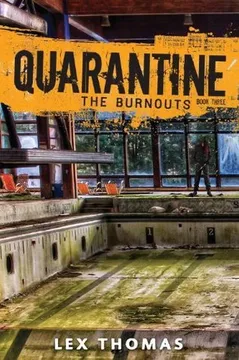


Plot Summary
David Returns Breathing
Will has spent months believing his older brother David died inside McKinley High. Now David stands before him at a parents’ farm outside the school, his gas mask hiding most of his face. He explains that he survived the infected zone, escaped armed hunters, and used a dead boy’s body to make them believe he had been killed.
A blood test confirms Will has cleared the virus, and the brothers can finally breathe the same air. Their reunion revives old jokes and old hurt, especially when Will learns their father is still missing. Before either brother can settle into the fragile comfort of being together again, screams erupt outside. They rush from the trailer and find the farm burning.
The reunion gives Will a moment of emotional repair, but the book immediately tests whether intimacy can survive the conditions that produced their separation. David’s survival depended on deception and improvisation, not rescue by a stable authority. The blood test makes their shared air feel newly precious: physical closeness becomes proof that danger has receded, though only temporarily. Will’s hope about their absent father shows how quickly relief exposes older grief. The fire interrupts not merely a private reunion but the assumption that the parents’ farm offers safety. In this story, sanctuary is real, but it is never permanent.
The Farm Under Fire
The burning building draws the parents toward the wrong side of the farm just as armed hunters climb the perimeter and begin throwing grenades. David recognizes the blaze as a diversion and runs to help contain the attack. He gives Will a pickax and trusts him to hold the wall alone. Will knocks one hunter from a ladder and saves the farm from a second breach, then races down to stop another man from stabbing Sam’s injured father.
The older man remains wary of Will, whose earlier deception around Sam’s death had made him seem monstrous. But he explains that a wild hog killed his son, not Will. He still demands that Will prove himself trustworthy, turning the rescue into the first step toward a harder-earned place on the farm.
Will’s first meaningful act outside McKinley is not a grand rescue but a sequence of practical choices made without David’s protection. The pickax gives him responsibility before he feels ready, and his defense of the wall lets him experience fear as something he can act through. Saving Sam’s father matters because the man’s judgment is shaped by grief, not simple hostility. The clarification about the hog separates Will’s actual guilt from the guilt he has carried, but it does not erase his earlier deception. Trust here is neither granted by confession nor won by a single dramatic act. It begins as a task that must continue.
Lucy Loses Her Shelter
Inside McKinley, Lucy visits Violent, the Slut leader gravely injured in the gang fight with the Saints. Violent admits that her fearless authority has hidden a frightened, vulnerable girl, then collapses before Lucy can comfort her.
The other Sluts blame Lucy for the fight and exclude her from their mourning. Though Lips lets Lucy do chores the next morning, the gang soon locks her out and throws away her few belongings. Lucy retrieves her old Loner gear from the trash and realizes she has nowhere to belong.
She hides in Maxine’s secret greenhouse, surviving on dwindling water and whatever food she can steal. The tiny surviving flower and a copied photograph of Will become her only reminders that she once had a home and someone waiting for her.
Violent’s confession alters Lucy’s understanding of leadership: the confidence she relied on was not an absence of fear but a way of containing it. Her death therefore removes both a person and the protective performance that organized the Sluts. Lucy’s exclusion makes belonging feel conditional, dependent on being useful and blameless in a world where neither is possible for long. The greenhouse offers concealment rather than community, while the flower and photograph preserve a private continuity that the gangs cannot give her. Her isolation is not simply loneliness. It is the loss of a social identity, leaving Lucy to decide what remains of her when no group claims her.
Hilary Finds a Gun
Hilary, stripped of her private privileges and mocked by the students, has been left in the school basement with a captive girl. While searching a mound of garbage for shoes, she uncovers a dead Saint and a small revolver hidden in his boot.
The weapon recalls promises her absent father once made, but its immediate value is simpler: it can force people to obey. Back in the gym, Hilary shoots Varsity leader Terry in the foot when he threatens to dismiss her. The crowd’s laughter becomes silence.
She closes the pool, claims authority over every gang, and makes students surrender what she wants. When her nose begins bleeding, a sign that her body is leaving the infected state, she decides to use her remaining power to stage the prom she has always wanted.
The gun does not create Hilary’s desire for control; it removes the social limits that had kept that desire in check. Her response to humiliation is to replace persuasion and status with immediate bodily threat. The revolver also revives an abandoned paternal promise, so the authority she claims is entangled with a childhood grievance: she can become powerful without waiting for anyone to choose or protect her. Her approaching transition adds urgency, because the weapon’s power is temporary. The prom becomes less a celebration than a deadline for manufacturing the admiration she believes she is owed.
A Cure Beyond Colorado
A battered minivan brings Gonzalo, the enormous former Loner, back to the parents’ farm. He has been searching for Sasha, his missing girlfriend, and reports hearing that researchers in Minnesota may have developed a cure for the virus.
The claim is unconfirmed, but Will sees a chance to help everyone still trapped inside McKinley. David hesitates: the journey would cross dangerous territory and consume supplies the farm can scarcely spare. He eventually agrees that the risk may be worth taking if they can gather enough fuel, filters, and provisions.
Gonzalo refuses to join them because he must keep searching for Sasha. His devotion reminds Will that love can pull a person toward danger, while David’s reluctance reveals how deeply his time outside has taught him to fear it.
The cure rumor gives the brothers a goal beyond endurance, but the uncertainty matters as much as the promise. Will treats possibility as a reason to move; David measures it against the bodies and resources a failed journey could cost. Their disagreement exposes the difference between courage and experience without reducing either to a moral virtue. Gonzalo’s search for Sasha offers a parallel form of commitment, one that refuses to let a larger emergency erase an individual bond. The cure is thus both a practical hope and a test of what each character believes love requires: pursuit, protection, or the willingness to remain with those already depending on you.
Lucy Falls Into the Ruins
Lucy discovers that she is pregnant and begins disguising herself as a confused, filthy Scrap so she can search for food without drawing attention. Hilary follows her through the ruined school, then shoves her from a broken stair landing.
Lucy lands among the Burnouts, a group of badly neglected students who numb themselves with fumes and improvised drugs. One boy, dressed in a stained slip and wearing Lucy’s lost necklace, cuts the cord Hilary used to restrain her and brings her food.
He calls himself Bile and claims he has been watching over Lucy. His kindness is unsettling, but her injuries and hunger make it difficult to leave. When Lucy finally limps away from him, she has no safe place to go and no idea that the fall has endangered her pregnancy.
Lucy’s disguise is an attempt to control how others read her, but Hilary’s violence strips away that fragile control and places her in a world where survival depends on accepting help from someone unpredictable. Bile’s care is genuine in effect, yet it is mixed with surveillance and a desire for closeness that Lucy does not share. The necklace makes the encounter intimate before trust exists, connecting him to Lucy’s past while marking his own need for comfort. Her decision to leave shows that gratitude does not create an obligation to surrender autonomy. Still, injury and hunger narrow the choices she can realistically make.
The Pregnancy Ends
In an abandoned bathroom, Lucy begins bleeding heavily and realizes she has miscarried. The loss overwhelms her; she returns to the Burnouts and inhales fumes from their improvised waste-gas balloons to escape what she is feeling. During the hallucination, she imagines David and Will beside her and a daughter they might have raised together.
When she wakes, the baby is gone and the flower she carried has been crushed. Bile stays near her, but his need for Lucy begins to turn possessive. He mistakes her for his mother while high and grips her hand, so she punches him and runs. Soon the Saints corner her, led by Lark, who wants revenge for Gates. Lucy, exhausted and grieving, barely resists as Lark raises a knife.
The miscarriage transforms Lucy’s pregnancy from a frightening responsibility into a grief she cannot make socially legible to anyone around her. The drug-induced vision briefly supplies the family and future that the school has made impossible, then returns her to the material evidence of loss. Bile’s protective role also shifts: he offers escape from pain, but his confusion and dependence make her responsible for managing his needs. Lucy’s refusal to remain with him is a meaningful act of self-preservation, even when it leaves her exposed. Her passivity before Lark’s knife suggests that grief has temporarily exhausted her will to defend a future she can no longer imagine.
David Enters McKinley
After Belinda graduates from McKinley and reaches the farm, she tells Will and David that Lucy is pregnant and alone. Will abandons the Minnesota plan and slips back into the school using the crane, despite David’s warning that his mask filter may fail.
David follows to replace it and finds the school far more brutal than the brothers remember. He witnesses gangs assaulting students and sees that peaceful food drops outside have only pushed violence deeper into the building. In the old Loner base, he reunites with Mort, who reveals that Will and Lucy had been together.
Before David can find his brother, Geeks recognize the brothers and mistake their return for proof that the quarantine is ending. Their excited crowd splits Will and David apart and sends them fleeing in opposite directions.
The brothers’ return converts an outside rescue mission into a confrontation with the consequences of their absence. Will acts from personal urgency, while David’s entry is initially an attempt to limit the danger Will has created. His observations of violence complicate the parents’ belief that food and order have improved life inside: controlled distribution has displaced conflict, not dissolved it. Mort’s revelation also makes David reassess his emotional position toward Lucy and Will. The Geeks’ hopeful misreading of the brothers shows how badly the students need an exit, but it turns that need into a new threat. Rescue becomes dangerous because others are ready to believe in it.
Lucy Finds David Again
While Bile’s attachment grows more frightening, Lucy escapes his drug den and encounters Lark and a group of Saints. Lark holds a knife to her throat for killing Gates, but the Saints are interrupted by a masked boy racing down the corridor with a mob behind him.
Lucy recognizes David’s black eye patch and follows him up a dangling extension cord. When the cord tears loose, David catches her before she falls. Their reunion rekindles their physical closeness, though the gas mask keeps them apart.
David asks about her pregnancy, and Lucy tells him she lost the baby. He asks her not to tell Will yet, fearing the news will destroy him. Lucy agrees, and the two move toward the old elevator route, carrying both the urgency of escape and the strain of what they have chosen not to say.
The rescue reverses Lucy’s earlier belief that no one is coming, but it does not restore the person she was before the school’s violence. David catches her body at the exact moment she has begun to accept death, giving their reunion an emotional force that neither can easily regulate. The mask makes their attraction physically incomplete, a fitting image for the relationship’s unresolved history. Their decision to conceal the miscarriage from Will is framed as protection, yet it also creates an unequal burden: Lucy must carry grief privately while David controls when his brother learns the truth. Affection and secrecy become inseparable, making the rescue morally complicated.
Will Becomes Hilary’s Leverage
Separated from David, Will is caught by Bobby Corning, the self-styled Jackal who leads the Freaks. Bobby has tattooed his face and head black, and he makes Will a prisoner inside the Freaks’ grotesque, theatrical territory. Hilary is preparing a prom where every gang must serve her demands.
Her nosebleed signals that she is close to leaving the infected state, so she has little time to enjoy her power. Bobby presents Will as a gift, explaining that David is inside the school and will come looking for his brother.
Hilary accepts Bobby as her escort, not her equal. Meanwhile, David and Lucy find Zachary, the flamboyant Geek leader, and ask him to smuggle them into the prom. He agrees, dressing them for the event while their gas masks and borrowed finery conceal how little time they have left.
The prom converts the school’s gang hierarchy into a staged court, with Hilary using spectacle to make coercion look like celebration. Bobby’s offer of Will is an attempt to purchase intimacy through service, exposing how thoroughly he confuses devotion with possession. His transformed appearance gives that desperation a visible form, but does not make him less vulnerable. David and Lucy’s reliance on Zachary also shows that old betrayals can become resources when the immediate danger is greater than distrust. Their costumes let them enter Hilary’s performance, yet they cannot blend in completely. The scene sets up a conflict where every character is trying to control how others see them.
Prom Ends in Blood
David approaches Hilary on the dance floor, hoping to distract her long enough to seize the gun and find Will. Hilary mistakes him for figures from her past, while Lucy searches the crowd and spots Will leashed beside Bobby. Bile appears and attacks Hilary, trying to take the revolver.
A shot wounds Bile; before he dies, he puts the weapon into Lucy’s hands. She orders the crowd back and reaches Will and David. Then Hilary reveals that she pushed Lucy from the stair landing.
Lucy recognizes that the fall caused her baby’s death and forces Hilary to pull out the false tooth she had stolen. The crowd laughs at Hilary’s humiliation, but her body abruptly fails as the virus’s final transition overwhelms her. David takes the gun and turns the panic toward escape.
The prom’s theatrical order collapses when the people Hilary has reduced to props act beyond her control. Bile’s intervention is simultaneously protective and destructive: he gives Lucy a means of resistance, but does so at the cost of his own life. Hilary’s confession changes Lucy’s grief from an inexplicable loss into an injury caused by deliberate violence. Her demand about the stolen tooth makes revenge intimate and public, forcing the perfection Hilary defended to display its damage. Yet Hilary’s death does not settle the crisis. David’s decision to take the gun shifts attention from punishment toward collective survival, challenging the crowd to imagine an exit instead of another spectacle.
The Steel Wall Falls
The crowd closes around the three siblings, hungry for the gun and the power it represents. David fires the remaining bullets into the ceiling, empties the revolver, and throws it away.
Then he tells the students that the parents built a possible emergency exit: the steel plates sealing the back foyer can be pulled down with the crane if the rivet holding them gives way. The students push together, gang against gang, until the wall tears loose and daylight floods the entrance. The alarm brings the parents running in protective gear.
Bobby steps outside and reunites with his mother, prompting the other students to follow. Children and parents meet across the farm. Lucy and Will find each other, but Will’s hope of becoming a father is about to collide with the truth Lucy has kept from him.
The wall’s collapse is a literal breach in a system that has treated containment as the same thing as safety. David’s first act is to make the gun useless, refusing to let freedom depend on one person’s armed authority. The students then accomplish what their gangs could not: they coordinate across the divisions that once determined who ate, slept, and survived. Bobby’s reunion with his mother gives the opening of the school a human trigger, showing that the desire for family can move people more powerfully than abstract promises of liberty. Yet release does not restore innocence or erase private wounds. The open gate carries old conflicts into a larger world.
Will Rides Away Alone
As the students spill across the farm, Lucy tells Will that she lost their baby. Will learns that David already knew, and sees how close Lucy and his brother have become. He demands that Lucy choose between them; she cannot answer with the reassurance he wants.
Will leaves on a motorcycle, furious at both of them and ashamed of his own need for support. He has a seizure on the road and wakes injured beside the bike. A government crew in a white vehicle approaches, tests him with a dart, and identifies him as virus-free.
They claim to have come to administer a cure. Will’s departure turns a family crisis into a solitary journey, while the strangers’ promise offers him a way to matter again. His injuries leave him dependent on the very authorities he does not know whether to trust.
Will’s departure is an attempt to reclaim agency by refusing the humiliating position of the person left behind. His accusation against David cannot be supported by the facts, and he knows it; the deeper wound is his belief that his brother’s presence makes him disappear. The seizure exposes the bodily vulnerability beneath his self-sufficiency, making the road an especially dangerous place to prove he needs no one. The government crew arrives at precisely this point of dependence. Their claim of a cure offers purpose and relief, but Will has little power to verify it. The scene makes hope perilous not because it is foolish, but because the desperate are easiest to recruit.
The Cure Becomes a Massacre
Back at the farm, Will stands beside the government team as they prepare to spray a treatment over the gathered students. A white fog settles across the crowd. P-Nut and other infected teenagers collapse, coughing black blood and tissue.
Will realizes the so-called cure is killing them and attacks the officials. One shoots him in the head before David can reach him. The farm erupts as parents fight the crew and infected students flee over the wall. Lucy escapes in a car; David sees the tracks leading away but cannot follow.
He later finds his father in Nebraska and begins searching for former McKinley students who have no safe home. Lucy reaches her family in Canada, where a doctor discovers that she had been carrying twins and that one baby survived.
The promised treatment reveals the final form of the adults’ original failure: a policy of protecting the healthy by destroying the infected. Will’s effort to stop the spraying is a last act of courage, but it cannot undo the state’s violence or overcome the distance David must cross. Lucy’s escape preserves her life while leaving David to interpret her absence as another loss. The later discovery of the surviving twin does not cancel the earlier miscarriage; it changes its meaning by revealing that grief had concealed an incomplete truth. The ending refuses a clean restoration. Survival brings family and possibility, but also permanent bereavement and a responsibility to care for those the world has discarded.
Epilogue
After the massacre, David finds his father and then begins traveling to locate former McKinley students abandoned by their families or driven from their homes. He helps gather them toward a farm where the previously infected can work and belong. Lucy reaches her relatives in Canada and lives in isolation while she recovers.
When her uncle examines her blood, he discovers that she had been carrying twins: the baby she lost was not the only one. David arrives at her door, still infected and unable to touch her safely, but determined to stay until she is well. Lucy’s future is no longer the one she imagined with Will, yet a surviving child and David’s return give her a reason to look beyond the school.
The ending resists the idea that escape automatically repairs what quarantine has done. David’s search for former students turns survival into a social obligation: he cannot recover his own family without noticing those who have been left outside every family. Lucy’s safety in Canada is real, but the closed guesthouse and physical separation show that protection still has a cost. The surviving twin complicates rather than erases her grief. Her loss was genuine, and the child who remains is not a replacement for the one she mourns. David’s decision to stay nearby, despite the mask between them, makes care a patient practice rather than a triumphant reunion. Hope arrives with conditions, memory, and work.
Analysis
The Burnouts builds its dystopia from a collision between two forms of protection. Inside McKinley, gangs offer food, shelter, and belonging, but turn those necessities into instruments of control. Outside, the parents create a farm meant to preserve life, yet their walls and security measures also keep the infected contained. Neither system is simply virtuous or corrupt. Each begins as an answer to danger and becomes dangerous when its leaders mistake order for care.
The three central characters embody different responses to dependence. Will treats action as proof that he is not weak, so he repeatedly moves before he has measured the cost. David has seen enough catastrophe to confuse caution with responsibility, then must learn that refusing risk can abandon people as surely as reckless action can endanger them. Lucy survives by adapting to groups, but each new shelter asks her to pay with some part of her independence. Their romantic bonds intensify these conflicts because love is both comfort and a claim on another person’s future.
The novel is especially interested in how public roles conceal private fear. Violent’s toughness, Hilary’s beauty, Bobby’s frightening persona, and Bile’s intoxication all regulate how others approach them. These performances are not equally harmless: some protect a vulnerable self, while others grant permission to injure. When the prom turns into a hostage spectacle, the school’s social theater becomes literal. Yet the students escape only when David makes the gun irrelevant and asks rival gangs to exert force together. Collective action, not a new ruler, breaks the wall.
The ending refuses a simple victory. The school opens, but the authorities’ supposed cure reproduces the logic of quarantine on a larger scale, sacrificing infected teenagers for public safety. Will’s death and Lucy’s escape make freedom uneven and costly. The surviving twin offers hope without undoing loss, while David’s search for displaced students extends the story’s moral question beyond the family: survival becomes meaningful when those who escaped take responsibility for those still without a home.
Review Summary
Characters
David Thorpe
The guarded older brotherDavid is Will’s older brother, a former Loner leader whose authority once came from protecting a group of isolated students. His eyepatch and measured habits reflect the bodily and emotional cost of surviving outside McKinley. He is practical, loyal, and often so concerned with preventing harm that caution becomes a way to avoid acting. His relationship with Will is affectionate but competitive, shaped by years of comparison and unspoken resentment. Lucy matters to him as both a person he once protected and someone whose closeness unsettles his sense of what he owes his brother. David’s deepest motive is to keep people alive without becoming the kind of power that controls them.
Will Thorpe
The reckless younger brotherWill is David’s younger brother, quick with jokes and quicker to act when someone he loves is in danger. He wants to be seen as brave and capable, but his impulsiveness often grows from a fear of being overshadowed or treated as helpless. His history with Lucy gives him a vision of a future beyond McKinley, while his bond with David remains both a source of security and a site of rivalry. Will’s epilepsy is another reality he tries to outpace, even when it demands care and practical limits. He is generous in emergencies and emotionally vulnerable beneath his bravado, struggling to separate being loved from being needed.
Lucy
The survivor without a gangLucy moves between groups that offer safety but also demand loyalty, first finding shelter among the Loners and later among the Sluts. She is perceptive about other people’s pain, sometimes at the expense of recognizing her own limits. Her bond with David is rooted in trust and protection, while her relationship with Will carries the intimacy of shared danger and the hope of an ordinary future. Lucy’s resilience is not fearless toughness: she grieves, makes mistakes, and still keeps choosing the next thing that might keep her alive. She wants belonging without surrendering her ability to judge for herself, a difficult balance in a school where nearly every relationship comes with a price.
Hilary
The beauty-obsessed rulerHilary is a former Pretty Ones leader and David’s ex-girlfriend. She is intensely attentive to appearance, status, and the effect she has on a room. Rather than experience insecurity as a private weakness, she converts it into a demand that everyone else confirm her importance. Her relationship with David links her to a lost version of life before the quarantine, but she treats memory as something she can use to reclaim control. Hilary is intelligent at reading social hierarchies and skilled at manipulating them, yet she mistakes fear for devotion and admiration for love. Her desire to be seen as exceptional shapes both her charm and her cruelty.
Bile
The damaged Burnout protectorBile is a physically frail student who lives among the Burnouts and relies on fumes to escape his memories. He shows Lucy unexpected tenderness, bringing food and trying to protect her from other students. His care is tangled with loneliness and a desperate need to attach himself to someone who sees him as more than a threat. He carries the weight of his past without knowing how to face it directly, and his drug use gives him brief contact with an imagined source of comfort. Bile can be gentle and frightening in the same day, which makes Lucy’s compassion toward him inseparable from the need to protect her own boundaries.
Gonzalo
The searching LonerGonzalo is an immense former Loner known for his physical strength and fierce loyalty. He has spent much of his time outside McKinley searching for Sasha, his missing girlfriend. His reserve can make him seem blunt, but his persistence reveals a deep capacity for attachment. Gonzalo understands the dangers of the infected zone because he has lived in it, and his news about a possible cure gives the brothers a reason to imagine a larger solution. He is less interested in becoming a leader than in finding the person he loves, making his private quest a counterweight to the community’s collective crisis.
Violent
The formidable Slut leaderViolent leads the Sluts with a commanding presence that makes other girls feel protected. She is more emotionally complicated than her tough persona suggests, and she recognizes a younger version of herself in Lucy. Her authority rests on the group’s belief that she cannot be shaken, even as she privately understands how much fear she carries. Violent’s relationship with Lucy combines mentorship and recognition: she sees sensitivity not as weakness but as something the school has forced them to conceal. She gives Lucy a glimpse of the person beneath the gang role, and of the cost of having to perform strength continually.
Sam’s father
The farm’s stern organizerSam’s father helps organize the parents who have built a self-sufficient farm around McKinley. His grief over Sam makes him wary of Will, whom he initially associates with the worst parts of the school. He is disciplined, practical, and focused on protecting both the children inside and the community outside. Rather than trusting apologies alone, he looks for proof in what people do under pressure. His work gives the farm structure, but his emphasis on security also reflects the difficult choices adults make when they believe a crisis has no painless answer.
Belinda
Lucy’s returning friendBelinda is Lucy’s friend from McKinley and one of the students who reaches the parents’ farm after graduating. She is warm and emotionally direct, but she also understands that leaving the school can mean abandoning the people still trapped there. Her reunion with David carries the force of a friendship she thought was lost, while her concern for Lucy makes her an important bridge between the girls inside and the brothers outside. Belinda tries to offer care even when she cannot remain to provide it, showing how survival can turn good-byes into promises that are difficult to keep.
Zachary
The theatrical Geek leaderZachary leads the Geeks and treats clothing, performance, and presentation as serious forms of power. He is flamboyant, sharp-tongued, and alert to the social meanings other students overlook. His past with David includes betrayal, but he is capable of helping when the stakes become greater than old grievances. Zachary’s wit protects him from vulnerability, though it does not make him indifferent to loyalty. He understands that an entrance can redirect attention and that appearance can become a tool for survival, making him especially useful when David and Lucy need to move through Hilary’s spectacle.
Bobby Corning
The self-invented JackalBobby, who calls himself Jackal, leads the Freaks and cultivates a frightening persona through black makeup, costumes, and theatrical cruelty. Beneath the performance is a boy who wants recognition and resents being dismissed as weak or ridiculous. He has a long history of antagonism with Will, whose jokes and schemes have repeatedly exposed his insecurity. Bobby’s wish to be feared is more than adolescent posturing: it is an attempt to decide how other people will treat him before they can decide for him. His need for approval remains visible even when he tries to hide it beneath an invented identity.
Mort
A loyal former LonerMort is a former Loner who still returns to the group’s abandoned headquarters to remember the safety they once shared. He has blue hair, a damaged hand, and a strong attachment to David, whom he continues to regard as a leader. Mort is observant about the school’s changing relationships, even when he is uncomfortable discussing them. His loyalty is less about obedience than the wish to preserve a time when the Loners felt like a family. By helping David understand what happened inside McKinley, he connects the brothers’ outside lives to the relationships that continued without them.
Gates
The Saints’ charismatic leaderGates leads the Saints and wields charisma through humor, bravado, and an ability to make hardship feel like a shared adventure. He is important to the school’s gang politics and to Will’s history inside McKinley. His followers remember him as a leader who tried to keep their group together, while other students experience the danger behind his authority. Gates’s influence shows how charm can create genuine loyalty while also giving a powerful person room to cross boundaries.
Lark
A grieving SaintLark is a Saint closely connected to Gates and one of the students most visibly affected by his death. She carries grief as anger and struggles to distinguish loyalty to a person from loyalty to the version of him the group remembers. Her relationship with Lucy is shaped by the belief that Lucy is responsible for a loss Lark cannot accept. Lark’s actions show how mourning can become a demand for revenge when a community has no trusted way to make sense of violence.
Terry
The wounded Varsity leaderTerry leads Varsity and tries to turn the gang’s control of the gym and pool into a profitable enterprise. He is confident in his authority until Hilary’s weapon makes that authority vulnerable. His injury marks the moment the school’s familiar hierarchies begin to change.
Sam
The dead boy behind old blameSam is the son of the farm’s organizer and a powerful figure in Will’s past inside McKinley. His death shapes his father’s grief and the suspicion Will must overcome. The truth about how Sam died matters because it separates real responsibility from the story others first believed.
Lucy’s family
The distant family refugeLucy’s parents, grandparents, and uncle live outside the infected zone and remain connected to her despite the danger of contact. They offer her food, shelter, and medical care after she escapes McKinley. Their caution reflects the fear that governs ordinary family life during the crisis, while their willingness to receive Lucy shows that familial love can endure long separation and uncertainty.
Plot Devices
The McKinley quarantine
The pressure cooker schoolMcKinley is sealed against a virus that makes infected teenagers dangerous to people outside. Inside, students divide into gangs that control food, shelter, and status, while graduation offers a route out once the infection passes. The school’s rules create the central social experiment: young people must build order without adults, but their systems often reproduce coercion and violence. The parents’ farm and the school’s sealed doors make safety a contested question rather than a simple location. The quarantine also shapes every relationship, since trust, romance, and loyalty all unfold under the constant threat of infection and exclusion.
Gas masks and filters
A fragile boundaryGas masks allow people who have left the school to enter the infected zone without breathing the virus, but their filters have limited lives and their face shields can crack. They make rescue possible while turning every breath into a calculation. Will’s return to McKinley depends on a mask whose filter is nearly spent, forcing David to follow him and bring a replacement. The masks also create physical distance between characters who want to touch or comfort each other. They are both practical equipment and a visible reminder that survival remains conditional, even after someone has cleared the infection.
The school crane
A lifeline through barriersThe crane originally lifts graduates out of McKinley, linking the school to the parents’ operation outside. Will uses its cable to return to the building, and David follows the same perilous route to keep him alive. Later, the crane becomes part of the parents’ emergency plan for removing the steel barrier at the back of the school. The device therefore changes meaning across the story: first an instrument of departure, then a route back into danger, and finally the mechanism that helps the students escape together. Its long reach connects two worlds that are physically close but morally divided.
Hilary’s revolver
Power made visibleThe revolver gives Hilary a way to turn social influence into immediate physical control. After finding it in a dead student’s boot, she uses it to injure Terry, command the gangs, and stage a prom built around her authority. Other characters respond to the weapon as both a threat and a possible means of escape. Its limited ammunition matters: David eventually empties it into the ceiling so the crowd cannot continue treating it as an inexhaustible source of power. The gun exposes how quickly fear can replace consent, while its disposal opens space for collective action.
The promised cure
Hope under suspicionA rumor that researchers in Minnesota have found a cure gives Will and David a reason to consider leaving the farm. Later, a government crew claims to be administering treatment, making the idea of a cure seem close enough to touch. The contrast between these claims and the crew’s lethal treatment turns medical hope into a test of authority. Students and parents must decide whether to trust people who arrive with equipment and official confidence, even though earlier institutions have failed them. The cure plot device drives the journey beyond McKinley and exposes the difference between treating infected people as patients and treating them as a problem to eliminate.
Download PDF
Download EPUB
.epub digital book format is ideal for reading ebooks on phones, tablets, and e-readers.








