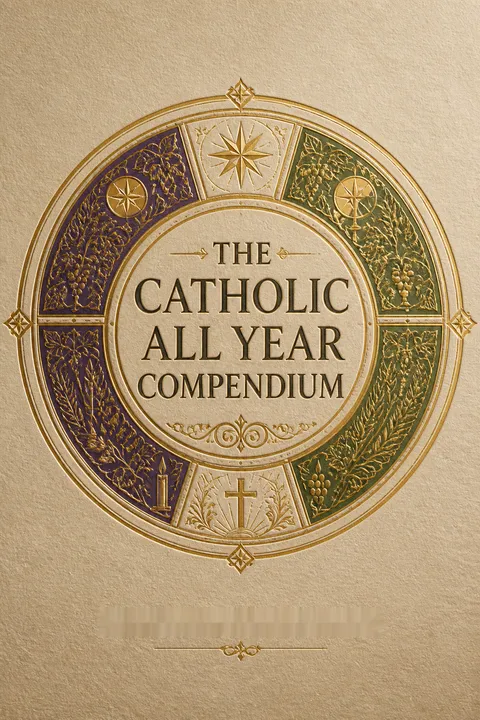


Key Takeaways
Let the Church calendar give ordinary family life a shared beat.
A year with a pulse. The liturgical year is the Church’s annual cycle of seasons and feast days, recalling events in Jesus’ life and honoring saints. Liturgical living means bringing that rhythm into home life through prayer, meals, stories, decorations, and acts of service. With more than ten thousand canonized saints, families have many possible entry points throughout the year.
Keep the center clear. Sunday Mass and the sacraments remain the essentials; home traditions are optional additions, not a test of Catholic commitment. Tierney’s family marks Sundays as small Easter celebrations and Fridays as reminders of Good Friday. Repeating familiar practices gives the year a shape children can recognize, while leaving room for different schedules, budgets, and family cultures.
Shared rituals can function as a kind of family timekeeping. In a life governed by school terms, work schedules, and commercial holidays, a recurring meal or prayer gives people a common reference point and a way to mark change. The book’s strongest distinction is between the faith’s central obligations and the creative household customs built around them. That distinction matters: without it, a practical guide to belonging could become another demanding performance standard. A tradition works best when it draws a family together, not when the family must organize itself around an idealized version of the tradition.
Begin with baptism days, name days, Fridays, and Sundays.
Start close to home. Tierney recommends beginning with celebrations already connected to family life. Find each person’s baptism date, choose a patron saint, and note that saint’s feast day. For a baptism anniversary, the family can share a chosen meal, renew baptismal promises, and use a candle. A name day can bring a special dinner and a conversation about the saint.
Add one practice at a time. After these personal observances, try a Friday sacrifice or a Sunday meal that feels festive. Then consider familiar feast days, such as St. Nicholas Day, before adding more solemnities or seasonal customs. The sequence is designed for gradual adoption, not completion. If a practice fits, repeat it next year. If it does not, set it aside or adapt it.
This gradual approach resembles habit formation: a practice is more sustainable when attached to an existing date, meal, or family role than when introduced as a large new project. Personal occasions also give children an immediate reason to care about the wider calendar. The method is deliberately flexible, though the workload should not silently land on one parent. A small ritual shared by the household may serve its purpose better than an elaborate celebration maintained by an exhausted organizer.
Keep Advent distinct from Christmas so anticipation survives the season.
Practice expectant waiting. Advent is the season of preparation before Christmas. Tierney describes how starting decorations, carols, parties, and shopping in November left her family tired of Christmas before the feast arrived. Her response was to finish gift shopping early, decorate gradually, and save some Christmas traditions for Christmas Eve.
Give the waiting its own rituals. The family uses an Advent wreath, with candles added by week, and a Christmas novena, a set of prayers said over nine days. They favor Advent songs and readings, and sometimes limit radio and television to avoid the surrounding Christmas rush. Yet they still accept invitations and respect other families’ customs. The aim is not strictness for its own sake, but a season that feels different from the celebration it anticipates.
A season of anticipation can make a later celebration feel more substantial. The book’s approach also exposes how commercial calendars compress a holiday into a long sales period followed by a single day of consumption. Ritual distinctions can resist that pressure by giving preparation and celebration different emotional tones. Still, restraint is not equally available to every household: school events, work, travel, and extended family traditions may dictate the schedule. The useful principle is to protect some meaningful contrast, even if the whole month cannot be reorganized.
Turn saints’ stories into food, play, and memories children can retell.
Make stories tangible. Tierney connects saints’ feast days to simple activities and meals, using details from their lives as prompts. For St. Andrew, whose most consequential act was bringing his brother Peter to meet Jesus, a family can discuss how a small introduction can shape another person’s life. For the Sacred Heart, Tierney recalls a wobbly red gelatin dessert that became a family favorite after the children helped add whipped cream.
Let imperfection belong. A regional dish, a handmade costume, a book, or a short conversation can make a story memorable without turning the day into a production. The book also distinguishes between saints supported by historical records and legends passed down through tradition. Families can share both, while being clear that a vivid legend is not the same as verified history.
Learning research often distinguishes abstract explanation from embodied experience: people may remember an idea more readily when they have handled, tasted, performed, or retold something connected to it. The feast-day meal becomes a memory cue, while the saint supplies a human example to discuss. That combination is especially apt for children, who can enter a story through play before grasping its theology. The historical caveat is essential, however. Hagiographic legends can inspire without being treated as documentary evidence, and the book’s own distinctions help readers preserve that difference.
Use Lent to loosen attachments, not manufacture misery.
Choose a purposeful discipline. Lent is a season of preparation for Easter, traditionally centered on prayer, fasting, and almsgiving. Tierney reframes giving something up as a way to notice what has become too important or distracting, rather than as punishment. A person might reduce screen time, add a family Rosary, make the bed daily, or give more attention to someone who needs help.
Keep celebration in the rhythm. Sundays remain days of Easter joy even during Lent, and solemnities are not meant to be treated as ordinary days of penance. In Tierney’s home, children place purple beans in a jar for good deeds and small sacrifices; at Easter, the beans become jelly beans. The practice makes effort visible without making the season a contest in suffering.
A voluntary discipline can reveal dependence by briefly interrupting an automatic comfort or routine. That is different from assuming discomfort is inherently virtuous. The book’s emphasis on matching a practice to one’s real circumstances is important, especially for caregivers, pregnant or nursing people, and anyone whose health makes fasting inappropriate. Behavioral science also suggests that a change is easier to sustain when it has a clear purpose and a supportive environment. The beans offer a playful cue, but the underlying aim remains attention to God and other people, not reward accumulation.
Let Holy Week move from public ritual into household practice.
Enter the story in stages. The Triduum is the three-day observance from Holy Thursday evening through Easter Sunday. Holy Thursday recalls the Last Supper, Jesus washing his disciples’ feet, and the institution of the Eucharist. Good Friday centers on his suffering and death. Holy Saturday is a day of waiting and preparation before Easter.
Use simple physical signs. Tierney’s family visits churches, shares a Last Supper-inspired meal, and washes one another’s feet. On Good Friday, they pray the Stations of the Cross, a devotion that follows episodes of Jesus’ journey to crucifixion, and keep a quieter household. For Tenebrae, candles are extinguished one by one, followed by a sudden sound in the dark. Holy Saturday shifts to preparing food, clothes, and decorations for Easter.
These practices translate a complex religious narrative into space, movement, sound, and time. The sequence matters: the family does not skip directly from sorrow to celebration, but gives grief and waiting their own place. Ritual can provide a structure for discussing difficult events without demanding that children produce a particular emotional response. The intensity should still be adjusted to the child and setting. A simple reading or quiet moment can carry the same meaning as a more elaborate observance, especially when a family’s energy or circumstances are limited.
Celebrate Christmas as a season, not a single morning.
Let the feast begin. Tierney waits to put up the main Christmas tree until Christmas Eve, then keeps decorations, songs, films, and special treats through the twelve days of Christmas. The wider liturgical Christmas season can vary in length according to the calendar; her family chooses the familiar twelve-day pattern. The Wise Men move toward the Nativity scene each night until Epiphany, turning the passage of days into something children can watch.
Make giving less about volume. The family reduces the number of gifts, gives experiences when possible, and has children secretly help or make gifts for siblings. Christmas dinner includes a birthday cake for Jesus, a tradition begun when a child asked why the birthday boy had no cake. These customs keep delight and generosity in the celebration without requiring an ever-larger pile of presents.
The chapter challenges the familiar pattern in which anticipation consumes December and Christmas itself becomes cleanup day. Extending celebration can shift attention from acquisition toward shared time, food, music, and hospitality. The Wise Men’s slow journey is particularly effective because children can see time passing rather than merely being told to wait. Yet households cannot always control when relatives gather or when holidays are scheduled. A longer season need not mean reproducing every custom; keeping one or two traditions alive after December 25 can preserve the central insight.
Give Easter enough days to feel like the climax it is.
Keep the celebration going. Eastertide is the fifty-day season from Easter Sunday through Pentecost. Its first eight days form the Easter octave, when each day is treated liturgically as another Easter celebration. Tierney’s family continues Easter music, desserts, decorations, and a greeting that answers He is risen with He is risen indeed. The Easter Vigil, beginning in darkness before the church fills with light, gives the Resurrection a dramatic communal setting.
Carry joy into ordinary routines. During Easter, the family changes the Lenten sacrifice beans into jelly beans, keeps plastic eggs in use, and replaces the Angelus prayer at noon with the Regina Caeli. Pentecost, marking the Holy Spirit’s arrival and the Church’s beginning, closes the season. The practical message is clear: Easter is not a one-day reward after Lent, but a sustained period of celebration.
A prolonged celebration counters the tendency to treat major events as brief peaks followed by an immediate return to routine. Repetition can help a community inhabit the meaning of an event instead of merely remembering that it happened. The book’s playful details make that duration legible to children, while the Vigil provides a striking communal symbol of change from darkness to light. The broader challenge is continuity: long celebrations can become burdensome if every day requires a special activity. Ordinary meals and small greetings may be enough to keep the season present.
Treat indulgences as invitations to prayer, not spiritual coupons.
Understand the purpose. In Catholic teaching, an indulgence remits some or all of the temporal punishment associated with sins whose guilt has been forgiven. It is not a way to buy forgiveness or avoid responsibility. Tierney presents indulgences as practices that encourage prayer, charity, and spiritual growth, and that can also be offered for the souls of the dead.
Connect the practice to the calendar. The book describes opportunities linked to actions such as praying the Stations of the Cross, reading Scripture, visiting a cemetery to pray for the dead, or taking part in a Eucharistic procession. A plenary indulgence is understood as full remission, while a partial indulgence is partial; plenary indulgences also have specified conditions, including confession, Communion, prayer for the pope, and detachment from sin. The official requirements should be checked, since they are not interchangeable.
Indulgences can sound transactional to readers unfamiliar with the theology, as though spiritual life were a points system. The book’s emphasis on the practices themselves offers a stronger interpretation: the acts are worthwhile as prayer, charity, and attention even apart from the indulgence attached to them. This resembles a broader religious pattern in which repeated actions train moral and spiritual habits. Still, precise conditions matter. A simplified summary should not make the practice sound automatic, and readers should consult current Church guidance rather than relying on a family custom or an old calendar.
Turn feast days into encounters with saints, neighbors, and the dead.
Make holiness recognizable. For All Saints’ Day, children can dress as saints, tell clues about their lives, and join a pageant or carnival. Costumes and games help turn distant names into individual people with distinctive choices and stories. Tierney stresses that saints include people from many eras, cultures, and walks of life, not only ancient martyrs or religious figures.
Remember those who died. On All Souls’ Day, her family visits a cemetery, prays for people by name, and leaves flowers at graves. Catholic teaching holds that the dead remain part of the Church, and the family’s prayers are an act of care for them. The calendar thus connects household life not just to famous saints, but also to deceased relatives, local communities, and people children may never have met.
Role-play and commemoration make belonging concrete. A child wearing a saint’s clothes or standing beside a named gravestone encounters history as a relationship rather than a list of facts. These customs also give families a shared way to speak about death, grief, and hope, subjects often pushed out of everyday conversation. The practice should remain open to different temperaments: some children welcome cemetery visits, while others may need a gentler introduction. The underlying invitation is broader than any single activity: remember the people whose lives shape a community.
Analysis
This book is best understood as a domestic field guide to Catholic time. Its subject is not simply a list of feast days, recipes, or crafts. It offers a method for making an inherited calendar visible in the home: mark a season, tell a story, do something with the body, and return to the practice next year. Meals, candles, costumes, blessings, and prayers become memory cues, while recurring dates give families a shared structure that competes with the commercial calendar.
The narrative works because Tierney does not pose as a flawless liturgical expert. A runny gelatin heart, an imperfect family project, and the admission that traditions are skipped keep the book grounded in ordinary domestic life. The recurring instruction to start small is more than reassurance. It is a practical safeguard against turning religious observance into another measure of parental competence. The claim that family traditions can strengthen faith is plausible, but the book’s examples arise from one American, Latin Rite household with particular resources, schedules, and preferences. They are invitations to adapt, not templates that every Catholic family should reproduce.
Its most useful tension is between structure and freedom. The Church calendar supplies a common story, while local culture and family circumstance determine its household expression. A Scottish dish, Mexican food, or a home-built activity can open a window onto a wider Catholic world, though cultural and historical claims still deserve discernment. Some saint stories are documented, others are devotional legends, and the book is strongest when readers preserve that distinction.
For a contemporary reader, the durable insight is not that every day needs a themed dessert. It is that time can be shaped deliberately. A modest annual ritual can connect generations, make abstract beliefs discussable, and give children a vocabulary for joy, grief, generosity, and waiting. The book is an abundant sourcebook, but its own best advice is also its best editing principle: keep what brings a family closer to its faith and one another, and release what does not.
Review Summary
The Catholic All Year Compendium receives overwhelmingly positive reviews, with readers praising its comprehensive guide to liturgical living. Many appreciate Tierney's approachable writing style, humor, and practical suggestions for incorporating Catholic traditions into family life. Reviewers find the book informative, inspiring, and easy to implement, noting its value for both new and experienced Catholics. Some highlight its usefulness as a reference tool and gift. While a few find certain aspects overwhelming, most appreciate Tierney's emphasis on starting small and adapting practices to individual families.
People Also Read




Glossary
Liturgical living
Faith shaped by feast daysA way of bringing the Catholic Church’s yearly calendar into ordinary home life. Families may mark seasons and feast days with prayer, meals, stories, decorations, service, or activities. The practice is intended to support faith and family connection; it is not a requirement for being a good Catholic.
Liturgical year
The Church’s annual calendarThe recurring calendar through which the Catholic Church observes seasons such as Advent and Lent, celebrates major events in the life of Jesus, and honors saints. Its pattern includes periods of preparation, celebration, and Ordinary Time, and it gives the book its overall structure.
Advent
Preparation before ChristmasThe season before Christmas that prepares Catholics to celebrate the birth of Jesus. Tierney presents it as a period of expectation, prayer, and preparation, distinct from Christmas itself. Household customs such as an Advent wreath or novena can help families experience the waiting rather than beginning the Christmas celebration early.
Triduum
Three days of Easter observanceThe central three-day observance of the Catholic year, beginning with the evening Mass of the Lord’s Supper on Holy Thursday and continuing through Easter Sunday. It recalls the Last Supper, Jesus’ Passion and death, and the Resurrection. The book treats each day as a distinct part of one unfolding story.
Christmastide
The liturgical Christmas seasonThe Church’s season of celebrating Christmas, beginning on Christmas Eve and continuing beyond Christmas Day. Its precise endpoint varies with the liturgical calendar and local observance. Tierney’s family emphasizes the traditional twelve days, using music, treats, feasts, and the arrival of the Wise Men to keep the celebration going.
Eastertide
The fifty-day Easter seasonThe season that begins with Easter Sunday and ends at Pentecost. It includes the Easter octave, the eight days from Easter Sunday through the following Sunday, when the Resurrection remains the central celebration. The book recommends continuing Easter customs throughout the season rather than treating Easter as a single day.
Sacramental
A sign that prepares for graceA sacred sign, action, or object used in the life of the Church, such as holy water or a blessed candle. In the book’s explanation, sacramentals do not function like sacraments; through the Church’s prayer, they help prepare people to receive grace and to respond to it.
Indulgence
Remission of temporal punishmentIn Catholic teaching, an indulgence is the remission of temporal punishment due to sins whose guilt has already been forgiven. It may be partial or plenary, and can be applied to oneself or to the dead. A plenary indulgence requires specified actions and spiritual conditions, so it is not automatic or a substitute for forgiveness.
Soup and Stations
Lenten meal and prayer gatheringTierney’s family gathering during Lent that combines a simple meat-free meal with the Stations of the Cross. Friends may join, and the stations can be set up in a home or yard. The format adapts a parish devotion to a family-friendly time and setting.
Straw for Baby Jesus
Good deeds represented as manger strawAn Advent custom in which family members add pieces of yarn or straw to a manger after witnessing kindness, helpfulness, or a sacrifice. The growing bed represents preparation for the baby Jesus. On Christmas Eve, a figure of the infant is placed in the manger.
Lenten sacrifice beans
Visible record of good deedsA family practice in which children place a bean in a jar for a good deed or small sacrifice during Lent. At Easter, the beans are exchanged for jelly beans, and children may continue doing good deeds during Eastertide to take treats from the jar. The practice gives children a concrete seasonal reminder.
FAQ
What's The Catholic All Year Compendium about?
- Liturgical Living Focus: The book emphasizes integrating the Catholic liturgical calendar into everyday family life, making it accessible and enjoyable for all ages.
- Practical Guidance: It provides practical advice on how to celebrate feast days, solemnities, and seasons throughout the year with activities, recipes, and crafts.
- Celebration of Saints: Each chapter covers different liturgical seasons and feast days, highlighting the lives of saints and their significance.
Why should I read The Catholic All Year Compendium?
- Inspiration for Families: The book serves as a guide for families looking to deepen their faith and create meaningful traditions.
- Accessible to All: Kendra Tierney writes in a relatable and engaging style, making the content approachable for both seasoned Catholics and those new to the faith.
- Encourages Community: It emphasizes the importance of community and shared experiences in celebrating the liturgical year.
What are the key takeaways of The Catholic All Year Compendium?
- Embrace Liturgical Living: Living according to the liturgical calendar can enrich family life and deepen faith.
- Start Small: Begin with simple practices and gradually incorporate more as you become comfortable.
- Celebrate with Joy: The book highlights the importance of joy in the faith journey, encouraging families to find happiness in their traditions.
How does Kendra Tierney suggest starting liturgical living in the home?
- Begin with Current Practices: Start with the liturgical living practices that families are already doing, such as celebrating Christmas and Easter.
- Celebrate Baptismal Anniversaries: This can be a meaningful way to connect with the faith and help children understand the significance of their baptism.
- Incorporate Name Days: Choose a patron saint for each family member and celebrate their name days to foster a personal connection to the saints.
What are some practical activities suggested in The Catholic All Year Compendium?
- Feast Day Celebrations: Includes activities like making gingerbread cookies for St. Nicholas Day or celebrating with a special meal for St. Joseph's Day.
- Advent and Christmas Traditions: Observing Advent and Christmas with an Advent wreath and the Christmas Novena helps focus on the true meaning of the seasons.
- Crafts and Recipes: Offers crafts and recipes such as creating a Jesse Tree or making St. Brigid's crosses to reinforce the stories and significance of the saints.
What are some unique traditions mentioned in The Catholic All Year Compendium?
- Straw for Baby Jesus: Children perform good deeds during Advent to fill a manger with straw for the baby Jesus, teaching kindness and service.
- Burying the Alleluia: Families write “Alleluia” on paper and bury it during Lent, symbolizing the period of waiting before Easter.
- King Cake for Epiphany: Making a king cake with a hidden item inside, with the finder being crowned king or queen for the day, reinforces the connection to the Wise Men.
How does The Catholic All Year Compendium address the challenges of modern family life?
- Flexibility in Observance: Tierney acknowledges that modern life can be busy and encourages families to adapt traditions to fit their schedules.
- Encouragement for Community: Promotes inviting friends and neighbors to join in celebrations, fostering a sense of community.
- Focus on Meaning: Prioritize the meaning behind the traditions rather than perfection, aiming to grow in faith and love.
How does Kendra Tierney suggest families can incorporate prayer into their liturgical living?
- Daily Family Prayer: Establish a routine of daily prayer, such as saying the Rosary or the Angelus, to center the family’s focus on faith.
- Prayer for Specific Intentions: Gather prayer intentions from friends and family to include in daily prayers, fostering a sense of community.
- Celebrating Feast Days with Prayer: Incorporate specific prayers and readings into family meals or gatherings to deepen understanding of the saints.
What are the best quotes from The Catholic All Year Compendium and what do they mean?
- “Sometimes all you really need is a little enthusiasm and the willingness to give things a try.”: Encourages readers to embrace imperfections and enjoy the journey of faith and family traditions.
- “You do not have to do everything in this book.”: Reassures readers that they can choose what works best for their family, personalizing the experience.
- “The calendar of the Catholic Church has, for centuries, set a rhythm for the year for the faithful.”: Highlights the significance of the liturgical calendar in guiding the spiritual life of Catholics.
How does The Catholic All Year Compendium encourage family involvement in faith?
- Inclusive Activities: Provides activities that involve all family members, making faith a shared experience.
- Teaching Moments: Emphasizes using feast days as teaching moments about the saints and their virtues.
- Creating Lasting Memories: Encourages families to celebrate together, creating lasting memories centered around faith.
How does The Catholic All Year Compendium address the concept of indulgences?
- Understanding Indulgences: Explains that indulgences reduce the temporal punishment for sins, emphasizing their importance in Catholic teaching.
- Practical Application: Outlines specific actions and prayers that can lead to obtaining indulgences, such as visiting a church or praying for the Holy Souls.
- Encouragement for Charity: Highlights that obtaining indulgences for the souls in purgatory is a charitable act, fostering a sense of community and compassion.
How can I implement the teachings of The Catholic All Year Compendium in my family?
- Start Small: Incorporate one or two feast day celebrations into your family's routine, gradually adding more as you become comfortable.
- Engage Children: Involve children in planning and executing the activities, fostering a sense of responsibility and excitement about their spiritual lives.
- Create a Family Calendar: Develop a liturgical calendar that highlights important feast days and activities, helping your family stay organized and focused on celebrating their faith.
Download PDF
Download EPUB
.epub digital book format is ideal for reading ebooks on phones, tablets, and e-readers.








