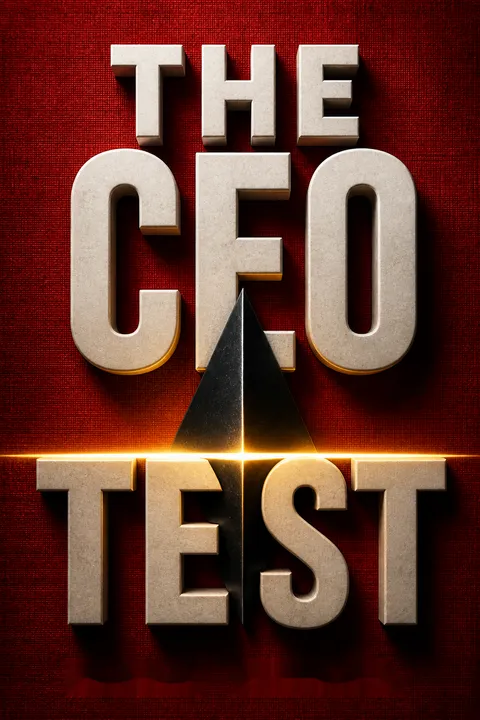


Key Takeaways
Treat the CEO's hardest tests as a practical syllabus for every leader
The role magnifies the work. Bryant and Sharer argue that a CEO's problems are not unique; they are familiar leadership challenges turned up to full volume. Their seven tests cover strategy, culture, teams, transformation, listening, crises, and the leader's inner life. Leaders do not need to excel at every skill, but they need a working level of competence across all of them. Neglecting even one can undermine the rest: a clear plan cannot survive a team that will not collaborate, and a strong culture cannot compensate for a leader who ignores warning signs.
A field guide, not a formula. The authors draw on more than 600 interviews and experience mentoring executives. Their practical cases are meant to help readers recognize situations and choose a response, not follow a universal script. The right approach depends on the leader, the people, and the circumstances.
What's useful here is the shift from personality traits to observable work. A leader can be charismatic yet fail to set priorities, develop a team, or hear inconvenient facts. That makes the book's tests easier to discuss and coach. The CEO lens also clarifies how power changes ordinary interactions: employees may soften criticism, and a leader's small gestures can carry outsized meaning. Still, a first-time manager cannot pull the same levers as a chief executive. The framework travels best when its questions are adapted to each person's actual authority, rather than mistaken for a promise that everyone can change the whole organization.
Turn strategy into a memorable destination, a few moves, and a scoreboard
Make the plan graspable. Bryant and Sharer call for a simple plan: a concise account of what the organization aims to achieve, the few actions most likely to get it there, the obstacles it faces, and how progress will be judged. This is not a mission statement or a catalogue of current projects. It should help an employee answer two questions: what deserves my effort, and why does it matter? At the New York Times Company, leaders set a target in 2015 to more than double digital-only revenue to over $800 million by 2020. The company passed that goal ahead of schedule.
Repeat what matters. Leaders should edit away jargon, focus on outcomes, assign strong people to the most important work, and test whether employees can explain the plan consistently. Repetition is not needless redundancy when the audience is large and busy.
A clear strategy functions like a shared compression algorithm: it lets many people make local choices without requiring a meeting for every decision. Cognitive limits make that especially valuable; a short list is easier to remember and use than a dense presentation. But compression can hide uncertainty. A single scoreboard can also encourage gaming or crowd out less measurable work. The plan is strongest when it pairs a vivid destination with a small number of measures, explains what those measures miss, and is revised when evidence changes. Simplicity should make complexity manageable, not pretend it has disappeared.
Make values observable enough that people can reward or challenge behavior
Culture needs handles. Twilio CEO Jeff Lawson learned the cost of an undefined culture when his earlier startup struggled to hire experienced employees. At Twilio, he waited until the company had about 60 employees before involving a group of staff in naming its existing norms. Some of the resulting phrases, such as draw the owl and no shenanigans, were memorable because people could use them in ordinary conversation. The words mattered less than the behaviors they pointed to.
Make the words consequential. Twilio connected its values to hiring questions, onboarding stories, performance reviews, promotions, employee awards, and surveys about whether the stated culture matched daily experience. Leaders had to model the same standards. The book also argues that inclusion requires measurable outcomes, including diverse leaders in roles with direct business responsibility, not just public commitments or charitable donations.
Values work like informal rules in a repeated game: they help people predict what conduct earns trust and what breaks it. Memorable language can make a norm easier to invoke in the moment, especially when a junior employee needs a low-friction way to challenge a decision. Yet a tight culture can also become a conformity machine if dissent is treated as disloyalty. Surveys and representation metrics are useful checks, but they do not explain every lived experience. The deeper test is whether values protect honest disagreement and whether leaders accept real costs, such as losing a high performer who repeatedly violates them.
Build a team that owns shared work, not just departmental updates
Give the team a job. A senior team is not automatically a team just because its members share an organization chart. Its purpose is to solve work that crosses functions and cannot be handled well by one department alone. At Microsoft, Satya Nadella framed his leadership group's task around giving the organization clarity, alignment, and energy. The authors recommend keeping shared priorities to a few at a time, rather than letting an unwieldy list dilute attention.
Set rules for working together. At ServiceNow, executives wrote a social contract covering trust, cross-functional problem solving, decision clarity, debate, and mutual support. The leader's role is to make meetings purposeful, clarify who decides, draw out quieter voices, coach people, and replace executives who cannot meet the job's changing demands. Kevin Sharer saw the contrast firsthand: after overmanaging a navy crew, he learned to set clear expectations and trust them; at MCI, tolerated internal warfare made work miserable.
Teams depend on both psychological safety and accountability. Safety makes it possible to surface a dissenting view; accountability makes it matter whether anyone acts on the group's decisions. Shared compensation can encourage cooperation, but if every reward is collective, it may blur individual responsibility or frustrate strong contributors. The practical question is not simply whether people trust each other, but whether the work is designed so that helping across boundaries is rational and visible. A written agreement helps, yet it only becomes credible when members can name breaches and see leaders respond consistently.
Make change believable by proving why the status quo cannot hold
Start with shared reality. At the New York Times Company, a newsroom study catalogued concrete problems in how the paper was adapting to digital readers. Its report became public unexpectedly, but the evidence helped employees understand why change was necessary. Leaders preserved the paper's journalistic mission while questioning traditions that no longer served it. Cross-functional leaders then developed a shared focus on digital subscribers.
Make change everyone's work. Amgen's leaders asked how to build a better company before prescribing every answer. They invited proposals from across the organization, including options that leaders might otherwise have screened out, and enlisted roughly 500 managers to explain the change in their own words. The effort produced $1.9 billion in cost savings. BetterCloud faced a sharper threat: it rebuilt its product platform and rallied around winning 100 new customers, eventually reaching about 140. In each case, the CEO had to stay visibly involved.
Change gains legitimacy when people can see both the evidence and the reasoning, rather than receiving a polished announcement with the conclusion already fixed. The Times example also shows why preserving a meaningful mission can make experimentation feel less like erasure. However, a compelling threat narrative can be abused to manufacture urgency or silence debate. A sound case for change should distinguish facts from forecasts, invite challenge to proposed solutions, and state what evidence would prompt adjustment. Shared ownership does not mean every decision is democratic; it means people understand the problem and can contribute to the response.
Build channels for bad news before success makes you deaf
Success can mute signals. At Amgen, a drug that produced about a third of profits faced evidence of higher risks for some patients at high doses. Kevin Sharer later recognized that he had become impatient and insufficiently engaged, assuming others would fix the problem. The crisis led to layoffs affecting 14 percent of staff and forced him to confront how poorly he had listened.
Design for candor. Listening, in the book's account, means more than paying attention in a meeting. Leaders need channels that reach beyond their immediate reports: conversations with front-line workers, regulators, customers, board members, and employees; structured requests for feedback; and visible follow-up. Sharer surveyed his team about his own performance and read employee comments, then made himself more available after people described him as remote. Such a listening ecosystem is a deliberate network for detecting both risks and opportunities, not a passive open-door policy.
Organizations have a predictable information problem: people often filter messages upward to protect themselves or avoid upsetting a powerful leader. That makes listening partly a systems-design challenge. Private feedback, direct contact with front-line staff, and a visible record of follow-up can reduce the distance between what leaders hear and what is happening. The danger is collecting feedback as theater. If speaking candidly leads to retaliation, or if repeated concerns produce no action or explanation, the channel loses credibility. Leaders also need to separate a genuine warning from noise without treating disagreement itself as proof of disloyalty.
In a crisis, separate known facts from comforting guesses
Credibility is fragile. The authors distinguish an external shock, such as Covid-19, from a crisis rooted inside the organization. In either case, leaders should quickly establish what is known, limit immediate harm, communicate accurately, investigate the root cause, and project calm. The most damaging early mistake is asserting more than the evidence supports. After the Deepwater Horizon disaster, BP chief executive Tony Hayward tried to distance the company and minimized the spill's likely impact. His comments further damaged trust.
Own the response. During Amgen's Epogen crisis, Sharer moved from denial toward direct engagement with the facts. He briefed the board, met shareholders, spoke with employees close to the work, accepted the financial consequences, and strengthened the company's relationship with the FDA. A leader cannot undo what has happened; the usable choices are what to learn, whom to protect, and what to change.
Calibrated communication is more than a public-relations tactic. It reduces the chance that leaders lock themselves into a false account while evidence is still emerging. Saying what is known, what remains uncertain, and when an update is expected gives people a structure for interpreting events without pretending uncertainty is gone. This approach can feel less confident than a sweeping assurance, but confidence built on unsupported claims is brittle. Candor does not remove legal or reputational consequences, and facts alone do not resolve harm. A credible response also requires care for affected people and visible action against the conditions that produced the crisis.
Hold opposing leadership demands without becoming a one-note boss
Balance is contextual. Niki Leondakis described spending years swinging between being too friendly with employees and adopting a rigid style she thought a boss was supposed to use. A difficult conversation taught her that compassion and accountability could coexist. The authors treat leadership as a set of tensions, not a single ideal style: confidence with humility, urgency with patience, optimism with realism, and freedom with structure. The right emphasis shifts with the people, the task, and the risks.
Protect the person doing the job. The inner work includes keeping ego in check, acknowledging pressure, setting achievable goals, delegating enough to make oneself less central, and protecting time for health, reflection, and relationships. These practices support steadier judgment and help prevent the role from consuming the person. They are not luxuries reserved for executives; leaders at every level face competing demands and limited emotional reserves.
The paradox frame is a useful correction to advice that treats leadership as a personality type. It resembles skilled improvisation: principles stay stable while behavior adjusts to the situation. But flexibility can look arbitrary if a leader changes course without explaining why. Nor is every pair of demands best solved at a midpoint. In a safety-critical setting, structure may appropriately dominate; in creative work, uncertainty may need room. The leader's task is to explain the trade-off, notice its effects, and revise it. Self-care matters here not as a private reward, but as maintenance of the judgment and attention other people rely on.
Analysis
The book's strongest contribution is not a novel theory of leadership. It is a disciplined choice of what to notice. Across its seven tests, leadership becomes a set of recurring organizational problems: translating complexity, making norms credible, coordinating interdependent executives, mobilizing change, overcoming filtered information, responding under scrutiny, and regulating the leader's own behavior. That structure helps readers diagnose a specific failure without reducing every problem to character or charisma.
Its stories are especially effective when they show a leader revising a mistaken belief. Sharer's move from command-and-control habits to trust, then from confidence to denial during Amgen's Epogen problem, gives the book a useful narrative arc: experience does not automatically teach; reflection and changed systems make learning durable. The cases also show how small mechanisms, such as a meeting agenda, feedback survey, or shared target, can turn abstract intentions into repeated practice.
The evidence has limits the authors acknowledge. Hundreds of interviews create breadth, but anecdotes from successful executives cannot establish which practice caused a result or how often it works. Retrospective accounts may compress uncertainty and failure into a cleaner story than participants experienced at the time. Readers should treat each example as a hypothesis to test, not as proof that a particular CEO's method can be transplanted unchanged.
The book is most persuasive when it links behavior to structure. Telling people to speak up is weaker than giving them safe channels and responding visibly. Asking executives to collaborate is weaker than giving them genuinely shared work. Publishing values is weaker than using them in hiring and promotion. This systems emphasis is the adaptation's central practical lesson: leadership is not merely what a person intends, but the conditions their repeated choices create for other people. Its final paradox follows naturally. Leaders must serve the organization while protecting the attention, energy, and humility that make service possible.
Review Summary
The CEO Test receives positive reviews for its insightful leadership advice, practical examples, and clear structure. Readers appreciate the book's concise yet comprehensive approach to addressing key challenges faced by leaders at all levels. Many find the seven tests and paradoxes particularly valuable. While some critics note that the advice can be generic, most reviewers recommend it as an excellent resource for current and aspiring leaders. The book's real-life examples and focus on both the external and internal aspects of leadership are frequently praised.
People Also Read









Glossary
The CEO test
Leadership skill thresholdThe book's name for a set of foundational challenges that determine whether a leader can succeed. The tests cover strategy, culture, teams, transformation, listening, crisis response, and the leader's inner life. Passing does not mean perfection; it means developing enough proficiency across the areas that weakness in one does not undermine the whole role.
simple plan
Concise strategy for alignmentA clear, compact explanation of what a team or organization is trying to achieve, how it intends to get there, what obstacles it faces, and how it will measure progress. It sits between an abstract mission statement and a long list of initiatives. Its purpose is to help people connect their daily work to a shared outcome.
sponsorship spine
Managers championing changeA chain of leaders who understand and support a transformation, carrying its rationale from the executive team through successive layers of management. The idea is that employees take cues from their own managers, not only from the CEO. Those managers need enough context to explain the change authentically and build commitment in their teams.
listening ecosystem
Network for candid signalsA deliberate set of relationships, feedback routines, and information channels that helps a leader hear risks and opportunities across an organization. It can include employee surveys, front-line conversations, regulator and customer contact, board discussions, and structured requests for feedback. The goal is to reduce the filtering that often occurs as information moves up a hierarchy.
VUCA era
Volatile, uncertain environmentAn acronym for volatility, uncertainty, complexity, and ambiguity, attributed in the book to the US Army War College. The authors use it to describe conditions in which leaders face rapid change, incomplete information, and interacting problems. The term supports their argument that crisis readiness and adaptability must be treated as ongoing leadership needs.
FAQ
What's "The CEO Test: Master the Challenges That Make or Break All Leaders" about?
- Focus on Leadership Challenges: The book explores the critical challenges that leaders face, which can determine their success or failure. It provides insights into mastering these challenges to become an effective leader.
- Seven Key Tests: It outlines seven tests that leaders must pass, including developing a strategy, building a culture, forming effective teams, leading transformation, listening, handling crises, and mastering the inner game of leadership.
- Insights from CEOs: The authors, Adam Bryant and Kevin Sharer, draw on interviews with over 600 CEOs and their own experiences to provide practical advice and real-world examples.
Why should I read "The CEO Test"?
- Practical Guidance: The book offers actionable advice for leaders at all levels, not just CEOs, making it relevant for anyone aspiring to improve their leadership skills.
- Real-World Examples: It includes stories and lessons from successful CEOs, providing a rich source of inspiration and learning.
- Comprehensive Framework: The seven tests provide a structured approach to understanding and mastering the complexities of leadership.
What are the key takeaways of "The CEO Test"?
- Simplifying Complexity: Leaders must develop the ability to simplify complex issues and communicate them clearly to their teams.
- Building Culture: Creating a strong, values-driven culture is essential for organizational success and requires leaders to model and reinforce desired behaviors.
- Handling Crises: Effective crisis management involves understanding the facts, acting quickly, communicating transparently, and addressing root causes.
What are the best quotes from "The CEO Test" and what do they mean?
- "Simplifying complexity is a leader’s superpower." This emphasizes the importance of distilling complex issues into clear, actionable strategies.
- "Culture is almost like a religion." It highlights the deep commitment and belief that a strong organizational culture can inspire among employees.
- "The leader’s job is to simplify complexity, and be right." This underscores the dual responsibility of leaders to clarify issues and make correct decisions.
How does "The CEO Test" define effective leadership?
- Balancing Paradoxes: Effective leadership involves navigating paradoxes, such as being confident yet humble, and urgent yet patient.
- Listening Skills: Leaders must actively listen to understand the true dynamics within their organization and respond appropriately.
- Team Building: Building cohesive teams that work well together is crucial for executing strategies and achieving goals.
What is the "big idea" question in strategy development according to "The CEO Test"?
- Core Message: The "big idea" question challenges leaders to crystallize the essence of their strategy in a simple, memorable way.
- Strategic Clarity: It helps ensure that everyone in the organization understands the strategic goals and their role in achieving them.
- Decision-Making Tool: This approach aids in prioritizing actions and aligning resources with the most critical objectives.
How does "The CEO Test" suggest leaders handle crises?
- Understand the Facts: Leaders must quickly gather and comprehend the facts to make informed decisions.
- Act Fast: Immediate actions are necessary to mitigate the impact of the crisis and reassure stakeholders.
- Communicate Widely: Transparent communication is crucial to maintain trust and provide updates as the situation evolves.
What role does culture play in leadership according to "The CEO Test"?
- Foundation of Success: A strong culture aligns employees with the organization's values and goals, driving performance and engagement.
- Leader's Responsibility: Leaders must own and model the culture, ensuring that it is reinforced through actions and decisions.
- Continuous Process: Building and maintaining a culture is an ongoing effort that requires regular assessment and adaptation.
How can leaders improve their listening skills as per "The CEO Test"?
- Active Listening: Leaders should focus on understanding rather than responding, creating an environment where employees feel heard.
- Feedback Systems: Implementing structured feedback mechanisms helps leaders stay attuned to the organization's pulse.
- Regular Engagement: Leaders should engage with employees at all levels to gather diverse perspectives and insights.
What is the significance of transformation in "The CEO Test"?
- Ongoing Challenge: Transformation is a continuous process that requires leaders to balance current operations with future disruptions.
- Engaging the Organization: Successful transformation involves engaging employees in developing and owning the change strategy.
- Clear Communication: Leaders must communicate the need for change and the vision for the future to align and motivate the organization.
How does "The CEO Test" address the inner game of leadership?
- Self-Awareness: Leaders must understand their strengths and weaknesses to navigate the complexities of leadership effectively.
- Balancing Demands: The inner game involves managing conflicting demands and maintaining personal well-being.
- Constructive Selfishness: Leaders should prioritize self-care to sustain their energy and effectiveness in leading others.
What are the common mistakes leaders make during crises according to "The CEO Test"?
- Denial: Leaders often downplay the severity of a crisis, delaying necessary actions and eroding trust.
- Overpromising: Making statements beyond what is known can damage credibility and complicate crisis management.
- Lack of Transparency: Failing to communicate openly with stakeholders can lead to misinformation and increased anxiety.
About the Author
Other books by Adam Bryant

Download PDF
Download EPUB
.epub digital book format is ideal for reading ebooks on phones, tablets, and e-readers.








