

Key Takeaways
Treat the gospel Jesus as a mythic construction, not a settled biography
The central claim. Mythicism is the position that Jesus of the Gospels was not a historical person. Murdock argues that the figure was assembled from Jewish scripture, older religious traditions, and stories that gave human form to celestial events. This is a stronger claim than saying that a real preacher was later surrounded by legends: the book argues there is no historical founder beneath the accumulated narrative.
A different explanation. The reader is asked whether existing myths, rituals, and scriptures can explain Christianity without assuming a miracle-working founder. Murdock's answer is yes. She calls the celestial pattern a solar myth, meaning a story that personifies the sun's movements and seasonal cycles. The book presents this theory as its organizing key, not as an established scholarly consensus.
What's striking is the book's refusal to treat a familiar religious story as exempt from ordinary historical questions. That stance can sharpen inquiry into how communities turn symbols into biography. Yet the gap between saying the Gospels are theological literature and concluding that Jesus never existed is substantial. Historical figures can attract legends, while mythic motifs can also be attached to real people. The most useful starting point is therefore the distinction between what the sources establish, what they suggest, and what remains conjecture.
Test each ancient witness for independence, date, and transmission
Evidence under review. Murdock examines the small group of non-biblical texts commonly cited for Jesus, including Josephus, Tacitus, Pliny the Younger, and Suetonius. She argues that Josephus's Testimonium Flavianum, a passage in Jewish Antiquities describing Jesus, was altered by Christian hands. She also questions the Tacitus passage about Christians under Nero and the brief references in Pliny and Suetonius, arguing that they may concern later believers or groups called Chrestians rather than a historical Jesus.
What the sources can show. In Murdock's reading, these passages do not independently verify the Gospel biography. She emphasizes that a text's date, manuscript history, and dependence on earlier Christian reports matter as much as its wording.
Source criticism is strongest when it separates several questions: whether a passage is authentic, what its author knew, and what it can establish about an earlier event. Those questions are not interchangeable. Many historians accept that the Josephus passage contains Christian additions while retaining a possible earlier core, and commonly regard Tacitus's reference as authentic but late. Such evidence may support the existence of early Christians without confirming Gospel details. The book's scrutiny is valuable, but treating every disputed text as equally worthless obscures differences in evidentiary strength.
Use shared savior myths as clues, not proof of direct copying
Recurring motifs. Murdock compares Jesus with figures such as Horus, Krishna, Attis, Mithra, and Dionysus. She highlights recurring themes: divine or unusual birth, healing, sacred meals, death, return to life, and titles such as savior or shepherd. She argues that Christianity drew on a broad mythic inheritance rather than creating these ideas from nothing.
A rival explanation. Euhemerism is the theory that gods began as historical people whose deeds were later exaggerated. Murdock rejects it as an explanation for Jesus, arguing that the Gospel figure is composite from the start. The comparisons, she says, make more sense as shared religious patterns that were adapted to new settings than as the embellishment of one obscure biography.
Comparative mythology is most illuminating when it identifies motifs and then asks how they traveled, changed, or arose independently. A dying and returning deity, for example, can express seasonal renewal without proving that one religion copied another. Similarities become persuasive evidence of borrowing only when dates, contact, and distinctive wording or ritual details line up. The book usefully widens the comparison beyond the Mediterranean, but its broad catalogue sometimes treats resemblance as a conclusion. Careful comparison should distinguish common human symbols from demonstrable historical influence.
Read the Gospels as layered arguments, not eyewitness transcripts
Texts with agendas. Murdock stresses that the canonical Gospels are anonymous in their original form, differ in chronology and detail, and reuse Jewish scripture to shape their narratives. She argues that Paul says little about Jesus's earthly life and interprets key passages as spiritual or scriptural rather than historical. The book further proposes that Marcion's shorter Gospel of the Lord preceded the canonical Luke and that later writers expanded it to Judaize and historicize the story.
A specialized term. Pseudepigraphy means writing under the name of someone who did not compose the work. Murdock sees this practice, alongside editing and interpolation, as central to Christian origins. Her late dating of the Gospels is contested, even though their authorship and literary development remain active scholarly questions.
Treating the Gospels as ancient religious literature rather than modern reportage is a sound methodological move. Their authors shape inherited traditions for theological purposes, and differences between accounts invite analysis instead of automatic harmonization. But anonymous authorship does not itself mean fabrication, and ancient texts often combine memory, interpretation, and scriptural allusion. The book's Marcion-first reconstruction is more speculative than its observation that the texts are layered. Distinguishing literary dependence from deliberate fraud keeps criticism precise without requiring either biblical inerrancy or blanket dismissal.
Trace how Roman power reshaped a sect into imperial religion
Power changes the story. Murdock depicts Christianity not as a movement that simply spread through the appeal of its message, but as a diverse religious current reshaped by institutions and imperial politics. She emphasizes the Council of Nicaea under Constantine, where leaders debated doctrine and authority, and argues that later church structures absorbed or displaced rival traditions. She also challenges stories of mass early martyrdom and argues that Christianity's later expansion relied substantially on coercion and state power.
A long transformation. The book connects the growth of Christian orthodoxy with censorship, the suppression of competing texts, and the destruction of older religious sites. It portrays this history as a struggle over both belief and public authority, not merely a debate about theology.
The political history matters because religions do not spread in a vacuum. Imperial patronage can standardize beliefs, fund institutions, and make some interpretations durable while marginalizing others. At the same time, the history is not a single switch from tolerance to persecution: early communities, imperial policies, and later conversions varied across centuries and places. The book's account is most useful when it directs attention to power and institutional selection. Its sweeping claims about the scale and uniformity of coercion need to be assessed case by case.
Place Israel's God and scriptures in their ancient cultural neighborhood
Religious diversity. Murdock challenges the idea that ancient Israel began as a neatly separated monotheistic culture. She points to biblical references to Baal, Asherah, celestial worship, and the plural Hebrew term Elohim, which she reads as traces of an older, diverse religious landscape. In her account, Yahweh's identity and status developed through competition with other regional deities and through later efforts to centralize worship in Jerusalem.
Texts shaped by conflict. Stories about reforming kings such as Hezekiah and Josiah become evidence, for Murdock, of political and priestly efforts to suppress local sanctuaries and rival worship. The book places biblical traditions alongside Canaanite, Egyptian, Babylonian, and Persian religions, treating cultural exchange and religious rivalry as essential context.
The broader setting is important: ancient Israelite religion developed amid neighboring cultures and was not static. Archaeology and biblical scholarship have substantially complicated simple accounts of an unchanged early monotheism. Still, a plural-looking term or a shared divine title does not automatically prove that Yahweh was simply another name for the sun or Baal. Murdock's strongest contribution here is to make cultural entanglement visible. Her more specific etymological and astrotheological identifications require stronger evidence than resemblance alone.
Read Christian symbols through the sun, seasons, and zodiac
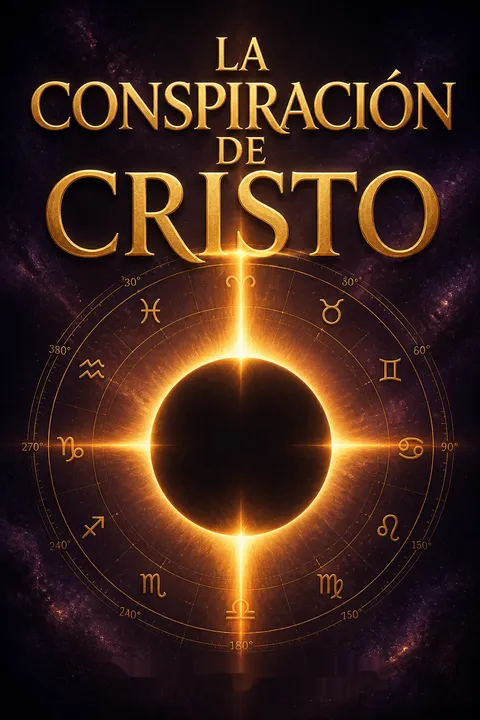
A celestial reading. Astrotheology is the interpretation of religious stories and symbols through celestial bodies and their cycles. Murdock argues that Jesus's birth, death, and return to life echo the sun's seasonal journey, while the twelve disciples reflect the zodiac's twelve signs. She reads the fish imagery as a sign of Pisces, the age she associates with Christianity's emergence.
The astronomical frame. The precession of the equinoxes is the slow shift in the stars that appear behind the sun at the spring equinox, completing a broad cycle over roughly 26,000 years. Murdock treats this movement as a hidden framework for religious history, linking the transition from Aries to Pisces with the Jesus story. The astronomical phenomenon is real; the proposed biblical code is an interpretation.
Astrotheology offers a memorable way to connect seasonal ritual, agricultural life, and religious symbolism. The sun's annual cycle is observable, and ancient societies depended on skywatching to organize calendars. The harder question is whether a particular Gospel passage intentionally encodes a zodiac age. That claim needs early, unambiguous evidence, not merely symbols that can be mapped onto the sky after the fact. Separating astronomy from astrology also helps: precession is measurable, while assigning a specific theological meaning to it remains an interpretive argument.
Demand evidence before turning textual gaps into a coordinated conspiracy
The title's accusation. Murdock uses conspiracy to describe the deliberate shaping of Christianity through editing, forgery, institutional control, and political advantage. She gives special weight to Alexandria and Rome, and also discusses secret brotherhoods and Masonic influence. In her account, the solar myth was gradually turned into a Jewish biography and then promoted as history.
Separate the claims. The book combines textual questions that can be investigated, such as authorship and interpolation, with much broader claims about organized suppression. Its strongest challenge is to ask who shaped the surviving record and whose interests it served. But absence of evidence, lost books, and institutional power do not by themselves establish one coordinated plan or identify its architects.
The word conspiracy can describe real coordination, but it can also make a theory hard to test if every missing document becomes proof of concealment. Historical institutions do preserve, select, and exclude texts; those processes can emerge from competing incentives without a single master plan. The useful discipline is to ask what evidence would distinguish coordination from ordinary conflict, accidental loss, or later editorial preference. This standard strengthens the book's questions about power while keeping its more speculative claims from outrunning the record.
Analysis
At its strongest, The Christ Conspiracy asks readers to apply ordinary historical scrutiny to a story often protected from it by religious reverence. Its attention to anonymous authorship, scriptural reuse, textual alteration, and the varied religious environment of the Roman world is valuable even to readers who reject its central conclusion. It also restores a question that popular accounts often avoid: how did a movement's theology, institutions, and political interests shape the texts that survived?
The book's central inference, however, depends on several steps that require separate proof. Similarities between Jesus and earlier savior figures may suggest shared cultural material, but they do not alone prove direct borrowing or the absence of a historical person. Late or anonymous sources weaken claims of eyewitness precision, yet they do not establish that every person behind a religious tradition was invented. Likewise, gaps in the record can reflect ancient preservation conditions, not necessarily coordinated censorship. The book often moves from plausible textual criticism to much larger claims about a unified conspiracy without providing equally strong evidence for each transition.
The author's use of astrotheology is distinctive and intellectually generative. Precession, seasonal cycles, and the symbolic importance of the sun help explain why religious narratives repeatedly use birth, light, death, and renewal. But showing that a symbol fits a celestial pattern is different from demonstrating that an ancient author intended that precise meaning. The most rigorous version of this approach would compare dated texts, archaeological alignments, and competing interpretations, while identifying which conclusions remain hypotheses.
Readers can therefore gain value without accepting the book's all-or-nothing verdict. Its strongest lesson is methodological: distinguish what a source says from what later communities claim it proves, and distinguish a suggestive parallel from a documented line of influence. Murdock's polemic sometimes blurs those distinctions, but its challenge to examine religion as history, literature, political institution, and myth remains worth engaging seriously.
Review Summary
The Christ Conspiracy receives mixed reviews. Critics praise its comprehensive research on religious origins but question source credibility and historical accuracy. Supporters find it eye-opening, challenging traditional beliefs about Christianity's origins. Detractors argue it misrepresents sources and makes unfounded claims. Some reviewers appreciate the book's alternative perspective on religion, while others dismiss it as poorly documented and misleading. The book's controversial stance on Jesus' historicity and Christianity's pagan roots sparks debate among readers, with ratings ranging from 1 to 5 stars.
People Also Read

Glossary
Mythicism
Jesus as a mythical figureIn this book, mythicism is the position that Jesus of the Gospels was not a historical person. Murdock argues that the Gospel figure was formed from Jewish scripture, older religious traditions, and celestial symbolism. This differs from the view that a real preacher existed but was later surrounded by legends.
Astrotheology
Religion read through the skyAstrotheology interprets religious figures, stories, and symbols as representations of celestial bodies, their movements, or their cycles. Murdock applies this approach to the sun, zodiac, seasons, and precession, arguing that Gospel motifs preserve a cosmic story recast as events in human history.
Precession of the equinoxes
Slow shift of the equinox starsPrecession is the gradual change in the position of the stars behind the sun at the equinoxes, caused by the slow change in Earth's orientation. Murdock treats this astronomical cycle as a framework for religious ages, associating Jesus with Pisces. The astronomical motion is measurable; its proposed scriptural meaning is interpretive.
Euhemerism
Gods as deified humansEuhemerism explains gods as historical people whose reputations and deeds grew until they were treated as divine. Murdock rejects this as an adequate account of Jesus, arguing that the Gospel figure is a composite of mythic and scriptural material rather than an ordinary person later elevated to divine status.
Testimonium Flavianum
Josephus passage about JesusThe Testimonium Flavianum is a passage in Josephus's Jewish Antiquities that refers to Jesus. Christian writers cite it as non-biblical testimony, while critics have long debated its wording and authenticity. Murdock argues that Christians inserted or substantially altered it, so it cannot independently establish the Gospel account.
Pseudepigraphy
Writing under another namePseudepigraphy is the practice of presenting a text as written by a respected figure who did not actually compose it. Murdock treats pseudepigraphy, interpolation, and later editing as central to the formation of Christian scripture. The presence of disputed authorship requires source criticism, though it does not by itself prove deliberate deception in every case.
Download PDF
Download EPUB
.epub digital book format is ideal for reading ebooks on phones, tablets, and e-readers.








