

Key Takeaways
Read race as a substitute for place, not merely a label
A damaged social vision. Jennings calls the shared imagination of how people belong and live together diseased when it cannot picture Christian connection across difference. His opening memory makes the problem concrete: two white missionaries approach his mother, Mary, in her garden as if she needs conversion, although she is a devoted Christian whose faith anchors her family and neighborhood. They fail to recognize her because their social world has already sorted Christian life by race and culture.
Place matters. The book argues that colonialism separated people from lands that had helped shape their identities, then made race carry some of that identity-making work. Whiteness became a portable standard for judging people and ordering space. Race is not simply a label attached to bodies. It also reflects a historical rupture between people and place.
What's striking is the book's shift from asking only how racial categories describe people to asking what they replaced. That move connects racial formation to geography, property, and belonging, rather than treating prejudice as a private attitude. It also makes the garden more than a symbol: Mary's cultivated relationship with the land offers a different account of freedom than ownership alone. The argument benefits from one qualification. Place-based identity can sustain community, but it can also police outsiders. Restoring attention to land requires attention to who has access to it and who controls it.
Ask what Christian compassion excuses when it witnesses suffering
Tears beside the auction. In 1444, Portuguese chronicler Gomes Eanes de Zurara recorded the sale of 235 Africans at Lagos. Families were separated, and the captives' grief moved him to tears. Yet he placed the scene inside a Christian account of Portuguese success: Prince Henry's capture of Africans could be praised as an opportunity to save their souls. The church even received two enslaved children as a religious tithe.
A story that contains its evidence. Zurara's description echoes the suffering of Jesus, but he does not follow that resemblance to challenge the slave trade. Jennings calls the resulting contradiction displacement: Christian language recognizes the captives' humanity while helping justify their captivity. The episode shows how pity can coexist with a system that treats people as saleable bodies.
The episode clarifies why emotional recognition is not the same as political resistance. Zurara notices suffering, and that notice gives his account moral force, yet the narrative redirects the reader toward the captors' salvific purpose. Similar patterns appear whenever institutions acknowledge harm while defining the remedy in ways that preserve their authority. The comparison to Jesus makes the contradiction especially sharp, though it does not prove that Zurara consciously intended the parallel. The stronger point is about effects: a story can expose an injustice and contain it at the same time.
Check whether theology is learning from people or grading them
A classroom across a continent. Jesuit theologian José de Acosta arrived in Peru in 1572, trained to combine scholarship and religious teaching. He laughed when the climate contradicted Aristotle's account of equatorial heat, but he did not let that correction remake his whole framework. He interpreted Spanish expansion, mining wealth, and Christian mission through providence, while classifying Indigenous peoples by their supposed intellectual and religious capacities.
Evaluation as rule. Jennings calls this pedagogical imperialism: a colonial relationship that turns the governed into permanent students, assessed against European Christian standards. Acosta sometimes criticized clerical abuses, but his teaching still treated Indigenous knowledge as defective and their religious practices as demonic. The issue is not education itself. It is education fused with political power, where one side sets the standard and the other is chiefly defined by its failure to meet it.
Acosta's example links the history of education to the history of governance. Assessment can look benevolent while quietly deciding whose knowledge counts, who may teach, and who must keep proving competence. This connection remains useful in schools, missions, and public policy, where good intentions do not neutralize unequal authority. At the same time, Acosta should not be reduced to a single role: the source notes both his criticism of abuses and his participation in colonial systems. Holding those facts together makes the analysis more persuasive than treating every act of teaching as identical to domination.
Let translation change the translator, not only the translated
Questions from the language teacher. Anglican bishop John William Colenso came to Natal in 1854 and worked to translate the Bible into Zulu with help from speakers including William Ngidi. Ngidi's questions about Scripture and Christian doctrine helped push Colenso toward a more universal vision of God's love. Yet that vision could also flatten difference: it made Jewish history and Zulu religious life matter less than a supposedly universal moral truth.
A costly change of allegiance. Colenso initially worked closely with colonial administrator Theophilus Shepstone. When Shepstone helped crush Chief Langalibalele and his people, information from African collaborators led Colenso to challenge the injustice. He lost his friendship with Shepstone and became an advocate for the oppressed. Translation had not automatically made his early mission noncolonial, but listening and relationship helped alter the direction of his life.
Translation is often treated as a technical transfer between languages. Colenso's story shows that it also distributes authority: who asks the questions, who interprets the answers, and whose account reaches print all shape the result. His later defense of Langalibalele demonstrates that relationships can unsettle a translator's loyalties, not merely furnish material for interpretation. Still, the shift was neither instant nor complete. A translator can learn another language while retaining institutional power over its use. Reciprocal translation requires more than fluency; it requires changed control over decisions and representation.
Use your voice against power without mistaking access for equality
A life written by its subject. Olaudah Equiano's autobiography presented the slave trade from the perspective of an African who had experienced capture, forced labor, and sale. He learned to read and write, built commercial skills, and eventually bought his freedom for forty pounds. His book joined abolitionist argument with a carefully managed publishing career, including control of his copyright.
Agency within a market. Equiano used the very commercial world that had treated him as property to make his account public and press for change. Yet his story also reveals the limits of the available Christian community: his trust in God and Scripture had to carry much of the belonging that white society denied him. His achievement is neither simple assimilation nor complete escape. It is a determined effort to speak as a person inside systems that still measured his humanity on unequal terms.
Equiano's authorship makes a powerful case for self-representation, but it also invites a question about the audience's power. The writer gained influence by presenting a narrative that readers would recognize as credible and morally compelling. That strategy can expand agency while leaving the standards of recognition largely intact. This is not a reason to discount his achievement. It is a way to distinguish visibility from equality: being heard in a market is meaningful, but the market does not automatically relinquish its power to decide which voices are legible.
Ask who gets to read, and who controls what reading means
Scripture and nationhood. English hymn writer Isaac Watts revised biblical psalms for worship, sometimes replacing Israel with Britain. His versions made the Bible speak directly to a national community and its hopes. Vernacular scripture could strengthen devotion, but it could also help readers imagine their own nation as God's chosen people while pushing Israel's particular history to the margins.
Literacy under guard. In slaveholding America, several states criminalized teaching enslaved people to read or write. Some slaveholders who did teach literacy surrounded Scripture with lessons in obedience and submission. Reading was therefore both a possible tool of freedom and a tightly controlled practice. Jennings's point is not that vernacular translation or literacy is inherently oppressive. Their effects depend on who has access to texts, who directs interpretation, and what social order that interpretation supports.
Literacy is often discussed as an individual skill, but this history shows it operating as infrastructure for collective identity. Print can bind readers into a public, yet access to publication, schools, and interpretive authority is unevenly distributed. The same text can support emancipation or discipline, depending on its setting and gatekeepers. That makes literacy policy more than a question of whether people can read. It also concerns whether readers can contest official meanings and build institutions of their own.
Read yourself as a Gentile guest inside Israel's story
An unexpected starting point. Jennings argues that Christians should not read Israel as an obsolete prelude to their own story. Israel's election is a particular relationship with God, not a license for later nations to claim the same status. Jesus is Jewish, and the Christian account of him makes little sense if Israel is erased from view. The term supersessionism names the claim that the church has replaced Israel as God's people.
Guests, not replacements. In the book of Acts, Gentiles enter the story through encounters with Jewish believers and the work of the Spirit. Peter visits Cornelius, a Gentile household, and learns that he must not treat its members as unclean. Jennings reads this as a call to shared life, not merely a message translated into separate cultures. This reading also faces the biblical violence of conquest directly, treating Israel's land claim as unrepeatable rather than a model for later empires.
This argument changes the reader's position: Christians are not the original owners of the story but participants whose presence depends on Israel's witness. That reframing challenges religious entitlement and encourages theological humility. It also raises a difficult question the book does not make easy: describing biblical conquest as unique may prevent its direct imitation, but it does not remove the violence that the narrative records. A responsible reading must preserve that moral difficulty rather than turn Israel's distinctiveness into a shortcut around the victims' experience.
A postracial future needs land justice, not just colorblind language
Race reorganizes space. Jennings argues that colonial rule separated people from places that had shaped their identities, then treated land as property and human identity as something carried mainly on the body. Whiteness became an organizing standard that could travel across territories and rank people within new economic and political systems. This is why simply declaring race unreal or irrelevant may leave the underlying arrangement untouched.
Look at the map. Housing patterns, property ownership, and access to land can preserve racial separation even when public language becomes colorblind. The book's proposed test is spatial: ask who can live where, who controls the land, and whose histories are made invisible. A postracial aspiration that ignores these material patterns risks mistaking the absence of explicit racial language for the end of racial power.
The spatial lens adds explanatory depth to debates that focus only on attitudes or identity labels. It directs attention toward property, planning, and the durable geography of opportunity. That is a productive challenge to colorblind approaches, which can overlook how older arrangements persist without openly racial rules. The argument is strongest as a demand to investigate those arrangements, not as a claim that every racial process works identically. Race is flexible, and its effects vary by place, law, and history; analysis must be specific enough to show how.
Make Christian belonging visible in shared places and shared risks
Communion takes a location. Jennings's alternative is not an abstract call to appreciate difference. Christian belonging should take shape through people who share life, learn one another's languages, and become answerable to one another in concrete places. The stories of Pentecost and Cornelius show believers drawn across linguistic and social boundaries, not simply receiving a message while remaining untouched by its neighbors.
Change the arrangements. Such communion must confront the spatial and economic systems that keep people apart. It may require communities to question property patterns, class divisions, and the assumption that groups can live beside one another without becoming responsible for one another. Jennings's phrase cultural intimacy points to this mutual joining, where relationships can alter how people imagine themselves and their neighbors. Proximity alone is not belonging; shared responsibility is the test.
The proposal connects theology to the design of everyday life. A congregation's neighborhood, housing choices, partnerships, and use of common space can either reinforce separation or make shared responsibility more plausible. Research on intergroup contact generally cautions that proximity alone does not erase prejudice; unequal status and weak institutional support can preserve it. That nuance strengthens the book's practical implication: communion requires more than good will. It needs durable practices and structures that distribute voice, risk, and resources across the people who claim to belong together.
Analysis
Jennings builds a theological argument through four lives and a concluding proposal. Zurara's account of an early slave auction reveals Christian piety already entangled with racialized commerce. Acosta shows theology turning into a system for classifying and teaching colonized peoples. Colenso's translation work exposes both the promise and the limits of listening across languages. Equiano demonstrates how an enslaved person can claim authorship while working within the market structures that constrain recognition. The later chapters connect those episodes to literacy, land, and the possibility of Christian community shaped by Israel rather than by racial hierarchy.
The book's distinctive contribution is its insistence that race and space must be analyzed together. If colonial power detached identities from particular lands, then race did more than sort bodies. It helped make people legible within new arrangements of property, labor, and belonging. This framing usefully links theology to geography and political economy, and it explains why individual goodwill or colorblind language may leave inherited structures intact.
Its method is also its main pressure point. Theological readings of historical episodes disclose meanings that economic or political accounts may miss, but they can make a wide historical process seem more coherent than it was. Church doctrine, state policy, commercial incentives, local rivalries, and Indigenous agency interacted unevenly. A careful application of Jennings's thesis should therefore ask where theological ideas directly shaped action, where they legitimized existing interests, and where local actors redirected them. The account of Israel's conquest is similarly challenging: declaring that violence unrepeatable may resist imperial imitation, but it cannot by itself answer the ethical problem of the text.
The book ultimately offers a demanding criterion for Christian identity: not whether a community speaks inclusively, but whether its habits of reading, teaching, owning, and living make genuine shared life possible. That criterion makes the historical diagnosis practical. It shifts the question from whether race can be renounced in thought to whether people can change the material arrangements that keep belonging segregated.
Review Summary
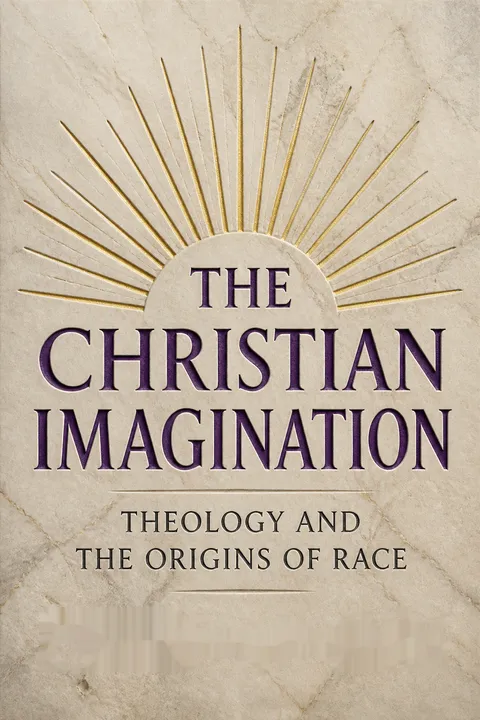
The Christian Imagination receives high praise as a groundbreaking work examining the intersection of Christianity, colonialism, and race. Readers commend Jennings for his deep historical analysis and theological insights, particularly on how Christian theology contributed to the development of racial categories. While some find the dense academic prose challenging, many consider it essential reading for understanding contemporary racial issues in Christianity. Jennings' critique of supersessionism and call for reconnecting with Israel resonate with readers, who appreciate his vision for a more inclusive Christian imagination.
People Also Read








Glossary
social imagination
Shared picture of belongingThe shared capacity through which people picture social relationships, collective identity, and who belongs with whom. Jennings argues that Western Christianity developed a diseased social imagination when it could not recognize Christians across racial and cultural boundaries, and when it imagined belonging through colonial hierarchies rather than mutual transformation.
racial scale
Comparative ordering of bodiesA way of comparing people through racialized categories, especially whiteness and blackness, with other identities placed between them. In Jennings's account, the scale did more than rank bodies. It made distant peoples appear comparable under one visual system and helped colonial Christians judge their presumed civilization and capacity for salvation.
supersessionism
Church replaces IsraelA Christian theological view that the church has replaced Israel as God's people. Jennings treats supersessionism as more than a doctrinal error: in colonial settings, it helped detach Christian identity from Israel and made it easier for European nations to imagine themselves as uniquely elected, while judging other peoples through racialized standards.
pedagogical imperialism
Teaching as colonial ruleA colonial form of education in which European Christian authorities define the standards of knowledge and character, while Indigenous people are treated as deficient students who must be continually assessed. Jennings uses Acosta's missionary work to show how teaching and conversion could become part of a wider system of control.
denial of coevalness
Separating people in timeThe practice of depicting people who live in the observer's own historical present as if they belong to an earlier stage of human development. Drawing on Johannes Fabian, Jennings connects this temporal distancing to spatial separation: Indigenous peoples are treated as less modern and less fully present, making unequal relations seem natural.
white space
Whiteness organizing placeA racialized spatial order in which whiteness acts as an often unspoken standard for organizing access, identity, and belonging. It includes more than neighborhoods populated by white people. Jennings uses the idea to describe how land, property, institutions, and cultural images can make white identity appear universal while other identities are treated as particular or out of place.
cultural intimacy
Belonging through shared lifeA form of mutual belonging created through sustained relationships in which people share language, place, vulnerability, and ordinary life. For Jennings, Christian intimacy should not mean absorbing others into a dominant culture. It should involve reciprocal change and a common life that challenges racial and economic arrangements keeping people apart.
Download PDF
Download EPUB
.epub digital book format is ideal for reading ebooks on phones, tablets, and e-readers.








