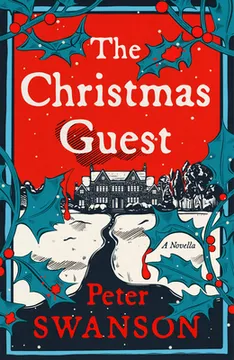


Plot Summary
The Diary From London
Thirty years after the events she recorded, a solitary New York fundraiser finds an old diary while clearing her closet on Christmas Day. Its first pages return her to London in 1989, where Ashley Smith, a California art-history student with no family to visit, expects to spend Christmas alone. Her English friend Emma Chapman invites her to the family’s country home, Starvewood Hall, and Ashley eagerly accepts.
Nervous about fitting in, she buys gifts and new clothes, then takes the train to the Cotswolds. The diary’s young, hopeful voice gives the trip the promise of a romantic escape. Its older reader already knows that this holiday ended in murder, though the first pages reveal none of the danger ahead.
The frame makes memory feel less like a stable record than a room someone has kept locked. The adult narrator’s mundane Christmas ritual gives way to Ashley’s exuberant diary, and that contrast turns the act of reading into a return to a life whose ending is already known to the older self. Ashley’s loneliness is not simply a weakness: it makes her willing to accept an invitation that offers belonging, novelty, and a family-shaped Christmas. Her written rules and anxious self-corrections show someone trying to manage uncertainty through observation. The diary therefore becomes both a record of her inner life and an instrument whose meaning will change when another person takes control of the story.
A Welcome With Teeth
At the station, Emma’s twin brother Adam collects Ashley and stops at a country pub before taking her to the sprawling, chilly manor. Ashley is struck by his looks and aloofness, then meets Emma’s parents and relatives at a crowded family gathering. Emma stays close, helping her guest through unfamiliar names and customs, while her father, Roger, makes the household feel less welcoming than its Christmas decorations suggest.
Adam leaves the dinner for the pub, which only sharpens Ashley’s fascination with him. She is also drawn to Emma’s warmth and to the lively clan she has long wished to belong to. The house offers her both a refuge from solitude and an invitation into a family whose private cruelties she has only begun to notice.
Starvewood Hall works as a social stage: Ashley reads its old rooms, family rituals, and class markers as evidence that she has entered a different, more complete life. Yet the welcome is conditional. Roger’s authority operates through small humiliations, while Alison’s failure to intervene leaves Emma and Adam to manage their father’s behavior themselves. Emma’s attentiveness gives Ashley a real point of attachment, but Adam’s beauty and distance invite romantic projection. Ashley’s longing for family and her attraction to Adam begin to overlap, making it harder for her to distinguish being included from being safe. The tension comes from her sincere pleasure in the household and the reader’s growing sense that its warmth conceals damage.
Joanna's Uncanny Double
At the Sheepfold, a local woman stares at Ashley because she resembles Joanna Davies, a teenager found dead in the woods months earlier. Emma tries to contain the awkward moment, while Adam withdraws rather than explain his connection to Joanna.
He later admits he had seen her shortly before she disappeared, and village suspicion has gathered around him. On the following day, local friend Sophie tells Ashley that Adam and Joanna had been involved, and that his alibi depends on Claudia Gowan, whose account is now in doubt.
Sophie describes Joanna as a local girl from a less privileged family, making Adam’s interest seem unusual to the village. Ashley hears enough to understand that the handsome brother she desires is also central to an unsolved killing.
The resemblance turns Ashley’s body into a piece of evidence before she understands the case. The murdered girl’s mother sees a likeness, and the village immediately places Ashley inside a story already organized around suspicion, class difference, and Adam’s reputation. Ashley’s instinct is to ask questions, but attraction keeps pulling her toward the person those questions implicate. Sophie’s gossip offers context while remaining unreliable in its certainty; it gives Ashley a working theory, not proof. The scene also establishes how quickly the village converts intimacy into public judgment. Joanna is discussed through the social categories surrounding her, while the details of her own experience remain inaccessible, a silence that will matter when the diary’s account is overturned.
The Scarf He Leaves
After Roger belittles Emma during dinner, Adam confronts their father the next morning and announces he is returning to London. Emma is shaken, but Alison offers no defense of either child, arguing instead that Roger will not change. Before he drives away, Adam tells Ashley he has left something in her room: a cashmere scarf, a pointedly personal gift after noticing she had no scarf in the cold.
Ashley wears it to the village pub, where she later sees a pale, bearded figure emerge from the woods and gesture as if cutting her throat. She hurries home but says nothing to the family at first. The scarf deepens her romantic hopes; the stranger gives the holiday a more immediate threat than village gossip.
Adam’s departure appears to confirm a familiar family pattern: Roger humiliates, Alison accommodates, and the twins try to protect one another by leaving or enduring. The scarf complicates Ashley’s reading of Adam. It is evidence of consideration, but also a token whose intimate meaning she supplies herself. Her fear in the lane is similarly shaped by the stories she has absorbed, especially her sense that she is living inside a Gothic mystery. Because she delays reporting what she saw, uncertainty remains private and easily dismissed. The section links emotional vulnerability with practical risk: Ashley wants the scarf to mean she matters to Adam, while the threatening figure forces her to consider that the danger may be real.
A Dress, Then Snow
The next morning, Ashley slips into Adam’s bedroom to borrow a book and finds a small dress, labeled with Emma’s name, hidden among his clothes. Brown stains mark its front, and Ashley connects them to Emma’s childhood nosebleeds without knowing why Adam kept it. Later, Sophie confirms that Claudia’s account of the night Joanna died may not hold up, and Ashley visits the derelict cottage behind the manor where local teenagers gathered.
That evening, Emma takes Ashley to the Green Man for dinner, where Adam unexpectedly arrives with a friend from London. After the meal, the two women and their companions separate briefly in the snowy dark. Adam kisses Ashley, and she returns to Starvewood convinced her attraction may be becoming mutual.
Ashley’s discoveries are arranged like clues, but she cannot yet tell which details belong together. The stained dress points toward Emma’s past without explaining it; the cottage gives Joanna’s death a location, but not a culprit. Ashley’s eagerness to build a coherent mystery mirrors her tendency to narrate her own life as a romance or thriller. The kiss with Adam feels like confirmation, yet it arrives amid unresolved evidence and a family she barely understands. Her diary preserves these impressions as if careful description could make them trustworthy. The coming shift in perspective will expose the limitation of that faith: observation can be vivid and honest while still being radically incomplete.
The Santa Mask
On Christmas Eve morning, Ashley quietly enters Adam’s room and sees Emma asleep in his bed, then backs away before Emma can fully wake. Later, Emma goes to the village for milk and runs back to Starvewood, saying a small, white-bearded man chased her through the woods.
Ashley recognizes the description from the figure she saw earlier. Police arrive, and a senior officer brings in a cheap Santa mask found on the path. The officers initially treat the threat as a prank, but Emma’s anger makes them promise to investigate.
By the fire, Ashley admits her crush on Adam and tells Emma about the scarf and kiss. Emma reassures her that Adam can be selfish but is loyal to people he loves, encouraging Ashley’s hope even as the supposed attacker remains at large.
The mask converts a private fear into apparent corroboration: both women have seen the same kind of stranger, and the police now possess an object that seems to anchor their accounts. Ashley’s bedroom encounter with Emma could invite jealousy, but she avoids asking about it, preserving the friendship and her imagined romance. That pattern of withholding helps Emma remain the trusted interpreter of Adam’s character. Her account of his loyalty is emotionally persuasive because Ashley wants it to be true and because the family’s cruelty has made loyalty feel rare. The section’s suspense depends on the gap between what the evidence appears to mean and who controls the evidence. Ashley and the police both believe they are assembling a case against an outside threat.
The Survivor's True Name
Ashley’s diary ends before the Christmas Eve attack. Tucked into it is a newspaper clipping reporting that Ashley died in the woods and Emma was found critically injured. The New York woman reading the diary then reveals that she was once Emma Chapman, and that she killed Ashley. The diary has not been a confession by its apparent owner but the surviving woman’s preserved account of her victim.
Emma explains that Ashley’s descriptions of the holiday sometimes match her own memories and sometimes trouble her, especially the details about the bloodstained dress and Emma sleeping in Adam’s room. She kept Ashley’s diary instead of destroying it, and decades later its pages still trouble the identity she built after leaving England.
The revelation does more than identify a killer: it transfers authorship. Ashley’s diary seemed to offer direct access to the person whose life it records, but its framing reader has held the artifact for decades and must now explain how she acquired it. The newspaper clipping supplies an external record, yet even that account names Emma only as a surviving victim. The gap between public narrative and private knowledge becomes the book’s central mechanism. Emma’s unease over details she cannot remember suggests that memory does not simply preserve guilt; it also destabilizes the self that guilt has been used to protect. Ashley’s writing survives as a countervoice, making Emma read the person she once dismissed as shallow.
The Twins' Impossible Bargain
Emma’s recollection reaches back to August, when Adam admitted he had killed Joanna during an argument behind the cottage. He said he meant to strike her lightly, but she fell, hit her head on a rock, and died; he then struck her again to disguise what had happened and arranged a false alibi with Claudia.
As police suspicion grew, Adam proposed a plan to save himself: Emma would invite Ashley to Starvewood, let Adam charm her, and stage a second attack that would make the village suspect a serial killer. Emma would pretend to be injured, while Adam stayed in London with witnesses. She resisted at first, but fear of losing her twin and resentment toward Ashley hardened into consent. Adam designed the scheme; Emma would carry it out.
The twins’ intimacy is not presented as simple affection. Their shared childhood under Roger’s cruelty has made loyalty feel like survival, and Adam exploits that bond by recasting murder as the only way to keep them together. His account of Joanna distinguishes an initial fatal accident from the deliberate violence he used to conceal it, showing how panic becomes a choice repeated and enlarged. Emma’s consent has several motives, including fear, devotion, and jealousy, but none makes the plan inevitable. Her insistence that she acted for Adam is both explanation and defense. The scheme’s coldest feature is its treatment of Ashley: Adam proposes manufacturing pleasure and romance before death, turning another person’s trust into a tool.
Christmas in the Woods
On Christmas Eve, Emma and Ashley leave the family’s holiday gathering for the Sheepfold, where Ashley keeps watching the door in hopes Adam will appear. He is actually in London, protected by the witnesses arranged in the plan.
After the pub closes, Emma persuades Ashley to take the wooded shortcut and gives her a small flashlight. Ashley carries a rock for protection; Emma carries a heavier one in a gloved hand. She hits Ashley on the head, then strikes her again as she lies on the ground.
Emma positions herself beside Ashley, smears herself with blood, and injures her own face and shoulder to imitate a survivor of the same attack. Simon and his sons find the women after searching the path. Ashley dies; Emma survives and tells police she remembers almost nothing.
The murder completes the plan by converting affection into access. Ashley goes willingly because the evening has been shaped to confirm her hope that Adam might choose her; Emma uses that hope to make the dangerous walk seem worth taking. The physical staging is as deliberate as the emotional staging. Emma arranges the bodies, wounds herself, and later limits her account to protect the fiction of an unknown attacker. Yet the plan does not erase her responsibility. The discovery by Simon and his sons ends her control over the scene, but the investigation accepts the story she prepared. The horror lies partly in how ordinary actions, leaving a pub, carrying a light, trusting a friend, become the final steps of a premeditated killing.
A Ghost, A Tip, A Death
After the attack, Adam gives Emma Ashley’s diary, passport, and other documents. Emma abandons plans to move to Italy, travels to New York under the name Rebecca Ashley Smith, and builds a life as a nonprofit fundraiser. Decades later, reading the diary brings Ashley’s ghost into her apartment.
The apparition prompts Rebecca to search for unsolved killings of young blonde women near Adam’s home in Yorkshire. She finds a pattern and anonymously alerts journalist Diya Advani to investigate him.
Advani’s reporting identifies Adam as a possible suspect in several murders; soon afterward, he is found dead by suicide at Starvewood Hall. Rebecca ends another Christmas expecting Ashley and perhaps the police, knowing her warning helped set events in motion but not knowing what reckoning will follow.
Rebecca’s new identity offers practical escape, not moral release. She can change countries, occupations, and even her name, yet the diary and the ghost restore the past whenever Christmas returns. Her work supporting victims acknowledges the distance between atonement and repair: it may help others, but it cannot undo Ashley’s death or the silence around Joanna. The anonymous tip is a small act with large consequences, a deliberate intervention after decades of passive concealment. Adam’s death does not provide a clean resolution; the police may still seek Rebecca, and her action does not establish what he did to every suspected victim. The ending leaves accountability suspended between the law, memory, and the dead.
Analysis
The Christmas setting is not merely atmospheric. Its rituals create a ready-made language of hospitality, reconciliation, and family belonging, which Ashley longs to believe in and Emma learns to exploit. Starvewood Hall’s crowded tables and decorated rooms conceal a household governed by Roger’s cruelty, Alison’s accommodation, and the twins’ intense dependence on each other. That domestic structure helps explain, but does not excuse, the violence that follows.
The book’s most consequential formal move is its shift from Ashley’s diary to Emma’s retrospective account. Ashley is vivid on the page, yet her record cannot reveal the motives of the person who controls the frame. When Emma admits that she killed Ashley, the diary becomes an ethical counterweight: it preserves the victim’s distinct inner life against Emma’s earlier habit of reducing her to a loud, awkward American. The older narrator’s admiration for Ashley’s writing arrives too late to become friendship, but it prevents the victim from remaining a mere instrument in Adam and Emma’s plan.
Identity in the story is both resemblance and appropriation. Ashley resembles Joanna, Emma impersonates a threatened survivor, then assumes Ashley’s name and crosses an ocean. These transformations show how public credibility can depend on appearance and paperwork, while private guilt survives both. The fake attacker and the false alibi also expose a weakness in investigative reasoning: a convincing pattern can be manufactured when witnesses and objects are carefully arranged.
The ending refuses simple redemption. Rebecca’s work for victims and her anonymous warning to a journalist are meaningful acts, but neither restores Ashley or settles every suspected killing. Adam’s death brings an external consequence without giving Rebecca the certainty of justice, and Ashley’s ghost keeps the past present. Christmas becomes the season when the story’s competing accounts return: what the police believed, what the diary recorded, and what the survivor can no longer suppress.
Review Summary
The Christmas Guest is a well-received dark holiday novella averaging 3.57 stars. Most readers praise its atmospheric Cotswold manor setting, clever epistolary format, and surprising twists. The story follows American student Ashley Smith, who spends Christmas with the mysterious Chapman family in 1989, told through diary entries before shifting to the present day. Reviewers frequently highlight the satisfying twist and gothic tone, though some found the diary format slow or characters underdeveloped. Nearly all agree it's an ideal one-sitting holiday read for thriller enthusiasts.
People Also Read




Characters
Ashley Smith
The searching AmericanAshley is a nineteen-year-old Californian studying art history in London, where she has no family to visit for Christmas. She is socially anxious and talkative, prone to replaying awkward moments, but she is also observant and curious about the people around her. Her diary shows how she uses humor, lists, and storytelling to manage uncertainty. Having lost her mother, she longs for the crowded family life she sees at Starvewood Hall and is eager to believe that Emma’s invitation means genuine friendship. Her attraction to Adam grows alongside her wish to belong, leaving her vulnerable to the promises she reads into his attention.
Emma Chapman
Adam's guarded twinEmma is Adam’s twin sister and Ashley’s host at Starvewood Hall. She is knowledgeable about her family’s moods and often tries to cushion the effect of her father’s cruelty, while her mother’s passivity leaves her feeling unprotected. Emma can be affectionate and funny, but she is also shaped by years of managing the household’s tensions and by her unusually close bond with Adam. Her studies in art history give her a life beyond the family, though she remains emotionally entangled in its loyalties. To Ashley, Emma offers the first real promise of friendship in the Cotswolds.
Adam Chapman
The magnetic twinAdam is Emma’s handsome, self-assured twin, raised in the same intimidating household but more willing to challenge their father openly. He is quick with humor, attentive when he chooses to be, and accustomed to attracting people through confidence and charm. His closeness with Emma gives him a powerful emotional ally, although their bond also carries the weight of shared fear and family history. Ashley encounters him as an aloof young man whose occasional tenderness seems especially meaningful. His impulse to treat other people’s feelings as part of his own private world makes him difficult to read.
Roger Chapman
The humiliating patriarchRoger, Emma and Adam’s father, is a successful entertainment lawyer whose authority reaches into every family gathering. He uses pointed remarks and public humiliation to keep his children off balance, while expecting the household to accept his conduct as unchangeable. Ashley experiences him as cold and unnerving, and Emma’s accounts make clear that his cruelty is longstanding. His power depends not only on what he says but on the family members who have learned not to challenge him.
Alison Chapman
The accommodating motherAlison is Emma and Adam’s mother, a reserved presence who tends to preserve the household’s arrangements rather than openly oppose Roger. She can offer practical hospitality, but her children do not experience her as a reliable defender when their father humiliates them. Her quiet acceptance teaches them that comfort and protection are not the same thing. Ashley sees her as intimidatingly distant before understanding the family’s deeper history.
Joanna Davies
The absent village girlJoanna is a local teenager whose relationship with Adam draws attention in a village where class and family background shape how people are judged. She comes from a less privileged Cotswold family than the Chapmans, and residents speak about her through rumor as much as personal knowledge. Her connection to Adam places her at the center of Ashley’s questions about what happened in the woods, even while Joanna herself remains largely unseen.
Claudia Gowan
Adam's local entanglementClaudia is a local young woman with a longstanding, on-and-off connection to Adam. She belongs to the village’s more established social circle and is known through other people’s descriptions, particularly Sophie’s. Her relationship with Adam makes her relevant to the questions surrounding Joanna, though Ashley initially knows her only through secondhand accounts.
Sophie
The village informantSophie is a local friend of Emma’s who speaks freely about village relationships and gossip. She gives Ashley useful context about Joanna, Adam, and Claudia, though her confidence can make rumor sound more certain than it is. Sophie represents the village’s informal information network, where personal histories circulate alongside incomplete evidence.
Simon Chapman
The dependable uncleSimon is Adam and Emma’s uncle, a quieter and kinder relative who spends Christmas at Starvewood Hall with his family. Ashley first finds him awkward to talk with, then sees his warmth during a board game. Unlike Roger, Simon offers companionship without demanding attention, making him one of the household’s more reassuring figures.
Daniel Parkinson
The older novelistDaniel is a successful spy novelist and a client of Roger’s. He is witty and socially confident, and his interest in Ashley introduces another possible romantic direction during her stay. His ease at the family table contrasts with the discomfort Ashley feels around the Chapmans.
Diya Advani
The investigative journalistDiya is a journalist who investigates unsolved killings in Yorkshire. Her reporting gives public attention to a pattern that the authorities have not formally connected. She becomes the recipient of a brief, anonymous lead that directs her toward Adam Chapman.
Plot Devices
Ashley’s diary
The unreliable archiveThe diary first presents the Cotswold holiday through Ashley’s immediate impressions, recording her insecurity, romantic hopes, and growing fear. Its first-person voice encourages the reader to trust the account as a direct record, while its frame in the present raises questions about who preserved it and why. Once the older narrator reveals her own role in the events, the diary changes function: it becomes both evidence of Ashley’s inner life and a challenge to the survivor’s version of the past. The gap between what Ashley recorded and what Emma remembers drives the book’s suspense.
Ashley’s resemblance to Joanna
A mistaken likenessAshley’s resemblance to Joanna Davies causes a grieving mother and other villagers to connect the visiting American with the local girl who died. The likeness draws Ashley into the case before she has any knowledge of Joanna’s relationship with Adam. It also makes the murder feel close at hand, as if the dead girl’s story could repeat itself. The resemblance later supports the book’s pattern of overlapping identities and appearances, while reminding the reader that a physical likeness reveals little about the people being compared.
The Santa mask
A manufactured attackerA white-bearded figure frightens Ashley and later chases Emma through the woods. Police find a Santa mask on the path, making the sightings seem to confirm that an unknown assailant is moving near Starvewood Hall. The mask gives the supposed threat a concrete object and encourages the family, Ashley, and police to imagine an outside attacker. Its presence is crucial because it turns a staged appearance into apparent corroboration, helping a false account acquire the authority of physical evidence.
Ashley’s stolen documents
A borrowed identityAfter the attack, Ashley’s passport, driver’s license, and other personal papers allow Emma to leave England under Ashley’s name. The documents transform the survivor’s escape into a second life, first as Rebecca Ashley Smith in the United States and later as a New Yorker with a stable career. The identity conceals Emma’s history but cannot remove the diary, the crime, or the ghost that returns at Christmas. The device makes reinvention materially plausible while showing its limits: a person can change the name on a passport without changing what she remembers.
About the Author


Download PDF
Download EPUB
.epub digital book format is ideal for reading ebooks on phones, tablets, and e-readers.








