

Key Takeaways
Stop waiting for rescue: hidden dependency can quietly redirect an entire life
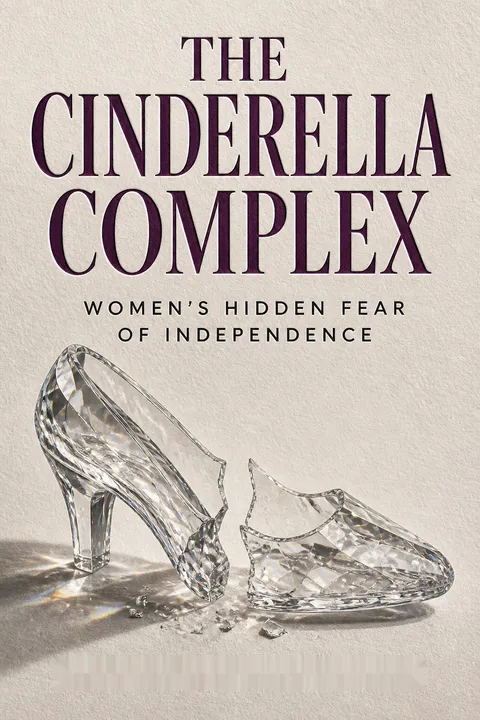
The rescue script. Dowling calls the Cinderella Complex a largely hidden set of fears and assumptions that leads women to wait for someone else to make life safe, rather than trust their own ability to shape it. The wish to be cared for is not presented as uniquely female or inherently unhealthy. Her argument is that girls are often trained to rely on others so deeply that the wish can compete with adult needs for choice and self-direction.
A personal turning point. During the flu, alone in her room, Dowling recognized how badly she wanted protection. Later, when she moved in with a supportive partner, she gradually stopped pursuing her writing and took on a comfortable domestic role. Her independence had not vanished; it had been quietly displaced by the promise of safety.
The book’s most durable insight is that dependence can operate as a script, not merely a preference. A person may sincerely endorse independence while arranging daily life around the hope that someone else will absorb its risks. That distinction helps explain why awareness alone may not change behavior. The frame also needs care: economic dependence can be imposed by unequal pay, caregiving demands, or limited opportunity, not simply chosen to evade adulthood. The strongest reading holds both realities together, examining inner habits without treating structural barriers as personal failures.
Treat retreat as information, not proof you lack ability
A revealing regression. Before moving to the country, Dowling had supported herself and three children for several years. Once she shared a home with a man, she found herself absorbed in cooking, gardening, and helping with his work. She framed the change as a welcome rest after years of financial strain, but she also stopped meeting deadlines, pursuing assignments, and making independent plans.
Look for the payoff. Dowling uses the psychological idea of secondary gains to describe benefits that can come from a problem, even when the problem hurts. Her retreat offered comfort and relief from uncertainty, while also weakening her confidence. When her partner challenged the unequal arrangement, she initially heard it as a withdrawal of care. The confrontation helped her see that she had helped create a role she resented.
This framing makes stalled ambition easier to investigate: instead of asking only what is wrong, it asks what the current arrangement provides. Relief from risk, conflict, or evaluation can be a real reward, even when the longer-term cost is substantial. The idea is useful beyond gender, but it should not turn every pause into evidence of avoidance. Rest, caregiving, and domestic work can be meaningful choices. The key distinction is whether a person can choose them freely, discuss the terms, and change course without feeling incapable or unworthy.
Notice how being praised as a good girl can teach dependence
Different lessons early. Dowling argues that girls are often protected and helped in ways that boys are not. She describes research in which parents interpreted the same infant’s crying as fear when they thought the baby was a girl, and anger when they thought the baby was a boy. In the book’s account, girls were more likely to receive immediate comfort, while boys were more often left to settle themselves.
Help can hinder mastery. The concern is not affection, but overhelp that prevents a child from testing abilities, tolerating frustration, and learning from mistakes. Dowling also points to girls being rewarded for neatness, compliance, and pleasing adults, while boys are pushed toward more independent behavior. These patterns, she argues, can teach girls to seek approval rather than trust their own judgment.
The useful question is not whether caregivers should comfort children, but whether comfort accompanies exploration or replaces it. A child learns competence through supported attempts, including manageable failure, rather than through either neglect or constant rescue. Dowling’s account makes everyday interactions visible as training in agency. Its limits are important: the cited research reflects a particular era, and patterns vary across families and cultures. Parents and teachers can use the insight without treating boys and girls as fixed types or assuming that one childhood path determines an adult life.
Examine why achievement feels like a threat to love and belonging
Success with a social cost. Psychologist Matina Horner studied students’ reactions to a story prompt about Anne, who finishes her first medical-school term at the top of her class. Many women imagined social rejection, loneliness, or a retreat from medicine, while men more often treated achievement as an uncomplicated advantage. In a study cited by Dowling, 65 percent of women’s stories in 1964 expressed negative consequences associated with success. A later study reported an even higher share.
Fear can lower the target. Dowling uses Fear of Success for anxiety that achievement will threaten acceptance or femininity. In her account, some women responded by choosing less demanding goals, even when they had strong academic records. This does not mean women lack ambition. It means ambition can collide with the learned belief that standing out risks losing affection or partnership.
Horner’s scenario reveals a social calculation that ordinary questions about confidence can miss: success may feel costly when belonging seems conditional on being agreeable or nonthreatening. That helps explain why capable people sometimes reduce their aims before testing their limits. The historical studies are suggestive, not a timeless measure of women’s motives. Their samples and cultural setting matter, and achievement anxiety can arise from many sources. The lasting value lies in asking what success is imagined to endanger, then separating evidence about actual relationships from inherited expectations.
Build financial and emotional security beyond the promise of marriage
A fragile shelter. Dowling argues that some women treat marriage as a guarantee of lifelong protection. Her account of Madeleine shows the danger: over many years, Madeleine organized her life around an unreliable husband and the hope that his plans would work out. When the family’s finances collapsed, she took steps to secure welfare support, then faced legal consequences. Only after the marriage and its promises failed did she begin rebuilding a life of her own.
Fusion hides the terms. Dowling describes fused relationships as partnerships in which people blur their identities because separateness feels frightening. One partner may appear to be in charge, while the other manages the household or keeps the partner emotionally afloat. The arrangement can feel safe, but if one person lacks money, skills, or a life beyond the relationship, that security is precarious.
The book’s challenge is not to intimacy, but to making one relationship carry every form of security. Emotional closeness can coexist with practical independence; indeed, clearer financial arrangements and shared responsibilities can make trust less dependent on silent sacrifice. The account of Madeleine is powerful because the pattern has real consequences, though the focus on her choices risks understating the economic pressures that constrained them. A fair reading asks both what a person can change and what systems make leaving or earning independently difficult.
Don't use busyness at home to postpone a life of your own
The second shift. Dowling describes women trying to combine paid work with nearly all domestic work, while treating relentless busyness as proof that they are managing well. One example is Evelyn, a working model who earned a strong income yet handled the home and children while her husband pursued photography. Their resources might have allowed them to hire help, but Evelyn remained caught in the homemaker role and felt increasingly resentful.
Busyness can conceal conflict. Dowling suggests that chores may sometimes provide a socially approved way to avoid a more unsettling question: what work, study, or creative direction does a woman want for herself? This is not a claim that housework is trivial or that every person should pursue a career. It is a reason to notice when domestic labor expands to fill the space where personal choice might otherwise begin.
The double burden is not solved by telling individuals to become more efficient. It depends on who is expected to notice, plan, and perform unpaid work, as well as on whether paid help and childcare are accessible. Dowling adds a psychological layer: domestic competence can also become a refuge from uncertainty about ambition. Both explanations matter. Treating all housework as avoidance would dismiss care as valuable labor, while treating every unequal arrangement as a personal preference would hide how norms shape what feels possible.
Track contradictions in daily choices to uncover the fear beneath them
Follow the mismatch. Dowling recommends noticing where stated goals and repeated behavior diverge. She describes wanting to earn a living while repeatedly blaming editors for a lack of opportunities, and wanting financial stability while failing to track her own account. These patterns were not proof that she lacked talent. They helped reveal how much she feared the responsibility of sustaining herself.
Keep a running balance. For Dowling, tracking money became a model for tracking emotional life. She asks where energy goes, what provides satisfaction, and whether the effort invested is matched by what comes back. The point is not flawless accounting or constant self-scrutiny. It is to replace vague resentment and passive waiting with specific information about choices, limits, and unmet needs.
This method resembles practical self-monitoring: a person records what actually happens rather than relying on an idealized story about intentions. The technique can make hidden tradeoffs easier to see and turn an abstract wish into a concrete decision. It also guards against assigning all responsibility to a partner or institution. But introspection is not a substitute for external change. If the account shows a genuine shortage of money, childcare, or opportunity, clearer awareness identifies the problem; it does not by itself supply the missing resources.
Practice independence in real decisions, not just in self-image
Separate and act. Dowling presents Simone de Beauvoir’s year in Marseille as an example of confronting dependence through experience. Away from Sartre, de Beauvoir spent her days teaching and took long solitary walks through unfamiliar terrain. The walks demanded planning, judgment, and persistence. In one account, she became lost and had to find her way back without help. The experience strengthened her sense that she could rely on herself.
Working through takes time. Dowling argues that recognizing a conflict is only a beginning. A person has to notice recurring patterns, examine what they protect, and make decisions that test old assumptions. This is not a demand to avoid relationships or prove toughness through danger. The aim is to tolerate separateness and uncertainty enough to build confidence from lived experience, rather than relying solely on an image of being strong.
De Beauvoir’s story makes independence tangible: competence develops through encounters in which a person must make judgments and bear their consequences. This is more persuasive than treating confidence as a slogan or personality trait. Still, a risky solo expedition is not a template for everyone, and danger should not be romanticized as a route to growth. The principle is more modest and widely usable: choose real, manageable responsibilities that allow capacity to become observable, while seeking support that enables action rather than taking it away.
Keep a separate ambition alive, even inside a loving partnership
Make room for a direction. Dowling closes with women who bring their abilities into the world without waiting for someone else to authorize them. Jean Auel, a mother of five with a business degree and a management job, left her position around age forty to write a novel. She studied extensively, drafted and revised a large manuscript, and eventually sold The Clan of the Cave Bear. Her story makes clear that commitment involved sustained work, not a sudden rescue or effortless talent.
Connection need not erase selfhood. Dowling’s ideal is not isolation, but a life in which relationships accompany a person’s own choices rather than replace them. She calls the fuller state wholeheartedness: the ability to bring one’s attention and feeling to work, beliefs, and relationships without pretending to be someone else.
Auel’s example counters the idea that a meaningful ambition must be pursued before marriage, children, or other responsibilities. It shows that a life can change direction through study, effort, and deliberate risk, even after years in another role. Yet exceptional success stories can make change look more available than it is for everyone. Their value is not as a promise of a bestseller, but as evidence that a person’s identity need not be exhausted by a partnership or a socially assigned role.
Analysis
The Cinderella Complex is most useful when understood as a tension between social structure and private adaptation. Dowling argues that women inherit expectations of dependence, then may reproduce those expectations in choices that bring immediate comfort but weaken future autonomy. Her own movement from supporting three children alone to retreating into domesticity gives the claim narrative force: competence in one setting does not automatically dissolve the desire to be protected in another.
The book’s strength is its refusal to equate outward achievement with inner freedom. A professional woman can earn well and still seek permission, defer decisions, or make unpaid care her proof of worth. Its accounts of marriage, work, money, and childhood show how dependency can be reinforced across institutions, rather than appearing as one isolated flaw. The idea of examining a pattern’s short-term payoff remains a sharp tool for understanding behavior that contradicts stated goals.
Its limitations are equally important. Published in 1981, the book relies heavily on psychoanalytic interpretations and studies conducted in a different cultural moment. Some claims about girls’ development and women’s motives are broad, and the language can make gender roles seem more uniform than lived experience allows. The book recognizes economic discrimination, but its emphasis on women’s participation in their own constraint can risk shifting attention from unequal wages, care burdens, and institutional barriers. Class and race appear, but are not developed into a full account of how dependency takes different forms across groups.
Read critically, the book does not say that every domestic choice is surrender or that independence means refusing care. It asks whether a person can choose, negotiate, and revise a life without relying on rescue as the hidden plan. That question remains valuable beyond its original setting. Its most compelling invitation is to treat self-trust as something built through decisions and experience, while also demanding social conditions that make those decisions genuinely available.
Review Summary
The Cinderella Complex received mixed reviews. Many readers found it life-changing and empowering, praising its insights into women's fear of independence. Some appreciated its relevance despite being written in the 1980s. Critics noted its lack of intersectionality, focus on middle-class white women, and occasional contradictions. Some felt it unfairly blamed women for their dependence. The book's feminist perspective was both lauded and criticized. Overall, it sparked important discussions about women's psychological barriers to independence and remains influential for many readers.
People Also Read




Glossary
The Cinderella Complex
hidden wish for rescueDowling’s term for largely unrecognized fears and assumptions that encourage women to wait for external protection or transformation instead of fully directing their own lives. The complex is linked to cultural training in dependence, fear of adult responsibility, and the appeal of security. It does not mean that every desire for care is unhealthy.
Fear of Success
anxiety about achievementA concept investigated by psychologist Matina Horner to describe anxiety that success may bring unwanted consequences, especially social rejection, isolation, or conflict with expectations of femininity. In the studies Dowling discusses, women often imagined that exceptional achievement would damage relationships. The concept helps explain why some capable people lower their aspirations or avoid opportunities.
Gender Panic
conflict over femininityDowling’s term for anxiety and confusion about whether independence, assertiveness, and ambition are compatible with being feminine. She argues that women can feel pulled between newer expectations of self-sufficiency and older ideals of dependence and domesticity. This conflict may produce hesitation, overwork, or withdrawal from opportunities.
counterphobic facade
toughness masking fearA defensive presentation of boldness, control, or exaggerated self-sufficiency that hides an underlying fear of dependence or vulnerability. Dowling describes women who appear unusually forceful or competent but struggle to trust others or acknowledge their need for support. The facade can protect against anxiety while also making genuine intimacy and self-understanding harder.
secondary gains
benefits hidden in problemsBenefits a person receives from maintaining a difficulty, even when the difficulty causes distress. In Dowling’s account, dependence can offer comfort, protection from risk, or relief from responsibility. Recognizing these gains does not mean a person consciously creates a problem; it helps explain why an unwanted pattern may persist despite its costs.
Energy Leak
energy lost to inner conflictDowling’s label for the fatigue and ineffectiveness that arise when opposing needs remain unresolved. A person may want independence while also seeking protection, or desire achievement while fearing its social consequences. The repeated effort to suppress one side can contribute to indecision, procrastination, and difficulty completing even ordinary tasks.
fusion
blurred identities in partnershipA relationship pattern in which one or both partners blur their individual identities because separateness feels threatening. Dowling, drawing on marital psychology, describes fused partners as relying on each other to define their well-being and avoiding disagreement or change. Intimacy is not itself fusion; the distinction is whether closeness leaves room for separate needs and decisions.
learned helplessness
expectation of no controlA psychological concept associated in the book with Martin Seligman. It describes a state in which repeated experiences of having little control lead a person to expect that actions will not change outcomes. Dowling applies the idea to women who have been taught to see their circumstances as governed by fate or other people, and who may need to rebuild a sense of agency.
displaced homemaker
homemaker needing independent supportA term Dowling uses for a woman who has spent years outside paid employment, often relying on a spouse, and then must support herself after divorce, separation, or widowhood. She may face outdated skills, financial hardship, and a sudden loss of identity. The term emphasizes that this transition can reflect social and economic conditions, not simply individual failure.
FAQ
What's The Cinderella Complex about?
- Exploration of Dependency: The Cinderella Complex by Colette Dowling examines the hidden fears women have about independence and their tendency to seek security through relationships.
- Cultural and Psychological Insights: The book delves into how societal expectations shape women's identities and relationships, highlighting the conflict between independence and the need for security.
- Real-Life Examples: Dowling uses personal stories and interviews to illustrate the struggles women face, providing relatable context for the theoretical concepts discussed.
Why should I read The Cinderella Complex?
- Insight into Gender Dynamics: The book offers a critical examination of traditional gender roles and their impact on women's identities and relationships.
- Empowerment Through Understanding: By understanding the roots of dependency, readers can challenge these patterns, fostering personal growth and independence.
- Cultural Relevance: The themes remain relevant today, as many women still grapple with societal expectations, making it a valuable read for discussions on gender roles.
What are the key takeaways of The Cinderella Complex?
- Dependency is Learned: Dependency in women is not innate but a learned behavior reinforced by societal norms and parental influences.
- Fear of Independence: Many women fear independence due to the anxiety it brings, leading them to retreat into dependency.
- Need for Self-Recognition: Recognizing and confronting one's own dependency needs is crucial for achieving true independence and self-fulfillment.
What are the best quotes from The Cinderella Complex and what do they mean?
- "We may pay lip service...": Reflects the internal conflict women face regarding independence; they may advocate for it but struggle to embrace it fully.
- "The wish to be saved...": Highlights how the desire for rescue can stifle personal growth and ambition.
- "Freedom demands that we become authentic...": Emphasizes the necessity of authenticity in achieving freedom, suggesting true independence requires self-awareness.
What is the Cinderella Complex?
- Definition of the Concept: The Cinderella Complex refers to the fear of independence that leads women to seek security through relationships.
- Cultural Implications: Rooted in cultural narratives that portray women as needing rescue, leading to reluctance to embrace autonomy.
- Impact on Women's Lives: Manifests in career choices, relationship dynamics, and personal ambitions, often resulting in unfulfillment.
How does childhood influence the Cinderella Complex?
- Parental Conditioning: Parents often instill dependency in daughters through overprotection and lack of encouragement for independence.
- Gendered Expectations: Girls are socialized to be nurturing and compliant, reinforcing reliance on others for support.
- Long-term Effects: These experiences create patterns that persist into adulthood, making it difficult for women to assert themselves.
What role does fear play in the Cinderella Complex?
- Fear of Independence: Many women fear the responsibilities and uncertainties that come with independence, leading to dependency.
- Fear of Failure: Compounded by societal pressures and internalized beliefs about their capabilities.
- Cycle of Insecurity: Fear of being alone or unsupported creates a cycle where women seek relationships that reinforce dependency.
How can women overcome the Cinderella Complex?
- Self-Reflection and Awareness: Recognizing one's own dependency needs and understanding their impact on choices and relationships.
- Embracing Independence: Encouraged to take small steps toward independence, such as pursuing careers or hobbies that foster self-sufficiency.
- Challenging Societal Norms: Advocates for questioning and challenging societal narratives that promote dependency.
How does The Cinderella Complex address the issue of emotional security?
- Emotional vs. Financial Security: Highlights the distinction, noting that marriage does not guarantee emotional fulfillment.
- Need for Emotional Support: Women often crave emotional support and validation, which can be lacking in traditional marriages.
- Creating a Balanced Relationship: Advocates for relationships that provide both emotional and financial security, encouraging open communication.
What methods does Colette Dowling suggest for overcoming dependency?
- Self-Reflection and Awareness: Engage in self-reflection to identify dependency patterns, essential for breaking free.
- Setting Personal Goals: Advises setting goals that prioritize independence and self-fulfillment.
- Building Support Networks: Cultivate supportive relationships with friends and family who encourage independence.
How does The Cinderella Complex relate to modern feminism?
- Critique of Traditional Roles: Critiques roles that pressure women into dependency, arguing they hinder progress toward equality.
- Empowerment Through Independence: Aligns with feminist ideals by advocating for independence and self-empowerment.
- Relevance to Contemporary Issues: Resonates with ongoing discussions about women's rights and gender equality.
What psychological concepts are explored in The Cinderella Complex?
- Separation-Individuation: Discusses developing a sense of self distinct from others, crucial for emotional independence.
- Fusion and Dependency: Explores fusion in relationships, where individuals lose identities in attempts to merge with partners.
- Fear of Success: Addresses the fear of success that prevents women from pursuing ambitions, rooted in societal expectations.
Download PDF
Download EPUB
.epub digital book format is ideal for reading ebooks on phones, tablets, and e-readers.








