Key Takeaways
1. Civilization as an Unplanned Sociogenetic Process
Clearly, "civilization" is not, any more than rationalization, a product of human "ratio" or the result of calculated long-term planning.
Emergent order. The civilizing process is a profound, long-term transformation of human conduct and sentiment that unfolds largely without conscious, rational planning by individuals or groups. Instead, it emerges from the complex, often conflicting, interweaving of countless individual actions and intentions, creating an order sui generis that is more compelling than any single will. This dynamic, self-propelling nature of social figurations is central to understanding historical change.
Beyond simple causality. This process is neither purely "rational" nor "irrational" in the conventional sense. It's driven by the autonomous dynamics of human relationships, by specific changes in how people are compelled to live together. While individual choices and talents play a role, the overarching direction of civilizational shifts is shaped by these larger, often invisible, social forces.
A continuous transformation. Civilization is not a static state but a continuous movement, a river of change that flows through generations. It involves a progressive differentiation of social functions, leading to longer chains of interdependence and a more intricate web of human interactions. This increasing complexity compels individuals to regulate their conduct in an ever-more differentiated, stable, and all-encompassing manner.
2. "Kultur" vs. "Civilisation": Reflecting National Psyches
The French and English concept of civilization can refer to political or economic, religious or technical, moral or social facts. The German concept of Kultur refers essentially to intellectual, artistic and religious facts, and has a tendency to draw a sharp dividing line between facts of this sort, on the one side, and political, economic and social facts, on the other.
National self-consciousness. The distinct meanings of "Kultur" in Germany and "Civilisation" in France and England reveal profound differences in national self-perception and historical development. "Civilisation" embodies the self-assurance of nations with established boundaries and colonial expansion, emphasizing universal human progress and outward refinement. In contrast, "Kultur" reflects Germany's later political unification and internal struggles, stressing intellectual, artistic, and spiritual achievements, often in opposition to perceived superficiality.
Social origins of concepts. This conceptual divergence originated in the 18th century from an internal social contrast within Germany: the polemic of the middle-class intelligentsia against the French-speaking, "civilized" courtly nobility. The German intelligentsia, largely excluded from political power, found its legitimacy in intellectual and artistic accomplishments, fostering a self-image of "inner depth" versus "outward politeness."
Historical context matters. The concepts are not abstract ideals but crystallizations of shared historical experiences.
- "Civilisation": Associated with expansionist, colonizing groups, emphasizing commonality.
- "Kultur": Stresses national differences, reflecting a nation constantly defining its boundaries and identity.
These terms, deeply embedded in national psyches, highlight how collective history shapes fundamental ways of understanding self and society.
3. Manners as Microcosms of Social Transformation
The greater or lesser discomfort we feel towards people who discuss or mention their bodily functions more openly, who conceal and restrain these functions less than we do, is one of the dominant feelings expressed in the judgement "barbaric" or "uncivilized".
Shifting thresholds. Everyday manners, from eating habits to nose-blowing and bedroom conduct, serve as tangible indicators of the civilizing process. What was once commonplace and unproblematic in medieval society—like eating with hands from a communal dish or openly discussing bodily functions—gradually became associated with shame, repugnance, and embarrassment. This shift reflects a rising "threshold of repugnance."
Erasmus as a bridge. Erasmus of Rotterdam's 1530 treatise, De civilitate morum puerilium, marks a crucial point in this transformation. While still discussing elementary behaviors with a frankness astonishing to later eras, it simultaneously introduced new demands for bodily propriety and self-restraint, signaling the nascent stages of modern "civility."
- Medieval: Eating with hands, communal utensils, open bodily functions.
- Erasmus's era: Introduction of napkins, forks (limited use), handkerchiefs (optional), and a nascent awareness of "what others might think."
- Later periods: Individual cutlery, strict hygiene, and privatization of bodily functions.
Social control and self-constraint. The evolution of manners demonstrates how external social pressures gradually transform into internalized self-constraints. Initially, rules were enforced by direct social disapproval or fear of offending superiors. Over centuries, these external compulsions became deeply ingrained habits, operating as automatic self-controls, often without conscious awareness of their social origins.
4. From Feudal Fragmentation to Centralized State Monopoly
The gradual increase of the money sector of the economy at the expense of the barter sector in a given region in the Middle Ages had very different consequences for the majority of the warrior nobility on the one hand, and for the king or prince on the other.
Decentralized power. The early Middle Ages were characterized by extreme feudal fragmentation, where numerous warrior families controlled small, largely self-sufficient territories. The central authority of kings was weak, often less powerful than their vassals, and constantly threatened by centrifugal forces. This was a society where military, economic, and political functions were undifferentiated, largely tied to land ownership.
Rise of money economy. The slow but steady increase in the money economy, replacing barter, fundamentally altered this power dynamic.
- Nobility: Fixed rents from land devalued by inflation, leading to impoverishment.
- King/Prince: Gained from taxes on increasing money circulation, boosting financial and military potential.
This economic shift provided the central ruler with the means to hire standing armies, reducing dependence on feudal vassals and their unreliable military service.
Pacification and integration. The growing financial and military supremacy of the central authority enabled the pacification of larger territories. This process, often violent and protracted, involved eliminating rival warrior houses and consolidating diverse regions under a single, increasingly stable government apparatus. This laid the groundwork for what would become the modern state, a unit of rule with a monopoly on physical force and taxation.
5. The Monopoly Mechanism: Power's Inevitable Concentration
A human figuration in which a relatively large number of units, by virtue of the power at their disposal, are in free competition, tends to deviate from this state of equilibrium (many balanced, many relatively free competition) and to approach a different state in which fewer and fewer units are able to compete; in other words it approaches a situation in which one social unit attains through accumulation a monopoly of the contended power chances.
The dynamics of competition. The "monopoly mechanism" describes a fundamental social dynamic: in any system of free competition for scarce resources, power inevitably concentrates in fewer and fewer hands. This process, observed from feudal lords competing for land to modern states vying for global influence, is a driving force behind social change. It's not a planned outcome but an emergent regularity of human interaction.
Phases of monopolization:
- Formation: Many competing units (e.g., feudal lords) engage in elimination contests, leading to the accumulation of resources (land, wealth, military power) by a few, and eventually one dominant entity.
- Socialization: Once a monopoly is established, its control tends to shift from a private possession (e.g., a king's personal domain) to a more "public" or "state" function, administered by a specialized bureaucracy for the benefit of a broader, interdependent society.
Beyond economic monopolies. While often associated with economic competition, this mechanism applies to all forms of social power, including physical violence and taxation. The establishment of state monopolies on force and revenue is a prime example, transforming societies from decentralized, violent arenas into more pacified, centrally governed entities.
6. The Courtization of Warriors: A New Social Discipline
The transformation of the nobility from a class of knights into a class of courtiers is an example of this.
From battlefield to court. The rise of centralized monarchies and their courts fundamentally transformed the warrior nobility. Knights, once relatively independent lords whose lives revolved around warfare, plunder, and direct physical combat, were gradually drawn into the king's court. Here, their traditional military functions diminished, replaced by new roles demanding social finesse, intrigue, and constant self-control.
New dependencies, new conduct. Life at court imposed a new set of constraints. Nobles became dependent on royal favor, pensions, and court offices for their status and livelihood. This intense competition for prestige and influence, where physical violence was largely forbidden, necessitated a profound shift in behavior:
- Emotional restraint: Suppressing spontaneous affects, anger, and aggression.
- Foresight and calculation: Navigating complex social hierarchies and intrigues with careful planning.
- Refined manners: Cultivating elaborate etiquette, speech, and gestures as markers of distinction.
A civilizing crucible. The court became a crucible for "civilité," a new standard of conduct that emphasized moderation, politeness, and emotional discipline. This transformation, driven by the unique social pressures of court life, was a crucial step in the broader civilizing process, laying the groundwork for later bourgeois ideals of self-control.
7. Muting of Drives: Psychologization and Rationalization
Like conduct generally, the perception of things and people also becomes affectively more neutral in the course of the civilizing process.
Internalized control. The increasing interdependence and pacification of society lead to a "muting of drives" and a shift towards "psychologization" and "rationalization." As direct physical violence diminishes, individuals are compelled to internalize social constraints, developing a more stable and differentiated apparatus of self-control. This means a greater capacity for foresight, a tempering of spontaneous affects, and a more nuanced understanding of oneself and others.
Foresight and calculation. Life in complex, interdependent networks demands that individuals consider the long-term consequences of their actions and attune their behavior to a wider social context. This fosters a more "long-sighted" view, where momentary impulses are subordinated to future goals, and events are connected through chains of cause and effect rather than immediate emotional reactions.
Psychologization of perception. The court, in particular, became a training ground for this new mode of perception. The constant need to observe, analyze, and anticipate the motives and intentions of others—to navigate the intricate web of courtly intrigue—cultivated a "psychological" self-image. People learned to "disguise their passions" and "act against their feelings," leading to a more complex, internally split personality structure.
8. The "Royal Mechanism": Balancing Ambivalent Interests
The hour of the strong central authority within a highly differentiated society strikes when the ambivalence of interests of the important functional groups grows too large, and power is distributed too evenly between them, that there can be neither a decisive compromise nor a decisive conflict between them.
A delicate balance. The "royal mechanism" describes how a central ruler gains optimal power by positioning himself as a fulcrum between powerful, yet mutually antagonistic, social groups (e.g., nobility and bourgeoisie). These groups, bound by increasing interdependence but divided by conflicting interests, find themselves in a stalemate where neither can decisively defeat the other nor achieve a stable compromise.
King as arbiter. In this precarious equilibrium, the central authority (the king) becomes indispensable. He can play one group against the other, lending his weight to either side to prevent any single faction from becoming too dominant. This dynamic grants the monarch immense power and scope for decision-making, making his rule appear "absolute," even though he is functionally dependent on the very tensions he manages.
Unintended consequences. This mechanism is not a product of conscious design but an emergent property of social figurations. The king's personal interests often align with maintaining this balance, as his power diminishes if one group becomes too strong or if the groups resolve their differences. This constant manipulation of social tensions, often through patronage and privilege, reinforces the central authority's position and further entrenches the need for self-restraint among the competing elites.
9. Internalization of Constraints: The Rise of the Super-Ego
The transformation of interpersonal external compulsion into individual internal compulsion, which now increasingly takes place, leads to a situation in which many affective impulses cannot be lived out as spontaneously as before.
From external to internal. A hallmark of the civilizing process is the gradual shift from external social constraints (e.g., fear of physical violence, direct punishment) to internalized self-constraints. As societies become more pacified and interdependent, the constant threat of physical harm diminishes, replaced by a more pervasive, subtle, and continuous pressure for self-control. This pressure is absorbed by individuals, forming an automatic, often unconscious, apparatus of self-regulation—the "super-ego."
The role of shame and embarrassment. Shame and embarrassment are key manifestations of this internalized control. They are forms of anxiety that arise when an individual's behavior contradicts the social norms they have adopted as their own. This internal conflict, where one part of the personality judges another, makes individuals "defenseless" against social degradation and compels them to conform, even in the absence of direct external supervision.
Childhood as a mirror. The individual civilizing process, where children learn to control their impulses and affects, mirrors the long-term sociogenetic process. Children are conditioned from an early age to suppress spontaneous desires and adopt socially acceptable behaviors, often through parental gestures and admonitions. This early conditioning instills a "second nature" of self-restraint, making it appear as an innate, rather than socially learned, aspect of the personality.
10. Diminishing Contrasts, Increasing Varieties in Conduct
The more the strong contrasts of individual conduct are tempered, the more the violent fluctuations of pleasure or displeasure are contained, moderated and changed by self-control, the greater becomes the sensitivity to shades or nuances of conduct, the more finely-grained people grow to minute gestures and forms, and the more complex becomes their experience of themselves and their world at levels which were previously hidden from consciousness through the veil of strong affects.
Homogenization and differentiation. The civilizing process leads to a reduction in the stark behavioral contrasts between different social classes and, eventually, between nations. As standards of conduct spread from upper to lower strata, and as societies become more integrated, a more uniform baseline of "civilized" behavior emerges. However, this doesn't mean a loss of individuality; instead, it fosters a greater sensitivity to nuances and varieties of conduct within the established framework.
The paradox of refinement. As grosser forms of behavior and emotional expression are suppressed, people become more attuned to subtle gestures, tones, and social cues. This increased "finely-grained" perception allows for a more complex experience of self and others, revealing layers of meaning previously obscured by more overt affects. This is evident in the evolution of art, literature, and social interaction, where subtle expressions gain significance.
Global spread and local adaptation. This pattern of diminishing contrasts and increasing varieties is observable not only within Western societies but also in the global spread of "civilization." As Western models of conduct permeate other cultures through interdependence, they amalgamate with indigenous patterns, creating new, unique varieties of civilized behavior. This ongoing process highlights the dynamic interplay between universal civilizing trends and local cultural adaptations.
Last updated:
Review Summary
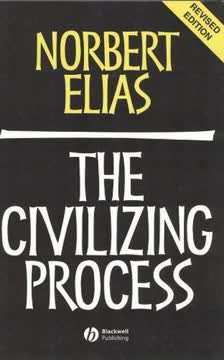
The Civilizing Process by Norbert Elias examines how European manners, behaviors, and social norms evolved from medieval times through modernity. Reviewers praise its groundbreaking interdisciplinary approach, combining sociology, psychology, and history to explain how self-restraint, etiquette, and affect control developed alongside state formation and power monopolization. The book's first section on medieval manner books is frequently described as hilarious, while later theoretical portions prove more challenging. Critics note its Eurocentric focus and dense Germanic style, though most find Elias's insights revolutionary. His concept of the "civilizing process" as ongoing transformation rather than fixed state remains influential and thought-provoking.
Similar Books